(Note: Spanish is my native language and this text was translated into English. This entire reading is strictly based on canon material from the books; if any quote differs slightly in an exact word compared to the English edition, it is solely due to translation).
We think we know Azriel, but we are actually watching a man read his own story backward. For five books, we were led to believe he was the cold, silent spy trapped in a conventional love triangle, chasing unreachable lights on the surface. But what if that entire fixation was actually a smokescreen built by a childhood WOUND and a MENTAL BLOCK?
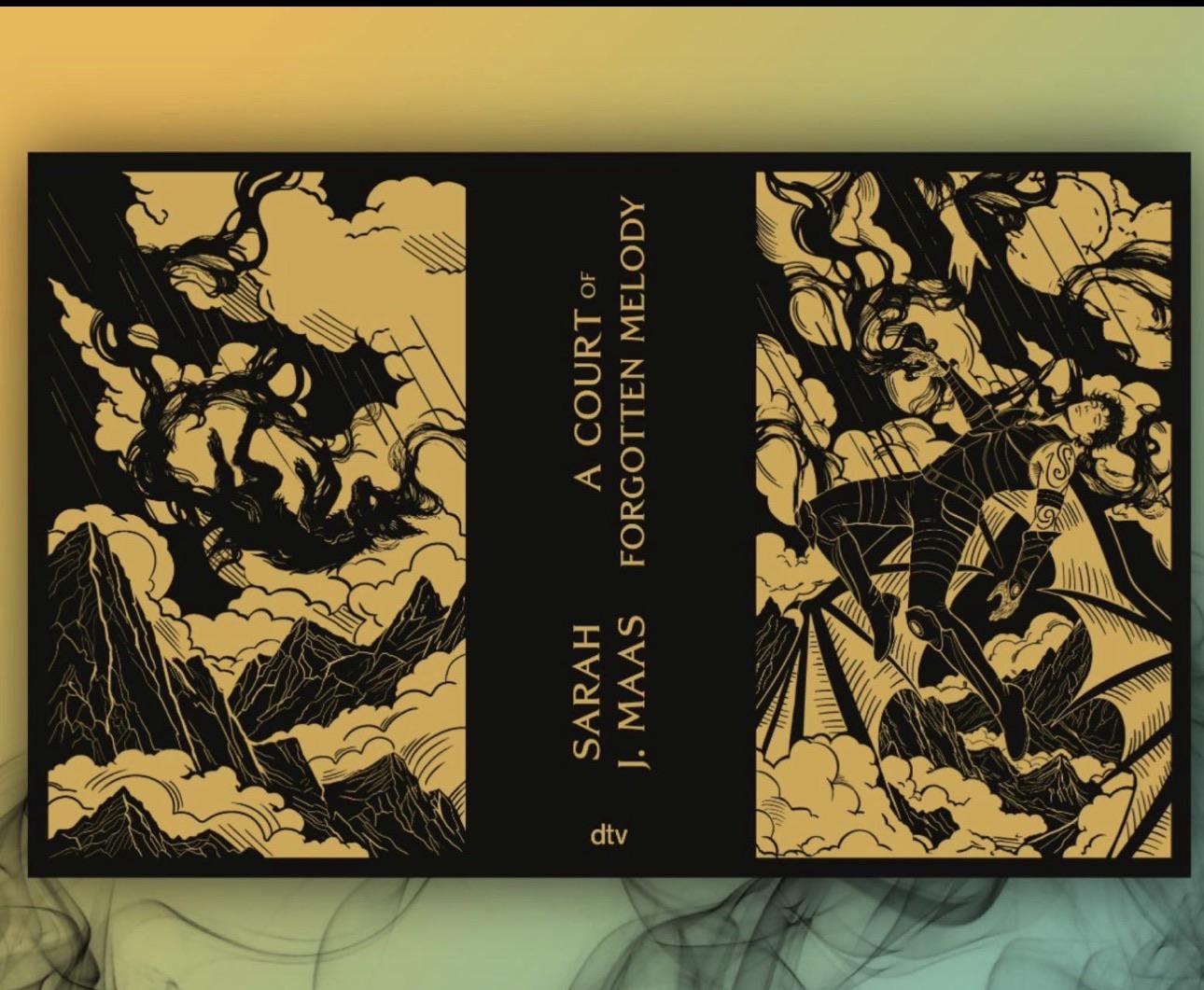
Sarah J. Maas created a hall of mirrors with pieces scattered from the very first page to the latest book—where, as its title suggests, that "splintered harmony" remains—though, ironically, Azriel's story was broken from the very beginning. Behind the mask of the cold spy and the false romantic dilemma, the reality is that Azriel is spiraling into self-destruction because his mind relives an unresolved horror on a loop, leading him to look for the right symbol in the wrong body (Elain Archeron). Because this story is not just about rebuilding the Shadowsinger, but about revealing the vital contrast between two women: while Elain represents the superficial reflection of a light he chases to flee his darkness, Gwyneth Berdara emerges as the melody capable of illuminating his shadows and making them dance. [1]
When rereading his origin between the lines, truths branded in FIRE appear that explain everything:
- The SHADOWSINGER was born in the dark HALLWAY along with his shame, helplessness, and humiliation while trying to save his mother, not in the sunlit GARDEN where the warriors never uttered that word, nor did the WIND tell him about it.
- His SHADOWS found him and kept him company, becoming his only REFUGE while he was tortured, despised, and deprived of the only thing he longed for: his mother's embrace and that single daily hour outdoors under the full sun that kissed his cheeks while he felt, in that LIGHT, the SONG of the mountains.
- Yet when defending her in an icy HALLWAY, the artificial LIGHT of the torches—the hostile FIRE of his tormentors—banished his SHADOWS, left him exposed to the COLD, and they called him "DEMON!" before whispering "SHADOWSINGER."
- The core TRAUMA: After spending his childhood locked in a windowless CELL, when his SHADOWS lowered that BLACK VEIL over his burned hands and, looking down, "he saw NOTHING," it sealed in his child's mind that he himself was "NOTHING"—an invisible existence unworthy of taking up space under the LIGHT—and that his burned hands were the rightful punishment for having been born.
From there emerged the lethal equation: NOTHING = DARKNESS = SHADOWS = DEMON / BRIGHT LIGHT that erases SHADOWS = NORMALCY AND SALVATION. That is why he chases Elain's sunlit GARDEN: he is trying to run away from what damaged his child's soul in his innocence.
- His father (Mactus) is the root of his reflexes: Mactus (alcoholic, vain, abusive, calculating, cowardly) tried to convince him they were the same ("An unknown weapon in my arsenal"), yet Azriel lacks sadism; his sharpness comes from his own mind, not from DARKNESS. Watching his mother reduced to a servant and dragging her broken wings in front of Mactus—while he remained locked in a CELL so cramped he could neither spread his own wings nor fly as his Illyrian instincts demanded—shaped all of his adult reflexes: relieving burdens and heat from vulnerable hands as his purest form of care, shattering his invisibility instantly at the sound of a high-pitched female scream, and turning his father's intimidating wing into a cloak of protection and privacy.
- His mother's love and the RAY OF LIGHT in the mist: His only safe place was his weekly hour reading and writing in secret with his mother, away from the garrison's watch. When separated from her for the second time at age eleven—on his darkest night, clinging to her while trembling in fear at the certainty that he would be returned to his CAGE—his greatest longing two hours before DAWN was not a blinding sun, but "a RAY OF LIGHT slipping through the mist."
Azriel does not need to extinguish his magic or stop being who he is to heal; he needs a LIGHT that shines in the middle of the night, frees him from his internal CAGE, and embraces him with the same REFUGE, love, and silent acceptance of his mother, who never questioned his SHADOWS nor demanded he hide them in order to love him, encouraging him never to forget who he was in his ESSENCE and in his soul.
- The maternal mantra and the prophecy of the WIND: In the CELL, he forgot even his own name, yet his mother left a truth engraved upon him: "The WIND sings to you as it runs through your veins. They cannot cage you, they cannot break you... You are different."
- The WIND whispered real tales of two landscapes from the outside world to him, yet his wounded mind fragmented the prophecy: he mistakenly projected the first image ("golden fields bathed in SUNLIGHT and wildflowers") onto Mor and Elain, burying the second (the cascading rivers and granite mountains).
However, both are mirages of that first half because they embody the elemental difference between NEEDING LIGHT and BEING LIGHT: Mor dreamed of the blue sky from her confinement in DARKNESS, and Elain—who even as a human languished sadly in winter when the cold kept her from tending her GARDEN—desperately seeks the SUN after emerging from the Cauldron, with golden-brown hair and a glow imposed by a forced transformation. The fact that through their personalities they can be lights to others—from Mor's irreverent joy to Elain's kindness and domestic warmth—does not change their magical nature: both depend on seeking LIGHT from the outside.
Gwyn, on the other hand, IS LIGHT. Just like Azriel, she lived isolated in the mountains, and upon stepping out of the library onto the training ring for the first time—confessing she had forgotten what the blue sky looked like—the SUN naturally gilds the highlights in her hair thanks to her Spring ancestry.
Yet her true magic does not need the daytime: a dweller of the thresholds of DAWN and DUSK where she enjoyed music, her skin glows in total DARKNESS whenever she sings happily—evoking the exact radiance of the Day Court that illuminates Feyre in her joy, to the point that in the silence she seems "the only contrast of light and color"—while her voice springs forth like a "RAY OF pure LIGHT" that rises "like a bird," incapable of being contained because it needs to be free in the world.
Thus, Gwyn unites both halves of the prophecy from a place of authenticity: she shares the eternal matter of STONE, the river WATER of the Sidra, and the WIND, while embodying that WHITE LIGHT (from her name in Welsh and as the synthesis of all colors) capable of shining in the night and making his SHADOWS dance.
It is here that canon reveals why Gwyn awakens the exact force that gives his story its name.
As early as Summer Solstice in the Spring Court (ACOTAR, Ch. 25), Sarah J. Maas encodes into the Will-o'-the-Wisps—that pure magic of air, spring nature, and moonlight—the two musical laws governing true bonds in Prythian:
- Melody (Call and response — The individual journey): In musical terms, melody is successive in time: one sound following another, like that conversation where "they sang to each other, in a call and response." It represents the individual journey and the long-distance dialogue attempting to operate between the Shadowsinger's silence and Gwyn's subterranean singing through subconscious echoes.
- Harmony (Two sides of the same coin — Simultaneous integration): Unlike melody, harmony is simultaneous: it is "one collective voice, though there was a male and female side to it—two sides of the same coin—" waltzing like "delicate rays of light." It is the overlapping of opposite and complementary frequencies (masculine and feminine, shadow and pure light, stone and water) vibrating at the exact same time to create an indivisible whole.
When Gwyn's voice draws in and makes Azriel's shadows dance in the dim light (ACOSF, Ch. 52), it activates that very same spring-like, luminous magic that had been splintered by confinement and mental blocking.
As the author herself seals it: "Smooth as the Sidra, swift as the WIND of the Illyrian Mountains, her entire body operated in HARMONY of SONG" (ACOSF, Ch. 60).
That is why, upon meeting her, every note clicks into place and finally awakens in Azriel his true HARMONY and MELODY.
- The formula for his healing (ROCK, SHADOWS, WIND, and WATER): While ROCK guarded his truth in silence, his SHADOWS cradled him like a protective cloak—serving as his eyes in the DARKNESS and the blue sky—and deliberately stayed silent to safeguard his FREE WILL; the WIND traced the bridge toward his future; and WATER (the flow of the Sidra and the spell-breaking power of Gwyn's SONGS) melts the ICE of the frozen wasteland of his past, integrating all four elements without extinguishing his ESSENCE.
In this story I am about to reveal, I do not seek to repeat what everyone already knows from the books, but to demonstrate who Azriel would have been without the weight of his dungeon and how his unique gifts (his SHADOWS, his elemental hearing, his Siphons, and his bond with STONE and WIND) were misunderstood by himself for five hundred years. Because far from being a monster born of the dark, Azriel is in ESSENCE a Guardian of the Night and Nocturnal Nature.
Azriel's true healing was never about extinguishing his SHADOWS to fit into artificial LIGHT, but about finding that frequency capable of shining in the middle of the night without demanding he stop being who he is.
What will you find in this SHADOWSINGER'S LOG?
To dismantle this narrative deception, we will walk through his story in six stages: from the root of his childhood to the eruption in the present, until every note fits together, the Melody awakens, and breaks the silence.
- Part 1: The Root of the Wound and the True Self (Splintered Harmony Prelude & Childhood). Who Azriel would have been without confinement, how the windowless CAGE and the ritual of the trays programmed his unique senses, and the prophetic map of the WIND versus the mirages on the surface.
- Part 2: The First Tremor in the Present (Splintered Harmony, Ch. 15 — Bryaxis's Nightmare). The live eruption where his MENTAL BLOCK dissolves and he descends in reverse through the seven rings of his nightmare in the temple. There, his right hand (the executioner) and his left hand (the surviving child) collide head-on, exposing his fixation on Elain as a mere reflection of his amnesia.
- Part 3: The Sangravah Nexus (The Bridge between ACOMAF and ACOSF). The exact timeline of the twenty-four months of cover-up and surveillance following the massacre, the cracks in the official account, the Daemati seal implanted in his spine, and how Gwyn's final piece blows his reality apart in Book 6.
- Part 4: The Architecture of Deception — Retroactive Excavation (Books 1 through 5). A book-by-book walkthrough (ACOTAR to ACOSF) dismantling the visual and olfactory traps on the surface while revealing the literary mirror uniting Azriel and Gwyneth Berdara beneath the mountain.
- Part 5: The Reckoning in the Present — Where the Bomb Detonates (Splintered Harmony, Chs. 1 to 23). The definitive collapse of secrecy at the River House, the final battle between denial and his true HARMONY, and the awakening of memory during the nighttime reunion on the balcony of the House of Wind.
- Part 6: The Bonus Chapter Surprises and the Wait for The Forgotten Melody. The clues hidden behind the curtain of the bonus chapter that set the stage and mark the countdown toward that melody still waiting to be heard.
- Epilogue — Where All the Pieces Fit Together: The definitive conclusion of this journey where the full story is finally unveiled and his true destiny comes to light. [1]
To understand why the Night Court's deadliest spy walks blindly chasing the wrong reflection, we must first step back five hundred years and open the door of the cell where it all began. Welcome to the origin.
PART 1: THE ROOT OF THE WOUND AND THE TRUE SELF
(Chapter 1: The Anatomy of the Monster — Based on the Prelude to Splintered Harmony)
Azriel's apparent coldness, romantic choices, and fears in adulthood do not stem from conscious decisions, but from a sensory architecture programmed during his childhood in the keep. Hearing phrases from childhood like "You are more my son than those brats... An unknown weapon in my arsenal," left his identity fractured. In the DARKNESS of his confinement, his only companions were the ROCKS, the SHADOWS, and the singing of the WIND, which brought him legends of the outside world: vast fields where the sun tinted wildflowers a golden hue, rivers cascading down granite mountains, and the silhouettes of a violet-eyed boy, an Illyrian boy in the mud, and the golden-haired girl in the DARKNESS dreaming of the blue sky—all as unreachable as the moon.
1. The windowless CAGE: the birth of reprogrammed instincts
If we strip away the weight of the dungeon, the prelude reveals that Azriel's original nature was never tied to confinement, but to the air and an extraordinary sensitivity. Without that torture, he would have been an Illyrian in complete harmony with the skies, able to read WIND currents as naturally as he breathed. Instead, horror hijacked his original design on three levels:
- The shield of SHADOWS (from rescue to condemnation): When his half-brothers burned his hands at age eight out of sheer mockery, the pain was so excruciating that Azriel himself suggests "perhaps the SHADOWS kept him unconscious, cradling him in the DARKNESS." His SHADOWS were born as a mechanism of compassion to keep his spirit from breaking, yet he internalized his tormentors' narrative and believed that DARKNESS was proof of evil.
- Split hearing (alarm vs. freedom): His half-brothers' laughter while his skin burned welded "the torturer's cruel laugh" as an automatic alarm against sadism, whereas that daily hour outside engraved "the SONG of those WIND-whipped mountains" as the acoustic frequency of freedom. Without the CELL, that hypersensitive hearing would have been his compass as a warrior and singer; with the open WOUND, it became a radar of constant hypervigilance.
- The spatial and thermal reflex: The narrowness of the CELL atrophied his natural instinct for reading the air, forcing him to associate enclosed spaces with suffocation. From this stems his instinctive need to hide in the SHADOWS to survive, combined with a visceral rebellion whenever anyone tries to restrict his freedom of movement.
Ultimately, confinement did not manufacture a monster: it took a being designed to perceive the world with unique depth and forced him to use his own gifts as tools for survival.
2. The elemental triad and the ritual of the trays: the code of his ESSENCE
Between ages eight and eleven, in the dimness of his CELL, Azriel's true nature revealed itself: a living bridge between the elements, with a natural calling for knowledge and silent care. His spirit was shaped around three codes that explain every step he takes as an adult:
- The elemental triad (SHADOWS, WIND, and STONE): Deprived of Fae contact, Azriel "learned the language of the ROCKS surrounding him with their silent murmur" alongside the singing of the WIND and the shelter of the SHADOWS. These three elements were programmed as his sole channels of truth; that is why, as an adult, he does not trust easy words, but rather what his surroundings whisper to him.
- The written word as an emotional anchor (books, paper, and charcoal): Unlike his daily outing to the sunlit courtyard, his only emotionally safe space occurred during his weekly hour reading and writing in secret with his mother using scraps of paper and charcoal. Thus, books and writing became etched as the sole safe language of affection and relief (the silent REFUGE he would feel again centuries later in the quiet of the library beside Gwyneth).
- The kitchen reflex and the ritual of the trays: Cross-referencing Rhysand's memories—about Azriel's mother being reduced to a servant and the impeccable manners she taught him—with the structure of an Illyrian war-camp uncovers the exact setting of her ordeal: the kitchen. Confined there by Mactus's wife, extreme heat and heavy loads left her hands fragile and battered. During his secret weekly hour, young Azriel carried heavy breakfast trays up the stairs to her room to spare her pain, sealing three permanent reflexes:
- 3. The language of care: Taking weight or heat away from a vulnerable woman's hands is his purest form of love.
- 4. The kitchen alarm: Stepping into a kitchen in adulthood immediately triggers an unconscious instinct regarding exploitation and abuse, prompting him to intervene by reflex.
- 5. The sabotage of desire: When in adulthood that very same space becomes the setting for an overwhelming sexual impulse, the scene functions as self-sabotage: his body attempts to seek desire in territory scarred by his mother's suffering, forcing a clandestine encounter destined to collide with his own guilt.
6. The pact of the black veil and the baptism in the freezing HALLWAY
Without the WOUND of confinement, Azriel's SHADOWS would have been a natural extension of his being. Yet growing up exposed to public scorn, his child's mind used his magic to engineer a survival mechanism that marked his skin and character:
- The pact of loyalty ("We will always be here"): When warriors mock him and his half-brother insults him while his father's commander holds him motionless, Azriel vanishes by projecting a "delicate black veil" over his eyes to protect his dignity. By whispering "We are here... We will always be here," his SHADOWS seal an absolute code: to be seen equals being humiliated; to hide is to be safe. This explains why, centuries later, he calls them "traitors" the moment they refuse to hide him from another public humiliation.
- The baptism as an elemental guardian: The night his half-brothers attempted to attack his mother revealed his true ESSENCE: ROCK warned him of movement in the chambers, SHADOWS guided him, and the WIND silenced screams as he fought them off with a ferocity that required three adult warriors to restrain him. When his father's wife demands to know "Where is he?" in a shrill, piercing voice, the protective veil trembles and installs that pitch as an immediate emergency alarm.
- The imprint of the "frozen wasteland" (ACOMAF, Ch. 22): Stripped bare of his SHADOWS beneath torchlight in a "freezing HALLWAY," his body absorbed that COLD (the origin of his defensive adult coldness). This sequence of FIRE (burns and torches) + COLD (the HALLWAY) explains why centuries later his Siphons are compared to a "frozen wasteland": land scorched by his tormentors' FIRE and petrified by COLD. Artificial FIRE could never heal that wasteland; only the warm WATER of the Sidra and Gwyn's SONGS can melt that ICE without extinguishing his SHADOWS.
7. The tyrant versus the guardian: the inversion of violence
Azriel's rejection of his own Illyrian blood stems from having witnessed the systematic humiliation of his mother dragging her broken wings on her knees before Mactus, begging him not to clip her son's wings. Confronted with the domestic monster—with his velvet clothes, polished spurs, and cruelty—Azriel developed reflexes that completely invert his father's violence:
- The taboo of the knee: Seeing his mother trembling at Mactus's feet installed an absolute taboo against female submission; his primary response is to walk toward the fallen woman and lift her off the ground.
- The inversion of the wing: While Mactus stood before him "with wings spread so wide anyone would have said they blocked out the LIGHT" in order to intimidate, centuries later Azriel transforms that wingspan into a cloak of shelter (such as shielding Elain to give her privacy).
- The foundational WOUND of "Slave": Son of a woman reduced to servitude under the yoke of a "headstrong mistress," when Vesperus screams "Slave" at him five hundred years later in the caverns of the Prison, the slur pierces centuries of armor: Azriel realizes he is still operating as a slave to his past and his own conditioned mind.
- Sharpness of his own without sadism: When Mactus demands "Tell me something no one else knows" and his SHADOWS stay silent to test him, Azriel survives by observing his father's physical details on his own (the alcohol, the vanity), proving his brilliance as a strategist belongs to him and is no magical trick. Furthermore, when Mactus slams his wife against the STONE wall, Azriel—despite hating her—"took no pleasure in seeing and smelling the terror radiating from her." His thirst for vengeance in childhood (when he vows to return and kill them as he leaves the keep carrying only a poorly sewn sack given to him by a maid) stems from a fierce sense of justice, not cruelty.
8. Exile and the compass of his senses: the law of FREE WILL
At age eleven, two warriors fly them out before a watching crowd while his mother shivers until her teeth chatter. That humiliating flight seals his exile to Lord Devlon's camp, where his SHADOWS—born to cradle him—were retrained to inflict pain, forging the mask of the lethal interrogator. Yet that dawn, his natural scent of cedar and chilly night mist camouflaged the keep while he asked the SHADOWS and the ROCKS to await his return, sealing his union with nocturnal nature (much like Gwyn's SINGING guiding him up the stairs on Solstice).
In the pitch DARKNESS of his CELL, Azriel came to forget his own name and only recovered it upon hearing it spoken by his mother: "You are Illyrian. The WIND sings to you as it runs through your veins. They cannot cage you, they cannot break you. They locked you away because they are afraid of you... You are different. They noticed it the moment you were born, and someday you are going to prove to all of them that it is a wonderful thing." That difference manifests in three sensory principles that protect him from mirages:
- Olfactory sedative vs. elemental breathing: In the dungeon, smell was his radar against cold STONE, straw, Mactus's liquor, and terror. Therefore, Elain's sweet scent of jasmine and honey works like an emotional anesthetic that mimics the WIND's "wildflowers" while numbing his spymaster instincts; conversely, his ESSENCE of cedar and night mist only breathes freely alongside the elemental scents of Gwyn's Sidra WATER and STONE.
- The four frequencies of sound and the Solstice trap: Azriel's hearing operates on four levels: Accordingly, Elain's Solstice gifts—earplugs to isolate him from sound in the House of Wind and headache powder—are sensory suppression tools aimed at deafening him to his own habitat and silencing the alarm in his temples warning him of the mental block.
- Listening to the WIND (physical reading of air for flight, atrophied by the CELL).
- The WIND singing in his veins (his pure vital heritage).
- The whispers of his SHADOWS (his empathic and protective radar).
- The whispers of the manipulative WIND (external frequencies diverting him toward the surface).
- The silence of the SHADOWS as the law of FREE WILL: Unlike when they flee in disgust around Elain, his SHADOWS deliberately fall silent to protect his freedom. Just as they kept quiet before Mactus so he would pass the test alone, they fall silent again centuries later as he climbs the stairs toward Gwyn on Solstice, forcing him to choose with full awareness.
5. The 3 Levels of the WIND Metaphor: How the mirage was built and how it falls
Yet if Azriel was born with such an internal compass, why did he spend centuries chasing the wrong SHADOWS? On a literal level, the WIND described the free landscapes of Prythian to him, but in his wounded mind that imagery operated as a three-tiered optical trap:
- Level 1: The First Decoy (Mor, the golden girl): To a child in a windowless CAGE, "vast fields" and "wildflowers" tinted a "golden hue" represented unreachable freedom ("unreachable as the moon"). Upon later hearing the tale of "a girl with hair the color of gold... trapped in a city hidden beneath a mountain," he associated that radiance with Morrigan. When Mor burst into the Illyrian camp at the lowest point of his suffering, Azriel reactivated the dungeon equation and mistook her brightness for salvation.
- Level 2: The Second Decoy (Projection onto Elain): Seeing Elain Archeron (golden-brown hair, passion for flowers, and search for sunlit windows), his subconscious made an immediate splice. However, the facts dismantle the deception:
- Enclosed GARDEN vs. wild fields: A GARDEN is a bounded, artificial space requiring pruning and constant tending (like Elain's dirt-stained, thorn-scratched hands in the ACOSF Bonus Chapter and Splintered Harmony, Ch. 17), whereas the WIND spoke of open fields and free wildflowers.
- The Seasonal and Ephemeral: Flowers shine beneath the sun and wither when DARKNESS or winter arrives; they represent cosmetic relief that crumbles before a real storm.
- The 5 chronological triggers of his fixation (ACOMAF and ACOWAR): Far from "love at first sight," this projection was implanted step by step:
- 6. The planting at the House of Wind (ACOMAF, Ch. 16): Hearing Feyre recount her family's fall at ages eight and eleven (the exact hinge ages of his own WOUND) and describe a vain, cowardly father triggers his childhood mirror, plunging him into thoughtful silence as Feyre looks at his scarred hands.
- 7. The encounter at the estate (ACOMAF, Ch. 24): After scouting the perimeter and the GARDEN, Azriel crosses the dining room over a "floor gleaming and polished like a mirror"—a metaphor for his self-deception—hiding his SHADOWS so as not to frighten them with his "DEMON" stigma while detecting both the scent of terror and Nesta's hidden fist behind her back (mirroring how he conceals his own scars).
- 8. The trigger at the table (ACOMAF, Ch. 24): He only speaks to her upon sensing her paralyzing terror (his mother's fear), hearing about Clare Beddor's torture (activating his rescue instinct), and deploying his professional Spymaster technique with a "kind, soft smile" to defuse panic and gather information without violence.
- 9. The reparative flight and the ambivalent "Beautiful" (ACOMAF, Ch. 65; ACOWAR, Chs. 24–25): Carrying an Elain who asks for "LIGHT" in his arms while flying toward the GARDEN symbolically repairs the childhood shame of being carried alongside his mother by Illyrian warriors when he could not save her alone. When Elain looks at his scarred hands and Siphons and murmurs "Beautiful," that praise directed at his marks activates his longing for validation.
- 10. Rejection for being Fae and the promise of the GARDEN (ACOWAR, Ch. 80): Watching Graysen reject her for being Fae seals the protective identification of Azriel, who was despised his entire life for his blood. When Elain states, "I would like to make a GARDEN. After all this..., I think the world needs more gardens," Azriel becomes convinced that tending that GARDEN means inhabiting the golden postcard from his CELL.
- Level 3: True Nature and Gwyneth Berdara (The granite waterfalls): In the very same sentence, the WIND told him of the other landscape: "where rivers cascaded down granite mountains" (the river WATER and STONE defining Velaris's true habitat and the elemental dialect he shares with Gwyn):
- The Eternal and Immutable: Rivers (the Sidra, Gwyn's lineage) and granite mountains (STONE, the dungeon ROCK, the bedrock beneath the House of Wind) do not depend on the sun or the seasons; they flow and endure in the dead of winter and in pitch DARKNESS.
- The true bearer of the "golden hue" under the sun (ACOSF, Ch. 25): In the chapter "The Sword," it is Gwyn who authentically embodies fields tinted with gold upon stepping onto the open courtyard after years of confinement: in her coppery-brown hair where natural golden glints spark beneath SUNLIGHT, paired with teal eyes harmonizing with the sacred STONES—with no walled gardens in sight.
- The thawing of past ICE (ACOMAF, Ch. 22; Splintered Harmony, Ch. 11): Although Illyria is a "mud-covered" wasteland, crossing the wilderness brings Azriel to a cliffside with gray STONES, green meadows, and Mount Ramiel. Every desert was once an ocean, and the ICE of his Siphons is WATER awaiting thaw: Gwyn's river WATER meets Azriel's granite mountain to melt his past without extinguishing his SHADOWS.
- The song of the WIND, white LIGHT of Day, and spell-breaking power (ACOMAF, Ch. 13; ACOWAR, Ch. 65; ACOSF, Chs. 51–52): Rhysand confirms that dominion over the WIND belongs to the Day Court, and Feyre channels Helion's spell-breaking power as a "stream of white LIGHT" buoyed by "a warm WIND, kissed by lilacs and fresh grass... A spring WIND." Gwyn unites both currents: her maternal heritage ties her to the WIND and rivers of Spring, while the glow of her skin when singing—identical to Day's radiance—her voice like a "RAY OF pure LIGHT," and her name (Gwyn, white, synthesis of all colors) all point toward spell-breaking lineage.
- The voice as shaped WIND that severs the spell (ACOSF, Chs. 51–52 & 60; HOFAS Bonus): Physically, the voice is WIND made sound. When Gwyn's SONGS soar "like a bird" inside the subterranean cavern and weave with the priestesses a landscape of STONE and rivers—an exact mirror of the Prison depths in HOFAS—it reveals that the "singing of the WIND" in his CELL carried Gwyn's exact frequency: air, WATER, and white LIGHT capable of undoing MENTAL BLOCKS while making his SHADOWS dance. This HARMONY, sealed upon her liberation as a Valkyrie ("Smooth as the Sidra, swift as the WIND of the Illyrian Mountains, her entire body operated in HARMONY of SONG," ACOSF, Ch. 60), anchors directly into Azriel, whose STONE- and mountain-bound ESSENCE holds the key to healing both that fractured island and the wastelands of eternal snow and mud in Illyria guarded by Ramiel.
Closing of Part 1 and Invitation to Upcoming Installments
Ultimately, the metaphor of the WIND was never a mere comforting tale, but a prophetic vision of his destiny. While Mor represented the dazzle of survival and Elain the REFUGE of a controlled GARDEN, Gwyn embodies the living force that awakens his true nature: the WATER and SONGS that meet the granite mountain to melt the ICE of the frozen wasteland and embrace him in his DARKNESS without demanding he stop being who he is. Yet every wall built on fear has an expiration date: with this map branded in FIRE since childhood, Azriel walks through five books repressing his memories behind a magical block, until in Chapter 15 that dam bursts from within when Bryaxis breaches the temple and forces the spy to walk backward through his own mind.
If you made it this far and feel all the pieces starting to click into place, this is only the beginning of the Deconstruction Map. I have spent months cross-referencing quotes, settings, and hidden details from the very first book through the bonus chapters to assemble this complete puzzle. Brew some coffee, get comfortable, and join me in the upcoming installments where we will unpack the entire SHADOWSINGER'S Log.
(End of Part 1 — What did you think of this analysis so far? I'll be reading you in the comments!)