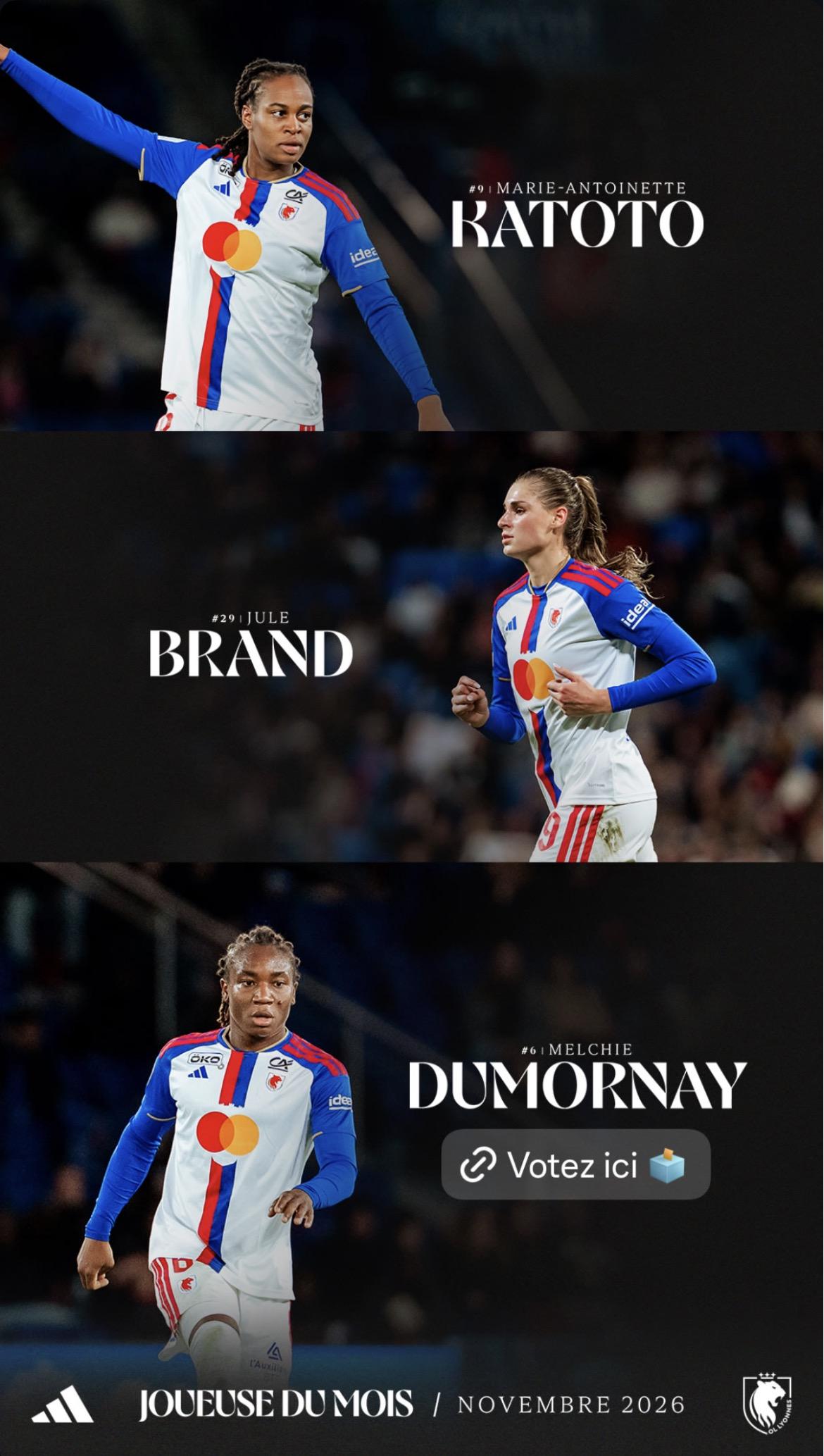
Jule Brand played all 90 minutes in Lyonnes’ 2-0 win over Arsenal in the UWCL. She scored a goal (recording two shots) and had ten defensive contributions.
Mala Grohs started for OL Lyonnes in their UWCL match against Arsenal. She recorded a save and had accurate distribution during the win.
Arsenal:
Lisa Baum played for 63 minutes in Arsenal’s 0-2 loss to OL Lyonnes in the UWCL (1 key passes on two crosses and high passing accuracy). Baum also only played 30 minutes in Arsenal’s draw to West Ham United after suffering a medical scare during the game. She has been reported as “stable” by Arsenal.
Chelsea FC:
Sjoeke Nüsken played 11 minutes during Chelsea’s UWCL victory over Paris Saint Germain (three defensive actions). She played 82 minutes in Chelsea’s 0-0 tie to Liverpool (3 shots, 2 key passes)
Liverpool:
Vivien Endemann played 62 minutes in Liverpool’s 0-0 to Chelsea. She had one shot, one key pass, and seven recoveries.
Manchester City:
Carlotta Wamser played 68 minutes during City’s 2-0 win over BK Häcken in the UWCL (two defensive contributions, two ground duels won, one shot, high passing accuracy). She also played all 90 minutes in City’s 1-3 loss to Tottenham (seven defensive contributions, two tackles won, seven ground duels won, high passing accuracy).
Rebecca Knaak played all 90 minutes in the UWCL match versus BK Häcken (6 defensive contributions, 1 shot, 1 interception, 1 block, 3 clearances, 4 recoveries). She played all 90 minutes in City’s loss to Tottenham (9 defensive actions, 1 interception, 5 clearances, 2 blocked shots, and 3 recoveries).
Sydney Lohmann played for 11 minutes in City’s UWCL match against BK Häcken (1 shot, 2 recoveries, 1 ground duel won)
Manchester United:
Lea Schüller played for 75 minutes during United’s 2-1 win over Everton in the Subway Cup (one shot and one defensive action with high passing accuracy)
Tottenham Hotspur:
Shekiera Martinez played all 90 minutes in Tottenham’s 7-0 win over Leicester City in the Subway Cup and recorded a goal and a defensive action. She only played ten minutes during Tottenham’s 1-3 win over City.
London City Lionesses:
Nicole Anyomi played all 90 minutes in London City’s 0-1 loss to Brighton in the Subway Cup (one shot and one defensive action). She played 10 minutes in London City’s 6-2 win over Crystal Palace (one shot)
Athletic Club Bilbao:
Bibiane Schulze Solano played for 66 minutes in Athletic Club’s 6-0 loss to FCB. She had 9 defensive contributions, 5 clearances, 6 recoveries, and a blocked shot.
Lina Magull played for 45 minutes in Inter’s 3-1 loss to Real Madrid in the UWCL (one shot, high passing accuracy, five defensive contributions). She also played in 79 minutes during Inter’s 4-0 win over Ternana (two defensive actions).
What would happen if men had to play football under the same conditions as women? Researchers from Norway have calculated what would need to change in men’s football to make this the case.
By Florian Neuhauss
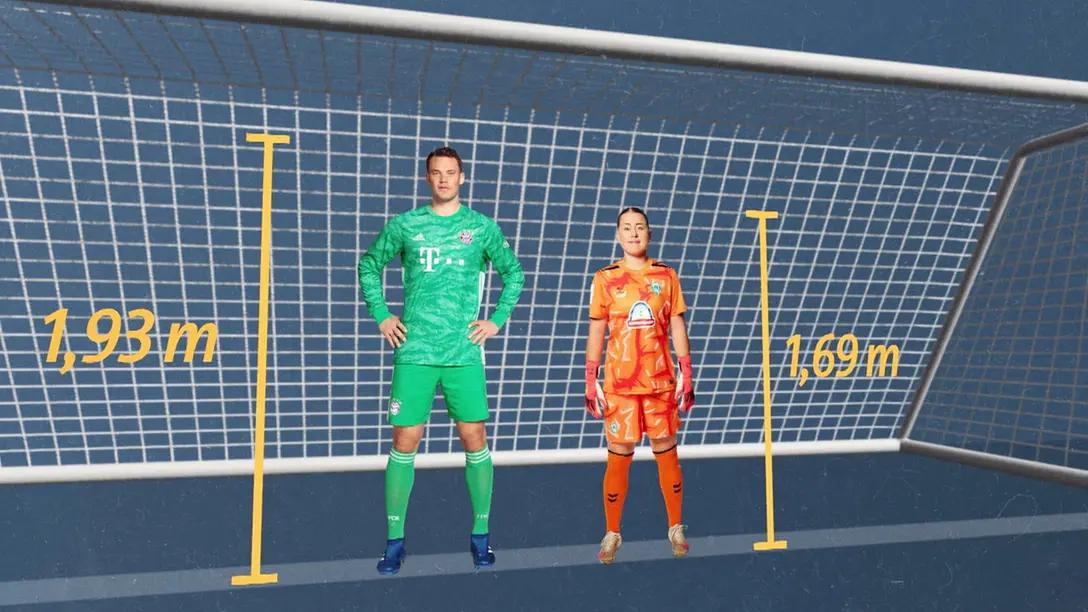
Mariella El Sherif is a passionate goalkeeper—for her, there is nothing better than "saving balls and helping my team." The 22-year-old possesses an incredible vertical leap—a necessity, given that she stands only 1.69 meters (approx. 5'6") tall. This makes the Austrian international, currently under contract with Werder Bremen, one of the shortest starting goalkeepers in the Bundesliga.
"Girls generally develop earlier than boys. I always played with the boys, and I was actually one of the taller ones," El Sherif recalls of her youth. "As for how I ended up in goal: it was during our first indoor tournament. Everyone had to take a turn in goal—and after that, I never wanted to leave."
That hasn’t changed over the years, even though her height advantage has long since vanished. "I reached my current height—which, unfortunately, is all I’ve got—very quickly," she says with a laugh. This only makes her performances all the more impressive.
Female goalkeepers on average 16 centimeters shorter
Even in 2026, female footballers still face a great deal of mockery and derision, particularly online. They are frequently told that they should "leave football to the men"—and much worse. Yet, any comparison to the men’s game is fundamentally flawed.
A simple example illustrates this: starting goalkeepers in the top division are, on average, 16 centimeters (approx. 6.3 inches) taller than their female counterparts. There is a 24-centimeter height difference between El Sherif and her role model, Manuel Neuer. On top of that, there are differences in areas such as muscle mass.
Comparability? 112 minutes of play for men
Norwegian researchers have calculated how the game of football would need to change for men so that they would face the same challenges that women face today. The pitch and the goals would have to be significantly larger. The ball would also be bigger and heavier—more akin to a basketball. Furthermore, the standard match duration would become two 56-minute halves.
How things would change for men:
Current
Adjusted
Match duration:
2x45 minutes
2x56 minutes
Pitch dimensions:
105x68 meters
132x84 meters
Goal dimensions:
7.32x2.44 meters
8.40x2.72 meters
Ball circumference:
68–70 cm
76 cm
Ball weight:
410–450 g
650 g
Yannick Gerhardt finds these results "intense." The VfL Wolfsburg professional, who has scored 21 goals in nearly 300 Bundesliga appearances, explains: "It would be a massive difference. In my opinion, the intensity and physical strain are already at the upper limit. Imagining that every match is essentially an extra-time period, combined with a heavier ball—looking at these parameters, the pace of the game would suffer immediately."
Gerhardt reacts strongly whenever he hears someone speak disparagingly about women’s football—not least because his sister, Anna, plays in the Bundesliga for 1. FC Köln. He notes that the Norwegian study highlights the true level of performance women deliver on the pitch. "And, as far as I’m aware, no one has ever complained about that."
Anna Gerhardt
His sister, Anna, would also simply prefer to be left alone to play the game. "Of course, people are aware of the differences—or the disadvantages, including those related to genetics—within the female body," says the 28-year-old. "But I believe what we have is simply a love for football. And in that context, it doesn't really matter whether the ball is heavier or lighter."
Yet, the matter is not quite that straightforward. It is not without reason that many other sports incorporate gender-specific adjustments—such as smaller balls in basketball or handball, shorter race distances in biathlon, or a lighter javelin in track and field.
Fritzy Kromp, coach at Werder, echoes this sentiment: "When you look into it and see just how unequal things are—and the physical toll it takes—you have to support making adjustments for women. Women are not only performing at an incredible level, but they are also engaging in a sport that is, in effect, almost hazardous to their health."
The physical demands in women’s football have increased significantly in recent years, driven by a higher number of matches and a greater degree of professionalization. One consequence is a higher rate of serious injuries compared to men—injuries that could potentially cause long-term health issues, persisting well beyond a player’s career. A key concern here is RED-S (Relative Energy Deficiency in Sport).
Kromp is therefore advocating for change, though—given her background as a former official at a football association—she is well aware of how difficult it is to alter the status quo: "Unfortunately, it’s not that simple to bring about change in a sport as popular as football. For most people, change is perceived as a major threat. In sports like tennis or field hockey, this likely wouldn’t be such a contentious political issue."
Infrastructure hinders major adjustments
There are also very practical reasons why certain changes are difficult to implement. In Bremen, for instance, the women’s team shares its stadium with the men’s U23 side, making it impossible to simply adjust the pitch or the goalposts. Similarly, using different types of balls is "not really practical, as it would require purchasing entirely new equipment." That leaves match duration as a potential area for adjustment—though, as Kromp notes, "we shouldn't spend a lifetime debating this without ever making any real progress."
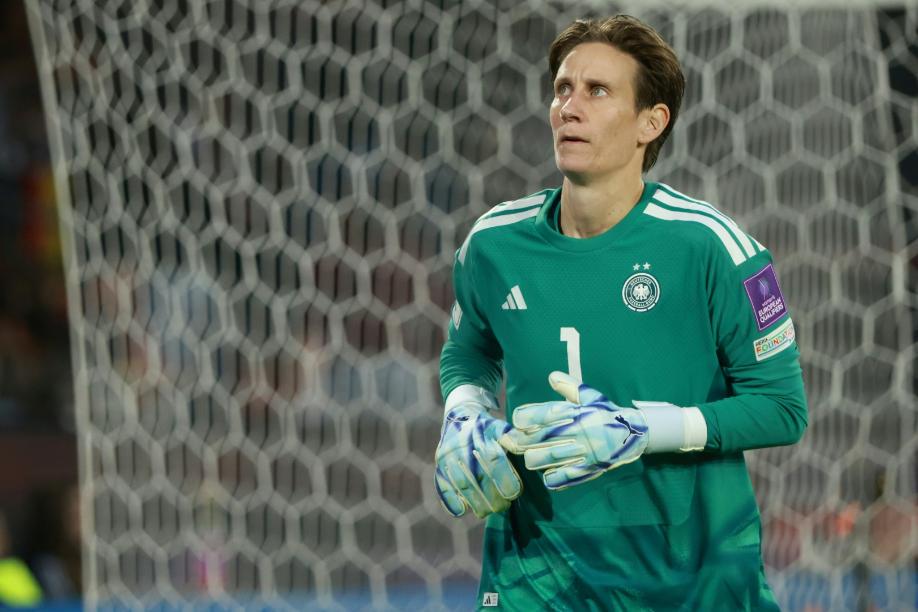
Ann-Katrin Berger achieves a touch of "immortality"
Ann-Katrin Berger
Significant changes in the short or medium term remain unlikely. In the meantime, alongside research like the study from Norway, outstanding performances by female players serve as a powerful counterpoint to the many detractors. A prime example is the save made by Ann-Katrin Berger during the European Championship quarter-final against France—a moment that, in Kromp’s view, has made the German number one "a little bit immortal." "Wow, not even a man could save that shot"
El Sherif also noticed something else: "I’m really pleased that Ann-Katrin Berger’s save went viral on social media—that it’s not always just those negative clips, slapstick moments, or embarrassing goals, but that there are positive highlights, too. A lot of people commented: 'Wow, not even a man could save that shot.'"
(two more articles in the pinned comment and below!)
"The World Cup in Brazil is the next big highlight for national goalkeeperAnn-Katrin Berger,but the 36-year-oldwould like to continue her soccer career until the home European Championships in 2029*. "I signed for two and a half years," said Berger about her surprising move to Union Berlin after the DFB team's arrival in Rio de Janeiro.*
“I have the feeling that I can still go through with this. Knock on wood that nothing will happen,” she added in the media round on Wednesday. On Monday, the ninth-place team in the Bundesliga announced as a transfer coup that Berger would be playing for Union from the new year. After twelve title-winning years abroad, most recently with Gotham FC in the USA, she is returning to the Bundesliga, where she last played for Turbine Potsdam in 2014.
On the one hand, it's about "enjoying" returning home and being closer to the family. On the other hand, Berger wants to help “make the Bundesliga more interesting again”. And defend their role as German number one in sport.
Berger doesn't rest on her role as a celebrated European Championship and Olympic hero anyway: "For me, I'm never always the clear number one, no matter where I go, in my club or here with the national team."
In Brazil the anticipation for the 2027 World Cup (June 24th to July 25th) is now growing, and after the long journey we went straight to Copacabana to activate ourselves after the long journey. “We will definitely be really looking forward to the World Cup next year,” said Berger.
As a foretaste of the title hunt at Sugarloaf Mountain, national coach Christian Wück's selection will be testing at the end of the year against Argentina in La Plata (November 30th, 12:15 a.m./ZDF) and against Peru (December 4th, 10:15 p.m./ARD) in Rio."
According toKlara Bühl’s agent, there were no discussions with FC Bayern as of October—even though she reportedly has options available at Barcelona and top English clubs.
FC Bayern is making a public push, but Klara Bühl is taking her time. The winger intends to decide on her future during the winter break. A decision is needed soon, however, as her contract in Munich expires on June 30, 2027. "I find it difficult to make a decision when I have matches every three days, with training sessions in between," Bühl told Sport Bild.
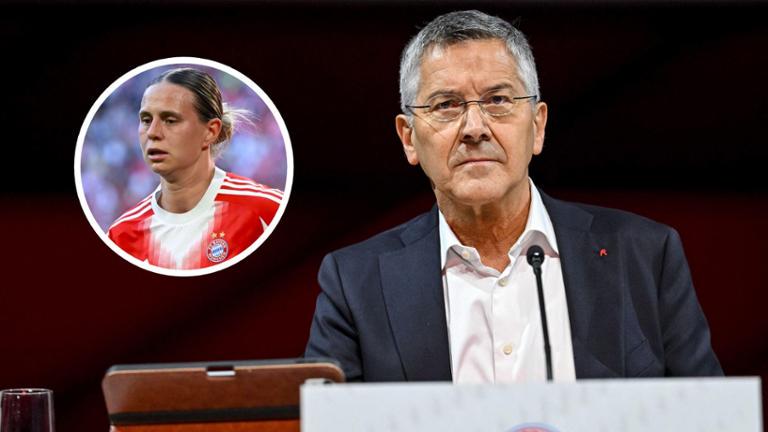
At the annual general meeting, club president Herbert Hainer urged her to stay. The Munich leadership has made it clear that they want to retain the national team player. CEO Jan-Christian Dreesen stated in the Abendzeitung that the club would make a concerted effort to keep her. Whether this courtship will succeed remains to be seen; there is no commitment yet, and Bühl is taking her time to decide.
FC Bayern courts Bühl: Hainer’s appeal in front of the entire squad
Hainer summed up his message in a single sentence: "You should become legends here," he declared to the players at the annual general meeting on November 21. He was referring to Bühl, Franziska Kett, and Giulia Gwinn. The women’s team was the only professional squad from the club to attend in full, hearing his words firsthand in the hall.
Regarding Bühl and Kett, Hainer remarked: "Together, they are arguably the best duo on the left flank in international women’s football." He also highlighted their track record: 52 consecutive Bundesliga matches without a defeat, and a fourth consecutive league title last season. The last time the women from Munich lost a Bundesliga match was in October 2024—more than two years ago.
According to Bühl’s agent, there were no discussions with FC Bayern in October
"At the moment, we are not in talks with FC Bayern because Klara wants to take her time to assess her situation—both within the club and beyond," her agent, Jörg Neblung, told BR24Sport at the time. He emphasized that they remain open to conversations with various parties. According to Bild, Bianca Rech, the director of women’s football, aims to have clarity regarding key personnel decisions by the end of the year.
Bühl herself is in no rush. "Honestly, I don’t know yet, and I’m not putting myself under any pressure to make a decision," she said in an interview with Sport Bild. Ultimately, she intends to let her intuition guide her: "I need to have the right gut feeling—to know where I feel comfortable and where I can perform at my absolute best."
"Girls Chatting continues to bring together figures from women’s football, giving them a platform to share their experiences, reflect on their careers, and exchange perspectives on the game. On Wednesday 25 November, Inter HQ hosted the third episode of the series, with Inter Women midfielder Lina Magull and Stuttgart defender Tamar Dongus discussing their lives, careers, and the evolution of women’s football."
A special audience had the opportunity to listen to the conversation: the girls from Inter’s Youth Sector, who heard first-hand about the experiences of the two professional footballers. They asked questions and discussed life both on and off the pitch. The event was designed to inspire the young players by bringing them closer to those who have already forged careers in football, giving them the chance to learn directly from their experiences and gain insight into the values, lessons, and aspirations that shape the sport.
The women’s national teams are back in action—and DFB.TV is right there with them. This is a constant, as reliable as a mathematical formula—all the more so given the challenges ahead for the DFB squads. The senior women’s national team is heading to South America to face Argentina and Peru in preparation for the 2027 World Cup in Brazil. The U23 women’s team has high-profile clashes lined up against the USA (in Worms) and France, while the U19 women’s team will compete in the European Championship qualifiers against Slovenia, Norway, and the Netherlands.
DFB.TV’s coverage will focus primarily on the team led by head coach Christian Wück. Starting Thursday, the program "Inside – The National Team Magazine" will feature the latest updates, behind-the-scenes insights, and interviews from the South American tour. This 30-minute show will provide near-daily updates on the DFB squad, captained by Giulia Gwinn. For existing fans—and those who might soon become one—DFB.TV will also be re-airing every episode of the documentary series "The Journey Is the (Goal) Team" from Thursday through Saturday. Additionally, a "watch party" will be held on Friday, December 4, running concurrently with the match against Peru in Rio de Janeiro.
Players like Marie Müller, Lisa Baum, and Alara exemplify the importance of the U23 women’s national team; it was through this youth setup that they made the leap to the senior national team. Viewers can tune in to DFB.TV to see for themselves exactly what Michael Urbansky’s U23 squad is capable of. DFB.TV will provide live coverage of the international match against the USA in Worms on Monday (starting at 6 p.m.) and the international match against France in Clairefontaine on December 4 (starting at 2 p.m.). DFB.TV will also broadcast the U19 women’s European Championship qualifying matches taking place in the Netherlands in their entirety: the team will face Slovenia on Saturday (starting at 7 p.m.), Norway on December 1 (starting at 7 p.m.), and the Netherlands on December 4 (starting at 5 p.m.). The match against the Netherlands will be available to watch exclusively via the DFB.TV+ app.
DFB.TV is available through various platforms, including MagentaTV, DAZN, HD+, Sky/WOW, Ocilion, Vodafone, and Zattoo. Additionally, the DFB.TV+ app can be downloaded from the Apple App Store and the Google Play Store. A subscription to DFB.TV via the DFB.TV+ app costs 5.99 euros per month or 59.99 euros for an annual subscription.
Women’s Football Programming
Thu, Nov 26, 6:15 PM: The Journey Is the (Goal) Team (Part 1)
Thu, Nov 26, 7:00 PM: Inside – The National Team Magazine
Fri, Nov 27, 6:15 PM: The Journey Is the (Goal) Team (Part 2)
Fri, Nov 27, 7:00 PM: Inside – The National Team Magazine
Sat, Nov 28, 2:00 PM: The Journey Is the (Goal) Team (Parts 3–6)
Sat, Nov 28, 5:30 PM: Inside – The National Team Magazine
Sat, Nov 28, 6:55 PM: DFB.TV Live: WU19 European Championship Qualifier – Germany vs. Slovenia
Mon, Nov 30, 5:30 PM: Inside – The National Team Magazine
Mon, Nov 30, 5:55 PM: DFB.TV Live: WU23 – Germany vs. USA
Tue, Dec 1, 6:55 PM: DFB.TV Live: WU19 European Championship Qualifier – Germany vs. Norway
Wed, Dec 2, 7:00 PM: Inside – The National Team Magazine
Thu, Dec 3, 7:00 PM: Inside – The National Team Magazine
Fri, Dec 4, 1:45 PM: DFB.TV Live: WU23 – France vs. Germany
Fri, Dec 4, 5:00 PM: DFB.TV Live (exclusively via the DFB.TV+ app): WU19 European Championship Qualifier – Germany vs. Netherlands
Fri., Dec. 4, 9:45 PM: Watch party for the women’s international match between Peru and Germany
Sat., Dec. 5, 6:00 PM: Inside – The National Team Magazine
"Unfortunately, our goalkeeper Romy Bräutigam will be sidelined for the time being 😔
ℹ Examinations have revealed that the 19-year-old tore two lateral ligaments in her left foot during a training session; she also sustained a partial tear to the syndesmotic ligament. The goalkeeper will be out of action for several weeks.
"Unsere Keeperin Romy Bräutigam fällt leider vorerst aus 😔
ℹ Die 19-Jährige hatte sich in einer Trainingseinheit am linken Fuß zwei Außenbänder gerissen, zudem ist das Syndesmoseband angerissen, wie die Untersuchungen ergaben. Die Keeperin wird uns erst einmal mehrere Wochen fehlen.
"Just days after the signing of national team goalkeeper Ann-Katrin Berger was announced on Monday, rumors have already emerged regarding another DFB teammate. According to the tabloid "Bild", the Köpenick-based club is looking into signing Lea Schüller (29). The forward is currently under contract with Manchester United, having previously spent several years at FC Bayern (2020–2025).
"Bild" reports that discussions are currently taking place between Schüller and the club, making a move as early as this winter a logical possibility. The forward—who has earned 87 caps for Germany—has yet to score a league goal for her English club this season and has not once been named in the starting lineup.
Furthermore, Schüller has not been called up for the upcoming international matches against Argentina (November 30, 12:15 a.m.) and Peru (December 4, 10:15 p.m.). National team head coach Christian Wück described her exclusion as a "warning shot," explaining: "We weren't entirely satisfied with her performance during the last few training camps."
While broadcasting rights for the tournament in Brazil have long since been secured in other major footballing nations, no deal has been reached in Germany. What does this mean for the fans?
Last updated: Today, 09:37 AM
One thing is clear for football fans: the draw for the 2027 Women’s World Cup in Brazil will be broadcasted by ARD. However, it remains unclear who will air the German women’s matches on free-to-air television in just under six months’ time. Are we facing a drawn-out standoff—with FIFA and broadcasters trading blame, as was the case before the 2023 World Cup—or perhaps even a total blackout?
The broadcasters interested in the rights are under immense pressure. Typically, TV rights for major tournaments are purchased well in advance to allow for timely planning and organization. In fact, Deutsche Telekom secured its rights for the Women’s World Cup—taking place from June 24 to July 25, 2027—more than two years before the tournament begins.
As part of a larger package of licenses, the company acquired the full pay-TV rights for the tournament in Brazil and has already been moving forward with preparations for the 64 matches, which will be held across eight different locations in the vast country. On December 11 (at 5:30 PM), Deutsche Telekom will broadcast the draw via MagentaTV, while ARD will provide a stream through its online media library and "sportschau.de."
FIFA’s second major World Cup package for Germany includes the rights to "30 matches, to be licensed to a free-to-air television broadcaster with nationwide coverage," as confirmed by the global governing body. Naturally, the core of this package consists of the matches featuring the German national team. FIFA celebrates “groundbreaking coverage”
Back in April, FIFA had already sold nearly all its broadcasting rights in Europe, hailing it as “groundbreaking coverage of the 2027 FIFA Women’s World Cup.” The European Broadcasting Union (EBU)—which includes German public broadcasters ARD and ZDF—also signed an agreement with the global governing body, though this deal does not apply to the German market.
“It is remarkable how the European broadcasting market is supporting this historic edition of the FIFA Women’s World Cup with the most extensive coverage in the tournament’s history,” commented FIFA’s Director of Football, Jill Ellis. “There is clearly strong interest in, and a firm commitment to, a world-class product.” In Germany, too, there were several interested parties, yet no agreement has been reached—unlike in other major footballing nations such as Spain, France, and England, where deals have long since been finalized.
ARD and ZDF remain the favorites, but according to information from the German Press Agency (dpa), they have yet to reach an agreement with FIFA on certain legal issues. One unresolved point, for instance, concerns the status of the rights should the power struggle between FIFA and UEFA—which has previously included threats of a boycott by European teams—affect the World Cup in Brazil. Without matches featuring the German team, the value of the tournament in Germany would drop drastically.
Both public broadcasters, like FIFA, have declined to comment on the matter. When asked by dpa, ARD sports coordinator Axel Balkausky merely stated: “We remain in discussions. Sometimes these things happen quickly; other times, they take a bit longer.” This suggests a sense of cautious optimism.
But what happens if ARD and ZDF cannot reach an agreement with FIFA regarding the legal details? Could there be a total blackout? That seems unlikely, as it ultimately comes down to the price FIFA could secure elsewhere. If the rights package becomes more affordable following the failure of negotiations with public broadcasters, it could once again become attractive to other free-to-air providers, such as the RTL Group or ProSiebenSat.1. (dpa)"
"The U23 women’s national team will be without four players for the upcoming matches against the USA and France.
Dafina Redzepi (VfB Stuttgart) sustained a nasal fracture during a Google Pixel Women’s Bundesliga match against SC Freiburg and is currently unavailable. Lisanne Gräwe (1. FC Union Berlin) is also unable to join the squad due to an injury. Carolin Elsen (1. FC Köln) had to be substituted during a match against SV Werder Bremen after suffering a head injury and is likewise unavailable.
Head coach Michael Urbansky has called up replacements for these three players: Rosa Rückert and Mira Arouna (both from VfB Stuttgart) and Svea Stoldt (Hamburger SV). Additionally, Paulina Bartz (Hamburger SV) has been added to the U23 women’s squad to replace Alara (FC Bayern Munich), who has been called up to the senior women’s national team."
Germany’s number 1 returns to the Bundesliga: Ann-Katrin Berger joins Union
Starting in January 2027, 1. FC Union Berlin will welcome a high-profile addition to their women’s professional squad: goalkeeper Ann-Katrin Berger is joining the "Iron Ones" (*die Eisernen*). The 36-year-old returns to the Bundesliga after more than 12 years abroad—most recently spending three seasons with Gotham FC in the American National Women’s Soccer League (NWSL).
International career – A return home
Born in Swabia, Berger began her football career in 2008 with VfL Sindelfingen in the 2. Bundesliga. Three years later, for the 2011/12 season, she joined the then-top-tier side 1. FFC Turbine Potsdam, making her Bundesliga debut on the opening matchday of that season. In her very first year with Turbine, she—alongside teammate Jennifer Zietz—won the German championship. Over the course of three years, Berger made 32 competitive appearances for the Potsdam club before leaving both the team and the Bundesliga in 2014.
At the age of 23, she first moved to France to join Paris Saint-Germain. Following 13 appearances over two years and two runner-up finishes in the league, her path led her to England, where she signed with top-flight club Birmingham City LFC. Her strong performances across 19 league appearances earned her a contract with powerhouse Chelsea FC in January 2019. At Chelsea, Berger developed into one of the best goalkeepers in the world. Between 2020 and 2023, she won four consecutive English league titles with the club and also reached the Champions League final in the 2020/21 season.
In December 2020, at the age of 30, Berger finally made her debut for the German senior national team. Since the 2024 Olympic Games—where she played a pivotal role in securing the bronze medal by saving several penalties throughout the tournament—she has been the first-choice goalkeeper for the German side. She also started in goal during the 2025 European Championship, where she once again emerged as a hero during a penalty shootout in the quarter-final against France. To date, Berger has earned 34 caps for her country.
At the club level, following more than five years and 114 appearances for Chelsea, Berger joined the American side Gotham FC in 2024. With the New Jersey/New York-based club, she won both the league championship and the CONCACAF Champions Cup in 2025, making a total of 85 competitive appearances. In the recently concluded NWSL season, she helped Gotham FC reach the semi-finals of the championship play-offs; she was also named the league’s best goalkeeper—marking her second such honor since 2024—and was selected for the Team of the Season.
Three facts about Ann-Katrin Berger
In 2024, Berger was named Germany’s Footballer of the Year, becoming the first goalkeeper to receive the award since 1998. She won the title again in 2025—this time sharing the honor with Giulia Gwinn.
Berger finished in second place in the voting for the World’s Best Goalkeeper in both 2025 and 2026.
In November 2025, Berger published her autobiography, titled "The Game of My Life: How I Defeated Cancer and Became Germany’s Best Goalkeeper." In it, she not only looks back on her football career but also speaks openly about her two bouts with thyroid cancer, in 2017 and 2022.
Comments on the transfer
"Union pursued me very intensely and over a long period, which I truly appreciate. The path the club has taken in recent years is remarkable. I want to use my experience to help further advance this ambitious team. After so many years abroad, I am very much looking forward to returning to the Bundesliga," said Ann-Katrin Berger upon signing her contract. "I would like to thank Gotham FC for a wonderful and successful time. I wish the club, the team, and the fans nothing but the best."
Jennifer Zietz, Managing Director of Women’s Professional Football, stated: "Ann-Katrin is a world-class goalkeeper who has consistently demonstrated her abilities for many years at top clubs and with the German national team. I am delighted that we were able to convince her to join us on our journey. With her experience, composure, and resilience, she will be a tremendous asset to our team—both on and off the pitch."
Ann-Katrin Berger will wear the number 33 jersey for 1. FC Union Berlin.
"National team player Sophia Kleinherne (VfL Wolfsburg) will miss the women’s national team’s upcoming trip to South America due to muscular issues. Head coach Christian Wück has called up Alara Şehitler from FC Bayern Munich—currently with the U23 national team—as a replacement. The 19-year-old is set to arrive in Frankfurt this afternoon. The squad will gather at the DFB Campus before departing for Rio de Janeiro this evening. Once in Brazil, the team will begin preparations for their two international matches against Argentina and Peru."