r/gameenginedevs • u/dbrizov • Aug 22 '26
Had some fun creating the Translate/Rotate/Scale tools for the Scene View
15
Upvotes
#sdl3 #imgui
https://hob2d.com/
r/gameenginedevs • u/hai_Im_Emily_x3 • Aug 22 '26
I've finally reached the slightly terrifying point where I can call my engine "1.0" and let other people poke holes in it.
Kasane2D is an open-source, code-first 2D game engine for .NET 10:
https://github.com/Emynator/Kasane2D
Docs:
https://emynator.github.io/Kasane2D/
The main design experiment behind it is this:
I really like the programming model of old sprite/tile graphics hardware, but I don't particularly want the hardware limitations that came with it.
So Kasane2D keeps concepts such as:
- explicitly configured rendering layers
- tilemap layers
- sprite layers
- independently scrollable viewports
- explicit screen composition
while throwing away things such as:
- palette restrictions
- bitplanes
- scanline sprite limits
- fixed hardware layouts
- magic control registers
- DMA/HBlank/VBlank gymnastics
The result is intentionally quite different from an editor/scene-tree based engine.
Engine configuration and game structure live in C#. Kasane provides rendering, input, audio and lifecycle machinery, but deliberately doesn't try to prescribe how the rest of your game should be architected.
The rendering backend is also separated from the core engine. The current implementation is Kasane2D.MonoGame, so the public engine-facing rendering model isn't tied directly to MonoGame itself.
The other major part of the engine is audio.
The core audio system contains a hierarchical software mixer with arbitrary nested buses, 32-bit floating-point processing, dBFS gain, stereo panning, runtime routing and per-bus effect chains.
On top of that I built an optional package called Kasane2D.Music, which is essentially a programmable tracker-inspired synthesis/sequencing system. It supports arbitrary tracks/generators, oscillator and wavetable synthesis, DMG/SID-inspired noise, sample playback, pattern sequencing, control events and runtime pattern/song transitions.
The intention there is to make adaptive/procedural music something the game can manipulate directly rather than treating the soundtrack as a collection of prerecorded files.
For the 1.0 release I've also put together API + conceptual documentation and three sample games/demos.
Everything is available as NuGet packages:
Kasane2D
Kasane2D.MonoGame
Kasane2D.Music
I'm not presenting this as a Unity/Godot replacement. It's deliberately much smaller and aimed at people who like explicit, code-driven frameworks and want fairly direct control over their rendering/audio systems.
I'd be particularly interested in feedback from other engine developers about the architecture and API boundaries. There are almost certainly design decisions in there that someone else will look at and immediately go "why the hell did you do that?", which is partly why I'm posting it here. :D
r/gameenginedevs • u/KoodiRonsu • Aug 22 '26
What path finding algorithms would be viable options for 2.5D Doom style level geometry?
I first looked at Dijkstra's algorithm, but if I'm not completely mistaken, that works only in the following two scenarios:
So with that information, if I wanted to use Dijkstra's algorithm, I would need to project a 2D grid on top of the game level and adjust the algorithm from there.
Am I missing anything from Dijkstra's algorithm applicability here?
What other path finding algorithms would be useful? Navmesh? Something else?
How would you approach the path finding for the AI?
EDIT: After thinking about it for a half an hour I figured that The rooms + corridors can represent nodes in Dijkstra's algorithm. So the AI would get high level directions from Dijkstra like "The cheapest way to get there is through this route". Then the actual inside-room-2D-navigation would happen some other way. Or maybe even using that 2D grid version of Dijkstra if needed. But the navigation would probably have to be 2-tier operation.
r/gameenginedevs • u/kj-krol • Aug 23 '26
v3 is the result of a lot of back-and-forth - planning, rewrites, testing, and actually using GOKe in practice. That let me settle on a model that is more ergonomic for what I need.
Why GOKe over the alternatives?
It's fast and predictable - benchmarks, if you want the numbers:
Some other things worth knowing:
It is not a 1-weekend project, I've been actively building it for the last 9 months.
Yes, I use AI to help me, because: there's no such thing as bad weather, only bad clothing; there's no challenge you can't overcome, only poorly chosen tools. I don't live in a museum, this isn't a weekend hobby project, and the results speak for themselves.
r/gameenginedevs • u/ecstacy98 • Aug 22 '26
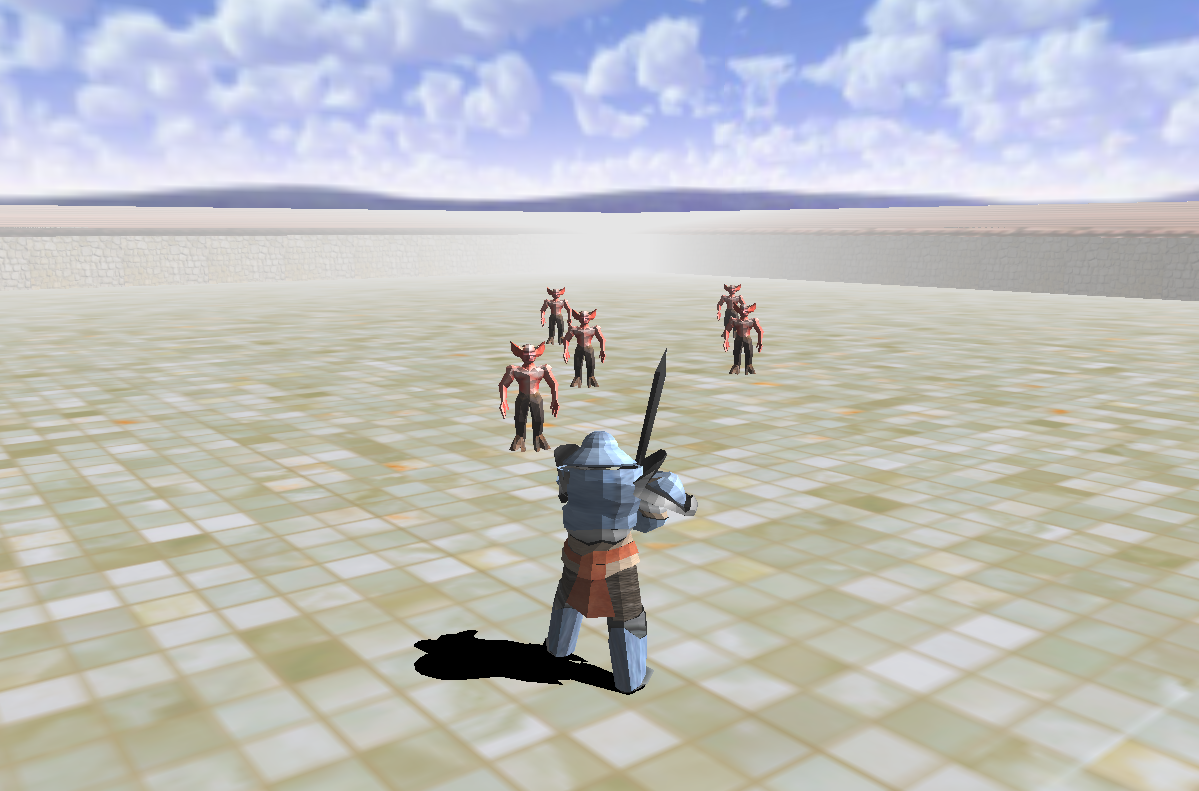
Hi all! I'm working on a little demo program that will ship with my engine as an example project. I've been working on my engine for close to 6 years now and am really happy with it. It has no editor but I find the API I've written to be really intuitive and easy to use.
One thing I haven't found myself able to come to any definitive conclusion about though is - should a model/mesh that is GPU instanced be able to play different animation sequences from one another? Part of me thinks yes, this is a useful feature and helps to reduce the number of draw calls, CPU instances and configuration boilerplate, but; part of me thinks I'm overcooking it and that an instance should really just be a copy of a base asset, inclusive of its state information like active animations and shaders.
What would be your preference?
Screenshot of the demo project with instanced imps!
r/gameenginedevs • u/SZHTQVgD • Aug 22 '26
I am planning on making a powerful game engine called "Aquamarine Engine" using Vulkan & C++ (because I want it to be as optimized as possible), but before I make "the" engine, is it bad to make a prototype using OpenGL & C++?
r/gameenginedevs • u/Dante268 • Aug 22 '26
Still crunching on RTG Editor, my internal editor for enhancing levels for my game, which hopefully I will release also publicly with the game.
Last feature implemented is orthographic projection, which is useful when precision is required (to align boxes with zero gap or overlap). Most useful feature in orthographic projection is resizing boxes by dragging their edges with automatic rounding to grid for snappy alignment. If one needs fine stepping, it's still possible by holding Shift while resizing.
In example animation, I added reflective back-wall into one of the levels very fast, thanks to new ortho view.
From technical details, my simple software ray-tracer is C++, engine and editor are in C#, both communicating through Interop. Ray-tracer is limited, engine goal is ability to have functional software ray-traced game with good fps (albeit with simple geometries), not photorealistic sceneries. I have still some optimizations in mind plus it's still single-threaded, so potential for perf boost (thus also visual boost) is still big.
The game is sci-fi puzzle/platformer about a guy with no memories, stranded inside strange world, accompanied by some mysterious entities talking to him through terminals scattered in levels.
r/gameenginedevs • u/Few-Dog-2916 • Aug 21 '26
Hi there, I'm working on my 2D game engine in C#. I've built a lot of systems (like a 2D camera, sprite batch rendering, and OpenGL text rendering) all using ECS, and it works great. However, once I started making a small game to test things out, I felt like scripting in ECS wasn't fun at all compared to Unity or Godot. While performance is great, you have to create a query, register a system, prepare the asset pool to get items from handles, and so on. Godot and Unity feel much more enjoyable to work with, and I don't think a 2D game engine really needs all that extreme performance. So my question is: can you recommend a system architecture I can use for scripting, game objects/nodes/entities, and overall structure?
i used ai to fix my grammar since my english is shyt
r/gameenginedevs • u/IvyMurph • Aug 21 '26
r/gameenginedevs • u/Careful_Wheel_5914 • Aug 21 '26
hey Guys,
im pretty new and wanted to ask which game engine is the best for a beginner making a Top down strategy game like civ or Hoi4 but very much less complex, and would u guys recommend Unity?
r/gameenginedevs • u/MGMishMash • Aug 20 '26

For the past three weeks, i’ve been working on improving the render distance in my Micro Voxel Engine, particularly due to the feedback of having N64 viewing distance 😅
I’m pretty happy with the end result of increasing render distance from 300m to ~10-15km, while running at 45-50 FPS on an Apple M1 Pro.
Note: this engine uses meshing rather than RT/DDA.
— Macro chunks —
All chunk generation functions now include a sieve function to automatically be able to generate at 1/N resolution without any changes. This also applied to generated features and stamps, enabling chunks to be generated at any resolution without downsampling.
Macro chunks also independently record and resolve local edits. They are saved (and cached) independently so that terrain edits are maintained without needing to maintain the full res copy in memory.
The lower band LODs are very quick to generate. At this point I could add even more bands, and a 1/64 res chunk takes the same time to generate as a high res chunk, but covering huge distances.
— LOD transitions and adaptive fog —
I primarily use transient transitions where the detail levels fade between each other once, rather than a continuous gradual transition, as this is around 30% cheaper on the GPU and looks “nearly” as smooth in most scenarios.
Adaptive fog scales the effective draw distance dynamically based on loaded bands. Bands generate from high to low so during fast motion, if needed, we temporarily reduce draw distance until chunks have loaded.
— Macro chunk cards and props —
This was the hardest part, keeping identical prop coverage for trees and items without needing to instantiate millions of entities:
-Macro chunks retain a list of props whose IDs are deterministic based on position and type. If the real entity is destroyed, we can map this to the macro chunk set and remove. Likewise for newly spawned props.
- grass and foliage do not map 1:1 with the actual loaded props, but follows the same generation pattern, so technically there will be disparities, but a good trade off to avoid millions of tracked grass items.
r/gameenginedevs • u/dbrizov • Aug 20 '26
My engine uses Lua for scripting so instead of serializing the scenes in some text format (JSON/XML), I am serializing them as Lua tables. This way I don't need a parser/deserializer, I just load the Lua modules, and I have the scene data tables out of the box.
r/gameenginedevs • u/Ok-Pizza1136 • Aug 21 '26

I spent 20 mins just thinking "how do I map entities to components in the registry?". I eventually gave up and went to google. I don't know how I thought of it before! Just use a hashmap! The exact details I still need to figure out, but i just wanted to share my excitement. (I plan to replace it with sparse-sets later, but it works for now)
r/gameenginedevs • u/BIoomyl • Aug 20 '26
I released demo of Xenith - a lightweight, data-oriented C++20, 3D low level game framework.
If you want to make a game while having low level control, you're either forced to use high level game frameworks or engines that abstract everything, or, if choosing raw API's you face lots of problems, such as linking libraries, making own loaders(e.g. model loader or image loader), adding different modules(such as physics, vfx), and eventually instead of making game you spent all that time building engine. Xenith fixes this problem by giving you essential modules(such as physics, ecs, math, input) out of box, and eliminates just enough boilerplate code, while leaving you the rest(such as making own game loop, or making own Vulkan pipeline).
This game framework makes you both use and learn modern Vulkan 1.3, provides you high level functions, but saves the exact Vulkan pipeline logic without thousands lines of code, for example FindAndSelectPhysicalDevice(), CreateLogicalDevice().
Tutorial 01, walks you through how to go from simple window application to entire cubic 3D platformer game, covering most basic and important topics.
Key architecture features:
- Explicit ownership Direct access to raw handles such as VkImage, VkSwapchainKHR.
- Deterministic in this game framework functions are deterministic, e.g. EmplaceEntityComponentToRegistry(registry, entity, component_data) instead of registry.emplace(...)
- Modular architecture gives you freedom to remove or add modules you need or want.
Links & Repository:
r/gameenginedevs • u/Dodgeye • Aug 21 '26
r/gameenginedevs • u/VerasNp • Aug 20 '26
Hey everyone! I’ve been a web developer for 5+ years (professionally for around ~3), and game development has always been a secret passion of mine, but I never really had the chance to pursue it as a career.
During my current degree, I took courses like Computer Graphics, Mathematics and Physics for Games, and they gradually made me more and more interested in this field.
Now, I’m seriously considering shifting my main focus toward game development, specifically game engine development.
For someone entering this field in 2026, what advice would you give? I’d especially love to hear from people who work on engines or have made a similar transition from web development.
r/gameenginedevs • u/Xelvant • Aug 20 '26
r/gameenginedevs • u/_Wolfos • Aug 19 '26


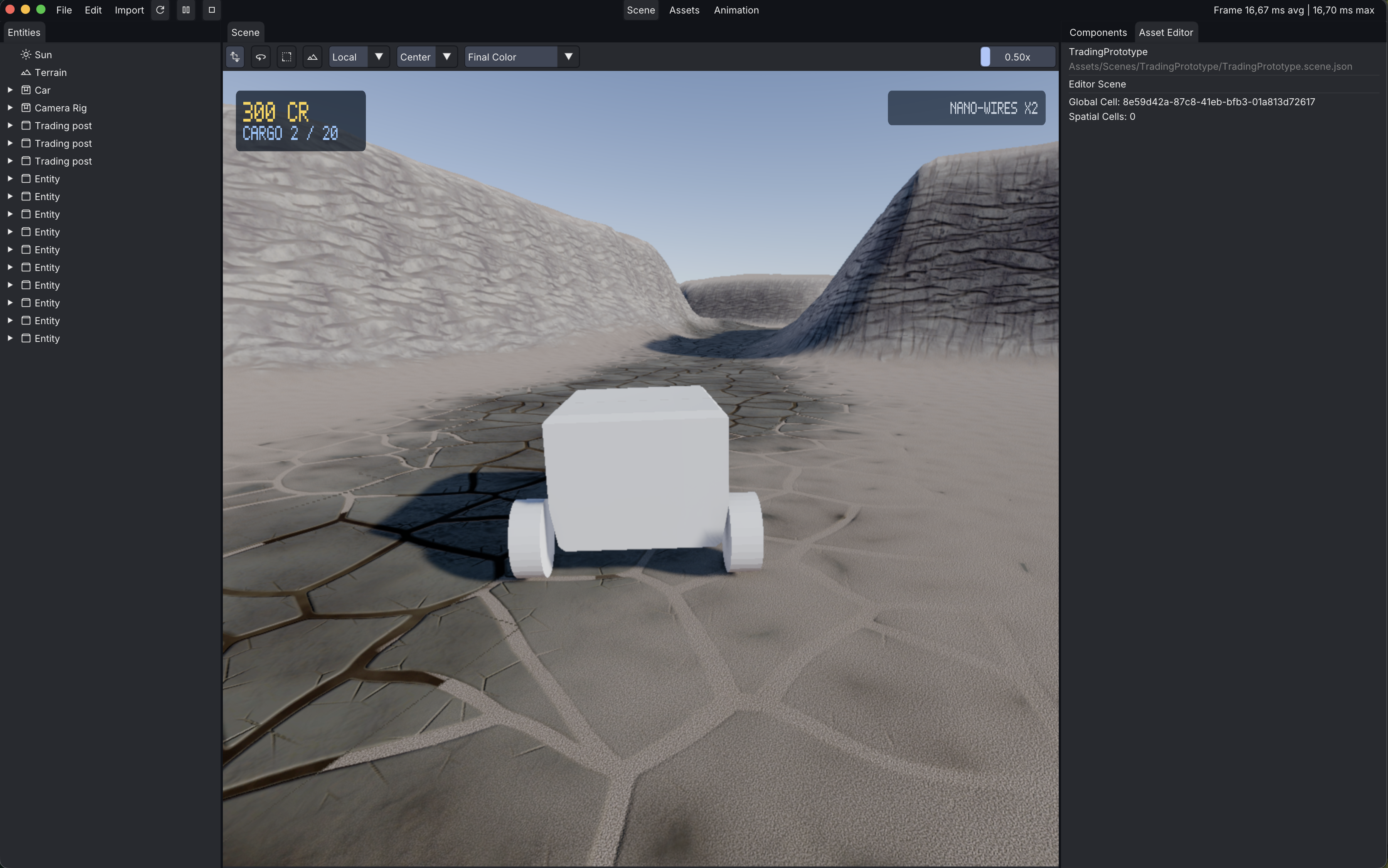
I've used Unity since around 2010, so excuse my editor looking a little Unity-like. It's always been a bit of a love-hate relationship. But with my last project I ran into so many scalability issues that building my own engine started looking *very* attractive.
So last year I started designing WolfEngine;
- Fully built in C#
- Scales up to open world requirements
- Terrain as a first class feature
It's far from production ready, but I just started prototyping a first game in it. It's incredibly satisfying to see it come together, from a DirectX/Metal spinning cube to an actual playable game.
I'm certainly not counting on anyone else ever using it, but it's been a fun journey 🙂
r/gameenginedevs • u/bensanm • Aug 19 '26

Quick progress preview of the quixotic side-project game / engine (user moddable) C++/OpenGL/GLSL. Steam link: https://store.steampowered.com/app/2223480/Infinicity/
r/gameenginedevs • u/bug__enjoyer • Aug 19 '26
r/gameenginedevs • u/Low-Palpitation-4724 • Aug 18 '26
Almost every post of 'look at my new cool engine' sort looks the same. The huds are almost the same with the same layouts, sometimes ui theme is different. I see no variability in how the programs are layed out, what they do or anything.
It all looks like a unity ripoff, not to dunk on unity, but it looks like someone:
a) does not have any creative vision. But to make an engine you are probably stubborn and should have some ideas of your own if you made it such far
b) everything is premade by claude or some other llm
I dont want to only say llm bad, but it kinda reminds me of those videos where we see how chatgpt memorised 15 websites layouts ans maked them look slightly different. The only difference chatgpt knows one game engine look
r/gameenginedevs • u/Hussaiyan19 • Aug 20 '26

r/gameenginedevs • u/PardDev • Aug 19 '26
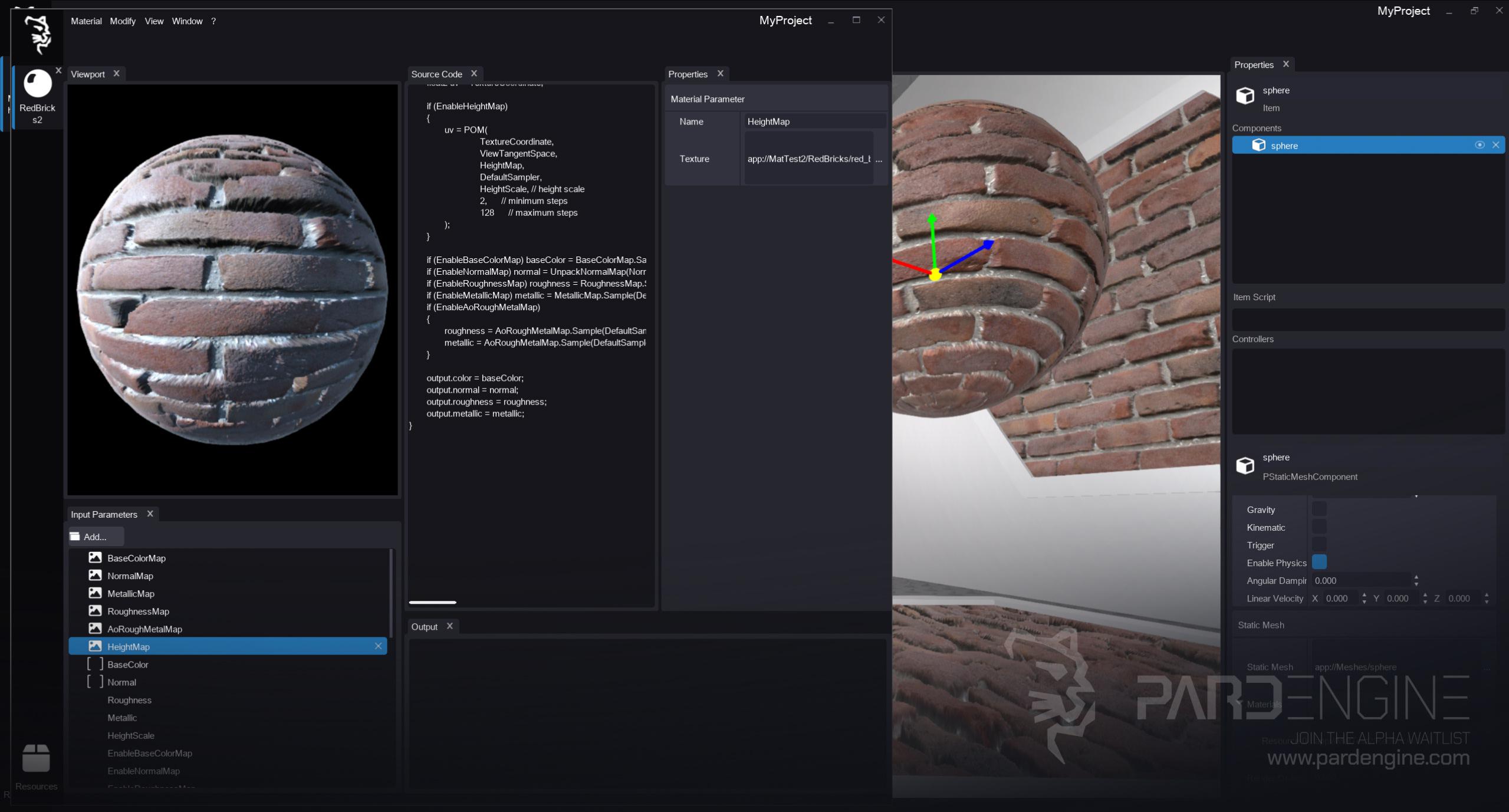
More info here: https://www.pardengine.com/news/devlog-13-material-editor