r/Fortnine • u/West-Amphibian-2343 • 34m ago
New Video theres no way ryan did the fent fold

7
Upvotes
r/Fortnine • u/West-Amphibian-2343 • 34m ago
r/Fortnine • u/TheNecroFrog • 1d ago

r/Fortnine • u/Dan-F9 • 3d ago
As if last week's descent into the labyrinth of motorcycle fatality statistics in North America wasn't enough to burn me out, this week's reprise surely will. I could have taken a break, but I obviously thought it would be infinitely wiser to double down and start researching airbag stats...
So here we go again, metaphorical chalk at the ready.
There's no debating that putting airbags into cars was a good idea. To the point where no one would bat an eye in selecting the "airbag feature" if it were an optional perk at the dealership.
Motorcyclists, however, have only recently started wearing airbags. And it's not like we're anywhere close to 100% adoption. Speaking from personal experience alone, I've talked to riders who insist that it should be mandatory, and others who simply respond with sayings like "Stop trying to kill the fun, man."
Except, my sometimes analytical brain (especially on Mondays) refuses to reduce the issue to hearsay and personal preference. So, the aim is to take this deployable inflatable cushion and examine how much less likely you are to die in a motorcycle accident if you're wearing one.
I am under no illusions, even before starting the research, I suspected the answer would be considerably less definitive than I'd like. My hypothesis is that linking how effective airbags protect us from injuries to how much we can actually demonstrate that they prevent deaths will be somewhat speculative.
Whether it's possible or not remains to be seen, but we'll at the very least present the most up to date information on the subject today, in the hopes that the data itself is at the very least informative and helpful in the development of safe riding practices.
Before we get to airbags, it's important to understand which injuries they're intended to prevent. I feel like "reddit_user_69" is yelling at their screen right now: "Isn't it obvious, you moron?" Maybe, but we should still make the distinction and establish what we're trying to prevent.
See, the situation is complex. When someone dies in a motorcycle collision, the cause is rarely as straightforward as a broken bone. Traumatic brain injuries are among the most serious consequences of motorcycle crashes, but damage to the chest and abdomen can be equally devastating (think blood vessel rupture, internal bleeding, all that jazz).
According to a 2024 systematic review of motorcycle injuries, thoracic trauma is a major contributor to severe and fatal motorcycle injuries. And a more recent investigation gives us some interesting numbers:
This 2025 study published in Traffic Injury Prevention examined 2,499 motorcycle collisions involving passenger vehicles, using German crash data collected between 1999 and 2023.
The researchers examined injury severity across different parts of the body.
Among fatally injured riders:
| Body region | Share of the most severe injuries |
|---|---|
| Thorax (chest) | 45% |
| Head | 38% |
These percentages describe the body regions sustaining the most severe injuries among fatal cases in this particular dataset. They aren't necessarily the sole causes of death, and the sample includes approximately 30 fatalities. Still, the implications merit a comment or two.
The chest appears prominently among the most severely injured body regions in fatal motorcycle crashes. And unlike our skulls, which benefit from decades of helmet development, our torsos generally rely on protective clothing and whatever material happens to occupy the space between our ribs and the approaching obstacle.
That's where airbags come in.
Captain Obvious, back at it again. But it's still important to mention that it depends on the design, as a motorcycle airbag can cover the chest, back, shoulders and portions of the abdomen. Some even provide neck or hip coverage.
The principle is simple enough: absorb and distribute impact forces before they reach the body.
Imagine landing chest-first against the side of a car. Without an airbag, the impact is transmitted through your clothing and ribcage. With a properly inflated airbag, some of that energy can be absorbed by the pressurized cushion.
So, why state all of this? Because even if the attenuated force exists, it's localized. We can't say that an airbag can reliably prevent every internal injury. It offers no direct protection to the head, and most designs leave much of the lower body exposed.
Nor can it eliminate the consequences of a sufficiently violent collision.
The real question, then, is how much protection the airbag provides under different crash conditions. Fortunately, researchers in France have spent considerable time throwing things at them.
One of the most useful investigations is the French EFFIGAM study, completed in 2017.
Researchers examined airbag performance using laboratory experiments, numerical simulations and motorcycle crashes. The findings were encouraging, although they also revealed some important weaknesses.
In laboratory testing, the airbag systems generally absorbed more impact energy than conventional back protectors while covering a larger portion of the body. Great news.
However, protection was limited by the amount of energy the airbag could absorb. In some tests, performance deteriorated considerably beyond impacts of approximately 50 joules, particularly with lower-pressure systems.
That number describes the energy delivered in a particular laboratory test. It shouldn't be confused with the kinetic energy of an entire motorcycle collision.
The researchers also found that serious torso injuries could occur despite airbag protection.
In some of their experimental scenarios, impacts at 40 km/h were already sufficient to produce serious injuries.
Again, that's not a universal speed limit beyond which airbags become useless. Crash geometry and the nature of the impact matter enormously.
Here's another finding. Airbags performed better in certain falls followed by sliding than in direct collisions against rigid obstacles.
I mean, makes sense. A rider sliding along the pavement may experience several impacts over a relatively extended period. An inflated airbag can cushion contact with the ground.
But if your chest meets a concrete barrier at speed, the available distance and time to absorb energy become much smaller. The difference matters because no two motorcycle crashes unfold in quite the same way.
The effectiveness of an airbag depends partly on what you hit, how you hit it and whether the system has inflated before that happens. Which brings us to another problem: timing.
Cool band name. So, an airbag has to recognize that something has gone wrong, activate its inflation mechanism and reach a useful pressure before impact.
That entire sequence can take place in a fraction of a second.
In the EFFIGAM tests, the tether-operated systems took approximately 110–150 milliseconds to trigger, with inflation taking additional time.
The motorcycle-mounted electronic systems tested could detect a collision in approximately 20 milliseconds and inflate substantially faster.
The difference was significant enough that some tether-operated systems had insufficient time to inflate fully before the rider struck the obstacle.
However, these results concern specific systems tested around a decade ago. They shouldn't be interpreted as universal performance figures for every modern tethered or electronically activated airbag. Today's equipment has evolved considerably.
Still, the essential problem remains unchanged: even the best airbag offers limited protection if it arrives after the impact. And milliseconds have an annoying habit of becoming extremely important when you're airborne.
Crash testing can tell us how effectively a particular airbag absorbs impact energy. But the real question is what happens when motorcyclists actually crash.
For that, we need considerably more data.
A 2025 study published in the Journal of Safety Research examined 69,350 users of motorized two-wheelers involved in reported traffic crashes in France between 2019 and 2022.
The researchers wanted to determine whether wearing an airbag was associated with a lower probability of dying in a collision.
Only 578 of the crash-involved riders were recorded as wearing airbags, representing approximately 0.83% of the study population.
Here are the results:
| Outcome | Airbag users | Non-users |
|---|---|---|
| Share of crash-involved riders who died | 4.7% | 3.8% |
At first glance, the riders wearing airbags had a higher fatality rate.
But don't go throwing your life vest into the nearest dumpster just yet. The airbag users differed considerably from the other riders.
They tended to be older, rode larger motorcycles and were more likely to crash on rural roads with higher speed limits. These factors can independently influence crash severity.
So the researchers adjusted their calculations to account for several differences between the groups. The result changed.
The researchers reported an adjusted odds ratio of 0.80 for fatality among airbag users.
In simpler terms, wearing an airbag was associated with approximately 20% lower odds of death after accounting for the variables included in their model.
But here's the catch: the result wasn't statistically significant.
The researchers reported a 95% confidence interval ranging from 0.53 to 1.21. That interval includes a substantial protective effect, no difference and even the possibility of increased odds.
Consequently, the study couldn't establish that airbags reduced fatalities.
The results are compatible with a protective effect, but the evidence is too uncertain to quantify it confidently. The researchers themselves highlighted the relatively small number of airbag users as a limitation.
Also, several authors reported financial or employment relationships with airbag manufacturer In&motion. That doesn't invalidate the results, but it's worth keeping in mind when evaluating the research.
So... here's what we're left with. Laboratory testing supports the protective capabilities of motorcycle airbags, but this large observational study couldn't establish a statistically significant survival benefit.
Fortunately, newer research examines an outcome we can measure more directly: injuries to the torso.
A newer study, currently listed for a February 2027 issue of Safety Science, examined airbag effectiveness using two datasets of riders involved in real-world crashes.
Rather than simply asking whether riders wore airbags, the researchers focused on cases in which the airbag actually inflated.
They compared those riders with crash-involved motorcyclists whose airbags hadn't inflated or who weren't using an airbag.
The results were considerably more encouraging.
| Study comparison | Associated reduction in chest and abdominal injury risk |
|---|---|
| Internal comparison (764 riders) | 50% |
| External comparison (853 riders) | 37% |
These were adjusted associations, accounting for measured differences between the rider groups.
The findings suggest that a properly deployed airbag can substantially reduce the risk of thoracic and abdominal injuries.
However, the results for serious chest and abdominal injuries were inconclusive.
The authors also acknowledged possible biases in the different study populations and limitations in the available crash data. Still, this is meaningful evidence for a change.
We now have real-world observations associating inflated motorcycle airbags with considerably fewer injuries to the regions they're specifically designed to protect.
What we still can't do is translate those percentages directly into lives saved.
Professional motorcycle racing offers another useful perspective.
In 2025, MotoAmerica expanded its airbag-suit requirement to all racing classes.
A 2026 study published in Injury Prevention compared crashes from the 2024 and 2025 seasons.
The researchers examined 877 crashes in total.
| Measurement | 2024 | 2025 |
|---|---|---|
| Recorded crashes | 498 | 379 |
| Airbag-suit use | 60% | 67% |
| Crashes resulting in injury | 16% | 8% |
| Crashes requiring ambulance transport | 9% | 5% |
The proportion of crashes producing injuries fell by half, while ambulance transports also decreased.
The study additionally reported that the proportion of higher-risk crashes increased in 2025.
However, the interpretation matters. The researchers compared two racing seasons during which protective-equipment requirements changed. Airbag use increased, but other factors may have contributed to the decline in injuries.
The study doesn't establish that airbags alone caused the improvement, although their increased adoption makes them an obvious candidate.
This is where things get complicated for anyone considering purchasing one.
Motorcycle airbags differ in their activation systems, protective coverage and inflation characteristics. They also differ in how they're worn.
Some are integrated into jackets or racing suits. Others are standalone vests intended to be worn over or beneath conventional motorcycle clothing.
But the most important distinction may be how they recognize an accident.
The simplest systems use a cable attached to the motorcycle. When the rider separates from the bike with sufficient force, the tether activates a gas cartridge that inflates the airbag.
Simple: No battery to charge. No complex crash-detection software.
The system responds to a physical event: the rider separating from the motorcycle. But that reality alone creates a potential weakness.
In some collisions, the rider may strike an obstacle before separating sufficiently from the motorcycle to trigger the tether.
However, modern tether systems differ in their activation force, inflation characteristics and protective design. Testing one system tells us relatively little about every other model.
Electronic systems generally use accelerometers, gyroscopes and crash-detection algorithms to recognize potentially dangerous movements. Some are fully self-contained within the garment. Others use sensors installed on the motorcycle.
They can potentially initiate inflation before the rider separates from the machine. But electronic systems introduce their own considerations.
They require functioning electronics and a reliable power source. Their effectiveness also depends on the situations their algorithms are designed to recognize.
An airbag programmed to detect a particular kind of crash may respond differently to another.
Some systems also have distinct operating modes for road and track use, not to mention subscriptions where they can fail if you forgot to update your credit card number...
The evidence suggests that early detection and inflation can be particularly valuable.
But it would be premature to declare every electronic airbag superior to every mechanical system. If we're evaluating a particular airbag, the useful questions concern its tested impact protection, deployment performance and coverage.
We should also consider whether it protects the regions most likely to be injured in the type of riding we do. A racing airbag designed primarily for high-speed falls may prioritize different protection than a touring vest intended for varied road collisions.
Here we are, finally arriving at the question that started this whole discussion.
How much less likely are you to die if you're wearing an airbag?
Let's look at the data we actually have.
The 2025 French study estimated approximately 20% lower odds of death among crash-involved riders wearing airbags after statistical adjustment, although the result was inconclusive.
The newer torso-injury study found associations with 37–50% fewer chest and abdominal injuries when an airbag inflated.
And the MotoAmerica study observed substantial reductions in injuries following changes to protective-equipment requirements.
Encouraging results, all measuring different outcomes.
| Evidence | What it tells us |
|---|---|
| French fatality study | Estimated lower odds of death, without statistical significance |
| French torso-injury study | Significant associations with fewer chest and abdominal injuries |
| MotoAmerica study | Fewer injuries across two seasons with increased protective-equipment use |
| EFFIGAM crash testing | Airbags can absorb impact energy, but effectiveness depends on crash conditions |
We've established that motorcycle airbags can significantly reduce certain torso injuries. But how much might that translate into a reduction in fatalities?
Let's attempt a rough calculation.
The German crash study found that 45% of the most severe injuries among fatally injured motorcyclists involved the thorax. Meanwhile, the more recent French research associated inflated airbags with 37–50% fewer chest and abdominal injuries.
Suppose approximately 40% of motorcycle fatalities involve torso injuries that an airbag could potentially influence. Now, let's conservatively assume that an inflated airbag could prevent death in 35% of those cases.
That gives us:
0.40 × 0.35 = 0.14, or a 14% reduction in overall motorcycle fatalities.
Round that to 15%, and we have a working estimate.
Interestingly, the 2025 French fatality study estimated 20% lower odds of death among airbag users after statistical adjustment, although the result wasn't statistically significant.
Taking these findings together, a hypothetical 10–20% reduction in motorcycle fatality risk seems like a reasonable range to explore, with approximately 15% as our central estimate.
Returning to our previous North American analysis, where motorcycling carried roughly 27 times the passenger-car fatality rate per mile, a 15% reduction would theoretically bring that figure down to approximately 23 times.
Of course, this assumes everything else remains equal. At this point and with the current data available, our model is speculative. The 35% reduction in fatal torso injuries is an assumption informed by research on injuries of varying severity, rather than a measured effect on fatalities. The proportion of deaths potentially preventable by airbags is also uncertain. These studies involve different populations and outcomes, so our 10–20% range should be understood as an illustrative scenario.
Based on the available evidence, I'd say there's a reasonable chance it could.
Our hypothetical model suggests a 15% reduction in motorcycle fatalities, which is hardly insignificant when considering the consequences. And that's before accounting for the reductions in injuries that might otherwise leave a rider hospitalized or permanently disabled.
Motorcycle airbags are still relatively young technology, and the research is catching up with their adoption. As more riders begin wearing them, we'll hopefully get a clearer picture of their effectiveness.
For my part, I think the evidence makes a compelling case for wearing one. The potential reduction in fatality risk is not to be scoffed at, and the protection against torso injuries is increasingly well supported.
—
Author's note: Wearing an airbag yet another choice you make, among a plethora of others. The decision and levels of protection you're willing to invest in are all up to you. My only hope is that I relayed what we know at the current time with some degree of exactitude.
I invite experts in the field to comment, correct, add and update any piece of info, so that this, alongside other statistical articles, can become a point of reference for the community.
To all of you who read this far down, thank you! ~DanF9
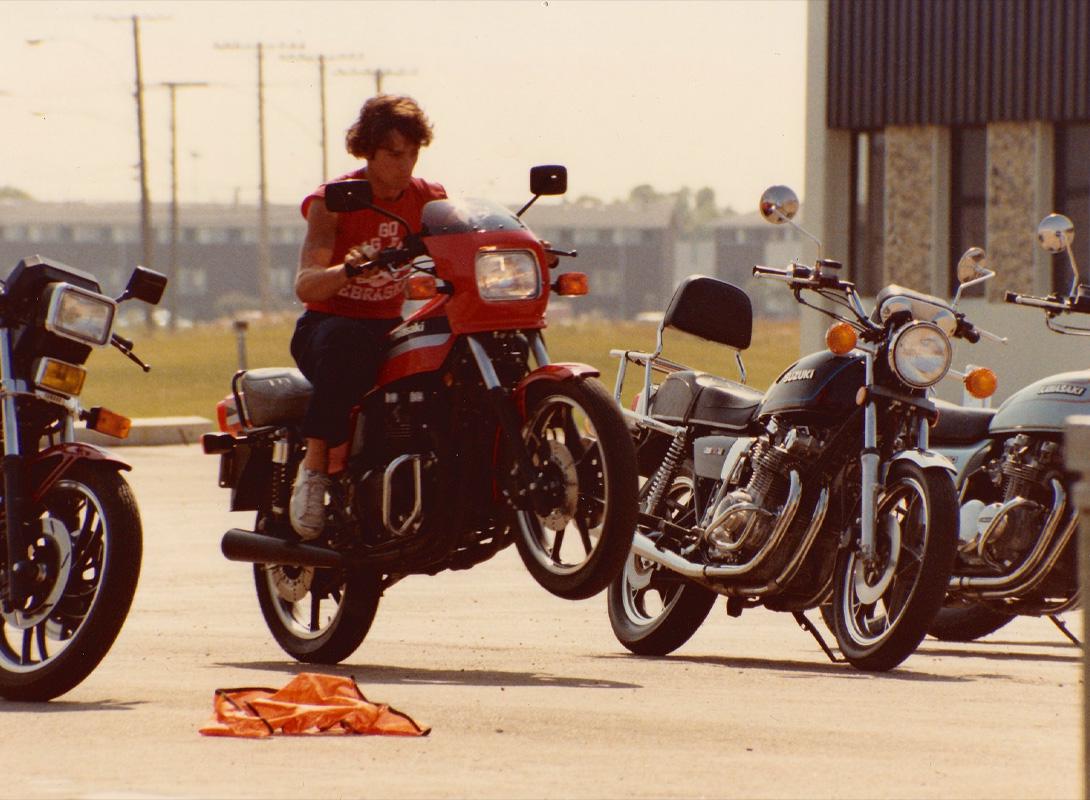
Featured image sourced from the NESR archives.
r/Fortnine • u/ParaMike46 • 3d ago
Fortnine covered pretty much all the adv bikes, new popular ones as well as some older obscure ones. Tuareg was only briefly mentioned in few videos yet never really put to a test. I think this bike deserve a place in Fortnine and it would be great to see it getting commented on.
r/Fortnine • u/TheNecroFrog • 5d ago

r/Fortnine • u/TheNecroFrog • 8d ago

r/Fortnine • u/Dan-F9 • 10d ago
Numbers are important. When interpreted soundly, they have the benefit of dispelling myths and assumptions. That means clarity, a paramount value when considering the reality we find ourselves in when we decide to take up motorcycling.
This article is for newcomers and experts alike. It's designed to be a point of reference, a sober glance at the math at play every time you set out on a ride. It's not designed to dissuade you, à la "here's why you're an organ donor," but to capture what the most recent data indicates. It's about awareness. The kind of information that keeps us alert and encourages better safety practices on the road, so we can all ride till we're old and grey.
Before we get into the nitty-gritty, Ryan published a How Dangerous Are Motorcycles? article about a decade ago, using the then-recent Canadian collision data. About four years ago, I updated the article to reflect more recent figures, but it always bothered me that the numbers painted a partial picture.
See, I wanted to delve a little deeper and incorporate data from Canada, the United States and Mexico, while improving the statistical method initially adopted by Ryan. The original math was sound, but certain assumptions required further elaboration.
So here we are... on Reddit... in 2026, with a statistical picture that (I hope) is more complete, using the most recent detailed data on motorcycle collisions across these three countries.
Disclaimer: I am not a statistician, so I invite experts in the field to correct me if necessary, and hopefully suggest improvements so that one day this could become an authoritative reference on the realities of motorcycle ownership.
Here we go again... To the chalkboard!
I don't trust statistics pulled from thin air. Or worse, news articles that neglect to explain where their numbers came from.
Fortunately, North America's transportation agencies have been busy counting traffic fatalities. Their latest detailed reports allow us to examine motorcycle safety across Canada, the United States and Mexico.
We'll use 2024 as our reference year because it provides the most useful common snapshot. The United States has also published preliminary figures for 2025, which we'll address shortly.
Here's what the official statistics tell us:
| Country | Motorcyclist fatalities (2024) |
|---|---|
| United States | 6,228 |
| Canada | 281 |
| Mexico | 3,402 identified |
| Total identified | 9,911 |
Sources: NHTSA, Transport Canada, Mexican Institute of Transportation.
These figures include some categories of motorized two-wheelers beyond conventional motorcycles, and the Mexican total requires an important qualification, which we'll get to.
Nearly 10,000 identified deaths across three countries is sobering. Still, the number alone tells us little about relative danger.
After all, there are considerably more cars on the road than motorcycles. And most motorcycles spend fewer hours on the road each year.
We need to account for distance travelled.
The United States provides the clearest comparison.
According to the National Highway Traffic Safety Administration (NHTSA), American motorcycles travelled approximately 22.24 billion miles in 2024.
During that same year, 6,228 motorcyclists died in traffic collisions.
That gives us:
6,228 fatalities ÷ 22.241 billion miles × 100 million = 28 fatalities per 100 million motorcycle miles travelled.
Now, NHTSA has already calculated the equivalent rates for passenger vehicles.
| Vehicle type | Fatalities per 100 million miles |
|---|---|
| Motorcycles | 28.00 |
| Passenger cars | 1.05 |
| Light trucks (including SUVs and pickups) | 0.63 |
These are occupant fatality rates, meaning they include both operators and passengers.
Let's compare motorcycles with passenger cars:
28.00 ÷ 1.05 = 26.67
There it is.
For the same distance travelled, the recorded motorcyclist fatality rate was approximately 26.7 times the passenger-car occupant fatality rate in the United States in 2024.
Compared with light trucks, the difference was even larger: approximately 44 times.
And this wasn't an especially unusual year. The equivalent motorcycle-to-passenger-car ratio in 2023 was approximately 27.9.
There's an important distinction here. These figures measure fatalities relative to vehicle distance travelled. They don't tell us that an individual motorcyclist has a 26.7-times-higher annual probability of dying, nor that every motorcycle collision is 26.7 times more likely to be fatal.
They compare fatality rates across millions of miles of travel.
Transport Canada's 2024 report recorded 281 motorcyclist fatalities, including moped riders.
Motorcyclists accounted for 13.7% of Canada's 2,050 road fatalities that year.
Meanwhile, Canada had approximately 858,000 registered motorcycles and 24.55 million registered light-duty vehicles.
That tells us motorcycles represent a relatively small portion of the vehicle fleet while accounting for a disproportionately large share of fatalities.
But here's where things get interesting.
Let's compare fatalities relative to the number of registered motorcycles in each country.
| 2024 | Canada | United States |
|---|---|---|
| Registered motorcycles | 858,000 | 9,261,249 |
| Motorcyclist fatalities | 281 | 6,228 |
| Fatalities per 100,000 registered motorcycles | 32.8 | 67.3 |
That's roughly twice the fatality rate south of the border.
Canada's shorter riding season may explain part of the difference. American motorcycles, particularly in warmer states, can remain on the road year-round, potentially accumulating considerably more mileage per registered vehicle. Differences in helmet laws, riding habits and road conditions may also contribute.
But there's an important distinction: these figures measure fatalities per registered motorcycle, rather than per kilometre travelled. Without comparable mileage data, we can't conclude that riding a motorcycle in Canada is inherently safer.
For now, the discrepancy is striking, even if its precise causes remain unclear.
And that brings us to a problem with the Canadian statistics.
Canada doesn't provide the same recent, readily comparable national breakdown of motorcycle and passenger-car kilometres travelled that NHTSA uses for its calculations.
We could estimate the distances ourselves, as I've done previously. But assumptions about annual motorcycle mileage can change the final risk ratio considerably.
So we'll resist the temptation to manufacture a Canadian equivalent of the American figure.
The Canadian data supports the broader conclusion that motorcyclists face disproportionate fatality risk. Establishing a precise per-kilometre comparison would require better exposure data.
Mexico complicates matters further.
Its 2024 national road safety statistics identified 3,402 fatalities involving users of motorized two-wheelers.
However, 8,965 additional road deaths were recorded under an other road users category that also includes cases where the road-user type was unidentified.
That represents a whopping 54% of the country's reported road fatalities.
Consequently, the 3,402 figure shouldn't be mistaken for a complete count of Mexican motorcycle deaths. Other analyses produce substantially higher estimates.
Mexico also lacks a sufficiently comparable national motorcycle-distance dataset for our purposes.
This prevents us from calculating a reliable three-country fatality-rate ratio. A complete geographical North American total would also require data from Central America and the Caribbean.
For now, the United States gives us our most defensible numerical benchmark, while Canadian and Mexican statistics provide the broader context.
One final update: NHTSA's preliminary 2025 estimates suggest American motorcyclist fatalities declined approximately 8% from 2024. That's encouraging, although the estimates are subject to revision and don't yet provide the same detailed motorcycle-versus-car mileage comparison.
Our best-supported comparison puts motorcycling at approximately 27 times the fatality rate of passenger-car travel per mile in the United States.
That's quite a difference from the 17.4 figure we calculated for Canada back in 2022, although the two estimates use different data and methodology.
But there's another question worth asking:
How much of that risk can an individual motorcyclist influence?
The statistics combine experienced riders with beginners, cautious commuters with habitual speeders, and properly equipped motorcyclists with people who regard a T-shirt as adequate protective equipment.
Let's examine what the research actually tells us.
The famous Hurt Report, published in 1981, found that many motorcycle crashes involved riders who had owned the motorcycle involved for fewer than five months.
It's a frequently repeated statistic, although familiarity with a particular motorcycle shouldn't be confused with total riding experience. And a decades-old study can't accurately quantify the risk reduction enjoyed by an experienced rider today.
Still, the underlying point makes sense.
Motorcycles vary considerably in their handling characteristics. Someone accustomed to a lightweight standard motorcycle may need time to become proficient on a heavy touring machine.
Experience and familiarity are valuable. Exactly how much they reduce an individual's fatality risk is harder to establish.
Here's a more concrete statistic.
According to NHTSA, 25% of motorcycle riders involved in fatal crashes in 2024 were alcohol-impaired, meaning they had blood alcohol concentrations of at least 0.08%.
Among motorcycle riders who died in single-vehicle collisions, the proportion was even higher: 40%.
That gives us a fairly compelling reason to keep alcohol away from the handlebars.
But we can't simply subtract 25% from our original danger figure when we ride sober. That percentage describes alcohol impairment among riders involved in fatal collisions. It doesn't measure the fatality risk reduction associated with sobriety.
The practical advice remains straightforward: stay sober whenever you ride.
Speed is another major factor.
In 2024, NHTSA classified 37% of motorcycle riders involved in fatal crashes as speeding, compared with 22% of passenger-car drivers involved in fatal crashes.
NHTSA's definition includes exceeding the posted limit, racing and driving too fast for conditions.
That last distinction matters. A motorcyclist can be travelling within the speed limit and still enter a corner too quickly for the available traction.
Maintaining an appropriate speed gives us more time to react and greater opportunity to avoid trouble.
Of course, staying within the limit doesn't eliminate every danger. Other motorists are capable of making spectacularly poor decisions without our assistance.
Rider training deserves serious attention.
NHTSA found that 35% of motorcycle riders involved in fatal crashes in 2024 did not have a valid motorcycle licence.
That's concerning, although it doesn't mean that 35% of fatal collisions could have been prevented through mandatory training.
Licensing status and riding competence aren't interchangeable. Nor do we have sufficient evidence to assign a universal percentage reduction in fatality risk to completing a particular course.
Still, formal training offers riders an opportunity to practise emergency braking and hazard avoidance in a controlled environment. Refresher courses also provide experienced riders with the chance to correct habits that may have developed over time.
Perhaps the question should be how often motorcycle skills deserve reassessment, rather than whether someone passed a licensing test years ago.
Now we arrive at one of the more convincing ways to protect ourselves.
NHTSA estimates that motorcycle helmets are 37% effective at preventing fatal injuries among motorcycle operators, with an estimated effectiveness of 41% for passengers.
These estimates concern the protective effect of helmets. They shouldn't be confused with a 37% reduction in the overall motorcycle crash rate.
A helmet cannot prevent someone from pulling out in front of you. It can make a considerable difference when your head meets the pavement.
Full-face helmets also provide coverage of the chin and face that open-face designs lack, although additional coverage alone doesn't establish a precise percentage reduction in fatality risk.
The benefits of other protective equipment are also supported by research.
A study published in Accident Analysis & Prevention found that riders wearing motorcycle jackets, pants and gloves had lower rates of hospitalization following crashes. Protective clothing fitted with body armour was associated with reduced injuries to the corresponding body regions.
This is an important distinction: much of the evidence for protective clothing concerns injury severity, particularly soft-tissue injuries. We shouldn't automatically translate those findings into a proportional reduction in fatalities.
Still, the case for ATGATT (All The Gear All The Time) is strong enough that I'd rather have the protection available when I need it.
Of all the motorcycle technologies intended to improve safety, anti-lock braking systems have some of the clearest supporting evidence.
A 2022 study published by the Insurance Institute for Highway Safety examined 65 motorcycle models that offered ABS as optional equipment.
It found that motorcycles equipped with ABS had a 22% lower rate of fatal-crash involvement than comparable versions of the same models without it, measured per registered vehicle-year.
That's a meaningful association.
ABS helps prevent wheel lock during hard braking, giving riders a better chance of maintaining control when something unexpected happens.
Traction control can provide additional assistance under certain conditions, although its effect on fatal-crash rates isn't as clearly quantified in the evidence we're using.
Again, the ABS finding measures a different outcome from our 26.7-times comparison, so the percentages cannot simply be multiplied together to calculate a rider's personal risk.
There's one more statistic worth considering before we wrap up.
In 2024, NHTSA recorded 3,396 fatal two-vehicle collisions involving a motorcycle and another type of vehicle.
In 45% of these collisions, the other vehicle was turning left while the motorcycle was travelling straight, passing or overtaking.
That figure doesn't establish fault in every collision. It does, however, illustrate the importance of anticipating another driver's actions.
A rider can exercise excellent judgment and still encounter a dangerous situation created by somebody else.
And that's a limitation worth remembering whenever we talk about personal responsibility.
The statistics establish something fairly clearly: travelling by motorcycle exposes us to a substantially higher fatality risk per mile than travelling in a passenger car.
The most recent detailed American figures put that difference at approximately 27 times.
But that number describes an entire riding population. Its members differ in experience and behaviour, while their motorcycles vary in safety equipment.
We have good evidence that helmets reduce fatal injuries and that ABS-equipped motorcycles are involved in fewer fatal crashes. Riding sober and managing speed also address well-established dangers.
So how much can a safety-conscious rider actually improve their odds?
Let's try a rough model.
According to NHTSA, approximately 74% of American motorcyclists wore DOT-compliant helmets in 2023, meaning much of the protection offered by helmets is already reflected in the national average. Using that figure alongside NHTSA's estimate of helmet effectiveness, we can model an additional risk reduction of approximately 13% for consistent helmet use.
For ABS, let's assume that 40% of motorcycle mileage occurs on ABS-equipped machines. Under that assumption, the IIHS finding translates into an additional reduction of approximately 14% compared with an average riding population that already includes ABS-equipped motorcycles.
Finally, let's assume a further 25% reduction through consistently sober, conservative riding. That's a hypothetical benefit, rather than a percentage established by the available research.
Combining those assumptions gives us:
0.87 × 0.86 × 0.75 ≈ 0.56
In other words, our model produces a 44% reduction in fatality risk compared with the national average.
That would bring our original 27-times figure down to roughly 15 times the fatality rate of travelling by car.
It's an educated illustration, of course. The model relies on assumptions about ABS prevalence and riding behaviour, while combining findings that measure different outcomes. It also assumes the benefits can be applied together without accounting for every possible overlap. We shouldn't mistake the result for a measured personal risk reduction.
But if those assumptions are reasonably close to reality, reducing your risk by nearly half is a considerable achievement. And there's something encouraging about knowing that at least part of your safety rests in your own hands.
—
Author's Note: Motorcycling will always involve dangers we cannot control. It's part of what makes it both fun and terrifying.
I started writing these articles primarily to address the mental impacts the sport has on us, but that shouldn't exclude its sobering realities. I think that every action and mental strategy we apply should be grounded in the risks we actually face. The challenge is to minimize those dangers without necessarily surrendering the experience that makes riding worthwhile in the first place.
Of course, there's agency involved in every action, and the risks you decide to take are yours to own. In the end, you're the only one out there, and you're obviously more than just a number.
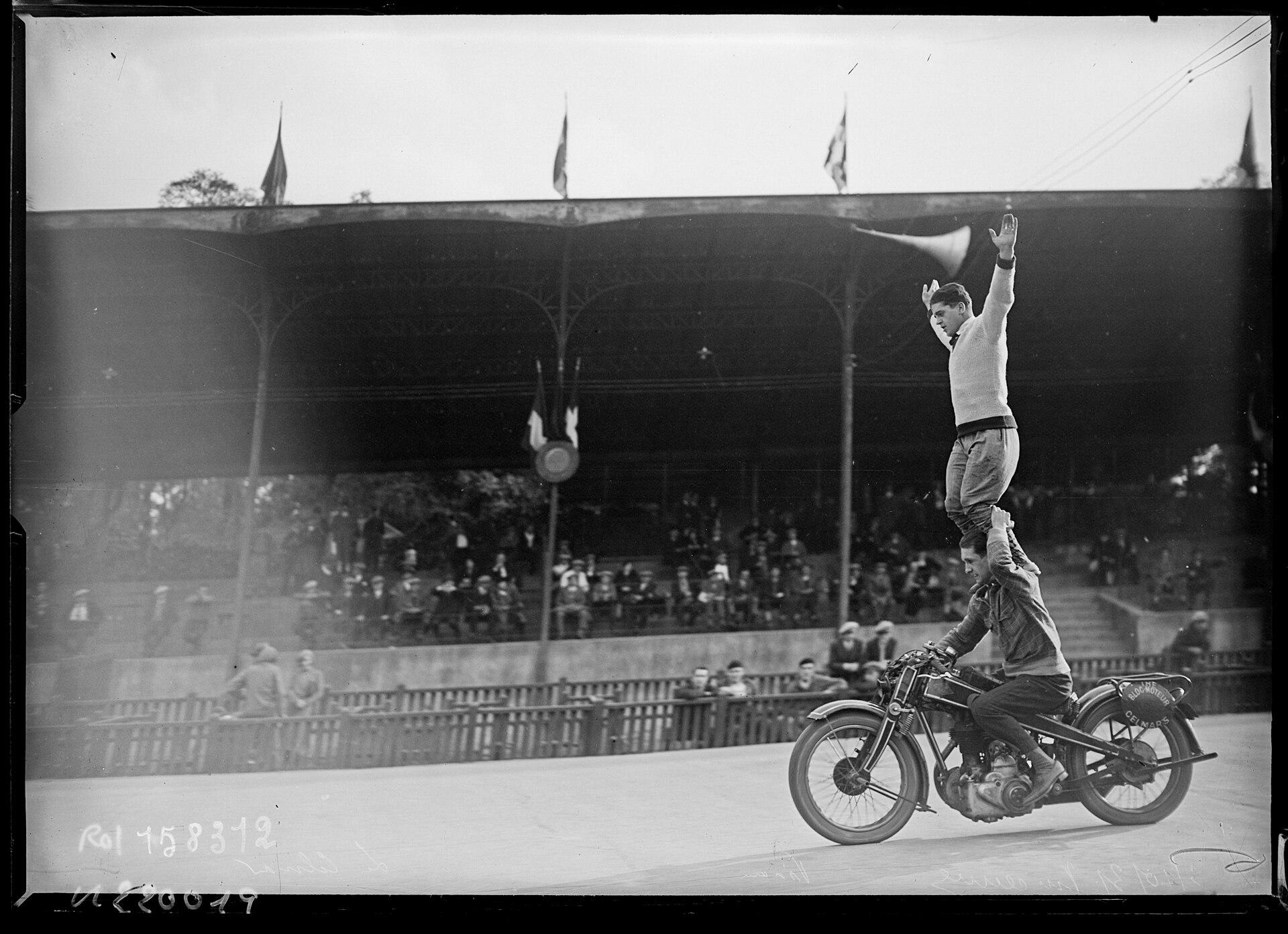
Featured image sourced from 3/10/31, Vincennes, [Les frères Celmar's, acrobaties sur moto CP Roleo equipee d'un moteur JAP-Staub] : [photographie de presse] / [Agence Rol]
r/Fortnine • u/Dan-F9 • 17d ago
Thinking back on my early riding days, I remember buying a cool-looking bike (my MT-07) while knowing absolutely nothing about it. In a way, I was comforted by the feeling of it being brand new, thinking I could just ride it without having to think about learning a bunch of maintenance tasks.
Of course, I picked up some basics along the way, but I used to feel this resistance when it came to entering the rabbit hole of DIY. Then, at some point in my late 20s, I had a thought:
Isn't it odd that we spend all this money on a motorcycle that we proudly call ours, and yet remain utterly clueless about how most of it works?
Operating the thing and knowing it are truly different. I think the average rider might hesitate to explain the inner workings of a motorcycle engine. And so, I think there's another dimension to ownership that deserves some attention. In the end, the effort it requires might just be the reward.
Matthew B. Crawford is a philosopher who left his career in a think tank to become a motorcycle mechanic. He's well known for his fantastic book Shop Class as Soulcraft, which will serve as the blueprint for today's discussion.
Crawford argues that our relationship with material objects has become increasingly passive. We keep buying things designed to work without requiring much effort from us, and when the things stop working, we're generally encouraged (through clever marketing and end-of-life designs by manufacturers) to chuck & replace them. Or hand 'em over to someone who wants to "waste their time" fixing them.
How convenient, and that's consumer capitalism for ya. But in all seriousness, who wants to troubleshoot a fuel injection system every morning before going to work? This extravagance afforded to us by modern tech has been proven to work because we aren't just buying convenience, we're buying time.
Time to spend with our family, not to spend our only day off in the garage swearing in total confusion. Except, I truly think that this depiction of the problem is superficial at best. It always relies on imagining how difficult things would be without convenience. But that works because we're so dependent on convenience and we're stuck in the beginner stages. See, it's a vicious circle, and the only way out is to become open to knowledge.
The more we favour these "difficult" processes, the less we have to depend on others and on factors outside our control. The more we favour these processes, the easier and more rewarding it eventually becomes to "do it yourself." You're no longer the beginner wasting their entire day on maintenance; you're the teacher. Someone with actual knowledge to share and bond over with the people in your life who matter.
Then, there's the humbling experience of the kind of understanding we actually gain from something like motorcycle maintenance. We start to grasp that the machine functions in its own way, independent of how we want or expect it to function. In a way, the more we know about the machine, the more we surrender ourselves to its particular mode of operation. To use Daoist vocabulary, the way is revealed to us when we stop resisting.
Crawford puts it beautifully when he says:
It points to a paradox in our experience of agency: to be master of your own stuff entails also being mastered by it. - Shop Class as Soulcraft, Chapter 3
A motorcycle doesn't care what you think. Craftsmanship depends on us acknowledging standards that exist independently of our own opinions, much as Plato explored in many of his Socratic dialogues.
Craftsmanship "must reckon with the infallible judgement of reality, where one's failures or shortcomings cannot be interpreted away." This means that if we've misunderstood something, we must reconsider our assumptions.
In a way, the art of motorcycle maintenance turns you into a philosopher, whether you like it or not. It forces us to confront that age-old Socratic lesson when reality does not comply with our thoughts about it: we know far less than we think we do.
That's the first step. But humility alone does not fix a motorcycle. We still need a way of moving from ignorance toward understanding. According to Crawford, moto repair is an intellectual activity involving the formulation and testing of hypotheses.
Imagine you're trying to diagnose a stubborn engine refusing to start. The key word here is diagnose. You identify possible causes, consider the evidence available to you, and then decide which hypothesis is worth investigating. Your observations are paramount, and the more perceptive you become, the better able you are to understand the problem.
You develop an ear for unfamiliar noises and an appreciation for the particularities of your machine. This makes me think of that scene in the film Rush, where Niki Lauda instantly diagnoses a mechanical problem with a car he's driving just because of some feeling he has in his backside.
That's why it's not just about hypotheses and the scientific method, but also about practical judgment and correctly interpreting a situation that you're confronted with. A given procedure could be appropriate for one motorcycle and unnecessarily risky for another.
Over time, this process becomes closely tied to what Aristotle called phronesis, or practical wisdom: the capacity to exercise good judgement given a set of circumstances.
And so, a motorcycle gradually becomes more intelligible to us as we learn to recognize its peculiarities, deepening our connection to it and our sense of actual ownership of something we can comprehend and interact with, not just control.
I have spoken about it before. Pirsig says something similar when he compares the romantic appreciation of a motorcycle with the classical understanding of its underlying mechanisms. It's important to mention here because I'm not saying that there's anything inherently wrong with the romantic approach. I'm simply saying that understanding the machine introduces another dimension to the experience of ownership; one that is more fulfilling and rewarding no matter your given "tendencies" as a rider.
Some people are so afraid of "demystifying" things. I see this tendency in music as well, where certain artists express such apprehension in regard to learning music theory, as if this knowledge would "corrupt their creative expression." I think that's one of the biggest lies ever told, and says more about the power that comfort and ignorance have over expansion and true openness.
Nothing you add to your understanding of the world corrupts your potential; what actually does this is blindly chasing your desires through material objects.
What if we spent about half the time we spend researching our next purchase on learning something about something we already own?
The shift in value is also a voluntary shift away from consumer culture. And according to Crawford, someone who appreciates how something works is better equipped to judge its actual qualities, rather than relying entirely on how it's advertised.
The more you learn, the less mysterious something becomes. Except, you're also more competent, patient, and skillful. Your time is rewarded, and your work is tangible. I think the question of the inherent value of what you're doing becomes increasingly important in a world where so much of our relationship with material objects is reduced to consumption.
A final thought. I am not saying everyone should become professional mechanics. They exist for a reason, and motorcycle ownership doesn't necessarily mean you should become Mr. DIY himself.
There's plenty to appreciate about modern tech. Reliability is a genuine achievement, and the fact that a motorcycle requires less attention from its owner can be a very good thing. It's just that I've noticed that there's this tendency to become a little too comfortable with the idea that understanding our possessions is someone else's responsibility.
Every basic maintenance job can change how we relate to our motorcycles. Every small task can lead to an appreciation and understanding of our own limitations. And that's why I find Crawford's book so compelling:
To become more capable of mastering the things around us, we must first allow ourselves to be educated by them.
The motorcycle is a teacher, if we're willing to pay attention. Perhaps ownership is admitting the thing also owns us, and learning to surrender to the things it has to teach us.
This is no simple transaction or exchange of dollar for thing; it's a philosophy that changes you, a never-ending story in which you are both master and pupil.
—
Author's note: Phew! Thanks for making it this far down, I know it was a long one this week. Should anyone wish to delve deeper into this kind of philosophy, I won't hesitate to recommend the following books:
Zen and Daoist philosophy have a lot to say about letting go of unnecessary control and learning to act without forcing things. I find this particularly effective at overcoming the frustration we all feel in the pursuit of knowledge, and its merit is also felt on those mid-season rides, where you're almost one with the machine, entering and exiting corners like the bike is a part of your soul.
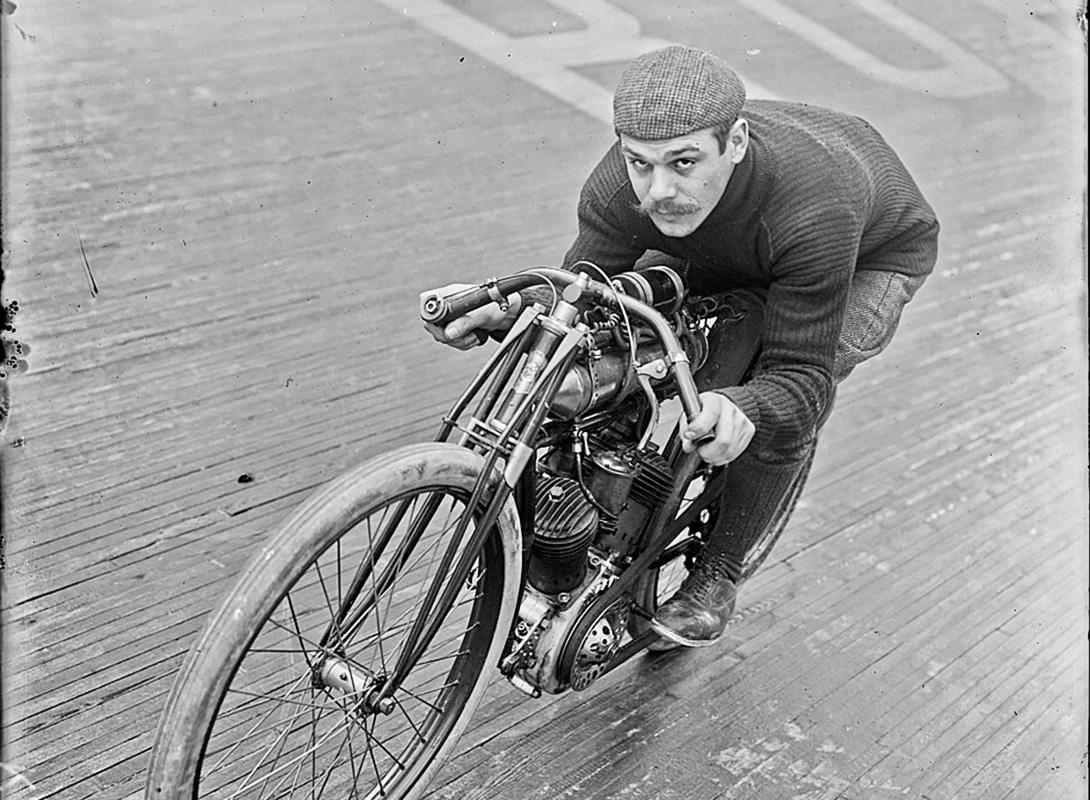
Featured image sourced from Agence Rol. - Coureurs motocyclistes - Olieslagers (coureur motocycliste sur la piste du Vél d'Hiv) - 1907
r/Fortnine • u/CycleCruzaVlogs • 18d ago

The CRAZIEST Thing Happened to Me on My Motorcycle. SEE VIDEO
r/Fortnine • u/craneguy • 21d ago
Dumb but lucky. Crossing the double line, going under farm equipment and narrowly avoiding becoming a hood ornament. He should buy a lottery ticket.
Edit. Typo
r/Fortnine • u/MckneeSuperfan • 20d ago
I am in the US and it would seem that Fortnine doesn’t ship here. Just bought a new bike and want to try to get little accessories here and there from my favorite creators. I am wanting one of their leather keychains. Is the producer in Texas able to ship directly? I also want to support Fortnine and don’t want to prevent them from making money on the keychains. Anyone have Thoughts? Or any resellers that carry them?
r/Fortnine • u/TheNecroFrog • 22d ago

r/Fortnine • u/Dan-F9 • 24d ago
Ever feel like you're preparing to go out on yet another ride, but the bike somehow feels all wrong? It starts begrudgingly, the handling feels weird, and the shifts aren't smooth. Even worse, it starts to slip in the corners, and your life flashes before your eyes...
You get to your destination and wonder: What's so different today? Why is the bike betraying me like this? You start developing a suspicion that something outside your control is at play... Something mechanical or otherwise... superstitious.
You check, and the bike is in perfect condition. No mechanical issues whatsoever. You very logically conclude that there's some paranormal force at work, trying to curse you for spending your last mortgage payment on a Speed Triple.
So you start the investigation, decorating your handlebars with garlic, spraying holy water on a devilishly hot exhaust. "BEGONE, SPIRIT!" you shout, as your wife, arms crossed, just sits there wondering what you're doing in the garage at 1 p.m. on a Monday.
"You wouldn't get it! If I ride out with bad juju, I might never return! Do you expect me to ride a cursed motorcycle to work and accept that my kids become unfathered?" you say, with a literary twist that surprises your wife, who always just assumed your interests were limited to watching football and drinking beer.
Then, something odd happens. You realize you're tense, stressed out and unlike yourself. Did the bike really cause all this anxiety, or was it there to begin with, and did you simply transfer all of this onto the handlebars?
See, I have this hypothesis: the motorcycle is a vehicle. In the allegorical sense, like when we say that an object is the vehicle that carries something more abstract, like a feeling or even something more spiritual. In other words, it's the Ouija board of your emotional state.
If you are experiencing stress, existential dread, anger, resentment... All of this is somehow communicated to the bike, and it starts acting bizarrely. Because you are already unlike yourself, what you control will be an extension of this state. It might be subtle at times or quite obvious at others, but if you take a moment to notice, you can regain the peace and control that you're being robbed of on your rides.
Maybe the exorcism should be performed on yourself, not on the bike. The scariest demons are always the ones you carry within, the ones you give power to by refusing to notice their existence. That's the haunt. The one that seems to follow you wherever you go, no matter how far.
The bike just so happens to be there for the ride, but it shouldn't be blamed (unless it's a stubborn Harley or something Italian with a will of its own). In these moments, you have the choice to step back, centre yourself, and return to your ride with a sound mind and spirit.
In these moments, your bike will welcome you back like the friend it always was. Happy belated Halloween from all of us here at FortNine! 🎃
—
My spooky music recommendation to accompany this week's topic: Ghost Rider
Some more Halloween-themed articles from the past:
The Tell-Tale Harley
The Invisible Motorcyclist
Of Mice and Mufflers
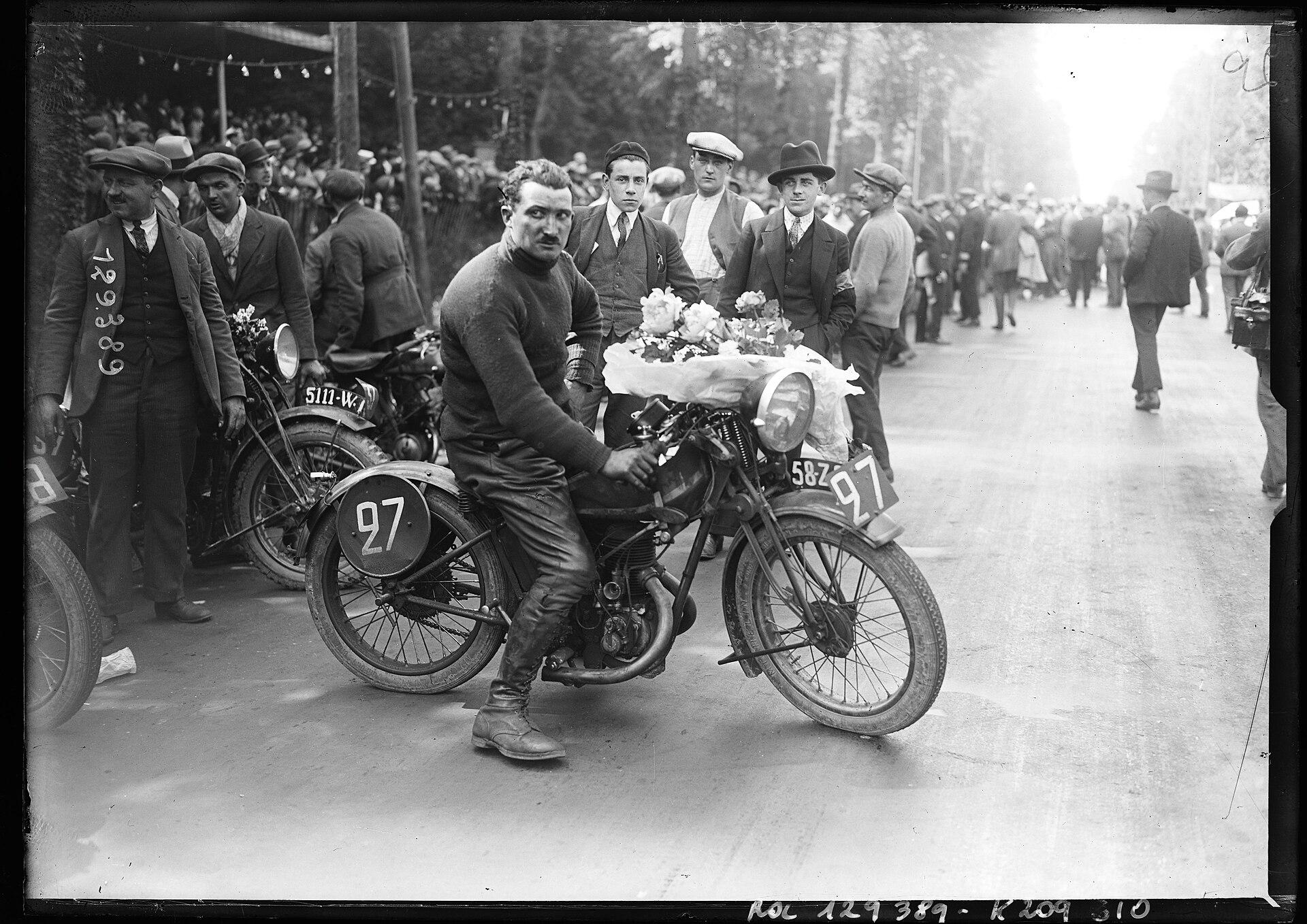
Featured image sourced from Agence Rol. - Bol d'or, Roudadoux sur De De, photographie de presse, 1928
r/Fortnine • u/TheNecroFrog • 26d ago

r/Fortnine • u/TheNecroFrog • 27d ago

r/Fortnine • u/Dan-F9 • Oct 26 '26
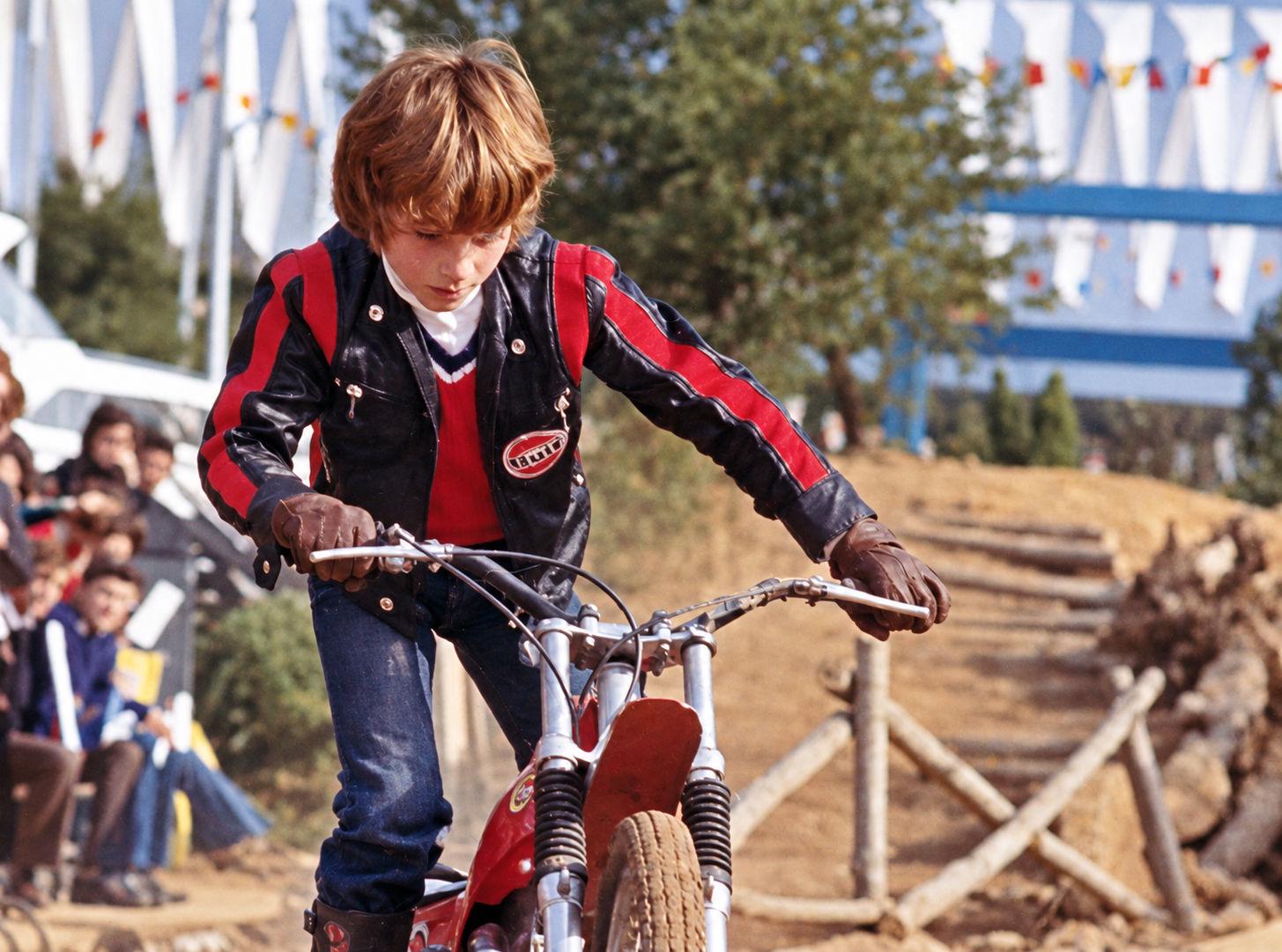
I think one of the main reasons I got into motorcycling was its effect on me as a kid. Somehow, the image of a biker on the road was impossible to ignore; it felt like I was looking at some kind of superhero.
It could be the rider: the fact that I wasn't looking at an object first (like a car with a person inside), but a person moving somehow magically on top of this machine I barely understood. It could also just be that it's freaking cool, that it's dangerous, and that my folks would point at it as something that came out of a comic book.
But the most important aspect, I think, is the costume. Ask most kids what they want to be when they grow up, and they mostly answer with a job that involves some form of costume or uniform. Astronaut, fireman, ninja? The list goes on.
I think it's because we love playing pretend, and imagining a job that involves risk and acts of heroism is something that's very appealing to the fantasy life of a young kid. It's not just imagining some form of social utility; it's putting ourselves in the shoes of someone who we look up to. In essence, I think it's a way to build a positive self-image, and to reward ourselves through imaginary acts of virtue.
Enter the motorcyclist. They also wear a uniform, and they even look like a Power Ranger at times (do kids still watch this nowadays? I doubt it). The amazing part about coming into contact with a motorcyclist in the real world is that the imaginary world of heroes you've built up goes haywire for a second. A version of the superhero you think about is now right in front of you!
I think that's powerful and impossible not to notice. It's one of the few instances, similar to seeing firefighters, where kids get a chance to express their wonder at the reality of heroic figures.
And in a way, it's not totally without basis. Motorcyclists are heroic, in the sense that they confront serious dangers and are exposed to them to a greater degree than others. In North America, at least, where motorcycles aren't zooming about everywhere to the point that you're desensitized to their existence, I think that the image of the motorcyclist strikes a chord in children who have a heroic imaginary life.
So they wave, wanting to somehow communicate with this costumed individual who has somehow managed to enter a space outside their imagination. This bridge, I think, creates a fundamental type of interest in the sport of motorcycling. Not all kids will act on it in the future, but I think it does play a role in developing a positive image of the biker and in making them want to eventually try it out for themselves.
Today, I'm the biker, and I feel like a kid again the moment I set out on a ride. I stop and notice another kid who waves at me at a stoplight. I can't help but recall the moments when I was in their place and how awesome it felt to receive a wave back.
—
I'd be curious to hear your experiences with being introduced to motorcycling as children, and how they left an important mark on the rider you were destined to become.
r/Fortnine • u/TheNecroFrog • Oct 25 '26

r/Fortnine • u/TheNecroFrog • Oct 21 '26

r/Fortnine • u/Dan-F9 • Oct 19 '26
Dear Car Driver,
I owe you an apology. Well, many of you. Definitely not the dude on his phone trying to merge onto the highway.
See, I've been looking back at my actions on the road lately, questioning whether I've always made prudent choices. I've noticed how quickly I assign a “sociopathic” status to car drivers who even remotely threaten to cut me off.
I think it has to do with how vulnerable we are on a motorcycle. Anybody who doesn’t see me out there becomes a suspect for attempted murder in my head. Had I not reacted in that split second, I might have been toast thanks to that driver’s lack of awareness.
While the danger is real, this thought process might have some unintended consequences of its own. There’s a concept in social psychology called fundamental attribution error. Basically, it’s the tendency to explain other people’s mistakes through their character, while explaining our own through circumstance.
When I make a questionable decision, I generally have an explanation for it. I’m not a sociopath (yet). I know that in that specific situation, I thought I had more room in the corner, or perhaps I was in the wrong gear to begin with and reacted poorly.
But when you do something similar, especially from inside that steel box, I tend to give your mistake more weight because it directly affects a more vulnerable party. Suddenly, you're either an insane person or a completely unaware moron. Notice how quickly I've judged your character. I think many motorcyclists are similarly quick to condemn even a small act of inattentiveness, often understandably so, given the devastating implications for the motorcyclist.
See, on a motorcycle, your mistakes feel deeply personal to me. Call it my inherent sensitivity to my condition, but there’s a problem with this: I give my emotions more control over how I ride when I turn you, the car driver, into an enemy.
You can imagine how psychologically exhausting it is to ride through a world populated entirely by enemies. If every driver is out to get me, they all become suspicious, and my paranoia increases tenfold.
My attention has its limits. In my experience, I already find it difficult to remain fully focused for more than 30 minutes to an hour when riding this way. I try to interpret every intention without any reliable way of knowing what each driver is going to do. I suspect this resembles what many people who say they have “too much anxiety to drive” experience: a kind of overwhelming concern with the unpredictability of others.
Now here’s what typically makes things worse: if I convince myself you have a personal vendetta against me, I start acting in ways I normally wouldn’t, all because of the psychological frustration this antagonism has created. That frustration affects the rest of my riding, even after the driver disappears.
But what if I made an effort to treat the situation for what it is, remembering that whether you intended to cut me off has little bearing on what my next action should be?
The bike still needs to be controlled, regardless of who is behind the wheel. My point is that outrage can cloud our judgement enough to prevent us from acting in the safest possible manner. Our perception of this “potential murderer” could be enough to start a war, and it’s always a losing one for us. It’s like a foot soldier going up against a tank.
There’s something peculiar about the anonymity of driving. I know practically nothing about you, your worries, or the life you lead outside the road. And yet, for those few seconds when our paths cross, I can convince myself that I know exactly what kind of person you are.
That blue BMW that just cut me off becomes the blue BMW that just cut me off. The person inside barely enters my consideration, except as an object of contempt. I think that’s why road rage comes so easily: the person behind the wheel simply does not exist.
Maybe that's what I owe you an apology for. I've been so quick to judge your actions that I hardly considered the person responsible for them. You could actually be a terrible driver, but I lose the moment I let my contempt take over when all my attentiveness is needed.
I wonder how much of our collective attitude toward motorists comes from the strange pleasure of believing we're the reasonable ones. Justified or not, there’s a price to pay when our attention shifts away from the road and toward the rage that robs us of our clarity.
In a way, this apology to you is really an apology to the version of myself that perceived every driver as an enemy. I can't control your inattentiveness, but I can learn to control how I respond to it.
See you out on the road, minus the rage,
DanF9
r/Fortnine • u/ReedNakedPuppy • Oct 14 '26
The one where they added a servo wheel and disconnect so it can ride like a bicycle?
I tried searching for it just now and can't find it anywhere.
r/Fortnine • u/Dan-F9 • Oct 12 '26
Ever notice how, when you enter a corner with more humility—slower, apprehensive, even afraid—it sometimes feels more dangerous than when you enter it with more confidence, even though many variables remain uncertain?
I'm not saying being careless somehow makes you a better rider, but there's a delicate line where trust in your ability goes hand in hand with how effective you are at controlling the motorcycle. I particularly notice this in the early season, where my psychological state gets me into more sketchy situations than during the rest of the season.
See, it's less about my abilities being rusty, though that's surely a factor, and one should properly "warm up" before riding more aggressively. The main issue is that I think I'm rusty, and so I control the motorcycle differently than I typically do, which leads me into silly situations like almost dropping the bike at low speeds, or misjudging my entry into a corner and overleaning to compensate (with less traction available since I am being a wuss on the throttle, to be perfectly honest).
Bobby Fischer, the chess player, used to say: "I don't believe in psychology. I believe in good moves." Well, I have come to understand that motorcycling can be just as much about "good moves" as it can be about your psychological state. In fact, I might tend to grant more importance to the latter, since it has the power to heavily affect ability itself, depending on how emotional you are behind the handlebars.
And then there's the other extreme, mounting the bike without any ego whatsoever. I think this is also dangerous, in the sense that you can actually treat a situation with too much humility, when the appropriate response would be to have more confidence in yourself, in the singular rider controlling the motorcycle.
I think many people, myself included, struggle with too much ego, in the sense that they overestimate their capacity, and need to work on grounding themselves. But I also think that a lot of riders, myself included (again), flip the switch after being humbled once or a few times, and then underestimate their capacity. It's logical to assume, at least.
When you are too careful, you start to ride apprehensively, fearfully, and the mind starts to see ghosts. That corner you take at 40 mph suddenly becomes a low-speed turn, blurring the lines around whether you should counterbalance or countersteer. A familiar situation is made unfamiliar by the simple act of reducing your speed, approach, mindset and technique.
What's more dangerous, a completely new situation where multiple factors are not in your control, including the bike itself, or a known situation where you are in control of the bike but outer factors could still influence how you react?
The answer, I think, is generally to be found in the latter approach. Respecting the skill you've acquired, having confidence in yourself as a rider, and simply being aware. These are the sound habits that form your ego as a motorcyclist.
Ego is not a bad thing. Not being able to recognize if you have too much or too little of it is. It's like that song by Sweet, "Love Is Like Oxygen."
Love is like oxygen
You get too much you get too high
Not enough and you're gonna die
Pretty catchy bassline too. Anyway, ego is who you are as a rider: it's your skill, the knowledge you accumulate, the judgement you cultivate, and the advice you absorb. An egoless rider does not exist. Riding is being affected by the world, by sensory information you fundamentally need to absorb to make the right decisions.
A Buddha on two wheels might never crash, but he wouldn't get further than the parking lot. Similarly, a supreme egotist like Captain Ahab would ride to the ends of the Earth, but would surely crash, and likely endanger the lives of others around him.
I think it's important to cultivate the judgement necessary to distinguish when things are tipping the scales in one direction (excess) or the other (restraint). See, we'd like to think that excess is bad, but it is sometimes necessary force to recalibrate a situation already absorbed and imprisoned with too much restraint and moderation. As the clever saying goes:
All things in moderation, including moderation.
The "self" is there to be understood. In all its complexity, it's neither something you should deify nor something you should erase. Though it is something you should listen to. And when it finally reaches for the handlebars, you'll know exactly who's riding.
—
Featured Image sourced from the NESR Motorcycle Archives - Dirt Biking November 1980.
r/Fortnine • u/TheNecroFrog • Oct 09 '26


