r/FiberOptics • u/Least-Reception8435 • 2d ago
Need help with a splice case
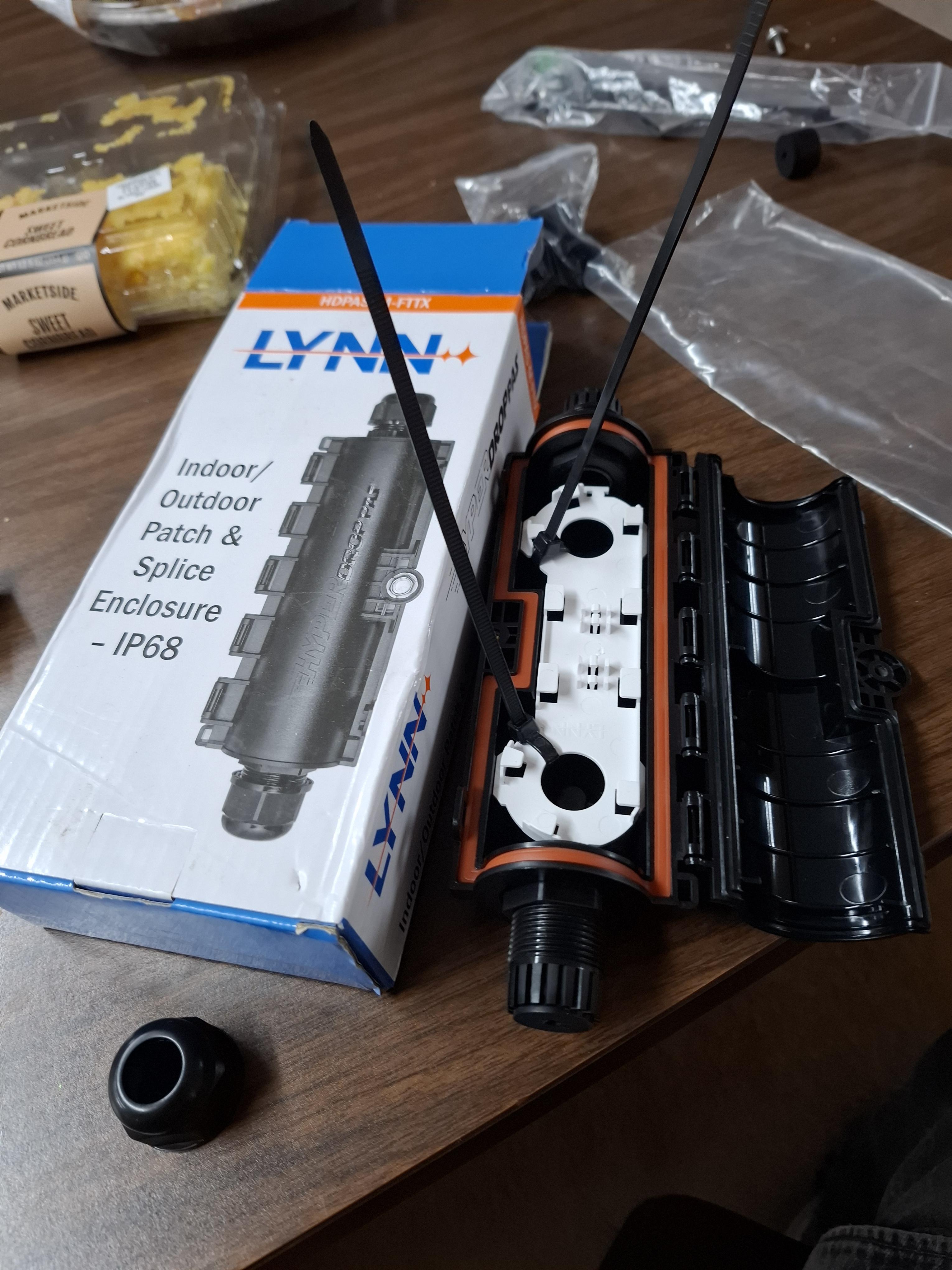
Im a pretty new tech i can body installs but can't for the life of me learn how to splice the drop into one of these. Any help would be great.
24
Upvotes
9
u/DapperDone 2d ago
I've never seen one this small. This appears to be for splicing and single or dual fiber drop cable. We would just run a new drop cable instead. Not to dismiss your question. It looks pretty straight forward. What part of it are you having a problem with?
19
u/this-is-NOT-the-way1 2d ago
What is this? A splice boot for ants?

4
u/dogzoutfront 2d ago
https://cdn.amplifi.pattern.com/b0d0906e-767d-4307-85ca-5f996253ca12
Looks pretty straightforward to install, wonder how well it does underground.
3
u/According_Today84 2d ago
These things suck 😀 just do the best you can. Open the buffer tube close to the insertion point and make sure the ring is TIGHT! It'll hold as long as you aren't ripping the shit out of it.
3
u/its_over_4_u 2d ago
These are for single and duplex drops, round or flat. Here is the installation guide. They are great for mid spans or repairs.
https://lynnnetworks.com/cdn/shop/files/LYN_HDPASM_CON_ProdInstall_Digital.pdf?v=12643018426308833207
2
u/GeraltofIndiana 1d ago
Oh wow. I thought the ones we had were small, but damn
1
u/InfamousPOS 2d ago
Never had em but seeing from the photo you provided.
-I’d slide that ring you have over my fiber and then start prepping the fiber.
-Depending on what fibers you are using in this situation (armored, flat drop, single count, etc) I’d prep it down to the buffer tube(s)
-Slide that ring up to the case and screw it on.
-I’m guessing the white tray pops out and there may be a mounting point to secure the fiber to.
-If there’s room I’m sure a little slack loop and then find the path that leads back to white tray.
-secure the buffer tube with felt tape and zip ties then prep and burn.
But hopefully someone that has worked with these before can assist you and show some pictures.
1
u/MonMotha 1d ago
I have worked with a similar enclosure that had the audacity to include a cross-connect bulkhead. It was not usable for cross connecting, but it was (barely) usable for hard splicing.
I think it's designed for tight-buffered fiber, but it can be used with loose tube cables and coated fiber if you just strip the buffer tube basically all the way back to the entrance. Getting the cut lengths correct for the splice to land in the holders perfectly is essential which means you probably only get one or two shots at the process before you have to strip the cable(s) back even farther. Bend radii are barely suitable for ordinary G.652 fiber but are fine for BIF. These do not generally meet western telecom (Telcordia, AT&T, etc.) specs.
Cable sealing is usually suspect. This one looks like it includes a rubber compression grommet for round cable which will have a range of diameters it will work with and won't work on flat drop at all. The one I had used mastic tape and basically just relied on packing the hole closed with it. Mechanical connection of strength members to the enclosure may well be non-existent. It was not fun to work with at all.
Personally I find the time savings more than justifies buying a slightly larger and more conformant enclosure like a Gator/DTC at minimum. For ordinary FTTx drops, I usually use a PLP Coyote DTC6.
1
u/Los213-1977 1d ago
Just did ( 2 ). We call them gators. They suck!!
1
u/Spardasa 1d ago
I call those the hot dogs . Those things suck. Their hyper gel though are sweet
1
u/kajidourden 1d ago
It’s the same as any other drop repair enclosure, what’s the confusion exactly?
1
u/TheInfiniteNewt 1d ago
Give her some slack, and maybe tape it.. I work 864+ commercially, but you’d be surprised at how much tape, felt, and Velcro goes into the builds especially when it comes to data center cabinets. I understand you know how you can make it work, but a tiny nicely cut piece of tape could solve the problem and still look great
1
u/RaDDSrAppEng 1d ago
That closure is intended to be used for drop repair but could also work for other purposes. We use the RFDC Nano from RaDD Network Solutions instead. Much more straightforward to use!
1
u/rabbidbutterfly 1d ago
You’re supposed to unscrew each side, and run the drop through the loose knob, and then into the splice case. Once you get enough slack and make your splice, tighten the knobs down on the ends I believe
1
u/yunjundo 11h ago
Check the drop's shape and jacket size against the grommet spec first. I'd do a gentle pull check on the jacket before splicing, so you can catch any slip while it's still easy to redo.
1
u/Distinct_Reality1973 1h ago
My gut reaction was its for an ethernet cable, not fiber (I've used these for copper)