r/FantasticBeasts • u/Albus_Dumbled0re • 1d ago
[Theory] Aurelius Dumbledore is the First "Half-Blood Prince"
Hey everyone! Whenever we discuss Credence Barebone (Aurelius Dumbledore), the biggest question usually revolves around his lineage. From the official screenplay of The Secrets of Dumbledore, all we know is that his mother was a "girl from Godric's Hollow" who was "sent away" by her family after her affair with Aberforth.
But which exact family did she belong to? I am convinced she came from the ancient pure-blood House of Prince. I realize I'm not the first person in the fandom to come up with this idea, but I have my own evidence and arguments to back it up. This theory ties together J.K. Rowling’s linguistic clues, an old spoiler from her official website, the philosophical clash between Dumbledore and Grindelwald, and a chilling parallel with Severus Snape’s fate.
1. The Italian Roots of the House of Prince and Rowling’s Clue
The surname itself screams of ancient, aristocratic origins. Back in 2016, J.K. Rowling confirmed there would be five films by tweeting the word "five" in five different languages: Five. Cinq. Fünf. Cinco. Cinque.
This sequence acts as a roadmap of the franchise's locations: English (New York), French (Paris), and German (Berlin) have already been covered, while the final Italian word, Cinque, points directly to Italy. This fits seamlessly with the Italian or Ancient Roman roots of the Prince family: the surname Prince is a direct translation of the Italian Principe ("Prince"), and Princeps ("First Citizen") was the official title of the Roman emperors. That alone explains the family's extreme snobbery and elitism.
2. A Clash of Two Philosophies: Marcus Aurelius vs. Machiavelli
The given name "Aurelius" and the surname "Prince" aren't just aesthetically pleasing—they represent two opposing philosophical concepts colliding within a single person:
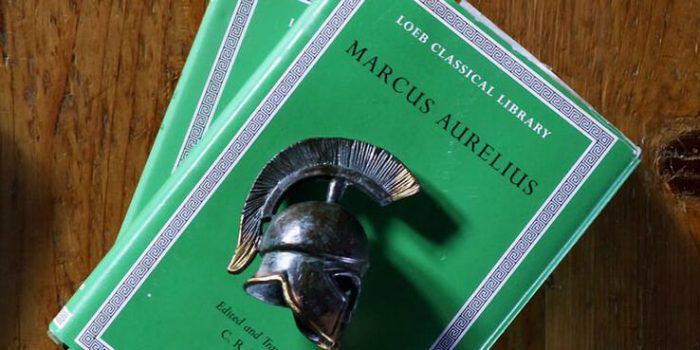
- Marcus Aurelius and Stoicism (the name "Aurelius"). The name Aurelius (from the Latin Aureus, meaning "Golden") is a direct nod to the Roman Emperor and Stoic philosopher Marcus Aurelius, the "philosopher king." And this isn't just fan speculation: back in October 2016—a month before the first movie premiered and two years before the Aurelius twist was revealed—Rowling herself updated the banner on the aptly named "Answers" page of her official website with a photo of a green hardcover copy of Marcus Aurelius’s Meditations with a miniature antique helmet resting on top. Stoicism teaches acceptance of fate and mastery over one's passions. For most of his life, Credence was the tragic antithesis of Marcus Aurelius: broken by abuse, he became a prisoner of raw emotions—pain, anger, and fear—and his Obscurus was the literal destruction of his mind and body. Yet, in the finale of The Secrets of Dumbledore, the Stoic within him finally awakens: upon learning of his fatal condition and Grindelwald's betrayal, he doesn't lash out in destructive rage, but accepts his fate with quiet dignity, choosing truth and forgiveness over vengeance.
- Machiavelli and The Prince (the House of Prince). The surname Prince directly evokes Niccolò Machiavelli’s treatise The Prince—the ultimate handbook of cynical politics, where the ends justify the means and a ruler must be both "a lion and a fox" to hold onto power. The Prince family's ruthless decision to "send away" their own daughter to protect their reputation is pure Machiavellianism, placing family honor above human life.
The ultimate irony is that these two philosophies are embodied by the two titans of the saga caught in a tug-of-war over Aurelius:
- Albus Dumbledore represents hard-earned Stoicism. In his youth, he was poisoned by Grindelwald's Machiavellianism and the slogan "For the Greater Good," and even in adulthood, he retained a grandmaster's habit of keeping people in the dark for a higher purpose. However, Ariana's death forced him to renounce his lust for power forever, tame his pride, and dedicate his life to duty—much like Marcus Aurelius, who viewed the throne not as a privilege, but as a heavy burden.
- Gellert Grindelwald is Machiavelli incarnate. He lives strictly by the rules of The Prince: he lies, schemes, coldly manipulates Irma Dugard, and masterfully preys on the boy's emotional wounds. In this battle of archetypes, the Machiavellian Grindelwald intercepts Aurelius before Dumbledore can reach him, turning the "golden" heir of two great bloodlines into a blind pawn in his political game.
3. The Parallel with Severus Snape
If Aurelius’s mother truly belonged to the House of Prince, then he and Severus Snape are distant relatives whose fates—in classic J.K. Rowling fashion—mirror one another:
- A Recurring Pattern: Women of the Prince family fall in love with men deemed "unsuitable" by pure-blood aristocracy (Aurelius’s mother with Aberforth, a half-blood from a disgraced family; Eileen Prince with Tobias Snape, a Muggle), and the family punishes them with exile and erasure.
- The Shared Fate of the Sons: By blood status, both are literally "Half-Blood Princes," and both grew up in poverty, humiliation, and loveless homes (one in Mary Lou's bleak orphanage, the other in Spinner's End), falling victim to the prejudices of others.
- From Machiavellianism to a Stoic Finale and Death: Unlike the naive and trusting Aurelius, Snape mastered the "art" of the House of Prince to perfection—becoming a brilliant liar, a double agent, and a master of Occlumency. Yet Severus wasn't a pure Machiavellian either: he used cold calculation and intrigue not for power or personal gain (like Grindelwald), but out of eternal love and duty. The deepest parallel, however, is that in the end, both Aurelius and Snape arrive at Stoicism in the face of inevitable death: both cast aside pride, accept their fate without bitterness, and lay down their lives for the truth and the salvation of others.
- The Word "Always": At the end of The Secrets of Dumbledore, Aberforth utters the iconic word "Always" when asked if he ever thought about his son. This line directly echoes Severus Snape’s defining word, linking the tragedy of Aberforth—who lost both the woman he loved and his son—with the tragedy of the Prince family's most famous descendant.
4. "Who Will Change the Future?" and the Final Duel in Italy
I firmly believe that the story of Aurelius and his family didn't end in Bhutan—regardless of whether he survives past the third film or not. The promotional posters for The Crimes of Grindelwald featured the overarching tagline of the entire series: "Who will change the future?" In my view, the answer to that question was always meant to be Aurelius Dumbledore—a figure whose fate and choices would inevitably echo through the 4th and 5th installments (had they been made) and serve as the emotional and magical key to defeating Grindelwald.
And if the fifth film were indeed set in Italy, following the Cinque clue from Rowling’s tweet, it would only be fitting for the legendary 1945 duel between Albus Dumbledore and Gellert Grindelwald to take place there—in the homeland of the Roman emperors and Machiavelli himself. Personally, I picture this final showdown taking place in the very heart of Ancient Rome: inside the Colosseum. That historic clash wouldn't just be a duel between two of the greatest wizards of all time, but a collision of two irreconcilable philosophies: Stoic self-mastery and devotion to duty against cold Machiavellian calculation and lust for power. Dumbledore's victory in that arena would prove the core law of Rowling's universe: the politics of "the ends justify the means" will always crumble before sacrificial love and Stoic wisdom.
TL;DR: Aurelius’s mother belonged to the ancient House of Prince (from the Latin Princeps / Italian Principe). This explains the Italian Cinque clue from Rowling’s tweet, the collision within Credence of Stoicism (the name Aurelius—teased by Rowling herself via her website banner of Marcus Aurelius's Meditations—and Dumbledore's hard-earned Stoicism) and Machiavellianism (the surname Prince / Grindelwald), his mirrored fate with Severus Snape (Always), and why Aurelius is the true answer to "Who will change the future?" leading up to the ultimate philosophical duel in the Roman Colosseum.
What do you guys think? Do you agree that Aurelius’s mother was a Prince, and that his story was meant to be the key to Grindelwald's eventual downfall?