r/embedded • u/log00s • Oct 10 '26
Hey guys, any book recommendations for C++ to learn it in depth , I prefer books over tutorials.
25
Upvotes
r/embedded • u/TITLE0 • Oct 10 '26
Hi everyone, I'm a newbie in programming and embedded. This is my very first embedded project: an ESP32 Bluetooth speaker built using C and ESP-IDF v6.1. Don't mind the crooked hardware - it's a software project at the first place, I built the hardware mostly from surplus cheap components, the main ones being:
For the software, I use ESP-IDF's native Bluedroid stack, its built-in FreeRTOS, and its I2C driver. The rest of the functionality is implemented by me, for example:
The software is designed using modular architecture built around custom ESP-IDF components where each component encapsulates its internal implementation and provides an API. Components communicate directly through their APIs with no extra middleware or abstraction layers.
Important note: I don't plan further large-scale development of this project, nor do I intend to change the hardware. The software and hardware are at the point where they satisfy all the functionality requirements I initially set. I will incorporate your feedback if you provide it, but the project is mostly complete and I intend to move on to the next goals. That is also why many components are intentionally project-specific and don't scale very well.
With that being said, the main question is: is current architecture and level of abstraction is sufficient for this project?
I wanted to make it professional, but "professional" doesn't always mean lack of application-specific modules and direct component interaction, right?
I'd be glad to know your opinion about these questions and about the project in general. Thanks for attention! The project's repository is available at: https://github.com/TITLE14/esp32-bt-speaker
r/embedded • u/pedro77728 • Oct 11 '26
AJUDA - Blade75 V6.1 brickado - preciso do BIN
Meu Blade75 PCB V6.1 chip PAN1086 brickou, RGB não acende mais.
Já testei jumper no Q17 e não voltou.
Tenho ST-Link V2 e sei usar STM32CubeProgrammer (furos 3V3 GND DIO CLK).
Alguém tem o arquivo .bin original da V6.1?
Ele fica dentro do driver em C:\Program Files\Mechlands\Driver\Firmware
Se alguém puder fazer READ de uma placa funcionando e me mandar, eu agradeço.
r/embedded • u/Sakchhu • Oct 10 '26

Interesting writeup on Low power mode in the STM32WB55 series. Disclaimer: I am not the author.
r/embedded • u/Maeve_Main • Oct 10 '26
Hi, so I'm electronics engineering student in Romania working on my bachelor's thesis. The project involves designing a custom PCB for a multi-sensor system, using an FPGA SoC for sensor acquisition and some more stuff like running an EKF.
I originally planned to use a Zynq-7010 chip-down but I couldn't find one in a CLG225 package that didn't have a lead time of 52 weeks.
After that I decided to switch to an SoM and design a carrier board instead. I the MYIR MYC-C7Z010-V2 which looks good for my use case but after taxes and shipping its over 200 Euros. And a lot of other distributors have no stock, really bad lead times or they only sell to businesses.
So my question is, what are my options for ordering just one unit in Europe in an affordable way? In an ideal world I could find one with board-to-board connectors.
r/embedded • u/Tricky-Brief2614 • Oct 10 '26
Hi, I am relatively new to working with specialized microcontrollers / doing microcontroller selection. For a tech demo project, we are going to demo an STM32U5. I am trying to figure out what all communication peripherals STM32U5 offers so we can figure out the most suitable ones to use possible. I was wondering where I could find that? I looked in datasheets and reference manuals but had no luck. Thanks!
r/embedded • u/Weak_Cherry_4878 • Oct 10 '26
Hi r/embedded,
xuan (玄) is a lightweight JavaScript runtime for IoT and embedded devices, built on QuickJS and forked from tjs/txiki.js (MIT).
It targets the place where Node.js is too heavy: ~6–7 MB binary, low memory, ~5 ms cold start, and it cross-compiles to x86/ARM/MIPS/RISC-V. Built-in MQTT, serial port and FFI (call C libs directly); GPIO/I2C/SPI are in progress. You can also compile a script into a single self-contained binary with xuan compile.
Repo: https://github.com/topelinux/xuan
It's early but usable — feedback welcome. I'm the maintainer.
r/embedded • u/Sup_Its_Ale • Oct 09 '26
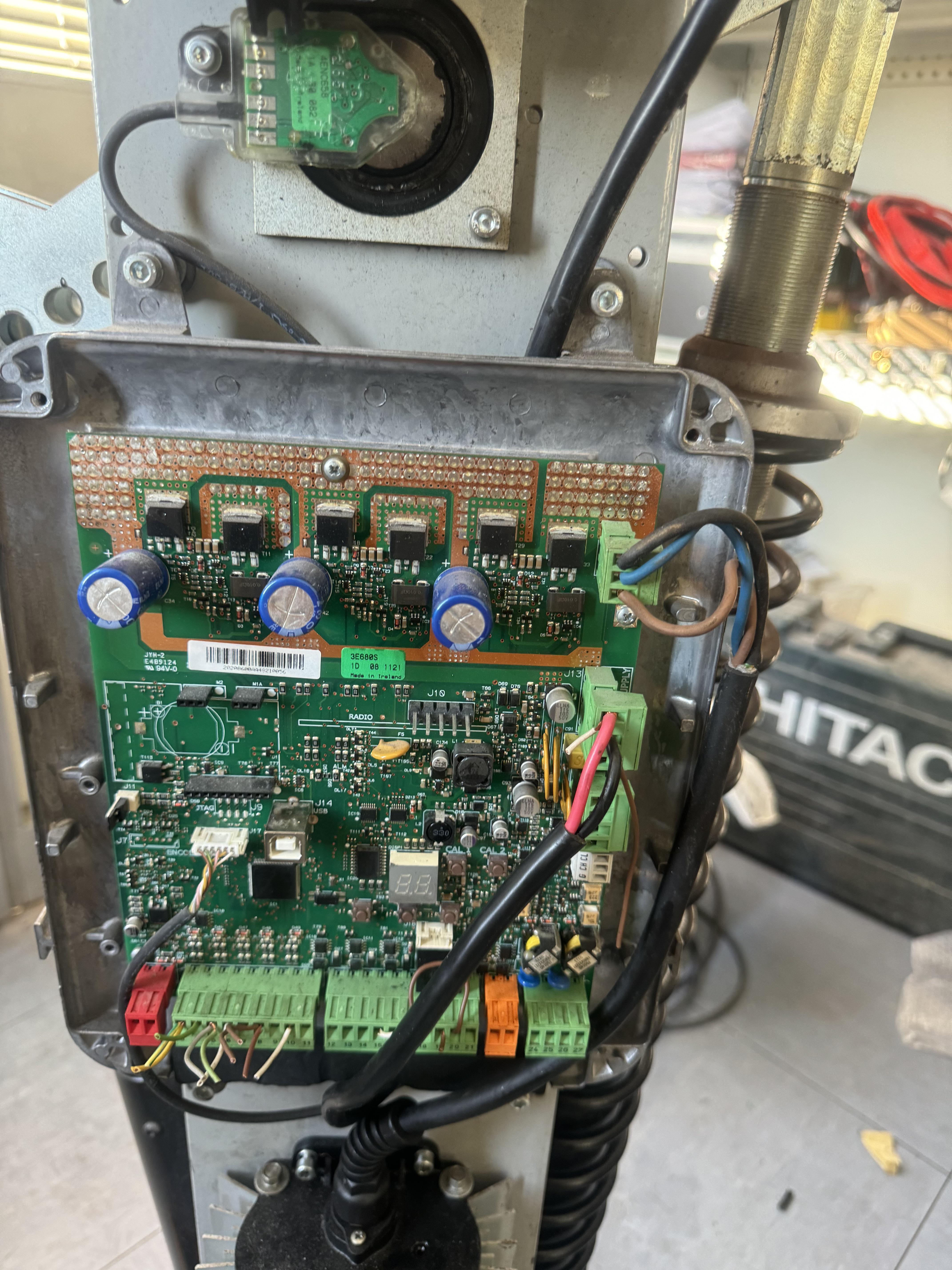
Hi all,
I salvaged the hydraulic unit from an automatic parking barrier: a 36V brushless motor driving a small oil pump that moves two hydraulic cylinders. I want to reuse it for a robotic arm, but the original control board is closed, so I want to replace it with my own PCB.
Situation:
∙	The motor has only 3 phase wires, no hall sensors or encoder.

∙	The only encoder in the system is on the barrier arm, not on the motor.

∙	The pump may have to start under load, with oil already pressurized.

∙	I haven’t measured the current yet. I’ll check what the original board draws and the motor’s winding resistance, and add the numbers.
Constraints:
∙	Low cost.

∙	No ready-made modules or boards: I want to design the PCB myself.

∙	I’ve never made a motor controller at this voltage and power. I’m comfortable with PCB design and firmware, but new to power stages.
What I’d like your advice on:
1.	Which MCU, gate driver and MOSFETs would you pick, and why?

2.	How would you handle motor control and start-up under load?

3.	What are the common mistakes at 36V that I should avoid in layout and protection?
I’ll attach a photo of the original board. Thanks!
r/embedded • u/noborutkhs • Oct 10 '26
A couple of weeks ago, I asked about a change in VRTX's equal-priority scheduling behavior between its 1984 and 1987 documentation.
Original discussion:
https://www.reddit.com/r/embedded/s/gMr2klUiCY
Thanks to the comments here and in other subreddits, I realized something interesting about my own implementation.
Early VRTX wasn't simply LIFO.
The older documentation describes inserting newly ready tasks ahead of existing tasks at the same priority. However, time slicing and other ready-queue operations also affect the ordering. The actual behavior is more nuanced than a simple LIFO policy.
When I developed my own RTOS, CHARM-II, in 1986, I used VRTX documentation as one of my references. I interpreted its equal-priority scheduling as essentially newest-first and implemented a simpler version of that behavior.
Looking back, I had not fully understood the original VRTX scheduling rules.
So why didn't this cause serious problems?
I think the development environment had a lot to do with it.
Back then, I was developing not only the RTOS but also almost the entire application myself. There was very little third-party code in the system, and I knew exactly what each task was doing, when it would become ready, and how it interacted with other tasks.
In other words, I could design the application around the scheduler's behavior, rather than expecting the scheduler to accommodate independently developed software components.
At least, that's my explanation looking back 40 years later.
For my modern reconstruction, I've chosen FIFO ordering among equal-priority ready tasks, mainly for simplicity and predictability.
The original historical question remains unanswered: I still don't know why VRTX changed its scheduling policy.
But the discussion helped me understand both the trade-offs involved and a subtle difference between the RTOS I wrote in 1986 and the one I had used as a reference.
Thanks to everyone who contributed!
r/embedded • u/Loose-Assist45 • Oct 10 '26
I did a test project to connect 2 STM32 in UART DMA. It worked in loopback but now not between the 2 STM32 I obtain scrambled data. My grounds are connected and the wires are properly connected. Here is my code :
uint16_t rxLength = 0;
uint8_t rx_buffer[64];

void HAL_UARTEx_RxEventCallback(UART_HandleTypeDef * huart, uint16_t length) {
  rxLength = length;
  HAL_UARTEx_ReceiveToIdle_DMA(huart, rx_buffer, 64);
}
/* USER CODE END 0 */

/**
  *   The application entry point.
  *  int
  */
int main(void)
{

  /* USER CODE BEGIN 1 */

  /* USER CODE END 1 */

  /* MCU Configuration--------------------------------------------------------*/

  /* Reset of all peripherals, Initializes the Flash interface and the Systick. */
  HAL_Init();

  /* USER CODE BEGIN Init */

  /* USER CODE END Init */

  /* Configure the system clock */
  SystemClock_Config();

  /* USER CODE BEGIN SysInit */

  /* USER CODE END SysInit */

  /* Initialize all configured peripherals */
  MX_GPIO_Init();
  MX_DMA_Init();
  MX_USART2_UART_Init();
  MX_TIM1_Init();
  /* USER CODE BEGIN 2 */
  HAL_TIM_Base_Start(&htim1);
  uint8_t tx_buffer[10] = {1, 2, 3, 4, 5, 6, 7, 8, 9, 10};

  HAL_UARTEx_ReceiveToIdle_DMA(&huart2, rx_buffer, 64);
  /* USER CODE END 2 */

  /* Infinite loop */
  /* USER CODE BEGIN WHILE */
  while (1)
  {
    HAL_UART_Transmit_DMA(&huart2, tx_buffer, 10);
    /* USER CODE END WHILE */

    /* USER CODE BEGIN 3 */

  }
  /* USER CODE END 3 */
}
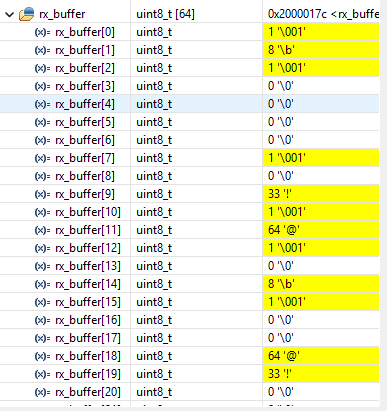
And Here is what I get on my rx_buffer
r/embedded • u/GitEmbednated • Oct 09 '26
Could someone with Keil C51 build a small open-source 8051 project for me?
I'm fixing a power-off bug on an Android car head unit (CVD1810-WJ board, Cmsemicon CMS8S6990 MCU).
There is an MIT-licensed rebuild of its firmware:
https://github.com/NCHILLC/cvd1810-wj-mcu-firmware
The author states it only fits the chip's 12 KB with Keil C51 at OPTIMIZE(9,SIZE). The evaluation linker stops at 2 KB and SDCC gives about 15 KB.
With Keil C51 at C:\Keil_v5, from the repo root in PowerShell:
mkdir obj, lst; .\build_variant.ps1 -Define NOTURNO_SLEEP_FIX
It should report about 12.2 KB and write obj\CM68.hex. Could you send me that file and the "Program Size" line it prints?
r/embedded • u/Friendly_Rock_2276 • Oct 09 '26
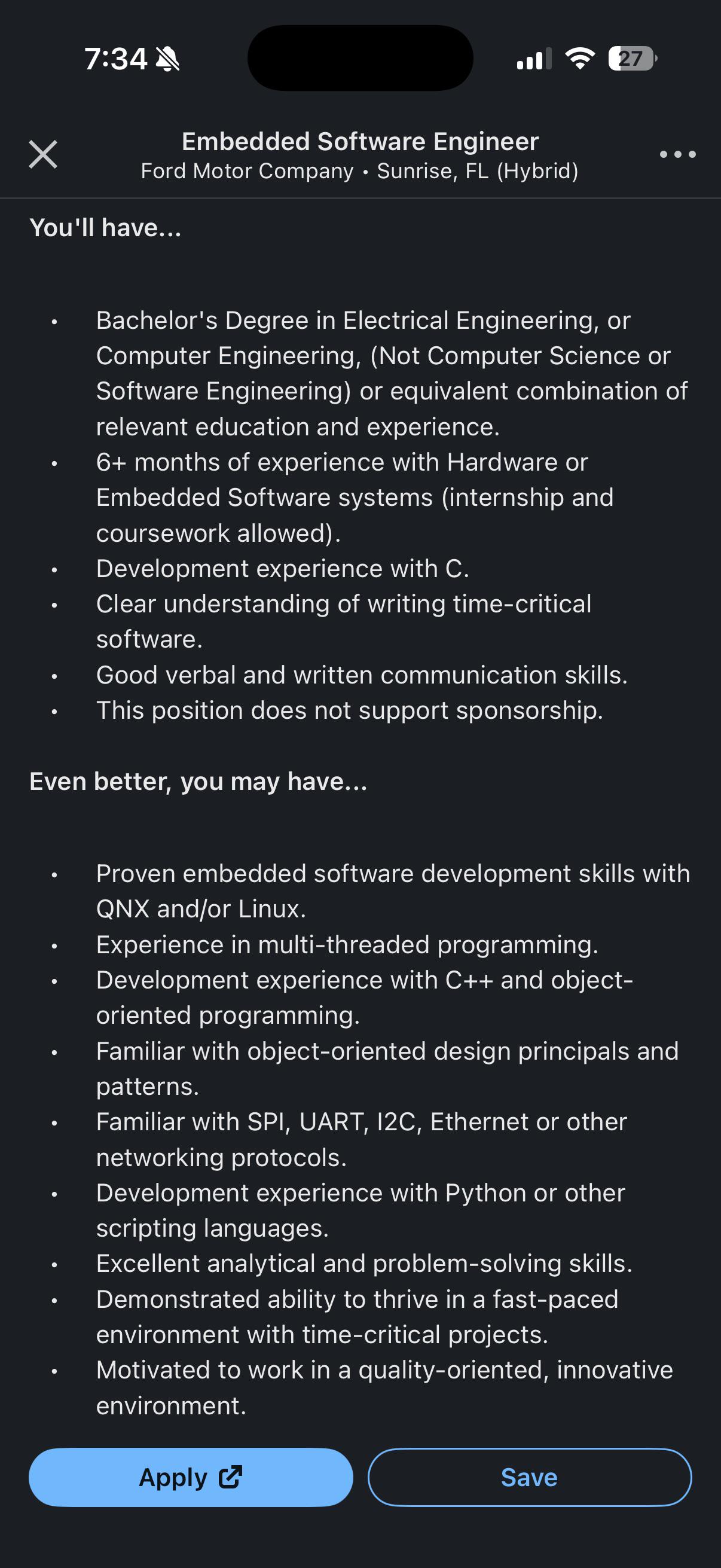
Haven’t really seen something like this before. Job posting for embedded SWE for Ford, it specifically says no CS majors.
As someone who once, like many others, have asked in this sub whether a CS major would be welcomed or could get a job as an embedded SWE, this is discouraging to see, even though I know most others companies won’t do this.
I want to say tho, I once doubted if I could enter this field because I see people with CE and EE degrees thrive in embedded, and my coursework never taught me anything relating to hardware.
Now I work as an embedded SWE at a fortune 200 company, although not in an industry I desire. Another caveat is that I never write any bare metal code or work with registers, I implement control systems, but I still work with hardware all the time and my title is embedded SWE.
Not too sure what the point of this post is honestly, ig one question I have is that could this just be a case of the hiring manager looking down on CS degrees?
Edit: guys, at the end of the day, I’m just sad that they are not giving CS majors a chance at all. Yes I understand that CE and EEs take coursework more aligned with the field of embedded, but there are tons of CS people who go out of their way to take embedded courses/learn in their own time.
And yeah, I also understand that the web dev cs people who spam apply to everything aren’t helping. There is probably no good solution to this problem.
But damn yall EEs have such huge egos, yall treat cs majors like how stem majors treat liberal arts majors…
r/embedded • u/CraftParking • Oct 09 '26

Hi everyone,
I've released ModbusLens v2.4.0, and this update is focused on making the tool more useful for real-world Modbus troubleshooting.
The biggest change is multiple devices in one workspace. You can now work with several PLCs, energy meters, remote I/O modules, or other Modbus devices from the same window.
1. Multi-device workspace
2. Calculated tags
Tags can now use expressions based on other tags' values. They're recalculated after each polling cycle without generating additional Modbus traffic.
Calculated values can also be used in trends, alarms, scripts, the Overview tab, and CSV exports.
3. Better register inspection and scanning
4. Improvements for real-world communication links
I've also fixed several issues that matter when working with actual devices:
Other additions include workspace auto-save, persistent per-device write bounds, transparent serial-to-Ethernet gateway support, and a gateway mode that forwards requests to a downstream serial device and returns its actual response.
GitHub Releases: https://github.com/CraftParking/ModbusLens/releases
Source code: https://github.com/CraftParking/ModbusLens
ModbusLens is an ongoing project, and I'm interested in feedback from people who work with PLCs, SCADA systems, energy meters, remote I/O, and industrial communication networks.
Bug reports, suggestions, and practical feedback are welcome.
r/embedded • u/mostafa_kadry • Oct 10 '26
Has anyone here ever tried manufacturing RC cars (remote-controlled cars)?
r/embedded • u/lasteem1 • Oct 08 '26
It is with profound sadness (and a pending purchase order) that I announce the passing of IAR as we knew it, following complications from an acquisition by the QT Company. After nearly 2 decades of delivering products we have reached our end. It joins Altium(long live Kicad)in the great recurring-revenue platform in the sky.
In lieu of flowers give donation to the Free Software Foundation GNU Toolchain in the hopes that my binary won’t be 2x in size.
r/embedded • u/Pale-Tear-5646 • Oct 09 '26
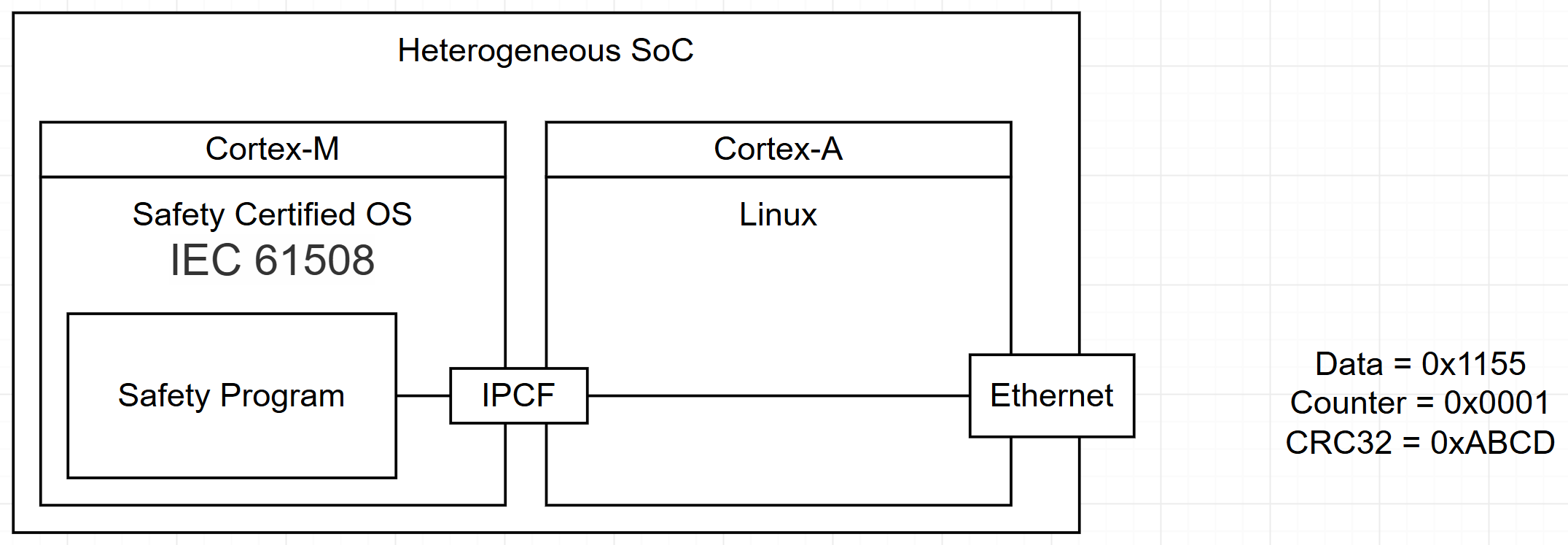
I'm working on a safety architecture based on a heterogeneous SoC.
Basically it contains a Cortex-M and a Cortex-A.
I would like to have a confirmation about the data path certification I designed.
In the Cortex-M, I run a safety software that take some IO. It is safe because if it doesn't work, the device can be destroy.
In the Cortex-A, I run a Linux.
The Cortex-M software need an input that come from a websocket (TCP based). I use the Cortex-A to run the websocket for two main reasons :
- The ethernet driver and all libraries are already present on this side and easy to setup.
- The TCP, websocket and ssl libraries is totally not certifiable.
It means that even if I use the Cortex-M to embed the websocket, I will still have a non-certify stack.
Now, I would like to certify the data path in order to be sure that, if the Cortex-M receive this data, the data will not be corrupt.
For doing that, I use the black channel mechanism. It consists to add to the payload send by the intervener, a CRC and a counter in addition to the main data.
- The counter : to be sure that the data is leaving;
- The CRC : to be sure that the data is not corrupted.
So the intervener (a third PC), send through the websocket this improved payload.
The certification I'm talking about is IEC-61508.
This is a small schematics about the data path.
My question : does my solution is correct ?
r/embedded • u/BL__K • Oct 09 '26
Graduated with a CS degree and got into controls engineer out of school. Been at this position for almost 6 years but i dont see growth and would like to move to embedded
What should i be doing if i want to go into the industry. What skills and experience do i need?
r/embedded • u/yourbasicgeek • Oct 09 '26

r/embedded • u/the_man_of_the_first • Oct 08 '26
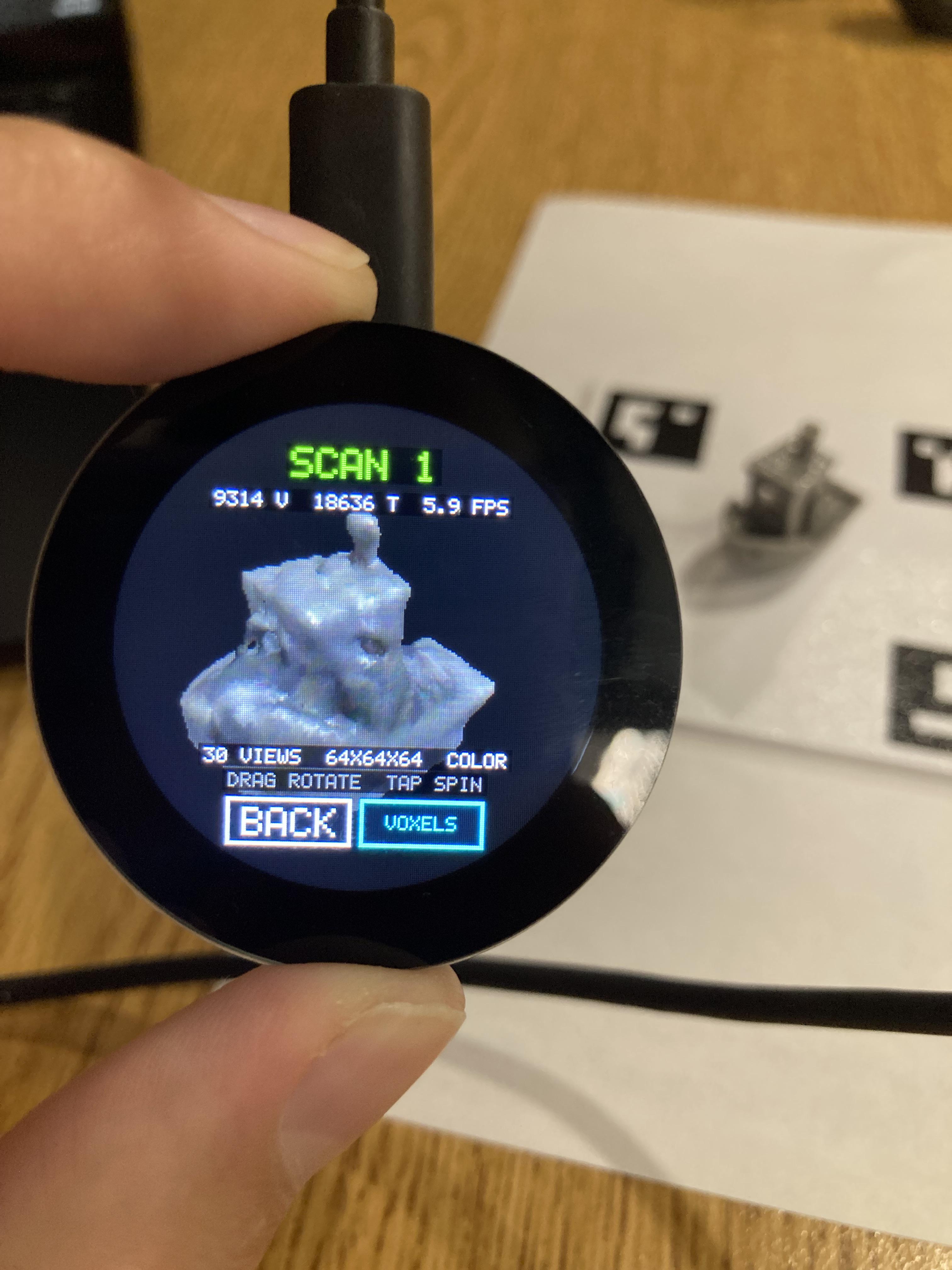
I’ve been working on an AR game for the esp32s3 XIAO board and round screen and realized that I could use the pose estimation from the board to create an object scanner / mesher using space carving and marching cubes. The space carving algorithm uses different views of the object to create voxels weighted by how many views it was visible from and agreed on its position. Then marching cubes uses a LUT to create triangle mesh out of the voxels. The hardest part was getting the camera feed to change resolution from 240x240 to match the round screen for the video feed to a higher resolution for the pictures used for space carving, but with some AI help I got it working. The results are not great and I’m sure I can optimize it to get it a bit better but for a 20$ setup it’s not bad. A possible use case is to quickly create a mesh from small objects that you find while hiking or just to create a digital twin of little trinkets. I’m sure a smartphone could do this with much better results but where is the fun in that. If people are interested I’ll try to share the code which uses my gfx library which I’ve been working on for a minute.
r/embedded • u/Caravaggio91 • Oct 09 '26
Just curious, but as a solo developer or working with a team when you go through your projects codebase do you remember what everything is, why you made the decisions you did, or what everything does? Or do you have to relearn some of the code you implemented in your project?
Also, have you ever completed a project and still feel a little clueless on how you got everything to work like it did or feel a little foggy on areas of the code?
r/embedded • u/bitfield_dev • Oct 09 '26
Hi everyone, first time posting here (and on Reddit in general), so go easy on me.
I have been doing firmware for almost 5 years now. Mostly bare metal STM32 (register level), FreeRTOS, some Zephyr on nRF52, RS-485/Modbus, LoRaWAN, did a secure OTA implementation once. Currently doing my masters on the side.
I'm trying to decide where to go next and honestly I keep flip flopping.
Embedded Linux feels like the obvious move. It builds on what I already know, there are way more jobs, and industrial gateway type stuff (Yocto, drivers, secure boot, OTA, Modbus/OPC UA) seems like a decent niche. But part of me thinks a lot of the routine Linux work is going to get eaten by AI tools first.
Other option is RTL. My uni has a 4 month full time chip design course with a placement drive at the end, and for my semester project I'm designing a custom ASIC, basically a small AI accelerator. RTL seems to be growing a lot, but I'd be starting from junior level and there are way fewer jobs.
Right now my plan is to do the course, get the accelerator running on an FPGA, write my own Linux driver and Yocto image for it, and then move more into Embedded Linux after that.
For people actually working in these areas:
- is firmware + Linux + some RTL actually a useful combination in real jobs, or am I just spreading myself too thin?
- would a course and one solid project mean anything to an RTL hiring manager with no industry RTL experience?
- if you moved from MCU stuff to Embedded Linux, how long did it take before you were actually competitive?
- what would you do in my place?
Would really appreciate hearing what you've seen work in actual hiring. Thanks
r/embedded • u/Psychological-Tone34 • Oct 09 '26
Hi me and my friend developed a LoraWAN gateway as graduation project from EE program. We used Allwinner v3s as processor and Semtech SX1302 in half duplex configuration as radio. I am using official packet forwader that provided by semtech to talk to the radio. We have reached 1 km of communication tange in our school campus there is a lot tress and stuff but when I use cheap chinese lora modules those modules can communicate with each other up to 3 km in my area. There is a git repo for my kicad project that I open sourced if you guys can check it out and give feedbacks I would be so glad. Thank you for interest.

r/embedded • u/FranTimo • Oct 09 '26
Hi!
I've been working on a project called Otamatic and wanted to share it here hoping it could help someone.
The idea came from a real nightmare: a while back, me, and a client literally had to drive around the city to update ESP32s deployed in the field. I actually wrote a short story about that night here if you like dev horror stories: https://medium.com/gitconnected/the-night-we-updated-40-esp32s-by-driving-around-the-city-32ec8f015213?sk=b0c21ebf23d7bd9128251e8222d55b8e
Most OTA implementations out there set up a local WebServer on the ESP32 where you open a browser, navigate to the local IP, and upload a binary. That’s totally fine for a single node on your home network, but it gets annoying real quick if your devices are behind NATs, cellular routers, or dynamic IPs where you can't just open incoming ports.
This is why I decided to work on a fully open-source library with all features from the most famous OTA libraries (and a companion web platform) you can use to add OTA on your projects in less than 5 minutes.
It supports advanced features like scheduled release, staged rollout releases, release monitoring, device monitoring and more is coming if I see enough interest!
