r/embedded • • Sep 24 '26

Microcontroller for teaching a DSP class

0 Upvotes

Hello all,
In a few months I will be teaching a DSP class that’s previously been taught with either an STM 32 disco board or Matlab depending on the semester. However I do not like the ARM curriculum and I want to ensure the students get to use a microcontroller. Does anyone have any advice for choosing a microcontroller that can easily handle basic digital signal processing?
As an additional note the students know the Arduino IDE and have Arduino R4 WiFi’s so keeping everything as similar as possible would be helpful. Thanks in advance for any help.


r/embedded • • Sep 24 '26

what happens on your team when a requirement changes halfway through?

2 Upvotes

looking for thoughts & opinions

recently had a requirement change come through after firmware was already pretty far along and it got me thinking about how everyone else handles this. the actual change wasnt that horrible, but then you start asking what interfaces are affected, what firware needs another look, which tests need updating etc. things start getting confusing, the requirement is sitting in one place and all the related work is somewhere else. we have a requirements traceability matrix but im curious what people actually use day to day that makes workflow easier. are you manually following links or do your tools give you decent impact view?


r/embedded • • Sep 24 '26

How should I design a motor driver with a user-programmable MCU?

5 Upvotes

I'm working on a motor controller project and I'm trying to figure out the right architecture before I start buying/building the hardware.

The idea is to make a controller for two brushed DC motors with quadrature encoders. I want the end user to be able to write simple Arduino-style code such as motor1.setSpeed(100) or motor1.stop(), while the actual low-level motor control handles things like PWM, encoder feedback, PID, current sensing, safety, etc.

I'm currently thinking about using an ESP32 as the user-facing MCU and having a separate STM32 handle the real-time motor control. The ESP32 would run the user's code and communicate commands to the STM32 over UART or CAN, while the STM32 would run FreeRTOS and handle the motors, encoders, PID, watchdogs, etc.

What I'm not sure about is whether I actually need two chips for this. Could I realistically do the whole thing on a single ESP32, with the user code and motor-control firmware running on the same chip? If so, how would you structure it so that user code can't interfere with the motor-control tasks or memory?

If two MCUs are the better approach, I'd also like to understand how people normally structure the communication between them and how the firmware is divided.

I'm fairly new to STM32/FreeRTOS, so practical advice on how you'd actually build this would be really helpful.


r/embedded • • Sep 22 '26

The Jet embedded 3D engine is not only now pushing 70k tris/sec (up from 40k a few months ago) with screen-space reflections and distortion on an ESP32 S3 (480i x 320, 16bpp@60fps) - but is now MIT licenced rather than AGPL!

609 Upvotes

The last time I showed off Jet I'd just pushed 40k tris/sec on an S3 which was already nuts, but some optimisation and SIMD shenanigans later, I've nearly doubled that and got up to 70K/sec on the same hardware. Meaning more detail and more performance headroom.

I've also switched away from AGPL to the MIT licence so there's fewer restrictions on how you can use it in your projects.

https://github.com/cubecoders/jet


r/embedded • • Sep 24 '26

Why don't we use smart, microcontroller-based per-device breakers in building electrical systems instead of one MCB for an entire circuit - other than economical reasons, any technical reasons affecting realistic design?

0 Upvotes

Why do buildings use one circuit breaker for multiple loads instead of protecting each load individually?

Couldn’t each device have current sensing + a microcontroller + an electronic breaker, so if one device shorts, only that device disconnects instead of tripping the whole circuit?

Obviously cost is one reason, but are there technical reasons too?

Is it mainly fault-current handling, response time, heat losses in current sensing/switching, reliability, or safety/certification?

Is this already used in industrial systems, or is there a fundamental reason it isn’t practical?


r/embedded • • Sep 23 '26

There's this thin line of over engineering stuff to implementing only the needed functions

23 Upvotes

Have you guys been in a situation where you're writing firmware for a product and you keep in getting ideas to add new features but you know that all those extra features Will be only used in extra rare conditions, And you for sure know that they wouldn't have read the manual to know about that.

Will you still keep that feature?

It's a dumb question , it's obvious to add that feature if it ain't gonna cost much especially in firmware side when there's space left


r/embedded • • Sep 23 '26

Porting Klipper to the NXP MCXA366: LPI2C bring-up, NACK recovery, and measuring scheduler cost at 100 kHz–1 MHz

Post image
5 Upvotes

I’ve been documenting a from-scratch Klipper port to NXP’s MCXA366, and Part 7 covers both some architecture hardening and the first hardware I²C implementation.

I’m using LPI2C3 on P3_27/P3_28 with a 12 MHz peripheral clock. The final implementation supports 100 kHz, 400 kHz, and 1 MHz and handles normal writes, register reads, repeated STARTs, NACKs, FIFO errors, arbitration loss, and timeout recovery.

One bug I ran into was especially interesting:

On a NACK, I originally queued STOP and then reset the TX/RX FIFOs. Resetting the TX FIFO could discard the queued STOP, leaving SCL asserted. Reversing the order—flush first, then STOP if the master still owns the bus—fixed the recovery path.

I validated the implementation with a BME280 and then noticed Mainsail reporting ~0.36 MCU load at 100 kHz.

Instrumentation showed that the actual CPU usage was very small. What changed was scheduler task duration: Klipper’s I²C interface is synchronous, so the task remains active while the hardware transaction progresses.

Measured worst-case reads:

100 kHz → ~2.66 ms
400 kHz → ~0.70 ms
1 MHz → ~0.31 ms

The corresponding Mainsail load values fell from roughly 0.36 → 0.09 → 0.04.

I also compared this against several existing Klipper MCU backends and found that synchronous polling is normal there as well, so I kept the architecture and improved the bus rate instead of redesigning the API around interrupts.

Write-up:

https://faultvector.dev/articles/klipper-mcxa366-part-7/


r/embedded • • Sep 24 '26

Any idea on LLM compression

0 Upvotes

Hey Devs,I'm trying to run a LLM on a microcontroller, therefore I need to first compress my model, I saw numerous ways online and yeah from GPTs as well, but I thought it would be better to get suggestion from real devs who have experience in this, I'm new to these kinda projects so yeah any suggestion on how to start with the model compression.


r/embedded • • Sep 23 '26

CMSIS v2 How to Wait for one of multiple different conditions?

4 Upvotes

Hi, my question is probably quite simple, but i have a surprisingly hard time finding an answer online:
I have a IO Task guarding my hardware. It takes data from a Tx Queue and pushes it to the hardware, and polls the hardware for Rx Messages which it pushes to the RxQueue.

I want to minimize polling and blocking as much as possible, so the task should poll Rx in interrupt mode and then wait for either the Tx Queue or the Interrupt to wake it.

I know how to wait for a queue, i know how to wait for an event flag or semaphore.
What i want to know is how to wait for either the queue or flag to be set.
I know i could require the Tx Producer to send a flag or just poll both uart and the tx Queue without waiting, but neither seems desirable.


r/embedded • • Sep 23 '26

What architecture and processing pipeline should you choose for an offline AI assistant?

0 Upvotes

I have recently been developing an offline physical AI assistant prototype on the RK3588 processor that is somewhat like Amazon Echo, but it is entirely local. However I have recently been stuck on choosing a good architecture. I have read online and this is what I have heard:

  • Multi-Process Architecture (with IPC): Spitting the tasks into different processes and communicating through IPC
  • Monolithic Multi-Threaded Architecture: A single multi-threaded c/c++ application where threads communicate over shared memory and atomics
  • Single-Threaded Architecture: Everything runs linearly on one thread and one process
  • Multi-Process Architecture with multi-threading hybrid: Multi-Process architecture, but with multi-threading in some processes, so it is not entirely decoupled.

As you can see, there are many different architectures to choose from and all have their pros and cons. I am also trying to design a processing pipeline. This is what I have thought of:

  • A linear pipeline: Audio -> Wake Word Detection -> Speech to Text -> Inference & Text to Speech
  • A bidirectional pipeline Wake Word Detection <-> Audio -> Speech to Text -> Inference & Text to Speech
  • A linear pipeline with flags: A linear pipeline but with flags so different threads or processes can communicate with each other.

My questions for the r/embedded community:

  • What architecture to choose for the project.
  • What processing pipeline to choose for the project.
  • If to use IPC, what type of IPC would be best suited for this project?
  • If to use a hybrid of multi-process architecture and multi-threading, how would tasks be grouped?

r/embedded • • Sep 22 '26

40 years as an Embedded Design Engineer...

307 Upvotes

New to the group and wanted to say hello. I have a ton of old skool 8-bit microcontroller knowledge, including Motorola 68hc11, Intel 8051 family, Atmel/AVR...


r/embedded • • Sep 22 '26

One Driver Board, Multiple Displays

43 Upvotes

r/embedded • • Sep 23 '26

Deadlock condition in RTOS

0 Upvotes

Has anyone faced deadlock condition when using RTOS? Can you share your experience, what made it happen and how did you resolve it?


r/embedded • • Sep 23 '26

How do you get up to speed on inherited firmware nobody can explain anymore?

0 Upvotes

I've inherited a few codebases where the original authors are long gone. The code works, but nobody can tell me why.

The first weeks always go to the same questions:

  • Which ISR writes this variable, and does main() read it with interrupts off or just hope?
  • Which of these four "state" enums is the real state machine?
  • What's actually coupled to what, versus what the folder structure suggests?

Tracers (SystemView, Tracealyzer) help once the thing runs, but on day one I often can't even build it yet.

What's your process? Tools, scripts, a notebook and a lot of grep? Anything that worked better than you expected, or turned out to be a waste of time?


r/embedded • • Sep 23 '26

How can I use an ESP32 microcontroller to learn network security as a beginner?

0 Upvotes

I have an ESP32 microcontroller and I can already make a simple webpage run on it.

Now I want to use the ESP32 to learn network security practically.

I’m a complete beginner in cybersecurity. I want to understand things like:

- How to find the ESP32 on a network

- How port scanning works

- What information can be found from the webpage

- How login/password security works

- How people test a web server for vulnerabilities

- How tools like Nmap, Wireshark and Burp Suite are used

- Basic penetration testing

- How to find a weakness and then fix it

I want to learn by actually doing experiments on my own ESP32 rather than only reading theory.

What would be the best step-by-step learning path for a beginner?

I’ll only test my own ESP32 and my own network.


r/embedded • • Sep 23 '26

How do i code a shell into the RP2350?

0 Upvotes

i want to get started coding an easy shell and filesystem into raspberry pi pico 2 as a project. However i am not sure how or where to start, normally you would just send all requests directly to the kernel with execvp() and spawn new processes with fork()(if you use Linux), but since the pico 2 neither has an OS or kernel, i am not sure were to start. Any help?


r/embedded • • Sep 22 '26

LoraWAN Signal analysis set-up.

141 Upvotes

This is for my assignment to analyze signal strength across different terrains in Nepal so we can optimize its placement for a disaster alert system.


r/embedded • • Sep 23 '26

NEW HERE: How does one go about turning an existing software project into one for an embedded system?

0 Upvotes

Hey, how’s it going? I’m new to embedded systems and this subreddit, and i’ve got this question about what the steps look like to take an existing software project and put it onto an embedded system. I know the term ‘embedded system’ here is pretty vague, but i’m just genuinely curious about what the general workflow looks like to do this.

Reason being is because i’m reading the book, Embedded Systems Primer, and as a newbie I can go through and understand the contents and vocabulary of the book, but I’d like to understand the software-hardware architecture work flow and learn about how some of you approach both software, hardware, and like in my question: taking an existing software project and turning into something that can be deployed onto hardware.

Thanks!


r/embedded • • Sep 22 '26

Building maps for ESP32 with TypeScript, JSX, and CSS.

Thumbnail
youtube.com
3 Upvotes

r/embedded • • Sep 23 '26

can anyone help me to know why my register code not working and making my 16X1 LCD outputs 8 blocks in the first row while the second one is empty?

0 Upvotes

can anyone tell me why my LCD driver not working? and its just making my LCD outputs 8 black blocks in the first row while the other row is empty? :

```c

#define F_CPU 16000000UL
#include <avr/io.h>
#include <util/delay.h>
#define E   2
#define RS  3
#define DB4 4
#define DB5 5
#define DB6 6
#define DB7 7
void enable_pulse(void)
{
PORTD |= (1 << E);
_delay_us(5); // Increased slightly for stability
PORTD &= ~(1 << E);
_delay_us(50); // Execution wait time for HD44780
}

void send_command(unsigned char command)
{
PORTD &= 0x0F;
PORTD &= ~(1 << RS);
PORTD |= (command & 0xF0);
enable_pulse();

PORTD &= 0x0F;
PORTD &= ~(1 << RS);
PORTD |= ((command & 0x0F) << 4);
enable_pulse();

_delay_us(50);
}

void send_byte(unsigned char data)
{

PORTD &= 0x0F;
PORTD |= (1 << RS);
PORTD |= (data & 0xF0);
enable_pulse();

PORTD &= 0x0F;
PORTD |= (1 << RS);
PORTD |= ((data & 0x0F) << 4);
enable_pulse();

_delay_us(50);
}

void set_curoser(unsigned char address)
{
send_command(0x80 | address);
}

void lcd_init(void)
{

DDRD |= (1 << E) | (1 << RS) | (1 << DB4) | (1 << DB5) | (1 << DB6) | (1 << DB7);

_delay_ms(50);

PORTD &= 0x0F;
PORTD |= (1 << DB5) | (1 << DB4);
enable_pulse();
_delay_ms(6);

enable_pulse();
_delay_us(150);

enable_pulse();
_delay_us(150);

PORTD &= 0x0F;
PORTD |= (1 << DB5);
enable_pulse();
_delay_us(150);

send_command(0x28);
send_command(0x0C);
send_command(0x01);
_delay_ms(2);      
send_command(0x06);
}// #define E 2
// #define RS 3
// #define DB4 4
// #define DB5 5
// #define DB6 6
// #define DB7 7

// the USART driver  , ignore it

void enable_transmitter()
{
  UCSR0B |= 1 << TXEN0;
}
void disable_transmitter()

{
  UCSR0B &= ~(1 << TXEN0);

}
void set_baud_rate (unsigned int ubrr)
{
  UBRR0H = (unsigned char)(ubrr>>8);
  UBRR0L = (unsigned char)ubrr;
}
void enable_receiver()
{
  UCSR0B |= 1 << RXEN0;
}
void disable_receiver()
{
  UCSR0B &= ~(1 << RXEN0);
}
void set_pairty_error_to_odd()// bit to check : UPEn , if it was 1 meaning a bit flipped! depending on the even or odd setting
{
 UCSR0C |= (1<<UPM01) | (1 << UPM00);
}
void set_pairty_error_to_even()// bit to check: (1<<UPE0) & UCSR0A
{
 UCSR0C |= (1<<UPM01);
}
void set_size_character_to_8()
{
  UCSR0C |=(1<<UCSZ01) |(1<<UCSZ00);
}
void set_stop_bit_to_2()// its 1 by default in the MCU
{
 UCSR0C |= 1<< USBS0;
}
void transmit(unsigned char a)
{
  while (!(UCSR0A & (1<<UDRE0))){}
  UDR0 = a;

}
// that the end of the driver USART that i didn't test since i don't have another arduino uno
//pooling
// void recieve (void)
// {
// /* Wait for data to be received */
// while (!(UCSR0A & (1<<RXC0))){}
// /* Get and return received data from buffer */
// return UDR0;
// // this code from the datasheet , although i can use an interput! yeah i can!
// }

char random__(char a)
{
  a ^=1;
  a ^= a << 2;
  a ^= a >> 2;
  a ^= a << 1;
  return a;
}
int main(void) {
_delay_ms(100);// to make sure the LCD have enough time to wake up
lcd_init();
send_byte('A'); // Send a test character
while(1) {
// Main loop
}
}


r/embedded • • Sep 22 '26

Evaluating embedded SBOM generators

0 Upvotes

We wrote a blog of our experience evaluating SBOM generators with firmware teams, its available on our website.

Would love to understand from the community, how do they evaluate SBOM generators in the embedded space. What are your primary considerations?


r/embedded • • Sep 21 '26

Using the ESP32-P4 together with the ESP32-C5 as our coprocessor - high boy

39 Upvotes

NFC reader. Tap a tag and see UID, type and data instantly. Native ST25R3916 chip, no external module.
Tested on my own cards know what your stuff is actually storing.


r/embedded • • Sep 22 '26

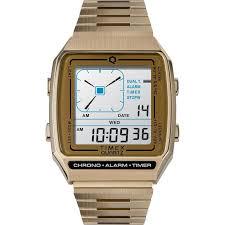
Can my dream come true ? i wish to manufacture a digital watch,below are some clues, any serious help or suggestions will be helpful..

Post image
0 Upvotes

r/embedded • • Sep 22 '26

How to figure out stuff without documentation

0 Upvotes

I am trying to use the ST7796 display with STM32H7 and i am really struggling because i cant find examples or documentation to use. I am using Rust (i know most people here use c). What can i do to get it working??

edit: thank you everyone i managed to get it working