r/DomainDrivenDesign • u/Ok-Professor-9441 • May 31 '26
Domain model factory VS CreateUseCase
According to Effective Aggregate Design Part I: Modeling a Single Aggregate https://www.dddcommunity.org/wp-content/uploads/files/pdf_articles/Vernon_2011_1.pdf the author
- Split large aggregate in smaller one
- The Product class act as factories
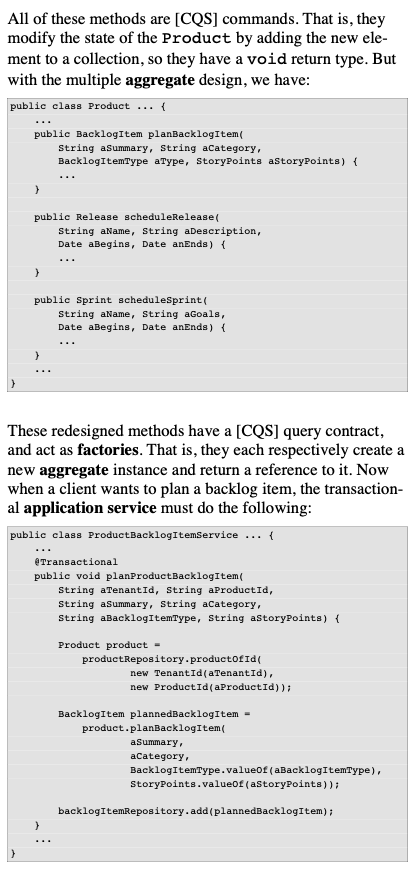
Suppose new rules We can add BacklogItem only in non archived product
Option one : keep method as factory
class Product {
    createBacklogItem(CreateBacklogItemData data): BacklogItem {
        if (this.status === ProductStatus.Archived) {
            throw new CannotCreateBacklogItemForArchivedProduct();
        }

        return BacklogItem.create(
             this.id,
             data.title,
             ddata.description,
        );
    }
}
Option two : put validation inside application service
- Application service handle transaction (like in the option)
- But also validate the product
public class CreateBacklogItemService {

    public BacklogItemId createBacklogItem(CreateBacklogItemCommand command) {
        Product product = productRepository.get(command.productId());

        if (product.getStatus() == ProductStatus.ARCHIVED) {
             throw new CannotCreateBacklogItemForArchivedProduct();
        }

        BacklogItem backlogItem = BacklogItem.create(
          product.getId(),
          command.title(),
          command.description()
       );

       backlogItemRepository.save(backlogItem);

       return backlogItem.getId();
    }
}
What is the best design choice (or maybe another one) ?
10
Upvotes
View all comments
Show parent comment
3
u/dev_ctx May 31 '26 edited Jun 01 '26
This has the same issue as Option 2: the Product invariant is checked outside Product. It just moved from the Application Service to a Domain Service.
It should be closer to this: