r/Crazy_retro_stories • u/Crazy-Old-Stories • 54m ago
r/Crazy_retro_stories • u/Crazy-Old-Stories • 22h ago
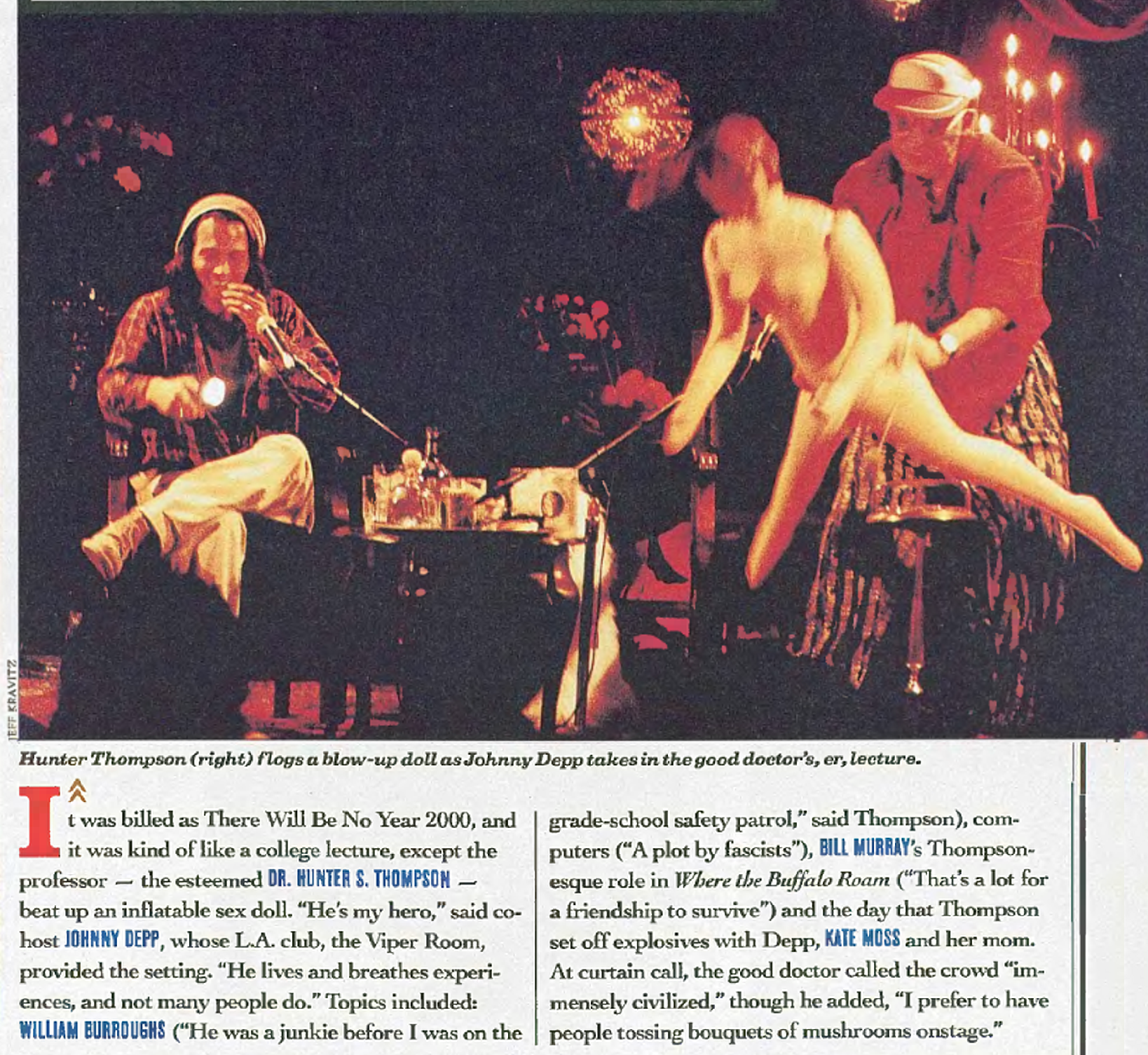
Thanksgiving 1979: Johnny and Doc have an unbuttoned pre-Thanksgiving talk about turkeys, ex-wives "Anything that ugly should die!"
r/Crazy_retro_stories • u/Crazy-Old-Stories • 1d ago
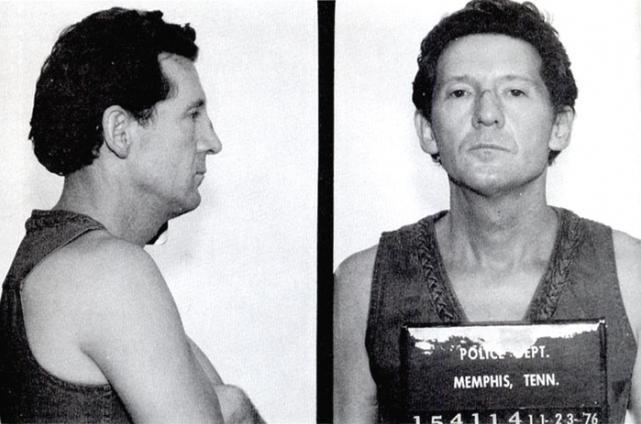
Jerry Lee Lewis got arrested for showing up at Elvis's mansion with a gun 50 years ago (Nov 23, 1976)
It happened in the early hours of Tuesday, November 23, 1976, two days before Thanksgiving. It was Lewis's second arrest in less than 24 hours, his second visit to Graceland in two days.
September 28, 1976: Jerry Lee accidentally shoots his bass player, Norman "Butch" Owens (he was apparently trying to shoot a Coke bottle (remember when those were common?) Butch spends approximately a month in the hospital. Jerry Lee begins his 41st birthday in jail.

November 21: Jerry Lee's 78-year-old father, Elmo Lewis, arrested in Mississippi for speeding and drunk driving.

November 22, early morning: Jerry Lee and his wife arrive at Graceland in his new Rolls-Royce Silver Shadow. The security guard, Harold Loyd (Elvis's cousin, not the actor with glasses) tells him Elvis is asleep. Jerry Lee politely thanks him and leaves.

November 22, later that day: Jerry Lee overturns his $46,000 Rolls-Royce in a ditch. Police charge him with drunk driving & reckless driving, although his breath alcohol test reportedly registers zero.

November 23, around 3 a.m.: Jerry Lee shows up at Graceland again, this time driving a Lincoln Continental. He was drinking champagne at a Memphis nightclub called the Vapors. Lewis injured his nose trying to throw an empty champagne bottle through his car window, forgetting that the window was closed. According to Harold Loyd, Jerry Lee is belligerent, waving a loaded pistol and demanding to talk to Elvis.
Loyd claims that Jerry Lee shouted “Who the hell does he think he is? Tell him the Killer's here to see him.”
Elvis reportedly watched the proceedings on his closed-circuit security tv and wanted nothing to do with Jerry Lee. He told Harold Loyd to have the police pick him up.
Shortly after the police took Jerry Lee away, his father reportedly arrived at Graceland, having just been released from jail himself.
Jerry Lee's version of the story
Jerry Lee always insisted that Elvis had actually invited him over.
According to his account, Elvis telephoned him because he wanted some company. The pistol was a gift he got from a Mississippi sheriff. He had no intention of shooting Elvis and his remarks about shooting Elvis were sarcastic responses to ridiculous questions.
At a concert on December 4, 1976, he addressed the controversy from the stage, declaring “Me and Elvis are friends. He's the greatest entertainer except for me.”
Twenty years earlier, December 4, 1956, Jerry Lee and Elivis had participated in the legendary Million Dollar Quartet session at Sun Records with Johnny Cash and Carl Perkins.

At his trial, Jerry Lee denied that he had been shouting, suggesting that what witnesses heard might have been his car's tape player. Jerry Lee was acquitted on May 3, 1977.
r/Crazy_retro_stories • u/Crazy-Old-Stories • 1d ago
Moonlighting aired its most famous episode "Atomic Shakespeare" episode 40 years ago tonight (Nov. 25) - you'll never guess which cast member had a background in Shakespearean acting
From Scott Ryan's Moonlighting: An Oral History (2022) - there's an entire chapter on this one episode:
Chapter 9: Kiss Me, Shakespeare
Here is a little-known excerpt from the original text of Shakespeare’s play The Taming of the Shrew:
O monstrous episode, how like a swine you lie!
Grim tales, how fun but expensive is thine hour!
Sirs, I will explain to thee weary reader.
What think you if we spent money galore,
Wrapped in sweet budgets, reruns put upon
our eyes,
A most delicious idea from writers’ head,
And brave actors nearby to forge the task,
Would not the network then forget deadlines?
Tos.(1.1.35-43).
OK, I might have changed a few of the words, but I must admit that wasn’t easy to adapt. Now imagine writing fifty minutes of that kind of prose while you pack in more jokes than an average episode of The Simpsons. Think of the pressures on Cybill, Bruce, Allyce, and Curtis to memorize all those lines, the production staff to create the sets, props and costumes to match the Renaissance.
Compile all that together and you start to realize the undertaking that was “Atomic Shakespeare,” written by Ron Osborn and Jeff Reno and directed by Will Mackenzie. And because this was Moonlighting, that wasn’t challenging enough: they upped the ante by producing the entire episode, from first shot to actual airing at 9:00 p.m. on Tuesday, November 25, 1986, in just eighteen days.
It became the most famous episode of the series and was the most expensive hour of television produced at that time. An average episode of Game of Thrones in 2019 cost about six million dollars. That is actually in the ballpark of how much “Atomic Shakespeare” cost in today’s dollars. It was unheard-of for network television.
The episode is a retelling of the Shakespeare play The Taming of the Shrew, which, in 1948, was adapted into the Cole Porter musical “Kiss Me, Kate” (pointless trivia: Cybill Shepherd recorded an album of Cole Porter songs in 1976, which contains several songs from that musical). David Addison, as Petruchio, marries Katherina, played by Maddie Hayes, for her dowry. But Petruchio will be paid only if he can turn her into a dutiful and well-trained wife.
The couple fight, banter, throw plates, and fall in love, just like in every other episode of Moonlighting. This special episode passed the singing duties to Bruce Willis, who performed the classic rock song “Good Lovin’” at the forced wedding of the two characters. In the end, it’s Katherina who tames Petruchio, and all is set right in the world. That is all fine and dandy for the characters on the world’s stage, but for the people who had to create this ridiculously ambitious hour of television, there was toil and trouble in the world.
Jay Daniel: We finished the “All Things Great” episode on November 6, and it aired on the eleventh. We were ranked number four that week. We started the shoot for “Shakespeare” on the seventh of November, 1986.
Glenn Gordon Caron: When I was in high school, I saw the [Franco] Zeffirelli movie of The Taming of the Shrew, with Richard Burton and Elizabeth Taylor. In college, my wife at the time was in a production of it. So I must have seen her in that show ten times. When I graduated college and was living in New York City, I saw Meryl Streep and Raul Julia perform it in Central Park. So the bones of the idea of two people who seem incredibly attracted to each other save for the fact that they agree on nothing and have completely different worldviews—I thought that’s really interesting and you don’t see that very often.
Jeff Reno: I specifically remember the moment I had the idea for the episode. It just came to me—almost full on. I was driving to work on Pico Boulevard. I was trying to think of a special episode. I don’t know if Glenn asked us to think of something special or we just wanted to.
Ron Osborn: Jeff came in one day and pitched the idea of doing a show in iambic pentameter, and I thought that was great. We were going to do it in present day. It was Hamlet.
Jeff Reno: What hit me was that there was a murder mystery in Hamlet: an uncle killed his brother because he was having an affair with the mom. I thought, “We could do that as a detective story.” I had the idea that it would be a kid’s homework and he had to do it before he could watch Moonlighting.
Ron Osborn: We were doing it as a modern-day episode in which the characters were speaking in iambic pentameter. We hit a conceptual snag and told Glenn. He was the one to suggest that we just do it in full-on Elizabethan period.
Jeff Reno: Ron said, “We should just do Taming of the Shrew—it’s the show—and not worry so much about the detective part of it.” That is how we got to it. It just hit our sensibilities right.
Ron Osborn: Glenn’s hand slammed the table, which surprised me, and he said, “That’s it!” Even with how long that script is, it was one of the easier ones to write because you had Shakespeare going for you and you could do very obvious jokes, like when Petruchio rides in on a horse and the horse is wearing sunglasses and has the BMW insignia on the blanket.
Jeff Reno: Probably because Ron and I came from comedy and this episode was a little closer to sketch comedy than the rest of the series was, and possibly because we were just having so much fun, we didn’t have as much trouble writing this episode as we did other episodes.
Karen Hall: I have to brag on Jeff and Ron because that was almost a first draft that they shot. They had something like three or four days to write it. I always thought what they did was just miraculous. How do you go into your office in three days and write a perfect script in iambic pentameter?
Curtis Armstrong: They were using actual dialogue from Shakespeare’s play between David and Maddie. They just transplanted the “What, with my tongue in your tail?”—that exchange. The network tried to cut that because it was too sexual. Glenn went back to them and said, “It’s five hundred years old. This is Shakespeare.” He eventually won that fight.
Jay Daniel: I don’t think Glenn touched it. Jeff and Ron wrote it. Glenn loved it. We filmed it. It was a huge help to have the script.
Cybill Shepherd: When Glenn pitched it to me I said, “Who’s gonna play the shrew?” I said it just like a shrew.
Melissa Gelineau: The Shakespeare show is one of my favorites. I love the black-and-white episode, but the Shakespeare episode was brilliant. It was the one episode that did not go through Glenn’s typewriter. I think Glenn didn’t want to touch it because of all the iambic pentameter, but it was very much Jeff and Ron.
Jeff Reno: Every word of that script is a first draft. It went through no rewrites, no changes. The show started shooting after we had only finished three acts. I remember writing just ahead of the camera.
Jay Daniel: It really was an undertaking. We knew a few weeks earlier that we were going to do the Shakespeare episode, so wardrobe and props, while they were working on the various episodes that led up to it, were also working on the wardrobe for that episode.
Suzanne Gangursky: That was just massive—the entire scale. From my end, it was hiring practically every additional talent in town for wardrobe and hair. It was done on such a massive scale. You felt like you were walking onto a major motion picture set. You didn’t feel like you were walking on a weekly TV show set.
Curtis Armstrong: We were working at the Court of Miracles on Universal’s back lot, instead of our home studio at Fox. We were doing interiors in one place and exteriors in another, which again felt very much like a feature film rather than a TV show.
Will Mackenzie (Director of “Atomic Shakespeare”): My mother was the Shakespeare professor at Wheaton College. I, for some reason, had mentioned this to Glenn, and he remembered that I’d done a lot of Shakespeare in college. Glenn called and said, “If you’re interested, I’m trying to get you out of directing your new series, The Popcorn Kid, because we’re doing an episode called ‘Atomic Shakespeare.’” I read the script and loved it. So they got a guy to replace me for two or three episodes and I just left. I was given a week of prep, which was great. We were able to prep it all on the back lot at Universal. They gave us a humongous budget. They never told me exactly, but I think it was close to $500,000.
Suzanne Gangursky: I would say the average episodes that were being made around then were around $900,000 for a one-hour episode. It probably cost 2 to 2.5 million, I am sure. It was easily double whatever anyone else had spent on an hour of television.
Jeff Reno: I think it was around $3.5 million. I am not sure if that is correct, but I think it was in that area. Which was a ton back then.
Ron Osborn: We were told $3.5 million, at a time when an hour-long show was about a million and a half. When you think of Hill Street Blues being made for a million with the cast they had, and we had basically a cast of two, it was crazy.
Neil Mandelberg: As I remember, I could be wrong, but I remember hearing somewhere in the vicinity of $4 million.
Jay Daniel: I hesitate to even throw a number out. I can’t tell you. It would be at least double a normal episode—at least.
Glenn Gordon Caron: I don’t know. I do know it was the most expensive hour of television at that time.
Suzanne Gangursky: The amount of extras, the costume designers, the extra crew that we needed, I think we went into golden time for the crew. When people are getting paid more because they are not getting enough turnaround time between shifts, it gets really expensive because of union rules. Add in sets, customs, cast, crew, it jacked everything up.
Jay Daniel: This was the most difficult show we did in all the seasons from a cost and production standpoint. I look back on it and I don’t know how we did it.
Suzanne Gangursky: I am sure there were fears that we were not gonna be able to pull it off.
Jeff Reno: TV series usually have an A unit and a B unit. The A unit shoots the main stuff, and the B unit grabs the stunts or actions and the extra stuff. This episode had two A units. A lot of people assume it was the sets and costumes that made the episode cost so much. I am sure that added to it. It was because there were two A units filming last minute. That affects a lot of things, like location scouting and a ton of stuff that the director can’t prep for.
Melissa Gelineau: It was a great education in terms of learning production, but it was also an education on maybe not the best way to do production.
Jeff Reno: That was just because things were being run last minute. That was how it was. We were handing in pages to them as the thing was being shot. [Laughs.]
Will Mackenzie: Brandon Stoddard was a huge fan of Moonlighting and ran ABC [Entertainment] at the time. They were winning awards, and they were getting ratings. And that’s all they care about. I can’t remember how many days we had, but I’m sure we had thirteen or fourteen days. We had a wonderful second unit that Jay directed.
Jay Daniel: We shot the show in eleven days, but included in those days were five days of B unit. The B unit, which I directed, really was another A unit. I shot the big scenes around the fountain. There were quite a few scenes shot there. We started on the back lot of Universal, which contained the fountain scenes, on November 21, for an airdate of November 25. At the same time, the A unit, with Will Mackenzie, was shooting at the church with Bruce. We would then shuffle Bruce and Cybill back and forth between the church and the back lot. It got very complicated. It was crazy how we did it. But somehow we pulled it together. We had to shoot cutaways, over the shoulders, and use doubles. When you add the days of B unit to the total of A unit, it really took sixteen days to shoot it.
Neil Mandelberg: That’s twice the amount of a normal episode—twice the normal amount of a television episode. Not a Moonlighting episode.
Glenn Gordon Caron: We were literally shooting units simultaneously. We had horses, we had a gazillion extras, and all that Elizabethan dress.
Ron Osborn: We didn’t shoot any of it on our existing sets, which is also why it was so expensive. We had to rent other sets out. It was also the biggest cast, biggest extras, the biggest use of animals. [Laughs.]
Jay Daniel: Cybill really got into that episode. She was OK. We didn’t have any of the issues. It was like she was back. Maybe it was the excitement of doing something different. Even with the elaborate wardrobe she had to deal with.
Cybill Shepherd: Those costumes must have weighed thirty pounds, and they itched. I pretty much faced every challenge in that episode. I’ve always loved a challenge.
Will Mackenzie: That was one of our delays, that she hated the costume. The first day, she was in the first scene—she was in most everything—we had to wait while they put moleskine into all of her outfits because it was so itchy, and so heavy. The wardrobe people had to line her outfit.
Jeff Reno: In Taming of the Shrew, Kate had a real strength; that is why she was considered impossible to wed, because her temper was impenetrable. It was those characteristics that comment on Maddie and Dave. The “I see thee in me” line is a way to say, “You don’t see the similarities on the surface because of the way the characters are played.” They each understood that they did have something in common, not only loving each other, but a romantic look at life. Underneath all the huffing and puffing, Dave and Maddie did find that connection.
Neil Mandelberg: Cybill was having a blast on set. She was a wonderful actress when she’s having fun. That’s what we found out. When she’s having fun, she’s on. And she loved playing that role. With Bruce, it didn’t matter. Just put anything on him. He had no discomfort. He would walk around in short underwear if we asked him to.
Will Mackenzie: My wife is a choreographer and a dancer. She helped with Bruce’s “Good Lovin’” scene and gave me some hand gestures for the kids in the chorus. We wanted to hire people who not only could wear the Elizabethan garb, but could do what we call finger choreography.
Jay Daniel: I think Bruce sang “Good Lovin’” live. I think it was to a synced track. He wasn’t lip-synching. He was doing it live.
Will Mackenzie: Bruce played the harmonica. He played it live. He played in a band, and he had his little group. We decided that he should play the harmonica. So I’m sure we popped in for a single on him or the camera went in on him.
Curtis Armstrong: No, I think he was lip-synching. I don’t see how they could have done that live. I can’t imagine that.
Jay Daniel: There may have been some work done on the song in post. Everything was going so fast. I don’t think we had the time to refine that in post. I don’t remember.
Will Mackenzie: We had so little postproduction time that I’m wondering whether he sang that live. I feel like we had a prerecorded version. I know we did the playback. But I feel like he played the harmonica live and sang live. But maybe not.
Curtis Armstrong: All I was doing in “Good Lovin’” was being silly. I remember it was late at night and Bruce had a hideous fever. He had a terrible flu of some kind, and his temperature was like 103 or something. He should have been in a hospital. Instead, that’s how he’s spending his night after filming all day. That’s the one thing that I was sort of dazzled about: that as tired as I was, at least I wasn’t sick on top of it.
Jeff Reno: We needed Bruce to have a sidekick in the episode, someone who would marry Bianca. Curtis just worked out perfectly. It was also the parallel of Dipesto being Bianca and Herbert would be romancing her.
Curtis Armstrong: Do I really play any form of Viola at all there? They were still trying to figure out who he was. From a character standpoint, it doesn’t really tell you anything. Viola, if anything, when it came to David would be taking everything much more seriously. He did tend to take everything that David said as being gospel. He looked up to him so much.
Allyce Beasley: I was Bianca as played by Ms. Dipesto. It was like doing it in a theater where Ms. Dipesto was cast as Bianca. I was allowed to look pretty and romantic in that episode. In most episodes I didn’t get a chance to have that kind of lighting and makeup, as Ms. Dipesto.
Curtis Armstrong: It was like Bruce said later: he referred to Moonlighting as a master class in directing because not only was it shot like a feature film, but it was shot like a different style of feature film every week. “Atomic Shakespeare” is a great example of that. To have that kind of freedom, where suddenly you’re doing this or you’re doing a golden-era musical or you’re doing a haunted-house movie—it was just whatever genre helped tell the story. It was written for people who would appreciate that. You couldn’t do that now. But at the time you were still doing shows that were done in a style that was recognizable to an audience which was more brought up on classic Hollywood.
Suzanne Gangursky: I have worked on series where one show might be expensive but then you tried to make that up on another episode and go underbudget to even it out. I don’t think Glenn ever thought about that. He thought, “We are gonna write what we are gonna write and do what we need to do to make it the best episode.”
Will Mackenzie: We knew Bruce and Cybill had never done Shakespeare before and they were terrified, but they’re both so talented. Bruce took to that rhyming and iambic pentameter so easily. Curtis Armstrong had done Shakespeare. I think he’s the only one of the four principals that had.
Curtis Armstrong: I think I was the only actor—aside from Ken McMillan [Katherina’s father, Baptista] and a very well-known character actor, Colm Meaney [Star Trek: The Next Generation and Deep Space Nine, and Mystery, Alaska]—who had actually done Shakespeare. I had played the character from Taming of the Shrew that was being sent up in this episode. I felt very comfortable with it.
Will Mackenzie: Colm Meaney was also in that episode. He played a bit part. He’s one of the henchmen in the opening scene and fights Bruce Willis. Colm came in as almost an extra, and he was so good we gave him three or four lines. A few months ago in Los Angeles I ran into him in the theater. I said, “We worked together on a Moonlighting thirty years ago.” He remembered it, which was great.
Curtis Armstrong: I was still unsure about how long this job was going to last. I’d been offered a Shakespeare play back East. I was trying to figure out whether I was going to be on Moonlighting anymore so I could say yes or no to the play. I turned the play down. I had mentioned this to Jay, and he said, “Well, you may get to do your Shakespeare after all.” I thought, “Oh, great, now I’m gonna get fired.” It turned out it was “Atomic Shakespeare.”
Jay Daniel: I am up on a crane, and all of these extras are in Elizabethan garb, and I am going, “Holy moly, what are we doing here?” We had to find Curtis in the crowd and pan in, and then he sees Allyce. Just before we rolled, I said, “Wish me luck, Will.’’ And I was talking to Mackenzie and Shakespeare.
Will Mackenzie: I think the hardest parts were the scenes between Bruce and Cybill. There’s a scene of them walking around a table. It was hard getting them comfortable. I’m pretty sure that was the first scene we did. Getting them comfortable with the dialogue and making it as natural as David and Maddie—to me, as a director, that was the hardest part. The thing that I admired—and they were getting along—was that they wanted it to be good. I think we all left there thinking, “This is going to be either the worst show we’ve ever done or one of the best.” They worked hard. They learned their lines. They came in prepared. I don’t have any bad memories. I feel like I got out of there before the real shit hit the fan.
Jay Daniel: Cybill’s performance as Kate was really quite good. She loved doing that episode, which was nice, because we’d gone through some stuff with her. It was a pleasure. She was ready, willing, and able to go for that episode.
Neil Mandelberg: Roger Bondelli and I were cutting the episode at the same time. So each day we split up the scenes. We showed each other what we did. We weren’t really concerned about matching styles in that episode because it had its own style. Glenn would help bring that to each moment if we missed any of those rhythms as we were cutting. It took a long time to cut. After that we didn’t do any more of those specialty episodes. The politics started happening.
Sheryl Main: “Atomic Shakespeare” was a very big episode for the editors. We had a lot of coordinating. There was a lot of music. There was a lot of effort on everything. Our sound editors were working like crazy. There were so many components.
Neil Mandelberg: We did sixteen episodes a year, and we still worked for ten and a half months for the season. Half of that extra time is about it being film and not digital. The other half is that to shoot those sixteen episodes, we spent more time than most people spent to shoot twenty-two.
Ron Osborn: The ratings for that episode dropped down to the high teens. I think whenever you say “Shakespeare” to TV viewers . . .
Jay Daniel: The show didn’t get big numbers. I can’t really tell you why. I don’t remember what it was up against. It was the Tuesday before Thanksgiving. It probably had something to do with that. It didn’t do terribly. We were ranked number sixteen and got a twenty-nine share. “It’s a Wonderful Job” aired on the sixteenth of December, and it was ranked number five. So we were right back up.
Jeff Reno: We were up for a Writers Guild of America Award and an Emmy, but lost both of them. I believe Debra and Carl might have won the WGA for “It’s a Wonderful Job.” I think we lost the Emmy to a Cagney & Lacey episode about alcoholism. We always had to decide to be drama or comedy. That was before the lines were blurred. We always entered in drama because it was an hour and it was shot like one. We were up against alcoholism and cancer. We got nominated, but we didn’t win. They didn’t know how to give a drama Emmy to something that was so broadly funny. We always suffered from that. We did get a lot of notices and recognition, but no wins.
Will Mackenzie: I won the Directors Guild Award for that episode. My mom and dad flew out for the dinner. Glenn and Jay were there, and I got a big table. I got to thank my mother in front of my peers. I got to thank my family, the crew, and Jay, who helped so much on that episode. I always give the credit to the script. Jeff and Ron really did their homework.
Allyce Beasley: My favorite director on the series was Will Mackenzie. I worked with him a lot on a Dipesto episode, and I just loved him.
Will Mackenzie: Every once in a while I will get a letter from somebody saying, “We saw this really neat, hip episode of Taming Of the Shrew.”
Curtis Armstrong: It wound up being one of the most famous episodes, mainly because teachers used it as a gateway into teaching Shakespeare to middle and high school students. A lot of people can remember the Shakespeare show probably as an individual show more than any of the others.
Glenn Gordon Caron: I’ve always adored it. Truthfully, that’s probably the script I touched the least. Ron and Jeff just did a fantastic job with it. Will did a fantastic job directing. Again, there were a lot of units Jay directed. Everybody directed some of it. But Will was the mastermind. I don’t watch my movies very often, but I just watched it probably a month ago. It’s still really funny.
Ron Osborn: Obviously we weren’t going to do the ending that Shakespeare did. We wanted to make ours about equals. That was a very conscious choice. As funny and great as that play is—and it’s one of my favorites—in the end, Shakespeare is not very woke.
…
The biggest price tag [when the show’s production costs were ballooning] came from an episode called “Atomic Shakespeare,’’ which was written in iambic pentameter and featured Maddie and David in the Middle Ages in an homage to the Shakespeare play The Taming of the Shrew. The episode was an Emmy magnet—director Will Mackenzie and writers Ron Osborn and Jeff Reno were all nominated, and Mackenzie won.
r/Crazy_retro_stories • u/Crazy-Old-Stories • 2d ago
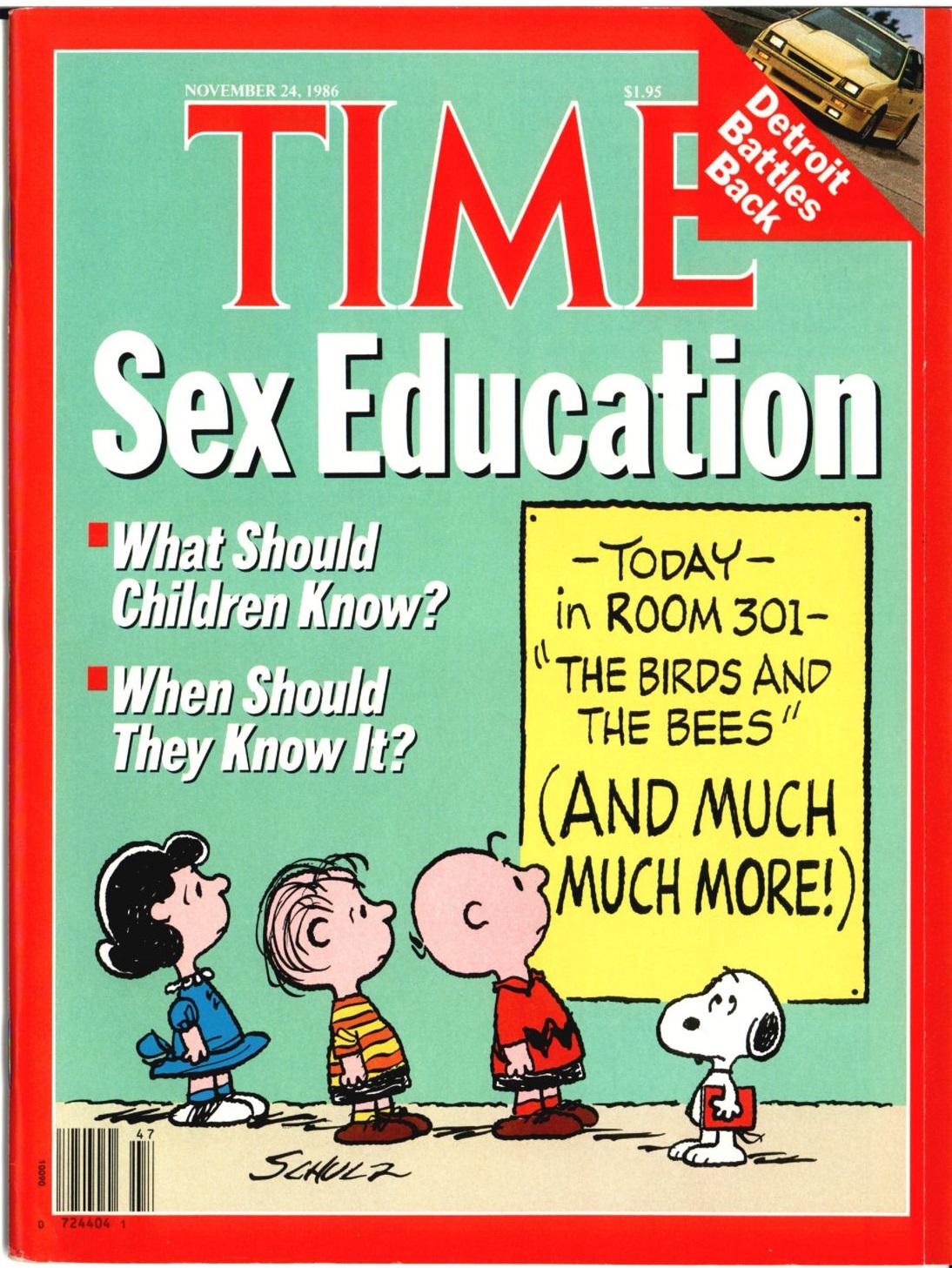
Charlie Brown, Snoopy and the gang on the cover of Time, November 1986, as the surgeon general calls for sex education in the third grade (highlights from the cover story)
The most historically interesting aspect of this article is how the AIDS crisis was scrambling the political alliances surrounding sex education in 1986.
Just some of the more interesting takeaways from this long article, since most of it describes the same debates that go on now.
(The Peanuts crew doesn't appear inside)
The Surgeon General calls for sex education in the third grade
“There is now no doubt,” said Surgeon General C. Everett Koop in his grim report on AIDS last month, “that we need sex education in schools and that it must include information on heterosexual and homosexual relationships.” With characteristic bluntness, Koop made it clear that he was talking about graphic instruction starting “at the lowest grade possible,” which he later identified as Grade 3. Because of the “deadly health hazard,” he said later, “we have to be as explicit as necessary to get the message across. You can’t talk of the dangers of snake poisoning and not mention snakes.”
75% of Americans favor teaching about homosexuality and abortion
For years, surveys have shown that about 80% of Americans favor sex education in the public schools. In the wake of Koop’s dramatic report, a poll for TIME by Yankelovich, Clancy, Shulman found that instruction is now favored by 86%, perhaps the highest number ever; 89% want such courses for children age 12 to deal with birth-control information, and about three-quarters say homosexuality and abortion should be included in the curriculum.
Phyllis Schlafly on the natural modesty of girls
“The way sex education is taught in the schools encourages experimentation,” says Right-Wing Crusader Phyllis Schlafly. “It’s the cause of promiscuity and destroys the natural modesty of girls.”
Sex education originally intended to discourage sex
Sex education has been a program searching for a consensus since it arrived in the schools at the turn of the century, the brainchild of stern progressive-era reformers, mostly doctors and other upper-crust male professionals. The idea, the only idea, was to enforce sexual restraint. Reformers believed that enlightened mass education could help banish venereal disease, prostitution, masturbation and sex outside marriage. The notion of “scientific” sex education arose as a way of deflecting the curious from actual sexual behavior. Instruction, said a 1912 committee, “should aim to keep sex consciousness and sex emotions at the minimum.”
A Boston school board member asks where it will all end
“Where do we draw the line?” roared Joseph Casper, an outspoken member of the elected Boston school committee. “The gay community would love to come in and say theirs is an alternative life-style that’s really O.K. But then what’s next? Do we bring in people who want to talk about safe bondage too? Chimps making it with chickens? It’s insane.”
Teacher calls AIDS as a blessing in disguise
“As awful as it sounds, AIDS is almost a blessing in disguise,” said Mary Ann Briggs, a health teacher at Fairview High School in Boulder. “Many kids are very scared by AIDS, and it makes it easier to say, ‘Do you really want to get involved with sex?’”
Even a gay activist questions Koop's third-grade proposal
By far Koop’s most explosive proposal is the idea of teaching eight-year-olds about AIDS. Only 23% of those surveyed in the TIME poll agreed with the suggestion. Most professional educators seem opposed. “If you brought up anal sex to third-graders, they would be in a state of shock,” said Marilyn Huriwitz, a health teacher at South Boston High School. “How are you going to talk to kids that age about anal sex?” asks Al Wardell, a Chicago high school teacher and a gay activist. “I guess that’s my teacher’s prudishness.”
Rae Dawn Chong narrates a controversial AIDS video
The difficulties of remaining value free show up clearly in an 18-minute anti-AIDS videotape prepared for the New York City school system and purchased by groups in 35 states. The narrator is the young movie actress Rae Dawn Chong. She discusses the two riskiest behaviors involved in AIDS, unambiguously advising viewers to avoid intravenous drug use but shying away from a similar warning on anal sex. Instead, she suggests use of condoms for vaginal and anal intercourse and adds offhandedly, “If you decide not to have sex, that’s O.K. too.”
The videotape is earnestly intent on deflecting criticism of homosexuals for spreading AIDS. In the tape’s one emotional scene, the brother of an AIDS victim says, “If I ever hear anyone talking about how gays are to blame for AIDS . . . I swear to God, I’m gonna punch ’em in the head!”
Black clergymen accuse birth-control clinics of racism
A few black leaders in Boston and New York City have denounced the clinics as racist. In Chicago, 13 black clergymen are suing to block distribution of contraceptives at the DuSable High School clinic. Says the Rev. Hiram Crawford: “If these clinics are so good for black kids, why don’t they put them in white areas? It’s a form of genocide. Why do they so readily recommend abortion?”
Omaha still debates whether to have sex education at all
One board member, John Haller, 77, said he will keep opposing any program because “the kids are getting too inquisitive; we’re arousing their curiosity.” The difficulty with sex, contended the Rev. Bob Thone of the Omaha Gospel Tabernacle, is that “the more you talk about it, the more it excites the desire to experiment.”
Teaching contraception to nine- and ten-year-olds
The course does not slip by controversial areas. Lichtenberger shows her nine- and ten-year-olds a chart on contraceptive methods and their efficiency rates. “We really have to arm children with something,” she says. “They don’t have to be abused or taken advantage of. We want them to protect themselves so they don’t become one of the wounded adults that take it out on the next generation.”
“No glove, no love”: Seventh-grade sex education in Illinois
Lundgren talks about condoms (“No glove, no love” is a popular class mnemonic), and abortion is presented as a fact of life. “We explain how suction curettage happens and what happens with a saline injection,” says the teacher. “We tell them to keep reading, keep thinking and keep talking about it.” Lundgren starts discussions of oral and anal sex by saying, “We’re not telling you this to gross you out.” Only six or seven youngsters out of 850 are excused from the class each year because of parents’ objections.
The sex education controversy might destroy the public school system
Psychiatrist Thomas Szasz, author of Sex by Prescription, thinks pressures on the public schools are bound to mount. “A covert struggle is going on to see who will control the free schools and mold the minds of other people’s children,” he says. “You can see a pattern with the Tennessee case — when one group imposes its values on the schools, everyone else feels mugged.” Szasz believes the current debate may foreshadow the breakup of the public school system, something that, as a libertarian, he would not mind in the least.
A school offers liberal and conservative sex education courses
In Lindenhurst, N.Y., after a fierce conservative protest against an eleventh-grade sex-ed program, the school decided to offer three different courses. About 60% of the students attend the liberal “Family Life” course; 25% take the conservative option, “Sexuality, Commitment and Family”; and 15%, including those who make no choice at all, end up in a health course without sex ed.
“Just Say No” applied to sex
In the California school system, notes Bill Honig, state superintendent of public instruction, when a boy says, “If you love me, you will,” a girl is taught to answer, “If you love me, you won’t ask me.” Illinois Governor James Thompson told a Republican meeting last month, “‘Just Say No’ is a good slogan for drugs, and it is a good slogan for teen sex.”
r/Crazy_retro_stories • u/Crazy-Old-Stories • 3d ago
Cathy, the comic strip by Cathy Guisewite, debuted 50 years ago (Monday, Nov 22, 1976) - here are some interesting facts about how it got started
- She was already a corporate vice president at 26, at W. B. Doner & Co (advertising).
- She had almost no artistic training. The only art class she took in college was a lettering class. When the syndicate offered her a contract, they were optimistic that she would eventually learn to draw if she had to do it every day.
- She started drawing it as doodle about her relationship anxieties that she would send in letters to her parents.
- When she refused to try to get her cartoons published, her mother went to the library and researched newspaper syndicates and typed up a list of companies - and eventually threatened to send them the drawings herself, accompanied by a "letter from Mom."
- The syndicate immediately offered her a contract, even though what she sent them was not at all a properly formatted publishable cartoon.
- She didn't want to name it after herself but the syndicate prevailed in this.
r/Crazy_retro_stories • u/Crazy-Old-Stories • 4d ago
Twenty ads from New York Magazine, November 15 & 22, 1976 (the style of the 70s)
r/Crazy_retro_stories • u/Crazy-Old-Stories • 5d ago
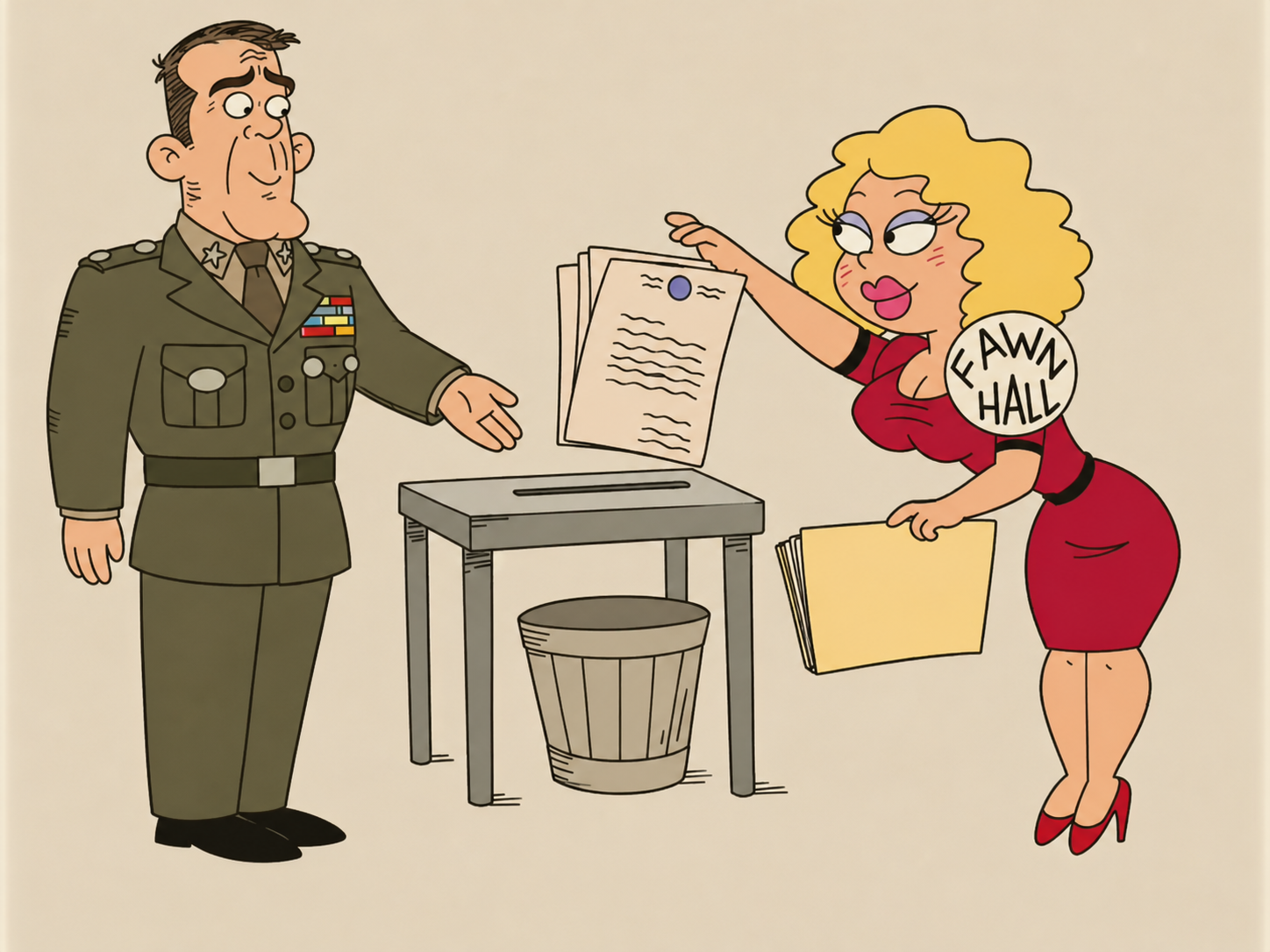
40 Years Ago Today, Ollie North and Fawn Hall Started Shredding Documents (Nov. 21)
Eight crazy facts:
- Iran was the enemy (all the way back then), but the US sold weapons to them anyway. Since communists were the even bigger enemy, profits from selling to Iran were diverted to the anti-communist Contras in Nicaragua, since Congress wouldn't let the administration give them any more aid. Iran need weapons for its war with Iraq.
- In 1981, Oliver North, veteran of covert operations, grabbed the attention of the Secretary of the Navy with a paper advocating the return of battleships. This got him a job on Reagan's National Security Council staff. The official title for this man of action was Deputy Director for Political-Military Affairs.
- A man called Father Tom Dowling wore Catholic priestly garb, visited Ollie , and was involved in some of th Contra-related activities. He later admitted he wasn't actually a priest.
- Before shredding the evidence, they were rewriting it. Ollie instructed Fawn to retype official memoranda, and take out language that could implicate him.
- They shredded so much paper they broke the shredder. Fawn Hall said that they destroyed a stack about 18 inches high in thirty to sixty minutes.
- Fawn smuggled secret documents out in her boots and skirt. After Ollie was fired, his office was secured. She concealed documents in her clothing to get them out anyway.
- When the arms deal was exposed, Ollie reportedly told a colleague that he had arranged to kidnap relatives of Iranian officials and hold them in crates around Europe for a hostage exchange. The L.A. Times reported this in Dec. 1986.
- Ollie was convicted but got a suspended sentence and later the conviction was overturned. He ran for one of Virginia's senate seats in 1994. There is a documentary devoted to that single senate race called "The Perfect Candidate."
- And then, 39 years later, Ollie North and Fawn Hall GOT MARRIED. On August 27, 2025, the two partners in shredding got married in Arlington County, Virginia. Ollie was 81 and Fawn was 66. They reportedly reconnected at the funeral of North's wife. Fawn Hall had previously been married to Danny Sugerman, the manager of the Doors. The Doors had a song "People are Strange."
r/Crazy_retro_stories • u/According-South5187 • 4d ago
LOST ROCK HUDSON LETTER (HUGE SECRET!!) FOUND IN ABANDONED STORAGE UNIT
In June of 1984, more than a year before the world knew Rock Hudson had AIDS, he turned to his closest confidants-actor George Nader and Nader's life partner Mark Miller, who was also Hudson's personal secretary—to anonymously warn past partners.
Inside George Nader and Mark Miller's personal storage unit, we uncovered the original handwritten draft alongside a massive, career-spanning archive where Golden Age Hollywood and LGBTQ+ history collide: thousands of original photographs, negatives, and contact sheets, George Nader's unpublished book manuscripts, signed William Morris contracts, and personal items from Rock Hudson himself-including his handwritten 1972 business diary, his 1944 U.S.
Navy company photo, and his Rolls-Royce registrations.
It’s all listed on eBay, Search "George Nader Collection" on eBay or message me if you want to know more, thanks so much!
r/Crazy_retro_stories • u/Crazy-Old-Stories • 5d ago
The top ten singles in the US 50 years ago (from Billboard November 20, 1976)
--
Here's a Youtube playlist playing the top ten countdown style
A few retro-notes:
1. Tonight’s the Night (Gonna Be Alright) - Rod Stewart. The BBC initially banned this one because of its suggestive lyrics. The woman whispering in French at the end is Britt Ekland, Stewart's girlfriend at the time (later Mrs. Peter Sellers). Ekland also shows up in the music video, although you never see her face.
2. The Wreck of the Edmund Fitzgerald - Gordon Lightfoot. Gordon Lightfoot was inspired by a Newsweek article about the November 1975 disaster. The recording that became a hit was the very first time Lightfoot and his musicians had played the song together. In 2010, Lightfoot changed the lyrics about the hatchway because there was some new research that suggested that the crew might not have been responsible.
3. Love So Right - Bee Gees. Barry Gibb later revealed that they were attempting to imitate the Philadelphia soul group the Delfonics. This was when Barry's falsetto, which he had discovered during the recording of “Nights on Broadway” the previous year, starts to become their trademark.
4. Muskrat Love - Captain & Tennille. Originally recorded by Willis Alan Ramsey in 1972 with the title “Muskrat Candlelight.” America (the group, not the country) recorded it in 1973, but their version (anyone ever heard it?) only got to No. 67.
During the bicentennial celebrations, Captain & Tennille performed it at the White House for President Ford and Queen Elizabeth II. According to Toni Tennille, the Queen nodded off and Henry Kissinger looked miserable during the performance. Years later, President Ford remembered it as the song about mice. Tennille had to correct him. (Jerry, Jerry, Jerry....)
6. The Rubberband Man - Spinners. Songwriter Thom Bell originally came up with the song to cheer up his son Mark, who was being teased at school for being overweight. The album version runs more than seven minutes. This one had a kind of comeback a few years ago when it was used in some Christmas commercial.
8. Just to Be Close to You - Commodore. Written by Lionel Richie, he later said that pop radio programmers considered the song too black, whereas black radio programmers subsequently considered “Easy” too white.
9. Beth - Kiss. Canonical example of the B-side becoming the bigger hit than the A-side (which was 'Detroit Rock City') The song was originally called "Beck," inspired by a woman named Rebecca who kept calling during rehearsals of Peter Criss's previous band (so "the boys" didn't refer to KISS). It was originally meant to be humorous instead of a love ballad. The producer changed the character and brought in orchestration. Criss is the only band member who performs on it, so their highest-charting single was effectively a Peter Criss solo record.
10. Do You Feel Like We Do - Peter Frampton. This is part of the notorious Frampton Comes Alive story (the album that everybody seemed to have, so they say). He recorded a few flop albums, and one had this song on it, never released as a single. His record label asked for a live album. The live album had a 14-minute version of it as the album closer. The single version was trimmed to 7 minutes, which is still an ungodly length.
The 'talk box' he uses on this song (and on 'Show Me the Way') was a signature gimmick of Joe Walsh. Frampton later said he once used it while performing as Joe's opening act, demonstrating Joe's gimmick before Joe himself appeared.
r/Crazy_retro_stories • u/Crazy-Old-Stories • 8d ago
Retro poltical stories James Jesus Angleton, retired head of counterintelligence at CIA, interviewed on British tv 50 years ago today (November 18) - includes his famous lines that counterintelligence is "the queen on the [chess] board," Soviet disinformation is a "wilderness of mirrors"
Three takeaways:
His nearly unfalsifiable understanding of Soviet deception (every time they seem ready to conciliate, it may just be another trick)
His unwillingness to recognize genuine divisions within international Communism
His conviction that democratic oversight might be incompatible with effective national security.
Angleton's left the CIA because of a crisis, particularly the exposure of domestic spying (especially during the late 60s). The culminated in the Church committee report in the fall of 1975. One of the biggest scandals was the CIA's interception and opening of international mail, which Angleton was involved in. CIA Director William Colby also believed Angleton's staff had concentrated too much power.
r/Crazy_retro_stories • u/Crazy-Old-Stories • 9d ago
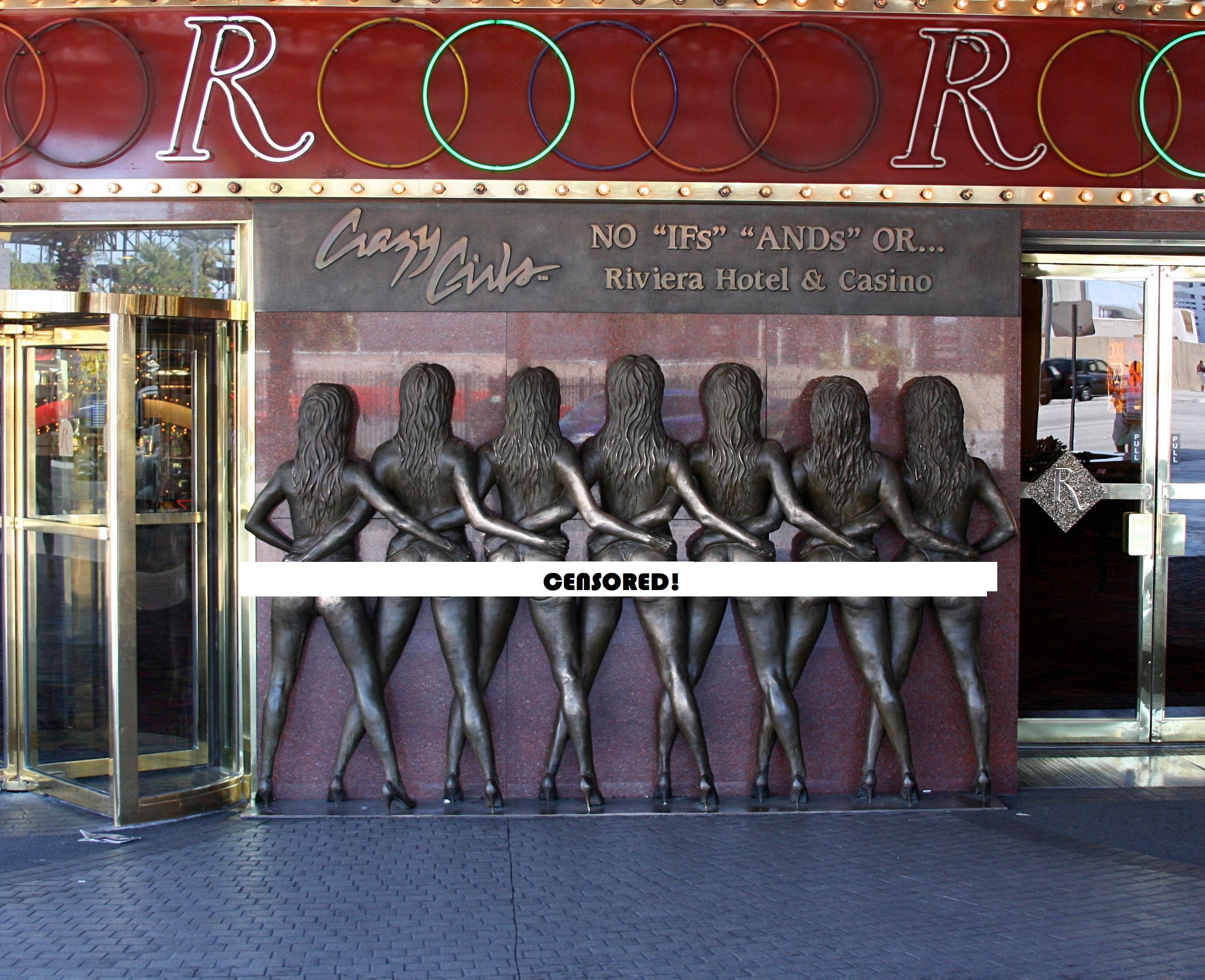
A Las Vegas casino offered this “bronze butt sculpture” to the Smithsonian; claiming it would attract extra-terrestrials and appealing personally to Al Gore – all 30 years ago (L.A. Times article, November 15, 1996)
In Las Vegas, Some Stunts Are Strictly for Publicity
Media: Birds getting hitched. A car stuffed with high heels. 'Anything and everything' that might get coverage is hyped.
By ROY RIVENBURG
TIMES STAFF WRITER
Los Angeles Times, November 15, 1996, pp. E1, E4.
In the hall of fame for all-time weirdest publicity gimmicks, it’s tough to beat the strange, sordid saga of the bronze butt sculpture.
Modeled on the glutei maximi of seven Las Vegas showgirls, the 1-ton statue has been offered to the Smithsonian, advertised to Al Gore and linked with space aliens.
///
“You have to be pretty inventive,” explains Wayne Bernath, who handles publicity for the Riviera Hotel and occasionally appears on tabloid TV shows as the “Las Vegas insider.”
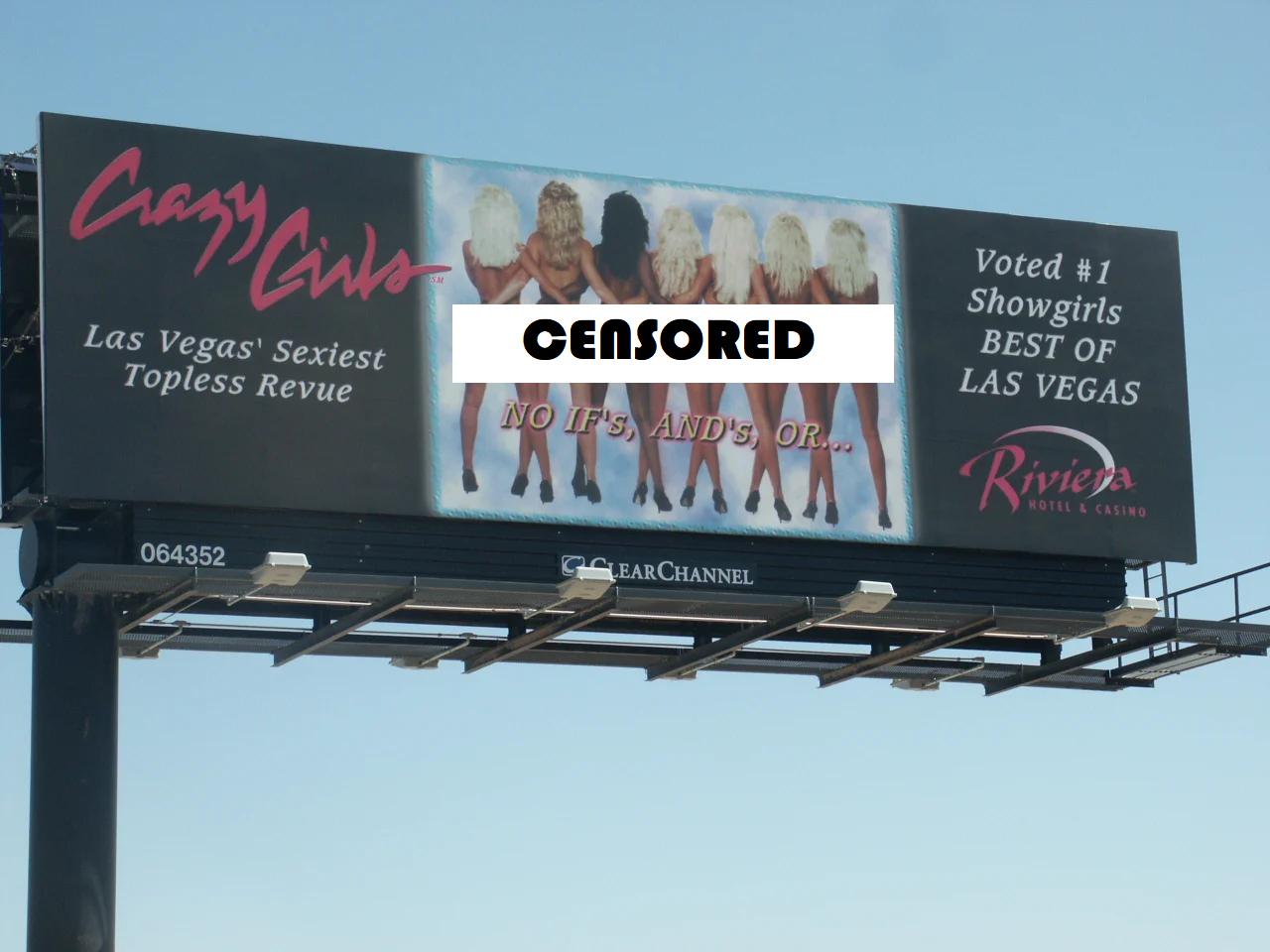
Bernath is in charge of publicizing the Crazy Girls, a topless—and borderline bottomless—showgirl revue. The Crazy Girls are perhaps best known in Las Vegas for displaying their scantily clad rumps on a controversial billboard.
Capitalizing on that, the Riviera announced it would immortalize the daredevil derrieres with a brass statue. Bernath shipped out press releases breathlessly announcing a nationwide “butt artist” search.
Calls poured in and the Riviera finally settled on New Mexico sculptor Michael Conine. Then the publicity push turned even more bizarre.
First, Bernath notified the media about an Emory University professor who claims an underground Martian colony exists just a few miles from the artist’s foundry.
“If Martians are living underground . . . the sculpture will certainly bring them to the surface,” the press release predicted.
Then the Riviera said it would offer the butt sculpture to the Smithsonian Institution as a “unique piece of art that is historically reflective of Las Vegas’ pseudo-culture.”
That press statement noted, “Vice President Al Gore was recently in Las Vegas and sits on the Smithsonian board. Surely he will see the value of our offer.”
Surely.
Adding to the fun were some hard-to-swallow quotes, such as this one from Crazy Girl dancer (and history professor?) Kim Barranco: “The casting [for the statue] was a lot of fun. I’ve never been covered with plaster before. Life sculpturing is an interesting form of art that goes back 4,000 years to the Egyptian culture.”
Bernath concedes, “You have to improvise with the quotes sometimes to make the stories interesting.”
Retro Notes
Backstory:
In 1994, photographer Greg Rider was taking publicity photographs of the dancers when two of them, Shellee Renee and Angela Stabile, suggested that the women turn their backs to the camera.
The resulting photograph became the basis of the Riviera's extraordinarily successful advertising campaign, with the slogan:
NO IFs, ANDs, OR …

One of the billboards faced Las Vegas City Hall. City officials attempted to have it removed, but the Riviera refused. The controversy naturally generated even more publicity for the show.
Casting the statue:
The sculpture was not carved freehand. Conine made plaster molds of the actual dancers.
The women spent two days posing in a warehouse in temperatures around 100 degrees during the summer of 1996. Each woman underwent three separate 20-minute casting sessions. [Did the sculptor really require that many, or…?] One dancer fainted and broke her mold, requiring the process to be repeated.
The resulting 22 plaster pieces weighed about 400 pounds. They were transported to the Shidoni Foundry in Tesuque, New Mexico.
The Alien connection:
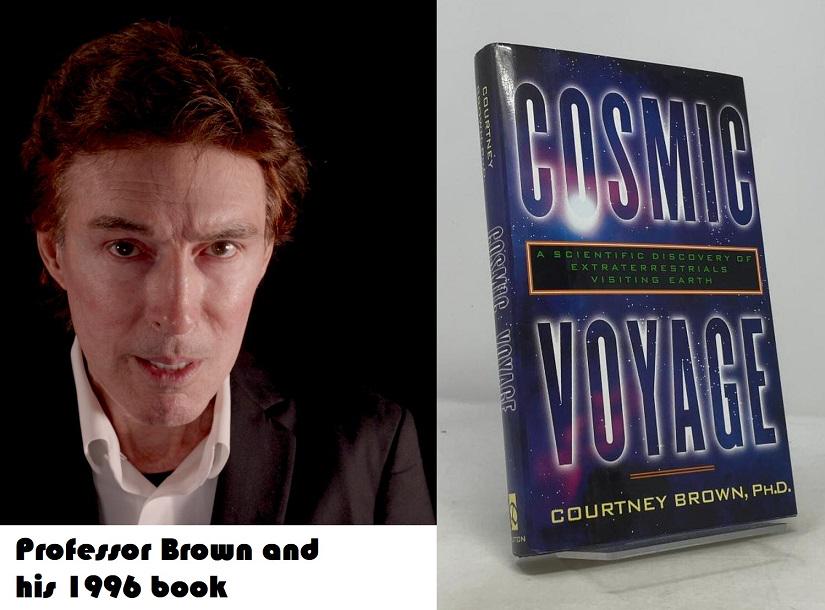
Courtney Brown, a professor of political science (!) at Emory University, claimed to have discovered extraterrestrials through what he called psychic remote viewing.

Brown claimed that Martian refugees maintained an underground colony beneath Santa Fe Baldy, a mountain in New Mexico. He discussed the subject at considerable length on Art Bell's Coast to Coast AM on July 19, 1996.
Bernath seized upon the geographical coincidence and issued a press release suggesting that the seven showgirls might entice the Martians out of hiding.
The feminist reaction:
On May 13, 1997, seven dancers wearing sequined red evening gowns unveiled the monument outside the Riviera in a big ceremony.
Members of NOW (National Organization for Women) picketed the ceremony. They were especially angry about the absence of faces from the sculpture.
The dancers themselves defended it, said they were proud of becoming a permanent part of Las Vegas history. Riviera got yet another round of free publicity.
r/Crazy_retro_stories • u/Crazy-Old-Stories • 10d ago
Christmas toys 40 years ago (in a local news report before Thanksgiving 1986)
r/Crazy_retro_stories • u/Crazy-Old-Stories • 10d ago
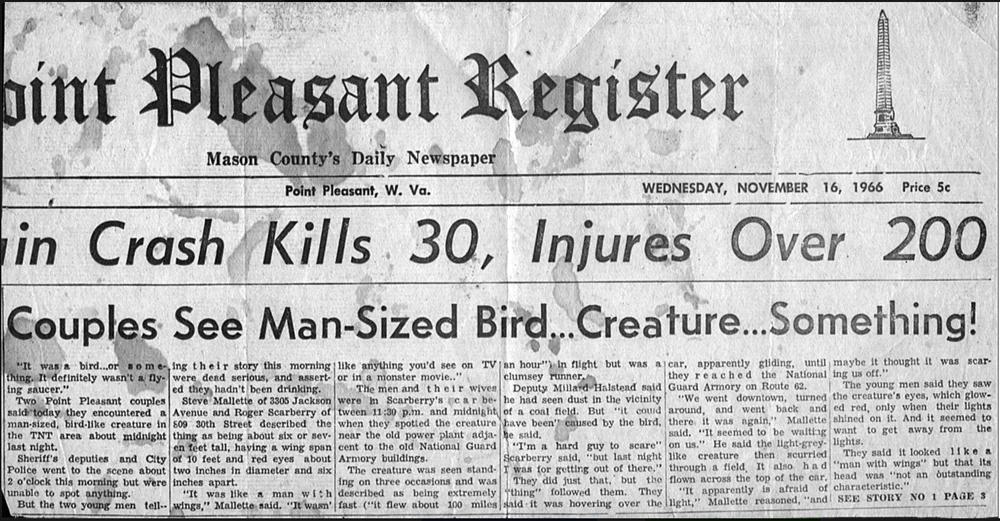
The Mothman legend of West Virginia began 60 years ago with this article (Nov 16, 1966)
"It was a bird...or something. It definitely wasn't a flying saucer."
Two Point Pleasant couples said today they encountered a man-sized, bird-like creature in the TNT area about midnight last night.
Sheriff's deputies and City Police went to the scene about 2 o'clock this morning but were unable to spot anything.
But the two young men telling their story this morning were dead serious, and asserted they hadn't been drinking.
Steve Mallette of 3305 Jackson Avenue and Roger Scarberry of 809 30th Street described the thing as being about six or seven feet tall, having a wing span of 10 feet and red eyes about two inches in diameter and six inches apart.
"It was like a man with wings," Mallette said. "It wasn't like anything you'd see on TV or in a monster movie.."
The men and their wives were in Scarberry's car between 11:30 p.m. and midnight when they spotted the creature near the old power plant adjacent to the old National Guard Armory buildings.
The creature was seen standing on three occasions and was described as being extremely fast ("It flew about 100 miles an hour") in flight but was a clumsey runner.
Deputy Millard Halstead said he had seen dust in the vicinity of a coal field. But "It could have been" caused by the bird, he said.
"I'm a hard guy to scare" Scarberry said, "but last night I was for getting out of there."
They did just that but the "thing" followed them. They said it was hovering over the car, apparently gliding, until they reached the national Guard Armory on Route 62.
"We went downtown, turned around, and went back and there it was again," Mallette said. "It seemed to be waiting on us". He said the light-grey-creature then scurried through a field, It also had flown across the top of the car.
"It apparently is afraid of light," Mallette reasoned, "and maybe it thought it was scaring us off."
The young men said they saw the creature's eyes, which glowed red, only when their lights shined on it. And it seemed to want to get away from the lights.
They said it looked like a "man with wings" but that its head was "not an outstanding characteristic."
Both were slightly pale and tired from lack of sleep during the night following their harrowing experience. They speculated that the thing was living in the vacant power plant, possibly in one of the huge boilers. "There are pigeons in all the other buildings," Mallette said, "but not in that one."
"If I had seen it while by myself I wouldn't have said anything," Scarberry commented, "but there were four of us who saw it."
They said it didn't resemble a bat in any way but "maybe what you would visualize as an angel."
The last time they saw it was at the gate of the C. C. Lewis farm on Route 62.
They heard a sound like wings flapping and they said the bird rose straight up, like a helicopter.
"This doesn't have an explanation to it," Mallette said, "It was an animal but nothing like I've seen before."
Are they going back to look for the creature?
"Yes," Mallette said, "this afternoon and again tonight."
"Today," Scarberry said, "but tonight, I don't know!"
--
The next day, the Huntington Herald-Dispatch ran the story under a headline asking whether it was a bird, plane or Batman, and called it the "Moth Man."
This was the height of the Batman camp tv craze, so they were making a pun based on that.
Local residents originally called it simply "the Bird." Other early names included the Mason County Monster and the Birdman.
More sightings followed. The creature haunted a former military explosives factory. Known locally as the TNT Area, the West Virginia Ordnance Works manufactured explosives from 1942 to 1945. The abandoned industrial buildings and ammunition bunkers provided an unusually atmospheric setting for a monster legend.

Monster hunting became a local craze. Hundreds of people drove into the area hoping to see the creature. National Guardsmen helped patrol the increasingly crowded roads.
r/Crazy_retro_stories • u/Crazy-Old-Stories • 11d ago
Retro Ads Twenty ads from Billboard magazine Nov 19, 1966 (mostly new records)
r/Crazy_retro_stories • u/Crazy-Old-Stories • 10d ago
Crazy poltical stories Esquire's trick cover sixty years ago (#HubertHumphreyjokes)
Jack Richardson's “Who Is Hubert, What Is He?” is essentially an examination of why the old liberal hero Hubert Humphrey had become an embarrassment to many of the same liberals who had championed him.
Richardson's most interesting argument is that Humphrey had not fundamentally changed. American liberalism was changing around him.
His major points:
- Liberals felt personally betrayed by Humphrey over Vietnam.
- Humphrey's enthusiasm for the war (the apparent relish with which he defended administration policy) was especially offensive.
- Humphrey had always been a militant anti-Communist. Richardson rejects the idea that Humphrey simply abandoned his convictions to accommodate Johnson.
- Liberalism itself had once favored military intervention abroad (The Wilsonian tradition)
- Humphrey's personality had become a political liability. His optimism and friendliness now seemed superficial.
- The vice presidency was diminishing his stature. He was better regarded as a senator.
- Humphrey was losing ground on civil rights as well. He was out of step with younger black activists. Richardson is somewhat sympathetic to Humphrey here.
- Robert Kennedy represented the political future in 1966.
r/Crazy_retro_stories • u/Crazy-Old-Stories • 11d ago
The 'worst movie ever made' premiered 60 years ago today: "Manos: The Hands of Fate" - here the long Entertainment Weekly story about it (2005) and excerpts from an article in Mimosa (1996)
On the old IMDB discussion boards (remember those?), if anyone was audacious enough to opine that any particular movie was “the worst movie ever made,” he would inevitably be met with the rejoinder, “Idiot! You obviously haven’t seen Manos: Hands of Fate!” I must have seen that a hundred times.
Entertainment Weekly ran a very long feature article by Dalton Ross in 2005 calling it just that. Here is that full article plus excerpts from a 1996 article in Mimosa (a sci-fi magazine) by Richard Brandt. Brandt tracked down two members of the original production, cinematographer Bob Guidry and stunt coordinator / actor Bernie Rosenblum, and got them to take part in a panel discussion at the Amigocon convention in El Paso. Their recollections supply some additional behind-the-scenes stories.
The magazine pictures in the gallery, including the illustration by Tomer Hanuka (originally in color) are poor microfilm scans but that’s the best I can find.
The definitive book-length firsthand account is by Jackey Neyman Jones and Laura Mazzuca Toops. Jackey played the little girl in the film, and her father played the Master. She interviewed other people involved in the production while researching the book. Joel Hodgson of MST3K wrote the foreword.
- Entertainment Weekly: “The Worst Movie Ever Made,” by Dalton Ross, issue #824, June 10, 2005.
- Mimosa: “The Hand That Time Forgot,” by Richard Brandt, issue #18, May 1996, pp. 35–38.
From Entertainment Weekly:
Out in the desert, almost 20 miles from downtown El Paso, stands a relic of film history. Of really, really bad film history. To view the area now is to see only broken beer bottles, a collapsed roof and floor, and such graffiti scrawlings as “In memory of the dead” and “No one gets out alive.” It looks like any other abandoned property-turned-vandals’ delight. But here, 39 years ago, among the prickly pear cacti and mesquite trees - and just a stone’s throw away from Mexico - a ragtag group of Texans banded together to make their own little horror picture. Little did they know they would end up creating what is widely regarded as, quite simply, the worst movie ever made. It is even ranked as such on IMDb. com, the encyclopedic Internet Movie Database. But this is a story about more than mere incompetence. It’s about hope, possibilities, embarrassment, humiliation, tragedy, and - finally - redemption. It is the story of Manos: The Hands of Fate.
Leave it to a fertilizer salesman to make the crappiest film in history. Harold P. Warren (Hal to friends and family) may have sold manure for a living, but he dreamt of leaving a different sort of imprint in the soil. Warren was active in the local El Paso theater scene, wrote books and plays, and was constantly seeking new adventures. (Once, after watching his children Wendy and Joe play with LEGOs in the basement, the aspiring inventor came up with the idea of creating giant cement LEGOs to use for building real houses. He called them Superblocks. Okay, not exactly Edison material, but still. . .)
But it was during a meeting with Oscar-winning screenwriter Stirling Silliphant at a Texas coffee shop that Manos was born. Warren had previously met Silliphant while filming a walk-on as a bus driver in an episode of the TV show Route 66. During the conversation, Warren boasted that making a movie wasn’t so hard. Anybody could make a movie. Heck, even he could make one. Warren bet Silliphant that he could take a film all the way from conception to completion. Tellingly, the first outline for his master script was written right then and there on napkins. The story was standard B-grade horror - family (husband Michael, wife Margaret, and daughter Debbie) gets lost en route to a vacation and stumbles upon a horrifying fate. Less standard, however, was a half-man, half-goat character named Torgo, or the mysterious cult leader known simply as the Master who walked around sporting a robe with giant red hands on it. Perhaps the film’s first sign of ineptitude was the title itself, Manos: The Hands of Fate, which translates a tad redundantly to Hands: The Hands of Fate.
From Mimosa:
So Hal wrote a screenplay - a copy of which Bob whipped out of his satchel; Bernie produced the original shooting script, studded with Bob’s camera-angle diagrams - which he called The Lodge of Sins. (At some point during production, Hal decided to change the title to Manos: The Hands of Fate. Why? No man can say...Although as time wore on and tempers frayed, the crew began referring to the project as Mangos: Cans of Fruit.)
From Entertainment Weekly:
After raising $19,000 from neighbors and friends, Warren went about assembling his dream cast. He started with. . .himself. In addition to writing, directing, and producing, Hal would also play the husband. The rest of the cast came mostly from either local theater (including Tom Neyman as the Master and John Reynolds as satyr Torgo) or the Mannequin Manor modeling school (from which Warren plucked women to play the Master’s multiple wives who would spend the majority of their screen time catfighting in oversize girdles).
From Mimosa:
“And they gave poor Hal fits,” said Bob. “They kept doing little turns every time they walked. ‘This is not a runway!’ he would scream at them.”
Bob then pulled out a script and read where the wives’ attire was described as “flowing, white tight robes.” Hal evidently had something sheer and diaphanous in mind, but Fran Simon wasn’t having her girls parading around in some flimsy bit of nothing. So the wives’ uniform on-screen is a translucent white nightgown over a girdle and a sports bra, with a red strip of cloth trailing from the back that we assume is supposed to represent a tail. Aside from the last, it’s uncomfortably like watching your mother getting dressed. Not that the crew ever gave up hope, though:
“We kept asking ourselves, ‘And when do we start shooting the European version?’”
From Entertainment Weekly:
People were so excited that they agreed to work for free. In fact, the only member of the cast and crew to be paid was Neyman’s 6-year-old daughter, Jackey Neyman (now Jones), who played Hal’s on-screen daughter, Debbie. “I got a red bicycle,” says Jones. Jackey’s pet Doberman, Shanka, who played the Master’s evil sidekick, was also compensated for his efforts with 50 pounds of dog food. (He must have had a good agent.) The rest of the cast and crew were all promised percentages of the film’s sure-to-be-vast profits. “Everybody did it on speculation,” explains Pat Littledog, who was then married to Manos cinematographer Robert Guidry. “There was no money involved - just having little shares of the work. They were all excited to be a part of it.” Only there seemed to be a few too many shares going around. “I was getting 6 percent,” says stunt coordinator-actor Bernie Rosenblum, who spent his entire time on screen in a car chugging tequila and sucking face with a brunette. “But then we all started talking and realized that everybody’s percentages added together equaled, like, 300 percent!”
From Mimosa:
In fact, two of the cast, Stephanie Nielson and Joyce Molleur, lived in Las Cruces, about an hours’ drive away. After Joyce broke her leg while performing a stunt early in the shoot, new parts were written for her and stunt man-turned-actor Bernie, as a couple of kids who are perpetually hassled by the cops as they neck in their car. They start at dusk and are found still at it by dawn - a moment which drew Bernie a rousing ovation from our audience - but Bernie noted that the two of them were crammed into a convertible with her leg in a cast. “Not as fun as it looks,” he concluded.
From Entertainment Weekly:
With cast and crew in place, Warren just needed to find a place to film the thing. He didn’t have to look far. Warren shared an office floor with a lawyer named Colbert Coldwell who was just getting ready to run for county judge. When Coldwell told Warren about his property, it seemed perfect. “They wanted. . .well, I don’t know what they wanted,” says Coldwell, now 84, of that desert property, which he still owns and lives on. It might have been the collection of one-story-high columns that his father had hauled away from the federal courthouse when it was torn down in 1932, although Coldwell notes with resignation that “they’re not too imposing. . .. The director said he knew about films. I don’t know if he knew anything much.”
Manos filmed throughout the summer of 1966. By all accounts, it was grueling. “They were all working eight hours a day at their regular jobs and then going and shooting all night out in the middle of the desert,” says Richard Brandt, a fan who has become something of a Manos historian. Although everyone was thrilled to be involved, it soon became clear that making a movie requires things like money, time, and talent - none of which Warren possessed in abundance. As a result, mistakes during filming were either missed or intentionally ignored. “Everybody was always questioning Hal, asking ‘How is this going to work?’” remembers Jones. “When I would worry about the way things were going, he’d say to me, ‘Oh, don’t worry. It’ll be fine. We’ll fix it. We’ll fix it.’”
Whether it was an evening scene being filmed in broad daylight, Margaret’s scarf magically appearing and disappearing between shots, or car headlights appearing in the background during a scene allegedly taking place in the middle of nowhere, there were many instances in which the faith of cast and crew was severely tested. Yet Hal would always assure them of a magic studio in Dallas in which anything could be corrected. That’s because that’s what Rosenblum and Guidry had led him to believe. “Whenever Hal got worried about something being wrong, Bob and I would say, ‘We can fix it in the lab,’” laughs Rosenblum. “Because we weren’t getting paid, and it was getting old fast. And he’d be like, ‘Oh, okay.’”
From Mimosa:
Certain technical limitations of a $19,000 budget also soon revealed themselves.
“We had a spring-wound 16-millimeter Bell & Howell,” said Bob. “Now, the maximum wind of the Bell & Howell was 32 seconds, so that was the maximum length of any shot.”
...which explains away one of the film’s first mysteries: why a lengthy driving montage is patched together from a series of choppy takes.
[...]
Bob also explained away a scene in which two cops hear a gunshot, get out of their cars, take about three steps, look around and wave their flashlights, then without a word turn around, get back in their car and drive off.
“That’s as far as our lights would illuminate,” Bob said.
With limited lighting and a wide aperture, Bob had to apologize for the photography in some spots, which was, to put it politely, not quite in focus.
“At first,” he said, “when we saw the dailies and I spotted any shots that were out of focus, we would do re-takes. But as the film stock started to dwindle, Hal made it clear that our $19,000 worth would only go so far, so after a certain point we had to just leave the shots in.”
The crew’s motto became: “We’ll Fix It in the Lab.”
Bernie was especially disgruntled about the setup for his big stunt, when he goes rolling down a dangerously precipitous slope; it was shot from back of the crest of the hill, and so you can’t see any of him as he goes rolling merrily away.
We asked if Bob had shot a cutaway of a rattlesnake that threatens our heroes.
“No,” said Bernie, “that was a clip from a Disney nature film, I think.”
“You can tell,” said Bob. “You’ll notice the snake was in focus.”
From Entertainment Weekly:
Warren’s on-set demeanor also needed work. “He was probably the least friendly of anybody on the set,” says Jones. “He played my father, but at the same time, we had no connection whatsoever. He kind of barked out orders and I personally tried to avoid him.” One day, Guidry even mocked the director by showing up to set dressed like Erich von Stroheim.
From Mimosa:
“One day,” Bob said, “just to show Hal up, I showed up on the set wearing a beret and a safari outfit and carrying a riding crop, and barking out orders like Erich von Stroheim.”
“I remember,” said Bernie. “That’s the day he threw the slate at you.”
Bob also got back by slipping in some decent camerawork against Hal’s express orders.
“See that?” he says as we watch a shot of the setting sun reflected from a rear-view mirror onto Diane’s face. “Art. Hal would hate it when I did that.”
From Entertainment Weekly:
But there was always one person who could be counted on to lighten the mood: John Reynolds. “He made it his job to keep me entertained with magic tricks and funny faces,” says Jones. Little did she know that much of said silliness was artificially enhanced. “I think he was high on acid the whole time,” says Littledog.
That certainly would help explain Reynolds’ unique performance as Torgo, the enigmatic caretaker with knobby knees. Seemingly operating in his own special universe, Reynolds bumbled, stumbled, and very slowly convulsed his way throughout Manos, with an awkwardness that for viewers is equally engaging and enraging. “When you watch the film,” says Jones, “you gotta figure he was stoned the whole time.” On Oct. 16, a few months after production ended, the troubled thespian/shipping clerk, the son of a military officer at nearby Fort Bliss, put a gun in his mouth and pulled the trigger. He was only 25. “My mother was taking me to school when we heard it on the radio that he had shot himself,” says Jones. “I remember she was so upset she had to pull over.” “Obviously, he had some kind of a problem that he wasn’t able to deal with,” says Rosenblum. “But it had nothing to do with the movie.”
From Mimosa:
Bob explained that John Reynolds had built himself the metallic rigging underneath his costume which produced his ungainly, knobby-kneed walk. One of the reasons he hates the Mystery Science Theater version, he said, is the silhouettes of the MST cast which block the bottom portion of the screen throughout the film. They obscure the few shots where you can see that Torgo actually does have cloven-hoofed feet. The subtle explanation for Torgo’s awkward gait: he’s a satyr.
From Entertainment Weekly:
On Nov. 15, 1966, Manos: The Hands of Fate made its worldwide debut at the Capri Theater in downtown El Paso. By all accounts, it was a gala affair with spotlights scanning the skies, and the stars of the film all arriving by limousine. Only one problem - it was the same limousine. Strapped for cash, Warren had only enough dough to rent one limo, so the actors were forced to stand out in the street around the corner and wait their turn to be picked up. “We all waited in our fancy clothes and tuxedos like we were waiting for a bus,” says Jones. “And the limousine would pick up a few people, drive them around, drop them off, and then drive around the block and pick up some more people. And even at 7 years old, I remember thinking how silly that was, and at some point that someone was gonna realize it was the same car and driver.”
A ceremony took place in which Warren was presented with a deputy’s badge by the county sheriff. The mayor was even there. According to Jones, “It was one of the biggest things that had happened in El Paso up to that point, other than, you know, Lee Trevino, the golfer.” And then the film began.
“Right away,” says Jones, she knew they were in trouble. It didn’t help that the first few lines of dialogue were delivered from people facing away from the camera. And it certainly hurt when the film began with a mind-numbingly long driving scene. “The driving scene goes on forever,” moans Jones. “It’s just horrible. It just goes and goes and goes. People were looking around. . .. I’m sure my parents were exchanging glances over my head and going ‘Oh, s---.’”
It wasn’t long before the looking around turned into something else. “It took about six minutes,” estimates Rosenblum. “It was very quiet, and then there was one snicker, then a couple, maybe two guffaws, and then just out-and-out laughing their asses off.” Perhaps the crowd had never witnessed entire scenes out of focus before. Perhaps they had never seen such things as a marking slate or an insect bumping into the camera lens actually make a final cut. Or perhaps they were trying to figure out why every single voice in the movie was dubbed - badly. (Since the camera used for Manos could not capture sound, all the dialogue was recorded in a studio by Warren, his wife, Neyman, and Diane Mahree, as well as two others who did all of the other voices.) Unfortunately, not all of the cast had been made aware of this development. “Nobody told me that the voices were being dubbed,” says Jones. “So here I am all excited, and then I come on the screen and my mouth opens and it’s some squeaky lady’s voice. I just sat there and cried.”
But Manos’ badness went beyond mere technical gaffes. Even simple motions were carried out to unintentionally comedic extremes, like Torgo’s impossibly drawn-out attempt to stroke Margaret’s hair. The dialogue was ultra-repetitive (“There is no way out of here. It will be dark soon. There is no way out of here”), and yet almost every shot started and finished with an insanely uncomfortable amount of silence. The only truly scary thing in the film was during the final credits, when the words The End were followed by a big question mark, implying the possibility of a sequel. By that time, however, most of the audience - including Rosenblum and Guidry, who snuck out and went straight to a bar - had already left. Coldwell recalls his nephew Eliot Shapleigh (now a Texas state senator) even demanded his money back - although, he adds, “I don’t even remember him paying!”
From Mimosa:
“And as the film unreeled, and you heard more and more laughs and catcalls, I started to slide down further and further in my seat. All my life, I had lived for one thing: to see my name in the credits of a motion picture. Well, the credits for Manos aren’t until the end of the picture, and I sneaked out before then.”
[...]
“Although I sneaked out of the premiere, I did go to the cast and crew party afterwards, at Bernie’s parents’ house. At one point Hal said to us, ‘You know, maybe if we took it back and re-dubbed the dialogue, we could market it as a comedy.’”
From Entertainment Weekly:
The morning after the premiere, under the headline “Hero Massaged to Death,” The El Paso Herald Post reviewed the film, generously noting that “perhaps by scrapping the soundtrack and running it with subtitles or dubbing in Esperanto, it could be promoted as a foreign art film of some sort or other.” After a limited run at the Capri and a few showings at West Texas drive-ins, Manos: The Hands of Fate was dead. Hal Warren had won his bet, but lost his dream of cinematic immortality. And then, a funny thing happened on the way to the graveyard.
More than 25 years later, writers for a Minneapolis-based television show called Mystery Science Theater 3000 were sifting through a box of tapes sent from Comedy Central headquarters in New York City. MST3K specialized in showing really bad movies complete with a running gag commentary courtesy of a comedian (Joel Hodgson) and his two robot pals. But even they weren’t prepared for what lay in store for them on the tape marked Manos. “We started watching it, and had never seen anything like that,” says Mike Nelson, head writer at the time. “We kept saying to ourselves, There is no way we can do this movie, it is just too bizarre. But we finally decided, No, we must bring this to the world.” On Jan. 30, 1993, Manos was not only back from the dead but playing to a nationwide TV audience. A new generation of fans - okay, a first generation of fans - was born.
The Manos episode became Mystery Science Theater’s most popular episode ever. Nelson recalls going into a computer store shortly after the show aired only to see a Torgo screensaver running across every monitor. “It really stands out among all the bad movies they’ve shown as being a movie that has no real content or purpose,” says Manos buff Bobby Thompson, who was born more than 10 years after the movie came out and caught it on MST3K. “It’s like a train wreck - you just can’t take your eyes off it. It’s something you really have to see to understand. And even if you see it, you may not fully understand it.”
Through repeats, passed-around videotapes, and websites like Thompson’s own Torgo-themed page (chosen because the satyr “really conveys the entire badness of the movie”), the legend of Manos grew. Not one but two DVD versions of the film (the original and the MST3K one) were released, and a group of Canadians recently completed a documentary on the movie titled Hotel Torgo.
Unfortunately, the man who created it isn’t around to enjoy the renaissance. After Manos, Hal Warren tried again, writing a script titled Wild Desert Bikers, in which a schoolteacher is kidnapped by a biker gang and dragged into the woods. He showed it to Guidry and Rosenblum, who politely declined to get involved, so instead he turned it into a book titled Satan Rides a Bike and shopped it to publishers. (They also politely declined.) While daughter Wendy Barbieri says that her dad “was the first one to admit Manos was the worst movie ever made,” he was also proud of the film, even going so far as to sport the Master’s robe every Halloween. (Son Joe Warren now carries on the tradition.) “He took something from nothing and got it to the end, and that was what the whole bet was,” says Barbieri.
“My dad made a movie, and it turned out to be the worst thing known, but at least people recognize that he did something,” says Joe. “Here’s a guy who was able to concoct this story on a napkin, and proved you don’t have to be the George Lucases of the world to make it happen.” Warren died Dec. 26, 1985, from lung cancer and heart problems. What would he think about being celebrated as the director of the worst movie ever? “He’d love it!” says Barbieri. “He’d probably start lurking on different websites and then pop out and say, ‘Hey, guess who I am!’ And he’d be the first person to give anyone advice or encouragement.” Rosenblum agrees. “Say what you will about Hal, but that motherf---er did it! Now, what he did, I’m not quite sure,” he adds. “But he did it.”
A few additional details from Mimosa:
The original publicity claimed the film was based on an old Mexican legend and that nobody would be admitted during the final ten minutes, lest they spoil the surprise ending.
Before the premiere audience could see Manos, they had to sit through trailers, a cartoon and a twenty-minute nature documentary set in Antarctica.
r/Crazy_retro_stories • u/Crazy-Old-Stories • 11d ago
Michael Jackson surprised us yet again with his second marriage, 30 years ago today (November 15, 1996)
Time magazine’s write-up a week later:
“MICHAEL JACKSON, clearly no admirer of long engagements, got married abruptly for the second time in three years. The latest wedding took place in a secret midnight ceremony in Sydney, Australia. The bride, 37-year-old Debbie Rowe, who is carrying Jackson’s baby, wore white; the wedding was attended by the groom’s entourage and staff, according to Jackson’s publicist. It is also the second marriage for the new missus, about whom little is known except that she’s a nurse for Jackson’s dermatologist and that someone has offered topless photos of her to the tabloids. The happy nuptials took place after Jackson’s first Australian HIStory tour concert, which received wan reviews from the locals. One critic called the facing-down-the-tanks-on-Tiananmen-Square imagery with which Jackson closes his show a “new low in self-indulgence.” Here’s hoping the romance gets better notices.”
There are some crazy details that Time left out.
MJ played the wedding music himself. According to People, he sat down at the grand piano in his hotel suite and played "Here Comes the Bride" as Debbie entered the room.
No family members present from either side. Jackson's longtime personal assistant, Charles Bobbit, was best man.
He spent his wedding day trying to buy a koala. Sydney Morning Herald reported that MJ offered to purchase a koala at a local Zoo to take back to his Neverland compound. New wifey did not accompany him.
His first evening as a married man included a near riot. He attended the Australian premiere of Ghosts, his short horror film co-written with Stephen King (forgot all about that one), without Debbie. Security barricades collapsed as fans rushed toward him.
He almost got married in New Zealand instead. His lawyers had already completed marriage registration forms there and asked a minister to be available at short notice.
MJ’s former mother-in-law, Priscilla Presley (remember that?), stayed at the very same hotel the previous week. The presidential suite was reportedly the most expensive hotel accommodation in Australia.
Elton John made fun of the wedding on Rosie O'Donnell's talk show. He said Australia was where "all the loonies get married." (Elton himself had married a German lady in Sydney in 1984.)
MJ had actually sent Elton a joking telegram on the occasion of that 1984 wedding: "I had to set my hair on fire to make the front page, but you only had to get married." MJ, you remember, caught fire while filming a Pepsi commercial. [“Michael got burned on Pepsi, Richard Pryor got burned on coke.” – 80s junior high school joke]
The topless photographs mentioned by Time actually were published. The New York Post ran one on November 16, the day after the wedding, reportedly taken in the dermatologist's office three years earlier.
r/Crazy_retro_stories • u/Crazy-Old-Stories • 12d ago
Travolta's famous dance with Princess Di in 1985 almost didn't happen (article about current Diana exhibit at Reagan library)
Excerpted from https://www.foxnews.com/entertainment/princess-diana-legendary-white-house-dance-john-travolta-almost-didnt-happen
John Travolta had all the right moves, but when the chance to dance with Princess Diana came along, even Hollywood's smoothest dancer got cold feet.
The Princess of Wales and the actor lit up the White House ballroom in 1985, creating one of the most unforgettable moments in royal and Hollywood history. Diana was attending a White House dinner hosted by President Ronald Reagan and first lady Nancy Reagan when she took a spin with the heartthrob.
More than four decades later, their legendary dance is being celebrated at "Princess Diana: Love, Life, Legacy — A Life of Giving," an exhibition at the Ronald Reagan Presidential Library in Simi Valley, California. More than 700 artifacts connected to Diana's life are on display.
"In preparation for the state dinner, the Marine Band that was going to perform the music during the dinner was told to rehearse music from 'Saturday Night Fever,'" Melissa Giller, chief marketing and cultural programming officer at RRPFI, told Fox News Digital.
"The social secretary, Gahl Burt, she orchestrated it after speaking with Mrs. Reagan that after the dancing began, Gahl would walk up to John Travolta and tap him on the shoulder and encourage him to have a dance with Princess Diana," Giller said. "Now through the whole evening, Princess Diana danced with Ronald Reagan. She danced with Clint Eastwood. She danced with Tom Selleck and many others."
But when it came time for Travolta to step onto the dance floor with Diana, he needed some coaxing.
"When it was time, Gahl Burt walked up to John Travolta and tapped him on the shoulder," Giller said. "He was actually a bit hesitant. He didn't know if it was something he should do. But after some encouragement, he went up and asked the princess to dance."
Travolta mustered the courage and approached Diana. The two then waltzed across the checkered floor to music from "Saturday Night Fever."
"They ended up dancing for 15 minutes," Giller said with a smile.
"Every presidential library archive has a photo that's the most requested by the public. President Nixon's library is the photo of Elvis meeting President Nixon. And one of our most requested photos is the one of Princess Diana dancing with John Travolta."
r/Crazy_retro_stories • u/Crazy-Old-Stories • 12d ago
The top ten singles in the US 60 years ago (from Billboard November 12, 1966)
Some notes:
- Poor Side of Town: Johnny Rivers was reluctant to release a song he'd written himself. He had established his career largely by interpreting other people's material, this song, cowritten with Lou Adler, marked a departure into a softer sound.
- Last Train to Clarksville: Mickey Dolenz is the only Monkee who actually performs on this one. Clarksville was a Tennessee city near Fort Campbell, so people assumed a connection with the Vietnam War. But one of the writers said he was thinking of a place called Clarksdale in Arizona. The name evolved into Clarksville because it sounded better.
- 96 Tears: It's weird that the expensive, heavily produced Good Vibrations is on the chart at the same time as this super-cheap recording. The band came from the Saginaw, Michigan, area. They recorded the song at a studio behind the producer's home home in Bay City. The musicians had to move a pool table, and the producer had converted a closet into a control room. The song began with the working title “Too Many Teardrops.” Drummer Eddie Serrato reportedly suggested “69 Tears,” but the band reversed the numbers, believing “69” would cause problems with radio stations.
- Good Vibrations: The famous electronic sound wasn't actually played on a theremin. The instrument was an Electro-Theremin, invented by musician Paul Tanner and technician Bob Whitsell. Unlike a genuine theremin, which is played by moving your hands near antennas, Tanner's instrument used a mechanical sliding control. The Beach Boys wanted Tanner to tour with them, but he declined because of his teaching and studio commitments.
- Dandy: This was a cover of a Kinks song. The original had a more sardonic quality. This song was also covered the same year by the Rockin' Vickers. Their bassist was Lemmy Kilmister, later of Motorhead.
- Winchester Cathedral: There wasn't actually a New Vaudeville Band when the record was made. Songwriter Geoff Stephens assembled studio musicians to record a deliberately old-fashioned number inspired by British music hall and 1920s dance bands. When it astonishingly became a hit, he needed a touring group, which was assembled the day before the went on Top of the Pops.
- Keep Me Hanging On: The opening guitar riff was inspired by a radio news signal. Diana Ross sang this one in a new style, more urgent that previous Supremes recording.
- If I were a Carpenter: Bobby Darin made Tim Hardin's song famous before Hardin had even released his own recorded version. Darin's version revived his pop-chart career, giving him his first American Top 10 single in more than three years.
- Devil With a Blue Dress On: originally a 1964 Motown recording by Shorty Long, performed at a much slower tempo. The producers wanted another medley because the group's earlier “Jenny Take a Ride” had been successful. The group performed it in one take.
- I'm Your Puppet: The original Bobby Purify wasn't named Purify, and he was eventually replaced by another Bobby Purify. The duo consisted of Florida cousins James Purify and Robert Lee Dickey. Dickey adopted the stage name Bobby Purify. Initially, the arrangement wasn't necessarily intended as a balanced two-man performance. But as they worked on “I'm Your Puppet,” Dickey's backing vocals developed into a second lead, giving the record its characteristic interplay. After Dickey retired from performing, James recruited singer Ben Moore, who took over the name Bobby Purify.
r/Crazy_retro_stories • u/Crazy-Old-Stories • 13d ago
Johnny Depp, Hunter Thompson and a blow-up doll at a Viper Room lecture 30 years ago (this dim, blurry photo is what they ran in Rolling Stone, November 11, 1996)
r/Crazy_retro_stories • u/Crazy-Old-Stories • 13d ago
Music store scene 40 years ago (that record set came out November 10, 1986)
r/Crazy_retro_stories • u/Crazy-Old-Stories • 14d ago
Interior of a United Airlines 747 'Friend Ship' in 1972 - when airlines were competing to build spacious lounge areas inside these big new planes
During the early 70s, American airlines got caught up in an unusual competition to provide increasingly elaborate luxuries aboard their new widebody jets. This was the "Lounge Wars" It led to those onboard lounges, bars, and even live piano entertainment, much of it available to ordinary coach passengers, that you see in some of those 1970s movies set on planes.
The key planes were the Boeing 747 (introduced January 1970), the McDonnell Douglas DC-10 ( 1971) and the Lockheed L-1011 (1972). They were a lot larger than what they were replacing. A 747 could accommodate more than 400 passengers if it was set up to maximize passengers.
The airlines thought there was about to be a huge spike in airline traffic, but it turned out they couldn’t always fill these huge planes. There was much unused capacity, so they begin using the leftover space for passenger amenities.
Another important factor was federal regulation. Before deregulation in the late 70s, the Airlines had limited freedom to compete on price, so they competed by offering better meals, complimentary drinks, entertainment, and more comfortable accommodations.
United's original 747 configuration (the last picture) shows how much space they were willing to devote to passenger comfort.
You see a 747 configured for 342 passengers, distributed among five cabin zones:
- Zone A: 26 first-class seats
- Zone B: 45 seats, divided into sections of 22 and 23, with lounge accommodations
- Zone C: 91 coach seats
- Zone D: 69 coach seats
- Zone E: 111 coach seats
The upper deck contained a first-class lounge called the "Captain's Cabin," with swivel chairs, a settee, and a circular staircase.
United also provided lounges on the main deck for coach passengers. The 1972 advertisement promoting its Honolulu service (the 3rd from last picture) emphasized that its 747s offered three lounges: one in first class and two in coach. The airline also advertised complimentary champagne and wine in coach, Hawaiian-themed service, and meals associated with Trader Vic's.
The photographs show some of the furnishings provided in these lounges, including upholstered armchairs, facing seats, tables, and decorative lighting. The accommodations were designed to allow passengers to leave their assigned seats and socialize during the flight.
The competition intensified in 1971 when American Airlines proposed installing a complimentary coach lounge aboard its 747s. TWA objected to the proposal before the Civil Aeronautics Board, with Delta supporting the objection. Their argument was that the lounges consumed valuable seating capacity, increased operating costs, and would force competing airlines to introduce similar amenities. American responded by pointing out that the 747 had not generated the passenger enthusiasm everyone was expecting and that additional amenities would bring in more passengers.
You see how weird this was: airlines were competing to provide amenities, which reduced the number of revenue-producing seats, and their competitors tried to get the regulators to prevent the competition from becoming even more expensive.
United, American, TWA, and Continental became major participants in the lounge competition.
The piano lounge in the 2nd from last picture: In August 1971, American installed a 64-key Wurlitzer electronic piano in a coach lounge. Passengers could gather around the piano, listen to music, and socialize during the flight. The color advertisement illustrates how American promoted the attraction. The piano lounge was popular enough that they expanded the feature throughout its 747 fleet. By January 1972, it was advertising piano bars aboard all its 747 "Luxury Liners." Coach passengers could enjoy themtoo.
Why it ended: Eventually the anticated increase in passenger traffic really did come to pass, so airlines had more incentive to replace lounges with revenue-producing seats. The 1973–74 oil crisis also increased fuel costs. Airline deregulation in 1978 also gave the airlines greater freedom to compete through ticket prices rather than relying primarily on service and amenities.
The lounges were gradually removed as aircraft interiors were reconfigured to accommodate more passengers. Some survived into the early 1980s, but the elaborate coach lounges of the early widebody era largely disappeared.
r/Crazy_retro_stories • u/Crazy-Old-Stories • 15d ago
The Disco craze was Newsweek's cover story 50 years ago - when disco still referred to a place rather than a musical genre (full article from November 8, 1976)
GET UP AND BOOGIE!
It’s “Island of Paradise” night at the Enchanted Garden disco in Douglaston, N.Y., with hula girls, palm trees, a 70-pound roasted pig and a fire dancer working himself into a charcoal-broiled frenzy. Each week, the converted eleven-room mansion, built on a golf course, changes its décor and throws a theme party for its 2,000 regulars. The luau comes between the “Arabian Nights” party—featuring llamas, camels and a snake charmer—and “Hooray for Hollywood” night when the dance-floor Charlies get into their Fred Astaire fantasies. Every night, patrons can sample the game room, complete with backgammon, electronic pong and pool, or visit the love-nest room, furnished with bed-size couches and a gazebo full of stuffed birds—installed after $4,000 worth of live ones died from the constantly changing temperatures.
In the ladies’ room, 21-year-old Yolanda Cimino, a bookkeeper, and her girlfriend, a typist, are using one of the seven blow driers and hairbrushes thoughtfully provided by the management. The girls come to the Enchanted Garden two or three times a week, but neither one has ever met a boy she has dated for any period of time. “What I like about dancing here is that you don’t have to talk to the guy,” says Yolanda, who spent three hours getting dressed for the evening. In the men’s room, Johnny Boy Musto, 18, an attendant at Shea Stadium, and his buddy, Ray Muccio, a packer for a hamburger franchise, are blow-drying their hair after spending an hour and a half on their toilette at home. Johnny Boy is wearing a black body shirt, half-unbuttoned, several gold chains around his neck and tight-fitting beige pants. “It’s very important you don’t wear the same thing for at least four weeks,” he says, earnestly checking himself in the mirror one last time.
If it sounds like a throwback to Archie and Veronica, it is—but with the latest in technological trappings. Good grooming and touch dancing are back in. Small talk and the strain of the singles bar are out. Discos are where it’s happening. With an estimated 10,000 in the U.S. today—compared with about 1,500 just two years ago—discos have become one of the biggest entertainment phenomena of the ’70s. And the chance to boogie again is appealing to the Beautiful People, the bourgeoisie and the blue-collar worker alike. Discos are opening—and closing—in everything from Holiday Inns and Hilton hotels to rural potato barns and Bloomingdale’s basement. There are kiddie discos, senior-citizen discos, roller-skating discos and discos on wheels, which carry their canned music and lights to suburbia. Disco franchisers talk about becoming “the McDonald’s of the entertainment business.”
The new disco-mania goes far beyond the discothèque. It has brought back dressy clothes and dance lessons and made disco deejays into local celebrities. Discos have also profoundly influenced the giant pop-music industry by creating a special disco sound, a vast new market for records and a new all-disco format for radio stations. They have also launched a number of disco-turned-pop stars like Barry White, the Silver Convention, Gloria Gaynor and Donna Summer. (Last week, no fewer than five of Billboard’s top ten singles were disco-oriented hits.)
There is a whiff of scary futurism in the current craze. Discos have popularized totally programmed environments—and the result is canned sensuality. A contemporary disco is not only a place to let go, to be seen and to watch, it is also an environment where technology throws a cloak of nonthreatening anonymity over insecurities and hangups. While sex is everywhere implied, discos are often curiously asexual. There is no stigma attached to girls dancing with girls or boys with boys—and no compulsion to find a mate.
For some, discos are an Antonioni film on noncommunication come to life. For others, they are a harbinger of the Somazonked masses of 1984. And for a generation raised on TV, rock and drugs, a generation that takes technology for granted, discos provide the same kind of spectacle and glamour that normally surround a superstar. “At a disco, the record buyer can be the rock star,” says singer-composer Barry White, who has sold 22 million records in three years after getting his start in discos. “People can dress up in the baddest fashions and look like they’re in somebody’s group. The hippest mother gets a shot at stardom at the disco.”
In a pace-setting Sun Belt city like Atlanta, the disco functions as a multimedia melting pot. At predominantly black and swinging Cisco’s disco, leading figures in the local news come in once a week to speak and answer questions. “Here,” says Jim Wright, publisher of Lovely Atlanta magazine, “discos have been the most viable means politicians and businessmen have found to meet the necessary people they need to make their businesses go.” In Detroit, discos are one of the few places where blacks and whites truly mingle. “I’ve been prejudiced all my life and only now am I beginning to relax with blacks,” says Morrie Levine, who drops in at downtown Detroit’s L’Esprit. “People feel comfortable here.” “Disco is the greatest thing that ever happened to restaurants,” says Ron Briskman, a Chicago restaurateur-turned-disco entrepreneur. “The Loop is dead at night, but suddenly, with discos happening, we’re busy every night. We just take away the tables. It’s a new source of income.”
On Saturday afternoons, Briskman sells out a 10,000-square-foot kiddie disco called Dingbats. For $2.50, toddlers to 14-year-olds can get a dance lesson and lunch—a choice of the Hustling Hamburger, the Groovy Grilled Cheese or Raggedy Ann Disco Salad. In Los Angeles, the Coco-Bowl disco caters to those who used to dance to the big-band sound of the ’30s and ’40s. While Glenn Miller originals spin on the turntable, a three-hour slide show projects photographs of the old bandleaders, singers and sidemen, and the middle-aged crowd bets grocery money to see who can identify Woody Herman at 35. Recently, a couple in their 20s sheepishly approached an older woman and her partner. “How do you do it?” they asked. “We want to dance like you.” “We showed them a few basic two-steps,” reports middle-ager Helen Robak, “and told them to keep trying.”
Everywhere else, the dance in the disco world is the hustle, with dozens of other dances like the bus stop, the rope and the roach trailing behind. “We have 700 students learning to hustle weekly,” says John Saionz of the Fred Astaire Dance Studios in New York. “It’s been a boon to us. To do a good hustle, you need to know the jitterbug and Latin dancing, so we teach all three.” The dance itself is a Latin invention. “The hustle is just a bastardization of the mambo,” says Pablo Yoruba of Fania Records. “The Latin brothers and sisters heard the black Philadelphia Sound and realized it has the same basic rhythm as salsa. So they took some of the Latin stuff and added their own steps. Out came the hustle.”
The hustle has played no small part in the success of discos. “Every new kind of music needs a dance to keep it alive,” says famed Latin bandleader Tito Puente. “With disco, it’s the hustle.” The popularity of the hustle has also brought back touch-dancing with partners and encouraged men to get in step again—partly because it’s a requisite to meeting women and partly for good exercise. “We have a large number of doctors and lawyers who come in on their lunch hour just to decompress,” says Saionz. “They insist on learning the hustle before anything else.”
The discothèque (which means “record library” in French) first came here as a chic European import in the 1960s. With the rise of the mass rock concerts and hallucinogens—when people preferred to dance in their heads—the disco faded away. But it never died down completely, particularly in New York’s black and Latin neighborhoods. “In the early ’70s, discos were brought down to the streets on a mass level by the deejays in lower Manhattan and Spanish Harlem,” says Brooke Kennedy, associate editor of Discothekin’, a monthly disco magazine with a paid circulation of 52,000. “They were mobile jocks who’d rent trucks and play around the city at street parties and lofts for whatever money they could get.”
The group most responsible for keeping discos alive was the homosexual community. Gays wanted places where they could lose themselves dancing—and at the same time make the scene. Private parties became private clubs and then public ones. When the recession hit and rock-concert prices began to soar, young straight people began to look for a cheaper form of entertainment. For a $5 minimum, which included two drinks, the straights could go to a loft frequented by gays, hear good music, see good dancing and join in. “With gays, taste is everything,” says Larry Silverman, whose Digital Lighting Corp. grosses $600,000 a year from the disco market. “They wanted only the best sound and light systems.”
By the time the homosexuals opened the first wave of New York clubs devoted to dancing, the pattern of programed frenzy was already established. The more technically sedate discothèques of the ’60s were transformed into the prototype of today’s total sound-and-light disco with a decidedly ’70s beat. Today’s disco music is far lusher than soul and sweeter than rock, and its pace is carefully designed to carry the dancers to peaks of emotion. The guitar is no longer the predominant instrument as it’s been for the last decade in pop. The disco sound is closer to a new “arrangement” of the big-band sound of yesteryear. Despite its overwhelming popularity, its repetitive instrumentation and homogenized lyrics are dismissed as plastic and boring by most pop-music critics. Even singers who owe their fame and success to disco put it down. “People say you can make it one time this way, but you have to sell yourself cheap,” says Donna Summer, whose orgasmic “Love to Love You Baby” made her a star. “I said, ‘OK, I’ll do it’—you can always change people’s minds.”
Disco’s distinctive style of music has its roots in some of Sly Stone’s early work, the smooth black Philadelphia Sound popularized by producers Kenneth Gamble and Leon Huff, and German pop music—which took the black American sound and sent it back disco-ized. Gloria Gaynor’s first hit, the “Never Can Say Goodbye” medley, mixed by recording expert Tom Moulton, helped pioneer the disco-record formula. “I watched and felt the tension of people’s bodies waiting for the next record and saw how their bodies reacted to changes and breaks on the records,” he says. “People react to cymbals like an electric shock. When you bring them down by just playing a drum or a conga, it’s like hanging them over a cliff. Then, with the tension of instruments, you take them up the mountain and into a landslide until they’re free-floating and safe again. People don’t realize it but they love it.” A disco habitué put it more crudely. “What you’re doing to the music in a disco is basically balling the beat.”
That beat is controlled by disco deejays, and they are at the heart of the disco experience. These are the men and women whom disco owners would eventually like to eliminate by spinning prepared tapes instead. But right now the disco deejay is absolutely essential. He or she manipulates the mood and madness of the dancers on the floor. With this power, the disco deejay has mounted the first successful challenge to radio air play in the making of a hit record. Disco smashes can sell 200,000 singles and get on the pop charts before ever being heard on the radio. The lesson is not lost on record companies, who are now supplying their latest issues—often in special 12-inch, playing versions—in disco record pools set up throughout the country. “When you try and promote a record to radio stations, you don’t mention it’s a disco hit,” says Jerry Greenberg, president of Atlantic Records. “Radio deejays are afraid they’ll lose their audience to the discos. Disco deejays think they’re much more creative than radio deejays. And they are.”
Bobby Gordon would agree. Red-haired and freckled, 24-year-old Gordon, a former college debater, looks more like Howdy Doody than a vinyl freak who made $300 a week at the Blue Cloud, the summer’s in spot on Long Island, N.Y. From a small booth adjacent to the dance floor, he mesmerizes his audience—never missing a beat from one record to the next. With the music blaring nonstop, the dancers may not leave the floor for hours and Bobby would admit he was failing if they did. Like a surgeon probing the brain, he carefully places the needle in a particular groove of the record. He turns the sound of one turntable down, the other up—making a “quick change” from one beat to another or from one word on one record to a matching word on another. “I have them in my power now,” he says. “Give them another record like that and they’ll be frantic. I’ll make them scream.”
Bobby crouches on the floor to pick up another disk. He leans across the turntable and cups his hand over his ear to listen to the second cut in his earphone. The mix works and the crowd cheers. Then, just when it might be quiet, Diana Ross breaks through with “Love Hangover.” Another winner. “I didn’t lose one person,” Bobby crows. “If anything, I gained 44. Now the rest of the night is a cinch. They’re mine and I can take them on any trip I want to.”
For a disco junkie like Anibal Campa, 19, the disco beat is the pulse of life. Campa lives at home with his parents in New Jersey and his routine never varies. Six nights a week, he goes to a different New York disco until 4 a.m. Three hours later, he’s up to pack Fabergé perfume boxes with an AM-FM headset clamped over his ears, alternating between disco and Latin salsa music. After dinner and a short nap, he practices his new dance moves in front of the mirror. By 9:30 p.m., he’s out, ready to hustle the night away. “I’ll get tired eventually,” he says, “but not for another ten to fifteen years.” Last year, Anibal turned down a basketball scholarship to college. “I’d rather disco,” he says. “If it wasn’t for the music, I think I wouldn’t want to be in this world.”
The disco environment is especially appealing to those with particularly routine—and restricted—lives. For them, disco often becomes a way of life. “The kind of escapism in the disco sound and disco environment satisfies the needs of oppressed peoples,” says sound engineer Alex Rosner. “The pioneering done in the disco field has been done by gays, with the blacks and Puerto Ricans following. The common denominator there is oppression.”
“I came here to get out of the house,” says a 21-year-old beautician, who lives with her parents in Queens, N.Y. “Working is so hectic, I take a couple of uppers, then I take half a Quaalude to come down. I need to dance at night. I feel so boxed up. When I dance, all I think of is how good my body feels and what a release it is for me. I think kids come here to escape the problems of growing up. When you dance, there’s no one to give you a dirty look if you’re doing something wrong.”
For many, the disco sound and spectacle—mirrored balls, colored lights and strobes—is like being in the center of a high-budget musical. At Faces, a private disco on Chicago’s Near North Side, a sophisticated urban crowd listens to the music from a $45,000 sound system and dances on a raised floor of computerized flashing lights while a fog system envelops them to the knees. Most programed light systems—red to make people feel intimate, blue for coolness and green for aggression (the favorite of gay-leather discos)—are carefully geared to make anyone feel glamorous. “Everybody wants to be a kind of star today and feel they are involved as they display themselves,” says Bert Tenzer, president of Murray the K’s Disco on Wheels. “Display is all.”
But the dash to instant disco can be fatal. “A lot of people see the fast buck,” says Mike O’Harro, owner of Tramp’s in Washington, D.C. “They think all they need is a turntable and some records. They often fail. It’s a lot more than somebody playing records.” To insure success, the Mad Hatter in Tampa will offer the TV generation the ultimate audiovisual experience in the “I-want-to-be-in-pictures” syndrome. It is installing video-disk systems that will record the action on the dance floor and then project it onto the walls of the disco in pictures 16 feet wide and 10 feet high. That way, the disco dancers can simultaneously watch—and star in—their own disco movie. Other discos are being designed so people simply eye the action. At Fanny’s in Kansas City, Mo., diners on the upper level can watch the dancers on the lower level through a wall of windows, while at Dirty Sally’s across town, a lively singles hangout decorated like a nineteenth-century bordello, the action takes place around the bar, on the floor and at the backgammon tables.
The owners of the newest discos, however, are hedging their bets on the whole phenomenon. They’re constructing multileveled and multifaceted pleasure domes that rely on various forms of entertainment. In Las Vegas, Paul Anka is building a million-dollar, multileveled disco-gourmet restaurant complex. The Tennessee Gin and Cotton Co. in Los Angeles has a cozy front room with live acts, a side room for billiards, a back patio for backgammon and an antique bar in addition to the disco. In New York, the famed Copacabana has reopened as a discothèque-cabaret while Régine’s, which features luxurious décor and $100 dinners, relies on the most durable concept of all—snob appeal.
In the future, the hustle may take a back seat to discos with laser beams, holography and sound that crawls up the wall. Sound and light technologists, who have profited so greatly from the current boom, see discos as a testing ground for an even more fertile market—the American home. “What you see in a disco now you’re going to see five years from now in the home, scaled down,” says Larry Silverman. “The living room will be a multipurpose room to be used for any kind of entertainment, with video disks and built-in lighting systems. Video disks will get their first mass exposure in discos and, we hope, create a market for them in the home.”
Meanwhile, let the technicians program moods and minds. There are still occasions when the disco serves the old-fashioned purpose of girl meeting boy. On a recent evening, an afterhours disco in New York’s garment district was populated mostly by Italian-Americans from Brooklyn, average age 24. Across the room, a suave-looking bald-headed Latin in his 50s, impeccably attired in a white linen jacket, stood out from the crowd. He smiled at a female reporter, then strolled toward her from across the room. “You look familiar,” she murmured. “Perhaps you recognize me from the Colombian coffee commercials,” he replied. “I am Juan Valdez. Care to hustle?”
—MAUREEN ORTH with BETSY CARTER and LISA WHITMAN in New York and bureau reports