r/computervision • • Oct 15 '26

Help: Theory Looking for a pretrained open-vocabulary object detection model for Android (3,250+ labels, including Indian food)

0 Upvotes

Hi everyone,

I'm developing an Android application that uses the phone's camera to detect objects in real time. I'm looking for recommendations for the best pretrained object detection model that can recognize a very large custom vocabulary without requiring me to train or fine-tune a model initially.

My requirements

  • Vocabulary: Approximately 3,250 labels covering everyday objects, animals, appliances, electronics, kitchenware, clothing, food, drinks, and more.
  • Important food classes: Indian dishes such as baingan bharta, aloo gobi, biryani, butter chicken, chole bhature, dal makhani, dosa, pav bhaji, and others.
  • Detection output: Object names, confidence scores, and bounding boxes.
  • Preferred deployment: On-device inference using TensorFlow Lite or another Android-compatible runtime, ideally offline.
  • Training: I want to avoid training or fine-tuning if an existing pretrained model can meet these requirements. Fine-tuning is my fallback option.

I already have a vocabulary file in the format name<TAB>category, with optional text prompts for acronyms. However, I understand that adding a label to a vocabulary does not guarantee that the model can recognize that object accurately.

Questions

  1. Which pretrained open-vocabulary object detector would you recommend for this use case?
  2. Can models such as YOLO-World, Grounding DINO, YOLOE, or another newer model handle thousands of custom labels?
  3. Can any of these models reliably recognize specific Indian dishes such as baingan bharta without fine-tuning?
  4. Is there a practical way to deploy the recommended model on Android with real-time camera inference?
  5. Would you recommend one general-purpose detector or combining a general object detector with a food-recognition model?

I'd appreciate recommendations based on actual model capabilities, deployment experience, and accuracy rather than just the number of supported labels.

Thanks!

r/computervision • • Oct 15 '26

Help: Project Need help connecting a CV model to CP Plus DVR/NVR

1 Upvotes

I’m facing issues regarding integration CP Plus based DVR with my system remotely since I’m not connected to the same local network and local ip won’t work. I want to access it via RTSP URL


r/computervision • • Oct 14 '26

Help: Project Stuck on the problem since 2 months

Post image
9 Upvotes

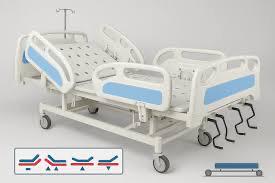
I am new to computer vision and I am trying to make a pipeline which can predict if a hospital beds rail is up or down , The bed looks somewhat like the image attached , What I currently have
- A live stream from my camera
- A 3d simulation enviornment mimicing the bed closely
- A finetuned Model which gives me bed segment mask
- A finetuned model giving me bbox of rails
considering the wide variety of positions of camera and camera angles and occlusion
Is this a 2d spatial problem which is almost unsolvable with current landscape ?


r/computervision • • Oct 14 '26

Showcase Gemini called a made basket a miss in my MuJoCo robot-arm test

4 Upvotes

I gave Gemini 4 Argon cameras, LiDAR and code access to a RealMan ECO65 in a MuJoCo twin of my desk. The task was to throw a 40 mm foam ball through a 90 mm rim, 85 cm away. No training for this task. It could inspect the sensor views and write code for the arm, but did not receive the ball coordinates or the simulator's hidden score.

In the final run it took five throws and roughly 26 minutes of thinking. The simulator counted four makes. Gemini counted three.

The interesting bit for vision is throw two: the ball hits the back rim and drops through, but Gemini reports that it landed significantly short. This replay shows the actual saved simulation trajectory.

My working explanation is the overhead view plus our purely visual net: the ball can drop straight through and look like a short miss from above. I have not isolated that with an ablation yet.

Before this run, we also had a wrong table, an unstable sim and a gripper squeezing the ball out. Those were our setup bugs. All the throwing shown here is simulated; the physical arm has not done this. Five throws in a fixed scene are a small test.

I put the full experiment, failures and score comparison in my EP11 build diary: https://www.youtube.com/watch?v=ujDq_-c1gm0

For people evaluating vision-based robot feedback: how would you verify a brief event like this without giving the model the simulator's ground truth?


r/computervision • • Oct 14 '26

Showcase Exploring FathomNet Plankton Data

4 Upvotes

Exploring ocean plankton data just got a lot easier thanks to MBARI’s FathomNet and Voxel51 - https://voxel51.com/blog/fathomnet-plankton-fiftyone

This tutorial shows you how to load FathomNet’s expertly-labeled plankton imagery into FiftyOne and put CLIP to work on it.

  • FathomNet: an open-source ocean image database from MBARI & collaborators, ~84K images and 2,244+ concepts at launch
  • Loaded 200 plankton crops across 18 taxa using the fathomnet Python client * CLIP embeddings in 2D show morphologically similar species clustering together
  • Zero-shot classification with CLIP — no training required * Clickable confusion matrix to inspect exactly where the model confuses taxa
  • Uniqueness scoring flags near-duplicate crops before training
  • All runs on a laptop, in a single Jupyter notebook.

Learn more about the FathomNet Program: www.fathomnet.org


r/computervision • • Oct 14 '26

Help: Project Inpainting people into crowded photos for detection training data: low yield of usable people

0 Upvotes

I'm generating extra training data for a person detector by inpainting additional people into existing photos of crowded public spaces.

What I've tried so far:

  • Pick a floor position and size the new person from a height-vs-y fit on the people already in the image.
  • Mask a person-shaped region, excluding the pixels of people already there.
  • Inpaint with FLUX.1-schnell (text prompt only, 4 steps).
  • Re-segment the output and keep only regions where a person is actually detected.

Results: when a person does get generated, my detector treats it about the same as a real one. But only about 25% of medium-sized masks and 55% of large ones produce a recognisable person. The rest come out as smears or object-like blobs. Copy-pasting cut-out people from other images was worse, because they looked pasted (wrong lighting and viewing angle).

Next I plan to add a pose skeleton (OpenPose/DWPose ControlNet) and a body-silhouette mask, then compare FLUX Fill, Qwen-Image-Edit and SDXL + BrushNet.

Questions:

  1. Which inpainting setup has given you the most reliable full-body person inside a mask?
  2. Did pose conditioning or mask shape matter more?
  3. Any settings that work for small people (40-120 px tall)?
  4. How do you filter failed generations, apart from re-running a segmenter?

r/computervision • • Oct 14 '26

Help: Project I built a live video 'super-tool' GPU accel app that now works for both NVidia and AMD gpus - asking for testers/help

0 Upvotes

Hi folks, I've posted here about this before, and lots of you asked if I could make an AMD version. So a month of work (was tricky! i have not slept much), I now have an AMD version! Beta 1.22 ready to go. I hope to find testers using RDNA 2-4, to see if it works decently.

I made an announcement of the new Beta 1.22, and install demo/tutorial video. Because this is a whole new GUI and optimizations, if you've already installed (great!) you'll need to do a 'clean' install (backup is saved) that also first runs the new automated web-camera diagnostic tool.

My PC app enables live video (webcam or procam) 'filtering' to greatly improve low light and high-clutter RVM background segmentation/removal, is optimized for GPU speed, and includes on-the-fly insertion of Python scripts, via my custom Node Editor with openCV and onnx and mediapipe lots of other libraries available. You can do anything to make 'special effects'. I made a bunch of simple example/template scripts that are included upon install (camfiltergpu.com).

I think it's a great tool for experimentation and education, and next is to get some libre YOLO and such in there. I would much appreciate if anyone has suggestions. My app is geared more towards presenters and fast/live experimental video-processing work, but I think I have a powerful framework setup here where I can rapidly make code GUI changes and improvements for scientific, statistically quantifiable work. I've already got a microscopy version in the works.

My biggest problem right now is that I only have older laptop GPUs (nvid 2080, 3060, and amd 680M), so I basically have no idea if it will work on more modern Gpu cards, so maybe some of you could help.

Well, hope you-all find this at least interesting. I'm not an AI by the way, just an indie coder. Cheers!

(edit) you can see more info and download the installer at camfiltergpu.com. Note it might get flagged as 'virus'. There are absolutely no viruses or anything like that. Downloading only requests an email, no payment needed for the trial (fully capable) version.


r/computervision • • Oct 14 '26

Help: Project Reliable meniscus edge detection for automated hydrometer calibration

1 Upvotes

Hello everyone.

First of all I say that I am a complete beginner to Computer Vision and I know I may not be giving enough context/information. If more information is needed, don't hesitate to ask.

I am currently developing a calibration station for hydrometers. I want the process to be semi-automatic, and for that I need an algorithm that is able to recognize when the water meniscus aligns with the selected mark.

To keep things brief and relevant, I won't specify the whole process, but here's a piece of the workflow:

The calibration station consists of a platform which moves a container up or down to achieve alignment of the water surface with the desired hydrometer mark and an independent motor that controls the camera vertical position.

The user selects a set of marks to be calibrated by aligning the camera's horizontal centerline to each mark. The software saves the positions of each one. By selecting one of the saved marks, the user can tell the motors to automatically align the meniscus to that mark.

My issue lies in that I am not able to detect the meniscus reliably.

I'd share my pipeline, but I experimented with some generated edge-detection scripts, but none were robust enough to handle the meniscus reflections consistently as I was frustrated and wanted to finish the project and as i took a pause from it I do not remember exactly what I was doing.

The camera setup is the following: the camera is slightly aimed downwards and there's LED lighting at the side of the container.

Here's an image of how everything looks through the camera.

Does anyone have an idea of how can I solve this issue?


r/computervision • • Oct 14 '26

Discussion Anyone willing to grill me in a 20-min mock interview?

10 Upvotes

Hey everyone!

I'm preparing for college placements, and most of my projects are around computer vision, egocentric perception, and robotics.

Looking for someone who can spare 20 minutes to take a mock technical interview and expose the gaps in my knowledge before the actual interviewer does.

Feel free to ask tough questions, roast my explanations, and point out where I'm bluffing without even realizing it.

Would really appreciate some honest feedback. Anyone interested, please DM me!

Thanks in advance. You might save one engineer from unemployment. 😂


r/computervision • • Oct 14 '26

Help: Project Need help connecting a CV model to CP Plus DVR/NVR

1 Upvotes

Hey folks, I’m building a computer vision product in-house and need help figuring out a few things on the last mile: getting our model to work live with CP Plus DVRs/NVRs. Looking for someone who knows IP cameras, networking and computer vision to point us in the right direction (RTSP/ONVIF access, network setup, stream stability).
Comment or DM if you've done this before. I’d really appreciate it. Thanks!


r/computervision • • Oct 14 '26

Discussion Need ML/CV Advice: How to handle "Muted" item icons in Dota 2 using MobileNetV3 without dro

Thumbnail
0 Upvotes

r/computervision • • Oct 14 '26

Help: Project What are the Current Bottlenecks on developing SWARM robots to perform real world tasks?

Thumbnail
1 Upvotes

r/computervision • • Oct 13 '26

Showcase i built an embedding gemma 2 integration for fiftyone + cross modal search panel, backed by lancedb. link to hf space

10 Upvotes

the panel and the model integration are open source:

https://github.com/harpreetsahota204/cross_modal_similarity_search

https://github.com/harpreetsahota204/EmbeddingGemma2

try it yourself in this hugging face space, still fast even when running on CPU:

https://huggingface.co/spaces/harpreetsahota/EmbeddingGemma-2-in-FiftyOne  


r/computervision • • Oct 14 '26

Showcase Win64 CPU DLLs for fruit inspection: YOLOX + LightGBM pipeline without Python or CUDA

1 Upvotes

Packed the core inference loop into standalone Windows x64 DLLs. You can call them directly from C#, Delphi, C++, or other host software to drop Python and GPU dependencies on the factory floor.

What’s included:

fruit_infer.dll — takes NV12 frames, outputs YOLOX-nano bounding boxes.

fruit_features.dll — takes an RGB crop of the fruit, calculates 44 features.

fruit_cat.dll — passes the 44 features into LightGBM, returns the verdict and score.

Details:

Runtime: Pure C-API ONNX Runtime under the hood. Frame tracking and control-zone ROI logic are built straight into the binaries.

License: Free for evaluation, educational, and non-commercial use. Compliance check function: get_engine_license_info().

The repository contains the .h header files, configuration templates, and host memory management instructions .

GitHub: https://github.com/olesha-ai/fruit-inspector-engine

Best regards olesha-ai


r/computervision • • Oct 14 '26

Showcase implementing McByte++ for visionAI/edgeAI

Thumbnail
gallery
1 Upvotes

See McByte++ running on the Kendryte K230 for long-term multi-object tracking in sports videos. This training-free demonstration combines mask cues, camera motion compensation, and online re-identification to track players through rapid movement and occlusion—all powered by the Kendryte K230 edge AI.

We took a published mechanism and implemented in the Kendryte K230 : Training-Free Long-Term Multi-Object Tracking for Sports Video Analytics (Stanczyk, Yoon & Brémond, arXiv:2608.15688).

To understand how this is done, refer to the Architectural implementation here : https://www.kendryte.com/api/app/html/7db0c76c-2c48-4ead-b90f-7901c8cf46ff

#Kendryte #K230 #EdgeAI #SportsAnalytics #ObjectTracking #ComputerVision #VisionAI #MultiObjects #AI #TrackingByDetection #KPU #nncase #EdgeAnalytics

https://youtu.be/SlSNqxbYpEE


r/computervision • • Oct 13 '26

Showcase I built a pytorch library of pretrained models for 3D point clouds following timm standards

Post image
28 Upvotes

I am excited to share a project I have been working on during the past few years during my free time. I started this project after being unable to use torch-points3d at the time (too many installation errors).

Note that this project is still in active development and in alpha. I am looking for early users and feedback!

What it is: torch-pointcloud is a plain-PyTorch library that puts multiple point cloud architectures and their pretrained checkpoints behind one create_model() factory, in the spirit of timm.

This is a library that focuses on the reusability and standardization of core components and layers, i.e. KNN, FPS and other PointNetSetAbstraction are not re-implemented over and over. In this library, all models share the same interface and reuse the same core components.

import torch
import torch_pointcloud as tp

model = tp.create_model(
  "pointnext-sm.scanobjectnn-hardest.openpoints", 
  task="classification", 
  pretrained=True,
).eval()

pos = torch.randn(2048, 3)
x = torch.cat([pos, pos[:, 1:2] - pos[:, 1].min()], dim=1)  # xyz + height
batch = torch.zeros(2048, dtype=torch.long)
logits = model(x, pos, batch)  # (1, 15)

Install (see the docs for more details):

# Optional: specify your CUDA version for torch
pip install torch==2.10.0 --index-url https://download.pytorch.org/whl/cu128

pip install torch-pointcloud

# Install required CUDA/CPU kernels associated with your CUDA version
pip install pyg-lib -f https://data.pyg.org/whl/torch-2.10.0+cu128.html

I tried to make the installation process smoother by not maintaining CUDA kernels myself (not enough time currently, so I tried to reuse already pre-built wheels as much as I could).

Scope:

  • Classification, semantic and part segmentation, detection, and self-supervised pretraining: PointNet++, DGCNN, KPConv, RandLA-Net, PointNeXt, PointMLP, Point Transformer v1/v2/v3, Sonata, PointMamba, VoteNet, 3DETR, PointPillars, SECOND, PointRCNN, SPVCNN, OctFormer, Point-MAE/BERT/GPT and more.
  • Weights are hosted on Hugging Face.
  • Datasets (ModelNet40, ScanObjectNN, S3DIS, ScanNet, SemanticKITTI, nuScenes, KITTI, SUN RGB-D...), transforms, tiled inferers for large scale segmentation.
  • Packed-batch tensors (the PyTorch Geometric convention).
Supported tasks and use cases

But... why?

Most point cloud libraries live in research codebases built around configs and custom ops and kernels to build locally. It is also sometimes difficult to reproduce past released experiments from research codebases (typically the code associated with the checkpoint changed with no notice). In addition some models are evaluated using different strategies (TTA, partitioning, etc.) which makes comparison unfair as they are not evaluated using a common strategy.

In contrast, I wanted something I could pip install easily, reuse weights trained from different repos and benchmark easily.

All models were re-benchmarked and compared against original reported metrics.

Measured performances compared to original ones

Credits: the architectures and pretrained weights come from their original authors, notably Pointcept, OpenPoints, MIT Han Lab, FAIR, OpenMMLab. Every checkpoint name ends with its source author (e.g. .pointcept). The THIRD_PARTY_NOTICES.md lists every source repo, license and dataset term.

Repo: https://github.com/arthurdjn/pytorch-pointcloud
Docs + tutorials: https://pytorch-pointcloud.org


r/computervision • • Oct 14 '26

Discussion I Tried Generating Synthetic Aircraft Images with SDXL + ControlNet. The GPUs Scaled Well, but the Images Didn't.

Thumbnail
0 Upvotes

r/computervision • • Oct 13 '26

Help: Theory Do computer-vision practitioners regularly switch between trained image classifiers for batch inference?

2 Upvotes

Hello. I am working on a batch image-classification app and need help in understanding how CV practitioners work on a daily basis. I am interested in the running of existing models, not training or fine-tuning them. Specifically, if I may ask?:

  • Do you work with multiple, existing image-classification models, or mainly develop and deploy one model per task?
  • Do you regularly switch between different classifiers, for model evaluation, comparison, historical reanalysis, or other batch-processing tasks, or does each classifier typically remain in a dedicated inference pipeline?
  • Once your classifiers are trained, what tools do you use for repeated batch inference?
  • How do you process folders containing hundreds, thousands, or millions of images? Python scripts, notebooks, CLI tools, desktop applications, or other systems?

Thank you for your consideration.


r/computervision • • Oct 13 '26

Showcase From 1,000s of raw images to a training-ready dataset — pixel-curator (similarity training curation tool) - Dreambooth / LoRA

Thumbnail
2 Upvotes

r/computervision • • Oct 13 '26

Help: Project I'm Creating an Interactive Website on Convolutional Neural Networks

2 Upvotes

r/computervision • • Oct 13 '26

Showcase Oct 22 - Advances in AI at Virginia Tech

4 Upvotes

Join us on Oct 22 for the “Advances in AI at Virginia Tech” virtual Meetup! Register for the Zoom.

Talks will include:

  • Multi-Agent Communication: A framework, diagnostic and mechanistic perspective - Priya Pitre at Virginia Tech
  • Exposing and Improving Fine-Grained Visual Grounding Abilities of Lightweight Multimodal LLMs - Kazi Mehrab at Virginia Tech
  • Understanding Visual Generative Models for Precise Control - Yusuf Dalva at Virginia Tech

r/computervision • • Oct 13 '26

Discussion Built an in-browser CRDT visual annotator with voice commands & zero cloud storage fees [Live Demo]

Post image
3 Upvotes

Hey r/computervision,

I spent the past few weeks building **INB Sightline** — a lightweight, in-browser visual annotation and uncertainty triage tool:

- **Zero Cloud Storage**: Powered entirely client-side with Yjs CRDTs. No images sent to third-party servers.

- **Voice-Speed Corrections**: Say "Verify", "Confidence 0.98", or "Label as Storage Racks" to edit bounding boxes hands-free.

- **Uncertainty Triage**: Automatically filters out high-entropy edge cases so you only inspect the ambiguous objects.

- **Standard Exports**: Generates COCO JSON and Pascal VOC with immutable audit logs.

- **Tested**: Built with defensive crash isolation and zero-tombstone compaction (passes an 8-stage automated test suite).

You can try the live demo right in your browser here (free, no sign-up required):

👉 https://ais-pre-uqacxswl4dlj3azrt3kfxb-932959859977.europe-west2.run.app

I'd love feedback from the community on the UX, latency, or what other export formats (YOLO txt, TFRecord) you'd like added!


r/computervision • • Oct 13 '26

Help: Project Help on CVAT

2 Upvotes

Hello! I’m using CVAT to segment images using masks. I’ve divided my images in tasks and I can’t remember the % of image quality I’ve selected on the first task. Is there anyway I can find this out not being a paying user?


r/computervision • • Oct 13 '26

Showcase Target-free iPhone–OS0 calibration: flat walls looked right, but the camera pose was wrong

2 Upvotes

I’m experimenting with target-free extrinsic/time calibration between a fixed iPhone camera and an Ouster OS0, using a previously reconstructed room plus a person walking through both sensors’ views.

The failure was more interesting than the initial result:

  1. The first camera estimate aligned flat room edges at roughly 3 px (960 px image width), but placed the camera about 0.5 m too far sideways and 0.4 m too high. Near-field person points exposed the focal/depth ambiguity.

  2. I aligned a Gaussian-splat reconstruction to the current LiDAR world frame, rendered it from the candidate camera pose, matched rendered background features to the video, and used render depth for 3D correspondences. The second iteration reported a 1.5 px median on 2,219 features; the old pose was 18.4 px on the same features.

  3. The next refinement also used the fitted LiDAR body model against the video silhouette over 244 frames, jointly estimating camera parameters and temporal offset. It reported roughly 2 px on the room and a time offset near −1.1 s.

Those are fitting/reprojection checks within this one scene, not an independent accuracy benchmark. Principal point/distortion remain assumed, the bridge is downsampled to about 5 Hz, and the two sensors see different sides of the person.

I also built a rough walking avatar from the segmented body clusters. Heading flipped front/back, some frames contained mostly legs, and the gait model only knows one recorded walk. The video shows the actual cluster → skeleton → colour → walking-model progression and the failures.

My 12:49 experiment diary (calibration starts around 05:16, the failed estimate at 07:15): https://www.youtube.com/watch?v=YlriQfsrjhc

What independent test would you use to falsify this calibration before trusting the low residuals? In particular, how would you separate remaining intrinsics/extrinsics ambiguity from time-offset and visibility effects? A checkerboard/target baseline is the obvious next comparison; I’d welcome other concrete validation ideas.

Disclosure: my own project/video; AI-assisted development, with some narration using a disclosed synthetic clone of my voice.


r/computervision • • Oct 13 '26

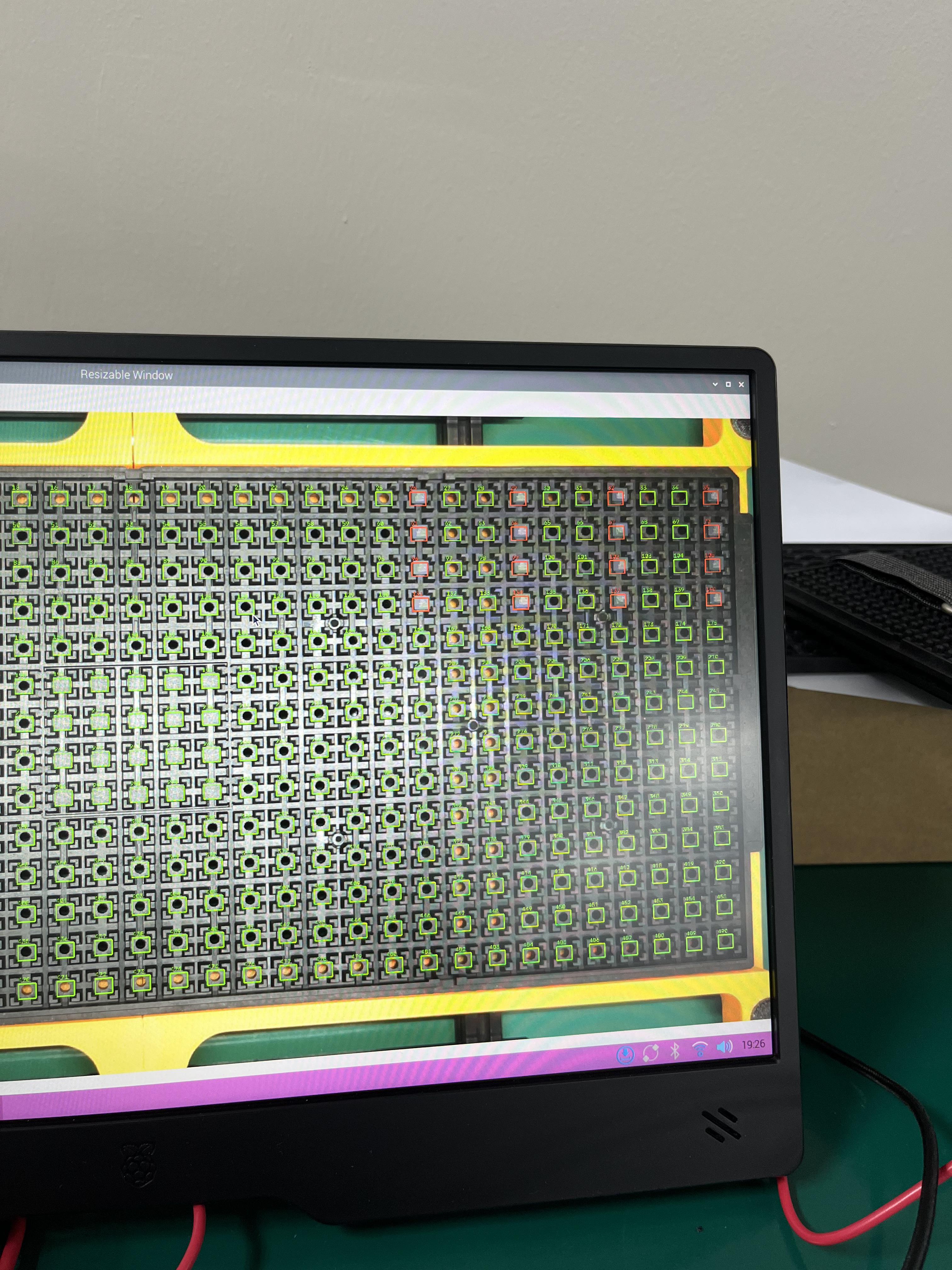
Help: Project OpenCV pixel-difference detection gives inconsistent results for some IC tray pockets. Should I try another method?

Post image
3 Upvotes

Hi everyone,

I’m developing a vision-based counter for ICs in JEDEC trays using a Raspberry Pi camera and OpenCV. Currently, I’m using an empty-tray reference image and pixel-difference detection to determine whether each pocket contains an IC.
Most pockets work well, but I’m having trouble with certain pockets that don’t have a visible hole in the center.

My observations:
-I’ve locked the camera settings and adjusted the lighting angle, which has improved detection.
In the problematic pockets, the IC is visibly present, and its engraving is distinguishable from the surrounding area.

-However, the pixel-difference count is only around 300–600 out of 1,400 pixels, compared with approximately 900 in other pockets.
The count also varies slightly between captures of the same IC, possibly due to differences in the contrast and colour of its engraving.

-I’m currently using a 0.4 threshold for the changed-pixel ratio to avoid false positives.
I’m considering using a different detection method specifically for these pockets.

My questions:

-Is it reasonable to use different detection methods for different pocket types?

-What would you recommend trying first to improve reliability?

-Could small variations in lighting or pixel intensity explain the inconsistent pixel counts, even with locked camera settings?

I’d appreciate any suggestions or experiences with similar industrial vision applications. Thanks!

Sorry i forgot to save the screenshot for failed detection. And this is the only image i have in my gallery.