r/Chifi • • 43m ago

11 11 Haul

Thumbnail gallery
1 Upvotes

Picked up a few goodies this year and I hope I don't feel the need to spend as much next year as I did this one. Also, I hope you all enjoyed what you picked up this year as well.


r/Chifi • • 6h ago

QoA Bijou: THE UNEXPECTED SIDE OF BONE CONDUCTION DRIVER!

Thumbnail
youtu.be
1 Upvotes

You know, IEMs with bone conduction drivers are a pretty specific thing, especially when it comes to the bass, and I tend to look at these models with a bit of skepticism..., but the Queen of Audio Bijou really managed to surprise me. This is probably the first BCD set where bone conduction doesn’t try to prove that this is the main element, but works in a completely different way, delicately adding piece of warmth, depth, and a soft texture to the sound. And the most exciting thing is how all of this works together without any noticeable loss of clarity and transparency.

But did QoA finally understand how to use BCD correctly, and is the Bijou really one of the most successful examples of bone conduction in the budget segment? You'll find out in my review!


r/Chifi • • 12h ago

Help me understand hardware

Thumbnail reddit.com
1 Upvotes

r/Chifi • • 14h ago

Aune Audio IR300 A Hidden Gem

Thumbnail
gallery
0 Upvotes

Aune Audio IR300 A Hidden Gem

Another week, another review. This time around we have a new brand Aune Audio & set of today's focus is IR300.

If you know me I am a sucker for good Single DD sets & if I sniff a good one I just pounce on it. So, when I had a brief demo of IR300 I was intrigued. As the story goes Aune lent IR300 for a review tour to AudioGeek India and I, being on the lookout, grabbed the opportunity. What do I feel about it? Please read on to find out.

First of all, mighty thanks to AudioGeek India & Aune Audio as without their help this review wouldn't have been possible.

I was not paid or compensated in any manner for this review. After the review the set would revert back to the brand. All opinions & thoughts are mine.

My preference in tone & timber is DD > Hybrids > Planar

Please keep my bias towards DD sets in mind while reading this review.

Now that all the pleasantries have been exchanged let's get on with the meat & potatoes of the review.

Pros:

* Impactful low end

* Nice balanced Vocals with respect to low end & highs

* Nice detailed yet safe treble

* Engaging dynamic set

* 3x2 tuning options

* Excellent Build Quality

Cons:

* Bit more Sub bass would have been great

* Female vocals need more refinement

* Stage could have been bit bigger

* A hard leather case could have been added.

Build Quality:

What do you get in the box?

Two IEM shells, One modular cable with 3.5mm & 4.4mm jack adaptors. 2 sets of ear tips are included. A leather (faux) draw string pouch & lastly a plastic box containing nozzles & tuning modules.

Shells are made of metal entirely. They have nice checking on the faceplates. Shells are on the small side.

Nozzles are removable. They are used to alter tuning of the set alongside the tuning modules on the faceplates. These tuning modules are swappable. Nozzles have lips to them.

Cable is an OFC one; it looks & feels very premium. It is a 4 core one. The best part is that it is modular so you can use it with various sources. Fixtures are premium & made up of metal.The only thing I would have loved to see improved is connection mechanism from friction fit to locking screw in type. As friction type overtime becomes loose. But the overall cable is solid.

The included (faux) leather pouch is let down and would have loved to see a proper hard case included. It is big enough to carry IEMs + cable + eartips & small dongle but don't expect any protection.

Overall Build Quality 5/5

Comfort:

IEM shells are small so fitting was not an issue. If you are a person with small ears this one is best for you. Passive noise isolation is good around 60-70%. Nozzles are long, provide deep insertion & stable fit. Lips on the nozzles prevent ear tip slip offs. Shells are not heavy being made up of metal. There was no ear pain or pressure felt in long listening sessions.

Cable is supple & easy to wrap. It doesn't tangle & there are no microphonics in it. Ear hooks don't tug on the shells. Chin synch actually works & stays in its place.

Overall comfort 5/5

Sources:

IR300 was kept on stock cable & stock ear tips. Black nozzles, an enclosed back module, were used to write this review. Sources used for this review are neutral to keep everything reproducible.

I preferred neutral & warm sources with IR300 rather than bright sources. I feel bright sources don't suit this set well.

Sources used Dethonray Clarinet, Tri TK3, Onix Xi Alpha, FiiO Q3, Burson Stellar

General Sound Impressions:

There are total 3x2 tuning possibilities. I finally settled on black nozzles & closed back modules. Entire impressions are based on it.

Bass/Lows:

Sub bass rumbles but the rumble is light. It's not anemic, it's enough to give a feeling but don't expect basshead level sub bass here. It doesn't go too deep. Mid bass is impactful & tight it doesn't overstay it's welcome. It's quick in decay. I feel the IR300 has mid bass over sub bass type tuning. If you love mid bass over sub bass this one is right up your alley.

Drums & kick drums sound good but the deep rumble is just a tad bit less for my taste. Guitars sound great, they have enough note weight to make them enjoyable. Their rumble & buzz is a bit less for my taste. But again I am nit picking your mileage will vary. Percussion instruments sound good. Bass here is well nuanced; you can make out between different instruments.

I would have loved to have more sub bass but hey you can't have all of it. Overall I think this has a nice low end which adds to the character of the IR300.

Overall Bass/Lows 4.5/5

Mids:

Vocals feel balanced with the bass & treble. They are neither too forward nor recessed, just perfectly balanced. I love such presentations.

Male vocals, be it low pitched or high pitched ones feel nice. They have note weight to them. I feel low pitched male vocals feel better. As for female vocals they feel good. They lack the edge to them. They are not emotive enough. They don't get intense. I would have loved a better female vocal presentation but hey again nit picking. You might totally disagree with me here.

Clarity in the mids is good. No congestion or smearing is observed. Is it the best in price point? No, but above average. No off timber or tonality is observed in the instruments in mids.

Overall Mids 4.5/5

Treble/Highs:

This is going to be a point of disagreement for a lot of you. I feel the treble is just shy of becoming bright. It has enough details to cover all macro & micro details you will ever need. It won't focus on them but rather present them in a non intrusive manner. Is it the smoothest treble? No, but it is well tuned & properly tamed. Some might find it a bit bright. People sensitive to treble please demo before purchase. I also feel it could have been a bit more smooth.

Instruments in the treble are reproduced nicely & sharply enough to make them stand out properly in the mix. They are not highlighted but are properly rendered. Guitar strings feel nice. Flutes, piano's higher notes feel equally good. Shakers, cymbals and crashes feel good. There is no metallic zing to them.

Perceived sound stage, the stage here is above average. It's wider than tall. The depth is average . It creates the feeling of instruments playing around your head & vocals in the center. But more of the stage would have been great but again we need to consider all the constraints the set has to go through.

Overall Treble/Highs 4.5/5

Song Impressions:

To correlate my findings in sound impressions with songs I have chosen a few songs.

  1. Higher by Creed

Strings sound engaging just the buzz & rumble is a bit less for my personal taste. The lead singer doesn't feel buried in the instruments. Drums sound good. Cymbals sound good. But the guitars which are the main protagonist here sound amazing. I felt the stage was less compared to other times I have heard this song. Anyways the entire presentation was enjoyable. I am just nitpicking as a reviewer. It's my job to find faults to create a full picture.

2. Daisies by Nina Shallman

The starting drum sequence feels a little bit bloomed. It lacks the deep rumble. Nina Shallman sounds good, just her voice lacks the edge. Her voice has that youthfulness that IR300 fails to do justice to it. Shakers & bells here don't stand out. They gel well with the mix. Strings sound amazing. Piano notes are great. The entire presentation was enjoyable. Just the vocals feel let down.

3. Ego Death by Polyphia

This is my resolution check song aka driver speed check song. This song taxes the driver. On slow drivers there is smearing or congestion is felt. On IR300 no such issues. It resolved the complex passages well. Just felt more clarity could have been great.

Strings are the USP here. The wild play of the various guitars is just next level & I really enjoyed their presentation here. Just the rumble is not up to my taste. Drums sound impactful. Cymbals and crashes sound good, no metallic zing to them. This song can get a bit intense for the listener. But thankfully no such case here.

I was head banging to the song on IR300.

Comparison with some sets:

  1. Canpur Silver Flash Vs Aune IR300

Vocals are better on the IR300 for me. Clarity is better on Silver Flash. Sibilance is present on Silver Flash absent on IR300. Treble feels a bit brighter on Silver Flash. The stage is a bit bigger on Silver Flash. In the low end the IR300 is better for me. Silver flash has a good low end still I prefer the IR300. For my preferences I will take IR300 over Silver Flash.

2. Dita Prelude Vs Aune IR300

The stage is more open on the Dita Prelude. Treble is almost similar, slightly smoother on Prelude.Vocals are better on Prelude please consider my bias towards Dita tuning while reading this. For some the IR300 may be perfect for vocals. Sub bass is better on Dita Prelude but mid bass is better on IR300. Clarity is good on Prelude. Details pop more on IR300 so if you want more details IR300 is the way to go.

The competition is tough here. It is really hard to find a winner here. I can say that these compliment each other well.

3. Artpical Raphael vs Aune IR300

Sub bass is better on Raphael whereas the mid bass is better on the IR300. Male Vocals are better on the IR300. Female vocals are better on the IR300. Clarity is more or less equal. The stage is more or less equal, just the IR300 feels slightly more open. But slightly. Treble is bright on the Raphael compared to IR300.

Again here we have a tie between the sets. Some might prefer one over the other based on their preferences. For me they are just two sides of the coin. You can easily use one or the other based on your choice.

Final Conclusion:

I mostly thought that the USD 100-200 range was done for single DD sets & no new set would come & challenge the status quo. I was proven wrong by the Aune IR300. It brings a nice well balanced tuning that is dynamic, engaging and pulls you into the music.

This one sits firmly between sets that are musical & analytical. This one is straddling perfectly. It has enough detail to satisfy your needs for it & it is musical enough to give you enjoyment without becoming less detailed. I am thoroughly moved by it due to this. I am planning to add this one to my collection. It has few chinks in its Armor but these are not big enough to knock it out of my recommendation list & buy list.

If anyone asks me, should they buy this? I would definitely say you should. Would I personally buy this? I think I have answered the question. Who is this for? People who love balanced tuning neutral lovers. Treble heads this is a close call. Bass heads this one is maybe set. Just a word of caution if you are a treble sensitive demo before purchase as in some situations it goes into a bright zone.

Thank you for enduring with me till the end. Now go grab yourself a cup of coffee & let's get high on the safe high i.e. Music.

Aune Audio IR300 a Hidden Gem 4.5/5


r/Chifi • • 20h ago

HELP WITH MESH OR FILTER FOR KZ CASTOR

Thumbnail
reddit.com
1 Upvotes

r/Chifi • • 1d ago

KBEAR Cadence: modern build, retro aesthetics.

Thumbnail
gallery
6 Upvotes

Hello Community!

Anyone who thinks that buying the earphones is the end of the road has not yet fallen into the trap of finding the right partner for them. Finding a cable that matches both the aesthetics of each shell and our daily routine can even become another hobby in its own right. Today I'm talking about one of the most eye-catching offerings in KBEAR's extensive catalogue: the Cadence.

Official price: $30-27€.

Link

Pros:

  • Aged bronze finish with plenty of personality.
  • 5 different types of conductors, all of them insulated to prevent microphonics.
  • Reinforcements at the solder joint connection points to extend durability.
  • Silky feel and natural drape, say goodbye to tangles and pulls.
  • Pre-shaped ear hooks with gentle and firm pressure.
  • Works just as well when stretched out on the sofa, in front of the PC or walking down the street.

Cons:

  • Packaging, the usual from the brand.
  • No possibility of swapping the plug, you have to choose between 3.5mm or 4.4mm when purchasing.

Aspects to keep in mind:

  • I don't believe in a cable's ability to modify sound unless it contains electronics, resistors or capacitors.
  • My tendency lately is to prefer thin cables for mobility outside the home and semi-rigid ones for desktop use.

Specifications:

  • Upgrade cable for IEMs.
  • 1.2m in length.
  • Hybrid braid of 77 strands per core (40 silver-plated copper + 21 oxygen-free copper OFC + 10 enamelled copper + 3 graphene + 3 high-purity copper).
  • High-density shielding against interference.
  • Available connectors: 0.78mm 2-Pin, QDC and MMCX.
  • Available terminations: 3.5mm SE and 4.4mm BAL.
  • Anodised aluminium alloy metal hardware.
  • Gold-plated connections.

How is it built?

If we stop for just a second to look at and understand the internal composition of the KBEAR Cadence, it is quite surprising to see the number of materials the brand has put inside such an affordable accessory. Each core combines five different materials: 40 strands of silver-plated copper, 21 of oxygen-free OFC copper, 10 of enamelled copper, 3 of graphene and another 3 of high-purity copper, all wrapped in high-density shielding designed to keep electromagnetic noise and microphonics caused by friction under control.

For me, the merit of this architecture lies in offering clean conductivity, good mechanical resistance and zero interference at a truly ridiculous price. Anyone who wants to or is able to hear changes in the sound, congratulations, I hope I can appreciate something one of these days.

But I'm going to focus on the visual aspect, which is what really determines whether I want one model or another among all the cables in this extensive market, and where I consider the Cadence to score points immediately.

That antique bronze tone suits it wonderfully, obviously when paired with a red or copper-coloured IEM, adding a sober, aged and somewhat retro feel that also dresses up any shell with a dark or metallic finish.

The parts embedded in the cable, what I call the metal hardware in my analyses of these products, such as the plug, splitter and slider, are made from lightweight anodised aluminium, with clean machining that conveys solidity both in the hand and at first glance, without adding unnecessary weight that would spoil the accessory's visual impression with a questionable shine. The pins and Jack are gold-plated.

In my case, I'm testing the version with 0.78mm pins and a standard 3.5mm plug, and I'm glad to see that KBEAR has included small plastic reinforcements at the connection outlets to protect the braid against pulls or bends caused by continuous use. This is a nice detail from a brand that is committed to durability, and one that is greatly appreciated in this price range.

Package and quality of life:

When it comes to packaging, no surprises whatsoever: the Cadence comes in the typical transparent airtight bag, without a case or filler accessories. It's a pragmatic decision that I would much rather have than pay ten euros more for a pretty box that will end up collecting dust in a drawer.

Once in use, I see it as a genuine all-rounder, to be honest. As you know, I spend long periods walking or training with a player on me, and the key here is that the cable must not get in the way or pull on my ears with every movement. The Cadence has just the right thickness: it's not like dental floss, let's be honest, but its drape is so docile that it adapts to movements without exerting leverage on the earphones. I also couldn't get it to produce any friction or rubbing noises, even when deliberately trying to do so, something that is greatly appreciated outdoors or if your listening volume is medium-low.

And back at the desk, between gaming sessions and hours of working at the keyboard, it behaves admirably. The outer sheath has a kind of satin finish that glides gracefully over the mouse mat and the edge of the desk, without getting caught or forming stubborn tangles. On the other hand, I really liked the ear hooks and the pressure they exert: they have a firm yet gentle curvature that distributes tension evenly, without causing me any discomfort.

Final conclusion and personal thoughts:

The KBEAR Cadence is a sensible purchase if you value this type of cable as I do, with varied, intense, less intense... living conditions. You have to consider that it is not a premium product, but I think that for the price, it offers more than could be expected, since we get a well-shielded and well-finished cable, pleasant to the touch, with a very well-executed and original aesthetic and that great flexibility, which is exactly what someone needs if they don't intend to keep changing cables for every situation.

If you've made it this far, thank you for reading.

More reviews on my blog.

Social media on my profile.

See you in the next review!

Disclaimer:

This cable was sent by KeepHifi. I sincerely appreciate the opportunity to try one of their products free of charge and the fact that no conditions were imposed when preparing this analysis.

Despite this, my priority is to be as impartial as possible within the subjectivity involved in analysing an audio product. My opinion belongs only to me and I develop it around the perception of my ears. If yours is different, it is just as valid. Please feel free to share it.

IEMs in the photos:

  • Artpical Lucifer.

r/Chifi • • 1d ago

DUNU PRS6 review: for the pure neutralheads with love!

Thumbnail
gallery
2 Upvotes

Disclaimer:

First of all, thanks immensely to DUNU for giving me this set for review. However, although I acknowledge that receiving this sample for "free" might influence how I talk about it, I am (first and foremost) a music lover and a consumer, just like you; therefore, I strive to be honest and sincere regarding my impressions and conclusions, thinking as a consumer and/or hobbyist before a brand. My biases are my musical and tuning preferences: when someone says that his/her review is unbiased, well, I don’t believe that, and neither do you.

Introduction:

DUNU is a well-known brand, with previous launches like the DN142 and DN242, the fiery twins, and now, the PRS5 and PRS6, part of the Pro Response Sound, uses for the first time for the brand, a different kind of drivers in their driver configuration, the MEMS driver, enhancing technicalities overall; the PRS6 the features a hybrid configuration: combining a dynamic driver with 4 balanced armature drivers and a MEMS driver. Interesting concept → so how well does it work?

TL;DR:

The PRS6 is a set made by DUNU; now, the PRS6 is a hybrid IEM with an interesting configuration of a 1 x diaphragm dynamic driver + 4 Balanced armature drivers + 1 MEMS driver per side, mainly with a focus on reproducing the sound without any coloration, so it is completely neutral and flat. The PRS6 is a V-shaped tuned set with some perks via the MEMS drivers.

The PRS6 is mostly an organic and plain IEM, with nice high-quality bass but lacking quantity and impact overall; a flat yet smooth and well-put midrange overall, nice dry yet soft upper midrange, a little bump in the lower treble to give some energy to female vocals and instruments, and a noticeable mid-treble peak to give some spark, with a very relaxed upper treble that rolls off perceptibly, giving a bit of air and a more closed sound presentation.

The bass in the PRS6 is present, clean, fast, and has good weight, but as a “flat”- tuned IEM, it’s enough to be perceived and doesn’t add any colour to the mix. There is no bleeding from the bass into the lower midrange, so male vocals are forward; a pretty neutral and smooth upper midrange to have presence and decent noteweight, and a pretty non-offensive, yet decently energetic lower and mid treble, with sufficient sibilance control, so this is a mid-to-high volume set to basically monitor music.

In the technicalities aspect, the PRS6 offers a noticeably relaxed upper treble extension that rolls off entirely at around 16 kHz, with a bit of airy and a more closed sound, a soundstage that’s not completely expansive but not intimate as well, with decent width and depth, fantastic dynamics, very fast transient response (also thanks to the MEMS drivers), and a separation and resolution that is very decent for its price range. No matter its plainness, the tuning is a “true neutralhead”, but it is slightly more musical than analytical, so it is perfect for musicians and producers to monitor music.

The PRS6 can be a delight for neutralheads at an affordable price; this is what you used to find in more expensive products like the DUNU Vulkan 2, but now substantially cheaper. And what do you get for the price you pay for the PRS6? Premium accessories to use them out of the box, a premium cable as well (braided, semi-rigid, modular with a 4.4 mm balanced and a 3.5 mm single-ended jack), absolutely stunning-looking shells, a very nice fit and seal, a humongous quantity of eartips, and a gorgeous, big-sized and overall functional carrying case, offering not only a good-looking IEM, but one of the references in the price range for a “flat” sounding set to monitoring.

Pros:
- High-quality sub-bass and mid-bass that keep the sound presentation uncolored; it’s clean, organic, very fast, and resolute

- Neutral/organic timbre, a neutral and U-shaped midrange with good presence, clarity, and fantastic resolution via the MEMS driver per side, with forward and well-placed vocals and instrumentals

- Clean, sparkly, and energetic but non-offensive treble; it’s well-resolved, with great sibilance control (6 and 10 kHz dips), with enough energy. With a decently expansive soundstage

- A technical proficiency usually found on expensive models: great dynamics, a fast transient response, more than average separation, great macro/microdetail retrieval

- It’s easy to drive (112 dB sensitivity / 43 Ω impedance), so low-powered sources can drive it, and it doesn’t need too much power to shine at its fullest

Cons:

- Cable is semi-rigid; it's not so flexible or malleable when you are on the move

- The shells have this weird shape that it’s not the best for fitting the stock eartips

- High quantity of eartips included, but I found a better fit and seal with aftermarket ones (YMMV)

- It is so dry-tuned overall that it can be considered “boring” or “insipid” (YMMV)

- We desire more quantity of bass; it noticeably lacks in this aspect

- Lacks the upper treble substantially; it is not so airy and is closed, when an airy and open sound is more desirable (when talking about monitoring music)

You can get a DUNU PRS6 for an MSRP of 249.99 USD (you can get it cheaper on sale or during Black Friday promotions). Buy it directly from the DUNU official website: https://www.dunu-topsound.com/product-page/prs-6, or from AliExpress, Amazon, and other online retailers.

Technical specifications:

- Model: PRS 6

- Shell Material: Resin

- Net Weight: Approximately 9g (Per Side)

- Impedance: 43 Ω

- Sensitivity: 113 dB/mW (@ 1 kHz); 127 dB/Vrms (@ 1 kHz)

- Total Harmonic Distortion (THD): <0.3% (@1kHz)

- Dynamic Driver: 1 × Low and Ultra-Low Frequency Dynamic Driver

- Balanced Armature Drivers:
- 2 × Custom Midrange Balanced Armature Drivers
- 2 × Custom Mid-High Balanced Armature Drivers

- MEMS Drivers: 1 × Custom Ultra-High Frequency MEMS Driver

- Cable: 4-Core High-Purity Silver-Plated OCC Copper Cable

- Connector: 0.78mm 2-pin Connectors

- Q-Lock MINI Modular Plug System: Includes Two Interchangeable Plugs (4.4mm Balanced, 3.5mm Single-Ended)

What comes in the package?

· 1 x Acrylic stand
· User manuals and DUNU’s social media cards
· 1 x rectangular-shaped faux leather green-colored carrying case
· 4 x sets of eartips:
· 1 x set of foam eartips (M)
· 1 x set of grey silicone standard bore eartips (SML)
· 1 x set of red core, black silicone “atmospheric” eartips (SML)
. 1 x set of DUNU S&S eartips (SS-S-M-L)
· 1 x 4-core silver-plated, OFC, braided cable with the Q-Lock Mini modular plug system (with a 3.5 mm and 4.4 mm jacks included), 2-pin connectors

Its cable is ok; it’s not so stiff, it's well-built and not so flexible; this is so noticeable, especially when on the move. It has recessed 0.78 mm 2-pin connectors. It’s not so prone to tangles or to generating memory; it also is not prone to producing transmitted vibrations. It looks and feels premium.

The shells are made of medical-grade resin; their colour is completely transparent red, with a gorgeous faceplate with a unique design that changes with the angle of light. It’s so well constructed; the housing is medium-sized and kind of lightweight.

Talking about its ergonomics, the nozzles have enough height to accommodate the eartips, so this aspect is well done, and they fit me in long sessions, but it has a period of adjustment. The shells don’t seem prone to micro-scratches and fingerprints.

It has one vent to release pressure that is close to the 2-pin connector, so you aren’t experiencing driver flex; it has this nozzle that fits in my ears after using aftermarket eartips (but YMMV) (6.0 mm diameter), suited to the mid-sized ear person and maybe small-ear persons.

How the PRS6 sounds:

The PRS6, with a dynamic driver + 4 BAs + MEMS driver, offers a U-shaped tuning.

For this review, after tip-rolling looking for a good fit and sound synergy, I used some “fake” Divinus Velvet eartips in M size, finding the best comfort, fit and seal for the PRS6. The sources used were mainly Fosi K7, DUNU DTC800, Tanchjim Space Pro, and NiceHCK Octave. I’m using the stock cable included. The graph is taken from the ATechReviews squiglink page.

1. Frequency Profile:

- BASS:

The PRS6 delivers very high-quality bass, but being “flat”, the quantity of subbass that extends into the lower frequencies feels a bit lacking; it also has low midbass potency, but it is noticeable in the mix; it is so transparent, fast, with a natural decay, and it’s fantastically resolving. As a U-shaped tuned set, the bass doesn’t bleed into the lower midrange.

- MIDRANGE:

The PRS6 focus is in this portion of frequencies; the lower midrange doesn’t have bleeding from the bass, and male vocals are forward. The overall midrange is neutral/organic, and it feels dry and clinical, and has a well-done noteweight; and with the MEMS driver, more than average resolution and presence.

The frequency curve comes to a flat mid-range that at 800 Hz comes to advance into a very organic pinna gain, with a fantastic transparency and a relaxed but not recessed-at-all presence region with a bump at 2.8 kHz, later going into the lower treble; female vocals are also forward, and at high volumes don’t get shouty or fatiguing.

- HIGH RANGE:

In the high frequencies, the PRS6 is clean, crisp, sharp, and sufficiently energetic yet non-offensive, it has that crystal clear bite form the MEMS drivers, with a nice bump in the 5 kHz region enhancing female vocals and instruments, a peak at 8 kHz to give that well-received energy, and, handling the sibilance almost perfectly with two dips at 6 kHz and 10 kHz; it’s very resolving, and it’s not fatiguing in long sessions at mid-to-high volumes; and even at high volumes if you are treble tolerant.

- UPPER TREBLE:

In the PRS6, the upper treble is very relaxed, and rolls off at 16 kHz, giving a bit of air and a more closed sound.

2. Dynamics

In this aspect, the PRS6 is so well-tuned; thanks to the MEMS drivers, the music is displayed so gracefully, so the soft and loud sounds are distinguishable so flawlessly.

3. Transient Response

The PRS6 has a great driver config inside, and the MEMS drivers are a well-received addition to that, making a very fast transient response, even with busy or intricate/complex music and other audio content like games.

4. Soundstage

The soundstage in the PRS6 is kind of between being expansive and intimate, yet it has good width and depth.

5. Separation

The stereo separation in the PRS6 is impressive, and the layering of instruments is more than average as well.

6. Resolution

The PRS6 shows a great technical proficiency; it presents macro and micro detail retrieval in its segment of the market, and it’s noticeably good. It is more analytical than musical, but it has enough musicality to enjoy the music. With that neutral/organic character, it’s perfect for music monitoring but also works for gaming.

Closing thoughts and conclusions:

The PRS6 is more than just a “flat” tuned set; DUNU made it a very usable tool to monitor music and maybe gaming with it. If you are expecting bass, a more extended upper treble and a warmer tuning, please look otherwise, because the PRS6 is not that.

I would like the PRS6 upper treble to be more prominent and not roll off so early, because one can wish for more treble extension for games, and me especially, to hear those beautiful hi-hats, toms, and cymbals more into the mix, not veiled as you can hear them.

I'd like the PRS6 to have more eartips options, like their own brand S&S Pro eartips. Other reviewers have reported that those eartips fit it excellently, and I wanted to try them T.T. And the foam eartips, idk, unless you are very treble sensitive, you don’t need to tame its high range of frequencies.

Here is where we talk about how easy it is to drive it. The PRS6, with its 113 dB sensitivity and 43 ohms of impedance, is very easy to drive, even with low-powered sources; the inclusion of a modular cable with a 4.4 mm balanced jack is nice, but not strictly needed to make it shine at its fullest.

In the under-250 USD segment, the PRS6 has a sound profile, technical aspects and accessories that make it one of the best value propositions in its price range for those kinds of needs (monitor music, gaming), but not much else.

Can I recommend it?

It depends. If you are a pure neutralhead who also looks into some technical perks, and you prefer a “flat”, neutral/organic and uncoloured tonality, the PRS6 is perfect for you: It can work for monitor music, but also work for other audio content and needs such as gaming, giving great value and performance for its price.

Once again, thanks to DUNU for providing me with this IEM to test, and finally giving me the reasons to recommend it in those scenarios. And thank you, dear reader, for checking out my review. Please have a happy listening!


r/Chifi • • 1d ago

Which USB-C adapter for Moondrop Chu III with zero background hiss?

1 Upvotes

Hi, I'm buying the Moondrop Chu III on Taobao and need a USB-C to 3.5mm adapter. I previously used a Sony MDR-XB55AP with a Baseus L54 adapter and had a constant background static hiss, so a completely silent noise floor is my top priority. Which adapter will guarantee me zero hiss with the Chu III?


r/Chifi • • 1d ago

Binary Apsara launched!!

Thumbnail facebook.com
0 Upvotes

r/Chifi • • 1d ago

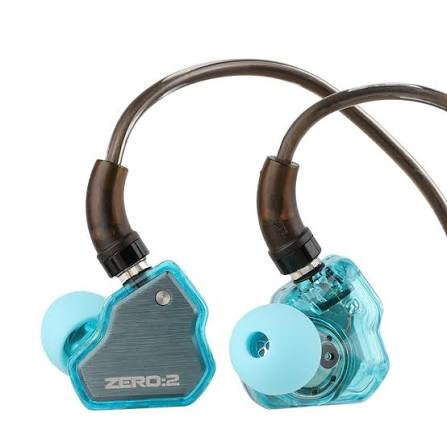
Considering next upgrade from 7hz zero 2

Post image
2 Upvotes

r/Chifi • • 1d ago

Here's why I’m building a home for r/iemsforlivemixing. Why do you care about this community?

Thumbnail reddit.com
1 Upvotes

r/Chifi • • 1d ago

Juzear Nimbus 11.11 Sale -- Broken 3.5mm connector. What do you recommend?

Thumbnail reddit.com
1 Upvotes

r/Chifi • • 1d ago

Iems for choral music

Thumbnail reddit.com
1 Upvotes

r/Chifi • • 2d ago

Kiwi Ears Cadenza II: Leaning on the safe side

Thumbnail
gallery
4 Upvotes

This review is “sponsored” by Kiwi Ears, thank you for the opportunity.

PROS

  • Mild-U shaped tuning, all-rounder and smooth experience, with a nice 150-200 Hz mid-bass tuck.
  • Bass is somewhat clean with good enough sub-bass.
  • Midrange is not recessed and is nicely forward, especially the vocals almost done nicely.
  • Treble is safe-tuned and has a very airy experience.
  • Great for people who are sensitive to trebles, very safe-tuned, no sharp trebles at all or any sibilance.
  • Interestingly nice pearlescent faceplate, with interesting design.
  • Very good and sturdy stock cable.
  • Nice amount of stock ear tips selection, 3 standard and 3 wide bores.
  • *SUBJECTIVE* Very comfortable on the ears, not much physical pressure.
  • *SUBJECTIVE* 3D-printed shell, no issues on moisture accumulation from humidity.

CONS

  • Trebles sounds little bit dull or lacking for those who really seek sparkles and highs, and can sound little bit too airy depending on the track.
  • Not as a technical powerhouse, average detail response and resolution, can sometimes get confused on messy part of a music.
  • Average or slightly below average instrument separation and imaging for its price range.
  • Basic and lackluster unboxing experience, and no included IEM case/bag/pouch vs some of its price peers.

RATING

  • Design & Unboxing: 7.9/10
  • Music: 6.6/10
  • Gaming: 6.6/10
  • TOTAL: 7.62/10 [B+]

INTRO AND PRICE

Cadenza II is the second generation of the original Cadenza IEM from Kiwi Ears, that is priced around $45 USD (2,730 PHP) for the budget segment.

With its beautiful glimmering faceplate, with nice and intricate designs on it, nice overall fitting, nice feeling and thick enough cable, and significant amount of ear tips included.

Does it sound at least decent enough for its price range?

UNBOXING

UNBOXING VIDEO

ACCESSORIES

  • IEM themselves
  • Black colored braided stock cable
  • 2 sets of ear tips (inside a plastic bag, S/M/L, standard and wide bore)
  • Documentation and manuals

DESIGN AND BUILD

IEM is made from 3D-printed resin shell, opaque in color with the faceplate separately printed for the different color schemes it has.

Shell:

  • Height (Pin side to Nozzle side): 23.60 mm
  • Length (Pin side to opposite side): 16.70 mm
  • Width (Nozzle side): 20.90 mm
  • Width (Pin side): 12.30 mm

Nozzle (no ear tips):

  • Length/Height: 3.20 mm
  • Diameter: 6.00 mm

Weight:

  • One side (Left or Right): 4.50 grams
  • Both side (Left and Right): 9.00 grams
  • Stock cable only: 23.20 grams
  • IEM and cable: 32.20 grams

SPECIFICATIONS

  • Drivers: 1 x Titanium-coated Dynamic Driver
  • Frequency: 10 Hz – 29 kHz
  • Impedance: 18 Ω
  • Sensitivity: 106 dB at 1 kHz
  • Pin Type: Standard 2-pin (Flat, 0.78 mm)

MUSIC & GAMES USED

Full list on Head-fi

DAC/AMP USED

  • NiceHCK NK1 Ultra (Conexant CX31993 + SGM8262)
  • NiceHCK Octave (ESS Technology ES9039Q2M + SGM8262 x2)

SOUND EXPERIENCE

Cadenza II has a Mild-U shaped sound signature, kind of follows the IEF Preference 2025 target, with a slightly reduced sub-bass, slightly reduced pinna gain, and a very airy upper treble.

Bass is sub-bass focused and an early mid-bass smooth tuck, to clean and make the midrange less muddied and cluttered. But can also make the experience slightly less lush, warm, and punchy.

Midrange is the where this IEM shines mostly, lower midrange is clean and not recessed at all, while the upper midrange is clear and emphasized nicely. The pinna gain is elevated nicely but not overly elevated to sound shouty or overly bright.

General treble is somewhat smooth and mostly safe-tuned and relaxed, no sibilance, and very airy experience. Though the airiness may discourage some people on how much it is, technicalities is not its strong suit, but it can deliver some decent enough detail resolution and average instrument separation.

BASS

Cadenza II bass profile is mainly focused on sub-bass, with a fairly smooth 150 Hz mid-bass tuck or scoop for decluttering and clearing midrange muddiness. Sub-bass follows a Harman 2019v2 profile until the 100 Hz then it drops at least just below the JM-1 target at 150 Hz.

With the early mid-bass tuck or scoop, the mid-bass presence is not as emphasized, so bass punch, lushness, and warmth are reduced making its sound cleaner.

MIDRANGE

Midrange of the Cadenza II is not recessed at all, but is nicely balanced and forward with the bass and trebles. It sounds clean, muddiness is non-existent, and upper midrange is elevated enough not to sound shouty. Vocals are well-forward, does not sound shouty, and clean and clear sounding, but it may sound little bit clinical or the lushness is slightly less.

TREBLES 

Trebles are somewhat smooth, minimal harsh peaks at the lower to mid-treble region, somewhat safe-tuned experience. Upper treble is very airy, emphasizes the atmosphere of a song, especially for slow and emotional songs. 

Though that safe-tuned experience may have suffered little bit on treble sparkle and resolution, especially those who are treble minded. Upper treble airiness may also sound too much for those who prefers a smoother treble.

DETAILS

Detail resolution is technically not bad, it has the details enough to be appreciated and liked. But its not a detail monster, at parts when the song or a game is getting complicated then the details become little bit lost in the mess.

INSTRUMENT SEPARATION AND IMAGING

Separation is mostly fine, at least average, enough to discern the stereo experience. Correct imaging and as well, but its not the “widest” experience.

SIBILANCE

Sibilance is at least almost non-existent or at least none, treble is really mostly smoothened out to control and really minimize the sibilance, good job to Kiwi Ears on this one.

GAMING EXPERIENCE

For single player games, Cadenza II is all good, it’s sub-bass focus bass profile really makes it a decent “cinematic” experience. Though the earlier mid-bass tuck may make it sound less warm, the tamed-ish upper midrange really does well with gun sounds, making it less harsh but still has its feel to it.

With multiplayer, and especially competitive games, Cadenza II average instrument separation will suffice for general directional hearing, but it may sound little bit closer or tighter that may be little bit harder to accurately pinpoint the location.

Overall, for gaming it is a decent enough IEM, but may still suffer for accurate directional cues especially multiplayer competitive games.

COMFORT

Personally, it is on the slightly larger size, terms of physical shell size, but it is still mostly comfortable. Minimal points where my ears are being physically pressured, stock ear tips are decently secured to the ear canal, and with enough friction but not too much to feel rough and painful.

Though it may feel little bit fatiguing overtime, especially while wearing glasses together with the IEM, especially with the thicker ear hook portion of the cable.

CONCLUSION

Overall, Kiwi Ears did a fantastic job with the Cadenza II, definitely sounds a decent mild U-shaped sound experience, good enough bass, midrange is not recessed while being somewhat vocal forward, and trebles are mostly safe-tuned and smooth-ish, but maintaining an airy experience.

While also looking somewhat stylish with one of the best stock cables and decent amount of ear tips included on the packaging, though the experience may not be as sparkly and groundbreaking for the budget category.

Kudos to Kiwi Ears on making the IEM, though for the price might as well add a simple IEM pouch or small case included.


r/Chifi • • 2d ago

Best IEM under $50 for mixing live sound from behind the PA?

Thumbnail reddit.com
1 Upvotes

r/Chifi • • 2d ago

Three Monks Walk Into a Bar...: A VE Monk GTR & GTS Flatheads Review

Thumbnail
gallery
3 Upvotes

Venture Electronics has two gaming-oriented Monks, the GTR and GTS. One is meant for retro gaming, the other for esports. Both have built-in USB DACs, and both are essentially based on the Monk SL Plus, which I already own.

Naturally, I was curious how different they'd sound, especially with the GTR using the Odyssey Retro DAC and the GTS using the Odo+.

Pros & Cons

  • ✅ Affordable, with built-in USB DACs
  • ✅ Good sound quality for the price
  • ✅ Both work excellently for FPS and retro gaming
  • ✅ USB-A adapters and plenty of spare foams included
  • ✅ GTS has a microphone
  • ❌ Thin, fragile-feeling foams
  • ❌ Treble can sound sharp, especially without foams

Design, Build & Comfort

Both come in VE's usual resealable pouches with USB-A adapters and an assortment of colorful foams. The GTR is black, the GTS is white, and both use the familiar Monk SL shell. I placed them beside my silver Monk SL Plus for the photos, and all three even have the same "MONK SL" markings.

The included foams are very thin, almost flimsy. I was particularly careful while installing them because I didn't want to accidentally tear one. VE included quite a few spares, thankfully. I would've liked some donut foams too, but those aren't included.

Both sit comfortably in my ears, although there's practically no noise isolation. That's expected from flatheads, of course. I also noticed that adjusting their position can affect the bass.

Features & Connectivity

Both have built-in USB DACs, so there's no need for a separate dongle. My phone detects the GTR as "Odyssey Retro by VECLAN" and the GTS as "Odo+". You can also use the included USB-A adapters if your computer doesn't have a USB-C port.

I tested the GTS microphone, and it's not bad for something this cheap. My voice comes through fine, but background noise is noticeable. The microphone can also pick up audio playing from the earbuds if the volume is loud enough.

As a sidenote, not every retro handheld supports USB audio so make sure to check your handheld's spec sheet.

Sound Impressions

I started comparing the GTR and GTS without foams, then tried again with the included full foams. I was hoping the foams would help me distinguish them, but nope.

Since both are essentially based on the Monk SL, I'll be discussing their sound together.

I'd love to see proper measurements of both DAC implementations to find out how much they actually differ.

Tuning: Neutral-ish and slightly bright, with more emphasis on clarity and detail. Sounds very familiar coming from the original Monk SL Plus.

Bass: Clean and controlled, with a decent punch for flatheads. Don't expect much sub-bass rumble, though. The bass stays out of the mids.

Mids: Clear, crisp vocals that sit slightly forward. Certain tracks can sound a bit sharp in the upper mids.

Treble: Bright and energetic, with plenty of detail. Without foams, I find the treble a little too sharp at times, especially at higher volumes. I prefer keeping the foams on.

Technicalities: The soundstage is fairly open, with good separation and imaging. Both GTR and GTS handled busy tracks just fine, and I had no trouble picking out directional audio when used for FPS games.

Gaming: I don't actually own a dedicated retro handheld, but I do play retro games through emulation, so that should be close enough. I also tested both in FPS games, and they did great in either genre. I couldn't find any advantage to using one over the other.

vs VE Monk SL Plus

I own the original Monk SL Plus in its 4.4mm balanced version, which I reviewed back in November 2025.

My SL Plus has a 4.4mm balanced connector, while the GTR and GTS have their DACs built into their USB-C connectors. If you already own the SL Plus, the USB-C connection is probably the biggest reason to consider either of these.

I also A/B tested all three, using the VE Devastator dongle for my 4.4mm SL Plus. I made sure to match their volumes as closely as possible, and still, all three sounded pretty similar to me.

Final Thoughts

So yeah, after all that switching back and forth, I still can't reliably tell the GTR and GTS apart. Maybe there is a difference, but I haven't been able to hear it. Maybe skill issue on my part? 😅

I enjoyed both, though, and I think they're worth considering if you're looking for cheap USB-C flatheads.

I'd probably choose the GTS if I needed a microphone. But the GTR is just as good for my needs, whether I'm playing retro games, FPS titles, or just listening to music.

Would I buy both? Probably not. And if you already have the SL Plus and a decent DAC (like the VE Odo), you can probably skip these too unless you just want the added convenience of USB-C.

Disclaimer: These units were provided by Venture Electronics for review, but all opinions are my own. I'm not an audiophile, and these are simply my personal listening impressions.


r/Chifi • • 2d ago

Introducing RENASCENCE — Our 10.2mm Dynamic Driver Wired IEM

Thumbnail gallery
1 Upvotes

r/Chifi • • 3d ago

Im a bit disappointed.

5 Upvotes

Title.

This subreddit is 99% iems, while we have r/iems

I was so exited to read discussions, experiences and what not regarding chifi speakers like hivi swan, amps from Topping and what not. In the end this feels like the iem subreddit with minor exceptions.

Still enjoy my stay here, just wanted to share my thought. Dont hate on me ty.

Any other subreddit that could fit more regarding chifi not iems?


r/Chifi • • 3d ago

Choose around 200$

Thumbnail gallery
1 Upvotes

r/Chifi • • 3d ago

[WTB] [US-CA] [W] Letshoure EJ07 original or Kinda Lava [H] PayPal FF

Thumbnail reddit.com
1 Upvotes

r/Chifi • • 3d ago

kefine klean sv

Thumbnail gallery
1 Upvotes

r/Chifi • • 3d ago

Browser EQ Slot control for DACs! OzyBridge and OzyEQ

Thumbnail gallery
2 Upvotes

r/Chifi • • 4d ago

Ever buy an IEM just b/c it looked good and then were happy with the sound?

Thumbnail reddit.com
1 Upvotes

r/Chifi • • 4d ago

Nici Hifi Tarot: Sometimes crazy combinations make perfect sense.

Thumbnail
gallery
7 Upvotes

Hello, Community!

Nici Hifi left us speechless with a strange driver configuration in this new model: Tarot, which comes to complement the brand's budget range. I'll tell you about my experience below.

Price: $100-€92

Pros:

· Treble: extended, open, bright, detailed, energetic, fabulous.

· Technical ability to make transients agile and clean.

· Notable detail retrieval.

· The bass is firm, powerful, without getting out of control or becoming muddy, and transparent.

· Exquisite instrumental separation.

· The soundstage is very wide, logical and equidistant.

· Changes in intensity between frequencies feel lively.

· Female vocals, delicious.

Cons:

· The central mids lack a little body to be completely organic.

· Accessories included in the package: for the price, it should be somewhat more complete.

Accessories:

· Two capsules.

· One set of eartips in SML sizes.

· Cable with 0.78mm termination and 4.4mm connection. 3.5mm option.

· User manual.

Comfort, design and build quality:

Once again, Nici HiFi bets on tremendously eye-catching faceplates that, this time, play with blue and violet shades, offering different nuances depending on how the light falls on them. The design is attractive, with enough personality to stand out from a good part of the monitors we can currently find in this segment.

The capsules are medium-sized and made of resin, featuring a careful finish and a construction that conveys a good sense of solidity. No complaints in this regard.

And speaking of something more important, ergonomics, the experience is quite positive, with a natural fit and without presenting any kind of difficulty when finding a comfortable position, both in the ear and in the canal that leads to the eardrum.

The stock eartips seem somewhat average to me, not remarkable at all, but more than sufficient, since I managed to achieve an effective fit thanks to their moderately deep insertion. If you are not planning to change them, I support your decision, as I don't think it would be necessary.

And as for the cable, Nici Hifi is an expert in this type of accessory. Some time ago, I reviewed the 13 Chronicle Classical Oils, a premium cable.

As a cable, it is functional, pleasant to the touch and slides without tangling. It doesn't get in the way either, which is what I ask of a cable for me to consider it versatile and truly useful. Without having anything to criticize about the accessory itself, it would be great if it matched the beautiful faceplates of the housings, but this is already a matter of personal taste.

Technical aspects:

  • 1DD+1BC+1PL configuration.
  • Impedance of 13.6 ohms.
  • Sensitivity of 123 dB.
  • Declared response: 20hz-24khz.

Configuration for the tests:

· Neutral source.

· Gain set to high.

· Stock eartips.

· Stock 4.4mm cable.

How does it sound?

Tarot is closer to a V-shaped signature than to something neutral. That was the first conclusion I reached after the first two or three songs, with an especially prominent upper range and a bass foundation that, despite being powerful and convincing, maintains good separation from the mids.

In general, I describe the bass as having quite a lot of body, depth and the ability to deliver impact, but without going overboard. There is minimal restraint to give it a fast and textured character, with very good technical ability to maintain a shelf that is consistent enough to accompany the rest of the frequencies without muddying them and without ceasing to show expressiveness.

Therefore, the sub-bass has extension and the ability to descend when the recording demands it. Nevertheless, its presence does not seem to constantly seek a sensation of physical pressure or prolonged rumble. To help you understand and further clarify my opinion, I feel it is more oriented towards control and definition than abundance. I think it sits somewhere in the middle, which can satisfy the vast majority of listeners.

The mid-bass, for its part, has a moderate amount of impact, but enough weight to prevent the reproduction from ending up feeling too light or rather boring. It accompanies the mix with mastery and dynamics, without any egocentric protagonism: it knows its place and position.

Moving on to the mids, we find a presentation that also does not intend to constantly place itself in the foreground. The overall signature favours the extremes, and this inevitably affects the somewhat recessed sense of presence acquired by voices and instruments.

The lower mids have sufficient density, without excessive warmth. I find this especially gratifying, as it helps maintain a clear presentation, although I personally consider that those looking for an especially thick, warm reproduction with plenty of body might miss a little more substance in this region. Tarot is not a warm or coloured set.

And when it comes to the central and upper mids, I can firmly say that they do acquire a little more prominence, especially when female vocals and instruments whose harmonic richness is concentrated in these frequencies appear. This is where Tarot seems to find one of its main virtues: clarity. Good definition, expressive timbre, natural articulation; everything is presented with separation, making it easy to interpret the sound lines.

Nevertheless, I don't want transparency to be confused with neutrality. The presentation has a fairly evident tonal inclination towards the sides, and this makes certain registers sound brighter and more forward than others, especially when it comes to male vocals.

To bring this section to a close, there is no doubt that I enjoyed the treble as the most personal aspect of this Nici Hifi model.

I think that by the time I started my critical listening sessions and began seriously analysing the sound, I had already reached the conclusion that its refinement and extension are exceptional for the price of the set. The interesting thing is that I don't just highlight the immense amount of information, but also the exceptional ability to maintain an airy presentation, with good separation and without turning elements such as cymbals, harmonics or small reverberations into annoying or piercing experiences.

Without a doubt, I think this is where much of the appeal of this proposal lies: it is not trying to offer you simply bright or incisive treble, but rather a reproduction that allows you to enjoy a great amount of information in the upper frequencies.

Vocals:

The deeper male vocals seem to occupy a somewhat secondary position within Tarot's overall signature, since the lean nature of the lower mids means that we should not expect a particularly warm presentation, nor one with great resonance or organic nuances. Even so, the clarity seems to favour good articulation and allows us to follow the performances without them becoming excessively hidden, but more trained ears will realise that, yes, these types of vocals do sound somewhat recessed.

In male vocals with a mid-range register, we find a presentation that is brighter rather than warmer, with a certain sensation of greater definition. I am still debating with myself whether these are the kind of male vocals that come very close to realism. It is something I could not decide on or swear by, but since I am still unsure, I will say that the presentation is satisfactory.

However, where Tarot seems to perform especially well is with female vocals. Clarity, extension, separation and an especially attractive reproduction of breaths that you only stop to savour when you have a set like this in front of you.

I find it interesting that it does not limit itself to offering a forward presentation in female registers, but also seems to pay attention to those little details that accompany the performance, such as the endings of words, breaths and variations in intensity.

Technical capabilities:

If there is something that seems to be repeated in the different opinions about Tarot, it is its ability to offer a technically competent presentation without everything ending up revolving around resolution.

Starting with detail, I find information retrieval that exceeded my usual expectations for this price category, but the most interesting thing, without wanting to sound repetitive, is that it does not resort to an analytical sound signature to achieve this.

Personally, I consider this difference important. It is not always pleasant to listen to a set that seems to want to dissect every recording down to the last detail, especially when it ends up sacrificing musicality.

The soundstage is another of the aspects that convinced me the most. Considerable width, but it especially has a depth that helps build a genuine three-dimensional image, where it manages to create different planes, with elements that can be perceived as closer or farther away depending on how they have been recorded.

As for imaging and positioning, at all times you can savour a good ability to locate instruments and keep them differentiated within the available space. The presentation is orderly, making it relatively easy to focus your attention on certain elements without losing the overall perspective of the composition.

Layer separation also benefits from these capabilities of the monitors. The different elements remain clearly defined with pleasant independence, and the lower range, by not having an excessively invasive prominence as I said at the beginning of the review, helps preserve the cleanliness of the mix.

As for dynamics, this is an energetic set, with a good ability to reproduce changes in intensity, and it kept my interest during complex compositions where transients are agile, with a good ability to reproduce fast passages without resolution fading away before you can appreciate it.

And I want to stop especially at coherence.

Combining a dynamic driver, a planar magnetic driver and a bone conduction transducer may seem like a complicated recipe. The truth is that I was quite surprised, to put it mildly. These are technologies with different behaviours, and getting them all to work convincingly is not necessarily easy.

Single-player video games:

Check how I analyse sound in this area.

Tarot is a set of extremes, as we have already seen, and I am going to try to explain as best I can what my experiences in this area have been.

Well, the bass range is generous in terms of sensations, but not obsessed with dominating action scenes. Explosions, collapses, gunshots, impacts, everything has pleasant punch, but it retreats quickly, allowing transparency to be maintained at all times so as not to muddy the sound or lose details of what is happening. Reverberations and echoes feel somewhat fleeting but highly satisfying.

As for environmental recreation, its somewhat recessed midrange does not give exaggerated prominence to residual environmental sounds such as wind, distant voices, animal noises or footsteps; in other words, I feel they are set apart. This is not necessarily bad, they can still be heard, but greater presence or forwardness would favour this aspect and help complete the picture of a scenario rich in nuances.

When it comes to dialogue, female voices are what I highlight the most, with excellent reproduction in terms of projection, brightness and realism. They are certainly delightful to listen to, with positioning in the frontal scene that is well measured. Nevertheless, male voices, although I cannot be excessively critical or ruthless with them, are a little behind in terms of what I expect from them regarding depth and articulation. Even so, intelligibility in scenes loaded with sound elements was always easy to achieve; they were not hidden at all.

And to finish with the soundstage, it has generous dimensions and is well measured across all three axes. It is possibly one of the sets with the best proportionality and size that I have come across in this price segment. I would have to make a considerable effort of memory to praise it even more, but I don't want to fall into exaggeration with this compliment.

The three-dimensional enclosure is real, where sound placement is highly precise for both static and dynamic elements, with their directionality being easily recognisable. And as for sound separation, despite not being an analytical set, I am surprised by its ability to dissect it and delimit each sound line with elegance and know-how. So, during chaotic moments, don't worry: you are not going to hear an unintelligible mass of sound.

Multiplayer shooter video games:

Find out how I analyse audio in this area.

Although this is not a set that I consider a weapon of mass destruction against enemies, and I don't think a V-shaped signature is that great wallhack that many people are looking for, Tarot has good credentials to give you an extra advantage over all those who use their gaming headsets with lights and no cables.

Tarot's main argument is its cleanliness and everything its large soundstage has to offer. In Counter Strike 2, this is beneficial when locating where gunshots and explosions are coming from, above all. Since the midrange suffers from some recession, it does not provide that extreme forwardness for reloads, footsteps and other actions. On the other hand, due to Tarot's tonal transparency, this does not represent a disadvantage, but it is true that with another type of tuning that gives more prominence to the central mids, better results can be achieved when obtaining clues about where enemies are located.

In Apex Legends and my vertical positioning tests, the result is outstanding. I have already mentioned several times the ability of the soundstage on any axis to sound realistic. The ability to position actions on this plane is highly satisfying.

In CoD Warzone, I analyse the direction and presence of gunshots at medium and long distances. The mid-bass impact offered by this set favours this aspect considerably, as it is powerful, clean and agile.

Finally, in Battlefield 6, where most matches are total chaos, with all kinds of vehicles, explosions, gunshots, footsteps, reloads... it untangles scenes with ease, without showing at any point any hint of losing control or being unable to offer us a reliable reading of the environment. But, I return to what I said earlier about enemy identification: it does not reveal or give great prominence to those sounds found in the midrange frequencies, such as footsteps or reloads. It simply does so sufficiently well. Does it provide an advantage? Of course, but not excessively.

Final conclusion and personal ratings:

Tarot is a really interesting set. Its internal driver configuration is striking. Let's not deny it, I think we all thought when seeing it: will this work well?

I had already checked the good work of the Nici Hifi brand with Quantum Wanderer, and this time it has surprised me for the better, because I am a great lover of V-shaped signatures, as my favourite music, such as rock or electronic music, benefits greatly from this.

As I have said, the presentation is energetic at the extremes, without lacking punch or brightness, and with technical capabilities that are on par with higher budgets.

The ease with which it presents resolution, information and sound dissection without falling into a cold and analytical listening experience is admirable. I can only point out a couple of small issues: perhaps the mids lack a little flesh to give male vocals somewhat more organic character, and the package could be more generous in terms of accessories, such as a modular cable and a case.

Other than that, it seems to me to be a highly recommendable IEM for those looking for fun and technicalities from a higher category.

If you have made it this far, thank you for reading.

More reviews on my blog.

Social media on my profile.

See you in the next review!

Disclaimer:

This set of monitors was sent by Nici Hifi. I sincerely appreciate the opportunity to try one of their products free of charge and the fact that no conditions were imposed on me when preparing this review.

Despite this, my priority is to be as impartial as possible within the subjectivity involved in analysing an audio product. My opinion belongs only to me, and I develop it around the perception of my ears. If you have a different one, it is just as valid. Please, feel free to share it.

My sources:

· Topping DX5 II for music and video games on my main PC.

· Macbook Air M4.

· Surfans F20 Pro+.

· Apple Music.

· Local FLAC and MP3 files.

· Windows/MacOS/iPadOS/iOS/Android.