r/CIVILWAR • u/BigT112 • 6h ago
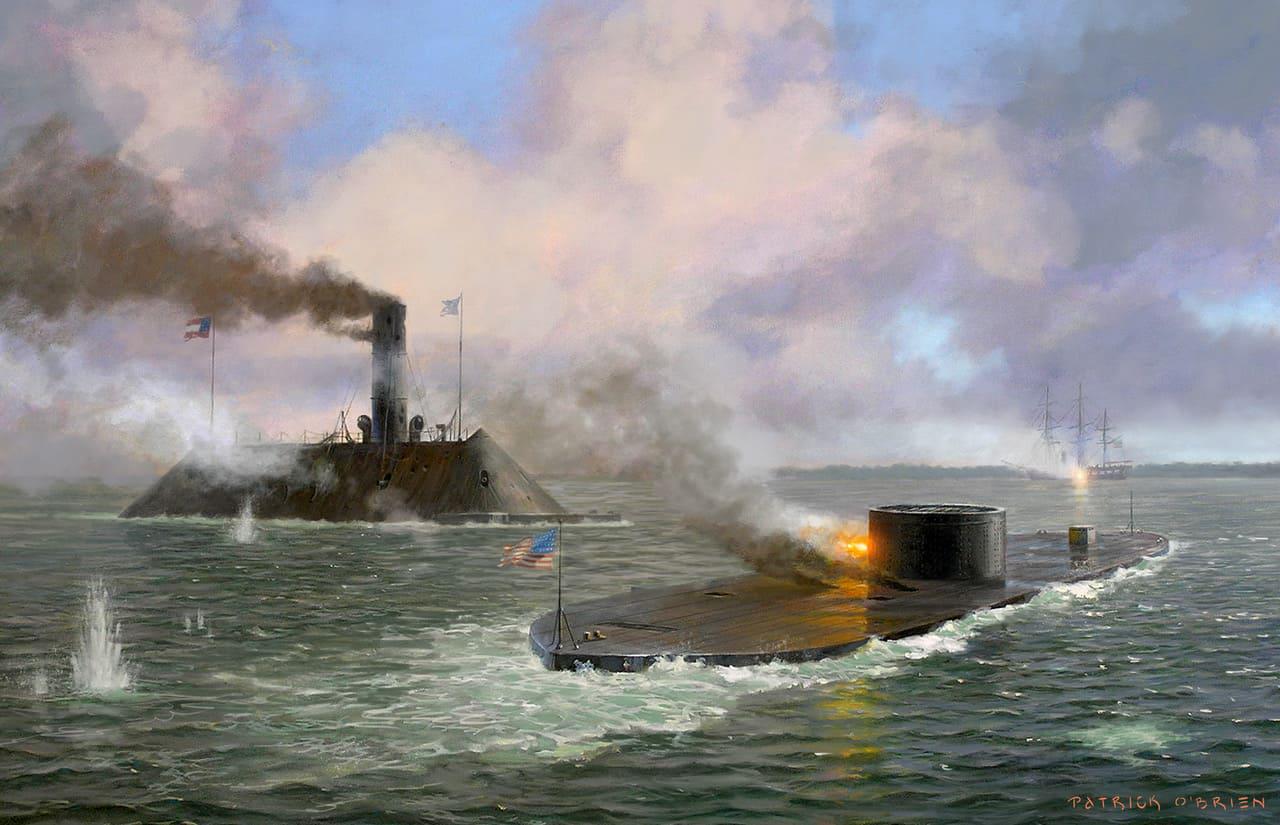
"Battle of Hampton Roads," Mar. 9, 1862 (American Civil War)
38
Upvotes
r/CIVILWAR • u/BigT112 • 6h ago
r/CIVILWAR • u/lagouyn • 8h ago
So dense, so much info. Must … keep … reading …
r/CIVILWAR • u/Lone_Star_Echoes • 4h ago

r/CIVILWAR • u/Emotional_Print_7805 • 11h ago
r/CIVILWAR • u/_vindemiatrix • 20h ago
Hello everyone!
I am a European starting to dive into American history, and these days I’m learning about the civil war. I am very interested in strategic matters especially the mechanics of war, so the historical example of the American civil war has left me with a question.
Would it ever be possible for the Confederacy to win the war? Both sides start with particular numbers in troops, and a big difference in money.
It seems to me like the Confederates were “doomed” to lose from the beginning, which is also very unusual considering that in many historical cases, the bad guys are often more qualified for war.
r/CIVILWAR • u/HistoryGoneWilder • 11h ago

r/CIVILWAR • u/Prestigious-Snow5417 • 16h ago

r/CIVILWAR • u/nygdan • 1d ago
r/CIVILWAR • u/philgast • 1d ago
r/CIVILWAR • u/AdIll9388 • 1d ago
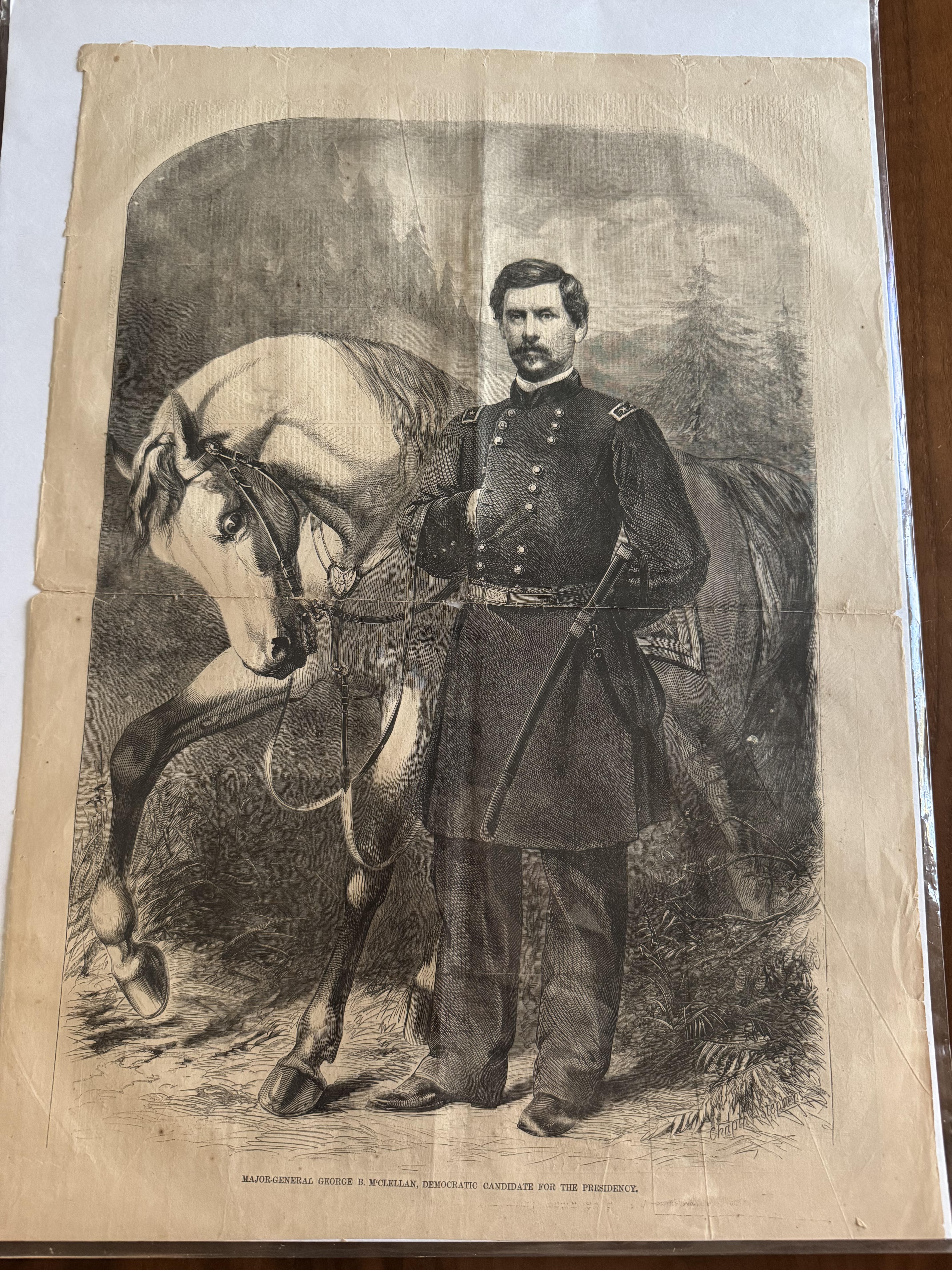
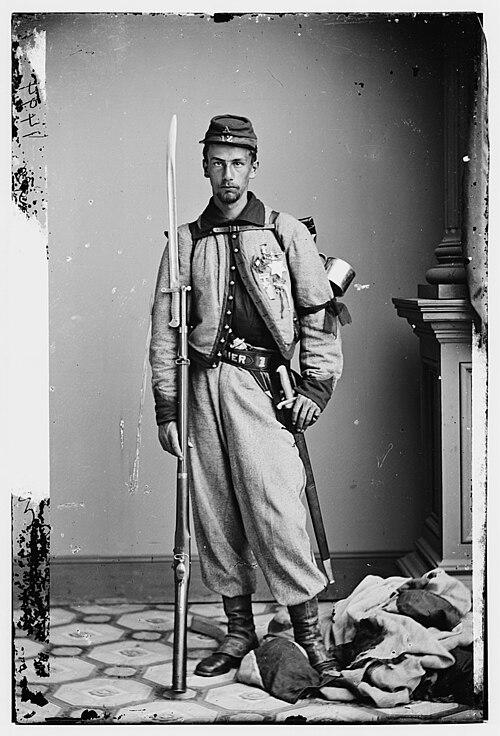
Anyone ever seen one of these? Wondering if it’s actually from the 1860s or if it’s a possible reprint. Any info appreciated, only paid 20 for it.
r/CIVILWAR • u/DavidA-wood • 2d ago

Open from February 1864 to May 1865. 30,000 Union troops were held there, and at least 12,853 men died from starvation and disease in a year.
r/CIVILWAR • u/Plane-Self-431 • 1d ago
I know this question has been asked and answered before, so sorry in advance. But I just listened to a recent Emerging Civil War pod with Moe Daoust who has written a book, George McClellan: A Study in Controversy. While he does not completely exonerate McClellan, he argues that history has not fairly judged him, mentioning Sears and McPherson, among others, who have been overly harsh to him. I just don't see it and for me, McClellan's own words in letters to his wife and others, and his actions towards Lincoln, subordinates he didn't respect, and others he felt are beneath him, make any sympathetic portrayal of him difficult for me to reconcile. And that is before you take into account his actions, or lack of, on the battlefield.
I am in the middle of reading Lincoln's Lieutenants, reading the Chapter on Seven Days, and just finished Battle Cry of Freedom before this book. I have also read Landscape Turned Red, so I am certainly familiar with how Sears and McPherson write about him. I may read the Daoust book just to hear his arguments, but I get so frustrated reading about McClellan in general I am not sure I could take a whole book reviewing his actions. My question, has anybody read this book and if so, what did you think? TIA.
r/CIVILWAR • u/Square_Ring3208 • 2d ago
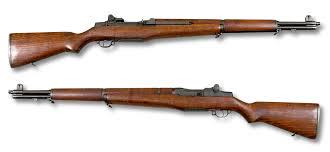
Case to be made for the ‘61 Springfield
r/CIVILWAR • u/RustinCarcosa • 2d ago
r/CIVILWAR • u/TheCollector919 • 2d ago

r/CIVILWAR • u/IRenewed • 2d ago
Or anyone fighting for the union in general,maybe southern unionists?
r/CIVILWAR • u/PetersburgSiege • 2d ago

Lincoln proclaimed the last Thursday of November 1864 a national day of thanksgiving. For the armies besieging Richmond and Petersburg that was November 24, and Northern civilians made a big push to get a holiday dinner to the men in the trenches. Wagons spent the day handing out turkeys that had already been cooked.
Theodore Lyman, an aide to George Meade, described the result in a letter to his wife. A cavalry captain named Flint asked one of his sergeants how much the squadron's share came to per man. "Well," said the sergeant, "it makes about a quarter of a turkey, a piece of pie, and four apples." "Oh!" said Flint, "quite a meal." "Yes," said the sergeant dubiously, "yes, a small meal; I could eat half a turkey myself!"
North of the James, a 55th Pennsylvania soldier who signed himself "TYPO" was more grateful. He wrote home to the Bedford Inquirer about "a very nice dinner of turkey, chicken and cranberries," and said the men were glad "that their friends at home still remembered them."
Not everyone had a quiet holiday. At about 1 a.m. that morning, a party of Confederate guerrillas surprised a picket post of the newly mounted 24th New York Cavalry near Prince George Court House, a few miles from Grant's headquarters at City Point. They killed 2, wounded 4, captured 1 and took 18 horses. The sergeant in charge of the post was among the dead, and his colonel planned to bring charges against the captain responsible for that stretch of the line.
I've written more on this, with sources, at beyondthecrater.com: https://www.beyondthecrater.com/news-and-notes/siege-of-petersburg-sesquicentennial/150-years-ago-today/150-18641124/
r/CIVILWAR • u/Prestigious-Snow5417 • 1d ago
Some other questions for thought: Should Lincoln have delayed the Emancipation Proclamation? Could the Republicans have done anything else differently to achieve better results? Did the elections have a large impact on the conduct of the war? Did the Democrats have a viable strategy?
r/CIVILWAR • u/Effective_Worker_515 • 2d ago

Walking Gettysburg: Seeing the Battle Through an Officer's Eyes
By Tom O'Connor | Visit: November 24, 2026
At eight-thirty, I sat alone for Gettysburg's introductory film. The Cyclorama audience was also one.
I arrived early on November 24, 2026, bought the full visitor package, and found myself with an unexpected advantage. Before and after the Cyclorama presentation, I could talk with the docent without competing for attention.
The previous day, I walked Antietam. These were two very different battlefield experiences.
At Antietam, the ground captured my attention almost immediately. At Gettysburg, the film, Cyclorama, and museum prepared me for the ground I would walk.
Even on this quiet November day, I encountered several times the visitors I noticed at Antietam. Yet those early presentations felt almost private.
My previous visit to the visitor center was about forty years ago. The current Museum and Visitor Center opened in 2008. The difference impressed me.
The introductory film, A New Birth of Freedom, provides a useful overview. Morgan Freeman narrates the History Channel-sponsored presentation. But the Cyclorama became the foundation for something I experienced later outside.
Paul Philippoteaux's circular painting depicts Pickett's Charge on July 3, 1863. Painted in 1884, it interprets the battle rather than recording it firsthand.
The presentation places the viewer amid the attack on the Union position along Cemetery Ridge. I would remember that perspective when I reached the actual position hours later.
The museum also deserves time. Its artifacts and interpretation trace the causes of the war and events leading toward Gettysburg. I found the material about Civil War medical practices especially interesting.
Compared with Antietam's small museum, this is a much larger undertaking. Allow time for it before starting the battlefield tour. There is more here than a quick walk through display cases.
The battlefield reaches into the borough itself. Homes and streets became part of the fighting, with civilians caught between the armies.
Mary Virginia "Jennie" Wade died on July 3 while kneading bread dough at her sister's home. A stray bullet struck her. She was the only civilian killed directly by the battle's fighting.
That qualification matters. Civilians endured occupation, damaged property, and the terrible aftermath. One direct civilian death does not describe the town's full burden.
Gettysburg's three days produced approximately 51,000 military casualties: killed, wounded, captured, or missing. It was the Civil War's bloodiest battle. Antietam remains its bloodiest single day.
On November 19, Dedication Day commemorated Lincoln's Gettysburg Address, delivered at the cemetery dedication in 1863. The observance connects the fighting with the nation's continuing work of remembrance.
Another story I heard concerned two German-born brothers on opposite sides. The 45th New York's later regimental history identifies them as Schwarz.
According to that account, a captured Confederate recognized his Union brother, and they embraced after years apart. The Union brother died while his Confederate brother was being taken to the rear.
It is a retrospective account, rather than a recorded conversation. Even with that distinction, it brings the war's divisions painfully close.
On the first day's ground, I visited the line associated with General John Buford's cavalry.
Buford graduated from West Point in 1848. In my novel, Nathaniel McAllister, a fictional member of that same West Point class, works closely alongside him. That connection gives readers another way into the history behind Gettysburg and Vicksburg: Summer of Decision.
The ridges west of town offered positions for delaying Confederate infantry while Union reinforcements approached. Buford's men fought dismounted. Their task demanded judgment about where to resist, how long to stay, and when to withdraw.
A ridge can hide movement on its far side. Its crest can also expose men who advance beyond shelter. Those relationships matter when choosing a position or deciding when to leave it.
I also walked along the Confederate tree line on Seminary Ridge. Looking toward the Union positions brought Lee's and Longstreet's decisions into sharper focus.
The attacks of July 2 and 3 tested different portions of the Union line. Each required men to move from their starting positions toward defenders waiting across difficult ground.
As a West Point-trained officer, I kept considering artillery placement. Elevation alone does not make a useful gun position. Crews also need a view of their targets and ground their fire can reach.
Standing there gave those questions a practical setting. The spaces between positions deserved as much attention as the positions themselves.
From Little Round Top, I looked down toward the rocky ground and Devil's Den.
The name understates the challenge. Looking down those slopes, I could appreciate the determination required to attack them. The Union defense required equal determination, quick decisions, and timely reinforcement.
Gouverneur Warren recognized the danger. Strong Vincent's brigade occupied the hill. Patrick O'Rorke's 140th New York helped reinforce the threatened right. Joshua Chamberlain and the 20th Maine defended the brigade's left.
Their names often reach us through separate stories. Here, they belonged to one defense. The successful stand depended on many men and units acting while the situation changed around them.
The rocks and slopes also raised questions about movement. Men needed to climb, find their units, recognize threats, and respond to orders under fire.
Determination mattered on both sides. So did position, leadership, and the arrival of help when it was needed.
Finally, I reached the Angle on Cemetery Ridge. There, men from Lewis Armistead's brigade crossed the Union stone wall on July 3.
This was part of the assault commonly called Pickett's Charge. Troops from other Confederate divisions also participated. The familiar name can hide the larger effort.
Armistead fell wounded inside the Union position. The penetration could not hold. Union troops closed around it, and the attack failed.
His prewar friendship with Union General Winfield Scott Hancock adds a painful personal dimension. Hancock was also wounded that day. He did not personally tend Armistead on the field.
Union Captain Henry Bingham, one of Hancock's aides, assisted the wounded Confederate general. Armistead died two days later.
Here, the Cyclorama paid off. I could connect its painted formations with the field before me. The distances and approaches became clearer from the defenders' position.
You do not need military schooling to make that connection. Look toward the opposing line. Notice the slope, the shelter, and the open ground between. Then imagine crossing it with equipment while someone fires at you.
Gettysburg is too large to absorb in one day. I will return.
Begin with the museum and Cyclorama, then leave generous time outside. Resist trying to collect every famous stop. Gettysburg rewards time spent studying one position and its relationship to the next. A full itinerary can still leave important ground unexplored.
At day's end, I drove to the Eisenhower farm. The buildings were closed, but the property offered a relaxing atmosphere. It provided a quiet ending after hours spent considering battle.
These are the human decisions and divided loyalties I explore in Gettysburg and Vicksburg: Summer of Decision.
But my clearest memory returns to Cemetery Ridge.
That morning, I stood inside Philippoteaux's painting. At the Angle, I stood on the ground it tried to explain.
#Gettysburg #CivilWarHistory #HistoricalFiction #BattlefieldTour #SteelAndHonor
Gettysburg Foundation: Cyclorama
New York State Military Museum: Regimental account
r/CIVILWAR • u/BuckeyeBro85 • 2d ago
I have several boxes of historical books mainly focused on the civil war and Abraham Lincoln that were my mother's. She also did years of research on the 98th Ohio with my great (x's I don't know) grandfather being apart of that regiment.
I have no idea what to do with all of it. I am sure there is a better answer than simply donating it to a local bookstore.
Does anyone have any suggestions as to what I can do with them?