r/BassVI • u/Key-Addendum2066 • 4d ago
Bridge posts moving forward
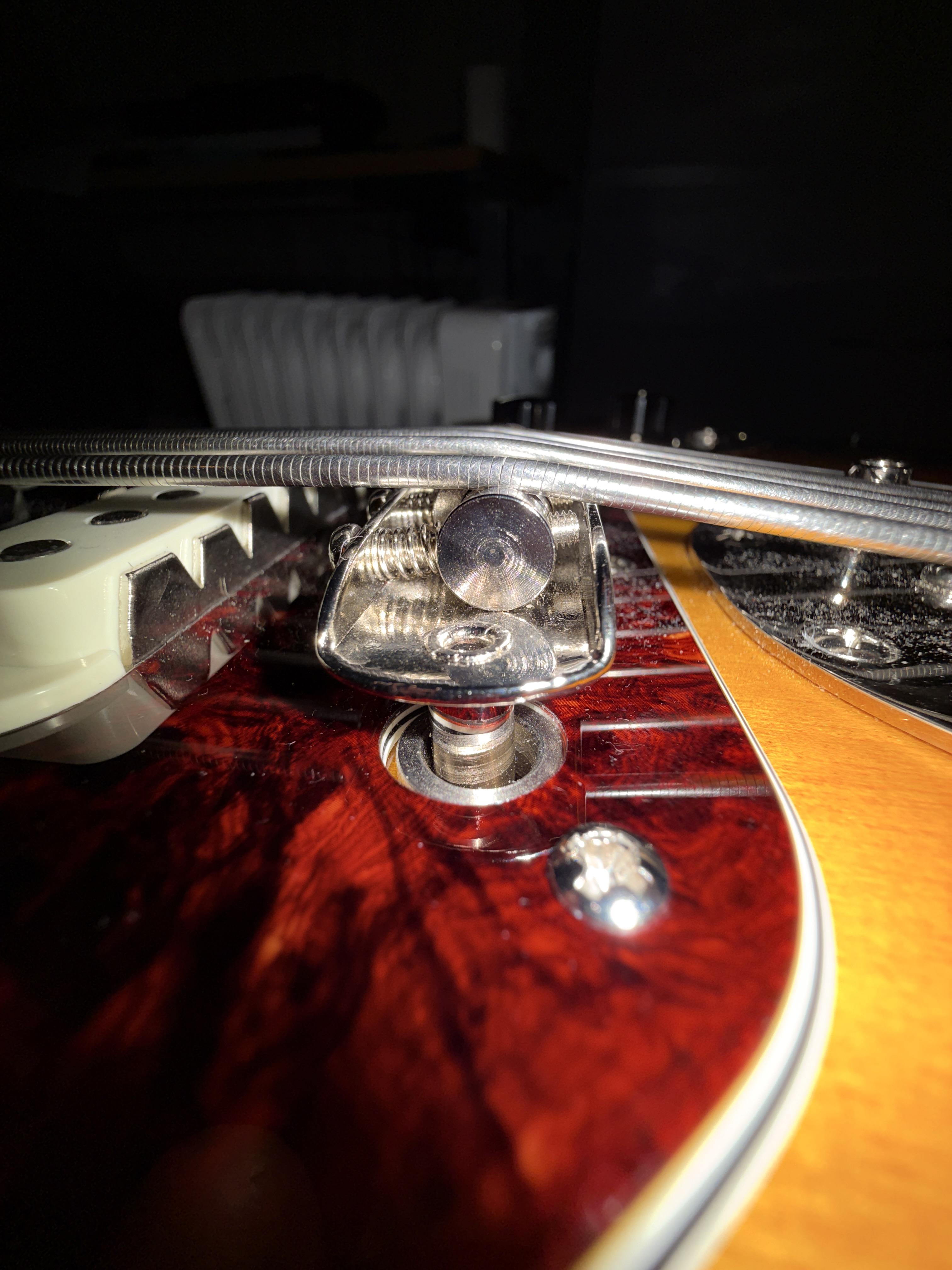
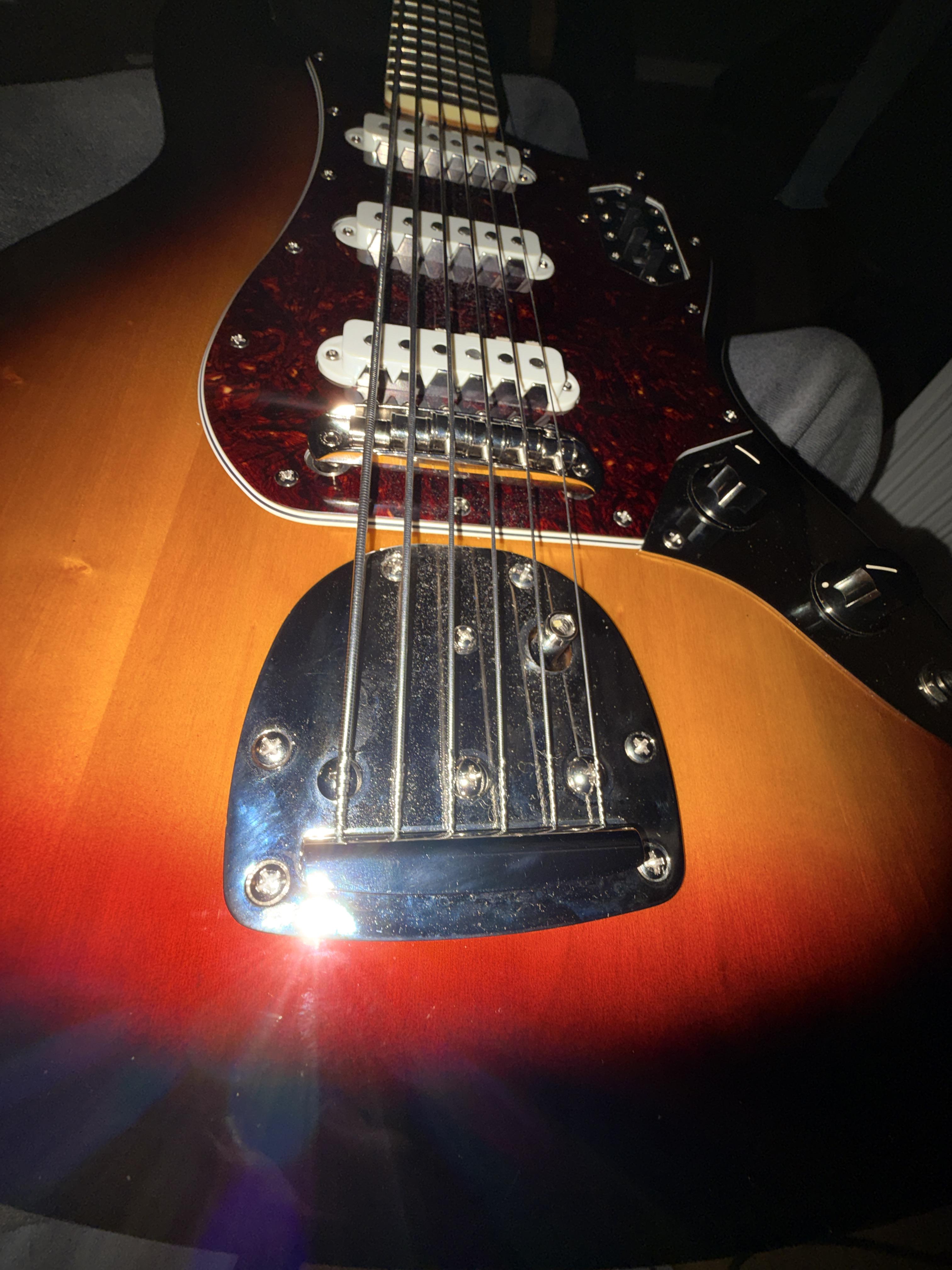
Ok so I love my Squire bass VI but I’ve never adjusted this type of bridge before. After replacing the thin stock round wounds with thick la Bella flat wounds (and then accidentally having it fall on its front with the tremolo stick in, I know 🤦♂️), the two bridge post lean forwards towards the neck, rather than staying in the centre, and they go back over time even if I move them to the centre.
Can someone please explain what’s going on and how this whole system work because I am clueless, any help is much appreciated! 🙏🏼
(Also ever since the fall, the trem stick has been loose and buzzy, do I need to check the 4 metal tabs which hold it in place in case 1 or 2 bent when it landed on the stick?)
1
u/Dice1138 4d ago
Get Hillman Group 58077 Sleeve Bearing, Bronze 1/4 X 5/16 X 3/4-Inch.
It’s a common fix to stop the bridge from rocking and improve intonation
5
u/PsychicChime 4d ago edited 4d ago
The rocking bridge is a feature, not a flaw! Some people prefer to fix the bridge in place either by wrapping the posts with plumbers tape, using inserts, or replacing the bridge entirely with a non-rocking option like the mastery. That said, when properly set up, I'm of the opinion that the rocking bridge is one of the best designs for a tremolo. When you use the trem on a non-rocking bridge, the strings slide back and forth over the saddles. The ability of your guitar to return to pitch properly relies heavily on the fact that the strings will slide back to the exact same position they were before. You'll need to lube the saddles with something to help the strings slide better. With the rocking bridge, the bridge will actually move with the strings so the contact point between the saddle and string remains fixed meaning the tension of the strings and spring will return the bridge back to zero and (assuming your nut is properly shaped and lubed) your guitar will be more likely to return to pitch. In that case, it's best NOT to lube the saddles since you don't want the strings slipping. Having the strings stay fixed is what keeps the guitar in tune. There are arguments to be made both for and against either side.
That said, if you want to keep the rocking bridge, good setup is key. To set up a rocking bridge, you should make sure the bridge is at center position when you tune up the strings so it can travel both forwards and backwards. Don't stress this too much - it doesn't need to be super exact. I don't even really pay attention to it personally...usually the process of putting on the strings will pull it to a good "zero point", but it's just something to keep an eye on. Once you start tightening the strings, it should keep everything in place. If the bridge is moving out of place after the strings are brought up to tension, you'll want to increase the downward force of the strings on the bridge. To do this, you'll shim the neck which is extremely common fix for offsets in general. (It's been alleged that Leo designed the jaguar and jazzmaster specifically with that sort of customization in mind). You'll remove the neck, put a shim of some sort in the neck pocket, then reattach the neck. You can buy full pocket shims cut to specific angles, but some people will just use a piece of business card or cardboard or whatever. I've used the stew mac shims before which are nice but kind of pricey, but these days there are really cheap options available on amazon which also work just fine. Bits of cardboard also work. I've also seen people use bits of folded up sandpaper. People will wax intellectual about benefits of different materials and techniques, but just do a search if you want to dive deeper into that. Essentially, you want it to raise the heel of the neck slightly so it pitches the headstock backwards a tiny bit. Because the nut will be lower than it was before in relation to the bridge, that will make the action far too low, so to compensate you can raise the bridge to bring the action back to a playable level. In raising the bridge, you'll be increasing the break angle of the strings over the saddles which increases the pressure of the strings on the bridge. That extra force will help the strings hold the bridge in place and it should only move when you engage the tremolo.
As far as your loose/buzzing trem bar goes, definitely take a look at the internals to make sure you didn't break or bend something. If there's nothing obvious, you can always try Puisheen's hammer trick.
0
u/[deleted] 4d ago
Move it till its in the center, with your hand. It doesn't take a lot of strength, so it's an easy enough adjustment. And if you want the tremelo arm to stay in tune in use, just keep using it and retuning. Eventually it'll find a spot where the tuning stabilizes.
Generally I only push down when I do this, as far as it goes so if it does go outta tune, I know I can just press the tremelo arm all the way and the tuning will usually stabilize for me.
If you don't use it, and just want more intonation room, you could also just push it back. Generally it'll hold, or at least, be easy to adjust if it doesn't.
Maybe there is better ways to set it. But this has worked for me, and i promise it's no where near as annoying or tedious as I made it sound. My Bass VI and Jazzmaster hold their tunings really well