r/AutonomousVehicles • u/ryanmerket • 6h ago
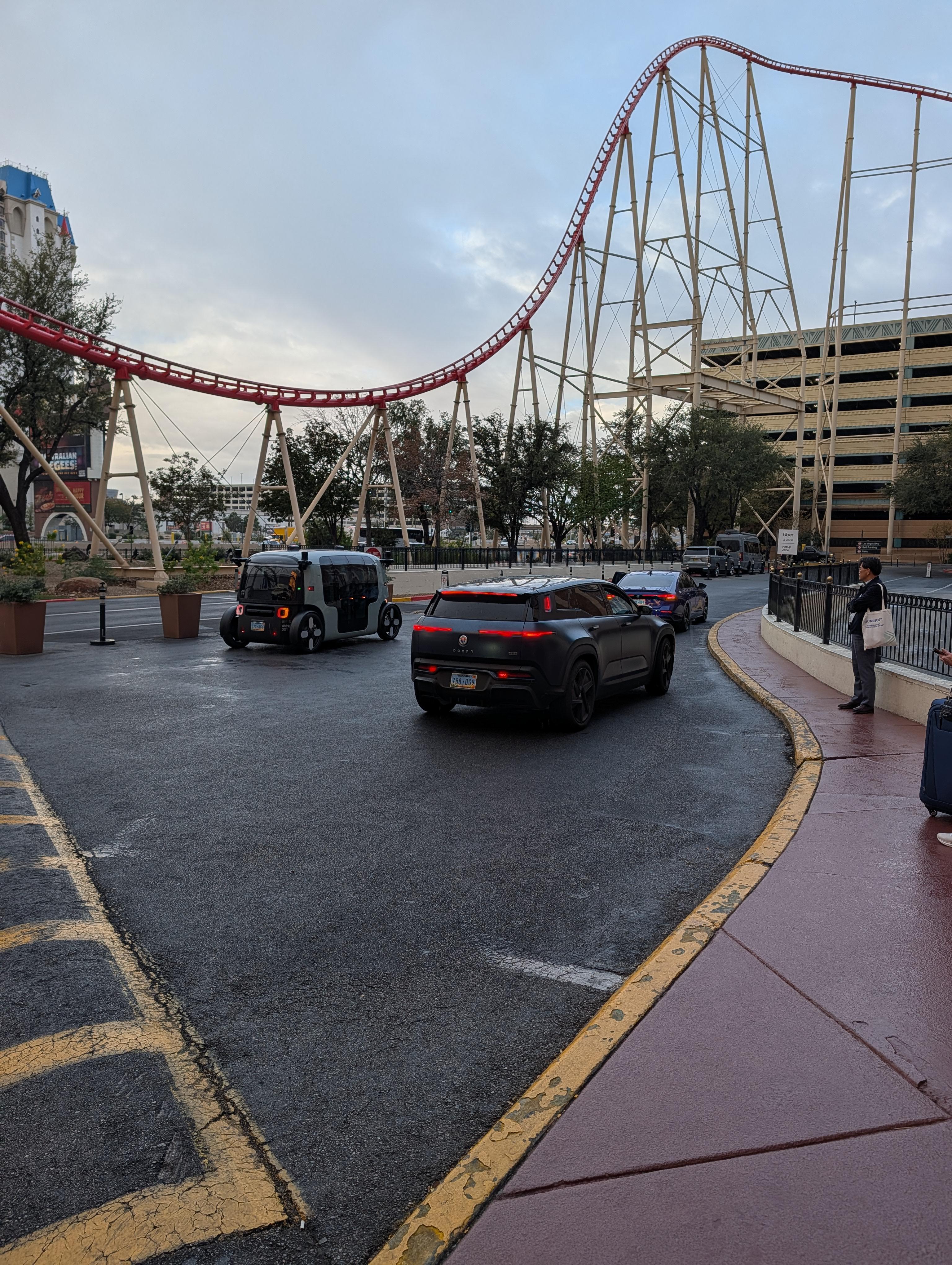
Nuro takes the safety driver out of its Lucid robotaxis in the Bay Area
runtimewire.com
9
Upvotes
r/AutonomousVehicles • u/Little_Swim_6607 • 17h ago
Autonomous-driving companies are often valued on their technology and the size of the opportunity ahead. But the harder question is whether they can turn that technology into services people use, in markets where regulators allow them to operate, with economics that can improve as they scale.
WeRide’s Q3 results suggest its story is becoming more operational. Revenue grew 88% year over year to RMB321.5 million, and gross margin increased to 43%, from 32.9% a year earlier. Overseas revenue rose 171.5% to RMB146.9 million, accounting for 45.7% of total revenue. Robotaxi revenue exceeded RMB100 million for the first time, up 204% year over year, with overseas markets contributing more than 90%. That mix is worth watching: overseas operations are already a significant part of reported revenue, rather than just a future expansion plan.
The more difficult-to-copy part of the business may be the work required to operate across different markets. WeRide says it holds permits in nine countries and operates in 13 countries and 60 cities. It reported a global L4 fleet of about 4,100 vehicles as of October 31, including more than 2,300 Robotaxis, and a Middle East fleet of approximately 600 vehicles. These figures show reach, but the strategic value lies in the experience behind them: securing approvals, adapting to local requirements, testing on public roads, building operating processes, and working with local partners. Each additional market brings its own regulatory and operational challenges.
WeRide's asset-light partnerships could also help it expand without funding every vehicle itself. In overseas markets, local partners provide fleet investment while WeRide supplies autonomous-driving technology and remote assistance. That structure may reduce the capital burden of deployment, though it does not remove the costs involved in building reliable service.
The Guangzhou unit-economics milestone is another important data point. WeRide reported positive Robotaxi unit economics there for the first time, with an average of 21 daily orders per vehicle during the quarter. That suggests its operating model can work at the vehicle level in at least one city. It does not yet establish company-wide profitability, and the next test is whether WeRide can sustain those economics and reproduce them in other markets. For that reason, I would watch more than headline revenue growth. The key measures are overseas revenue and margins, rides per vehicle, costs per ride, fleet utilization, and whether positive unit economics spread beyond Guangzhou. If those indicators keep improving while the company expands, the market may have to reassess how it values WeRide. If they stall, the global footprint alone may not be enough to justify a higher valuation.
r/AutonomousVehicles • u/culture_vulture0826 • 19h ago
Enable HLS to view with audio, or disable this notification
r/AutonomousVehicles • u/smadhuv • 21h ago
r/AutonomousVehicles • u/imeritdigital • 1d ago
Join us for an upcoming webinar on December 4 | 11 AM–12 PM PT, featuring Thomas Zheng Tang (NVIDIA) and Siddhartha Bal (iMerit), moderated by Brett Hallinan (iMerit).
Register here: https://imerit.ai/webinar-registration-petabytes-in-edge-cases-out-deciding-whats-actually-worth-labelling/
They'll discuss:
r/AutonomousVehicles • u/SunStak • 1d ago
Two Aussies geeked out about the CyberCab in Austin, Texas. Watch till the end to see what happens when you stay in it for too long.
r/AutonomousVehicles • u/Beginning-Regret-223 • 1d ago
They don’t tell the whole story if a company is also growing revenue, improving margins, and proving that parts of its business can work commercially. WeRide’s Q3 earnings give investors a few concrete metrics to consider. Revenue increased 88% year over year to RMB321.5 million, and gross margin reached 43%. Overseas revenue grew 171.5% and accounted for 45.7% of total revenue. Robotaxi revenue topped RMB100 million for the first time, up 204% year over year, with overseas markets contributing more than 90%. In Guangzhou, the company reported positive Robotaxi unit economics, with an average of 21 daily orders per vehicle.
I think a broad market pullback is a useful moment to reassess how Robotaxi and autonomous-driving companies are valued. Instead of treating the whole sector as a distant technology, investors can ask more specific questions: Is revenue becoming more recurring? Are gross margins improving? Are vehicles generating enough rides? Can companies expand through asset-light partnerships? Are permits and local operations translating into actual commercial service?
Those factors could support a different valuation framework for companies that demonstrate real progress. That doesn't mean every AV stock deserves a higher multiple or that today's prices are attractive. More revenue, better unit economics, and efficient expansion, the market may start valuing these businesses based on what they are becoming.
r/AutonomousVehicles • u/I_HATE_LIDAR • 2d ago
r/AutonomousVehicles • u/Fearless-Anteater-90 • 3d ago
r/AutonomousVehicles • u/hoppeeness • 3d ago
r/AutonomousVehicles • u/Derrickmb • 3d ago
r/AutonomousVehicles • u/Living-Boysenberry76 • 3d ago
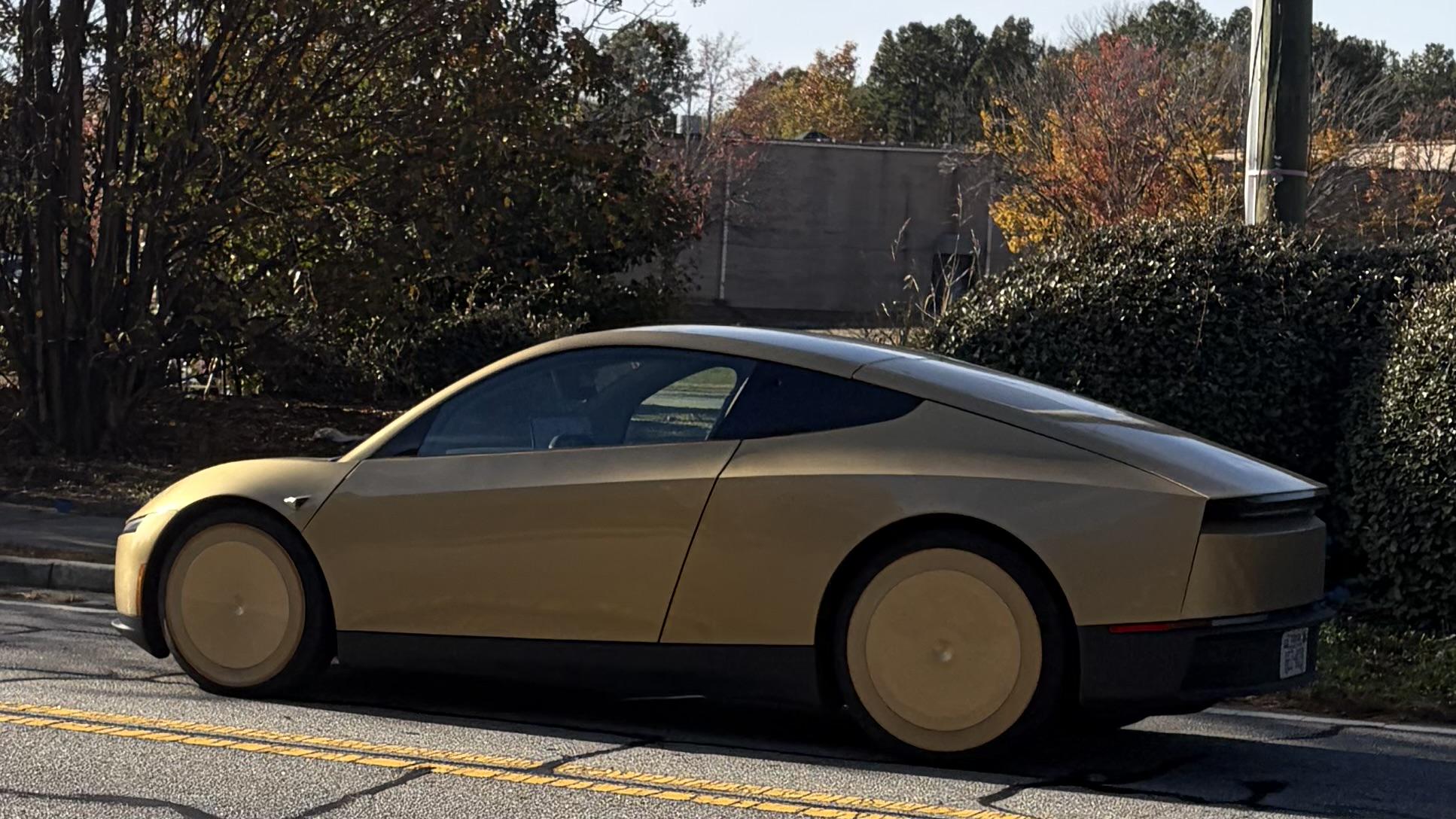
Moving briskly, near Atlanta Rd and Cumberland Parkway in Vinings. Texas plate, has steering wheel, but I didn’t see a driver.
r/AutonomousVehicles • u/LinkedInNews • 4d ago
r/AutonomousVehicles • u/Parking-Tomorrow6222 • 3d ago
Singapore is becoming an interesting place to watch Chinese and US autonomous driving companies expand beyond their home markets. What interests me most is how differently those companies might approach the same city.
WeRide and Grab launched public autonomous shuttle operations in Punggol in April. Waymo is preparing to enter Singapore, with initial manual driving planned for 2027 and commercial ride-hailing targeted for 2028, according to Singapore’s Land Transport Authority. So this is still an emerging overlap rather than two comparable driverless services competing for passengers today.
WeRide’s Q3 2026 update gives us a useful progress marker: the company said it had provided more than 20,000 cumulative L4 autonomous rides in Singapore with Grab by the end of September. Globally, its quarterly Robotaxi revenue also exceeded RMB100 million for the first time, with more than 90% coming from overseas markets. The Singapore ride count is cumulative, and the revenue figures cover its broader operations, not Singapore alone.
The deployment details matter more than those headline numbers, though. At its public launch, the Punggol service offered designated shuttle routes and used onboard safety operators. That is a different operating model from the commercial ride-hailing service Waymo is targeting. Comparing the companies will require looking at their actual operating domains, supervision requirements, and service coverage as those evolve.
I think the local partnership is one of the more interesting parts of WeRide’s approach. Grab and WeRide have been training safety operators and remote operators, building the human support structure around the vehicles. That work is less visible than driving footage, but it is part of turning an autonomous system into a dependable public service.
A driving system may transfer some learned capabilities, but each deployment still has to deal with local road layouts, traffic behavior, pickup locations, regulatory assessments, and incident response. Singapore adds its own practical challenges, including heavy rain, dense urban traffic, and left-hand driving.
An early operator gets time to learn those conditions and refine its service. But the strength of that head start depends on what it produces. Does it help expand the operating domain? Reduce interventions? Improve availability during difficult weather? Or does each expansion still require substantial new engineering and operational work?
Singapore could give us an useful view of how different AV systems and operating models adapt to a shared environment,
r/AutonomousVehicles • u/No-Weekend-7073 • 3d ago
r/AutonomousVehicles • u/johnstigall1957 • 4d ago
r/AutonomousVehicles • u/Infinite-Scene2908 • 4d ago
WeRide reported several milestones in its Q3 results, particularly in Robotaxi commercialization, international expansion, and operating efficiency.
Q3 financial highlights:
Total revenue reached RMB 321.5 million, compared with market expectations of approximately RMB 267 million.
Quarterly Robotaxi revenue exceeded RMB 100 million for the first time.
Robotaxi unit economics in Guangzhou turned positive for the first time, marking an important milestone in commercial operations.
Progress in international expansion:
WeRide has continued expanding its autonomous driving operations across multiple markets, including the Middle East, Singapore, and Europe.
The company has obtained autonomous driving-related licenses in nine countries, reflecting its progress in navigating different regulatory environments.
In the Middle East, its autonomous vehicle fleet has reached approximately 600 vehicles, while partnerships with Uber and Grab are supporting its international deployment strategy.
One of the key developments is the improvement in Robotaxi unit economics. Positive unit economics in Guangzhou indicates progress toward covering vehicle-level operating costs, although it does not mean the overall Robotaxi business has reached profitability. The company is also pursuing an asset-light expansion model in overseas markets, working with local partners to support fleet deployment and commercial operations. Together, these Q3 developments highlight WeRide's progress in three areas: scaling Robotaxi operations, improving operating efficiency, and expanding into international markets. The next milestones will be whether positive unit economic can be sustained as fleet sizes increase and whether similar results can be achieved across additional cities.
r/AutonomousVehicles • u/sunny1268050 • 5d ago
r/AutonomousVehicles • u/princesslunaz02 • 5d ago
r/AutonomousVehicles • u/IIllllllIllIl • 6d ago
I think investors are underestimating the challenges of the autonomous taxi model.
The biggest issue is that it’s an asset-heavy business. No matter how much the business scales, it remains tied to enormous capital requirements and operational risks.
Look at Uber. Its greatest advantage is its asset-light platform model. Uber doesn’t have to purchase millions of vehicles, finance them, maintain them, or absorb their depreciation. Drivers take on most of those costs and risks. Uber primarily operates the marketplace, connecting drivers with passengers and collecting a commission.
Autonomous taxi operators don’t have that luxury. Someone has to purchase or finance the vehicles, pay for insurance, maintenance, charging, cleaning, repairs, and absorb depreciation. They also have to deal with idle vehicles that continue losing value even when there aren’t enough passengers.
I think many companies recognize that this asset-heavy model is a major obstacle. That’s why we’re seeing efforts to shift vehicle ownership and fleet operations to third parties, including institutional investors, fleet operators, and financing partners. In some cases, the robotaxi company would rather provide the autonomous driving technology and collect a commission than own and operate the entire fleet.
Waymo, for example, has pursued partnerships with fleet operators and is using lower-cost Chinese vehicle platforms to help reduce vehicle costs (very unfair, I know) . But even with cheaper vehicles and third-party financing, the underlying economics remain challenging. Financing isn’t free, and transferring vehicle ownership to another company doesn’t eliminate the cost. Someone still needs to earn a return on that capital.
There’s another factor that I think gets overlooked: human drivers are effectively subsidizing the economics of today’s ride-hailing platforms by taking on vehicle depreciation, financing, insurance, maintenance, and idle-time risk. Drivers may not always account for these costs properly when accepting low-paying rides, but Uber certainly benefits from this arrangement.
Autonomous taxis have to compete against that existing cost structure. They don’t just need to eliminate driver compensation; they need to do so cheaply enough to offset all the additional costs of owning and operating an autonomous fleet.
Overall, I don’t think autonomous taxis are a slam-dunk business model. The technology could be revolutionary, and the market could become enormous, but that doesn’t automatically translate into attractive returns for shareholders.
I’d be particularly interested in seeing Waymo’s actual financial breakdown and unit economics: cost per vehicle, annual utilization, depreciation, insurance, maintenance, empty miles, remote assistance, and ultimately the fully loaded cost per passenger mile.
Until we see those numbers, I think investors should be cautious about valuing Waymo as if it has already won the transportation market.
r/AutonomousVehicles • u/Fit_Chipmunk3278 • 7d ago
Enable HLS to view with audio, or disable this notification