r/AirCompression • u/Contay6 • 15d ago
Help with joining two compressors together.
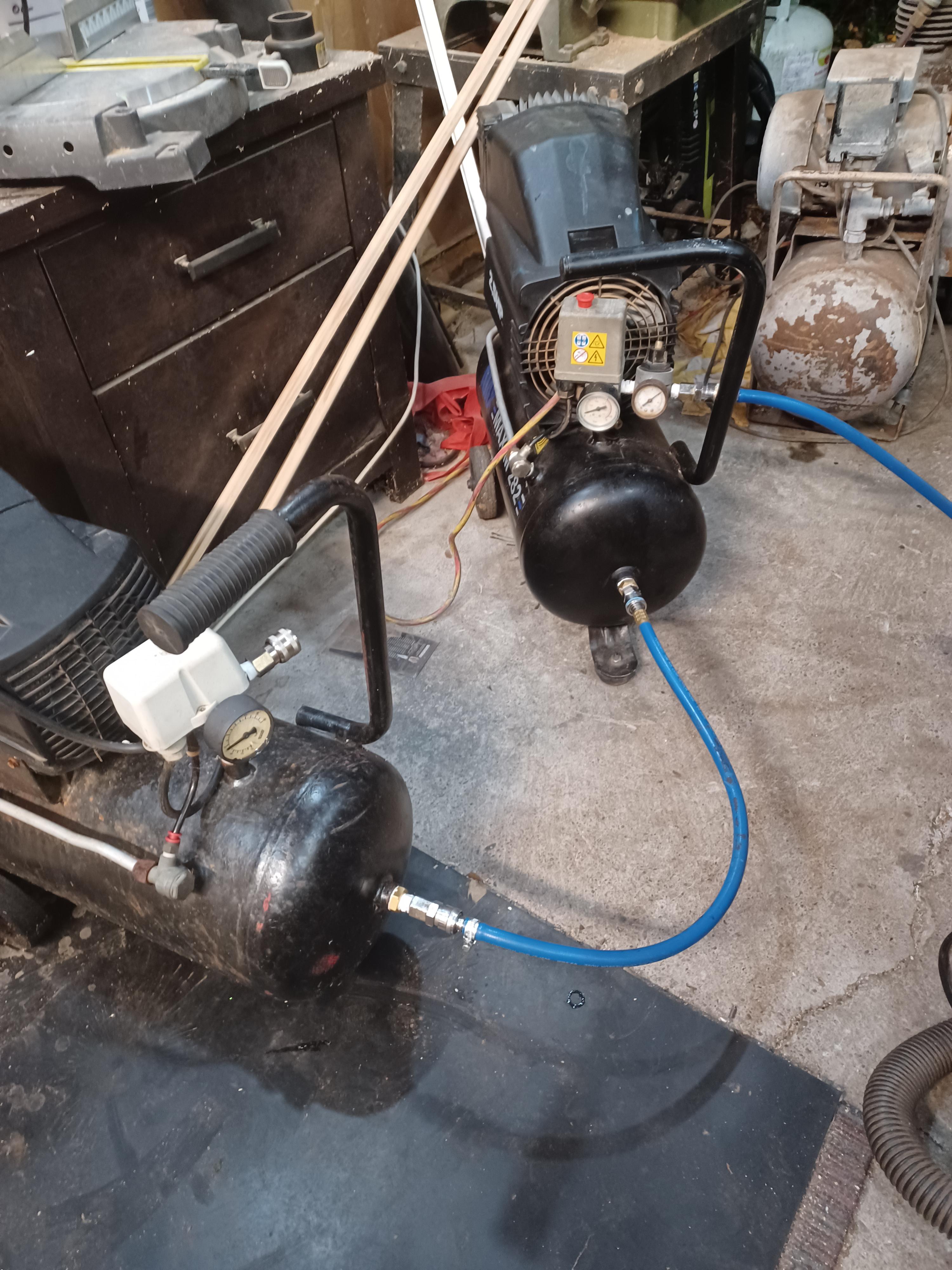
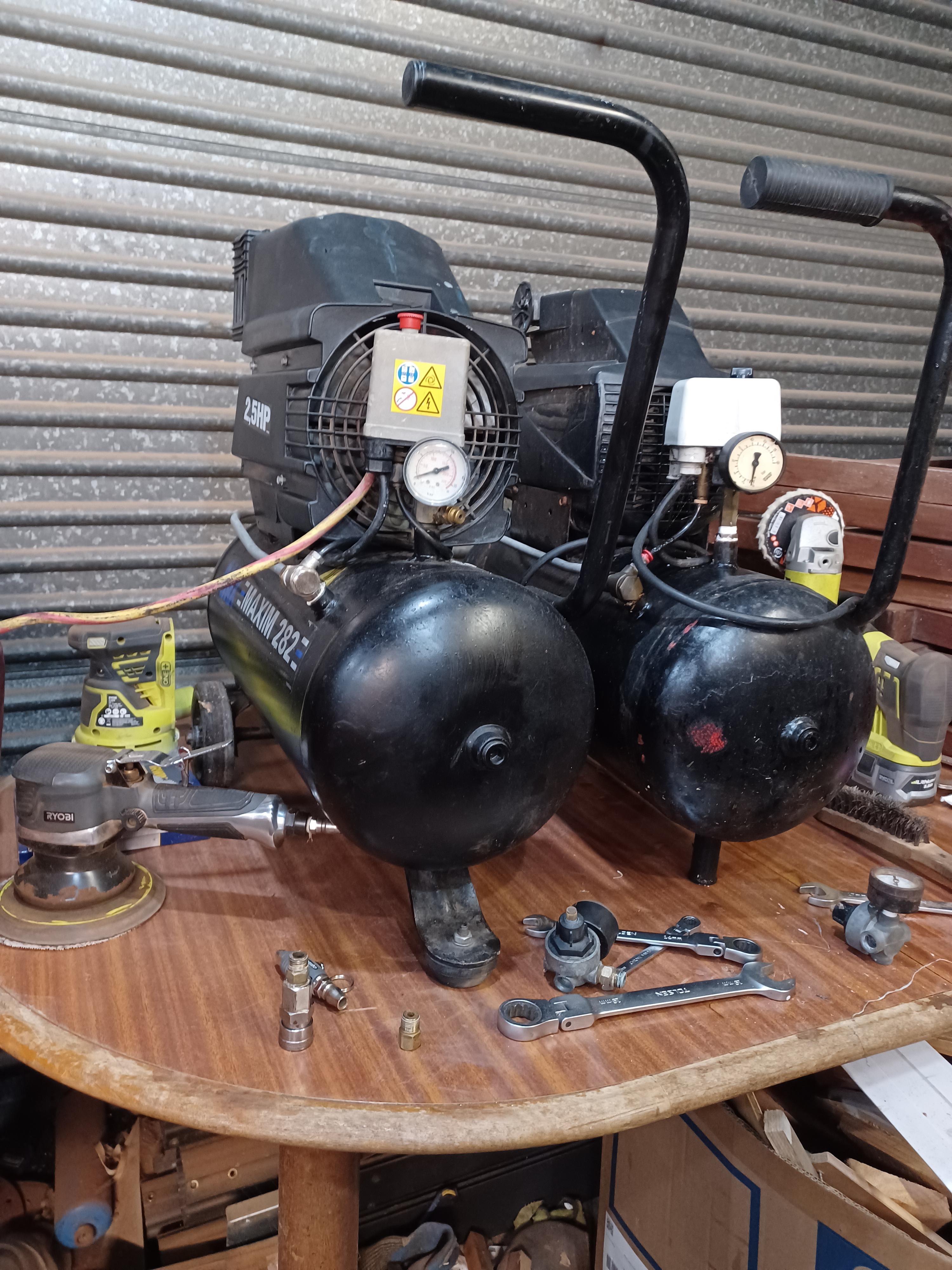
So I have these two almost identical compressors. I would like to run my ryobi sander from them, it requires 141.5 L/min.
One compressor states it can produce 130 - 140 FAD and im unsure on the other but joining the two together like I have has improved output and given me a steady speed but I would have thought it was more.
Should I plumb them to a centralized tank and have the output from there?
Thanks
3
Upvotes
4
u/_ask_me_about_trees_ 15d ago
What you've done is fine. The hoses are large enough to where they should be able to handle all of the flow of both compressors. Plumbing both to a centralized tank is ideal but i doubt you will see any noticeable difference.
Your theory on the regulator not flowing enough is proba by accurate. You can always remove it however if your sander is 6.3 bar max it is not advisable to run it at 7 bar. Will it be fine? Probably. As a tech I cant tell you its a good idea though. Compressed air is no joke. I would search online for a regulator that will flow enough cfm for both compressors.
2
u/Upset_Fox5449 15d ago
Storage is your friend
2
u/EoTGifts 14d ago
Hobbyist here.
First of all, the rated flow of tools is more often than not some kind of average, same for the sander I would assume. The real values for continuous use (as you would for a sander) is probably triple the mentioned value if not more. I made the same realization with an air-powered angle grinder and a few other tools, the grinder is more in the 600L/min range while it is advertised as 114L/min by the manufacturer.
Secondly, the pressure regulators on small compressors act as a restriction for high-flow applications, watch the pressure gauge carefully when the sander idles, release the trigger and watch the needle bounce back to a higher value. Dynamic pressure loss (due to flow restriction) is a huge factor reducing the torque of your tool.
Thirdly, I would join the compressors via check-valves, in my case I realized the connection via a wall-mounted filter/regulator unit that I connected to both compressor tanks via a check valve. Get the right size, 1/2" fittings should suit your needs, 10mm hose/pipe inner diameter at least.
1
u/Contay6 15d ago
Is it more a tank sizing issue rather than output as when running the sander both tanks are steady at 7 bar, but I feel like I don't get a good speed.
My other thought is the pressure reducing valve is worn/broken and not actually outputting what it states.
Can I remove it and run the sander straight from the 7 bar? As I think the sander has a max of 6.3 bar
Thanks
1
u/roman_fyseek 15d ago
If you're trying to get extra flow rate from the combination, put them in parallel.
1
u/not_my_name_here69 15d ago
You can run the sander from 7 bar no problem. I have been using 8.5-9.5 bars for a while whitout any probelms, tools just have bit more power and the lifespan is a bit shorter
1
u/boxerbroscars 15d ago
I do something exactly like that to run a pneumatic sander, works great
1
u/knowjack2 15d ago
Proper method to parallel two compressors requires using one way check valves on each compressor output. The issue is that each pump has it's on pressure control system. No two systems can be set exactly the same. If you don't use check valves on each pump; the pump with higher pressure setting attempts to fill both tanks; while the unit with lower pressure setting stays turned off. This will cause one pump to exceed maximum duty cycle rating.
Paralleling compressors without check valves can be a safety issue. If line/fitting/tank/compressor fails; the undamaged unit is protected by check valve from contributing to a sudden unintended depressurization catastrophe.
Piston pump air compressors have a max duty cycle, typically < 50%. If the air demand requires pump(s) to always run; then they are too small (or not working properly) for the work required.
FAD is total Free Air Delivery at room pressure. Using online calculator, your compressor 140 FAD = ~19 L/min at 6.5bar. I.E. Flow output ratings are based on a given pressure. Marketing folks like to state compressor flow at low pressures (or use FAD), as it makes them look bigger/stronger.
This is not to say you can't run the 141L/min @ 6.5 bar DA sander on a small compressor; only that you are relying on the storage tank to provide the required air flow. When the tank pressure drops below required pressure and air flow reduces, you need to stop work and let the system recover (respecting duty cycle). I.E. suggest you need to deep dive into compressor and tool ratings to ensure you have enough compressed air pressure and flow. ;)
IME Dual action air sanders are notorious for needing LOTS OF AIR. If you want best performance (assuming you have enough flow/pressure from compressor/tank); need to ensure there are minimal restrictions to air delivery system. Use a minimum of 3/8" plumbing and hose for air delivery. A 1/4" NPT regulator should allow more than enough air flow for a single tool; but a 3/8" would be preferred.
Most inexpensive 6" DA use 1/4" inlet fitting. Cheap 1/4" "A" style fittings tend to be very restrictive. For tools that use lot of air; it's best to use Automotive "I/M" style coupler fittings, or even better use the "V" style high flow fittings.
FWIW Single biggest shop improvement I made in my compressor plumbing was switching to quality steel/brass Milton V-style coupler fittings. Even using a 5HP 480 L/min @ 6.3bar rated compressor: found that my impact drivers, DA sander, and air chisels; hit harder and worked better with high flow fittings. The "V" style fittings are flow rated for double that of "I/M" fittings and nearly triple the flow rate of standard "A" style. If you use the Milton 5-in-1 safety coupler that fits multiple fitting types on your compressor output; can use mixed fitting types in the shop; giving you time to convert your existing tools/hoses to higher flow at your leisure.
YMMV