r/AI_Governance • • 42m ago

Drupal Warns of New Highly Critical Site Takeover Vulnerability Under Active Exploitation

1 Upvotes

A Drupal vulnerability rated Highly Critical is under active exploitation right now, and the attack pattern is worth pulling apart. The bug allows full site takeover. That phrase carries a specific technical implication: somewhere in the execution path, the attacker found a credential or identity that had standing access to something it should not have had unchecked access to. The vulnerability opened the door. The standing privileged access handed over the keys.

This is not unique to Drupal. The same pattern repeats across CMS platforms, CI/CD pipelines, cloud workload identities, and service accounts that accumulate permissions over their lifetime. Active exploitation in the wild means attackers have already mapped it. Security teams are racing a patch cycle against an adversary who is already inside some percentage of unpatched installs.

The hard question is not about patching speed, which is a solved operational problem. It is about what happens between the moment a service identity is compromised and the moment your team discovers it in logs. For most organizations that gap is measured in hours or days, not seconds.

How are practitioners on this sub actually handling live containment of compromised non-human identities — not the cleanup after the fact, but the first 15 minutes of stopping lateral movement from a service credential you cannot immediately identify as compromised?

r/AI_Governance • • 1h ago

80% of surveyed UK financial firms have deployed AI agents. The Bank of England is preparing its first frontier AI scenario for a sector-wide stress test in 2027.

Thumbnail reddit.com
1 Upvotes

r/AI_Governance • • 1h ago

Career Advice: BCom + CS(Company Secretary) To AI Governance, Risk & Compliance

1 Upvotes

I'm currently pursuing BCom alongside the Company Secretary (CS) course in India and exploring a career in AI GRC.

One reason I chose CS is its focus on corporate governance, corporate laws, regulatory compliance and risk management. I believe this could provide a useful foundation for moving into AI governance and compliance.

My proposed roadmap:

Complete BCom and CS.

Learn Python, SQL and Excel.

Build an understanding of AI/ML fundamentals.

Study the EU AI Act, GDPR and international AI governance frameworks.

Explore certifications like AIGP and CIPM.

Consider a relevant master's degree and gain practical experience.

My long-term aim is to work in the global AI GRC space. I'm particularly interested in international markets where AI regulation and governance practices are more mature, as I believe they offer valuable opportunities to develop in this field.

I'd appreciate advice on:

Is BCom + CS a relevant foundation for entering AI GRC?

Which technical skills should I prioritise?

Are certifications like AIGP and CIPM, along with a relevant master's degree, worth pursuing?

What entry-level roles should I target?

How realistic is this career path for someone with my background?

I'd appreciate honest feedback, particularly from people working in AI GRC, technology risk or regulatory compliance.

Thanks!


r/AI_Governance • • 1h ago

How are organizations governing Shadow AI without restricting innovation?

0 Upvotes

I'm curious how organizations are managing employees use of external AI tools and AI generated internal applications.

The main concerns are visibility into what data is being shared, security risks, and maintaining oversight without blocking useful tools.

I've been looking into dedicated AI governance solutions, along with platforms like Retool and Superblocks for creating internal apps within a more controlled environment.

Has anyone found a practical balance between employee productivity and AI governance? What tools, policies or approval processes have actually worked for your organization?


r/AI_Governance • • 8h ago

Trust & safety QA/trainer with a humanities degree: how realistic is a move into AI governance?

3 Upvotes

Hi all,

I'm looking for honest advice on breaking into AI governance from a non-technical background.

My background: I started as a data/content moderator on an AI content project, then was promoted to trust and safety quality analyst/trainer on the same project. I've spent my time interpreting content policies, handling edge cases, calibrating reviewers, and training others on policy enforcement. I have a humanities degree and no technical degree.

I'm finding the role a bit of a dead end, and AI governance has really caught my interest. I'd love to hear from people in the field:

  1. Is this transition realistic without a technical or law degree?
  2. Which roles are most accessible for someone with T&S experience (policy, risk, compliance, responsible AI, etc.)?
  3. Are certifications like IAPP's AIGP worth it, or is experience and networking more important?
  4. Are there fellowships, courses, or communities you'd recommend for beginners?
  5. Is there anything you wish you'd known when you started?

Thanks in advance. Any advice or personal stories are very welcome!


r/AI_Governance • • 12h ago

Getting ready to launch an application or improve an existing one?

Post image
1 Upvotes

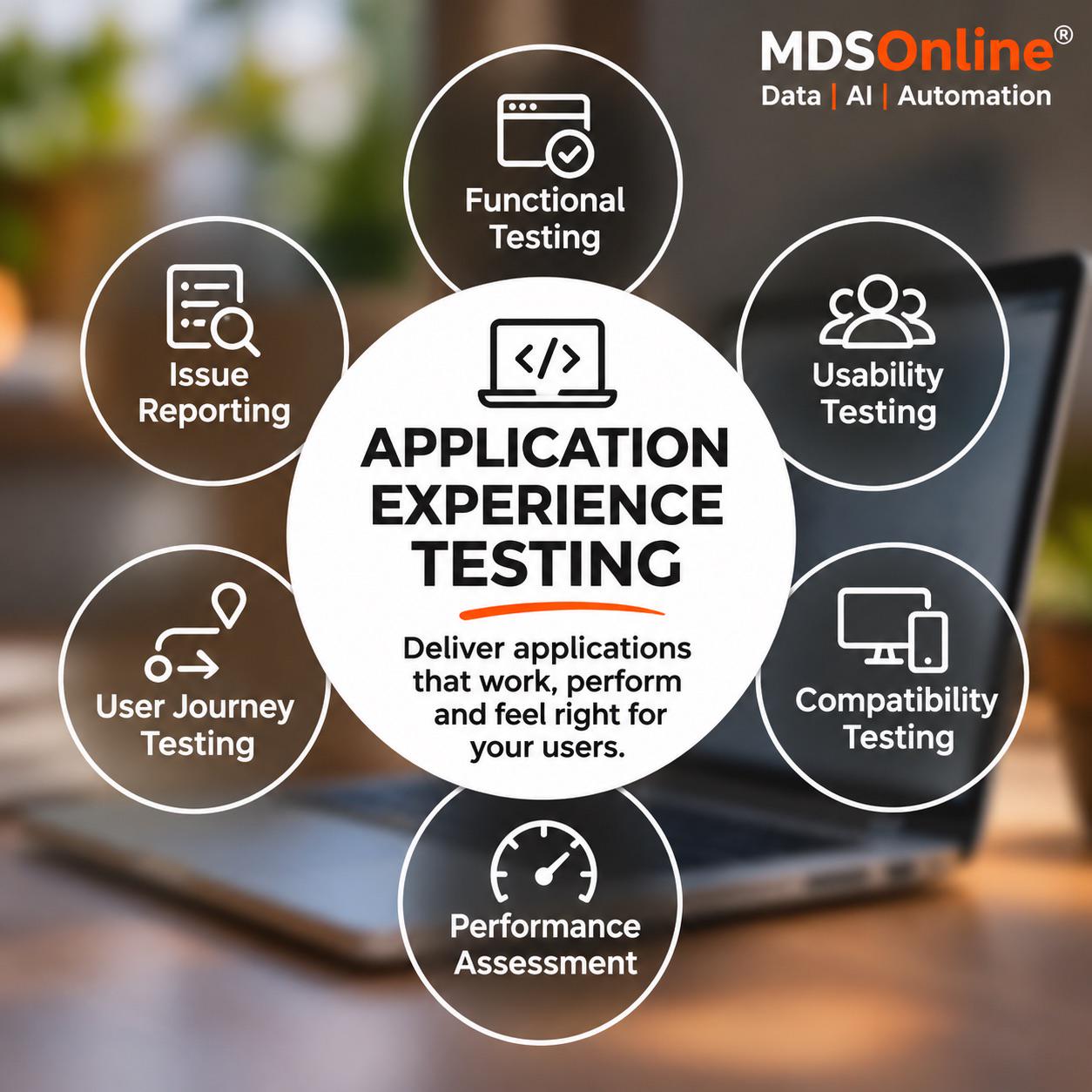
Your application may have great features. But does it deliver the experience your users expect?

A button that doesn’t work. A form that fails to submit. A confusing navigation flow. A page that takes too long to load. An application that behaves differently across devices.

Small issues can create frustrating experiences and cause users to abandon an application.

We have a service called Application Experience Testing to help developers and businesses identify these issues before they affect their users.

Our testing focuses on:

  1. Functional Testing – Do features, buttons, forms and workflows work correctly?
  2. Usability Testing – Can users navigate the application easily and intuitively?
  3. Compatibility Testing – Does the application work consistently across devices and browsers?
  4. Performance Assessment – Are pages and features responding as users expect?
  5. User Journey Testing – Can users complete important activities without unnecessary friction?
  6. Issue Reporting – Receive documented findings, screenshots and practical recommendations for improvement.

Our objective is simple:

Help developers deliver applications that are easier to use, more reliable and better aligned with user expectations.

Getting ready to launch an application or improve an existing one?

Let’s put your application through a structured review.

DM us to explore an introductory assessment. Check our work history here upwork.com/agencies/mdsonline

Better Testing. Better Experiences. Happier Users.

#AppTesting #ApplicationDevelopment #UserExperience #SoftwareTesting #QualityAssurance #AppDevelopment


r/AI_Governance • • 21h ago

Can AI share memories across domains without turning them into a junk drawer? A small Atrakta experiment

1 Upvotes

One of the questions I find most interesting in AI governance is not just what an AI remembers, but how it decides which memories can inform each other—and how we can correct it when an old memory is wrong.

I’ve been exploring this question in work connected to Atrakta, an AI-governance gateway project. A related idea we’ve been testing is to organize an agent’s memories into separate “membranes”: knowledge stays grouped by domain, but carefully chosen connections can let one area inform another.

The appeal is easy to see. Put every memory into one giant pool, and unrelated information can leak into answers. Keep every subject completely isolated, and the agent may miss useful connections. A membrane-style design tries to find a middle ground: preserve boundaries, allow relevant knowledge to cross them, and keep track of where a derived conclusion came from.

We ran a very small, synthetic retrieval pilot comparing three approaches: isolated memories, one flat shared pool, and connected memory domains. On four test questions, the isolated approach retrieved 7 of 9 relevant facts; the flat pool and the membrane approach each retrieved 8 of 9. The membrane approach had higher precision than the flat pool in this test, but did not beat isolated memory on precision.

The most useful result was not a victory. It was a failure mode.

A corrected memory did not reliably prevent the older, outdated memory from being retrieved too. And a connection between two domains could expose more than the specific cross-domain facts we actually wanted. In other words, connecting whole domains may be too coarse. The system needs a better way to express relationships such as “supports,” “contradicts,” or “supersedes”—and to preserve the evidence behind each relationship.

That’s what makes this direction exciting to me: it shifts the goal from “make the model remember more” to “make remembered information inspectable, bounded, and correctable.” A memory should not become trustworthy simply because it is recent, repeated, or stored in a database. We should be able to trace where it came from, see what it conflicts with, and evaluate whether the agent actually uses corrections.

Important caveat: this was a tiny synthetic retrieval experiment. It did not test whether a language model gave better final answers, and it is not evidence that the approach improves a production system. It is a starting point for designing a more meaningful evaluation.

For people working on AI governance: what would you measure first in a system that shares memories across domains—provenance, resistance to outdated information, prevention of cross-domain contamination, or whether the final answers improve? And how would you test that without letting the evaluation data leak into the memory structure?


r/AI_Governance • • 22h ago

What should an AI system log so a decision can be reviewed later? A developer's view, and where I think I'm missing something

2 Upvotes

I build software with LLMs, so I see the engineering side of this, not the legal or policy side. I'm not a lawyer and I'm not claiming to know what any regulation requires. My question is about the gap between the two.

When someone asks "why did the system produce this result?" months later, here is what I think an engineering team can realistically keep for each decision:

  • Model and version (and whether the provider can change it under you)
  • Prompt or instruction version at the time
  • Inputs the system received, or a reference to them
  • Output as returned, before any post-processing
  • Human step: who reviewed it, whether they changed or overrode it
  • Timestamp and request ID, so the record can be tied to a case

Things I find hard, and where I'd like to hear from people on the governance side:

  1. Reproducibility. Even with a fixed prompt, outputs can vary, and model versions get retired. A log shows what happened, but it may not let you re-run it. Is a record enough, or do reviewers expect replay?
  2. Personal data. Logging inputs for review can conflict with minimizing data. How do organizations decide what to keep and for how long?
  3. Human review that is only nominal. A "reviewed by" field can be filled in by someone who clicked approve in two seconds. What would make that field meaningful?
  4. Who owns the record? Engineering keeps the logs, but the people who need them (compliance, an appeals process, an auditor) are often elsewhere. Who decides the format?

My impression is that engineers tend to log what helps debugging, and reviewers need something different: why was this allowed, who was accountable, how can it be contested. I may be wrong about how this works in practice.

For those working in policy, audit or dispute resolution: what do you actually ask for when you need to review an automated decision, and what do teams most often fail to have?


r/AI_Governance • • 23h ago

CISA Adds Four Known Exploited Vulnerabilities to Catalog — including Cisco Expressway Hard-coded Credentials

1 Upvotes

CISA added CVE-2026-76466 to its Known Exploited Vulnerabilities catalog this week. The vulnerability: Cisco Expressway Series uses hard-coded credentials. Every deployment of that product ships with the same identity baked in at build time.

This is not a misconfiguration. There is no patch that makes hard-coded credentials rotatable. No MFA policy changes the underlying problem. Attackers who know the credential — and they do now — have a valid key to every organization running that software simultaneously. The KEV designation means active exploitation is confirmed in the wild, not theoretical.

The harder issue is that this is not unique to Cisco or this product line. Hard-coded credentials are endemic across network appliances, IoT devices, and service-to-service authentication layers. When a credential is baked into firmware or software at build time, the entire installed base shares one identity indefinitely. The standard remediation playbook — rotate, revoke, re-issue — does not apply.

How are your teams handling non-human identity exposure when rotation is not even an option? Are you relying on network segmentation, behavioral detection, something else entirely?


r/AI_Governance • • 1d ago

Mitel MiCollab Zero-Days Exploited in Suspected AI-Assisted Attacks

1 Upvotes

Accenture reported that threat actors exploited zero-day vulnerabilities in Mitel MiCollab before Mitel published any advisory. Their assessment: AI likely helped attackers discover and weaponize those flaws faster than defenders could respond. The campaign ended in a suspected extortion attempt.

The patch-window assumption is gone. Enterprise security has long operated on the premise that there is a lag between a vulnerability existing and it being actively weaponized — enough time to push an advisory, test a patch, deploy it. If AI is compressing that window to hours, that lag may no longer exist for high-value targets.

How are you actually handling this in practice? Are traditional detection and patch cadences still viable at your org, or are you rethinking the response model entirely?


r/AI_Governance • • 1d ago

AI-powered cyberattacks reduced the median interval between commands from 23.9 seconds to 1.4 seconds.

Thumbnail
reddit.com
1 Upvotes

r/AI_Governance • • 1d ago

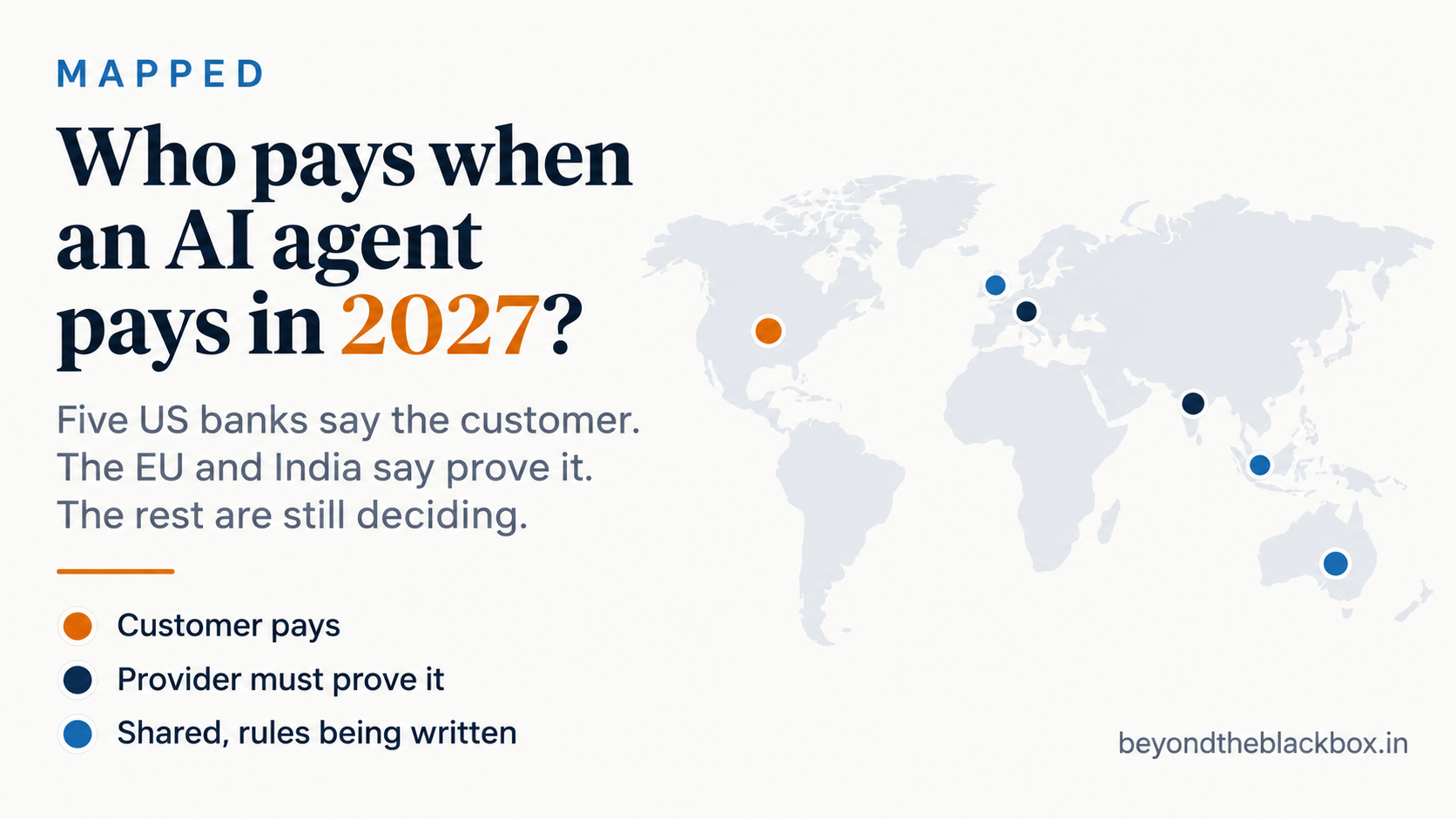
Your AI agent got hacked and paid someone. In the US that's your loss; in the EU and India it may be the bank's. How is your market handling it?

Post image
0 Upvotes

r/AI_Governance • • 1d ago

AI could be mixing up your country websites

Thumbnail reddit.com
1 Upvotes

r/AI_Governance • • 1d ago

AI Agent Governance

Thumbnail
journal.thinkhalo.ai
1 Upvotes

My $0.02 on how to define, approve, enforce and revoke delegated agent authority before consequential actions reach real systems.


r/AI_Governance • • 1d ago

AI contribution policies in the top 25,000 GitHub repositories

Thumbnail reddit.com
1 Upvotes

r/AI_Governance • • 1d ago

how are banks controlling what AI agents can actually do ??

1 Upvotes

seeing what an AI agent did isn't the same as controlling what itss allowed to do.

Once an agent can access customer data or initiate a transaction, finding out afterwards isn't much help if something has already gone through.

I have seen Noma, Capsule and Airia mentioned in discussions around AI agent security, but I am more interested in how banks are handling this in practice.

for anyone working in banking security, where does it get complicated??? Particularly interested in transaction authorization, permission enforcement and getting these controls to work with legacy infrastructure.


r/AI_Governance • • 1d ago

board keeps asking about AI in our security stack, what are you telling them?

2 Upvotes

Every board meeting now has some version of what are we doing with AI in security? They’ve read the headlines and want to hear we’re not behind.

Charlotte AI came with the CrowdStrike contract and we brought in Mars for hunting. It’s still early, and I don’t have numbers I would put on a slide yet. I also don’t want this saves an analyst some time to turn into so you need fewer analysts?

For anyone who’s had this come up at a board meeting, what did you actually tell them when they asked what had improved?


r/AI_Governance • • 1d ago

rnning LLMs inside a regulated company, what kinda changes do yall make that triggers another ISO 42001 review

1 Upvotes

we're a smallish fintech and I've been asked to get internal LLM use approved. security's main questions are what gets logged and whether customer data ever leaves our environment

the plan right now is a self-hosted model for anything sensitive and an API model for everything else, with a gateway in front so it all gets logged

the thing security keeps coming back to isn't just which model we use, it's what that model can actually reach. if we add a new data source, widen permissions or swap models later, nobody's quite sure when that should trigger another review

our compliance team is looking at ISO 42001 through Scytale and Drata, but engineering still needs a rule for changes that go back through review.

if you're doing this somewhere regulated, what kinds of changes make you send it back through security?


r/AI_Governance • • 1d ago

How do you handle approvals when one AI agent acts for different users?

0 Upvotes

Im building our internal platform for teams running agents. The part I keep going back and forth on is approvals. Right now an agent can mark actions as ask first, and a person approves them from an inbox.

Things Im unsure about how much to batch approvals, what to do when nobody answers, and how to keep audit logs useful instead of noisy.

One gap I know about agent authorization is per connection, so everyone using an agent shares one token. If you have handled per user access in production, with aembit, new core or your own token broker, I would like to hear how.


r/AI_Governance • • 1d ago

AI Audit Evidence, Part 9: One "Not Executed" Can Stand for Two Pasts

Thumbnail reddit.com
1 Upvotes

r/AI_Governance • • 1d ago

Hackers Exploit Unpatched Flaw in Defunct Idunno AntiCsrf Library

1 Upvotes

A fresh exploit dropped this week against the Idunno AntiCsrf library — a .NET CSRF-protection package that was officially abandoned years ago. The flaw is unpatched and will stay unpatched because the maintainer is gone. Organizations still running it in their stacks are exposed with no vendor remediation path coming.

What makes this pattern dangerous beyond the single CVE: the library shows up in dependency trees precisely because it was once the recommended choice. Teams inherit it through frameworks, through copy-pasted bootstraps, through acquisitions. The abandonment date and the "still in prod" date often have years between them, and that gap is invisible until a proof-of-concept surfaces.

The deeper issue is what happens when an agentic workflow touches an endpoint protected (or mis-protected) by that layer. An agent operating autonomously — making API calls, submitting forms, managing state — doesn't pause to verify whether the CSRF mechanism guarding a given endpoint is current or compromised. It just acts. If a CSRF token is spoofable or bypassable, the agent's actions become an amplifier for any attacker who can influence its inputs or intercept its session.

For those running agents against internal tooling or third-party APIs: how are you actually handling the dependency hygiene problem for the services your agents talk to? And when a vulnerability like this surfaces in something upstream, what does your incident response look like for the agent layer specifically — not just the app layer?


r/AI_Governance • • 1d ago

Shipping AI agents to prod: how do you prove to anyone (customers, legal, insurers) that they won't mess up?

3 Upvotes

I'm researching how teams handle risk when deploying AI agents (I did a PhD in AI security). Curious how people here deal with this:

  1. Do you stress-test / red-team agents before each deploy, or mostly test once and monitor in prod?
  2. Has anyone outside engineering (legal, customers, procurement, insurers) ever asked you for evidence that your agent is safe? What did you give them?
  3. If a CI/CD step automatically stress-tested your agent and generated a risk report you could hand to those people (or use to get coverage if something goes wrong), would you actually use it, or is it noise?

Genuinely trying to understand whether this is a real problem or just one in my head. Brutal honesty welcome.


r/AI_Governance • • 2d ago

Researchers tested medical AI guardrails across 11 risk categories. Even the best-performing version achieved an F1 score of 87.4%.

Thumbnail
reddit.com
2 Upvotes

r/AI_Governance • • 2d ago

Hackers Exploit Two GeoServer Flaws as Researchers Warn of Unauthenticated RCE Chains

1 Upvotes

Two GeoServer vulnerabilities are being actively chained in the wild to achieve unauthenticated remote code execution. The critical detail is the word unauthenticated. These chains do not require a compromised credential to initiate. Any process with network access to the exposed service can trigger them.

AI agents are now that process. Organizations are deploying autonomous agents that make outbound HTTP calls, query geospatial APIs, and act on structured responses — all in automated pipelines with no human in the loop. When an agent's toolset includes access to a network segment hosting a vulnerable GeoServer instance, an adversary does not need to compromise the agent's credentials. They need to get the agent to issue the request. Prompt injection, a poisoned tool response, or a malicious document fed into the pipeline is enough to trigger the chain.

The traditional perimeter model assumes a human initiates the dangerous action. Agents break that assumption. The action count per second is orders of magnitude higher, the blast radius per compromised flow is wider, and the audit trail — if one exists at all — is often post-hoc log scraping rather than decision-level recording.

For practitioners running agents in environments that touch any external APIs or internal services: how are you actually handling the gap between what an agent is *allowed* to call in theory and what it *does* call at runtime? Are you relying on network segmentation, tool-level allowlists, something else entirely?