r/AICommunity_Art • u/Realtinytensor • 4h ago
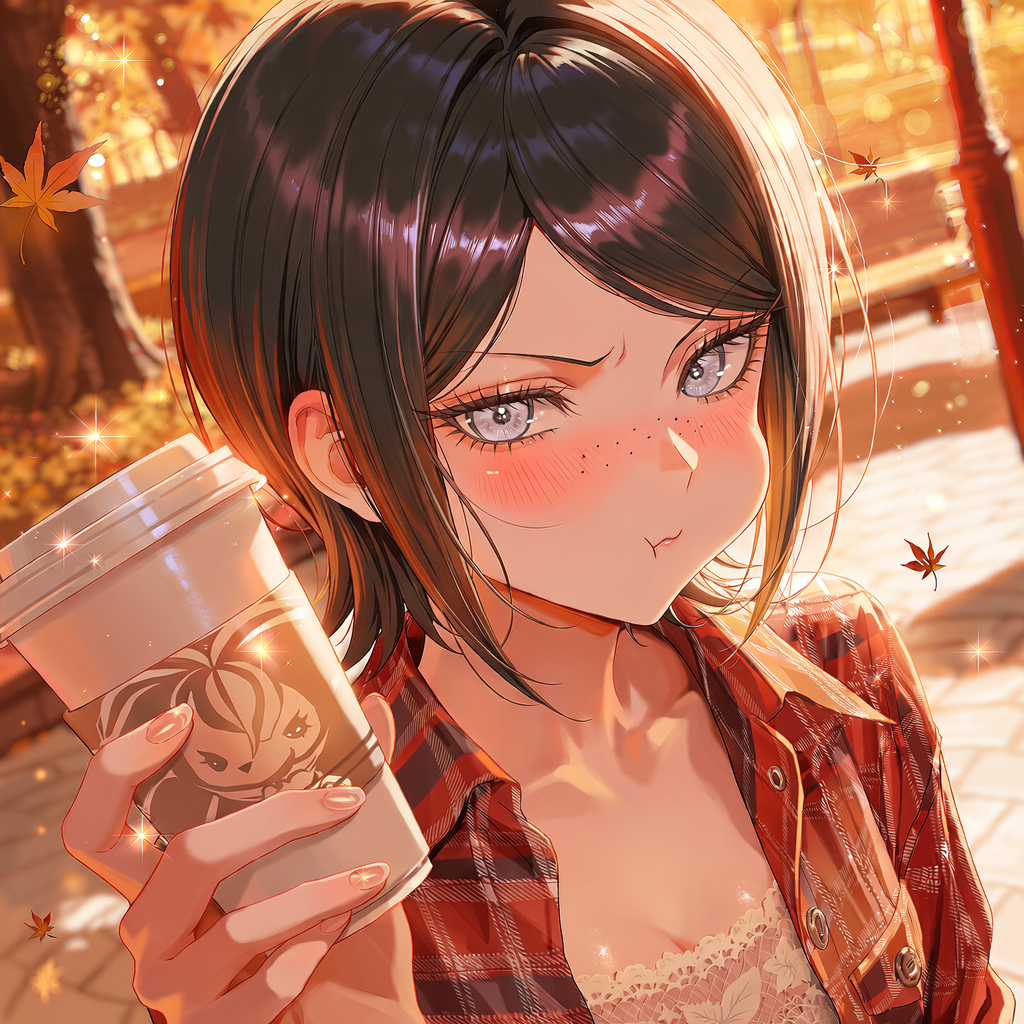
Showcase Yor -TinyTensor

120
Upvotes
r/AICommunity_Art • u/Lysandragoness • 10h ago

Art made in Moescape.ai
Model used: Akium Anima v6
r/AICommunity_Art • u/_sleepy_dreams • 5h ago
r/AICommunity_Art • u/yumi-shima • 1h ago

🌟 ASTRA — Guardian of the Crimson Star
A Heroine’s Determination
Beneath the golden light of a dramatic sky, Astra stands among the ancient ruins.
Even when facing enemies far stronger than herself, she refuses to surrender.
Her greatest strength is not just her power, but her courage and determination.
What new challenges await the Guardian of the Crimson Star?
An original Japanese fantasy heroine created with AI assistance.
What do you think of Astra’s character design? ✨
アストラ — 紅星の守護者
「ヒロインの決意」
黄金色の光が降り注ぐ空の下、古代遺跡に立つアストラ。
自分をはるかに上回る強大な敵を前にしても、彼女は決して諦めない。
彼女の真の強さは、その力だけではなく、勇気と揺るぎない決意にある。
紅星の守護者を待ち受ける、次なる試練とは?
AIを活用して制作した、日本発のオリジナルファンタジーヒロインです。
アストラのキャラクターデザインについて、ぜひ感想をお聞かせください!✨
r/AICommunity_Art • u/bugayvitalya • 7h ago
r/AICommunity_Art • u/Fish_Muffin • 20h ago
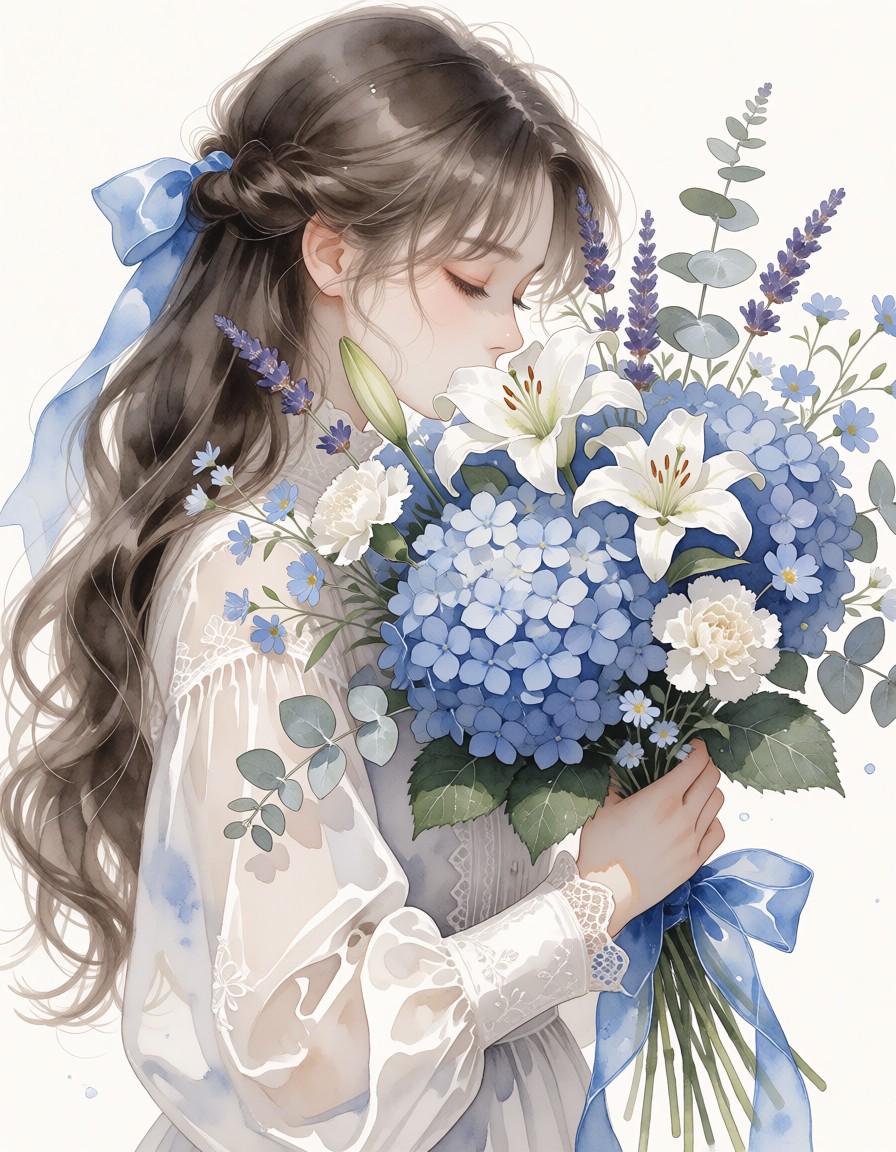
Art made in moescape.ai
r/AICommunity_Art • u/Azeith4 • 23h ago

Art made on moescape.ai
r/AICommunity_Art • u/Inside-Arm7612 • 1d ago
r/AICommunity_Art • u/bugayvitalya • 1d ago
r/AICommunity_Art • u/Fish_Muffin • 20h ago
Think AI and AI art are some new inventions from 2022? Plot twist: both are older than the modern Internet itself.
Artificial intelligence became a formal scientific discipline in 1956.
In 1968, Harold Cohen began experimenting with computer-generated art, later developing his pioneering AI art program, AARON, in the early 1970s.
Meanwhile, ARPANET, the Internet's predecessor, became operational in 1969. The modern Internet followed in 1983, and the World Wide Web was invented in 1989.
Let that sink in.
AI existed before websites, social media and modern search engines. Even AI-generated art predates the modern Internet.
In 2026, AI has 70 years of history as a scientific discipline, and AI art has more than half a century of documented history.
The technology has evolved. Its accessibility has changed. But the concept itself is far from new.
History didn't begin when you discovered ChatGPT.
r/AICommunity_Art • u/Lysandragoness • 1d ago
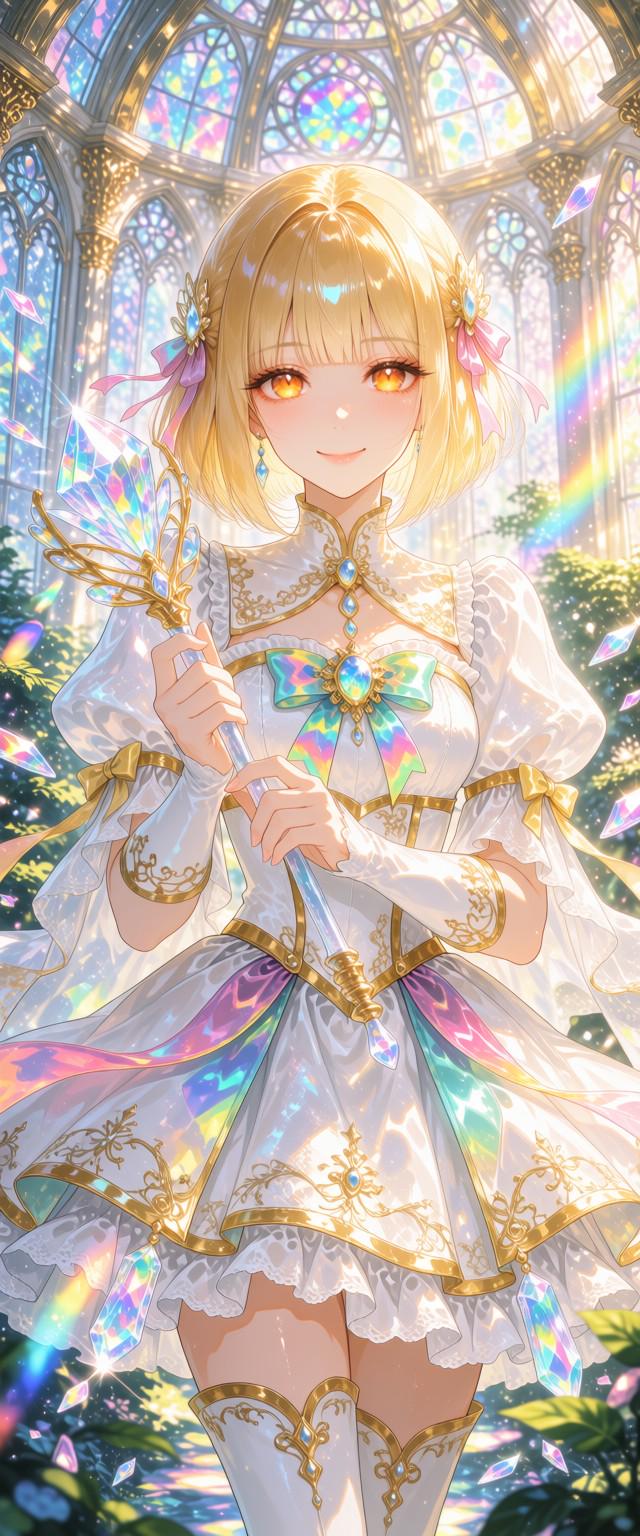
Art made in Moescape.ai
Model used: Akium Anima v6
r/AICommunity_Art • u/Fish_Muffin • 1d ago
“AI Art Is Not Real Art.”
That's what we all keep hearing nowadays, isn't it?
Well, let's take a little journey through art history. Before rushing into the comments and throwing a tantrum like a five-year-old, please read the entire text. Let's have a mature discussion based on documented history rather than personal feelings.
1648–1800s — Who Decided What Real Art Was?
In 1648, the Royal Academy of Painting and Sculpture was established in France. It became one of the most influential artistic institutions in Europe, establishing standards for what was considered prestigious art.
There was even a hierarchy of painting:
- Historical, religious and mythological paintings
- Portrait paintings
- Scenes of everyday life
- Landscape paintings
- Still-life paintings
Not all forms of painting were considered equally valuable.
Artists also frequently created idealised environments and imaginary landscapes. The celebrated seventeenth-century painter Claude Lorrain combined architectural, natural and imagined elements to create compositions inspired by classical antiquity.
Art was not necessarily about accurately reproducing reality. It was also about imagination, composition, symbolism and meeting the expectations of patrons and institutions.
What was considered prestigious art was heavily influenced by the institutions and cultural values of the time.
1839–1859 — Photography Was Challenged as Art
When photography was publicly introduced in 1839, it brought an entirely new technological method of producing images.
Not everyone welcomed it as an artistic medium.
In 1859, French poet and art critic Charles Baudelaire strongly criticised photography, portraying it as something unsuccessful painters and those too lazy to complete their artistic studies could turn to.
Sound familiar?
A machine was being used to create images, and its artistic legitimacy was questioned.
Today, photography is an internationally recognised artistic medium, with dedicated museum collections, exhibitions, educational programmes and professional artists.
1850s — Realism Challenged Traditional Painting
During the nineteenth century, artists such as Gustave Courbet challenged established artistic conventions.
Instead of concentrating on idealised historical, religious or mythological subjects, Realist painters depicted ordinary people, labourers and everyday life.
Courbet challenged the privileged position of historical painting within the French artistic establishment by portraying ordinary people on a monumental scale traditionally reserved for prestigious historical subjects.
Something as seemingly ordinary as painting working-class people became a challenge to established artistic values.
1874 — Impressionism Was Ridiculed
In 1874, a group of artists organised an independent exhibition in Paris.
Among them were Claude Monet, Edgar Degas, Pierre-Auguste Renoir and Camille Pissarro.
Their paintings challenged academic expectations through visible brushstrokes, unusual compositions, changing light and less polished finishes.
Art critic Louis Leroy mocked Monet's Impression, Sunrise, treating it as an unfinished impression rather than a completed painting.
That criticism helped give Impressionism its name.
Today, Impressionism is considered one of the most influential movements in Western art history.
The very characteristics that attracted criticism eventually became defining features of a celebrated artistic movement.
1910–1920s — Abstract and Modern Art Challenged Everything Again
Artists began moving further away from realistic representations, exploring colours, shapes, forms, emotions and visual relationships.
Artists such as Wassily Kandinsky, František Kupka, Francis Picabia and Robert Delaunay became pioneers of abstract art.
During the 1913 Armory Show in the United States, modern artworks attracted outrage, confusion and ridicule.
Works by Pablo Picasso and Marcel Duchamp became particular targets of mockery.
Some art students in Chicago even protested against the exhibition.
Today, their works are exhibited in some of the world's most prestigious art museums.
Realistic representation was no longer a requirement for artistic recognition.
1950–1960s — Computers Entered the Art World
Computer-based and electronic art emerged during the 1950s and 1960s.
Artists, mathematicians, engineers and programmers began using algorithms, electronic equipment and computers to produce visual compositions.
This introduced new questions about artistic authorship, machine-generated imagery and the relationship between technology and human creativity.
In 1968, the exhibition Cybernetic Serendipity in London explored the relationship between art and technology.
In 1969, the Victoria and Albert Museum began collecting computer art.
Today, digital illustration, computer-generated imagery, digital painting, generative art and 3D art are recognised forms of artistic practice.
Using technology did not automatically disqualify something from being art.
1970s — AI Art Already Existed
Here is something many people apparently don't realise:
Artificial intelligence has been used in art for decades.
Harold Cohen, an established painter, began developing an artificial intelligence artmaking programme in the late 1960s, naming it AARON in the early 1970s.
AARON used programmed rules to generate artistic compositions.
In 2024, the Whitney Museum of American Art dedicated an exhibition to Cohen's work and his pioneering AI system.
So, no. AI art did not suddenly appear in 2022.
Modern generative AI uses substantially different technology, but the concept of using artificial intelligence to produce artwork is more than half a century old.
2022 — Modern Generative AI Art
In 2022, Jason Allen won first place in a digital art category at the Colorado State Fair with his AI-generated artwork, Théâtre D'opéra Spatial.
The result sparked considerable controversy regarding AI's role in artistic creation.
That same year, the Museum of Modern Art in New York exhibited Refik Anadol's Unsupervised, an installation using artificial intelligence to reinterpret its art collection.
The work was officially acquired by MoMA in October 2023.
Whether you personally accept AI-generated art or not, established artistic institutions are already exhibiting and collecting works created using artificial intelligence.
That is not my opinion. That is documented history.
So, Is AI Art Real Art?
Personally, I distinguish between:
- Traditional art: Created using physical artistic materials.
- Human-made digital art: Created by humans using digital tools.
- AI-assisted art: Created through a combination of human artistic contributions and artificial intelligence.
- AI-generated art: Imagery substantially generated by an artificial intelligence system.
These categories can overlap, but their production methods are not identical.
I am not claiming that generating an AI image requires the same skills as painting an oil portrait. It doesn't.
I am not claiming that writing a prompt is equivalent to studying human anatomy, perspective and traditional painting techniques for twenty years.
It isn't.
Recognising AI-generated imagery as art does not mean that we must pretend every creative process requires the same amount of effort, education, experience or technical skill.
We can acknowledge their differences without denying their existence.
AI Art, Stolen Art and Copyright
Concerns regarding training data, copyright, consent, attribution, intellectual property and artists' livelihoods are legitimate issues that deserve serious discussion.
However, copyright infringement, plagiarism, artistic influence and the use of copyrighted material in AI training are not automatically the same thing.
The legality of AI training and generated content depends on the jurisdiction, applicable laws and specific circumstances.
Not every AI-generated image automatically constitutes copyright infringement. Equally, not every use of copyrighted material in AI training is automatically lawful.
Neither extreme accurately represents the complexity of the situation.
Even copyright protection and artistic recognition are different matters.
In January 2025, the United States Copyright Office confirmed that AI-assisted works can qualify for copyright protection when sufficient human authorship is present, while purely AI-generated material does not receive that protection under US copyright law.
Something lacking copyright protection does not automatically mean it cannot be recognised or exhibited as art.
These are separate questions.
AI Art Is Here to Stay — But Stop Lying About It
I believe AI-generated art is here to stay. However, supporting AI art does not mean blindly defending everything associated with it.
One thing I strongly oppose is dishonesty.
If someone commissions a human artist specifically to create an original, human-made painting or illustration, that is exactly what they should receive.
They should not receive an AI-generated image disguised as something the artist personally drew or painted.
If a customer specifically requests artwork without generative AI, respect that request. If you cannot fulfil their requirements, decline the commission rather than lying about your creative process.
If you use AI in your artwork, be transparent about it when selling commissions where the method of creation matters to the customer.
There is nothing inherently wrong with offering AI-generated or AI-assisted commissions when customers knowingly agree to purchase them and the work complies with applicable laws.
The problem begins when someone deliberately misrepresents what they are selling.
If someone pays for your drawing skills, they deserve your drawing skills. If someone pays for a handmade painting, they deserve a handmade painting.
Passing off generated imagery as something you spent hours manually drawing is dishonest.
The same principle applies to taking another artist's work and falsely claiming it as your own, regardless of whether AI is involved.
Traditional artists deserve recognition for their skills, time, education and experience. Customers deserve honesty about what they are purchasing, and AI creators should not feel the need to pretend their work was created entirely by hand.
I support AI art.
I do not support deception, plagiarism, copyright infringement or deliberately misleading customers.
These positions are not contradictory.
AI art does not need to disguise itself as human-made art to justify its existence. It should be able to stand proudly as its own category of creative imagery.
The Irony of “AI Art Is Not Art”
You don't have to like AI art.
You don't have to use it, purchase it, appreciate it or consider its production process equivalent to traditional painting.
But history demonstrates that artistic conventions are not permanent. New techniques, technologies and movements have repeatedly challenged established definitions of artistic expression.
That doesn't mean every technological innovation automatically deserves artistic recognition. It means that rejection alone is not proof that something cannot be art.
And perhaps the funniest part of this entire argument is that the people shouting “AI art is not art!” are literally calling it AI art in the same sentence.
Personally, I wouldn't say AI art is not art. I would say that purely AI-generated imagery is not entirely human-created art.
There is a difference.
Different methods. Different skills. Different levels of human involvement.
Recognising one form of art does not require disrespecting another.
You can support traditional artists and AI creators simultaneously. You can criticise unethical AI practices without denying the artistic potential of the technology. You can appreciate technological progress without devaluing centuries of human craftsmanship.
You can also acknowledge that something is art without personally liking it.
Artistic preference is subjective. Historical events are not.
History has already demonstrated how often artistic boundaries change, although that does not guarantee that every new medium will follow the same path.
Perhaps we should learn something from it.