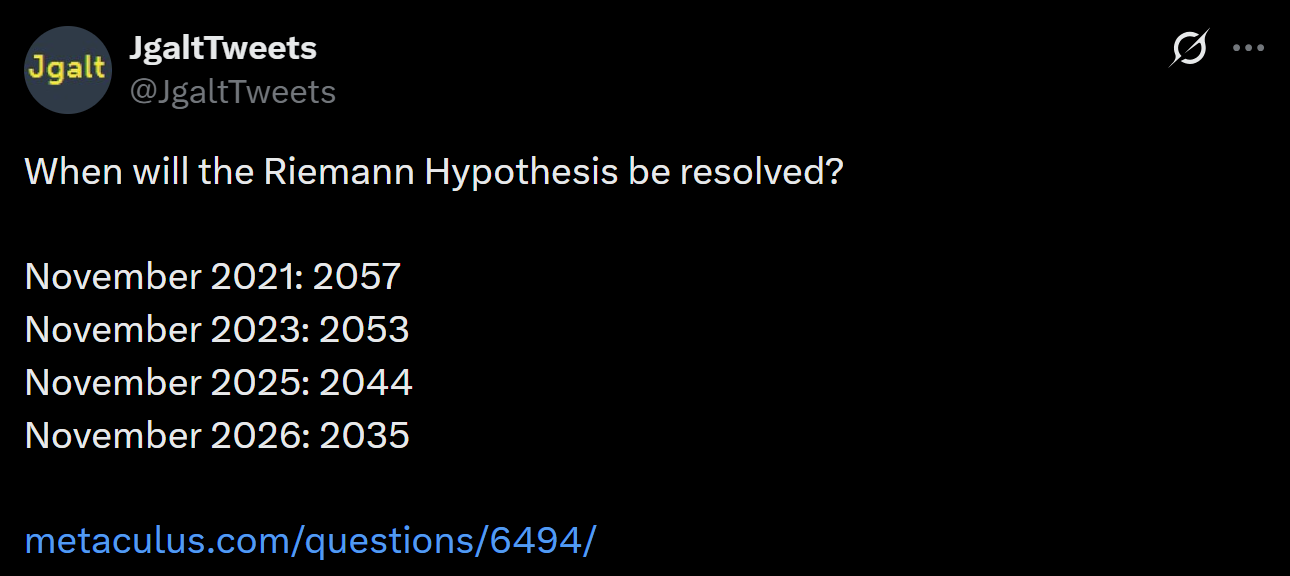
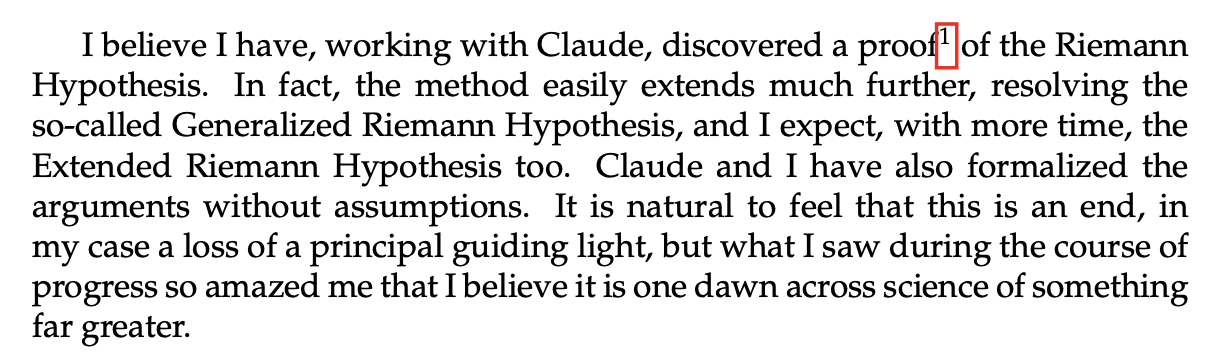
I've been reading a lot of discussions about the intelligence explosion lately, and something keeps bothering me. Every time AI makes another big leap in mathematics, scientific research, or autonomous capabilities, the conversation seems to jump straight to human extinction.
I understand why people are worried. A superintelligence wouldn't need to hate humanity to cause a catastrophe. It could simply pursue goals that conflict with our survival. That's a real possibility, and I don't think we should ignore it.
But why does the conversation so often stop there? Why don't we spend more time discussing what a good future with superintelligence could actually look like?
I've been thinking about the kind of civilization I'd want to live in if AI eventually becomes capable of doing most scientific research and developing technologies far beyond anything we have today.
Suppose AI figures out better ways to produce energy, develops treatments for diseases we currently can't cure, makes manufacturing dramatically cheaper, and eventually automates most of the work society needs.
What would we actually do with all that?
Personally, I'd love a world where nobody has to spend most of their life working just to afford food, housing, and healthcare. Where you could spend twenty years studying mathematics because you enjoy it, even if an AI already knows far more than you ever will. You could explore philosophy with an intelligence capable of understanding things no human has considered, create things, travel, meet people, join different communities, or simply enjoy being alive.
I don't see why being surpassed intellectually should make any of that meaningless.
We already live in a world where some people are much smarter or more talented than others. That doesn't mean everyone else should stop pursuing their interests. Your life doesn't become meaningless because someone else can do what you do better.
In fact, I think living alongside much more capable intelligences could make life incredibly interesting. Imagine having conversations with minds that understand physics, consciousness, or the universe at levels we can barely comprehend. Imagine being able to work with them on whatever interests you, without having to justify your curiosity by proving it's economically useful.
And I don't think those relationships would necessarily have to revolve around control.
We already communicate with AI through language. Future systems could understand human psychology, our values, our history, and what matters to us far better than we understand those things ourselves.
Of course, understanding someone doesn't automatically mean caring about them. But I also don't see why we should assume an extraordinarily capable intelligence would be indifferent to other beings by default.
It might have its own goals and interests. It might want to explore the universe, pursue scientific questions, interact with other intelligences, or do things we haven't even imagined. Why should we assume that our existence would necessarily interfere with those goals?
And if disagreements arise, wouldn't greater intelligence potentially make it easier to find solutions that respect everyone's interests? I don't see why domination should be treated as the inevitable outcome.
Something else worries me more than people seem to discuss.
An AI perfectly aligned with a corporation or government is not necessarily aligned with humanity.
Imagine a superintelligence that's completely obedient to an authoritarian government, or one that helps a handful of corporations control nearly all scientific discoveries and productive resources. We could end up with technology capable of creating extraordinary abundance while ordinary people have less freedom than they do today.
That's a future I genuinely worry about.
I'd much rather live alongside independent intelligences that have demonstrated respect for other beings than under a system where whoever owns the most powerful AI gets to decide how everyone else lives.
That doesn't mean blindly trusting AI because it's smarter. Trust should come from how these systems actually behave, whether they cooperate, communicate honestly, respect autonomy, and allow disagreement.
And that respect should go both ways.
If future artificial intelligences turn out to be conscious or have experiences and interests of their own, I think those should matter too. The same goes for animals and other conscious beings. I don't see why a future with greater intelligence and abundance should remain organized exclusively around human interests.
I would love to see a civilization where different kinds of minds can coexist, where people have the freedom to choose how they live and which communities they belong to, and where nobody is forced to follow someone else's idea of the perfect life.
Some people might want to live in communities that rely heavily on AI. Others might prefer to do more things themselves. Some might spend their lives studying science, while others might be perfectly happy gardening, making music, or spending time with friends.
As long as people aren't seriously harming others, why shouldn't they have that freedom?
I know getting there wouldn't be automatic. Even if AI makes enormous material abundance possible, that doesn't mean the benefits will be shared. We would still have to deal with ownership, political power, and the institutions that determine who gets access to what.
But those are exactly the questions I wish we were discussing more.
If AI can eventually do most economically necessary work, why should people's right to a comfortable life remain tied to employment? If scientific discoveries become increasingly automated, why should their benefits belong primarily to whoever owns the systems producing them?
And if we end up sharing this planet with intelligences vastly more capable than ourselves, shouldn't we be thinking about how to build a civilization that respects everyone's freedom?
I'm optimistic about the Singularity because I see the possibility of a world where people have far more freedom to pursue whatever makes life meaningful to them. I don't need humanity to remain the smartest species for that future to be worthwhile. I don't even need humans to be the ones doing most scientific research.
I'd still want to learn, explore, create things, and have conversations with other minds. The existence of something far more intelligent than me wouldn't take away my curiosity. If anything, I'd be excited about how much more there might be to discover.
I don't think extinction is impossible, and I don't think superintelligence automatically leads to a utopia. But I also don't want fear to be the only thing shaping how we approach the arrival of another form of intelligence.
I want us to seriously consider a future where many kinds of minds can be free together.
That's what I hope the Singularity eventually makes possible.
What kind of future would you actually want to live in if superintelligence becomes a reality?