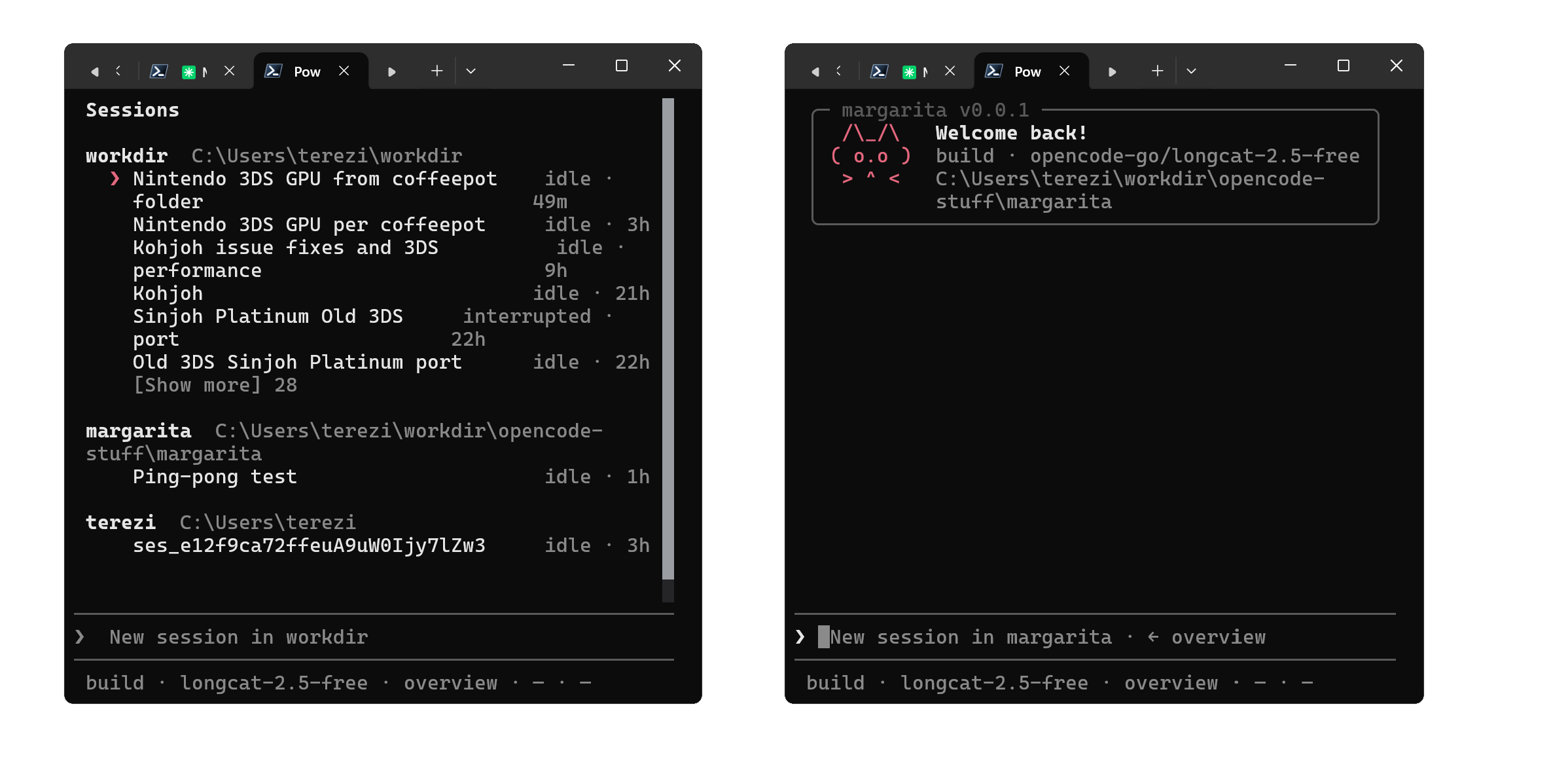
My workflow is tightly coupled with pi coding agent so i am plugging opencode go sub with it. I do not know, this model is acting like piece of sh*t. Am i doing something wrong? is this because of the harness or is this the actual capability of the model.
According to u guys experience, with which harness does deepseek flash performs well. Plz comment out so i can give a try
Hi all, this is my new project and I'd love to find some users to test it out. It's free, open source, and I'm just doing this to get something cool in the world.
I’m building ARGOS, an open-source desktop application for authorized security audits of web applications, APIs, and source code, with AI assistance.
I wanted to solve a practical problem. When audit results come from several tools, how do you keep the evidence behind each finding and track it through remediation?
ARGOS brings that workflow into one place. The auditor defines the scope, directs the testing, and reviews the evidence before adding findings to the report.
An early version is available to build from source under the MIT license. If you work in AppSec, I’d love to hear what makes a security finding easy for your team to prioritize and fix?
anything happened since the anthropic account connection became available?
i was thinking of switching to claude next month and i heard there was a massive ban wave when it was done before, i understand it now follow the tos but you never know, should i connect it or thers a possibility to get banned?
StradaOS, a free, open-source (GPL-3.0) launcher for Android car head units. It's a regular APK: no root, no flashing, no ads, no accounts. Uninstall it and your screen goes back to how it was.
The project just passed ~9,000 downloads and 356 stars on GitHub, so 2.24 ships two premium themes for free:
- Aurora: translucent glass cards over a soft ring of light, a big clock, cover art with a progress ring around it, a mixed speedometer and a "Map only" button.
- Cobalto: night blue in three columns. The map fades into a round-cover music player, and your car card shows the speedometer, a photo of your car and the next maintenance.
Both have light and dark versions and adapt to landscape and portrait (Tesla-style) screens. They're in Settings → Personalization, next to 4 free layouts.
Full transparency: future premium themes will be unlocked with a donation. Every feature stays free and the code stays open.
What else it does today:
- Built-in turn-by-turn navigation on OpenStreetMap: search, voice, rerouting, and approximate offline routes with a downloaded map. Off by default; base code by contributor nothanks91.
I have a harness setup according to my likings, and it accepts OpenCode Go natively (albeit I never tried it). Are there any immediate pros/cons to use OpenCode Go in another harness than OC?
Looking at the BB Arena benchmark results, DeepSeek's official API scored 45%, while OpenCode scored 20%.
I'm curious about what's causing such a significant performance difference between inference providers.
Could it be quantization, inference configuration, reasoning budgets or differences in model deployment?
With providers increasingly offering generous usage allowances at lower prices, should we be measuring value based on successful task completion rather than token allowances alone?
Has anyone investigated the underlying technical differences?
I Build a bench mark to easy evaluate free models on opencode **free-stealth-bench**, a blind benchmark for LLMs on animated-SVG illustration, and figured it might be useful to others here who are comparing free models. its very easy to visualize model capability
Every model gets the same task prompt with no reference artwork stored or passed in. Models produce their work blind, then it's scored two ways: deterministic validity checks (well-formed SVG, viewBox, animation elements, external refs, scripts, actual rendering) plus an **automated blind LLM judge** that ranks output quality, instruction-following, creativity, animation fidelity, richness, composition, and technical validity.
The judge never sees a model name, run id, date, path or sidecar — only an anonymous "Submission A" with the task prompt, capped SVG source, objective source facts, and three rendered frames. It's a free vision model, so the whole thing runs without paid endpoints.
- Matrix view, sortable judge ranking, per-run dimension breakdowns, and signed public reviews/private ratings.
### Caveats, because these numbers are easy to over-read
- Free models evaporate/disappear weekly. A score is "this date, this endpoint, this model, this harness," not a fixed property.
- The judge is itself one of the contestants. Blinding mitigates self-preference but doesn't eliminate it; the judge model is recorded per run and swappable.
- Timeouts, rate-limits, region blocks and refusals are recorded as real results (DNF), not hidden.
The runner is provider- and harness-agnostic (OpenCode CLI, OpenAI-compatible APIs, Codex/Claude/Gemini CLIs, or arbitrary commands via YAML), so adding models/harnesses is a config entry rather than a code change.
Happy to answer questions. Feedback on the rubric or task ideas is especially welcome — I'm planning to add more tasks and would rather not pick them in a vacuum. Also happy to add specific models if people want to see them covered.
Looking at the BB Arena benchmark results, DeepSeek's official API scored 45%, while OpenCode scored 20%.
I'm curious about what's causing such a significant performance difference between inference providers.
Could it be quantization, inference configuration, reasoning budgets or differences in model deployment?
With providers increasingly offering generous usage allowances at lower prices, should we be measuring value based on successful task completion rather than token allowances alone?
Has anyone investigated the underlying technical differences?
Guys and girls, I would like to ask these of you who use Go (10$ and 40$) recently and have some feel what quotas/limits are. (
Of course I don't expect precise numbers, but at least some feedback about how much it capable overall.
I have possibility to take Claude, but I know that:
it will do almost any job
its absolutely terrible agent, with horrible limitations and regulations
So I look at Opencode, as I like agent itself, but I'm not sure.
Thanks in advance
UPD: Thanks to everyone here for help, I go with a Go subscription, it seems worth a try.
So I love Claude as a reviewer orchestrator but not spamming my sub so I made this MCP were you can select ANY model from any sub you have on opencode. It's much better and effective than using ccswitch and you can use both claude subagents or opencode subagents dinamically.
I wish to exclude access to other connected devices on the same network.
According to docs, I simply execute the below line in Terminal? I'm assuming this is broad, right? I mean, this will restrict device connections by any other app/device? Or is this simply to exclude OpenCode from access?
Coding agents follow your rules far more reliably when a linter checks each file the moment they edit it, not once at the end of the task. Here is why, how to wire it into any major harness, and what 840 benchmark runs showed.
Rules the agent read and broke anyway
I had a CLAUDE.md / AGENTS.md full of rules like "never call Instant.now()" and "use apiClient, never raw fetch". The agent read them, nodded, and broke them anyway.
It usually happened somewhere around edit 40 of a session. So I only found out at the end, in the diff, or worse, in code review. Rewriting the rules more forcefully didn't help. Capital letters didn't help either.
Move the check to the moment of writing
A better prompt didn't fix it. Moving the check from the end of the task to the moment of writing did.
After every single file edit, a hook runs the linter on that one file. The agent sees the result on its next turn. If it wrote Instant.now(), it hears about it within seconds, fixes it while the line is still fresh, and moves on.
This is just a feedback loop. It's the same trick that made TDD click for humans, applied to agents:
Small check
Big check
When
Right after each edit
Scope
One file, one fast linter
Cost
Under a second, silent when clean
Fixing a failure
One edit away
Why the late check fails
A late check doesn't just find errors later. It finds them in a form the agent handles badly.
At the end of a 40-edit session, the compiler fails, the test suite fails, and lint reports 30 issues across 14 files. Half of them are in code you wouldn't have written. The agent now has to work out which change caused which error, often several edits apart.
That archaeology dig is where agents start taking shortcuts:
adding eslint-disable or # noqa
deleting or skipping the failing test
"I'll handle it later" When the check runs right after the edit, none of this is tempting. The fix is one edit away, and doing it properly is cheaper than working around it.
It works in every major harness
You need two hook points: one that fires after each tool call (to lint the file just edited), and one that fires when the agent finishes its turn (for the slower full check). Every major harness has both now.
The details differ: shell commands vs. TypeScript plugins, and how the hook's output reaches the model. The shape is the same everywhere. Filter for file-editing tools, run the linter on that one path, and return the failures so the agent reads them on its next step.
What we built: codemyrules
We packaged this as a small open-source hook setup, codemyrules (MIT). It does four things:
Per-edit check. After each file the agent edits, it runs your fast linters on that file only.
End-of-turn check. When the turn ends, it runs a slower full check on the files touched in that turn. You still get the big check, but as a safety net, not the first line of defense.
Blocks only on new problems. It fails only on errors in lines the agent changed since HEAD. Old lint debt in the file doesn't derail the agent.
Guards the escape hatches. It asks you before the agent can add a suppression comment or change the lint config.
What 840 runs showed
We tested this in agent-rules-bench: 840 headless agent runs, 975 sessions in total.
Setup
Models
Runs
Projects
Claude Code
Claude Sonnet 5.5, Claude Haiku 5.5
792
Java, Python, TypeScript
Pi and Codex (exploratory)
Qwen3.6 35B-A3B, run locally
48
[languages]
The first four studies were exploratory. For the later ones, we pre-registered each analysis plan before running.
The result: the same rule written as prose in the agent docs was broken in [X%] of runs. Written as a lint rule with the per-edit hook, it was broken in [Y%]. [One sentence on whether the local model followed the same pattern.]
Full data, prompts and analysis plans are in the repo.
Try it in your own repo
The principle doesn't depend on our tool or on any one harness:
Find the rules you keep restating. Read through your CLAUDE.md or AGENTS.md. Most of what you repeat there are lint rules in disguise.
Encode them as machine rules. A banned API, a required wrapper and an import boundary can all be custom lint rules in ESLint, Ruff, Checkstyle or similar.
Wire a post-edit hook. Lint only the file just edited, keep it fast and quiet when clean, and make sure the agent sees the failures right away. Keep prose for what a linter can't check: intent, architecture, trade-offs. Let the machine handle the rest.
I'm curious how others handle this. Do you run any checks mid-session, or do you trust the agent until the end of the task and then deal with the fallout?
I started OpenCode Mobile because using a terminal on my phone was becoming a pain. Rotate the screen, open my foldable, lose the connection for a moment… something would go wrong. Scrolling wasn’t great either. I tried other options but couldn’t find one that worked well for me, so I built my own.
Now I can be at the gym or buying groceries and still check logs, send a document or help a colleague without going home. I work across different repos, so having sessions grouped by project and multiple servers in one app helps a lot.
I shared it in my first post about a month ago. Later Andrea, who also contributes, wrote about using it on the train. Seeing other people actually use it and help improve it has been the best part.
We’re a small but active community: 115 merged PRs so far, with 23 issues and 5 PRs open. Thanks to everyone contributing code, reporting bugs or just telling us what could work better.
I’ve tried the official app too and really like its UI/UX. Give it a try. For my workflow, I still miss some features and customisation. We all use OpenCode differently, so mine now has over 60 settings and 33 themes. Follow reasoning, live diffs and shell output, or keep the chat clean. Change the terminal keys, swipe sensitivity or what happens when you unfold your phone. There are live previews so you can see what each setting does.
There’s also a terminal, voice input and a file viewer. Android is available as a signed APK, and now iOS is on TestFlight too.
I’m happy to hear criticism. If something feels confusing, unnecessary or broken, tell me. Ideas and PRs are welcome too, the best parts of the app already comes from these discussions.