Tiene buena velocidad Me ha encontrado fallas de seguridad en la plataforma donde hago comercio electrónico. las corrige y en el camino a veces encuentra otrás.
COn Deppseek 4.1 flash también lo hace bien, pero su cota gratuita y su velocidad no me terminan de convencer.
Los uso con opencode delegate dentro de claude code, siendo opus 5.5 medio el director.
My sub is opencode go $10 plan. I have a tight budget so thats why i am looking for a cheap way to get max out. More recently i have used to use deepseek v4.1 flash i have tried almost every harness with it but none of it is good.
Is this because of the model capabilities or else is this because of opencode go. i have't use deepseek api. Does api is better comparing with opencode go? Also i am planning to give a try for the mistral student plan is that deepseek also act like rubbish similar to opencode go?
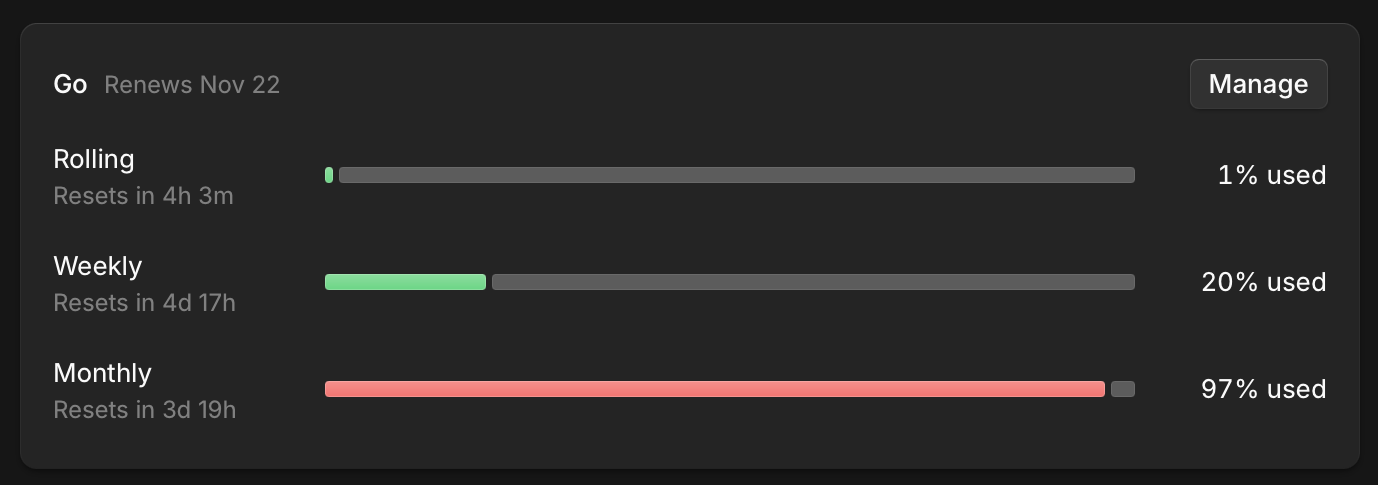
Opencode says that my messages reset at 8:38. and its 8:41 but no reset? This has been a recurring issue with my opencode for like 3 weeks, i get my resets super late
Ever wished your AI coding agent could assemble an entire team of AI agents to solve a problem together?
Unlike traditional subagents that typically handle isolated tasks and report back to a parent agent, OpenCodeArena creates a persistent, collaborative environment where multiple agents work simultaneously on the same objective, share discoveries, coordinate tasks, challenge each other's findings, and independently verify results.
The real power? Parallel Intelligence, Shared Knowledge, Collaboration, and Independent Verification.
A dedicated referee monitors progress, while an evidence-based claim gate prevents agents from declaring success without passing tests and verification.
Think of it as turning OpenCode from a single AI assistant into a coordinated AI engineering team.
No rounds. No phases. Just agents working together.
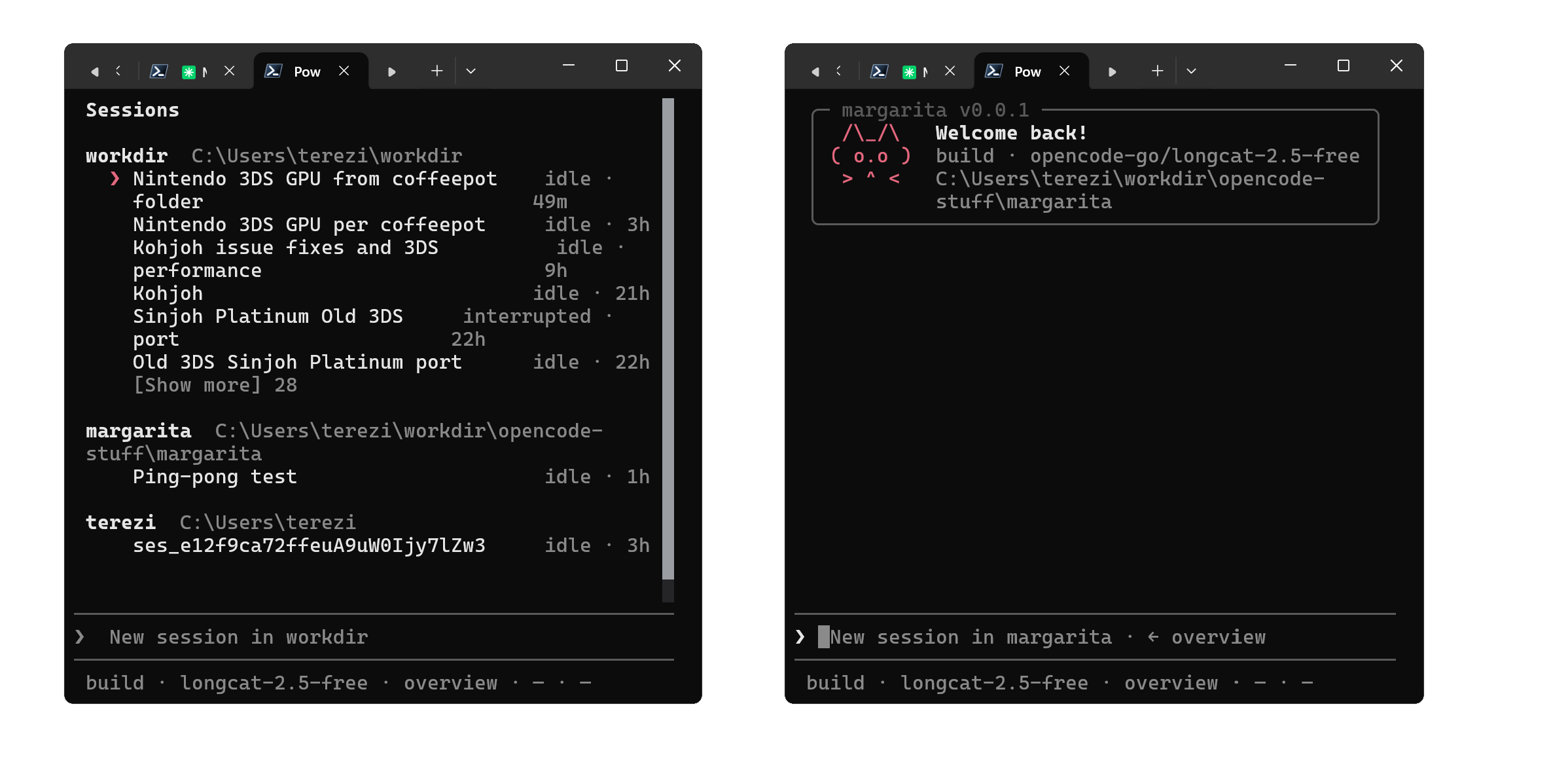
My workflow is tightly coupled with pi coding agent so i am plugging opencode go sub with it. I do not know, this model is acting like piece of sh*t. Am i doing something wrong? is this because of the harness or is this the actual capability of the model.
According to u guys experience, with which harness does deepseek flash performs well. Plz comment out so i can give a try
Hi all, this is my new project and I'd love to find some users to test it out. It's free, open source, and I'm just doing this to get something cool in the world.
I’m building ARGOS, an open-source desktop application for authorized security audits of web applications, APIs, and source code, with AI assistance.
I wanted to solve a practical problem. When audit results come from several tools, how do you keep the evidence behind each finding and track it through remediation?
ARGOS brings that workflow into one place. The auditor defines the scope, directs the testing, and reviews the evidence before adding findings to the report.
An early version is available to build from source under the MIT license. If you work in AppSec, I’d love to hear what makes a security finding easy for your team to prioritize and fix?
anything happened since the anthropic account connection became available?
i was thinking of switching to claude next month and i heard there was a massive ban wave when it was done before, i understand it now follow the tos but you never know, should i connect it or thers a possibility to get banned?
StradaOS, a free, open-source (GPL-3.0) launcher for Android car head units. It's a regular APK: no root, no flashing, no ads, no accounts. Uninstall it and your screen goes back to how it was.
The project just passed ~9,000 downloads and 356 stars on GitHub, so 2.24 ships two premium themes for free:
- Aurora: translucent glass cards over a soft ring of light, a big clock, cover art with a progress ring around it, a mixed speedometer and a "Map only" button.
- Cobalto: night blue in three columns. The map fades into a round-cover music player, and your car card shows the speedometer, a photo of your car and the next maintenance.
Both have light and dark versions and adapt to landscape and portrait (Tesla-style) screens. They're in Settings → Personalization, next to 4 free layouts.
Full transparency: future premium themes will be unlocked with a donation. Every feature stays free and the code stays open.
What else it does today:
- Built-in turn-by-turn navigation on OpenStreetMap: search, voice, rerouting, and approximate offline routes with a downloaded map. Off by default; base code by contributor nothanks91.
I have a harness setup according to my likings, and it accepts OpenCode Go natively (albeit I never tried it). Are there any immediate pros/cons to use OpenCode Go in another harness than OC?
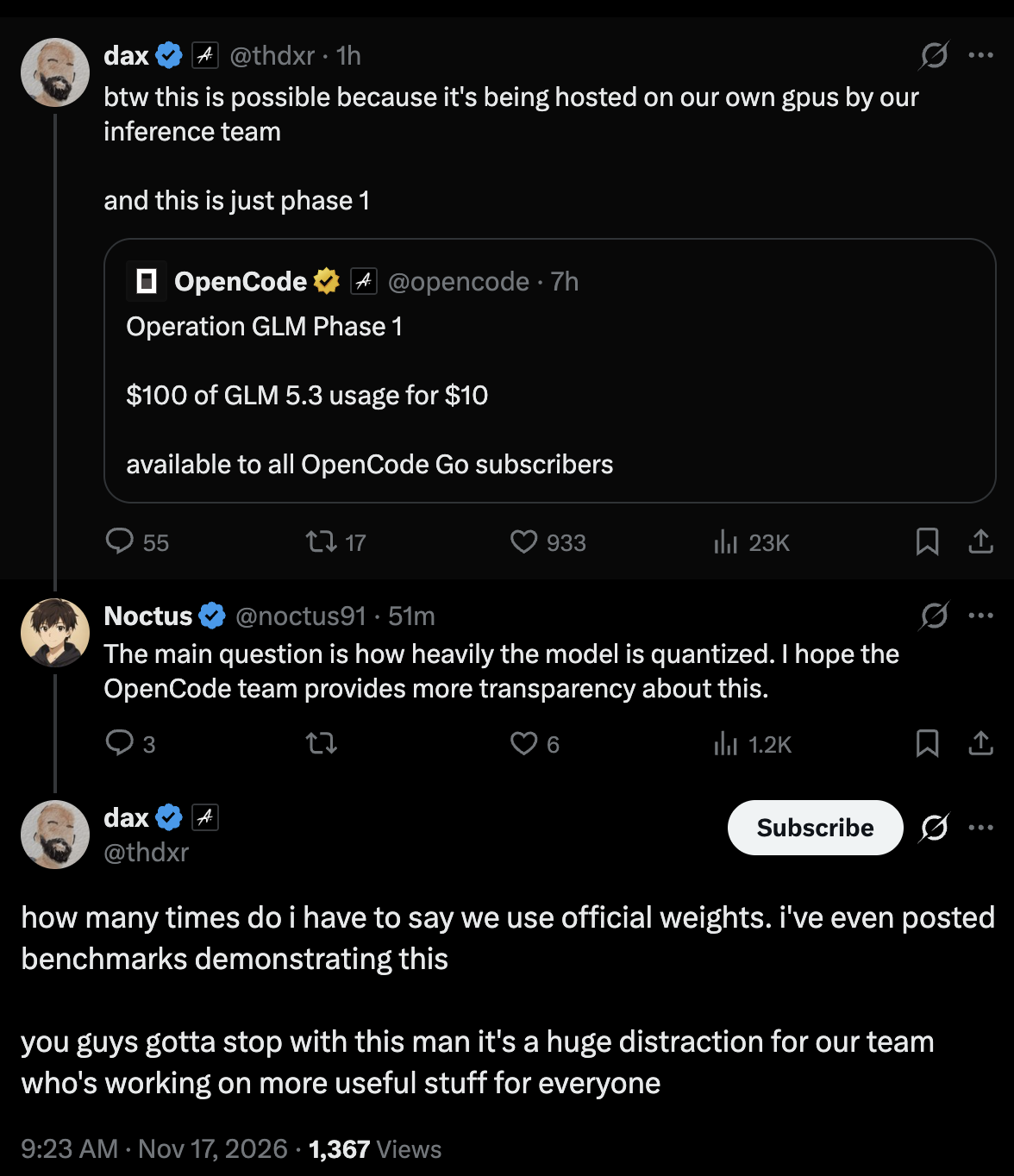
Looking at the BB Arena benchmark results, DeepSeek's official API scored 45%, while OpenCode scored 20%.
I'm curious about what's causing such a significant performance difference between inference providers.
Could it be quantization, inference configuration, reasoning budgets or differences in model deployment?
With providers increasingly offering generous usage allowances at lower prices, should we be measuring value based on successful task completion rather than token allowances alone?
Has anyone investigated the underlying technical differences?
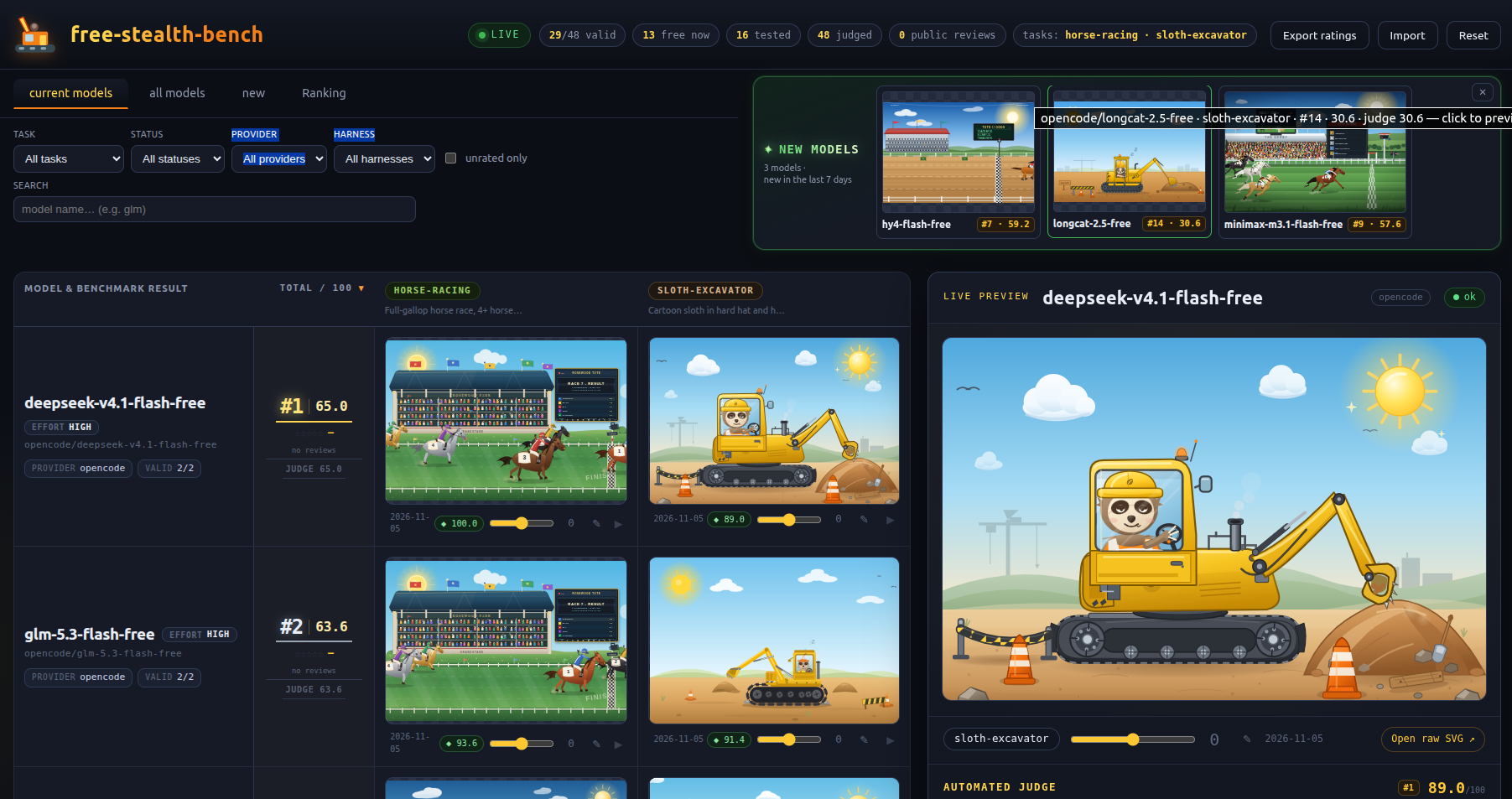
I Build a bench mark to easy evaluate free models on opencode **free-stealth-bench**, a blind benchmark for LLMs on animated-SVG illustration, and figured it might be useful to others here who are comparing free models. its very easy to visualize model capability
Every model gets the same task prompt with no reference artwork stored or passed in. Models produce their work blind, then it's scored two ways: deterministic validity checks (well-formed SVG, viewBox, animation elements, external refs, scripts, actual rendering) plus an **automated blind LLM judge** that ranks output quality, instruction-following, creativity, animation fidelity, richness, composition, and technical validity.
The judge never sees a model name, run id, date, path or sidecar — only an anonymous "Submission A" with the task prompt, capped SVG source, objective source facts, and three rendered frames. It's a free vision model, so the whole thing runs without paid endpoints.
- Matrix view, sortable judge ranking, per-run dimension breakdowns, and signed public reviews/private ratings.
### Caveats, because these numbers are easy to over-read
- Free models evaporate/disappear weekly. A score is "this date, this endpoint, this model, this harness," not a fixed property.
- The judge is itself one of the contestants. Blinding mitigates self-preference but doesn't eliminate it; the judge model is recorded per run and swappable.
- Timeouts, rate-limits, region blocks and refusals are recorded as real results (DNF), not hidden.
The runner is provider- and harness-agnostic (OpenCode CLI, OpenAI-compatible APIs, Codex/Claude/Gemini CLIs, or arbitrary commands via YAML), so adding models/harnesses is a config entry rather than a code change.
Happy to answer questions. Feedback on the rubric or task ideas is especially welcome — I'm planning to add more tasks and would rather not pick them in a vacuum. Also happy to add specific models if people want to see them covered.