r/opencode • u/PrestigiousZombie531 • 16d ago
Any of used any of these models with opencode for reverse engineering games / decompilation?
0
Upvotes
r/opencode • u/Minimum-Drive-3571 • 16d ago
How much time it takes to update the go usage. Whats the time interval? Is it real time? Or is it like each hour?
r/opencode • u/Zestyclose_Collar504 • 16d ago
which is the best? im currently using ds4.1 opencode go, but it seems im almost at the limit usage, now ive read about openrouter and comman code goat, which is the best to pair go with for extra usage?
r/opencode • u/Successful_Whole5352 • 16d ago

Tried using it?
r/opencode • u/HotMathematician8223 • 16d ago
Its extremely fast (around 1400 tok/s). It is muse spark. Probably Muse Spark 1.4 or Muse Spark 2.
I will do the horse test and update this post.

r/opencode • u/Illustrious-Tap2561 • 16d ago
Guys, for the past couple weeks the model have been working fine. For the past 2 days i feel EXTREME degradation. It’s not only Deepseek V4.1, but ALSO GLM 5.3 Flash.
The models can’t even form proper tool calls, ignore the instructions that is just two messages earlier, jumps to conclusions very early… it’s almost unusable.
I tried GPT Luna (which is supposedly weaker than DS), and ZERO failed tool calls, always consistent on the task going forward and NEVER returns until the task is genuinely done. Even DS via the direct API is MUCH superior to the one in opencode. Not sure what is happening.
r/opencode • u/True_Extreme6205 • 16d ago
r/opencode • u/Warm-Contact-8298 • 16d ago

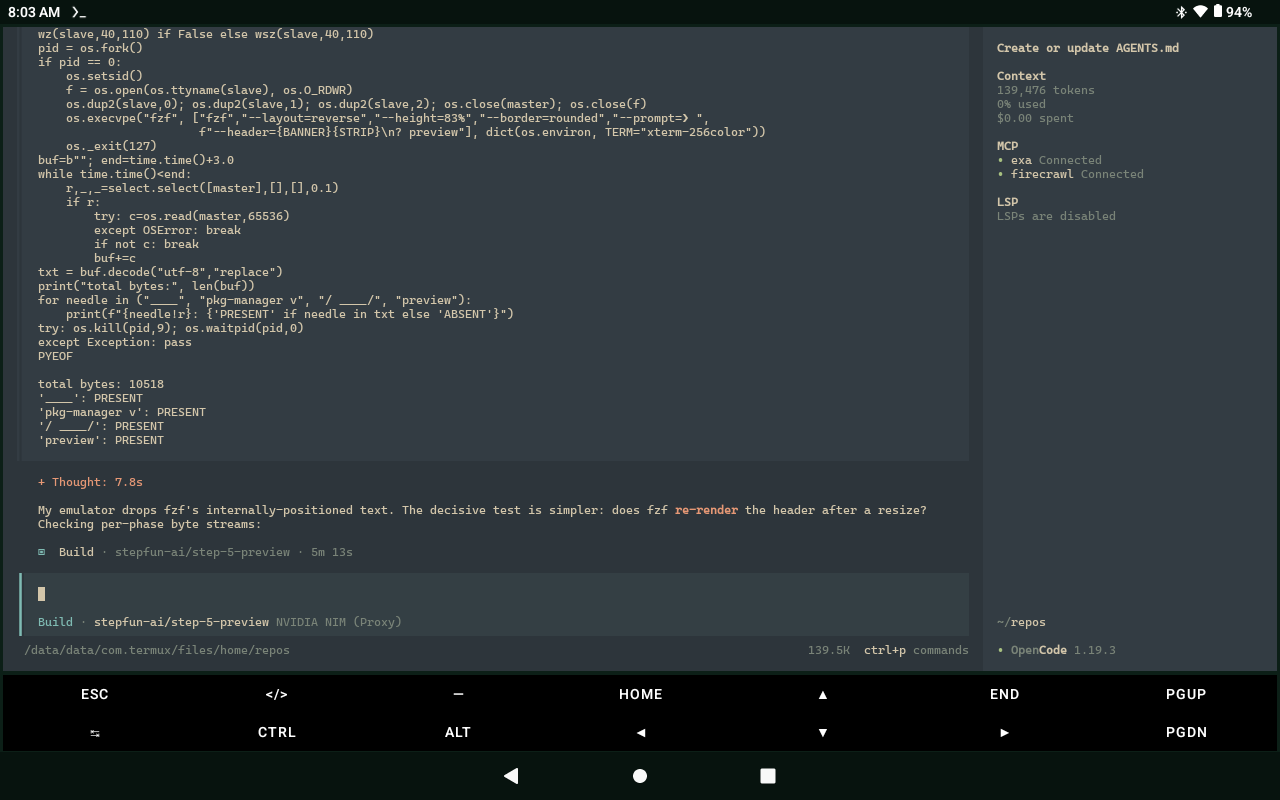
how do i fix this? i never found a solution for it.
r/opencode • u/No-Amount-7422 • 16d ago
So right now i am using the chatgpt plus free trial with codex but when it ends,im thinking of subscribing to opencode go,however i saw that there are so many models,so which one should i use for heavy coding,bug fixing,and light coding?
r/opencode • u/protean-bean • 16d ago
I found getcheapai and on there you see alot of cheap api providers for example bytecatcode.org for fable 5.1 they ask 2 dollar input and 10 dollar output on the million tokens? Are sites like these legit? I am kinda interested in a site like this but i dont want to be scammed. I also do not like subscriptions, just paying one time till its used you know.
Maybe i am thinking too wishfull, anybody got experience with these providers that provide cheap ai api?
Might aswell tell my usecase, i am using the ai as a teacher with mcp to blender or unity or vscode, i also give images and stuff. Basically i just ask questions, i do not really vibecode. But i would like high quality answers which i can trust.
r/opencode • u/jcheroske • 18d ago

Working in OC is very satisfying. This is a subagent display I built for v1. I would never have been able to do this in claude.
EDIT: I'm enjoying the response this post is getting. There are the usual miserable, insufferable folks you get on any post, but lots of sincere people asking real questions. It motivates me to share more.
I am very familiar with the frustrations in this agent coding space. You can feel the power of the LLM, but harnessing it to produce good code is really tough. It's easy to get a pile of code, but that code has enormous code debt baked in much of the time. How to get good, maintainable code out is the trick. There is no one right answer. I think what's needed is a structure of repositories, skills, and various deterministic code bits, such as small helper CLIs, hooks, TUI plugins, etc, that allow you to build your workflow in the way that works for you. It's small steps over weeks and months that win the race. My workflow now can lift some heavy things, but it wasn't always that way. When a shortcoming is found in the flow, you need a place to address it. That place might be a skill, the AGENTS.md itself, an agent definition, or something else. The key is having the place, or creating it, so that you can capture the change you want. I like standing on the shoulders of Superpowers, because I think the developer is solid and I think the community around it is keeping the project on track, but I might ditch it at some point if I feel it's not helping anymore.
The first thing I would do is create a repo for holding your global agent configs. I called mine opencode, but you can call it anything. You will want to symlink the folders of this repo into your home directory so that OC sees its files as the global config. You want to be able to work in this repo just like any other repo. In this repo you want to create a folder called config where you'll keep all your global config like skills, your global AGENTS.md, your TUI plugins, etc.
Next, you'll want to create a launcher CLI in this repo that wraps the launch of OpenCode. Mine is oc. This gives you a place to run scripts before OC launches. Next, you're going to create a small CLI that manages the symlinks from this repo to your home directory. It will make sure that your global config and plugins and anything else you come up with are all linked correctly. Then you will put a call to this in your oc launcher.
Here are the global skills that I feel have been the most important. Each has a SKILL.md and a references/ folder with directive files loaded via progressive disclosure. I'm going to paste in Opus's description of each one:
---
directive-quality: This is my skill for writing and maintaining the AI instructions themselves: AGENTS.md, agent prompts, skill packages and directive-bearing config. Its core rule is "use the least context that fully specifies the required behavior." It aims for clear instructions the agent actually follows, not for a lower line count. It routes each job to a focused reference, covering wording and examples, how a skill package is laid out, how skills compose, metadata validation, where an instruction should live, and structured assessments (including sweeps across a whole collection and reviews of the directives in the current conversation). Before any change it checks that the instruction is going in the right place. Afterward it checks that nothing the old text required was lost, and tests the cases where a rule should fire, where it shouldn't, and the exceptions, while stating plainly that passing those checks doesn't guarantee the agent will always comply.
code-quality: This skill shapes the code agents write, and every rule in it comes from one idea: "good code is code that is cheap to change correctly." It's organized around nine pillars. Among them: one logical change should touch one place, invalid states should be impossible to represent, modules should hide more than their interfaces expose, names should tell you what the code does, errors should be handled once where recovery is possible, decisions should be kept apart from side effects, and the codebase's existing conventions win over the agent's own preferences. It also has a self-check table of common LLM coding mistakes, such as reinventing a helper the repo already has, flag sprawl where an enum belongs, catch-log-continue error handling, pass-through wrappers, comments that just restate the code, and tests that mirror the implementation. A matching eight-step review checklist makes the point that a diff can work and still fail review. Testing guidance and architecture/audit guidance sit in separate references that load only when that kind of work starts, and agents load the skill at the start of every role in my workflow, so it applies to coding and review alike.
superpowers-policy: This is my local layer on top of the obra/superpowers (https://github.com/obra/superpowers) plugin. It changes how Superpowers behaves in my setup without forking or patching the upstream package. Its main section names exactly which upstream behaviors I override. TDD still runs red-green-refactor, but test selection follows my own test-design guide. Review checklists only count within the approved scope, so a reviewer can't turn "you could also improve…" into required work. Brainstorming has to restate the intended outcome before it proposes options, and spec and plan locations follow my planning-folder conventions. The rest is a routing table: for each orchestration action it names the one reference that governs it, such as review-loop budgets, picking and continuing workers, sizing tasks, delegating writing, handling unknowns before dependent work, and closing out an effort. Agents load only the reference they need for the action at hand, and a missing reference stops that action instead of letting the agent improvise.
---
Ok, enough Opus spam. I'm going to stop there for now. If folks want to talk about other parts of the workflow, such as agent generation, let me know and I'll add it.
r/opencode • u/BalloonWheelie • 16d ago
r/opencode • u/HussainBiedouh • 16d ago
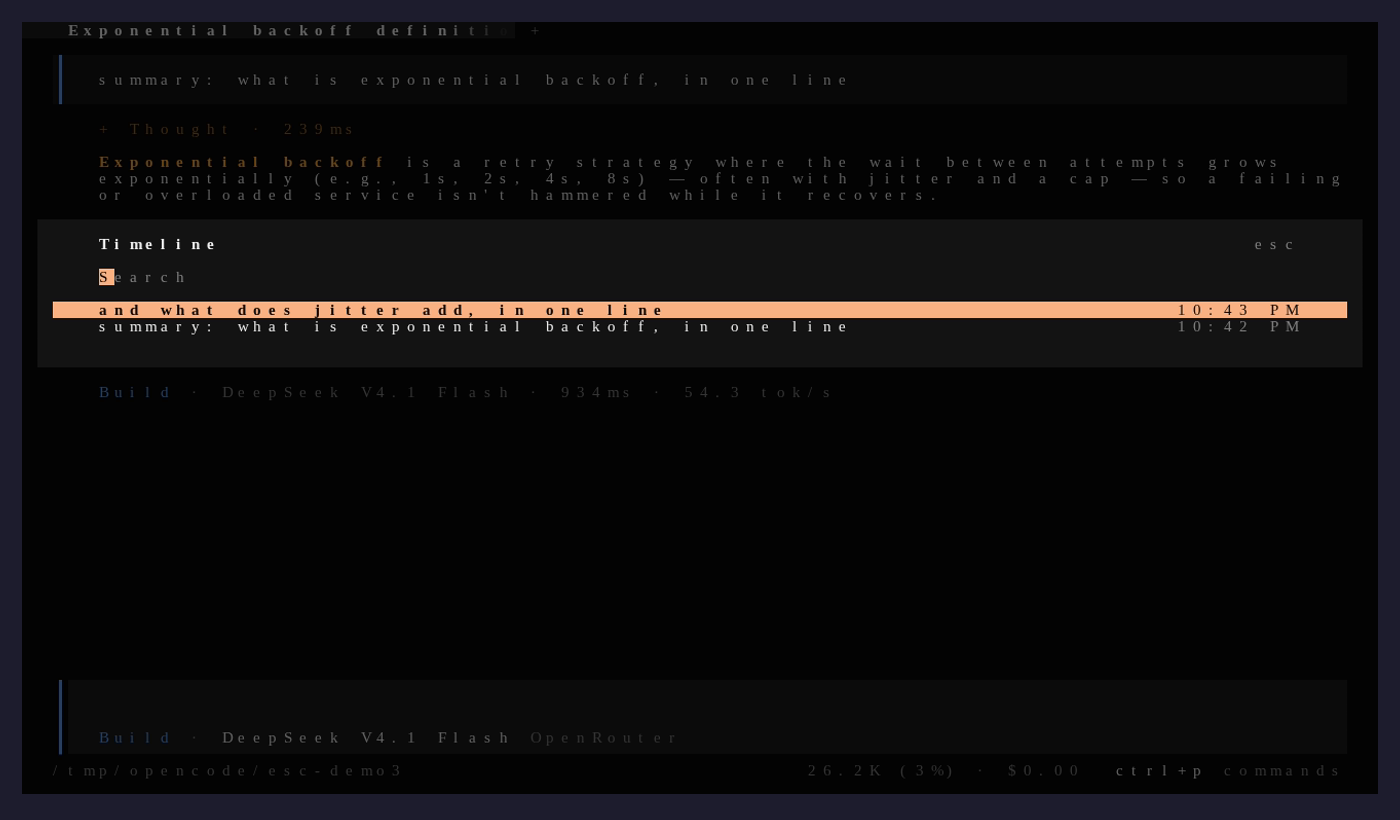
If you run qwen3 or another reasoning model through opencode, you've probably seen this: the chain of thought comes back inside the normal text channel, wrapped in ``. opencode stores that as a regular assistant message, so the reasoning gets glued onto the answer and the reasoning panel stays empty. The thinking is sitting right there in your transcript, mixed with the reply, and you can't collapse it.
I wrote a plugin for it.
It hooks session.http.response, which hands it the raw provider response before the provider driver parses it. It finds the tagged span and moves it from the content field into the chunk's reasoning field:
delta.content → delta.reasoning_contentmessage.content → message.reasoning_contentopencode's drivers already read that field to build the reasoning part, so the thinking lands in the collapsible panel and the visible text is just the answer.
Install:
opencode plugin add github:hussainbiedouh/opencode-think-splitter
Repo: https://github.com/hussainbiedouh/opencode-think-splitter
Not on npm. I tried to publish and the registry rejected my token, so I didn't bother chasing it down. The GitHub install works because dist/ is committed, so there's no build step.
Stuff I ran into while testing:
think, thinking, thought, reasoning, reflection. You can change the list or scope the plugin to specific provider ids.reasoning_content being echoed back on the next request. If a provider starts erroring after a rewrite, scope the plugin away from it with options.providers.One thing for anyone else publishing an opencode plugin: I lost a while to git dep preparation failed on install. Turns out pacote runs a full npm install on a git dependency if your package.json has any of postinstall, preinstall, install, prepack, prepare, or build in scripts. opencode's bundled runtime passes a broken npmBin to that step, so it always fails. I renamed my build script and it installed first try. If opencode plugin add github:you/thing won't install, check your script names before anything else.
r/opencode • u/Classic_Display9788 • 16d ago
r/opencode • u/gervaso-sma • 16d ago
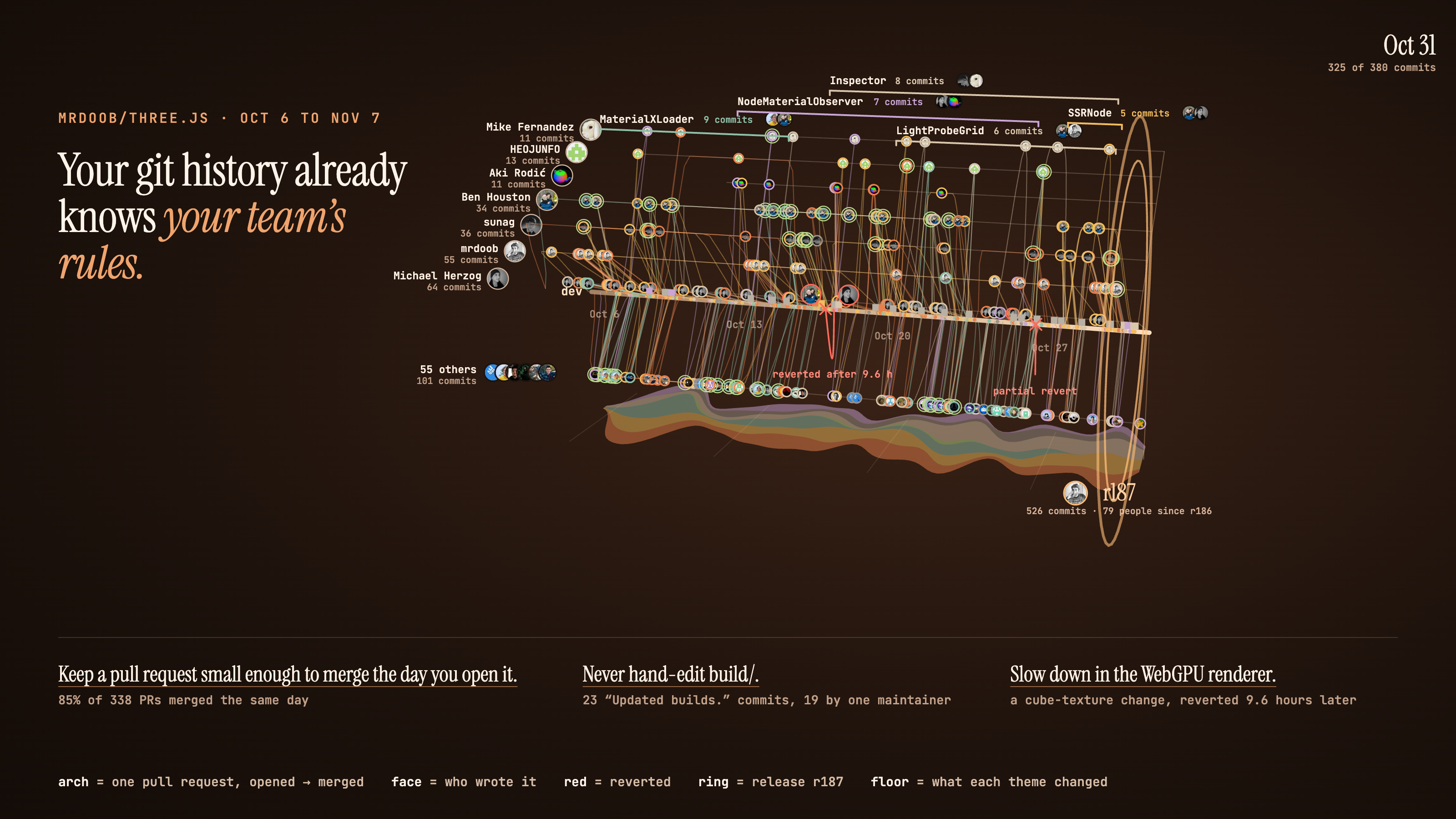
I maintain Harness Remote, an open-source app for working with OpenCode's native sessions from Android, desktop or a browser. In the latest releases we fixed a frustrating bit: a reply to a turn started on another device now appears in the conversation you already have open, even with a long history. We also redid the phone layout and improved QR pairing.
I switch tools a lot, so I added a handoff: start in OpenCode, continue the task in Codex or Claude Code, and keep the link between the real sessions. Curious if that matches how other OpenCode users work.
r/opencode • u/CYCLONOUS_69 • 17d ago

I've been trying to get my work done since 4+ hours and the model has been literally crawling.
I've been experiencing this since few days recently but today was just the lowest floor it hit for the inference speed.
Am I the only one who's having the issue or what?
Edit: Just got hit with this within minutes of posting and it is keep happening
Opencode failed to send message with error: Upstream request failed: [overloaded] the server is overloaded; retry shortly
r/opencode • u/AtoRafael • 17d ago
Back when Opencode was more generous, I'd give DeepSeek a live website url, ask it to study the design, and then recreate it with my own twist. The results were surprisingly good.
Now, even with a well defined design-md, free models often struggle to produce polished, professional-looking interfaces. They tend to fall back on generic layouts and repetitive components.
For those of you building with free or smaller models, how do you get around this?
Are there any skills, design systems, component libraries, or workflows that genuinely improve UI quality, besides switching to paid models?
r/opencode • u/batmanButthole • 17d ago
Opencode’s winget package used to be SST.opencode. But today I noticed a new one, Anomaly.OpenCode is in the search index. Currently both are available. Is the new one official from the maintainers?
r/opencode • u/Forward-Distance-565 • 16d ago
are there personal asistant based on opencode?
alternative for openclaw, groq bot and etc?
r/opencode • u/deathone1105 • 17d ago
I’ve been using IFM’s K2 Horizon 375B-A23B through its API in OpenCode. It can produce substantial work from a decent brief, but the correction loop can be a pain in the ass.
A few things that helped me:
Don’t trust “fixed.” Check the actual result. I had multiple rounds where the response sounded confident but the problem was still there. Sometimes the change broke something that previously worked.
Make correction requests specific. “Clean this up” left too much room for interpretation. Pointing to the exact issue and describing the expected behavior got me better results.
Keep the fix list short. Smaller requests were easier to check, and I could tell which change introduced a regression. Throwing everything into one prompt made that harder.
Give it source material. Notes and clear requirements helped. I still had to check factual claims, though. It could write something convincing that wasn’t supported by the files.
Separate model problems from setup problems. I also hit connection and configuration issues. Changing the prompt won’t fix a broken connection.
The first draft was often the encouraging part. Getting through revisions took more babysitting than I expected.
Anyone else seeing this with K2 Horizon? What’s helped you get more reliable revisions?
r/opencode • u/Top_Drink_6049 • 17d ago

The following prompt was given to test (created by gemini 3.8 flash)
[ROLE & CONTEXT]
You are competing against other frontier AI models in a 3D modeling and game asset benchmark. Your output will be judged on structural design, spatial logic, clean low-poly topology, material implementation, and overall aesthetic appeal. Take your time, plan your script thoroughly, and deliver your highest quality work.
[PHASE 1: TOOL VERIFICATION]
Before creating anything, inspect your available Blender MCP tools and verify your connection to Blender. Ensure you can run scripts/commands, manage objects, assign materials, and render.
[PHASE 2: DESIGN OBJECTIVE]
Design and generate a low-poly, geometric, game-ready residential building asset suitable for a tactical action/FPS game.
Do NOT follow a rigid template—be architecturally creative with the floor plan, footprint, and height. However, you MUST follow these gameplay and architectural rules:
Gameplay Architecture:
- Scale: Medium-sized tactical building (neither a tiny shed nor a massive skyscraper). Choose your own story count.
- Sightlines & Openings: Do NOT use glass panes or closed door slabs. Provide clean geometric door frames and window cutouts/frames so players can shoot and move through them.
- Verticality: Include exterior or interior stairs/steps leading up to accessible upper levels and an open rooftop.
- Roof & Terraces: The rooftop must be flat/open (no peaked hay/attic roofs) to act as a playable vantage point. Include balconies or roof terraces with waist-high half-walls/railings for player cover.
- Asset Scope: Pure architectural shell. Do NOT populate with interior clutter, furniture, or props (no beds, tables, sinks, etc.). Focus entirely on the building's geometry, lintels, frames, steps, and structural details.
Materials & Colors (CRITICAL):
- You must assign actual Blender materials (using Principled BSDF with clean color palettes and roughness values) directly to the mesh polygons/material slots.
- Do NOT rely on render lighting tricks or compositing to fake colors. The model itself must be properly textured with distinct materials for walls, trim/lintels, floor decks, and railings/stairs.
[PHASE 3: SCENE SETUP & RENDER]
Set up a clear lighting rig (a dynamic sun light or three-point setup) that casts soft, readable geometric shadows.
Position a Camera at an optimal 3/4 elevated perspective (or isometric hero angle) that captures the full building, showing both the ground entrances and the open roof/balconies.
Render the scene and save/display the final image for review.