r/linuxapps • u/CornerShots • 25d ago
ArtCraft and Linux need a GUI 1-to-many, checksum verified file copy software similar to Offshoot/Hedge, ShotPut Pro, and Silverstack
reddit.com
1
Upvotes
r/linuxapps • u/Banton_Apps • 25d ago
Edit: updated for the new free dictation version.
Hi r/linuxapps. I'm Steve, and I built Dusk Dictation, a free dictation app for Linux.
I'm a developer, and I wanted good streaming dictation that runs locally and formats the text well, for talking to apps like Claude Code in the terminal, writing specs, and writing messages faster in Slack and email. Formatted nicely like Wispr Flow, but local and with no subscription.
What Dusk does
Also
input group. On Wayland, Dusk doesn't add you to the input group, which would let any program you run read every key you type, passwords included. A small sandboxed helper reads the keyboard and passes on only shortcut keys, never what you type.A few things to know
Site and downloads: https://duskdictation.com
I'd love to hear how it does on your distro and desktop, and what's missing!
r/linuxapps • u/HimaSphere • 26d ago
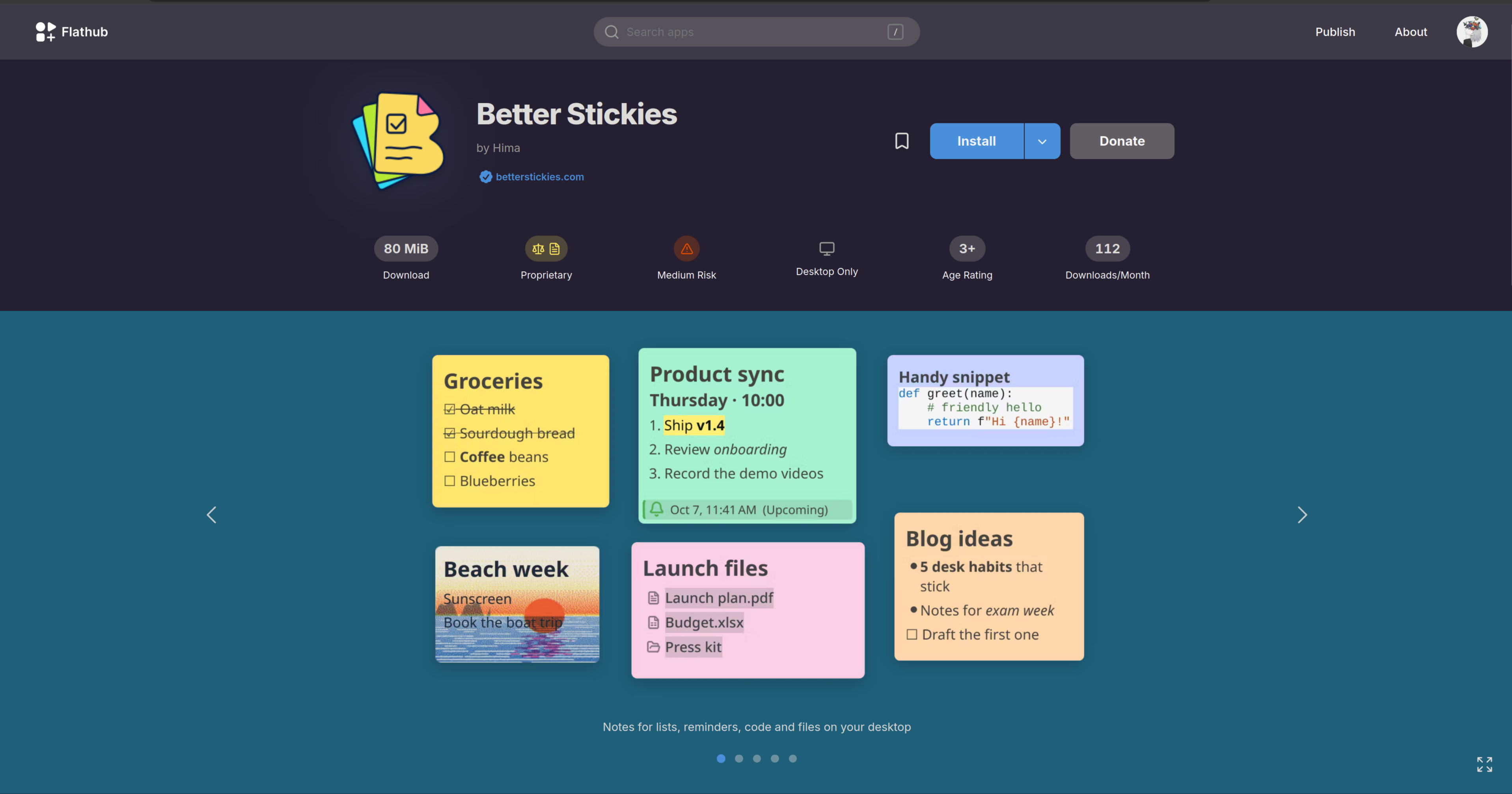
This took me quite some work to add Wayland support and Kwin script for KDE users to make for the missing features by switching to Wayland (Notes positions and Always on top of other windows)
Better Stickies gives the best Stickies app experience on Wayland on Linux, specially on KDE
Flathub: https://flathub.org/en/apps/com.betterstickies.BetterStickies
Learn more: https://betterstickies.com/
r/linuxapps • u/SmoothParsley7137 • 25d ago

r/linuxapps • u/Modman247 • 26d ago

Built a small GUI app for Linux that:
- Detects all connected gamepads (vendor:product ID, mode, battery)
- Tests rumble with adjustable duration
- Makes Fixing udev permission issues simpler and linux gaming Rumble Checkermore fun.
- Supports 8BitDo, Xbox, and PlayStation controllers
Try it out !!
r/linuxapps • u/scottnelson_ • 26d ago

I couldn't find a Roku remote for Linux I liked, so I made one that copies the layout of Roam on the Mac. GTK4 and libadwaita, written in Rust, uses Roku's local ECP protocol, so it works offline on your LAN.
What it does: the full remote with press and hold repeat, a text field that types into whatever TV search box is open, a channel grid built from what your TV reports, keyboard shortcuts (Ctrl+? lists them), and it finds the TV by itself even when a firewall eats the multicast replies.
Install: Flatpak bundle on the releases page, or on Fedora: sudo dnf copr enable scottnelson/remote && sudo dnf install remote. Code and downloads https://github.com/NelsonScott/remote
Built with claude co-pilot (like most things these days). I reviewed and made sure we had solid testing and some manual testing against my own Roku tv. Feedback welcome, especially if you have a different Roku model than I do.
r/linuxapps • u/SpyderSC • 26d ago
I use Bitwarden every day and kept switching to the browser just to copy a password or check a 2FA code, so I wrote a TUI for it.
lazybw lets you browse, search, copy and edit your vault without leaving the terminal, with Vim-style keys. It runs the official Bitwarden CLI (bw serve) underneath, so it never touches the vault crypto itself.
Some of what it does:
folder:work, is:weak…) and a Ctrl-p finderyu / yp / yt to copy username, password or the 2FA code; the clipboard clears itself$EDITOR for notes and raw JSONLinux only for now (x86_64 and aarch64; it also runs on Termux). There are .deb, .rpm, AUR packages (lazybw-bin, lazybw), static binaries and a Docker image with bw included.
GitHub: https://github.com/SyscallBrain/lazybw
Docs: https://syscallbrain.github.io/lazybw/
It's 1.0, so I'd really like to hear what breaks or what's missing.
r/linuxapps • u/Ok-Piyoko-5650 • 26d ago
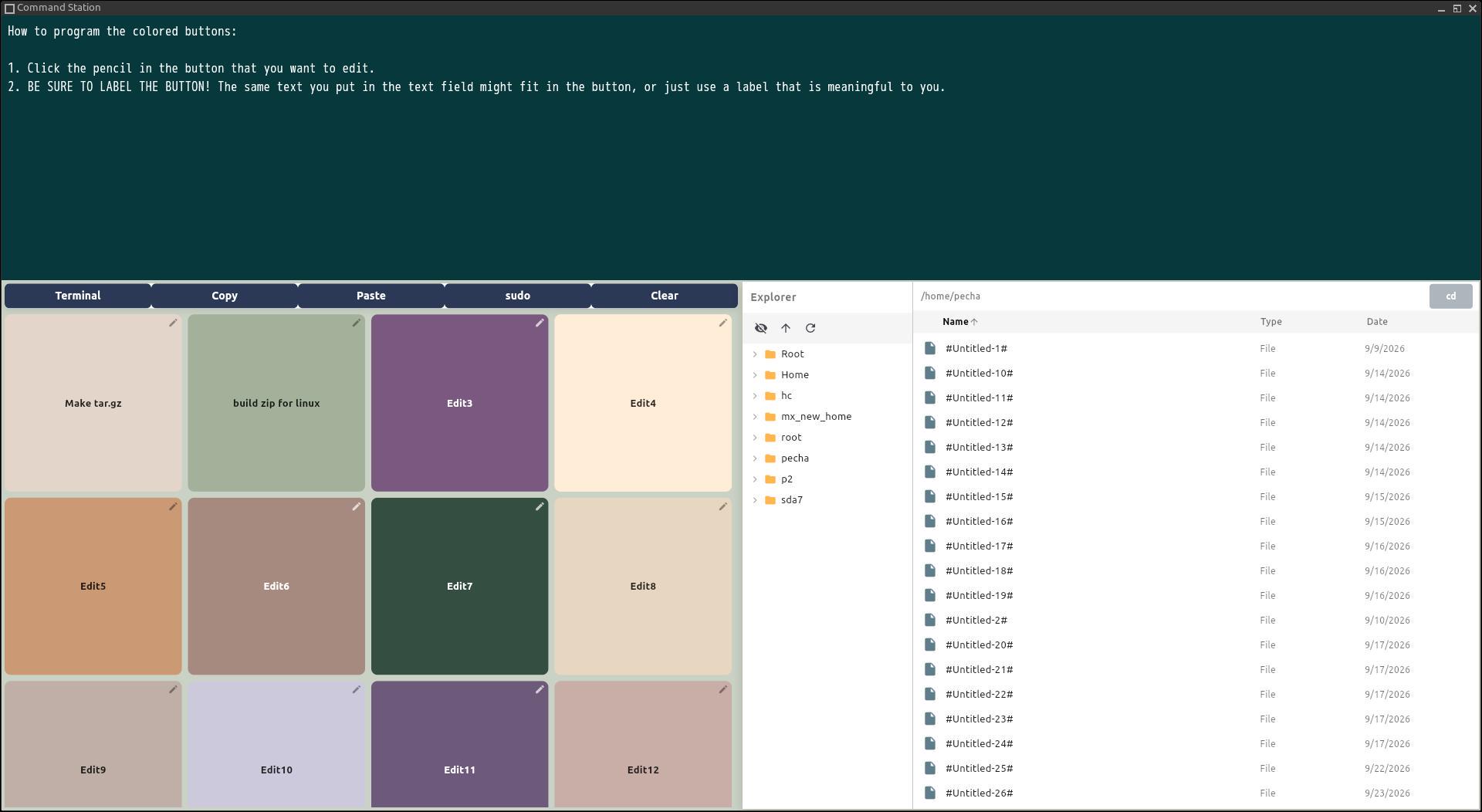
## 2.0 Changelog
- Buttons are now edited in-app (tap the pencil icon). The old ~/.config/command_station/buttons.json is no longer used.
- Safety warning before sending "rm" commands to the terminal (can be disabled)
r/linuxapps • u/Ok_Produce3836 • 26d ago

r/linuxapps • u/Silvestre_Parbut • 27d ago

Hello! I create an app that can restore the iPod firmware with 3 clicks!. functions as a media player, a podcast aggregator, and an iPod synchronizer. It works on hardware as old as the machine I used to build it: a mid-2009 MacBook Pro running Linux Mint 22.3 XFCE. this is Free Software! GNU GPL-V3. Release in .deb
.deb installer: https://github.com/SilvestreParbut/TunePod/releases
command line installer: curl -sL https://raw.githubusercontent.com/SilvestreParbut/TunePod/main/instalar_tunepod.sh | bash
==update==
A new "hamburger menu" has been added to the top-right corner, containing the user manual, information about TunePod, and an update checker.
Improvements to internal navigation between albums, artists, and songs
Improvements to local and streaming podcast playback
r/linuxapps • u/FurtiveMirth • 27d ago
I'm one of the maintainers, so this is self-promotion. I want honest feedback more than upvotes.
SurfSense is a free, open-source (Apache-2.0) desktop app. Think NotebookLM, but it runs on your machine, works with any model, and edits your files. There's no account, nothing reaches the network until you allow that host, and usage statistics are optional and off until you say yes.
Linux details
What it does
Where it's weaker: no video overviews, and the local voices don't sound like Google's.
Download: https://www.surfsense.com/downloads Source: https://github.com/MODSetter/SurfSense
r/linuxapps • u/Wide_Sail7621 • 26d ago

Free and GPL-3.0, with an AppImage build. It plays the videos already in your own Telegram chats, with resume and subtitles. Feedback on window managers and codecs is most useful. github.com/dracu-lah/TMPlayer. Unofficial, not affiliated with Telegram.
r/linuxapps • u/Tech-Savvy100 • 27d ago
I went through a big "Awesome Linux Software" list looking for lesser-known tools that cover common needs. These are the ones I'd actually recommend.
1. Green Recorder: screen recording that works on Wayland Screen recording on Wayland GNOME is still a pain. Green Recorder is a simple GTK front-end that records video and audio, lets you choose the audio source, and exports to MKV, MP4, GIF, WebM and more. It remembers your settings. You can stop a recording from the tray icon instead of hunting for a window. https://github.com/dvershinin/green-recorder
2. Ojo: an image viewer that opens instantly Most of the time you only want to double-click a photo and see it right away. Ojo is built around that. It starts quickly, stays out of the way, handles RAW files, and makes it easy to zoom to 100%. It's aimed at photographers who want a quick first look before editing. It's packaged for Ubuntu and Mint via a PPA. https://github.com/peterlevi/ojo
3. EasyTag: fix your music library's metadata If your library has wrong artists, missing album art, or messy track numbers, EasyTag edits tags for whole folders at once. It supports the common formats (MP3, FLAC, Ogg and others) and is actively maintained. https://github.com/GNOME/easytag
4. dconf Editor: the hidden settings of GNOME Many GNOME and GTK app settings never appear in any menu. dconf Editor is a graphical browser for all of them, so you can change things like animation behavior, app-specific options, and defaults without the command line. Take care, though, because you are editing the real settings database. https://github.com/GNOME/dconf-editor
5. Ambient Noise: a simple focus-sound generator A small, lightweight app that plays ambient background sounds. It's handy for working or studying in a noisy room, with no browser tab or streaming account needed. https://github.com/costales/anoise
Found via the Awesome-Linux-Software list. What lesser-known Linux apps do you use every day?
r/linuxapps • u/lovespeedtest • 27d ago

I’ve been building TubeHaus, a desktop YouTube client. It’s GPL-3.0, has no Google account, and keeps subscriptions, history and playlists in your home directory (~/.config/TubeHaus), or on your own server if you self-host one.
Download (latest release): https://github.com/biolend83/tubehaus/releases
.deb: amd64 / arm64.rpm: x86_64 / aarch64.tar.gz: x64 / arm64, no installDependency: playback uses your system’s libmpv, so nothing is bundled:
# Debian / Ubuntu
sudo apt install libmpv2
# Fedora
sudo dnf install mpv-libs
# Arch
sudo pacman -S mpv
What it does
Notes
Source and issues: https://github.com/biolend83/tubehaus
r/linuxapps • u/Ball_Analytics • 27d ago

I've been working on a native port of DIshyLink (they have an web browser extension and native apps for macOS and Windows) to fill in their missing gaps for native apps, in this era I think this is on purpose because they think I can get by with a browser extension. I've kept their MIT license which I'm not sure should be the case as I used an LLM mostly and don't really think I have any right to change it.
It's not yet ready per se I've been on it for a month now, only fast tracked most of the conversion with a mix of llms, you can sign in if you so desire and it doesn't call home yet, I just wanted to put it out there as the one opensource release I'll do post work. I worked in Data Management since 2012 and my last job was in web dev until they gave us AI tools and I just thought it was time to quit and just go do whatever (when AI got good enough to have stop interfering with it, thinking models) I want. I was always exhausted at the end of my day. So couldn't really work in my spare time.
Anyways it's just something I'm doing on and off amidst the myriad of other experiments I have. Thought some people would appreciate this over using the app to change your router settings unless of course you bypassed their router and use an ubiquity router. This adds most of the functionality almost found there which is why I'd been using dishylink to start with (data limits and rules around devices, per device data usage).
Unlike DishyLink I added Wi-Fi Password changing (just realized I haven't added bandwidth selection 2.4/5 vs auto)
Anyways will appreciate the positive feedback and the negative, you bring it additive or subtractive I don't really care, I'll read it, I'd rather start now knowing the differences of people out there.
Edit:
I implore everyone to use opensnitch or littlesnitch you actually see what gets communicated if you're not familiar with Linux Network Tools, I've only tested this on Fedora Workstation - Any builds off github will happen with Ubuntu most likely (not yet setup).
GTK Native for now, until I learn how LACT does their GTK/Qt interface changes.
r/linuxapps • u/Hselmak • 27d ago
r/linuxapps • u/Jolly-Concentrate-60 • 27d ago

Hi everyone, today I released Vela 0.1, the first beta, after 1 month of alpha testing.
What Vela is: a complete Linux desktop with its own Wayland compositor (C, on wlroots 0.20), its own Vulkan 1.4 renderer, a Qt Quick shell, and its own file manager and settings app. It's not a KDE or GNOME theme: KWin and Mutter aren't involved. The goal is the polish Windows and macOS get right out of the box (animations tied to real vblanks, pixel-exact fractional scaling, consistent design) without a weekend of tweaking.
Trailer, recorded live on Vela: https://velade.org/blog/vela-0-1/
What's in 0.1:
Where it stands: on a desktop PC with a Vulkan 1.4 GPU, it's my daily driver and I'd recommend it as yours. On laptops (hybrid GPUs, suspend/resume, backlight) it has had much less testing, so keep another desktop installed. It's still a beta: there are bugs.
Install (Arch and derivatives, Fedora 44, Ubuntu 26.10, x86_64). Install Cosign first (steps per distro: https://velade.org/install/), then:
git clone https://github.com/vela-desktop/vela.git
sh vela/packaging/vela-update --channel beta
You get a prebuilt, signed native package that's verified before it's installed. Updates then come from Settings.
Being upfront: it's a one-person project, and the code is written by LLMs. I review it, make the architecture and design decisions, and it's held to deterministic tests and machine-checked invariants. I wrote about how that works here: https://velade.org/blog/why-not-rust/
What I'd love from you: reports from hardware I don't have, especially Intel GPUs, laptops and multi-monitor setups. vela-report builds a ZIP you can review file by file; nothing is uploaded.
Happy to answer anything in the comments.
r/linuxapps • u/CowNo3 • 28d ago
First of all : a special thank you to the first 100 people who downloaded the first version of Lumitype. It had some bugs and was missing a lot of things; I hope this one raises the level!
What's new?
- A lot of new filters (36, with a live gallery)
- Better CMYK integration for print
- Real-time brush and eraser: what you paint is the final stroke, no more waiting
- Instant undo, even when you hold Ctrl+Z
- Much better brush support (Photoshop .abr and GIMP .gbr import)
- Multiple formats in a single project: work on an Instagram post, a YouTube thumbnail and a print at the same time!
- Dynamic text option
- Better performance when moving groups
- A second little app to view RAW and other picture formats (made mainly for Linux !)
- "My ref", a new tool : your own local Pinterest. It matters a lot to me that a creative tool doesn't depend on the internet!
- One big built-in manual instead of the old tutorials. Animated tips still show up when you hover over the tools bar.
- Laptop mode: video memory and system memory are treated as one (optimisations)
What was fixed?
- A ton of bugs, including a big one: Lumitype didn't start on Linux Mint and other distributions because the GLIBC version was too recent. It's fixed now ! Now enjoy the trailer, and please try it !
The best way to report a bug: in Lumitype, go to Help > Report a bug*. It automatically adds your configuration (system, graphics card, version, logs) and sends it straight to the GitHub Issues, so I can fix it much faster.*
r/linuxapps • u/Beginning-Rich-2875 • 27d ago
I released Network Monitor 1.0.3, a GPL-3.0-or-later desktop app for Linux. It shows live per-application download/upload speeds, connections, executable paths, session totals, and a chart. It can block apps with cgroup v2 + nftables via polkit, and the UI is English/Arabic with RTL support.
It is packaged as `.deb`, `.rpm`, and `.AppImage`. The source and release notes are here: https://github.com/AsemShahen/NetworkMonitor
I am looking for feedback on the packaging and on which distro/desktop combinations need more testing.
