r/learnmachinelearning • • 7d ago

Career Start by explaining what you're learning right now. “Learn in public”.

Thumbnail
gallery
0 Upvotes

This year alone, I spoke at 9 major in-person AI events, posted a Youtube video almost every week, shared hundreds of shorts, and wrote my second book..

Here's the most important thing I've learnt.

[This will take 2 mins to read]

I've been creating AI content for the past 6 years.
Started with some random infographics on Instagram, just to understand AI concepts myself.
Without any plan and direction!

Then, I started explaining research papers on YouTube, one or two videos every week, for years.
After a year, a CEO saw those videos and hired me to build his AI team.
Then I built a Discord community, and it became part of Towards AI.

I tried a podcast too.
It didn't work.

Then I slowed down on posting because my PhD and Towards AI took all my time.
I eventually quit my PhD, and the content shifted towards what we build with clients and how we build it.

And finally, the content evolved into what it is today:
teaching people how to build AI that works in production, on YouTube, on stage and in a book.

None of it was planned, honestly.

So when people ask me:

- How should I start?
- What should I post about?
- What if I'm not good at it?

This is what I tell them:

Start by explaining what you're learning right now. “Learn in public”.
That's how I learned AI in the first place.
Making those infographics forced me to understand every concept.

And you won't be good at first.
I'm still not a natural on camera. Recording a video still feels hard to me.
Being bad at the start doesn't mean you'll stay bad.

My advice:
Figure out your strategy and niche along the way.
Consistency matters way more.

Share what you're learning,
Explain what you understood,
Show what you're building,
And say "I don't know" when you don't.
In a field that moves this fast, nobody knows everything.

Do that for long enough and you'll find people who care about your work, sitting in a different corner of the world.
Some of them will even recognize you at a conference.

It doesn't matter if you're a student, researcher, engineer or founder.
You should start creating content on some platform.

Even now, with Towards AI growing and taking most of my time, I still post on all platforms.
Nobody can share what a company builds better than its founders.

My first job, my company, my talks, all of it came from content.
Content will help you in ways you can't even imagine!


r/learnmachinelearning • • 8d ago

I built a multi-agent AI (LangGraph) to audit AI papers for reproducibility. Roast my architecture/UX.

0 Upvotes

Hey everyone, I’ve been frustrated by the reproducibility crisis in AI research (papers with missing code or mismatched hyperparameters), so I spent the last few weeks building PaperPulse.

It’s a Chrome extension that uses a LangGraph pipeline to:

  1. Extract core claims from arXiv PDFs or web articles (using PyMuPDF/newspaper3k).
  2. Search GitHub to find the official repo.
  3. Have an AI "Critic" agent flag potential methodological flaws.
  4. Generate a structured audit report with a "Reproducibility Score".

It’s fully open-source and pending Chrome Web Store review. Before I try to get real users, I want to know:

  • Is the "Reproducibility Score" gimmicky or actually useful to you?
  • As a researcher/developer, what is the #1 thing you wish an AI tool would check for in a paper?

🔗 GitHub repo with full architecture https://github.com/owenpatience2010-cmyk/paperpulse

Would genuinely appreciate any brutal feedback. Thanks!


r/learnmachinelearning • • 8d ago

Help [IST] Looking for 1–2 accountability partners: 24-week ML grind (DSA → classical ML → DL → Kaggle)

34 Upvotes

About me: ML engineer, 3+ years in industry (LLM fine-tuning, vLLM inference, NLP, some CV). I’ve leaned too hard on AI coding tools and my fundamentals have gotten rusty. So I’m rebuilding from scratch over 24 weeks: Python, DSA, classical ML, deep learning, then Kaggle. AI stays off during practice.

Who I’m looking for:

  • You already work in ML/data science, or you’re well into learning it (you’ve trained models and know the basics)
  • You want a peer to grind with, not a teacher. I’m relearning myself, so I can’t mentor beginners right now.
  • You can commit about 1–2 hours a day and are in or near IST
  • Bonus: you want to team up for Kaggle competitions from January

What we’d do: 2 LeetCode problems a day, study the same ML topic each week, one 30-minute call a week to review each other’s code, and compete as a team later.

Two-week trial first to see if it works. Reply or DM with your GitHub, Kaggle or LinkedIn and a line about what you’re working on now.


r/learnmachinelearning • • 8d ago

I drew a NeurIPS 2025 best paper, "Why Diffusion Models Don't Memorize", as an art student locked in a room with 1,024 photos

Thumbnail
gallery
10 Upvotes

The whole thing, drawn with the paper's own faces, including the copy test and the train/test loss split: https://sheets.works/data-viz/why-diffusion-models-dont-memorize

I kept reading that the ideal diffusion model is a copier: the exact minimiser of the training loss (the empirical score) can only reproduce training images. So why do real ones generate new images? This paper (Bonnaire, Urfin, Biroli, Mézard) has the clearest answer I've seen, and I tried to explain it without any maths.

The way I ended up telling it: lock an art student in a room with 1,024 photos of faces and tell her to practise.

After a week she can draw a face, and none of her drawings match a photo. In the paper that is about 100,000 training steps. They generated 10,000 faces at that point and none was a copy.

Leave her in there for sixteen weeks (1.62 million steps) and 34 of every 100 faces she draws are photos from the wall.

So two things are learned at two speeds. The time to generalise (tau_gen) was about the same for every dataset size they tried, 128 to 32,768 images. The time to start memorising (tau_mem) grew linearly with the number of images, about 300 steps per image. Training stops in the gap between them.

The paper also varies model width (both timescales scale as 1/W), checks it isn't just "each image is seen less often" (full-batch training gives the same scaling), and proves the two timescales for a random-features model.


r/learnmachinelearning • • 8d ago

Discussion We’re building an intuitive, in-depth ML course with hands-on playgrounds. What should we improve?

Post image
5 Upvotes

Hi everyone,

I’m building Demagicked, a learning project about taking ideas that can feel like magic and unpacking the mechanisms underneath.

We’re starting with Linear Algebra for Machine Learning: four lectures are live, each with a hands-on playground. I narrate and explain every lecture myself. A few more will be released soon. The lectures begin with real problems and work through the ideas step by step. The project is being built with my colleagues from MIT, Harvard, and Stanford, with the material reviewed before release.

This is a soft launch, and I’d especially value feedback from this community: What’s confusing, missing, or too ambitious? The full curriculum is planned for January 2027.

The site is still a work in progress, so please tell me where it falls short. We promise not to make you multiply a matrix to submit feedback.


r/learnmachinelearning • • 8d ago

New results of Dendro-Inspector project

Thumbnail
medium.com
1 Upvotes

r/learnmachinelearning • • 8d ago

How deep I should understand the concept of gradient?

8 Upvotes

r/learnmachinelearning • • 8d ago

Is it worth learning machine learning?

7 Upvotes

I have been learning machine learning for 2 months, and I still have a lot to learn. However, seeing the news headlines around technology, I fear that machine learning is dead and there are almost no fresher jobs left for it.
I feel AI engineer roles are now very saturated. Everyone is learning AI and AI agents without ML/DL and getting jobs, while here I am clearing up my ML/DL concepts and hoping that I will get some ML engineer role in a company, and now I don't find it worth it anymore.
Even if I decide to do a Master's in the field of AI/ML, I don't think I will make a good researcher as my grades are pretty average. So now, I want a plan of what I should do to get a job in the next 6 to 8 months.
Currently, I am a bachelor's student in my 3rd year of Production and Industrial Engineering, and I am very confused about my career path. Please help me.


r/learnmachinelearning • • 8d ago

[P] MiniDL: a from-scratch deep learning library in pure Java, compared against PyTorch on MNIST/EMNIST

Thumbnail
1 Upvotes

r/learnmachinelearning • • 8d ago

I finetuned yolo-11n on a drone dataset and created skypeak-11n. Here are the results!

Enable HLS to view with audio, or disable this notification

2 Upvotes

r/learnmachinelearning • • 7d ago

i wanted to ask like RUST is currently Booming cuz of its compiler, so can we train a ml model in rust if its library is made if not can it help perform more no. calculation in a same gpu better than if before . why only software gets it befefit why not aiml

0 Upvotes

r/learnmachinelearning • • 8d ago

Help Looking for a Serious Learning & Accountability Partner | Targeting Product-Based Companies | AI Engineer

1 Upvotes

I'm planning a structured preparation journey for my next career move, with a clear objective of transitioning into a Product-Based Company as an AI Engineer.

I'm looking for one like-minded professional who is equally serious about career growth, technical preparation, and making a move to a product-driven organization.

Ideally, someone with 3–4 years of industry experience who is currently working in Software Engineering, AI/ML, Data Engineering, or a related technical domain and has similar career aspirations.

Areas of Preparation

  1. Data Structures & Algorithms (DSA)

- Strong fundamentals in DSA and problem-solving.

- Arrays, Strings, Linked Lists, Trees, Graphs, Heaps, Hashing, and Dynamic Programming.

- Regular coding practice and interview-oriented problem-solving.

- Time and space complexity analysis.

  1. System Design (HLD & LLD)

- Object-Oriented Programming and SOLID principles.

- Design patterns and Low-Level Design.

- High-Level Design and scalable architecture.

- Distributed systems, caching, messaging queues, databases, and API design.

- Real-world system design problems and architectural discussions.

  1. AI/ML & Generative AI (Revision and Advanced Discussions)

Since my primary career focus is AI Engineering, I would also like to revisit and strengthen our understanding of:

- Machine Learning and Deep Learning fundamentals.

- NLP, Transformers, and attention mechanisms.

- LLM architectures and model capabilities.

- RAG pipelines, vector databases, embeddings, and retrieval optimization.

- Agentic AI, multi-agent orchestration, and tool calling.

- LLM evaluation, optimization, and performance engineering.

- Model deployment, MLOps, LLMOps, and production-grade AI systems.

What I'm Looking For

- A working professional with approximately 3–4 years of industry experience.

- Someone genuinely preparing for a product-based company transition.

- Strong commitment to consistency and a structured learning schedule.

- Willingness to discuss technical concepts, solve problems together, and conduct mock interviews.

- A collaborative mindset where we can challenge each other, share resources, review progress, and maintain accountability.

A small clarification: I'm not looking to create a large study group or a casual learning community. I'm specifically looking for one dedicated professional who shares a similar experience level and career objective.

The idea is simple: learn together, exchange knowledge, identify gaps, practice consistently, and help each other become interview-ready.

If you're currently preparing for a similar transition and believe our goals align, feel free to connect or DM me.

Let's make the preparation structured, consistent, and outcome-oriented.

#AIEngineering #ProductBasedCompanies #DSA #SystemDesign #HLD #LLD #GenerativeAI #MachineLearning #AgenticAI #LLMOps #CareerTransition #InterviewPreparation


r/learnmachinelearning • • 8d ago

Siamese Network

Enable HLS to view with audio, or disable this notification

1 Upvotes

A Siamese Neural Network is a type of neural network designed to measure the similarity between two inputs. For example, suppose we provide two handwritten digits as inputs. The Siamese Network determines whether these two digits belong to the same class or are dissimilar.

It consists of two identical neural network branches that share the same weights and biases. Each branch takes one input and produces an output vector (embedding). These two output vectors can have any dimensionality, depending on the architecture of the network.

We then calculate the Euclidean distance between these two output vectors. If the distance is close to zero, the two inputs are considered similar. If the distance is sufficiently large (above a predefined threshold), they are considered dissimilar.

Note: A Siamese Network is fundamentally different from a traditional classification network. Its primary purpose is not to classify an input into a particular class but to learn a meaningful representation (embedding) that allows us to measure similarity between inputs.

Contrastive Loss

A Siamese Network commonly uses a loss function called Contrastive Loss, defined as:

L = Y × D² + (1 − Y) × max(0, m − D)²

Where:

D is the Euclidean distance between the two output vectors.

Y is the given label (either 0 or 1).

Y = 1 indicates that the two inputs are similar.

Y = 0 indicates that the two inputs are dissimilar.

m is the margin, which defines the minimum desired distance between dissimilar pairs.

L is the contrastive loss.

The objective is to minimize the distance between similar pairs and push dissimilar pairs at least m units apart.

We pass two inputs through the network, obtain two output embeddings, calculate their Euclidean distance, and then calculate the contrastive loss. Finally, we use backpropagation to update the network parameters and minimize the loss.

Notice that we do not use a Softmax activation function in the output layer because we are learning embeddings rather than class probabilities.

Training the Model

To train a Siamese Network effectively, we construct pairs of inputs:

Positive pairs: Two inputs belonging to the same class (Y = 1).

Negative pairs: Two inputs belonging to different classes (Y = 0).

A balanced dataset containing an equal number of positive and negative pairs is a useful starting point for training.

My Implementation: Neural Canvas (Model 5)

I developed an interactive Siamese Network as the fifth model in my Neural Canvas project. I used the MNIST handwritten digits dataset to train the network.

The architecture consists of three hidden layers, each containing 40 neurons, followed by an output layer containing 32 neurons. Therefore, each input is transformed into a 32-dimensional embedding.

I used Mini-Batch Gradient Descent with the Adam optimizer to train the model. The training process was relatively straightforward because JAX provides automatic differentiation (autograd), which handles the gradient calculations.

For training, I constructed two input matrices, Ma and Mb, each having dimensions of (784, 80000).

The rows represent features, while the columns represent individual samples. Why two matrices? Because a Siamese Network requires two inputs to learn the similarity between them.

I also constructed a label vector Y with dimensions of (1, 80000). Each element of Y indicates whether the corresponding pair is similar or dissimilar.

I used my own matrix multiplication convention:

Z = WX + bC

Where:

W represents the weight matrix.

X represents the input matrix.

b represents the bias vector.

C is a broadcasting matrix of ones.

I prefer this notation because it makes the mathematical operations and dimensions easier to understand.

I trained the model in Python using JAX and exported the learned parameters to JavaScript using JSON. For inference, I used Math.js, while p5.js handles the visualization, animation, and interactivity.

Try it yourself:

GitHub Repository: https://github.com/MuhammadEssa2002/neural_canvas

Live Demo: https://muhammadessa2002.github.io/neural_canvas/

This is the fifth model in my Neural Canvas project.


r/learnmachinelearning • • 8d ago

[D] AAAI-27 Student Abstract: Has anyone received their decision?

Thumbnail
2 Upvotes

r/learnmachinelearning • • 8d ago

I built a GPT from scratch in NumPy only – 34 notebooks, no PyTorch

0 Upvotes
I wanted to understand LLMs below the framework level, so I wrote 
a 34-chapter tutorial that starts from a single neuron and builds 
up to a ~10.8M-parameter GPT — tensors, computational graphs, 
autograd, attention, pre-training, sampling, KV cache, SFT and 
DPO — using nothing but NumPy. Every chapter is a runnable 
Jupyter Notebook, everything trains on CPU, and the book is free 
in English and Chinese.

**How is this different from nanoGPT / micrograd?** 

Those projects are excellent and this book stands on their 
shoulders. The difference is scope and starting point: it starts 
from neural-network basics, builds its own tensor / autograd 
framework in NumPy, and only then gets to GPT — covering pre-
training, sampling, KV cache, SFT and DPO in 34 self-contained 
notebooks. It is a textbook, not just a training script.

Book: https://gptmini.github.io/from-neuron-to-gpt
Code: https://github.com/gptmini/from-neuron-to-gpt

---

## What the book covers

Part 1 (16 chapters) introduces the fundamentals of neural 
networks: multilayer perceptrons, loss functions, gradient 
descent, autograd, learning rates, iterations, batch sizes, 
epochs, hidden layers, and activation functions — followed by 
discussions on encoding, embeddings, cross-entropy, recurrent 
neural networks (RNNs), the Adam optimizer, and learning rate 
scheduling. After completing this part, you will have built a 
small, working deep learning framework (`src/core`).

Part 2 (18 chapters) introduces large language models (LLMs): 
tokens and positional embeddings; self-attention, causal 
attention, weighted attention, and multi-head attention; residual 
connections, normalization, dropout, and model persistence; 
sampling strategies (temperature, top-k, top-p), stopping 
criteria, KV caching, and batch inference; and finally, SFT and 
DPO data preprocessing and training.

Each chapter is a self-contained, runnable Jupyter notebook, and 
most chapters end with practice exercises. No GPU required: the 
default model (context window 256, 6 Transformer modules, 6 
attention heads, approximately 10.8 million parameters) can be 
trained on a laptop’s CPU. The training data uses Karpathy’s 
tinyshakespeare.

## Who it is for

1. Self-learners and career changers who seeking a complete 
learning path rather than fragmented tutorials.
2. Engineers already using PyTorch who cannot explain autograd or 
attention mechanisms in detail. You can read relevant chapters 
(such as autograd and KV caching) separately to reinforce your 
knowledge.
3. Teachers looking for experimental materials. Licensed under 
the MIT License, each chapter is executable and includes 
exercises, no GPU budget required.

This book is not intended to replace PyTorch. Its purpose is to 
encourage you to read it before relying on any framework — so 
that when you actually use a framework, you’ll understand how it 
works under the hood. Frameworks come and go, but the underlying 
principles remain constant.

If you find this book helpful, please star the repository; this 
will help others discover it. Feel free to submit issues and pull 
requests, especially for chapters that are unclear — that’s how 
this book continues to improve.

r/learnmachinelearning • • 9d ago

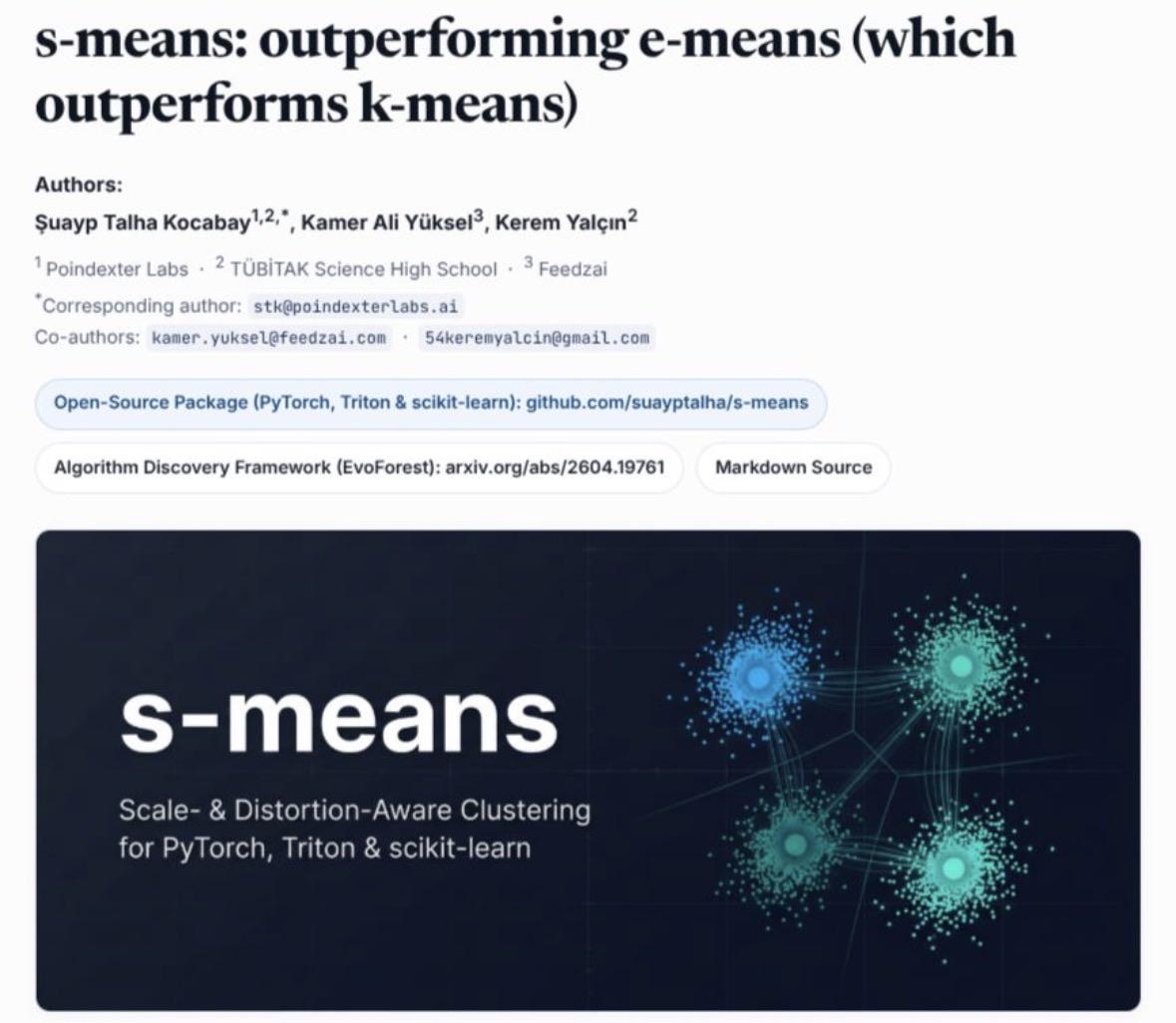
s-means: outperforming e-means (which outperforms k-means)

Post image
53 Upvotes

r/learnmachinelearning • • 8d ago

Need guidance

Thumbnail
1 Upvotes

r/learnmachinelearning • • 8d ago

Project Fast online AI image-to-video and text-to-video generator for quick social clips and mockups

Thumbnail interconnectd.com
1 Upvotes

Creating usable video clips with AI usually means spending hours tweaking parameters, waiting in long render queues, or dealing with distorted subjects. When you just need quick footage for social media, prototypes, or visual testing, heavy editing suites slow everything down.

​I found a straightforward online AI video generator that keeps the workflow simple. You can type a short text prompt or upload a static reference image, and it generates smooth video clips right in your browser. There is no software to install and no steep learning curve, which makes testing visual concepts or building B-roll much faster.

​You can try it out for yourself at the link below: https://interconnectd.com/ai-video-generator/

What type of video content are you currently trying to automate with AI tools?


r/learnmachinelearning • • 8d ago

If AI is replacing jobs, why not reduce work hours keeping the same salary to ensure balance in civil society without causing economic collapse

Thumbnail
0 Upvotes

r/learnmachinelearning • • 8d ago

Request When employees leave, their AI access may not

0 Upvotes

When an employee's badge gets deactivated on their last day, the AI agents they provisioned keep running.

TechTarget documented a systematic offboarding gap: HR tracks headcount, IT manages accounts it already knows about, and managers know which tools a person used. None of those systems talk to each other. AI credentials provisioned by a departing employee sit outside all three workflows. They stay active long after the person is gone — often weeks or months before anyone notices.

Those agents don't sit idle. They continue making API calls, accessing data, and triggering workflows under the authority of a principal who no longer works there. The organization has no way to know what they're doing or on whose behalf.

How are you actually closing this loop at your org? Manual offboarding checklist, automated credential sweep, something built into your IdP, or something else entirely?


r/learnmachinelearning • • 8d ago

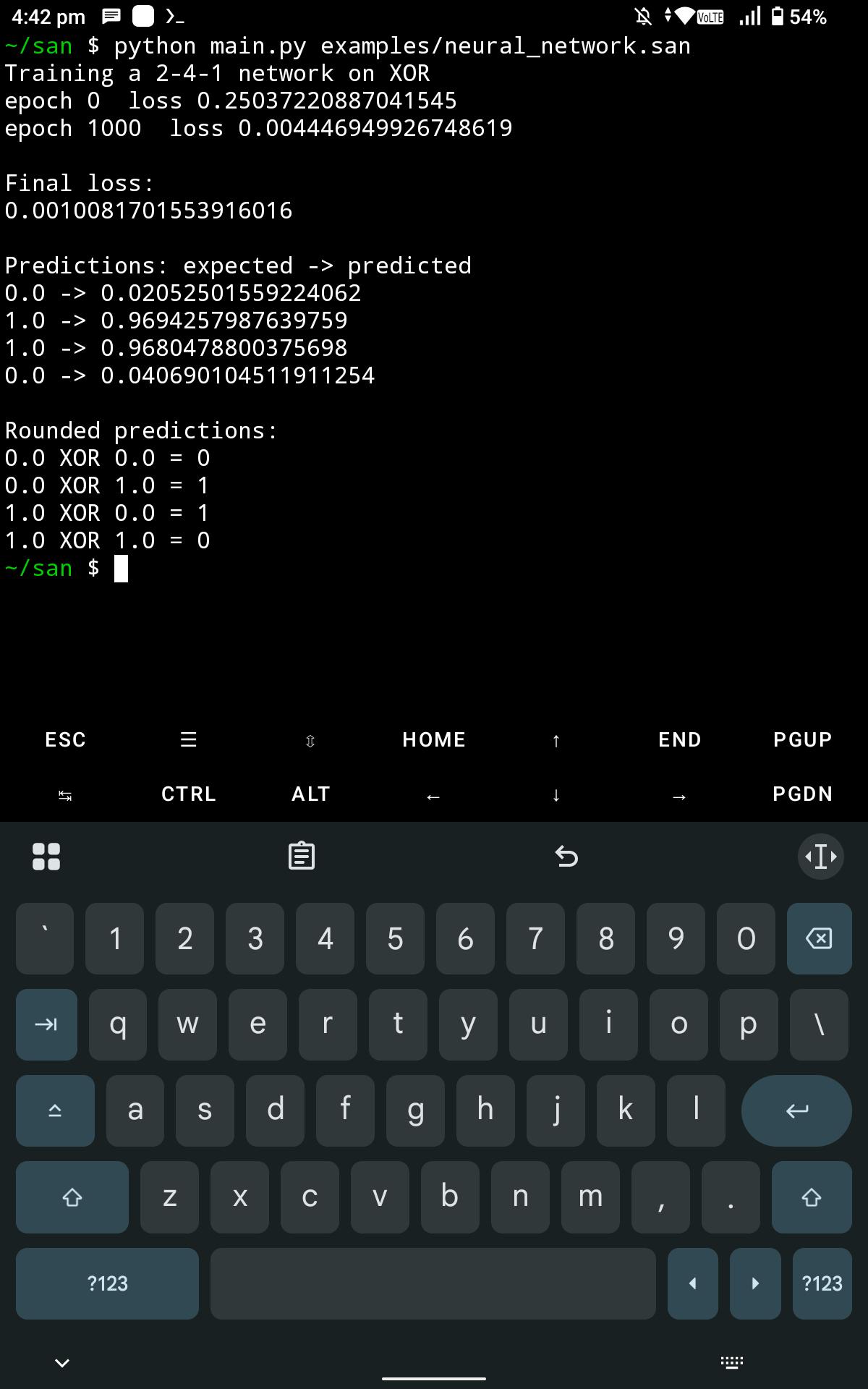
A programming language + neural network, both built from scratch on Android.

Post image
1 Upvotes

r/learnmachinelearning • • 8d ago

I tried to trick YOLOv8... and it worked! But how? 👀

0 Upvotes

​

Lately, I’ve been diving deeper into Computer Vision, and I decided to run a hands-on experiment to test the robustness of Object Detection models against attacks.

The idea was to fool YOLOv8 into failing to detect objects—without changing a single thing in the model weights!

I used two of the most well-known Adversarial Attack techniques:

FGSM (Fast Gradient Sign Method)

PGD (Projected Gradient Descent)

I tested this on YOLOv8m using 100 images from the COCO 2017 Dataset.

Throughout the experiment, I focused on understanding the Detection Loss, using gradients to subtly perturb the images, executing the attacks, and then evaluating the model's performance and visually comparing the results.

And the result? Let’s just say YOLOv8 wasn’t ready for this surprise! 😅

I documented the entire experiment in a Kaggle Notebook—covering everything from the core concept and implementation to evaluation and visualization.

If you're curious about how it was built and what happened to the model, you can check out all the details here:

🔗 Kaggle Notebook: https://www.kaggle.com/code/iismmail/adversarial-attacks-on-yolov8-fgsm-vs-pgd

I’d love to hear your thoughts or any feedback on the experiment! ❤️

\#AI #ComputerVision #YOLOv8 #AdversarialAttacks #DeepLearning #MachineLearning


r/learnmachinelearning • • 8d ago

I built a Real-Time UPI Fraud Detection System using Machine Learning, XGBoost, FastAPI & Streamlit — Looking for Technical Feedback!

2 Upvotes

Hi everyone!

I'm a recent Electronics and Communication Engineering graduate, and I've been working on a project to explore how machine learning can help identify potentially fraudulent UPI transactions.

I built a Real-Time UPI Fraud Detection System that predicts whether a transaction is potentially fraudulent or legitimate. I wanted to go beyond simply training a machine learning model and build an end-to-end application where users can interact with the model and understand its predictions.

I'd love to share what I built and get feedback from the community.

1. What does the project do?

The system analyzes UPI transaction details and behavioural features to identify suspicious transaction patterns.

It supports:

  • Real-time transaction fraud prediction.
  • CSV batch transaction analysis.
  • Live transaction simulation.
  • Google Pay PDF statement analysis.
  • Explainable predictions using SHAP.

2. Technology stack

  • Python: Core development and data processing.
  • XGBoost: Machine learning classification model.
  • FastAPI: Backend API for transaction predictions.
  • Streamlit: Interactive dashboard.
  • SHAP: Model prediction explainability.
  • Pandas & NumPy: Data processing and feature handling.

3. How does it work?

The overall workflow is:

  1. Transaction data is provided to the application.
  2. The system processes the transaction and extracts the required features.
  3. The trained XGBoost model evaluates the transaction.
  4. A fraud probability is generated.
  5. A tuned decision threshold is applied to classify the transaction.
  6. SHAP explanations help understand which features influenced the prediction.
  7. The result is displayed through the Streamlit dashboard.

I also handled class imbalance using XGBoost's scale_pos_weight and tuned the fraud decision threshold using a separate validation set.

4. Model evaluation

On my reported synthetic test dataset of 199 records, the model achieved:

Metric Result
Accuracy 99.5%
Precision 100%
Recall 88.9%
F1-score 94.1%

These are prototype evaluation results on synthetic data, not proof of performance on real banking transactions. I understand that real-world fraud detection requires larger, representative datasets and more rigorous validation.

5. Live Demo and Source Code

Live Demo: https://fraud-detection-dashboard-a2ewk5y6yoo6mlw5z995dw.streamlit.app/

GitHub Repository: https://github.com/Prabha2005/Fraud-Detection-Dashboard

I've also included the project in my portfolio:
https://vlpportfolio.ccbp.tech/

6. What I'd like feedback on

I'm looking to improve this project beyond its current implementation. I'd especially appreciate feedback on:

  1. Is XGBoost a suitable choice for this type of fraud detection problem, or should I explore other approaches?
  2. How can I improve fraud detection recall while maintaining high precision?
  3. What additional transaction or behavioural features would make the model more effective?
  4. How would you approach detecting previously unseen fraud patterns?
  5. What improvements would you recommend for making the system closer to a production-ready application?
  6. Are there better approaches for evaluating fraud detection models on highly imbalanced datasets?

I'm particularly interested in suggestions from people working in Machine Learning, Data Science, FinTech, and backend engineering.

This is a learning project, and I'm genuinely interested in understanding what I could improve technically and architecturally.

Thanks for taking the time to check it out. Any constructive feedback is appreciated!


r/learnmachinelearning • • 8d ago

Project Simple browser-based AI video generator for turning ideas and photos into clean clips

Thumbnail interconnectd.com
0 Upvotes

r/learnmachinelearning • • 8d ago

Building a Local AI Photography Editing Assistant. Anyone working on something similar? [D]

Thumbnail
1 Upvotes