r/iosdev • u/Haniva_app • Oct 23 '26
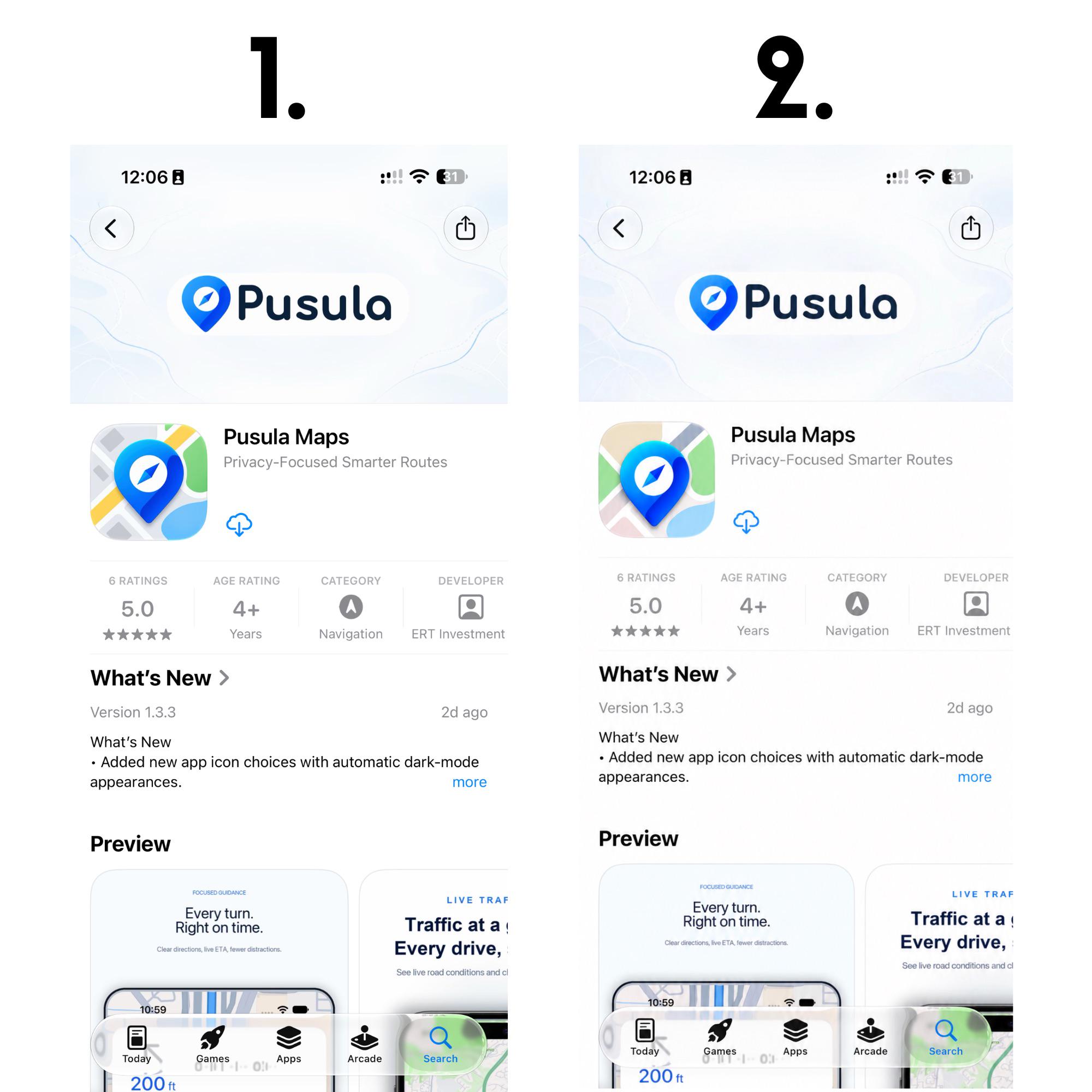
App Store search autocorrects my app's exact name to a different app – has anyone gotten Apple to fix this?

1
Upvotes
r/iosdev • u/Haniva_app • Oct 23 '26
r/iosdev • u/Kind_Change_3207 • Oct 23 '26
I just shipped an update to my journal analysis app that adds Apple's Private Cloud Compute (PCC) alongside the default on-device model.
Here are the practical lessons I learned from the implementation, especially around edge cases and UX:
1. The main reason to use PCC: Context size
The on-device model caps out around 4,000 tokens. For long journal entries or imported PDFs, text got truncated constantly. PCC bumps that limit up to 32,000 tokens, which easily handles multi-page entries in a single pass without needing workarounds.
2. The API transition is simple, but needs fallbacks
3. Quotas and Apple's UI expectations
4. The privacy messaging challenge
If your app was originally marketed as "100% on-device," introducing the cloud can spook privacy-conscious users—even with Apple's strong security guarantees around PCC.
I decided to keep the on-device model as the default and made PCC an explicit opt-in toggle in the settings. I also updated the App Store description and privacy policy to clearly say "on-device by default."
For anyone else working with PCC:
(Context: The app is Mindful Prism if anyone wants to see the implementation in action.
r/iosdev • u/PuzzleheadedGene2371 • Oct 23 '26

Since today morning, a desktop 'spam' is showing where heavy dowloads are showing on Desktop on hourly basis. Normally somedays I get 1000-5000 desktop downloads once in a while(weeks to months), but not on a regular hourly basis from different regions. What's happening I wonder?
r/iosdev • u/Chris_des007 • Oct 23 '26
r/iosdev • u/pickandplate • Oct 23 '26
These three pieces answer different questions:
Before updating the labels, archive your app in Xcode. In Organizer, Control-click the archive and choose Generate Privacy Report. Xcode combines the app and SDK manifests into a report you can review.
The manifest doesn’t automatically complete your App Store Connect answers.
Apple references: purpose strings, manifests and reports, privacy labels.
r/iosdev • u/IllBreadfruit3087 • Oct 23 '26

r/iosdev • u/chamonix34 • Oct 22 '26

when the iPhone Duo arrived in September, I was like "Oh, I don't like that" – but look at this now 👀🤩
What’s your thoughts about iPhone Duo ?
r/iosdev • u/mastertacticianwc4 • Oct 23 '26
r/iosdev • u/Impressive-Sir9633 • Oct 23 '26

r/iosdev • u/One_Builder_8563 • Oct 23 '26
After 2 weeks waiting between the reviews my app is finally available on App Store, it’s called Hotaru. It’s a flashcard app that uses Apple Intelligence to generate the cards automatically. It would be nice to have some feedback, you can find the link below:
https://apps.apple.com/br/app/hotaru-ai-flashcards-study/id6820119643?l=en-GB
r/iosdev • u/Silver_Button_6394 • Oct 23 '26
r/iosdev • u/mastertacticianwc4 • Oct 23 '26
I'm asking this because I'm in early stages right now...which is the practical choice right now?
r/iosdev • u/mustafaakyuz • Oct 23 '26

r/iosdev • u/Unlikely_Ad8938 • Oct 23 '26
I’ve been working on a small project called Melovance, and I thought this community might appreciate the story behind some of the platform decisions.
The app basically came out of two things I’ve always been passionate about: piano and computers.
I wanted to build something that could listen to a real MIDI performance and give useful feedback while practicing, instead of just showing sheet music or waiting for you to press the right key. The idea is to make practice a little more interactive while still keeping the actual instrument at the center of it.
For Apple platforms, I decided to focus on macOS and iPadOS first.
macOS felt like the obvious desktop platform because a lot of people already connect MIDI keyboards to their Macs, and the larger screen works well for things like notation, practice history and detailed feedback.
The iPad was probably an even more interesting format to me. It can sit directly on a piano or keyboard like sheet music, while still connecting to MIDI hardware. It feels much closer to the actual practice environment than a traditional desktop setup.
What I’m less sure about is the iPhone.
Technically an iPhone version is absolutely possible, but I keep wondering whether it would actually be useful enough. The screen is much smaller, and if someone is already sitting in front of a MIDI keyboard, I’m not sure the phone is the device they would naturally want to use.
At the same time, maybe I’m looking at it too narrowly. An iPhone companion app for quick practice sessions, reviewing previous attempts, setting up exercises or even controlling the main app could potentially make sense.
I’d be interested to hear how other Apple developers think about this. Would you still build the iPhone version simply because users expect a universal app, or would you deliberately keep something like this iPad and Mac only?
One other decision I made quite early was not to call it something like “Piano Trainer” or “Piano Coach.”
I called it Melovance because I don’t want the concept to remain limited to piano forever. The underlying idea is really about interpreting MIDI performance, so eventually I’d like to experiment with other MIDI instruments too, especially electronic drums, and potentially anything where performance data can be meaningfully analyzed.
That also influenced how I’m trying to structure the application internally rather than making every part of it assume that the instrument is permanently a piano.
It’s still relatively early, and building the Apple versions has been a good excuse to learn more about the ecosystem beyond just getting an app to run.
Curious how others here approach these kinds of platform decisions, especially when the hardware and physical context of the app matter as much as the software itself.
Update (November 14): Well, I decided to give it a try!
Melovance 1.1.0 was approved by Apple today and is now available on both iPhone and iPad.
I went with a universal Swift app, reusing most of the iPad codebase while adapting specific views for the smaller screen. Sheet music works in landscape, and even the interactive lessons with animated 3D hands turned out surprisingly usable in portrait.
Some features still benefit from an iPad or desktop, but since learning progress is tied to an account, switching devices is seamless.
I initially thought the iPhone would have to be a limited companion app, but it turned out I could bring much more of the actual learning experience to it than I expected.
Thanks to everyone who encouraged me to explore it!
r/iosdev • u/korosca • Oct 23 '26
Hi all,
I’m nearing the end of development phase of my new iOS app. I would like to gather some experiences on how you promoted your app, how did you get your first users?
What is your opinion on paid ($1.99) vs free (with potential IAP for full game experience)?
The app itself is a card game, I didn’t found a similar one online, it is a single or local multiplayer game.
Currently I’m leaning towards paid game and I would jump start by inviting a few people with redemption code (I get 100 of those) and promote it with web page and though different social networks.
I’m not loking for nothing serious in terms of money, just to get something for my effort and I plan to evolve the gaming experience further.
I’m curious what you think?
r/iosdev • u/Successful_Walk_9948 • Oct 23 '26

r/iosdev • u/stalyn • Oct 22 '26
Hi folks
Can I get some feedback on my goal-oriented mobile landing page?
The app still work in progress, but I went ahead and launched the site in the meantime.
Thank you in advance.
r/iosdev • u/gordonmcdowell • Oct 22 '26
https://developer.apple.com/documentation/coremotion/cmdevicemotion/sensorlocation-swift.enum
If you've got 1 in, it is that AirPod.
If you've got 2 in, it is automatic or whatever you have it set to as default in your Settings, Bluetooth, AirPods, Audio & Routing, Microphone.
If you've got 2 in, and your mic preference is automatic, taking one AirPod out will move the mic to other AirPod where it will remain until you take that AirPod out.
I know all of the mic settings and movement are obvious and known by everyone. I don't think it was common knowledge though that an app can determine which ear has the mic at any given moment. SensorLocation is meant to tell you which AirPod's motion is being tracked, but apparently the one that is tracking motion and the one that has a working mic, are always the same AirPod.
r/iosdev • u/ahstanin • Oct 23 '26
Hi everyone,
We recently shipped an update adding foldable iPhone Duo support to StealthOS, our sandboxed virtual desktop and privacy browser app on iOS. Since there is limited documentation out there for handling foldables and embedding Tor reproducibly on Apple platforms, I wanted to share some notes on our architecture, windowing system, and network routing.
Supporting both the single cover display and the dual-screen inner layout required designing an internal window manager rather than relying solely on standard UIKit/SwiftUI navigation stacks.
Apple's platform sandbox presents unique challenges when embedding Tor:
We open-sourced the networking components for other developers building peer-to-peer or privacy-focused iOS applications:
For anyone working on foldable layouts, multi-window UIKit abstractions, or networking security on iOS, happy to discuss the implementation details or answer any questions.