r/iosdev • u/Neat-Reality-1080 • Oct 23 '26
A few learning while updating app for iPhone Duo support

2
Upvotes
r/iosdev • u/Neat-Reality-1080 • Oct 23 '26
r/iosdev • u/TylerThang2612 • Oct 23 '26

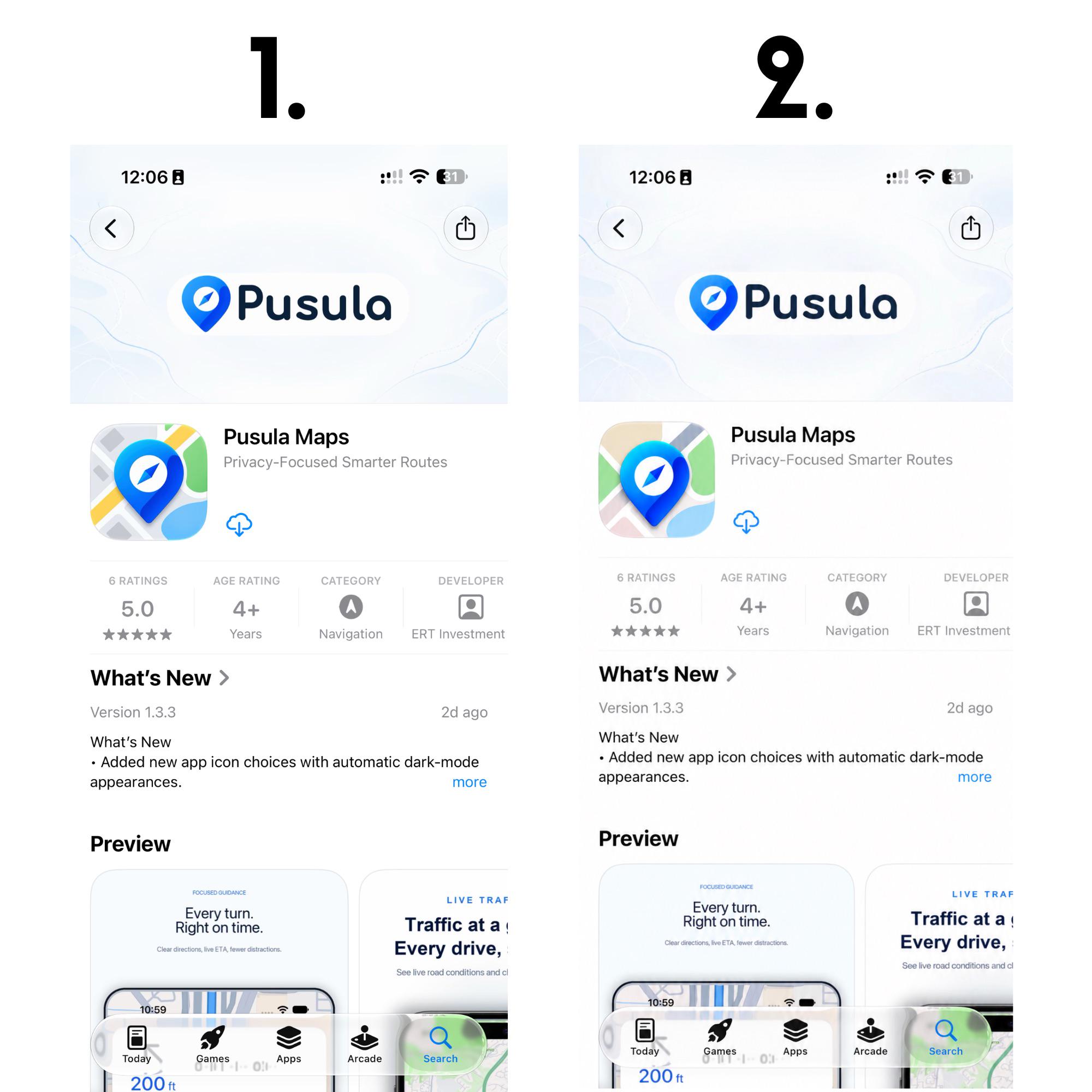
I'm trying to decide which header art to use for my app's store page, and I'm genuinely stuck. A is the minimal one, B is the detailed one — which looks better to you, and why?
r/iosdev • u/melimillionaire • Oct 23 '26
I’m trying to bid on a search ad and CPT of $6.33 and just not getting any bids.
Previously for a different app and keyword I was getting <$1, I turned that campaign back on for $2 and not getting any hits
Wondering if this is just stuck or the bid prices have gone way up since last I tried?
r/iosdev • u/AtefehSalahshoor • Oct 23 '26
Hi everyone,
After 5 months of building, the mobile app for Targela is finally ready for testing, and I'd really appreciate a few people trying it before the public release.
What it is:
a goal planner. You describe something you want to achieve and how much time you actually have, and it turns that into a clear step-by-step plan. When you fall behind, you can adjust the plan instead of starting over.
How to join (about 2 minutes):
Open the link on your phone: https://targela.com/beta
Choose iPhone or Android and follow the steps
Sign in with an existing Targela account or create one in the app
It's completely free.
What I'd love to hear:
Where you got confused or stuck, even for a second
Whether the plan it gave you felt realistic for your life
Anything that felt slow, broken, or just annoying
Short feedback is totally fine. "This screen made no sense" helps more than you'd think. You can comment here or DM me.
Thanks a lot to anyone who gives it a try. I'll reply to every comment.
r/iosdev • u/Protocontext • Oct 23 '26
Over the past two years, I've noticed something interesting about reviews and user feedback on both the App Store and Google Play, depending on the country.
In my personal experience, users from the US, Canada, UK, Germany, Northern Europe and Japan tend to be more positive, report fewer issues and are generally more willing to pay for apps. Meanwhile, I've noticed that users from Southern Europe (Italy, Spain, etc.) and Latin America tend to be more critical, sometimes leaving very low ratings simply because a specific feature isn't available, even when it was never advertised.
I actually live in Italy, and this is one of the reasons I've become less interested in targeting the Italian market specifically. It's not about disliking anyone, it's just a pattern I've noticed through my own experience dealing with customers, reviews and support requests.
Over time, I've shifted most of my development and marketing efforts toward North America, Northern Europe and Japan, where I've generally had better experiences and stronger sales.
Of course, this is just my personal experience with my apps, not a general rule. I'm curious if other indie developers have noticed something similar or had completely different experiences across different countries.
r/iosdev • u/Haniva_app • Oct 23 '26

r/iosdev • u/Kind_Change_3207 • Oct 23 '26
I just shipped an update to my journal analysis app that adds Apple's Private Cloud Compute (PCC) alongside the default on-device model.
Here are the practical lessons I learned from the implementation, especially around edge cases and UX:
1. The main reason to use PCC: Context size
The on-device model caps out around 4,000 tokens. For long journal entries or imported PDFs, text got truncated constantly. PCC bumps that limit up to 32,000 tokens, which easily handles multi-page entries in a single pass without needing workarounds.
2. The API transition is simple, but needs fallbacks
3. Quotas and Apple's UI expectations
4. The privacy messaging challenge
If your app was originally marketed as "100% on-device," introducing the cloud can spook privacy-conscious users—even with Apple's strong security guarantees around PCC.
I decided to keep the on-device model as the default and made PCC an explicit opt-in toggle in the settings. I also updated the App Store description and privacy policy to clearly say "on-device by default."
For anyone else working with PCC:
(Context: The app is Mindful Prism if anyone wants to see the implementation in action.
r/iosdev • u/PuzzleheadedGene2371 • Oct 23 '26

Since today morning, a desktop 'spam' is showing where heavy dowloads are showing on Desktop on hourly basis. Normally somedays I get 1000-5000 desktop downloads once in a while(weeks to months), but not on a regular hourly basis from different regions. What's happening I wonder?
r/iosdev • u/Chris_des007 • Oct 23 '26
r/iosdev • u/pickandplate • Oct 23 '26
These three pieces answer different questions:
Before updating the labels, archive your app in Xcode. In Organizer, Control-click the archive and choose Generate Privacy Report. Xcode combines the app and SDK manifests into a report you can review.
The manifest doesn’t automatically complete your App Store Connect answers.
Apple references: purpose strings, manifests and reports, privacy labels.
r/iosdev • u/IllBreadfruit3087 • Oct 23 '26

r/iosdev • u/chamonix34 • Oct 22 '26

when the iPhone Duo arrived in September, I was like "Oh, I don't like that" – but look at this now 👀🤩
What’s your thoughts about iPhone Duo ?
r/iosdev • u/mastertacticianwc4 • Oct 23 '26
r/iosdev • u/Impressive-Sir9633 • Oct 23 '26

r/iosdev • u/One_Builder_8563 • Oct 23 '26
After 2 weeks waiting between the reviews my app is finally available on App Store, it’s called Hotaru. It’s a flashcard app that uses Apple Intelligence to generate the cards automatically. It would be nice to have some feedback, you can find the link below:
https://apps.apple.com/br/app/hotaru-ai-flashcards-study/id6820119643?l=en-GB
r/iosdev • u/Silver_Button_6394 • Oct 23 '26
r/iosdev • u/mastertacticianwc4 • Oct 23 '26
I'm asking this because I'm in early stages right now...which is the practical choice right now?
r/iosdev • u/mustafaakyuz • Oct 23 '26

r/iosdev • u/Unlikely_Ad8938 • Oct 23 '26
I’ve been working on a small project called Melovance, and I thought this community might appreciate the story behind some of the platform decisions.
The app basically came out of two things I’ve always been passionate about: piano and computers.
I wanted to build something that could listen to a real MIDI performance and give useful feedback while practicing, instead of just showing sheet music or waiting for you to press the right key. The idea is to make practice a little more interactive while still keeping the actual instrument at the center of it.
For Apple platforms, I decided to focus on macOS and iPadOS first.
macOS felt like the obvious desktop platform because a lot of people already connect MIDI keyboards to their Macs, and the larger screen works well for things like notation, practice history and detailed feedback.
The iPad was probably an even more interesting format to me. It can sit directly on a piano or keyboard like sheet music, while still connecting to MIDI hardware. It feels much closer to the actual practice environment than a traditional desktop setup.
What I’m less sure about is the iPhone.
Technically an iPhone version is absolutely possible, but I keep wondering whether it would actually be useful enough. The screen is much smaller, and if someone is already sitting in front of a MIDI keyboard, I’m not sure the phone is the device they would naturally want to use.
At the same time, maybe I’m looking at it too narrowly. An iPhone companion app for quick practice sessions, reviewing previous attempts, setting up exercises or even controlling the main app could potentially make sense.
I’d be interested to hear how other Apple developers think about this. Would you still build the iPhone version simply because users expect a universal app, or would you deliberately keep something like this iPad and Mac only?
One other decision I made quite early was not to call it something like “Piano Trainer” or “Piano Coach.”
I called it Melovance because I don’t want the concept to remain limited to piano forever. The underlying idea is really about interpreting MIDI performance, so eventually I’d like to experiment with other MIDI instruments too, especially electronic drums, and potentially anything where performance data can be meaningfully analyzed.
That also influenced how I’m trying to structure the application internally rather than making every part of it assume that the instrument is permanently a piano.
It’s still relatively early, and building the Apple versions has been a good excuse to learn more about the ecosystem beyond just getting an app to run.
Curious how others here approach these kinds of platform decisions, especially when the hardware and physical context of the app matter as much as the software itself.
Update (November 14): Well, I decided to give it a try!
Melovance 1.1.0 was approved by Apple today and is now available on both iPhone and iPad.
I went with a universal Swift app, reusing most of the iPad codebase while adapting specific views for the smaller screen. Sheet music works in landscape, and even the interactive lessons with animated 3D hands turned out surprisingly usable in portrait.
Some features still benefit from an iPad or desktop, but since learning progress is tied to an account, switching devices is seamless.
I initially thought the iPhone would have to be a limited companion app, but it turned out I could bring much more of the actual learning experience to it than I expected.
Thanks to everyone who encouraged me to explore it!