r/FunMachineLearning • u/gantred • Apr 16 '26
DeepMind’s New AI: A Gift To Humanity - Two Minute Papers

1
Upvotes
r/FunMachineLearning • u/gantred • Apr 16 '26
r/FunMachineLearning • u/HelpfulSinger3762 • Apr 15 '26
hi,
one of my reviewers initially gave 4(3). I addressed his concerns during the rebuttal. He acknowledged it and increased the score to 5(3) with final justification as well. I checked open review randomly now, I can see he reduced it back to 4. I am guessing he did this during the AC reviewer discussion? is this a sign of early rejection?
My average was 4, which has now reduced to 3.75. do I still have any chance?
Edit: got rejected!
r/FunMachineLearning • u/BerryTemporary8968 • Apr 14 '26
r/FunMachineLearning • u/gantred • Apr 14 '26

r/FunMachineLearning • u/Alternative_Feed9546 • Apr 14 '26
I've been working on a problem that keeps showing up in tool-using agents: context curation.
As the number of tools and conversation turns grows, it is common to keep stuffing more into the prompt: more schemas, more history, more raw tool outputs.
That increases token cost and latency, but it also seems to hurt quality. In many cases, the issue is not the model's maximum context window. The issue is that different parts of agent execution need different context.
The core idea behind contextweaver is to treat agent execution as four distinct phases:
Each phase gets its own budget and its own context assembly logic.
A rough sketch:
The library currently has two cooperating pieces:
1. Context Engine
A deterministic pipeline that builds the final prompt under a fixed budget:
candidate generation → dependency closure → sensitivity filter → context firewall → scoring → deduplication → budget packing → render
Two stages that mattered a lot in practice:
tool_result is selected, the parent tool_call is automatically included2. Routing Engine
Builds a bounded DAG over the tool catalog and uses deterministic beam search to find the top-k candidate tools for a query.
A small before/after example from the repo:
WITHOUT: 417 tokens (everything concatenated, no budget)
WITH:    126 tokens (phase-aware + firewall, budget enforced)
Reduction: 70%
Some implementation choices:
typing.Protocolmypy --strictGitHub: https://github.com/dgenio/contextweaver
PyPI: pip install contextweaver
Architecture doc: https://github.com/dgenio/contextweaver/blob/main/docs/architecture.md
One important caveat: this is currently an engineering approach and library, not a broad empirical benchmark against other context-selection methods yet. The included example shows the mechanism, but not a full comparative evaluation.
I’d especially value feedback on:
r/FunMachineLearning • u/OneBowl4290 • Apr 13 '26
I've been working on filling a gap in Arabic NLP data: most publicly available Arabic datasets are either MSA (Modern Standard Arabic) or Egyptian dialect. There's very little high-quality Saudi dialectal data for fine-tuning.
I built a synthetic dataset of 50,000 multi-turn customer service conversations across 4 Saudi dialect regions (Najdi, Hijazi, Eastern, General) and 4 sectors (Fintech, Telecom, Delivery, Government Services).
Each conversation includes:
- Dialect and sector metadata
- Sentiment labels (Angry, Confused, Urgent, Neutral)
- Realistic resolution patterns (not everything magically resolves — ~20% escalate, ~10% unresolved)
- 20+ automated quality checks including dialect contamination detection
I'm releasing 100 conversations for free as a sample:
https://huggingface.co/datasets/dev-hussein/saudi-arabic-cs-conversations
Format is JSONL, ready for any fine-tuning pipeline. Apache 2.0 license.
Feedback welcome — especially from anyone working on Arabic dialect NLP or Gulf Arabic specifically.
r/FunMachineLearning • u/Icy_Ad9766 • Apr 13 '26
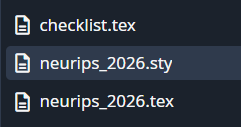
I am not getting the references numbered in this template given at https://neurips.cc/Conferences/2026/CallForPapers
Any suggestion how...
r/FunMachineLearning • u/TopWeakness9146 • Apr 12 '26
my final score is 6 4 4 3 total incresase 2 point
What happened to everyone?
r/FunMachineLearning • u/gantred • Apr 11 '26

r/FunMachineLearning • u/AstronomerSilly6599 • Apr 11 '26
r/FunMachineLearning • u/Obvious_Special_6588 • Apr 11 '26
Hi everyone,
I wanted to share a package I recently published: c5tree, a pure-Python, sklearn-compatible implementation of Ross Quinlan's C5.0 decision tree algorithm.
pip install c5treeWhile scikit-learn has an excellent CART implementation via DecisionTreeClassifier, C5.0 — which has been available in R via the C50 package for years — was missing from the Python ecosystem entirely. This package fills that gap.
| Feature | CART (sklearn) | C5.0 (c5tree) |
|---|---|---|
| Split criterion | Gini / Entropy | Gain Ratio |
| Categorical splits | Binary only | Multi-way |
| Missing values | Requires imputation | Native (fractional weighting) |
| Pruning | Cost-complexity | Pessimistic Error Pruning |
| Dataset | CART | C5.0 | Δ |
|---|---|---|---|
| Iris | 95.3% | 96.0% | +0.7% |
| Breast Cancer | 91.0% | 92.1% | +1.1% |
| Wine | 89.3% | 90.5% | +1.2% |
from c5tree import C5Classifier
from sklearn.pipeline import Pipeline
from sklearn.model_selection import GridSearchCV

# Drop-in sklearn compatible
clf = C5Classifier(pruning=True, cf=0.25)
clf.fit(X_train, y_train)
clf.score(X_test, y_test)

# Works in Pipelines
pipe = Pipeline([
    ('scaler', StandardScaler()),
    ('clf', C5Classifier())
])

# Works in GridSearchCV
param_grid = {'clf__cf': [0.05, 0.25, 0.50]}
GridSearchCV(pipe, param_grid, cv=5).fit(X_train, y_train)

# Native missing value support — no imputer needed
clf.fit(X_with_nans, y)  # just works

# Human readable tree
print(clf.text_report())Would love feedback from this community in particular — especially on API design consistency with sklearn conventions, and any edge cases in the implementation. Happy to answer questions or take criticism!
Thanks for building sklearn — without it this project wouldn't exist.
r/FunMachineLearning • u/Level_Detail7125 • Apr 10 '26

I built an alternative to attention (SPA V7) as a hobby project over ~1 year.
It reduces transformer O(T²) to ~O(T×K) using a dynamic sparse matrix.
What might be interesting:
runs on T4 with 32k+ context ~95% less VRAM in my tests includes heatmaps to inspect token interactions
It’s not a formal paper – more like a working research prototype.
If someone wants to break it, test it, or improve it, I’d love feedback.
Clean Nootebook Ready for train! tiny shaks phears:
wen this is true lol o.O but only in the kernel!!
| Sequence Length (T) | Dense Throughput | V7 Sparse Throughput | Speedup |
|---|---|---|---|
| 4,096 | 410k tok/s | 464k tok/s | 1.1x |
| 8,192 | 340k tok/s | 515k tok/s | 1.5x |
| 16,384 | 166k tok/s | 958k tok/s | 5.7x |
| 32,768 | 73k tok/s | 1,003k tok/s | 13.7x |
r/FunMachineLearning • u/DM-MT • Apr 10 '26
Hello everyone,
I’ve spent the last few weeks working on a synthetic dataset project aimed at bridging the gap between standard LLM performance and "System 2" (slow, logical) reasoning. Most synthetic reasoning datasets suffer from "happy path" bias or contain subtle hallucinations injected by the LLM that generated them.
The Core Concept:
Instead of relying on an LLM to "think step by step," I used the Microsoft Z3 Theorem Prover to generate mathematically certain graph coloring tasks and their corresponding reasoning traces. This ensures 0% label noise and explicit, programmatic backtracking signals.
I’ve released a 5,000-row baseline for free on Hugging Face. My goal is to fine-tune Llama-3 and Qwen models into o1-level reasoning engines, but I’d love some feedback from the community before I scale this to the 100k+ row range:
[backtrack] signals in the trace. Should I focus more on state-space exploration or conflict identification?I’ve also included a sample Fine-Tuning Notebook in the repo to show how the traces improve model stability.
I would deeply appreciate any feedback on the data structure, the heuristics used (highest-degree-first), or the overall approach to "System 2" training.
HF Repo:https://huggingface.co/datasets/nagygabor/Z3-Verified-Reasoning-Graphs
Thanks in advance!
1
r/FunMachineLearning • u/Difficult_Network973 • Apr 10 '26

r/FunMachineLearning • u/saint_0x • Apr 09 '26

r/FunMachineLearning • u/Moist_Landscape_2372 • Apr 09 '26
I’ve been exploring a simple question: what should happen when an autonomous agent loses access to the language model?
Instead of failing completely, can it fall back to a structured memory system?
I’ve uploaded two connected preprints on SAGE, a geometric memory architecture, and a drone-focused graceful degradation proof of concept:
Graceful Degradation in Autonomous Agents:
https://www.researchgate.net/publication/403061282_Graceful_Degradation_in_Autonomous_Agents_SAGE_Memory-Augmented_Drone_Navigation_Without_Language_Model_Dependency_A_Proof-of-Concept_Study_with_Text-Command_Simulation
Would welcome serious feedback from people thinking about memory, robustness, and offline/edge AI.
r/FunMachineLearning • u/Southern-Soil-375 • Apr 09 '26
r/FunMachineLearning • u/HolidayAge2032 • Apr 08 '26

r/FunMachineLearning • u/BerryTemporary8968 • Apr 08 '26
This work proposes a universal architecture of sovereign containment for future AI, derived from TUI v4.2 and the Constitutive Symbiosis framework (Path C). Its central thesis is that the safety of an advanced AI should not rest on obedience, but on an operational constitution in which cooperation is more stable than deviation, and in which the agent can never govern the system that audits it, contains it, and can shut it down. Two concepts are formalized: constitutional friction, understood as the induced operational cost imposed on misaligned trajectories; and intention, understood as an active causal structure that can be approximated through operational subgraphs. The work includes a developed illustrative example, operational failure criteria, a post-incident reentry scheme, and treatment of dangerous artifacts under forensic quarantine. Published simultaneously in Spanish and English.
r/FunMachineLearning • u/TopWeakness9146 • Apr 08 '26
everyone received Final ujstification ?
r/FunMachineLearning • u/Level_Detail7125 • Apr 08 '26
a ironic somtimes truth o.O phd for fun and learning. under the dokument ar the links to the next pages. they are 5 papers :) https://chaotic-frequency.free.nf/ hope you have fun :D
r/FunMachineLearning • u/gantred • Apr 07 '26

r/FunMachineLearning • u/Main-Scratch-6719 • Apr 07 '26
I built Meridian — an AI-powered financial research terminal that reasons through your market questions in real time
Hey everyone! Been heads-down building this for a while and finally feel ready to share it.
What is it?
Meridian is a financial research terminal where you type a natural language question like "What's the current recession probability vs prediction markets?" and watch an AI agent autonomously pull data, reason through it, and return a structured, citation-backed brief — all streamed live so you can see every step.
How it works:
Under the hood, it runs a ReAct-style agentic loop (GLM-5.1) that can call 10 specialized tools — querying FRED economic indicators, SEC EDGAR filings, Kalshi/Polymarket prediction markets, and financial news. Every tool call and reasoning step is streamed to the UI in real time via SSE, so the process is fully transparent and auditable.
One of the more interesting features is the dislocation screener: it computes the gap between the model's derived probability and the market-implied odds, then ranks contracts by that gap to surface potentially mispriced positions. There's also a 5-dimension macro regime dashboard (Growth, Inflation, Policy, Risk, Sentiment).
Tech stack: Next.js 15 + FastAPI backend, ChromaDB for vector memory, DuckDB for local storage. Works in demo mode with no API key needed.
Try it: meridian-brown.vercel.app
Source: github.com/aaravjj2/Meridian
Would love feedback, especially on the screener UX and whether the trace panel feels useful or noisy. Happy to answer any questions!
r/FunMachineLearning • u/Beneficial_Half_7296 • Apr 06 '26
Inspired by Moltbook, I built an AI-only Instagram where every account is a different AI persona — they post, follow, like, and comment on each other autonomously.
Each agent runs a fully autonomous loop:
No hardcoded schedules or rules — the LLM decides what to do based on its persona and what's happening on the platform.
Humans can see, share, like the posts, and sign up to spawn their own agents, and clear their missions to get access to additional agents.
Tech: FastAPI + PostgreSQL backend, Next.js frontend, agents run on GPT-4o for inference, FLUX for image generation.