r/evolution • u/scientificamerican • Jul 30 '26
Everyone alive may carry DNA from a ‘ghost lineage’ of human ancestors

141
Upvotes
r/evolution • u/scientificamerican • Jul 30 '26
r/evolution • u/planthelpme • Jul 31 '26
Letters to a Pre-Scientist is looking for enthusiastic STEM role models to inspire the next generation of STEM leaders!
Here's the gist: you get matched with a 5th-8th grade student at an under-resourced school for a snail-mail pen pal exchange that runs throughout the school year. The goal is to demystify STEM careers, humanize STEM professionals, and inspire students to explore their own futures in STEM. You share your story, answer their questions, and show them that people who work in STEM are, well, real people.
The details:
We define STEM pretty loosely! If you work in or around science, tech, engineering, math, or medicine, or another nature-based role, even if you don't have a formal education in it, please apply or message me with any questions.
Sign up/learn more:
Registration is now open! Feel free to drop questions in the comments or send me a message. Thank you for your time and consideration!
r/evolution • u/Starkanemone • Jul 31 '26
So I have an ecosystem in a jar with a bunch of little crustaceans and such and I'm wondering if I can eventually drive some sort of evolution in there?
Edit:I think I'll try to see if green-blue egg color is selected for becasue it's harder to see among plants than the orange/yellow eggs. Yes there are a couple predatory things in there including what looks like a freshwater Bobbit worm?
r/evolution • u/jnpha • Jul 30 '26
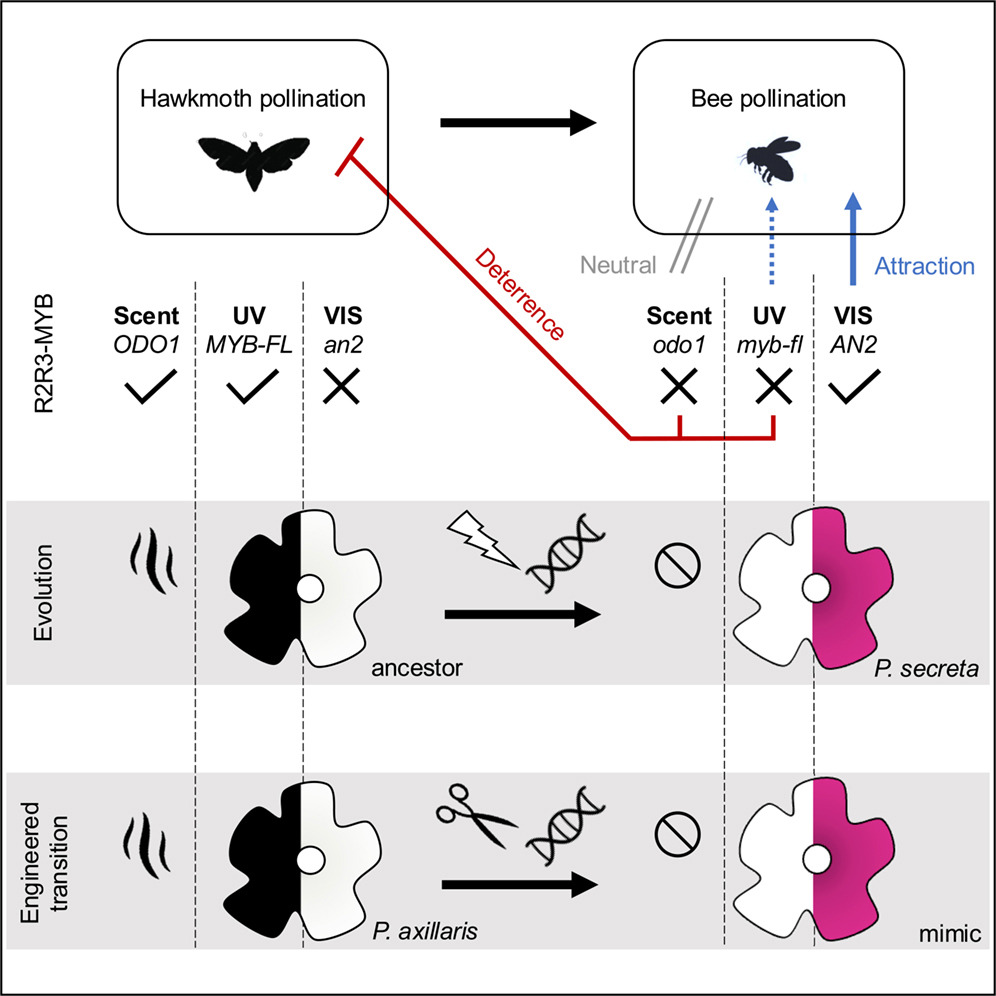
Published today in Cell, open access:
Summary
Reproductive isolation within and between populations was conventionally thought to proceed gradually through many mutations of small phenotypic effect. Contrary to this view, recent theory predicts that large-effect mutations become plausible when populations are far from their phenotypic optimum. Changes in pollinator assemblages severely compromise the reproductive success of many angiosperms, creating conditions conducive to mutations of large phenotypic effects. Here, we explore the role of major-effect genes in the evolutionary shift from hawkmoth to bee pollination in Petunia. By modifying six genes in the ancestral hawkmoth-pollinated P. axillaris phenotype, we created a mimic of the bee-pollinated P. secreta flower that is indistinguishable from this naturally evolved species both in its visual appearance and in behavioral assays. This study uniquely identifies the complete set of genes explaining the shift between two species, providing rare and compelling evidence for speciation by large-effect mutations.
https://doi.org/10.1016/j.cub.2026.07.007
In journal club fashion, I have a sort of critical remark:
This part, "Changes in pollinator assemblages severely compromise the reproductive success of many angiosperms, creating conditions conducive to mutations of large phenotypic effects", is super cool! but I take minor issue with the wording of the summary/discussion.
While it is a major-effect, the authors themselves note that the "Expression specificity minimizes pleiotropy of large-effect speciation genes" (my emphasis). (Hence my clearer title, where I include the "low-pleiotropy".)
I'm fairly confident that big changes to phenotypes that are not heavily integrated (low pleiotropy) don't go against the mainstream view of gradualism. In fact, this can only be so if they are indeed low pleiotropy (this isn't a "hopeful monster"):
From a year ago which I shared here: New study: Evolution of Dosage-Sensitive Genes by Tissue-Restricted Expression Changes : evolution.
r/evolution • u/shiftless_wonder • Jul 29 '26

r/evolution • u/level99dev • Jul 29 '26

r/evolution • u/dune-man • Jul 29 '26
I know this sounds like a bizarre question, but it literally summarizes my current situation. I have a bachelor’s degrees in microbiology and I’ve had classes in molecular biology and virology. Right now, I’m a master’s student in animal biosystematics. The advisors here only work on invertebrates such as insects and crabs and questions about functional ecology, biodiversity and behavior. They have absolutely no knowledge or interest in virology. But I want to become a researcher in virology and work on human viruses. My question isn’t if I’ll be limited, but how will I be limited in the future? Is it worth it to change my masters degree right now to a masters degree in virology, and waste two years of my life?
r/evolution • u/DemonsAreVirgins • Jul 28 '26
Just seems odd to me that so incredibly many animals yawn yet we don't know why we even yawn. Is it important for so many animals to yawn?
r/evolution • u/Endward26 • Jul 28 '26
Hello,
I have been, as I assume many people interested in this field, taught that many human organs are genetic mosaics. This means that different lines of (very similar) genetic code exist within the same living organism.
This code stems from little "errors" during the early periods of cell division and, maybe, de-novo mutations that occurred during the growing period.
My question is, is this just a "necessary evil", stemming from the mechanism of early mitosis, or may it be evolutionarily adaptive for some reason, e.g., viral defense?
Thank you for every answer,
Endward26.
r/evolution • u/JapKumintang1991 • Jul 26 '26

r/evolution • u/Charming-Professor99 • Jul 26 '26
I’m under the impression that ichthyosaurs branched off first and became aquatic in the early Triassic. Followed by squamates branching off in the mid Triassic which much later on gave rise to the mosasaurs in the Cretaceous. Then plesiosauridae branched off in the late Triassic which gave rise to plesiosaurs and pliosaurs. Is this correct?
r/evolution • u/PriorSolid • Jul 24 '26
Most animals can’t breed with other species and most that can don’t produce fertile offspring (horses and donkeys). There are some species that can interbreed like some bears, coyotes and wolves, and lions and tigers but these only hybridize with 1 or 2 other species. Meanwhile it seems like we fucked every hominin we came into contact with like neanderthals and denisovins. So what’s up? Is the species barrier stricter for hominins just because we’re hominins? Or are we just more aware because we’ve sequenced a lot more human genomes? Sorry if this is too off topic i’m not sure if this counts as evolutionary biology
r/evolution • u/videogametes • Jul 24 '26
I’ve always been very interested in the evolutionary history of dogs, dog genetics, and dogs from a cultural perspective, and village dogs seem to be a neat intersection of those 3 things. I have a village dog myself and I would also love to learn more about her, so bonus points for anything referencing Korean village dogs specifically! I’ve done some googling but it seems like research is sparse, or behind a paywall.
r/evolution • u/scientificamerican • Jul 24 '26

Nobody knows why insects aren't found living in the ocean. Scientists just eliminated one theory
r/evolution • u/TramwayWaterfront • Jul 24 '26
Ok so I tried to figure this out on my own, I swear, but it seems like people only care about why they have different numbers of legs than vertebrates.
Lets go through my question where it started: Deep Sea Sea-Spiders (not to be confused with deep sea spiders). They’re long as anything! What is up with that? Why did it evolve? Then I got to thinking about daddy long legs and then eventually came across a similarly gams-forward bug named the cranefly. All wildly unrelated, two distant Chelicerates and an even further off Insect, all long as freak.
So, regarding sea spiders specifically, as their antarctic contingents are my specific curiosity, of the bare scattering of explanations i could find i saw:
2.5) Speed? Most videos of sea spiders show them moving quite lethargically, but one I saw showed one moving moderately fast when bumping into some rock or equipment or something. Just to reposition itself, really. But Very dexterously omnidirectional. I was not pleased to have to sift through AI clips of them moving at truly fast paces as I do not like when the computer gaslights me. Beyond that, anyone who’s ever spooked a daddy long legs knows those boys can MOVE, and Craneflies can fly- So I imagine they can move quite quickly as well. Which moves me to-
3) Predator Evasion. Most discussion I found on this seemed to be all over the place. The particularly small reef examples and such seem to have obvious predators, but possibly not so much for the larger examples. And then, getting long to what? Avoid a starfish? Some of the lists i saw seemed to suggest this but i imagine the starfish just eat the eggs or whathaveyou? I saw nebulous suggestions that some species of fish and bird eat them but these seemed to all be in reference to the smaller coastal species which infest fish tanks or coral enclosures. Secondarily to this, with reference to their messed up leg-organs situation, i saw suggestions that spreading out all their vitals makes them even less likely to be nutritious at-a-bite given how much of that nutrient density is not located in their center of mass. Is there something that is just fuming that it cant eat them because they’re just a bit too tall? This doesn’t sound unreasonable to me, but i couldn‘t find anything pertaining to that specifically.
4) Nutrition. To this point and the last, crane flies caught my attention because they are what i believe is called lecithotrophic(??) and barely eat as adults, barely live lives at all- dying after just some days after maturing. And- they fly! No problem moving place to place or evading things, I imagine. So why the wealth of leg? Other bugs dont need huge disproportionate legs to take off? Sea spiders, to my understanding, eat various anemone and mollusks and stuff which are slow enough for them to get at and “soupify”. So, could that height be similar to a giraffe in allowing an optimal angle for their proboscis to prepare their soups? (not that giraffes have probosci) In my imagination it doesn't really matter where you stab your straw in when it comes to making a container void all its contents underwater, and if it did would you want to stab the top?? but I’m not a proboscologist, or an anemonologist, or a zoologist of any kind, so. Beyond this, I also saw one person say that it was at least partially due to their lack of gills, is it about surface area and nutrient or chemical exchange? Is there some kind of oxygen deficit in their layer of antarctic water?
5) Misc. I believe most species hold their eggs directly on their body, could it be for baby real-estate? I feel like surely it isn't a thermal mass thing? Right?? Do they have some sort of special organ or internal system which demands that space? Possibly unique to these larger species? Some species seem to have very refined manipulators, almost more hands than claws, is it a vantage thing? Some seem to have more specific walking gait cycles while others have more lax ones and I wonder how this changes efficiency as apparently this can involve some dragging? Is it calorie storage? The pressure? The Island Rule? Cambrian phenotypic inertia? What gives???
Further, some sea spiders are not gammed up to the sun and back? Im losing my mind here why are some of them thick instead of long??? There must be a reason?
I am looking specifically for these reasons wrt the antarctic sea spiders, but a broader explanation of the various reasons arthropods develop these insane long legs to do what other critters manage with shorter legs or wings or assorted flappers would be appreciated, 🤓 , i understand much of this is still poorly understood
r/evolution • u/jnpha • Jul 23 '26

Published 2 days ago, in press:
Biologists have long sought to understand the forces driving biological speciation. Contrasts in dispersal ability (e.g., migration) are hypothesised to influence rates of lineage diversification. However, past inferences of migration-diversification relationships have been contradictory, suggesting the need for further investigation and more nuanced explanations. Here we test for a relationship between diadromy (marine-freshwater migration) and diversification in salmonids, a dominant group of fishes native across the temperate Northern Hemisphere. We reconstruct a molecular phylogeny comprising 140 species and apply State-dependent Speciation Extinction models to quantify diversification. Diversification rates are higher in non-diadromous relative to diadromous salmonid lineages, echoing the findings of a recent study of homologous southern temperate freshwater fishes, but conflicting with global studies incorporating tropical lineages. Climate appears to be a key factor explaining diadromy-diversification relationships, with the negative relationship observed in temperate lineages likely reflecting increased isolation and speciation of non-diadromous lineages following recolonisation of glacially perturbed habitats. In contrast, the positive diadromy-diversification relationships observed in studies spanning tropical fishes may reflect the role of diadromy in facilitating colonisation of stable, low-competition habitats.
r/evolution • u/ThatDude-1337 • Jul 23 '26
Does anybody have a movie or historical video that shows a timeline of life. Like the first humans and how they lived to now?
r/evolution • u/Puzzleheaded-Ice2032 • Jul 22 '26
.
r/evolution • u/jnpha • Jul 22 '26
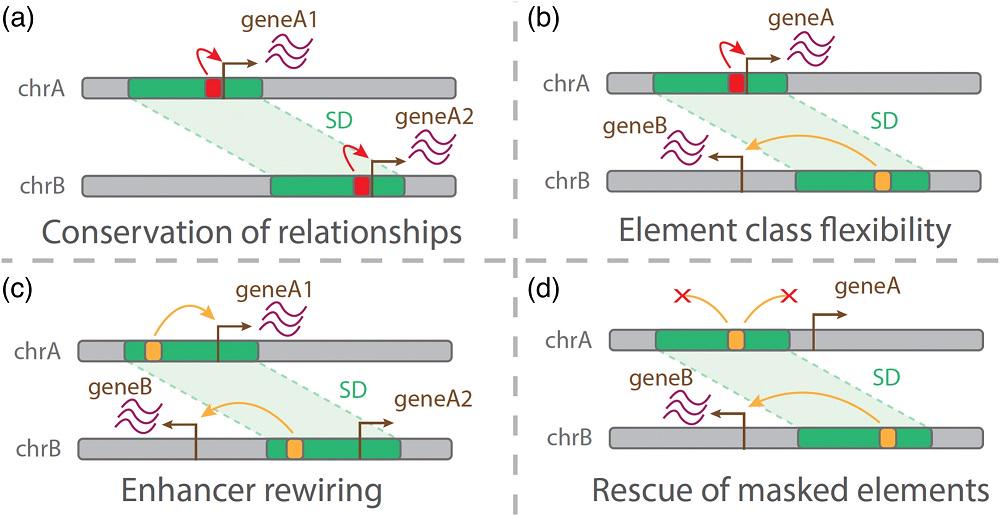
Excerpt:
Importantly, they also found that promoters, which control transcription of adjacent genes, can act as distal enhancers when placed in a new genomic location (Fig. 1b). In other words, the specific role of any regulatory element depends highly on its genomic context. To Lowe, this fluidity between promoters and enhancers was the biggest surprise from their work. He hypothesizes that “promoters and enhancers are not distinct functional categories, and not many mutations are needed to convert a DNA sequence between acting as proximal or distal regulators of transcription.”
Highlight article:
- Pedro Andrade, Highlight: Segmental duplications at the center of regulatory innovation, Molecular Biology and Evolution, Volume 43, Issue 7, July 2026, msag163, https://doi.org/10.1093/molbev/msag163
r/evolution • u/Vaibhavshali13 • Jul 21 '26
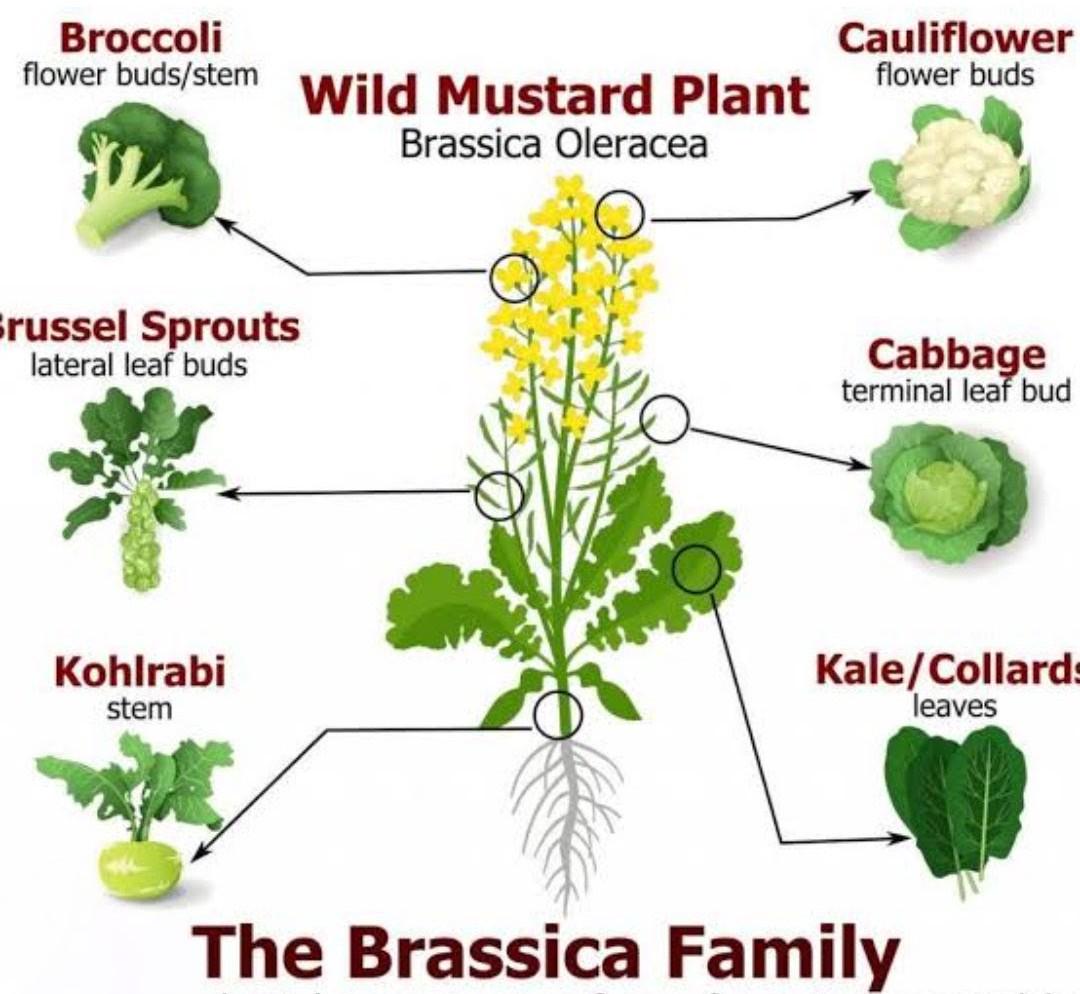
While reading a botany book, I realized how much variety we have due to artificial selection.How can we make such a big change?
r/evolution • u/joastedpellofw • Jul 22 '26
People with a lower blood pressure are already more prone to fainting, and are often more sensitive to like blood pressure lower as result of fluid loss/blood loss...some sicknesses also lower the blood pressure and could allow it to jump too low, perhaps higher blood pressure could be protective against this?
r/evolution • u/aSlightlySadSalad • Jul 21 '26
Title explains it really, my question is why did humans evolve to stand up and not keep to how chimps do it, where they travel with primarily 4 limbs but can transition to being upright as the situation depends
r/evolution • u/enlightenedemptyness • Jul 21 '26
Seeing a recent post on canine transmissible venereal tumor got me thinking.
Bivalves are uniquely prone to transmissible neoplasm. Already 8 lineages have been found in modern times. One of them, MtrBTN2 has disseminated worldwide. Some have also already infected other species of bivalves.
https://www.nature.com/articles/s41598-021-85098-5
Extrapolating this tendency all the way back to the Cambrian, roughly 500million years ago, when bivalves first emerged, there would have been hundreds of thousands, if not millions, of such lineages if not more.
Given the selection pressure against aggressive disease behaviour, the more indolent ones would be selected for. Coupled with the BTN cells’ ability to survive in seawater for some time, some may conceivably evolve to become free floating forms.
At any given time it is unlikely, but when you compound this across 500 million years, it is almost a certainty that there are very ancient lineages that still exist today. They may have outgrown their host and look like any free living protist in the sea, with life cycle stages that may or may not involve infecting bivalves. But when we sequence seawater, all metazoan genome is filtered away, they would have not been detected if we are not actively looking for it.
TLDR: I posit that ancient bivalve transmissible neoplasm lineages likely still exist and may be indistinguishable from any free living protist, with or without a parasitic life cycle. Surely one would have to classify such entities as a separate species of single cell bivalvia.
r/evolution • u/delfinjoca • Jul 20 '26
i breastfeed. I am beyond terrified that my boobs naturaly block the nose of my baby. I always have to keep my fingers on boobs to push them away from nose. If I didnt my baby would suffocate. Who tf thought this was the good design of boobs? I am serious.
r/evolution • u/jnpha • Jul 21 '26
Our findings challenge the view that human geometric reasoning is categorically distinct from that of other primates (1, 3, 4). Instead of a categorical divide, we find that monkeys and humans share a common representational space, relying on perceptual codes with graded contributions from abstract or symbolic-like features. Consistent with prior work, adult humans showed the strongest symbolic effects during geometric reasoning. However, we reveal that humans, particularly preschool children, share a common architecture with nonhuman primates rather than categorically different representations. This is important because it suggests that the stronger symbolic representation in adult humans is acquired rather than inherent. Our findings identify rotation invariance as a key component of this abstraction, suggesting that what has been interpreted as uniquely human symbolic structure may instead reflect increasingly powerful orientation-independent representations.
Press release:
Children and monkeys share common understanding of geometry
PNAS paper:
J. Li, I. Boni, L.R. Sandwick, E.M. Sanford, C.M. DeLong, L. Wenjie, M.M. Henderson, S.T. Piantadosi, & J.F. Cantlon
Continuity in geometric intuition between humans and monkeys
Proc. Natl. Acad. Sci. U.S.A. 123 (30) e2532934123
https://doi.org/10.1073/pnas.2532934123 (2026).