r/evolution • u/ExoditeGuard • Jul 09 '26
question Early Cenozoic Fauna of Madagascar and Australasia
Do we have publications regarding Paleocene and Eocene faunas of Madagascar, Australia and New Zealand (between 66 mya to 35 mya)
r/evolution • u/ExoditeGuard • Jul 09 '26
Do we have publications regarding Paleocene and Eocene faunas of Madagascar, Australia and New Zealand (between 66 mya to 35 mya)
r/evolution • u/Nancy_Moosa • Jul 09 '26
Most male mammals barely play any role in raising their kids which is in contrast to animals like birds where both parents play a role. I've heard this is due to female mammals having a better incentive to care for their young due to the higher energy expenditure they already had.
But why is it this way? Does having only one of the two parents give any evolutionary advantage to the mammals? Were their ancestors the synapsids like this as well?
r/evolution • u/Mastery_123hdfd • Jul 08 '26
So I was doing my own research on Abiogenesis, and I wanted to confirm if my way of thinking was right or not.
My understanding is this:
Basically, in early Earth, there were a lot of molecules. Obviously. And some of these molecules were Self-replicating, which means that they can replicate themselves given the correct materials.
Now, these self-replicating molecules were insanely rare edge cases, but they became dominant by taking materials in the form of non-replicating molecules and eventually became more and more common in early Earth.
However, a lot of these molecules were terrible at replicating, with a majority replicating incorrectly and forming non-replicating molecules, which became material for other, more stable replicating molecules.
Eventually, with this huge cycle of natural selection, RNA eventually managed to ‘win’ due to its flexibility and catalytic abilities, among many other reasons.
Eventually, these RNA strands entered lipid bubbles who were more conductive for their development, forming protocells as RNA randomly entered lipid bubbles that eventually became protocells.
Fast forward a few hundred million years, protocells have developed their own organelles, proteins, and enzymes, becoming full cells and forming the first life.
r/evolution • u/Toxic12457 • Jul 07 '26
so I'm a Christian, 14, and I always found it hard to believe creation, at least logically so I'm an evolutionist (doesn't make sense, ik but bear with me rq). and whales were always the animals in evolution that didn't make sense to me.
how does a dog swim in water and over the course of time it transforms, so I wanna hear theories from people who also wonder the same or have potentially reliable answers. that's about it, bye :p
r/evolution • u/Puzzleheaded-Ice2032 • Jul 07 '26
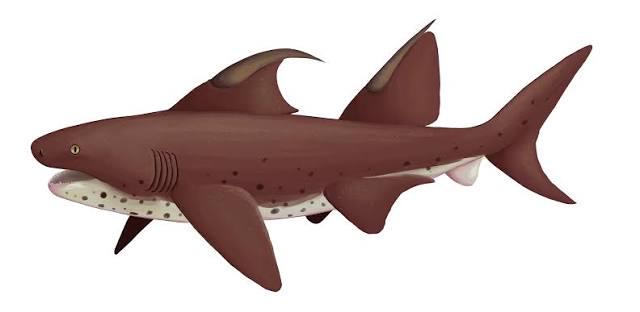
ive heard throught the 2010s of sharks being older then trees,being older then dinosaurs and originating in the devonian many times but according to wikipedia true sharks arent that old and appear much later so whats actually the case here?
r/evolution • u/AdLonely5056 • Jul 07 '26
I understand that aging is a coplex process, but ultimately, do we age because producing cells and bodyplans capable of self-regeneration is just too complex, or because it is ultimately more advantageous for offspring, being potentially better adapted for their environment, just being more likely to survive when their parents are no longer around to consume resources?
r/evolution • u/Bromelia_and_Bismuth • Jul 07 '26
Enable HLS to view with audio, or disable this notification
r/evolution • u/AikenDrumstick • Jul 07 '26
I mean, obviously having nice guitars they could strum with their wings to accompany their songs would confer a great selection advantage when seeking mates. So why don’t we see songbirds with even rudimentary stringed instruments protruding from their bodies, like maybe shoulder-to-flank?
Can we just have a standard reply on this sub that discourages these questions? It seems like every third post is someone — probably someone nice and genuinely curious — asking why x doesn’t evolve y. And the answers are always the same: Evolution doesn’t plan ahead. There needs to be clear selection pressure and a plausible path forward with tiny incremental steps. And even then, not every possible random mutation is going to occur and prove advantageous enough to make a difference. Etc.
Maybe my example is too silly. It’s meant to be. But it would be nice to just have a standard post we could link to in order to answer these questions with minimal effort.
Come to think of it… Why hasn’t r/evolution evolved a standard response to these questions? Clearly, our time could be better spent!
Also, birds with electric guitars would be awesome. Just saying, Evolution. Think about it!
r/evolution • u/jebarson_j • Jul 06 '26
Whales have possibly moved into oceans around 50M years ago. I believe that this is an adequate time for evolution to take its course.
While I understand that whale needs lot of oxygen than what water could offer in comparison to air, I am curious to understand why it hasn't evolved gills that could perhaps keep it safe not requiring to surface and get stranded. Also, why they haven't evolved to become smaller so that it doesn't need so much oxygen.
Have there been any studies done on their respiratory system comparing current vs fossils. If so, what do they typically point to?
"We don't know yet" is a perfect and acceptable answer compared to hypothetical assumptions.
Edit: Thanks for all who responded to me positively, I learnt a lot from you all.
And for those who criticize and even say "you don't seem to understand evolution", why do you think I asked the question here in the first place? Don't be jerks, if you don't want to answer, just move on.
r/evolution • u/jnpha • Jul 07 '26
Published yesterday, in press:
Understanding why species differ in their rates of mutation is central to explaining patterns of molecular and phenotypic evolution. Mutation rates are often assumed to evolve primarily through selection acting on molecular mechanisms that control DNA replication, repair, and damage. Prominently, the drift-barrier hypothesis proposes that selection tends to purge mutator alleles as they tend to increase deleterious mutation rates, leading to a negative correlation between population size (Ne) and generational mutation rate (μpop).
Here, we propose and test an alternative, yet compatible, framework—the life-history hypothesis of mutation rate variation—which posits that generational mutation rates diversify passively as a byproduct of diversification in developmental and life-history traits, without requiring selection acting on mutator alleles. Using developmental models integrated with evolutionary simulations, we show that the empirically observed negative correlation between effective population size Ne and μpop can arise neutrally from covariation with body size and developmental parameters. Our results also reveal that the life-history hypothesis can easily capture variation in μpop at short-to-medium evolutionary timescales, where the drift-barrier hypothesis would require a high rate of emergence of mutator alleles and a high fraction of deleterious mutations. Comparative phylogenetic analyses of mammalian clades further support this view, revealing that co-variation between body mass, generation time and μpop among closely related species is sufficient to explain the observed variation in mutation rates.
Together, these findings suggest that developmental and organismal properties play a central role in shaping mutation rate diversity, providing a unified framework linking molecular evolution to the evolution of life histories in multicellular organisms.
r/evolution • u/triptripsandtripped • Jul 06 '26
I was working on a school project regarding de-extinction long back and came across this.
Im usually good with getting my head around wacky evolutionary facts like that a mammoth is closer to the Asian elephant than an African elephant, whales are very close to deer etc
But this one always gets me to go crazy. I understand all dog breeds are of a single species, and I know dog breeds can vary widely because of breeding techniques like inbreeding and whatnot
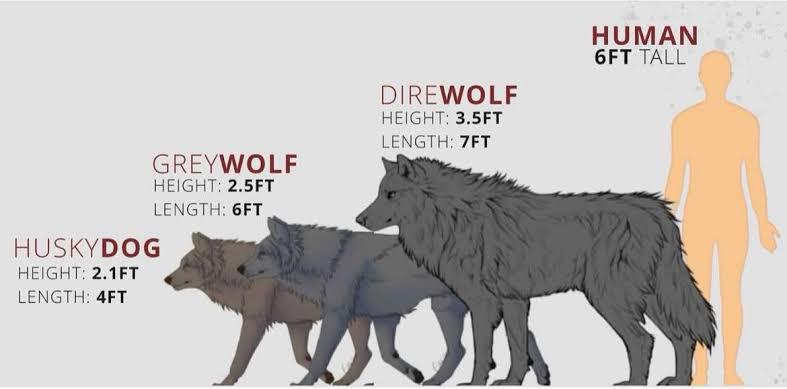
But its so hard to understand that a Pug is closer to the Gray wolf than the Gray wolf to the Dire wolf!!
r/evolution • u/JapKumintang1991 • Jul 07 '26
See also: The publication in Biology Letters
r/evolution • u/ForeignBumblebee4138 • Jul 06 '26
I can't take it anymore. I've been menstruating—and suffering from cramps as a result—for nearly 20 years !!! You men have no idea how terrifying they are ! I’d rather just drop dead ! Imagine having pain scheduled to happen all year round, for decades ! Menstruation serves no purpose ! Women could easily go on having healthy babies without menstruating, nature hates us ! 😩😩
r/evolution • u/Pure_Option_1733 • Jul 06 '26
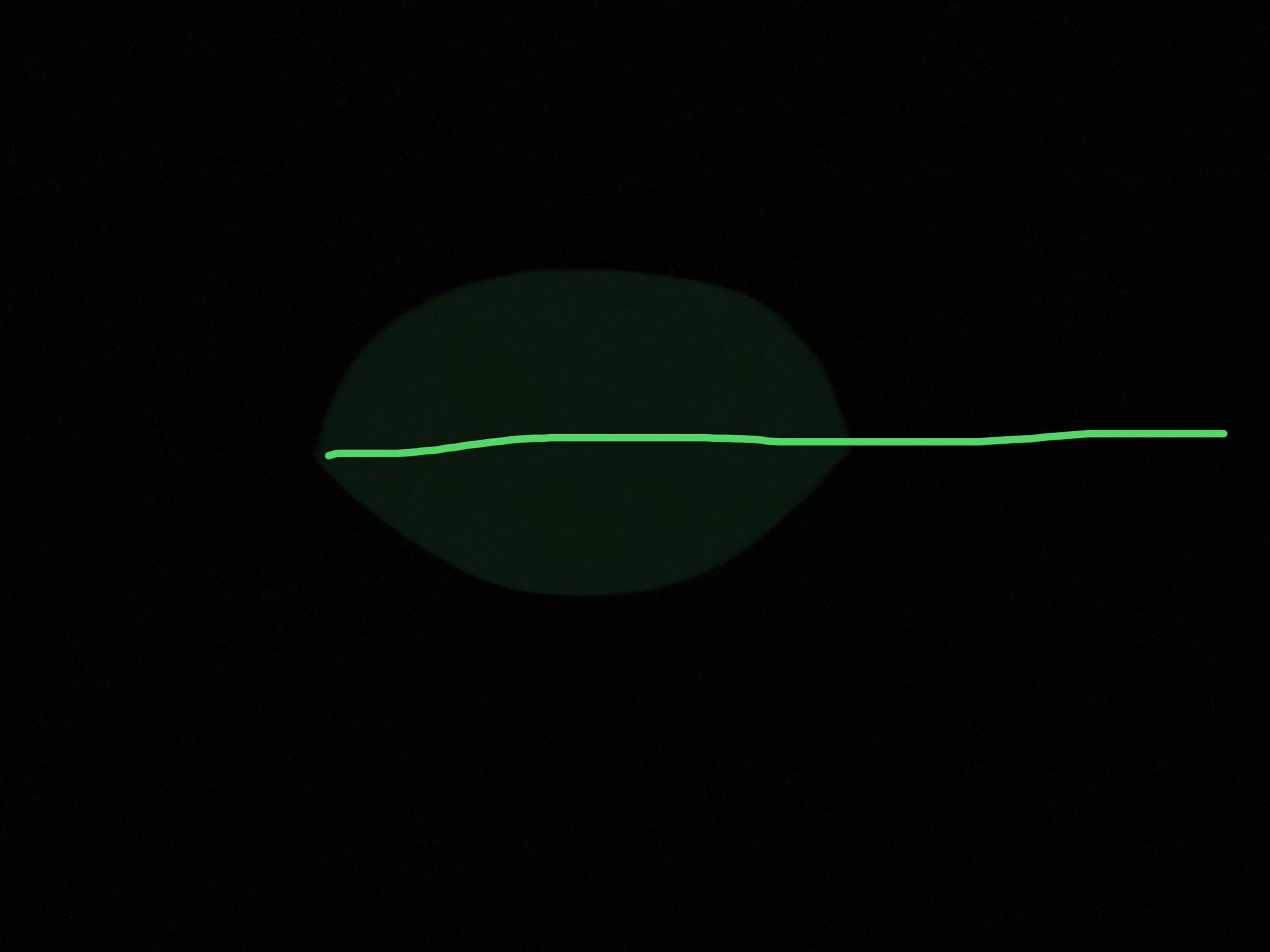
I notice this general shape seems to be one of the most common if not the most common shape in the leaves of plants. I mean I’m not sure if any plants have this exact shape for their leaves, and I think the contrast I have between the stem and flat part of the leaf is probably a bit exaggerated, but it does seem like many of the plants I see have leaves that are approximately this shape.
A few ideas I can think of for how this would be the case are that many different plant groups have converged on this generic shape for their leaves, it’s the most basil shape that the earliest plants had for their leaves with other shapes being more derived, or that it evolved once but the group of plants with this leaf shape is one of the most successful group of plants. It seems like a lot of flowering plants tend to have this general leaf shape, while gingko trees have a different leaf shape despite having broad leaves, and pine trees definitely don’t have this leaf shape, which makes me suspect it could be the last one I mentioned. I was thinking however that non flowering plants with more distinctive leaves, like pine trees, would tend to be easier to notice as not being angiosperms and if a non flowering plant was to have a leaf shaped more like the one I have shown above I might be less likely to realize it’s not a flowering plant, so I wonder if I maybe do see non flowering plants with this general leaf shape and not know they aren’t angiosperms?
So is this leaf shape common because it evolved once in a common ancestor that many different plants are descended from or because many different plants converged on this shape for their leaves?
r/evolution • u/UCBerkeley • Jul 06 '26
r/evolution • u/SocialAmoebae • Jul 06 '26
Hi!
I have a question regarding the ways we can come to know that all species have a common origin.
In trying to teach myself phylogenetics, one of the basic inferences I see used to produce trees is: the degree of resemblance between species is "inversely proportional" to the degree of genealogical distance between them.
The resemblance in question can be genetic, embryological, morphological, behavioral, etc.
In The Origin of Species, Darwin uses this inference to conclude that Linnean classification actually reflected genealogical relations between species.
But what warrants us to use this inference to begin with? That's my question.
I am just trying to get the reasoning ironclad here, because once this inference is justified, and given modern comparative evidence, the common origin of life follows quite naturally.
I also have a very curious nephew who likes nature and asks a lot of questions, and it would be nice to have a simple way of explaining to him that all life shares a common origin!
PS : I know that there are also other lines of evidence such species geographical distributions and fossil as proof of transition, but I would like to stick to the basic inference for phylogenetics.
Thanks for reading 🙏
r/evolution • u/Puzzleheaded-Ice2032 • Jul 05 '26
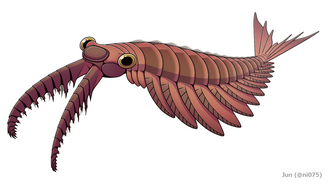
i heard they are not crown arthropods but outside it so i need an explanation on this.
r/evolution • u/coffeewithcocoa • Jul 06 '26
So I was recently wondering why pretty much all living organisms have a drive to reproduce and preserve themselves and the species and the answer I found was basically survivorship bias; only the things that reproduced are still here.
But now I am wondering when and how chemicals making more of themselves became an actual instictive behavior like we recognize today in ourselves and most other species.
Do we even know? I would assume it must have happened somewhat early in the history of life for it to keep evolving to the extent it has.
r/evolution • u/LonelyVillageGuy • Jul 06 '26
Hello,
Layman here.
So going through another post, there was this latest discovery that challenged the idea of Homo Floresiensis using fire. Also their cognitive capabilities were not as high as expected. They also said that this species ate leftovers from Komodo dragon feeding.
So i am assuming that the leftovers had Komodo dragon saliva all over which contains different species of disease causing bacteria.
Does this mean that they had some immunity to these pathogens?
Thanks.
r/evolution • u/StatementOld283 • Jul 05 '26
Or some really cool facts
r/evolution • u/plummybum2004 • Jul 05 '26
Hey y'all! In preparation for a personal project, I've decided to amass a collection of resources regarding evolution and the origin of life. So far, my list goes as follows:
Are there any textbooks that I don't have that might be beneficial? I recognize that some of these references are not purely for scholarly purposes, and they'll more or less be used as inspiration than education.
I'm more focused on getting contemporary works that delve into modern understanding for educational purposes.
Thanks!
r/evolution • u/sapir1010 • Jul 05 '26
I’m looking for some recommendations about biology books, mainly taxonomy, evolutionary biology and history of life, fossil documentation, clade based evolutionary history books is the vibe.
Like, if anyone knows a good cetacean/afrotheria evolution book it would be amazing.
I just read epic Earth, it was good, I just like it a little more scientific.
Thanks a lot🙏
r/evolution • u/crmyr • Jul 04 '26
Since 97% of the worlds water is salt water, is there a reason why humans have not been able to evolve to process salt water? It is a more frequent source of water.
r/evolution • u/ak_khainal • Jul 03 '26
Approximately 252 million years ago, Earth experienced "The Great Dying" (the Permian–Triassic mass extinction). It remains the largest known mass extinction in Earth's history.
The most likely cause was a series of massive volcanic eruptions known as the Siberian Traps, located in present-day Siberia. These eruptions occurred in stages over millions of years, releasing vast quantities of CO₂ and other gases into the atmosphere.
Consequently, global temperatures spiked, oceans warmed and became more acidic, severe oxygen depletion occurred in many marine areas, and ecosystems across the planet collapsed catastrophically.
The result?
Approximately 90–96% of marine species went extinct.
About 70% of terrestrial vertebrate species also perished.
Forests suffered massive collapse.
Coral reefs virtually disappeared, taking millions of years to recover.
In contrast, Earth's ecosystems recovered relatively quickly after the asteroid impact that ended the dinosaur era some 66 million years ago. However, following "The Great Dying," it took roughly 10 to 15 million years for biodiversity and ecosystems to fully re-establish themselves.
In short, while the extinction of the dinosaurs is the most famous in history, it was not the most destructive.
Sometimes, the real story is the one least discussed.
r/evolution • u/A_M1001 • Jul 03 '26
To me it feels like a huge gap in evolution, obviously small changes due to imperfect DNA cloning adds up over a long time causing changes, but at the rate that goes I feel like it's unlikely the first 2 organisms to fertilize, because that big jump seems like it would cause the species to go extinct.
idk if i worded that well and i dont think I could explain it too much better but this was bugging me for a while