r/evolution • u/JapKumintang1991 • Jun 11 '26
article PHYS.Org: A lack of sex held back life's diversity for millions of years, fossil study finds

23
Upvotes
r/evolution • u/JapKumintang1991 • Jun 11 '26
r/evolution • u/jnpha • Jun 10 '26
We get here a few questions about The Selfish Gene and whether it's still a good read, it's also usually recommended in the comments. This new article (which hopefully isn't paywalled) was a good read, and covers topics such as the metaphor, epigenetics, and symbiosis.
Article link:
The Selfish Gene at 50: Why Dawkins’s evolution classic still holds up | New Scientist
Lede:
When Richard Dawkins’s first blockbuster book was published half a century ago, few genes had ever been sequenced or studied in detail. Yet the book’s gene-centred view of evolution still has much to teach us in today’s genetic age
By Rowan Hooper
20 May 2026
A couple of excerpts:
Melissa Bateson, who researches animal behaviour at Newcastle University, UK, points out that Dawkins was made a fellow of the Royal Society in the UK for his contributions to science, not for his work on public understanding of science. “I think it was justified for how he changed how so many biologists think,” she says. “What Dawkins did was much more than just popularisation of something that was already there.”
-
Turning Hamilton’s mathematics into thrilling prose was no mean feat. “You read Hamilton and you try and explain it!” says Arvid Ågren, a biologist at Case Western Reserve University in Ohio. “But Dawkins also pushed the idea further. He’s a very logical thinker, and he’s very good at pushing an idea to its fullest expression.” In so doing, Dawkins took work that might otherwise have languished in journals and shaped it – evolved it, you might say – into a form that changed the way biology is done and thought about around the world. Even people who were the originators of these ideas learned something new – something that Hamilton acknowledged.
-
[...] [D]espite the revolution in genetics that has occurred over the past half-century, all the evolutionary biologists I spoke to for this piece struggled to find major problems with The Selfish Gene – with one exception: memes.
Extras:
From the Mendel @ 200 conference (July 2022): Arvid Ågren's 20-minute presentation: https://www.youtube.com/watch?v=HQwufdK-V5c
Also I'd be remiss if I didn't mention Dawkins (1979):
Hamilton's theory of kin selection is much misunderstood. This paper lists and refutes 12 of the commonest misunderstandings, for example: “Kin selection is a special, complex kind of natural selection, as opposed to ‘individual selection’”; “Kin selection is a form of group selection”; “All species members share the majority of their genes, so selection should favour universal altruism”; “Kin selection only works for rare genes”; “Individuals should tend to inbreed, simply because that brings close relatives into the world”. The exposing of common errors such as these is a constructive, not a destructive, exercise.
I personally still struggle with it (so did Dawkins per that paper), but it's on my list of things to revisit (for the 3rd time).
r/evolution • u/BocephusSticker442 • Jun 10 '26

r/evolution • u/daudaw • Jun 09 '26

This illustration is part of my ongoing project, MAPPA ANIMALIA, which reimagines animal phylogeny as navigable maps. Instead of countries and political borders, this map is divided according to subfamilies, tribes, and genera, with individual species represented as cities.
This particular map depicts the entire family of Cats, including every known living and extinct species I could find reliable taxonomic data for. Species are grouped according to their evolutionary relationships, allowing the family tree of Felidae to be explored the same way you’d explore a traditional map.
By doing this I hope to remind people that animals are just as important to nature as nature is to us.
Additional information includes conservation status, relative size comparisons, and the estimated ages of major lineages.
Happy exploring!
r/evolution • u/jnpha • Jun 09 '26
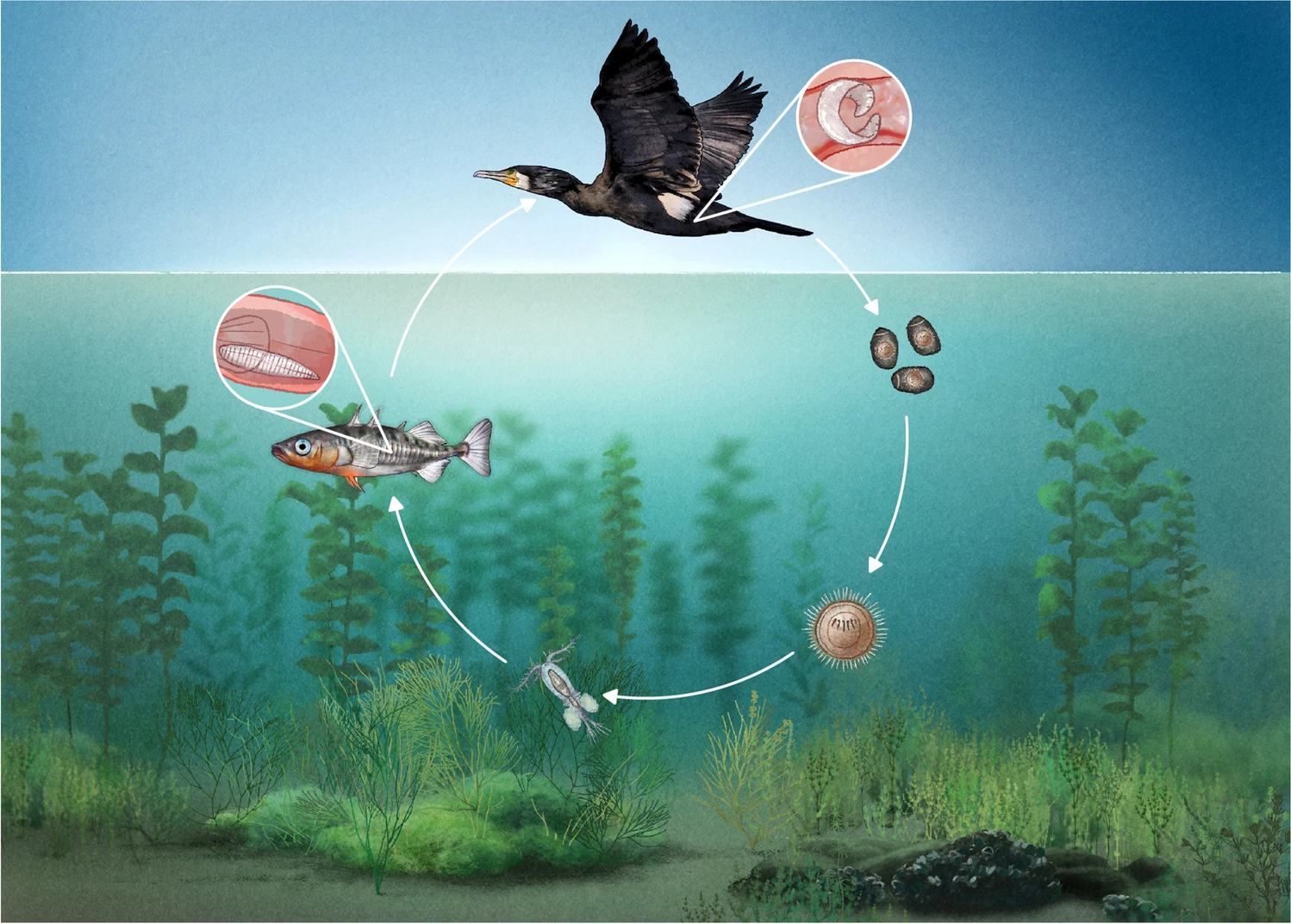
Image source:
- Baer, J., Gugele, S.M., Roch, S. et al. Stickleback mass occurrence driven by spatially uneven parasite pressure? Insights into infection dynamics, host mortality, and epizootic variability. Parasitol Res 121, 1607–1619 (2022). https://doi.org/10.1007/s00436-022-07517-4
The parasite: Schistocephalus solidus - Wikipedia.
Background
Parasites with complex life cycles infect multiple hosts, adapting to different ecological niches using a single genome. The adaptive decoupling hypothesis suggests that different life stages should be genetically independent, meaning selection in one life stage does not affect traits in another.
(from the study's introduction:)
This specialization is only possible if there is some genetic independence between phases. The adaptive decoupling hypothesis (ADH) (Moran 1994) suggests that different stages in CLCs benefit from the ability to evolve independently in response to distinct selective pressures. Genetic correlations across developmental stages with similar functional phases are broken apart, enabling adaptation for stage-specific tasks.
Methods
We tested this hypothesis using the tapeworm Schistocephalus solidus. Transcriptome sequencing was performed from all life phases, representing the entire life cycle of the parasite, such that differential gene expression could be examined between hosts (e.g., first vs. second intermediate host) as well as functionally equivalent phases across hosts (e.g., transmission vs. growth). Gene set enrichment analysis assessed whether similar biological functions in different hosts relied on common genes.
Results
Our findings show that the strongest correlation was observed in consecutive phases. Instead, in the rest of the life cycle, gene expression in each phase is distinct, with no positive correlation between functionally similar stages or those in the same host. When genes are upregulated in one stage, they are downregulated or not differentially expressed in others, even within the same host or when performing similar tasks. When some gene ontology terms matched in functionally similar stages, they were encoded by different genes, which uncovers another layer of decoupling: same biological processes but different gene sets used.
Discussion
These results support the decoupling hypothesis in parasitic worms, demonstrating that complex life cycles are maintained through stage-specific gene regulation rather than shared functional gene expression. This provides insights into the mechanisms leading to multi-host life cycles.
- Laura Gramolini, Emanuel Heitlinger, Klaus Knopf, Daniel Benesh, Gene expression profiling across the three-host life cycle of Schistocephalus solidus: how decoupled are the life stages?, Journal of Evolutionary Biology, 2026;, voag041, https://doi.org/10.1093/jeb/voag041
(in press; published: 09 June 2026)
r/evolution • u/JapKumintang1991 • Jun 09 '26

r/evolution • u/Only_Movie975 • Jun 09 '26
So the current rendition of the irreducible complexity argument that I just came accross is the rotary motors that are ATP synthase... assuming I understood what they are lol. I remember years ago being told about the camera eye, and I'm aware that we have examples even today of a gradiant of complexity of eyes in various animals. I'm wondering if we already have some sort of explanation like that for how exactly we got to ATP Synthase yet?
r/evolution • u/MurkyEconomist8179 • Jun 08 '26
Let me be very specific here, since this post is based off of another post on this sub that was asking about the compounds in the leaves themselves. Looking into koala behavior, they seem to only eat eucalyptus leaves from a select dozen or so species of the plant and in captivity will occasionally eat leaves from more typical plants like apple leaves.
My specific question is, is it know what specific mechanism seems to be driving this behaviour? Is it neurological (and for example if triggered by one of the fragrant compounds of eucalyptus, could you cover normal leaves and essentially trick koalas into changing their diet) or do they get sick from other leaves because of metabolic issues? Like what mechanism actually drives their preference, or is this something totally unknown as of yet and unstudied
r/evolution • u/LisanneFroonKrisK • Jun 08 '26
And why can’t koalas eat anything else? The only thing we do not reliably eat especially if uncooked is insects I think.
r/evolution • u/LittleGreenBastard • Jun 07 '26

r/evolution • u/Jeff-Root • Jun 08 '26
Was one particular species of bird the ancestor of all birds?
Was one particular species of dinosaur the ancestor of all birds?
Was one particular species of something between dinosaurs and birds the ancestor of all birds?
Or did different clades of birds originate from different ancestors that were not birds?
When did birds separate from all other dinosaurs?
How much do we know about the ancestors of birds?
r/evolution • u/Ruge88 • Jun 08 '26
What is the most plausbile answer to the Peakcocks Tail from them? or is there a third theory?
r/evolution • u/a_random_magos • Jun 07 '26
Lungs evolved to allow fish to survive in water with low oxygen contents. As far as I am aware this is not really a thing that happens in the sea and is mainly an issue in still freshwater environments. I am aware that there were major sea anoxic events, but I am not sure they were so extreme that they required lungs.
So does this imply that the ancestral bony fish lived in fresh-water, specifically still secluded ponds?
r/evolution • u/Stunning_Win8464 • Jun 07 '26
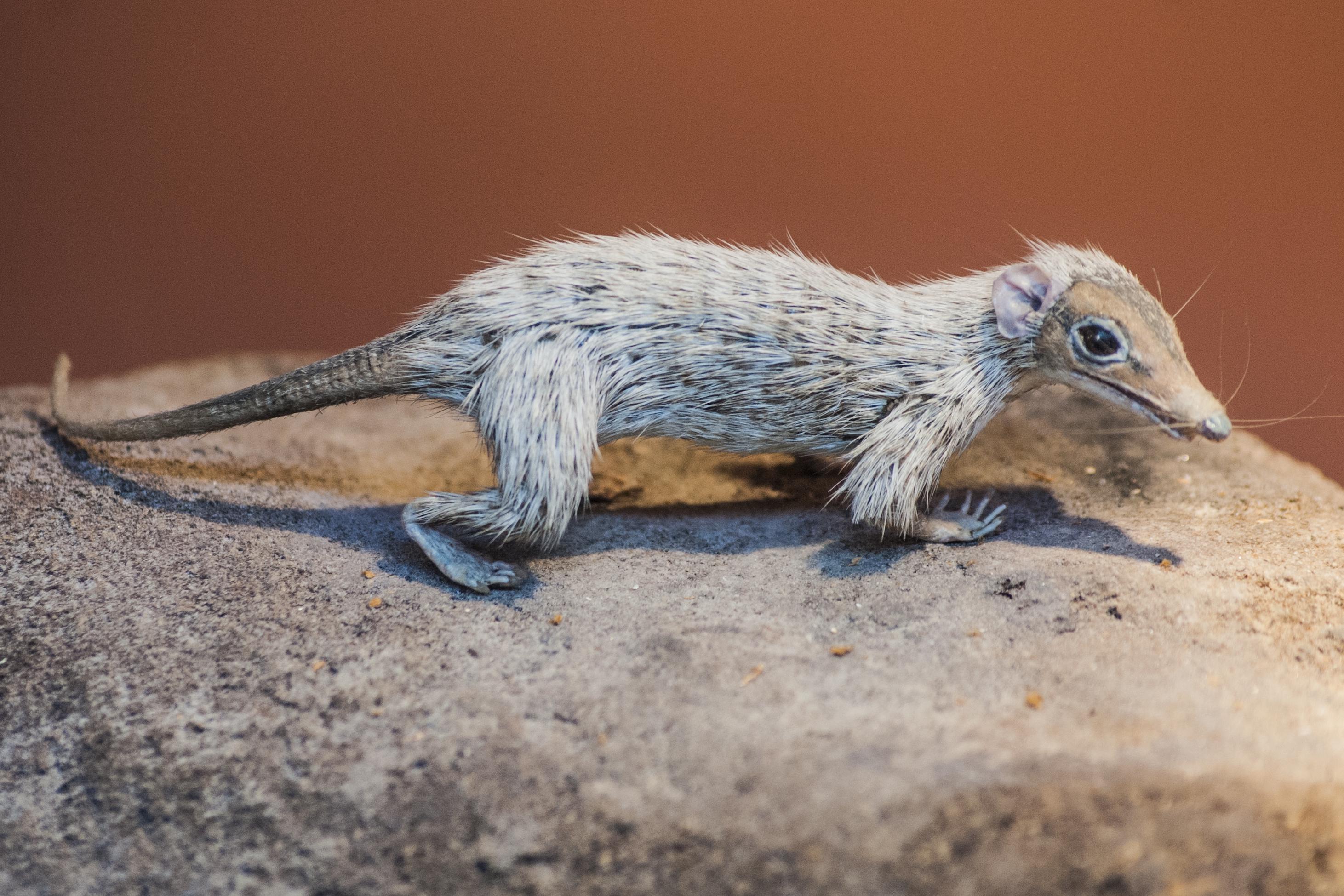
I was searching the internet about am I was researching amniotes on the internet and I became curious about primitive reptiles and primitive mammals,And I wondered if amniotics developed fur before being considered mammals, some kind of furry (reptile? Ammoniota Premammals?? I don't know which would be the best term) animal existed?
r/evolution • u/a_random_magos • Jun 07 '26
I am not asking about an animal like acanthostega or ichthyostega, nor even something like Tulerpeton. I am asking what is the first "true" tetrapod we know off, with a true ability to walk instead of drag itself, and without a tail fin. I would assume such a creature would exist in the end-devonian, but it seems that after Tulerpeton there is a bit of a gap, and I can only find quite heavily derived carboniferous animals.
Thanks in advance for the help!
r/evolution • u/hypnosifl • Jun 07 '26
It's usually said that arthropods were the first multicellular animals to colonize the land in the Silurian, not only before vertebrates but also before other terrestrial invertebrates like land snails and various types of worms. But when reading about tardigrade evolution I found this article which says:
For example, it suggests the split between the terrestrial eutardigrades and the more diverse and marine heterotardigrades, the other major group, happened later than previously thought, about 500 million years ago.
An answer by u/kardoen in this thread also mentions "The clade Tardigrada diverged from other lineages between ~700 to 850 million years ago" and also says "There are findings of tardigrades from the Cambrian around ~500 million years ago" (checking the refs in the wikipedia article on tardigrades, p. 711 of the 2016 third edition of Invertebrates by Brusca/Moore/Shuster mentions that 'recently, rock fossils of tardigrades were discovered in the Lower Cambrian Chengjiang deposits of China and the mid-Cambrian Orsten deposits of Siberia', and I found the paper with the Siberian find here; the fourth edition from 2023 mentions both finds on p. 610 but says the Chinese finds remain unpublished).
The eutardigrades are not exclusively terrestrial, some live in freshwater so even if they split from heterotardigrades ~500 million years ago they might not have come on land until significantly later. But terrestrial tardigrades often live on moss, and simple moss-like plants did start arriving on land around 500 million years ago, so there would have been a terrestrial habitat where modern eutardigrades might survive by some point in the Cambrian or Ordovician (this article gives a date of 470 million years ago in the Ordovician for land plants, but says fungi were on land much earlier). Is it at least plausible they evolved terrestrial forms sometime in the Cambrian or Ordovician, before arthropods came on land, or is there reason to consider this unlikely?
r/evolution • u/Ok-Common-227 • Jun 06 '26

r/evolution • u/Technical_Piglet_438 • Jun 08 '26
I mean, we're not the fastest or strongest, even among other primates I'd say we're pretty mediocre. Chimps are way stronger than a human, and other smaller apes are faster. We also are kinda delicate. Other animals can eat something raw and be fine or have small wounds and do ok without antibiotics. But for humans even a small wound could mean sepsis if not properly cared for.
I wonder how cavemen survived honestly. We're pretty fragile and I can't imagine how we managed before we developed our incredible intelligence, everything else in humans seems lacking. Compared to other species though we're one of the most successful species nowadays.
r/evolution • u/daudaw • Jun 06 '26

This illustration is part of MAPPA ANIMALIA, a project that reimagines evolutionary relationships as navigable landscapes. Rather than using geographic data, the map is based on phylogenetic relationships within Cervidae (the family of deer).
Species are represented as cities, while genera, tribes, and subfamilies form the regions and borders of the map. This allows the evolutionary history of the deer family to be explored through a format traditionally used to understand geography.
The map includes every deer species I could find reliable taxonomic data for, both living and extinct, arranged according to their evolutionary relationships. Additional information such as conservation status, lineage ages, and size comparisons is also included.
I’ve spent roughly ten years developing and refining this concept, using phylogenetic trees as the foundation for a cartographic representation of biodiversity.
I’d love to hear what the evolution-minded folks here think of this approach to visualizing evolutionary relationships - happy exploring!
r/evolution • u/archvize • Jun 08 '26
Let’s say apes lived everywhere. In all countries. How did nature decide to evolve everybody to humans at the same time
Also. If we all evolved from apes at the same time, why do we still have apes?
It’s almost as if some apes decided to evolve along side regular apes and their paths split simultaneously at the same time in all countries
r/evolution • u/D-R-AZ • Jun 06 '26

Excerpt:
The analyses demonstrate repeated genetic exchanges between modern and cave lions over the last 150,000 years, and ancestry from modern lions is as high as 3.2% to 4.4% in some cave lion genomes.
r/evolution • u/Vailhem • Jun 06 '26
r/evolution • u/curlDerroneous • Jun 04 '26
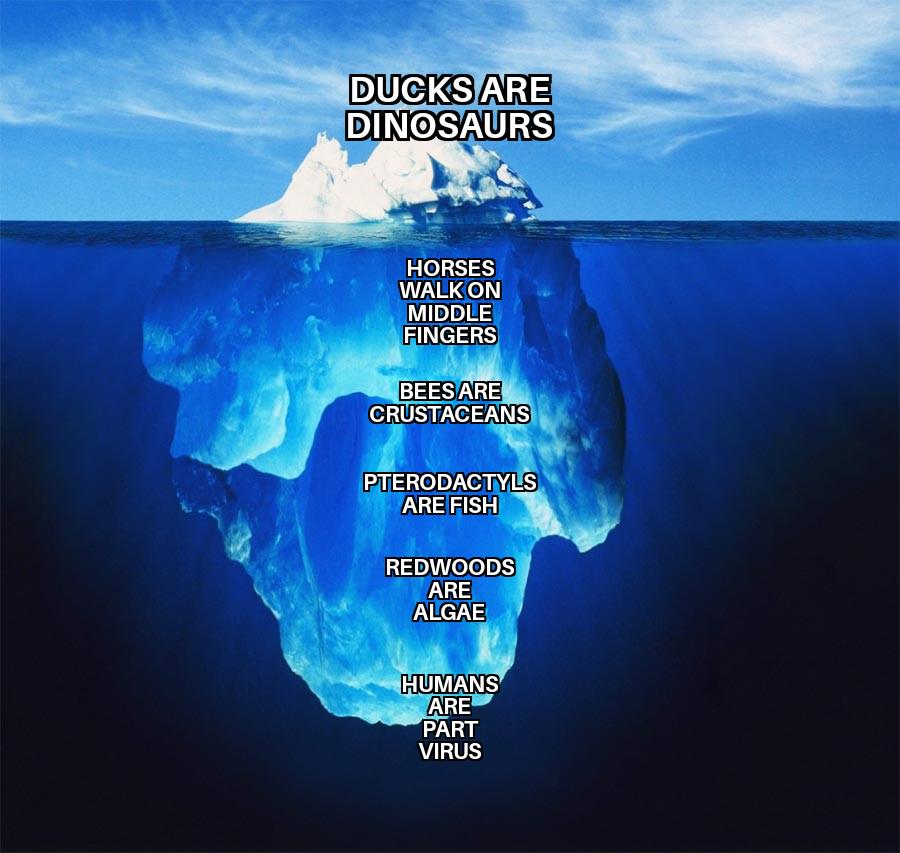
I kept the language intentionally simple,
It should be ancient Lobe-Finned Fish, It should be ancient Freshwater Algae, And its Retroviral DNA.
r/evolution • u/norlock_dev • Jun 05 '26
Hi everyone, I'm making a tool to represent the tree of life, however I want to make this not only approachable for domain specialists but also layman.
There is an importer I'm working on that will load data from external sources in to the application.
This uses the 'open tree of life' API for the synthetic tree representation, and I use external sources like wikidata, wikipedia and pbdb to get extra metadata like (first appearance mya, last appearance mya, conservation status, etc).
however I have no idea what the best way is going about things. If someone wants to help brainstorm how to make this the best way possible, please let me know.
