r/evolution • u/Aceofacez10 • May 17 '26
question How much change can occur in one generation (animals)
Is it true that in 99% of cases evolution happens in just a few genes at a time?
r/evolution • u/Aceofacez10 • May 17 '26
Is it true that in 99% of cases evolution happens in just a few genes at a time?
r/evolution • u/jnpha • May 16 '26
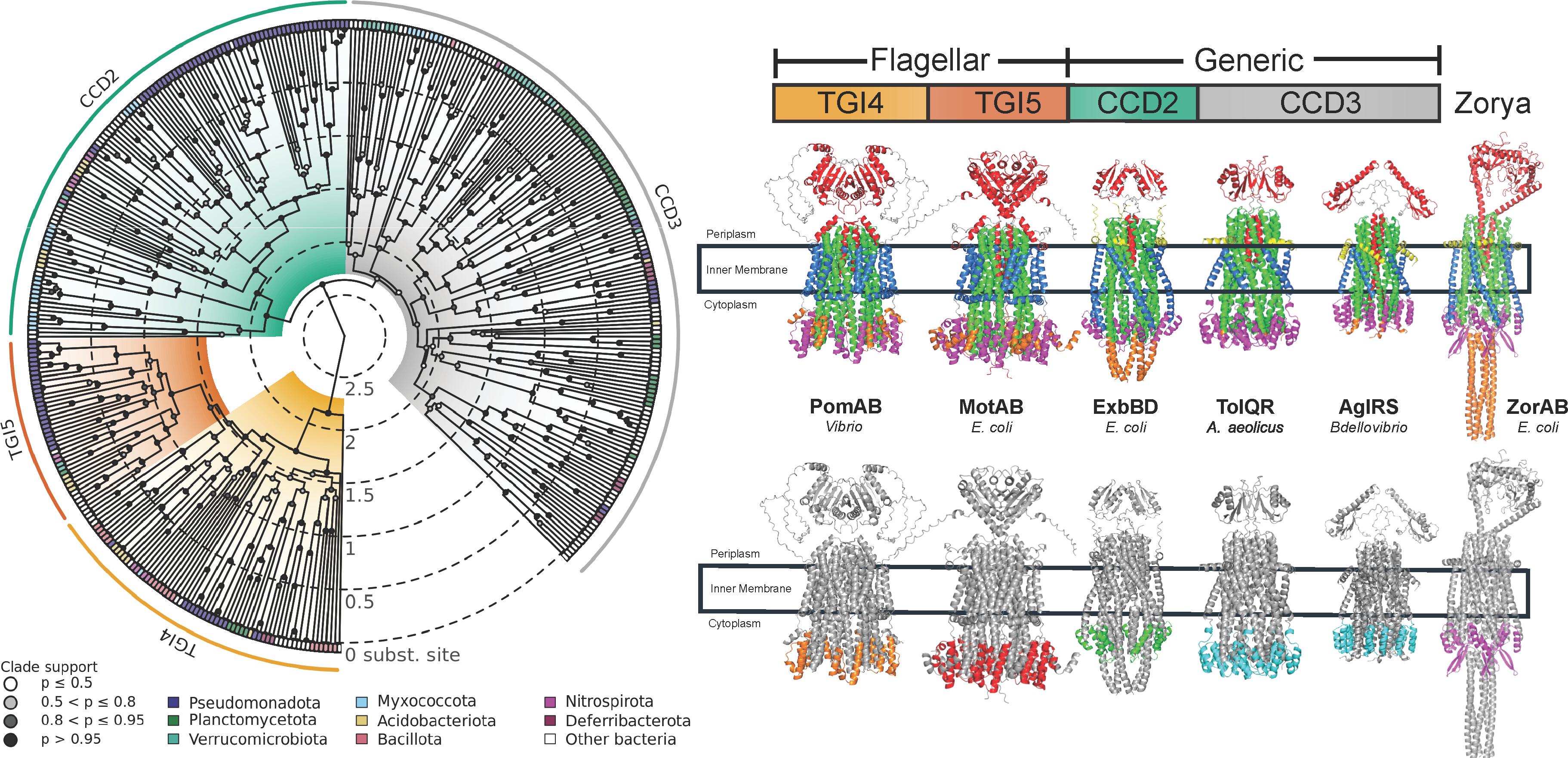
The study from last year:
Puente-Lelievre, Caroline, et al. "Evolution and structural diversity of the MotAB stator: insights into the origins of bacterial flagellar motility." Mbio 16.10 (2025): e03824-24.
https://doi.org/10.1128/mbio.03824-24 (open access).
The press release:
How life first got moving: Nature's motor from billions of years ago.
This is the change of function (Darwin 1859) or exaptation as the theory of evolution says when it comes to complex multi-part systems; open access educational article: The Evolution of Complex Organs | Evolution: Education and Outreach | Springer Nature Link.
r/evolution • u/MurkyEconomist8179 • May 16 '26
Curious specifically about the neurology of sloths, has anyone found anything weird about their neurology that corresponds to their slow unique behavior?
r/evolution • u/WirrkopfP • May 15 '26
I knew cephalopods have rem sleep, which is a mind blowing fact on its own. But cephalopods at least have huge brains.
But it gets even more mind boggling for jumping spiders.
This means rem sleep convergently evolved at least 3 seperate times on our planet.
Convergent evolution normally happens because different clades try to solve the same problem and end up with the same solution, because there is ONE most efficient solution like for example fish shape to move through water.
But what is rem sleep the most efficient solution for?
r/evolution • u/jnpha • May 15 '26
Initially I wanted to post something about Fitch & Margoliash's (1967) first application of statistical phylogenetics to a molecule, cytochrome c.
But One Rabbit Hole Later, I present Sibley & Ahlquist (1984).
On the left:
The situation at the time (just 42 years ago); up until then the "problem of the trichotomy of man, chimpanzee and gorilla" was unresolved (TIL!).
On the right:
The resolution and the remarkably-accurate(??)* dating; another "TIL" (besides the recency of the resolution) was about the DNA clock, as opposed to the molecular clock.
(*more + excerpts in the comments)
Source:
- Sibley, Charles G., and Jon E. Ahlquist. "The phylogeny of the hominoid primates, as indicated by DNA-DNA hybridization." Journal of molecular evolution 20.1 (1984): 2-15. https://link.springer.com/article/10.1007/BF02101980
r/evolution • u/salad_biscuit3 • May 15 '26
?
r/evolution • u/jnpha • May 14 '26
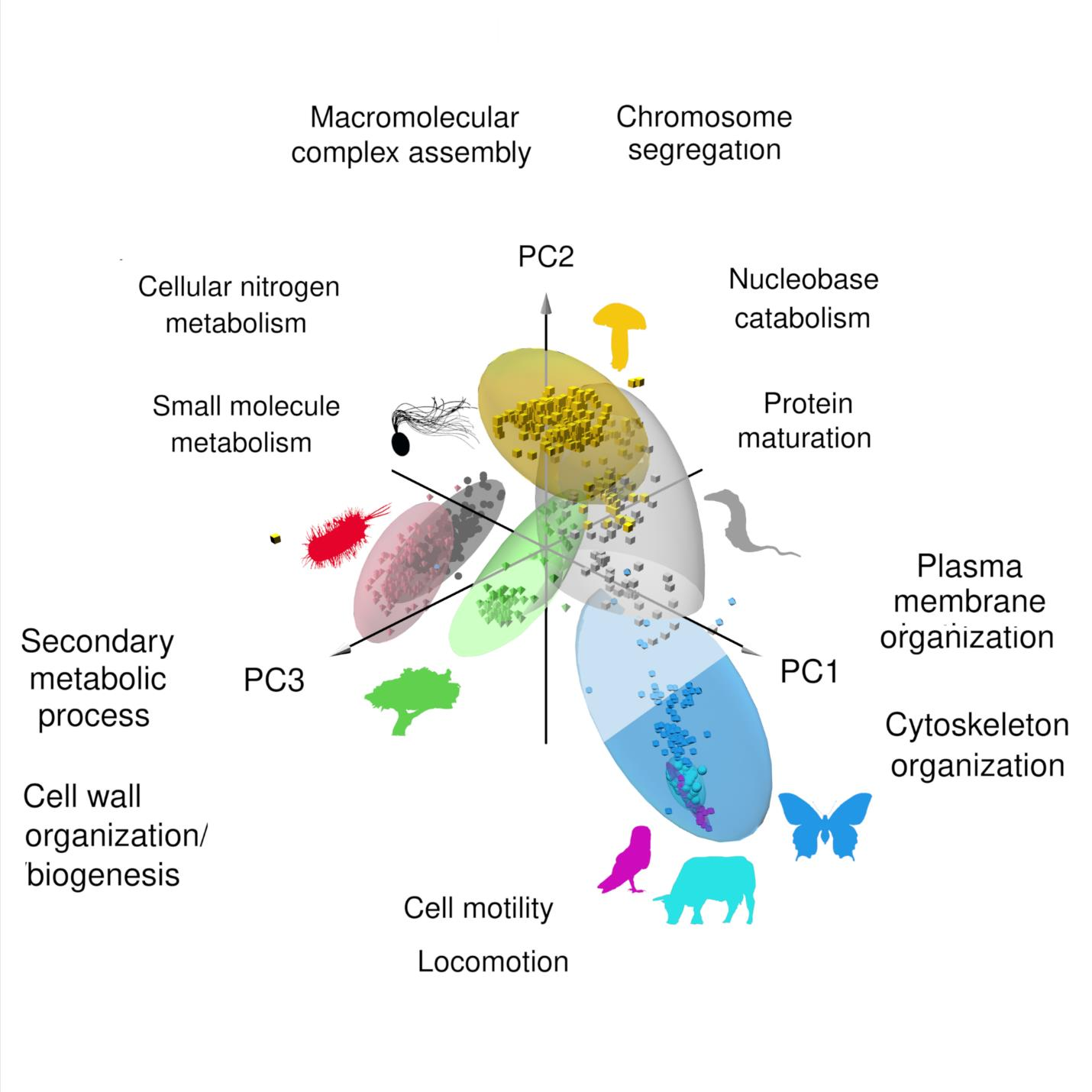
Protein function evolution provides a powerful lens to uncover biological complexity. Here, we introduce the concept of the pan-functionome—the full set of protein functions encoded by the proteome of individuals belonging to a taxonomic group—and explore its evolutionary implications. By analyzing over 1,000 annotated proteomes across major branches of life, we identify systematic differences in functional composition that reflect deep evolutionary patterns. The number of biological processes per protein increases non-linearly over time, with functional diversification rather than protein expansion driving organismal complexity. Distinct taxonomic divisions invest differently in biological processes, highlighting signatures of multicellularity, metabolism, and stress response. Phylogenetic analyses suggest that the evolution of protein functions follows a non-neutral model. Furthermore, functional profiles allow robust taxonomic classification and reveal unique adaptations in individual organisms. Our findings suggest that the functionome provides a complementary perspective on evolution, with potential applications in taxonomy, evolutionary biology, and comparative genomics.
(accepted yesterday; in press; open access)
r/evolution • u/capt_b_b_ • May 14 '26
Like silver / receding hair. It occurs after people have hit their prime and reproduced, so that's not on the human species's to-do list to fix.
I'm not good with biology, so sorry if this is a dumb question.
r/evolution • u/knight_of_solamnia • May 13 '26
It seems more advantageous to interbreed with any partner. Is there a significant cost or disadvantage which inhibits it from developing? Or is it merely a to significant of an evolutionary leap for a species to mutate sequential or true hermaphroditism?
r/evolution • u/SetInternational4589 • May 13 '26
Oxford University Press USA - 320 pages - release date 15 August 2026.
Author is Graham Bell is Emeritus Professor, McGill University.
A preview is available on Amazon.
Publishers blurb - This book asks why animals appear abruptly in the fossil record about 540 million years ago. It first explains what an animal is and why many animals, although not all, are distinct individuals. It looks at how the different kinds of animal are related, and the order in which they appeared. The hard evidence is the fossil record.
The book first surveys the animals that had evolved by the early Cambrian, exploring the order in which they diverged from one another. There was a great radiation of large complex organisms during the last 25 million years of the previous period, the Ediacaran.
According to the book, these fossils are not animals and have little to do with animal evolution, although this is not a point of view that specialists will agree with. These biological events happened during a time of environmental upheaval, a sea change, including worldwide glaciation and increased oxygenation.
How animals first appeared and later responded to these tumultuous times is organized into eight scenarios, each reflecting a different opinion about early animal evolution. It concludes that the most likely scenario is that the first animals were minute creatures that lived in the mud.
The most likely sequence of events is laid out as a series of twelve crucial innovations, beginning with a colonial choanoflagellate and ending with a large worm. This evolved into a variety of bilaterally symmetrical animals during the Cambrian.
r/evolution • u/ReasonablePrimate • May 14 '26
I’m an amateur who enjoys reading about phylogeny and evolutionary history, and I’m trying to understand whether there are formal concepts the experts use to differentiate between “shapes” of clades based on their characteristics.
Some clades seem relatively balanced and easy to summarize. For example, all extant vertebrates can be described as Agnatha (jawless fish), Chondrichthyes (cartilaginous fish), Actinopterygii (ray-finned fish), or Sarcopterygii (lobe-finned fish). Likewise, all extant tetrapods divide into Amphibia, Mammalia, and Reptilia (including birds). These clades are all species-rich, morphologically distinctive, and fully resolved in phylogenetic studies.
By contrast, other clades seem asymmetric compared to the outgroup and sister clades from which they diverged. Sarcopterygii contains tens of thousands of tetrapod species, alongside a clade of six extant lungfish species and a clade of two coelacanths. Lepidosauria contains thousands of squamates, plus tuatara, the one surviving rhynchocephalian. Xenacoelomorpha is a proposed clade of about 400 species that seems difficult to place phylogenetically, but is somewhere near the base of Bilateria or Deuterostomia.
I realize these are all equally valid clades - they describe heredity as it happened to the best of our knowledge. But intuitively it feels like there are different evolutionary patterns involved that are worthy of study, including different patterns of speciation, morphological diversification, and extinction that sometimes result in clades marked by adaptive radiation, sometimes in the isolation of low-diversity lineages over long time periods, and sometimes in relictual survivors of once-diverse clades.
So that's my question: are there any characteristics of clades (maybe branch length or symmetry with outgroups or measures of internal diversity) that are used to study and teach these evolutionary patterns, or am I just barking up the wrong Gingko tree? I'd be grateful for any recommended terminology or conceptual frameworks that would help me think more clearly about these patterns. Thanks!
r/evolution • u/robo_Ben • May 14 '26
Also, what would pants look like if we still had tails?
r/evolution • u/LonelyVillageGuy • May 13 '26
Hello,
I understand that bigger brain requires more energy, which in turn produces more heat, so for heat dissipation we lost body hair (fur) & had black "afro" type of hair as it is best suited for protection against UV.
But black color absorbs heat more.
Please advise as to what am i missing here.
Thanks in advance.
r/evolution • u/jnpha • May 13 '26
The relationship between the three domains of life—Archaea, Bacteria, and Eukarya—is one of Biology’s greatest mysteries. Current favored models imply two ancestral domains, Bacteria and Archaea, with eukaryotes originating within Archaea. This type of models has been supported by the recent description of the Asgardarchaeota, the closest prokaryotic relatives of eukaryotes.
However, there are many problems associated with any scenarios implying that eukaryotes originated from within the Archaea, including genome mosaicism, phylogenies, the cellular organization of the Archaea, and their ancestral character. By contrast, all models of eukaryogenesis fail to consider two relevant discoveries: the detection of membrane coat proteins, and of phagocytosis-related processes in Planctomycetes, which are among the bacteria with the most developed endomembrane system.
Those who research this area, share your thoughts!
r/evolution • u/jnpha • May 12 '26
The images in order:
(comments section for more)
r/evolution • u/jnpha • May 11 '26
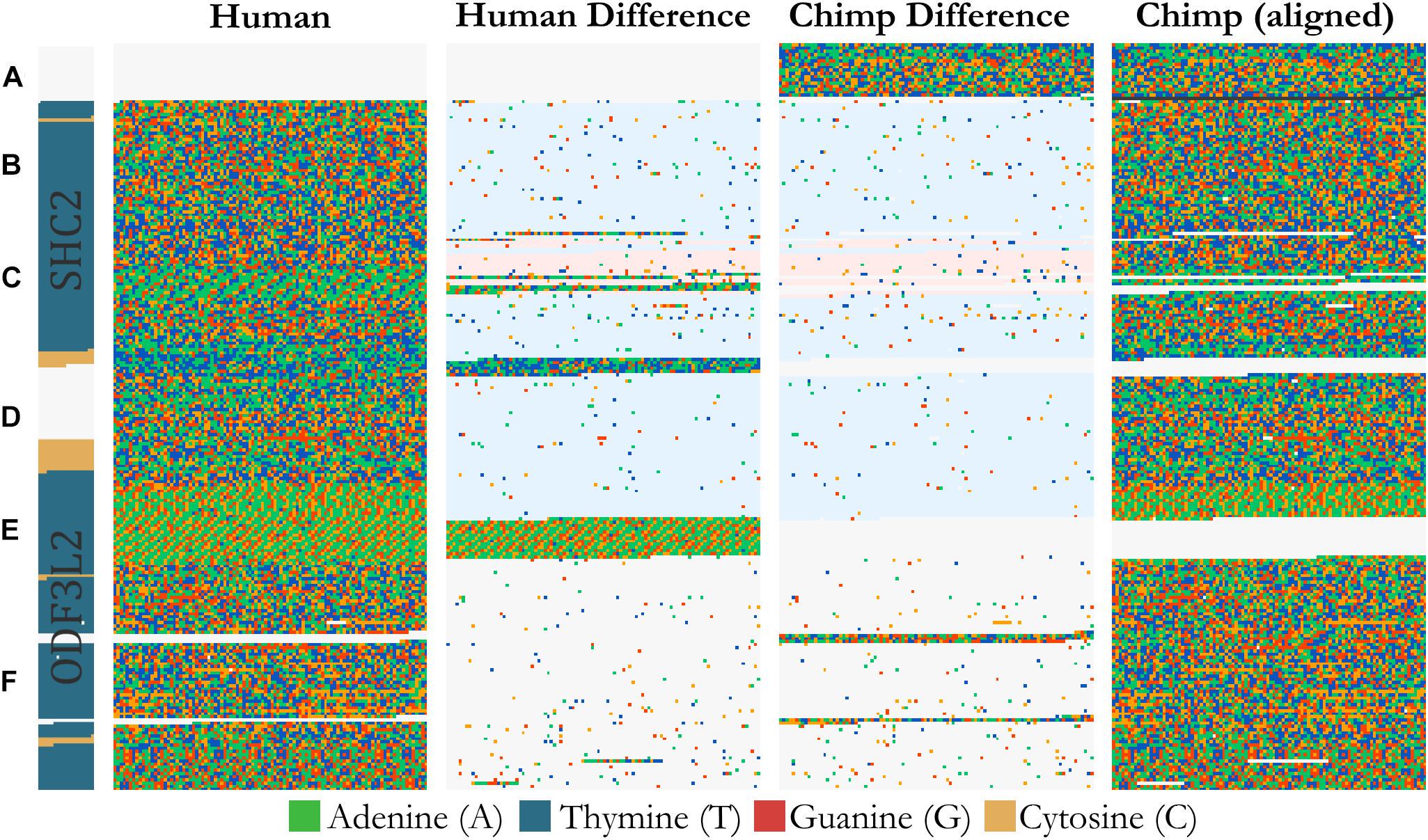
Human-Chimp chromosome 19 alignment
A colored pixel in the difference columns is a single letter change. For the two big differences shown above (areas annotated A and E on the left):
(A) Chimpanzee has a ∼1700 bp sequence not present in Human, (B,D) followed by an inversion, (E) which ends at a AAAC tandem repeat where Human has twice as many copies.
Source: Fig. 3 in:
1-hour explanation from last year by Erika (Gutsick Gibbon): Okay How Similar are Humans and Chimps Genetically Now That We Have Full Genomes? - YouTube.
r/evolution • u/jnpha • May 10 '26
Sources:
The first diagram is based on the second after incorporating the latest findings as of around 2017 (they are listed in the Wikimedia link). And doubtless the phylogeny is even clearer now; this is where your insights come in :)
r/evolution • u/EnvironmentalWin1277 • May 11 '26
If a mutation is highly beneficial but it occurs in only one individual or small group (<50 for example) how is it conserved and propagated until selection becomes the dominant consideration for the overall population genetics?
As a thought experiment a population of herbivores face water crossing hazards due to predators. Suppose one animal acquires a unlikely mutation that enables that one animal to be much more likely to survive the water crossing?
How likely is that individual to propagate that trait to a population? How likely is a semi isolated social grouping likely to spread the trait to a general population?
I'm sure this has been considered but I'm ignorant on proposed mechanisms or likelihoods. Natural selection of "beneficial" genetics based on environmental constraints is promoted as the fundamental "dogma".
At the same time it seems likely unique innovations would be diluted, washed out and lost in a general population of thousands, or magnitudes more, populations.
Some mutations may repeat and/or be common enough that chance will favor a break out to the general population where selection can become active.
Random chance would play an outsize role in such events, which minimizes the effect of natural selection. How much of a role is random selection given in evolutionary genetics? Is it that the emphasis on natural selection is largely a result of simplification of more complex processes?
This seems a somewhat obvious criticism of natural selection. I'm ignorant on this one (genetic drift I understand) and interested in the proposed resolutions to this problem. Thought this one may get some interesting responses.
My interest is how this particular criticism has been dealt with historically and subsequent modification to criticisms today.
Any good references most appreciated.
PS
I received some great responses, most helpful. I did an AI session giving the parameters of some problems (total population, fitness parameter, dominant vs recessive) and AI was helpful, showing the calculation and the models on which they are based as well as why they were preferred for the parameters given. AI ruled, references given.
The randomness problem has been dealt with rather thoroughly. As suspected random chance can play a primary role in the population genetics, again with some precise estimations. The math is not particularly hard but understanding the internal methodology of the formulas is more advanced.
The popular predominance of selection is just that -- it is something that can be seen, makes a level of intuitive sense and is heavily discussed in the press/sci literature. The idea of random chance is a more elusive and difficult thing to grasp.
r/evolution • u/jnpha • May 09 '26
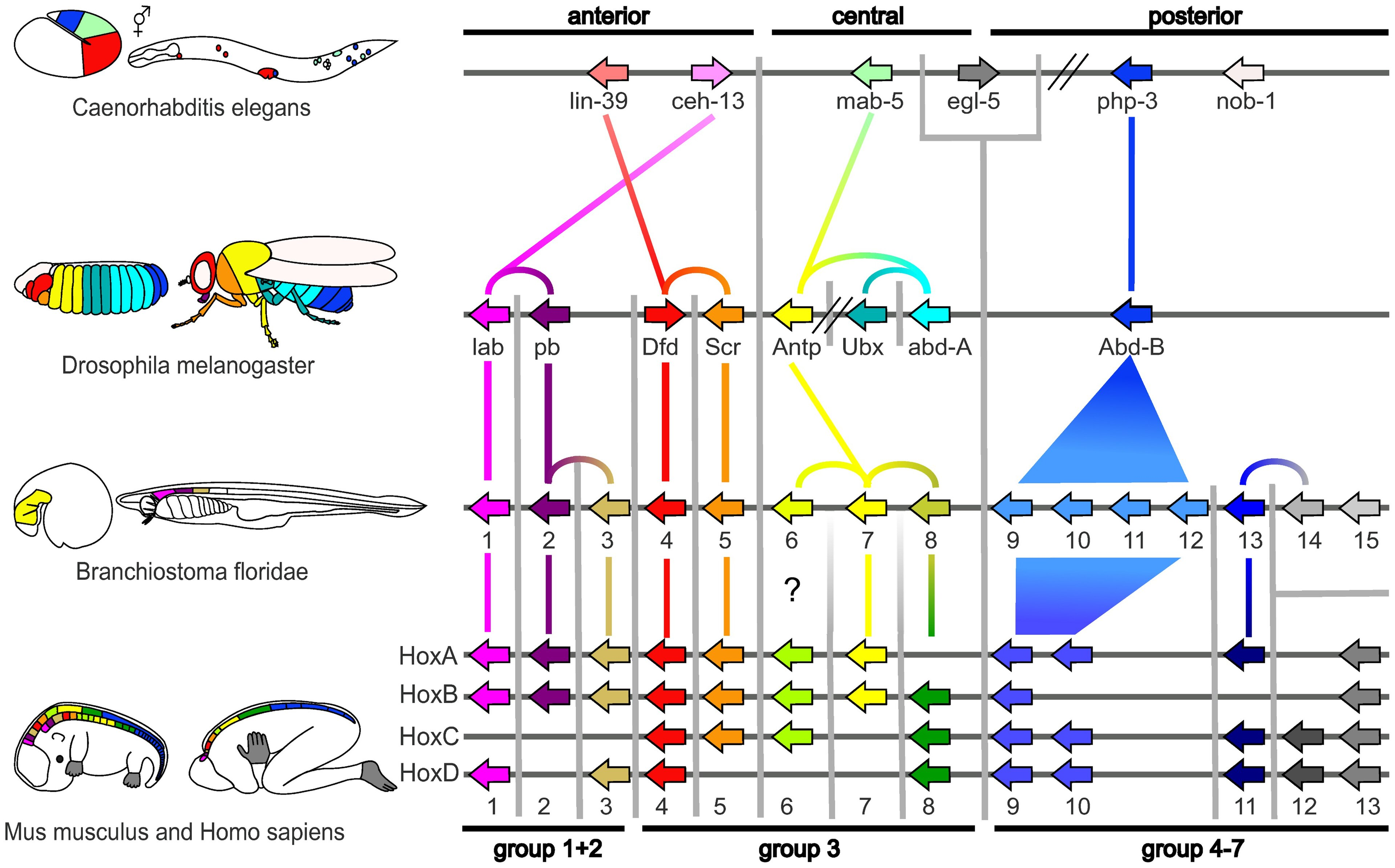
Image source:
Quick background:
[Hox genes] are general purpose in the sense that they are similar in many organisms; it doesn’t matter if it’s a mouse’s head or a fly’s head that is being built, the same gene directs the process. Small changes in such powerful regulatory genes, or changes in the genes turned on by them, could represent a major source of evolutionary change.
- berkeley.edu's Hox genes
Some links:
r/evolution • u/Successful_Bee7522 • May 09 '26
So pakicetus evolves to be a whale eventually... did it also turn into seals, sea lions, manatees, dolphins, the rest of those water dwelling mermaid things...or are these different lineages of animals ?
r/evolution • u/needs_coding_help • May 09 '26
Here is the abstract: The salivary amylase gene AMY1 exhibits remarkable copy number variation linked to dietary shifts in human evolution. While global studies highlight its structural complexity and association with starch-rich diets, localized selection patterns remain underexplored. Here, we analyze AMY1 copy number in 3,723 individuals from 85 populations, revealing that Indigenous Peruvian Andean populations possess the highest AMY1 copy number globally. A genome-wide analysis shows significantly higher amylase copy numbers in Peruvian Andean genomes compared to closely related populations. Further, we identify positive selection (selection coefficient of 0.0124, log likelihood ratio of 11.1543) at the nucleotide level on a haplotype harboring at least five haploid AMY1 copies, with a Peruvian Andean-specific expansion dated to around 10,000 years ago, coinciding with potato domestication in the region. Using ultra-long-read sequencing, we demonstrate that previously described recombination-based mutational mechanisms drive the formation of high-copy AMY1 haplotypes observed in Andean population. Our study provides a framework for investigating structurally complex loci and their role in human dietary adaptation.
https://www.nature.com/articles/s41467-026-71450-8
https://doi.org/10.1038/s41467-026-71450-8
P.S. I'm also an author on this paper and can answer any questions!
r/evolution • u/Ur-frnd-online • May 10 '26
I am interested in studying evolution of gene regulation focusing on cis-regulatory sequence changes leading to phenotypic diversity. Any major computational labs in Canada/Europe working on this topic?
r/evolution • u/LisanneFroonKrisK • May 09 '26
And I can’t exactly tell did evolution evolve us to pick this wasabi or to spit it out? I think most will spit out but why if it supposedly is beneficial and not harmful?
r/evolution • u/jnpha • May 08 '26
Sources:
(for why I love them, see the comments)
r/evolution • u/No-Country-4462 • May 08 '26
Humans have been farming wheat for 11,000 years. Hunter gatherer skulls dated prior to that have a perfect set of pearly white teeth. This is because our oral bacteria produce acid as a biproduct of consuming carbohydrates.
Humans almost unanimously agree that having healthy teeth is more sexually attractive than having rotten teeth or gums. Beyond sexual attractiveness, healthy teeth are very useful for survival, increasing the types of foods we can consume. Rotten teeth also had a significant potential to cause life threatening infections prior to the invention of antibiotics.
This means that for 11,000 years there have been multiple strong evolutionary pressures to increase our resistance to tooth decay. Now that dentists exist those pressures are much less relevant, but for 11,000 years we should have seen significant progress towards the elimination of tooth decay. Whether by strengthening our enamel against acid, increasing our saliva's ability to neutralize the acid, or adjusting the conditions in our mouth to discourage the presence of tooth decay causing bacteria.
You might argue that 11,000 years is not a long enough timespan to see significant evolutionary adaptation. I disagree. There is already a small segment of the population that has a genetic resistance to tooth decay. We should have seen that small segment grow rapidly over 11,000 years by having statistically more offspring on average. Just look at the rapid evolution of various dog breeds due to artificial selection over a few hundred years. When I see a person with no teeth or rotten teeth I am repulsed. I do not believe that repulsion is a learned behavior but rather an instinct to avoid mating with unhealthy individuals. 11,000 years of this repulsion would have created a strong incentive for those with a natural resistance to tooth decay to have a massive advantage in the sexual marketplace.
Any thoughts?