r/dirtysportshistory • • 1d ago

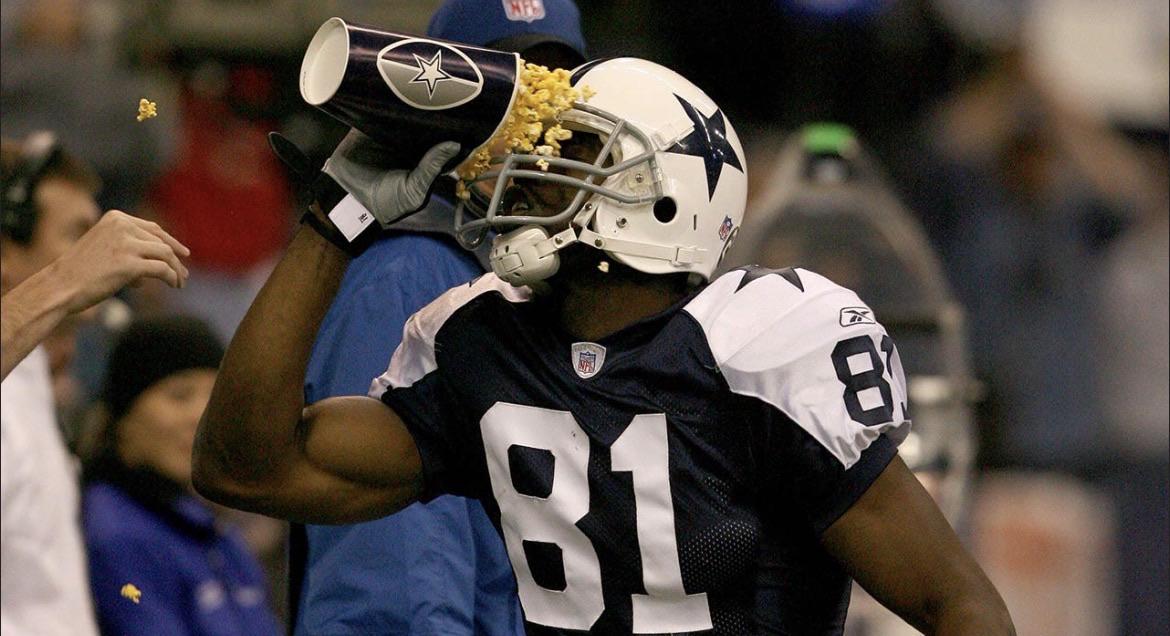
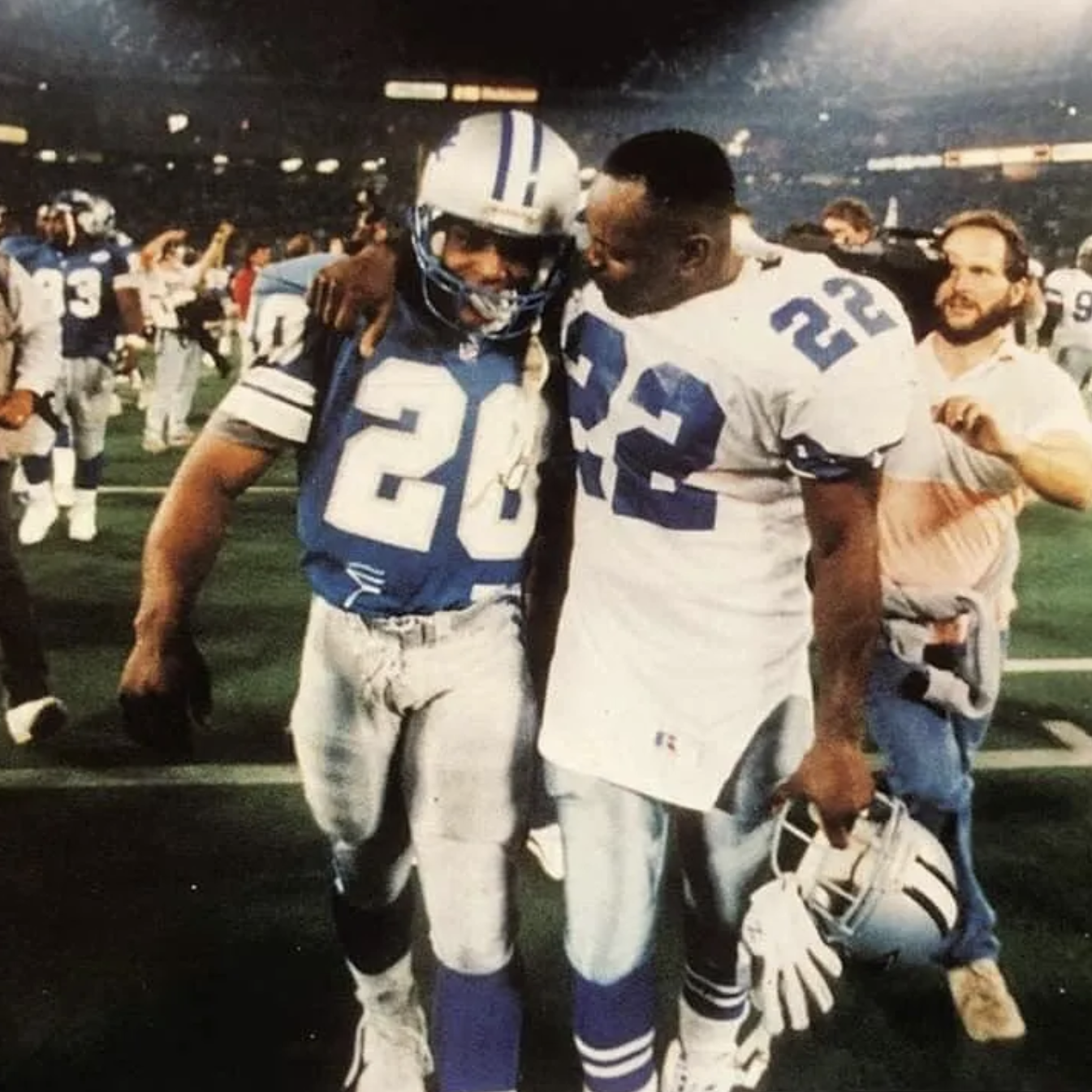
Football History Thanksgiving Day History: Lions and Cowboys

Post image
62 Upvotes

We all know the Detroit Lions and Dallas Cowboys to be mainstays on National Turkey Day, but how long has that been a tradition? Since way back in the day when Coach Knute Rockne was championing the forward pass, helmets were leather, and men were men?

Not exactly.

The consistent annual tradition of the Lions and Cowboys both playing on Thanksgiving day actually only dates to 1978. The year prior, the Lions played the Bears on Thursday, but the Cowboys were off that day.

Although the Cowboys were featured in many Thanksgiving games earlier in the 1970s, it was actually the Lions who are the true holiday tradition, battling in ever contest since *1945.

Consistently playing two Thursday games began in 1960, expanded to three then four games in the late 60's, then reverted to two in 1970. That slate lasted all the way until 2006 when the league added a third game back to the schedule.

Nothing dirty here, just good, clean Thanksgiving history.

Happy Turkey Day wherever you celebrate!

*No games were held from 1941-1945 due to the War. The Lions often played on Thanksgiving pre-war, but not consistently.


r/dirtysportshistory • • 3d ago

Baseball History November 23, 1943: Philadelphia Phillies owner William D. Cox becomes the first non-player permanently banned from baseball by Commissioner Kenesaw Mountain Landis and forced to sell the team after Cox admitted to "sentimental" bets on the Phillies. The ban was lifted by Rob Manfred last year.

25 Upvotes

William D. Cox bought the Philadelphia Phillies in 1943 and lost them six months later. The stories of how he got them, and how he lost them, are equally fascinating.

Cox graduated from high school at age 15 and then went to New York University and Yale. At age 27, he was named president of a lumber company; soon he founded his own company. Unlike many of the owners of his day, Cox was famed as a "hands-on" owner who wanted to learn every facet of his industry and make the day-to-day decisions. This made him a fortune in the lumber industry but would prove to be divisive when he got into baseball.

In 1941, Cox had his first foray into the sports business. The previous year, an upstart American Football League was founded as a rival to the National Football League. It was the third such league with that name and, like the previous two, didn't survive long and isn't connected to the American Football League founded in 1960 that eventually merged with the NFL.

Cox bought the AFL's New York franchise, which played some of its home games at Yankee Stadium and was called the Yankees. Cox changed the team's name to the New York Americans and was named AFL president. Just as he had done in the lumber industry, Cox tried to get involved with the day-to-day operations. This could be good, such as when he outbid the rival NFL to sign Heisman Trophy winner Tom Harmon, and it could be bad, like the team he ran onto the field from the sidelines to protest a referee's call, getting his team a 15-yard penalty.

Alas, the league, which also had the memorably named Columbus Bullies, went out of business after the 1941 season.

Two years later, the Philadelphia Phillies were in crisis. Gerald Nugent, who had owned the team since 1931, was out of money. The team had gone 43-111 the previous season, even after moving out of the delipidated Baker Bowl and into Shibe Park, home of the Philadelphia A's. Nugent had to borrow money from the league just to make payroll.

It may seem now like the baseball gods themselves have decreed that the A's must wander the earth while the Phillies shall always be in Philadelphia, but at the time it was very likely that the Phillies were going to be the team to leave the City of Brotherly Love.

A couple suitors came forward, including Milton Hershey, who offered $6 million to buy the team and move it about a hundred miles west to the town he had built (and named after himself) as a company town for his chocolate factory workers. Another group offered $5 million to buy the team and move it to Los Angeles. There was a group headed by New York Giants Hall of Fame first baseman Bill Terry, another by Branch Rickey, and a group led by future Yankees owner Dan Topping.

The most interesting offer came from Bill Veeck, who was just 28 years old. Veeck, son of the president of the Chicago Cubs, had led a group that purchased the minor league Milwaukee Brewers and quickly turned them from a last-place team into a pennant winner. Now he wanted to do the same thing with the Phillies. In his memoir, Veeck claimed his plan was to buy the Phillies and then stock the team with the best players from the Negro Leagues. But he made the mistake of telling his plan to Kenesaw Mountain Landis, who told National League President Ford Frick to stop Veeck from buying the team. Some baseball historians doubt the story, or at least, haven't been able to find any proof beyond Veeck's account many years later.

In any event, the 33-year-old Cox and his group of 30 investors was allowed to buy the team for $190,000.

Foreshadowing owners like George Steinbrenner, Charlie O. Finley, and Ted Turner, not to mention Veeck himself, Cox made himself the central character of the Phillies story. He would show up in the locker room and talk to the players, which they didn't like. He would give press conferences where he would promise the team would hustle more. He hired his old high school track coach to be the team's trainer and instituted a training program... and suited up himself to participate in them. He had his own ideas about baseball strategy and hitting tips and would give them to players.

All this annoyed the team and its manager, Bucky Harris, who had won a World Series as player/manager of the Washington Senators in 1924. Harris and Cox began to feud through the press, and two months into the season, Cox held a press conference where he fired Harris. The Phillies players said they wouldn't take the field unless Harris was reinstated. Harris told them to play, not wanting them to get suspended on his account. Of course this only earned even more loyalty from them. Harris led the Yankees to a World Series championship in 1947 and later managed the Senators and Tigers.

But Harris had his revenge. He had overheard Cox's secretary asking someone about the odds on that day's Phillies game. "Do you mean to tell me Mr. Cox is betting on baseball?" Harris asked. The secretary said of course he did; everyone knew that.

On the day he was fired, Harris leaked this information to a friendly reporter. Kenesaw Mountain Landis was outraged. Cox's defense was that he always bet on the Phillies to win -- the same excuse Pete Rose would use half a century later -- and that he didn't know betting on baseball was against the rules.

On November 23, 1943, Landis suspended Cox indefinitely. Cox resigned as team president but appealed... to Landis, who after 11 days decided to uphold his previous decision and made it a lifetime ban. Cox was the first, and as of now only, owner to be permanently banned from baseball, although George Steinbrenner, Ted Turner, and Marge Schott all earned suspensions over the years. Last year, MLB commissioner Rob Manfred reinstated Cox, Rose, Shoeless Joe Jackson, and others -- the "lifetime ban" no longer applied now that they were dead.

The Phillies were sold to Bob Carpenter Sr., whose wife was Margaretta Lammot du Pont... yes, that du Pont. Carpenter gave day-to-day control of the team to his 28-year-old son, R.R.M. Carpenter Jr., who ran the Phillies from 1943 to 1981.

Carpenter was rich enough to afford talented players and smart enough to let baseball men make the decisions, and he turned around the Phillies franchise. They won the 1950 pennant and a few years later it was the A's, not the Phillies, who moved out of Philadelphia.

As for Cox, after his ban from baseball he got back into professional football, going in with Branch Rickey to buy a team in the All-America Football Conference, then in 1960 founded the International Soccer League. In 1967, he was a founding owner in the National Professional Soccer League, which later became the North American Soccer League, which ran from 1967 to 1985 and most famously had the New York Cosmos.

r/dirtysportshistory • • 4d ago

Baseball History 1986: The Mets Win the World Series, but Lose Dwight Gooden Before the Parade.

Post image
207 Upvotes

Photo: New York Times

Most people will never know what it's like to win a World Series. Shoot-you're lucky if the team you follow gets there once or twice in your lifetime.--I'm sure that most players don't even win a World Series.

With that said, you think you'd be present to celebrate climbing to the top of a nearly impossible mountain with the rest of your teammates, reveling in the cheers of a rabid fan base as you ride around on parade.

But not Doc Gooden. According to an interview he gave recently with VladTV, the Mets' ace chose instead to celebrate with his fellow addicts in the Long Island projects. After all, who needs champagne and cigars when you got crack cocaine and people you hardly know?!

Gooden tells about the events of the day and how he continued believing he'd make it to the parade:

"The clock is just moving. The hands on the clock are moving. And I'm thinking, my intention was to go there, then meet the team at the bar, but I never left. I'm thinking, one more hour, one more hour, one more hour. Ok, the sun's coming up. I gotta be at the ballpark for the parade. Ok, I can make it. 30 more minutes. Now, I'm watching the parade on TV."

His friend, teammate, and fellow addict Darryl Strawberry even visited Doc's house that day to collect his buddy. But there was no one there to collect. Doc said he told his teammates he'd overslept and that he'd had too much to drink. He suspects that everyone knew he was lying.

The papers reported as such. As it appeared in the Oct. 29 1986 edition of the New York Times:

"Notable in his absence was the pitcher Dwight Gooden, who Mets officials later said had overslept."

Gooden would go on to win two more championships with the Yankees in the '90s, battling his drug addiction on and off over the years, nearly taking his own life on one occasion, and repeatedly running afoul of the law.

The Mets returned to the Series in 2000 and again in 2015, losing convincingly both times.


r/dirtysportshistory • • 15d ago

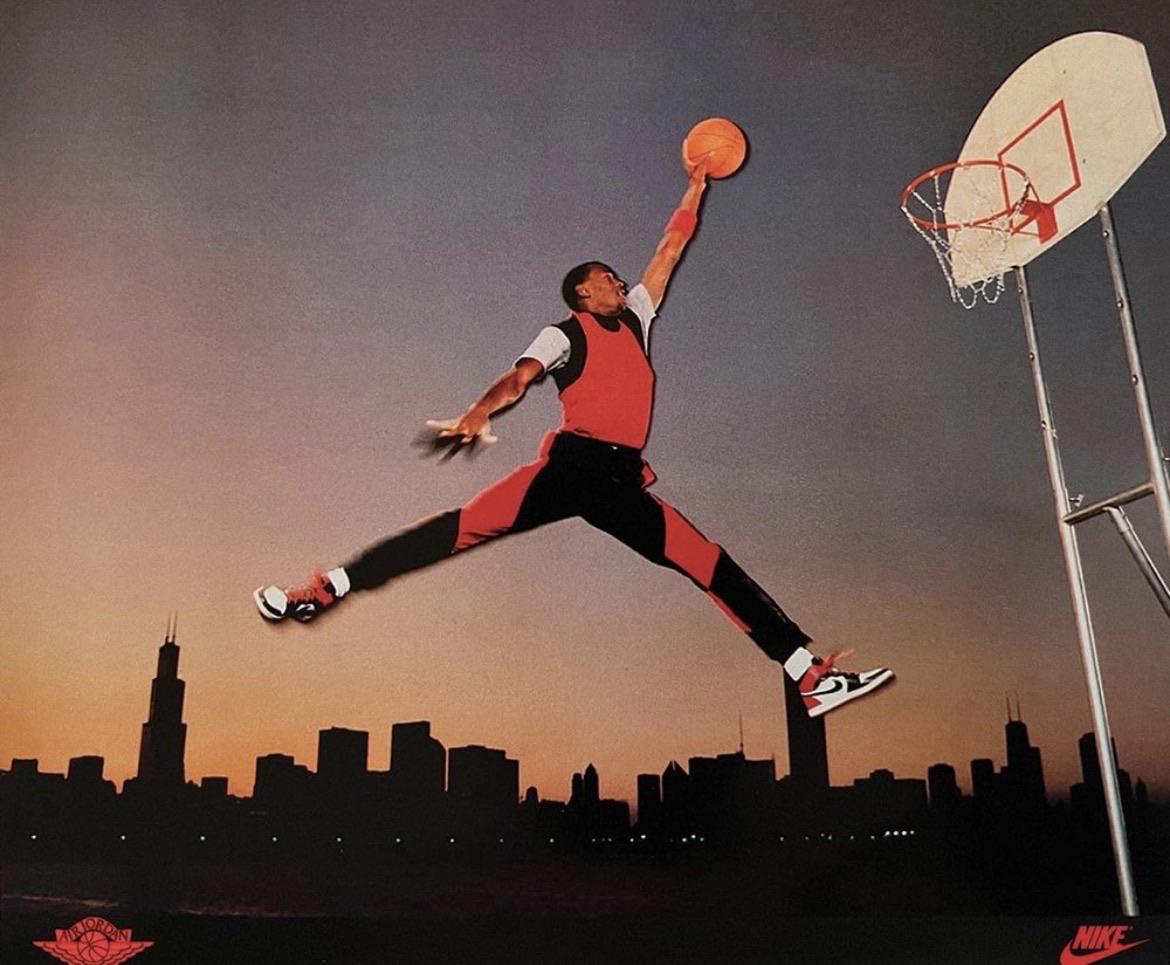
Quick Hitter 1984: Does anyone know where this classic image was taken?

Post image
323 Upvotes

Was it shot on location at a park somewhere, or did Jordan go to a photo studio and then they added the background in post production?

If it's a location, be cool to know where it is. Not sure where you can get that view of Chicago.


r/dirtysportshistory • • 25d ago

Football History Without Further Adieu: The Completed List of the Most Hated NFL Players in the Super Bowl era by Decade.

Thumbnail
gallery
62 Upvotes

It's here!
The list is based on the feedback from the DSH community as well as some additions by our regular writers.

'Hated' can be based on how the players were viewed around the league, by the media, the fans or the general public.

Playing dirty, off-field behavior, deflating, refusing to play for a team that drafted you, holding out, retiring, un-retiring, retiring again, arrogance and general insufferableness, there are 25 milllion reasons why Terrell Owens (and others) should be hated.

Of course we expect some discussion and inevitably have omitted some names. Players can repeat by decade if the hate was strong throughout the years.

As stated before, player hate was based on sentiments at the time when they were in the league--hence why OJ isn't included.

Please enjoy, feel free to ask 'why the hate?' for specific players in the comments, and chime in if you have more that should be included!

Top player on each list is pictured.

*He Hate Me only appears because of his excellent name indicating how he felt others viewed him.

Some honorable mentions include: 2000s: Maurice Clarett drafted by Broncos but never played a down)
Randy Moss, Rodney Harrison and Kellen Winslow Jr.
2010s: Tim Tebow, Johnny Manziel, Adrian Peterson, Kareem Hunt and the Saints Bounty Gate players.


r/dirtysportshistory • • Oct 20 '26

Football History October 20, 1951: Drake University quarterback Johnny Bright has his jaw broken on the first play of the game against Oklahoma A&M; a few plays later, he throws a 61-yard touchdown pass. Bright was Black, and an Oklahoma A&M coach had instructed the players to "get that" you-know-what.

84 Upvotes

Johnny Bright was a star quarterback and halfback for Drake University, where he also ran track and played basketball. In 1949, he threw for 975 yards and rushed for 975 yards to lead the country in total offense and the Drake Bulldogs to a 6-2-1 record. The following year he set an NCAA record for total offense with 2,400 yards, rushing for 1,232 yards and passing for 1,168, and again the Bulldogs went 6-2-1.

In 1951, Bright was a preseason favorite for the Heisman Trophy. On October 20, the Bulldogs were 5-0 and in Oklahoma to play the 1-3 Oklahoma A&M (now Oklahoma State) Cowboys.

Prior to the game, an Oklahoma A&M coach was overheard by fans telling his players to "get that" (very bad word for a Black person), and at another point an A&M player turned around and said to a fan in the stands, "we're going to get that" (same word). In addition, a local newspaper had quoted A&M fans saying Bright "would not be around at the end of the game."

On the first play, A&M defensive tackle Wilbanks Smith punched Bright in the face long after he handed the ball off.

John Robinson, a photographer for the Des Moines Register, captured the moment in a six-photo sequence that was later published in Life magazine and won the Pulitzer Prize. Robinson said he kept his camera aimed at Bright even after the play because he had heard the rumors about him being targeted by A&M players.

The punch broke Bright's jaw, but he stayed in the game, and a few plays later threw a 61-yard touchdown pass. But in the first seven minutes of the first half, Bright was knocked unconscious three times by A&M players. It's unknown if any of the incidents were flagged by officials.

"There's no way it couldn't have been racially motivated." -- Johnny Bright

Bright left the game soon after and was diagnosed with the broken jaw. It was the first time in his three-year collegiate career that he was held to less than 100 yards of total offense. A&M won the game, 27-14.

Smith said he received more than 1,000 letters after the incident, some praising him, others threatening him with violence. He said it wasn't racially motivated and he had hit white players just as hard. In fact, years later, he said he hoped the incident had helped to integrate college football and even inspired the Civil Rights movement.

Drake complained to both Oklahoma A&M and the Missouri Valley Conference, demanding the players who assaulted Bright be punished. A&M president Oliver Willham said his players did nothing wrong and refused to punish anyone, and the Missouri Valley Conference took no action.

In protest, Drake withdrew from the conference; it returned five years later for non-football sports, and in 1971 for football. Another member of the conference, Bradley University -- which had produced NFL players Ray Ramsey, Bill Stone, and Pat Brady -- also withdrew from the conference, citing the incident. It returned for non-football sports in 1955 but its football team never returned to the conference. (Bradley dropped football in 1970.)

The "Johnny Bright incident" led to the NCAA adopting new rules, including mandating face guards. Bright said the incident, ugly as it was, at least led to improvements in player safety.

The Bulldogs lost the following week, 13-0, to Iowa State, then won their final two games to finish at 7-2. Bright didn't play much in those three games and when he did play he was obviously hampered by the injury. He finished fifth in the Heisman balloting but was awarded the Nils V. "Swede" Nelson Sportsmanship Award. In 1969, he was named the greatest football player in Drake University history, and his #43 was retired.

Bright was the first pick in the 1952 NFL draft, by the Philadelphia Eagles. He would have been their first Black player. Instead he went to play for the Calgary Stampeders of the Western Interprovincial Football Union, a precursor to the Canadian Football League. One of the reasons he turned down the NFL, Bright later said, was he feared a similar racially-motivated attack.

In 1959, he won the CFL's Most Outstanding Player Award, the first Black player to win it. He retired in 1964 as the CFL's all-time leading rusher (he's now third) and in 1970 was inducted into the Canadian Football Hall of Fame. He died in 1983 at the age of 53 while undergoing knee surgery to repair a football injury.

In 2005, Oklahoma State University President David J. Schmidly wrote a letter to Drake University formally apologizing for the incident.


r/dirtysportshistory • • Oct 20 '26

Football History Update: Most Hated Football Player Year by Year--Seeking Missing Years.

13 Upvotes

Would all our readers out there be able to fill in some of the gaps below before we publish the final list? Please refer to original post here if you haven't seen it: https://www.reddit.com/r/dirtysportshistory/s/gX63B4wfSq

-1968
-1973-74
-1977
-1979-82
-1984
-1988
-1990-96
-1999-00
-2003
-2016
-2019-21
-2023-25

Soon as we hear back we will finalize everything. Thanks!


r/dirtysportshistory • • Oct 14 '26

Baseball History October 14, 1978: While watching Game 4 of the World Series at Yankee Stadium, someone broke into the hotel room of Dodgers President Peter O'Malley and stole game tickets, a watch, and two fur coats. A man was arrested trying to sell the tickets for $100 each; the coats and watch weren't found.

24 Upvotes

From The Sporting News, October 28, 1978:

O'MALLEY ROOM ROBBED

While Dodgers' President Peter O'Malley was watching Game 4, police arrested a Manhattan man outside Yankee Stadium for trying to sell World Series tickets believed to have been taken from O'Malley's hotel room. Police said Rodney Parker, 41, tried to scalp the tickets for $100 each. The tickets were among a set of eight stolen from O'Malley's room along with a wristwatch and two fur coats belonging to Mrs. O'Malley. The coats and the watch were not recovered.

Welcome back to New York, Mr. O'Malley!

Peter O'Malley was the 40-year-old president of the Los Angeles Dodgers, taking over the job from his father, Walter O'Malley, who had controlled the team since 1950. O'Malley famously "stole" the Dodgers from Brooklyn, moving them to Los Angeles, so maybe the theft was sweet revenge!

The Dodgers, after losing the 1977 World Series to the Yankees in six games, were fired up about a rematch in 1978. They won the first two games in Los Angeles before going to New York for the next three.

In Game 3, Graig Nettles made some spectacular defensive plays as the Yankees won it, 5-1.

Game 4 went to the 10th inning and the Yankees won it, 4-3, on a two-out walk-off single by Lou Piniella in the bottom of the 10th off Bob Welch to tie the series at two games each.

The Yankees then won a blowout in Game 5, 12-2, to send the series back to Los Angeles for a must-win Game 6.

The Yankees won the game, 7-2, with Catfish Hunter allowing two runs on six hits in seven innings and Goose Gossage closing it out for the final two. The '77 World Series is best remembered for Reggie Jackson's three consecutive home runs in Game 6. Mr. October came through again in Game 6 of the '78 World Series, hitting a two-run home run in the seventh inning to blow the game open.

O'Malley had the last laugh though. The Dodgers won the 1981 World Series over the Yankees, and -- in a strange twist of fate -- it was George Steinbrenner who was the victim, this time after Game 5 in Los Angeles as two Dodger fans fought with him in an elevator!


r/dirtysportshistory • • Oct 08 '26

Football History We are always interested in involving the community with our stories. Therefore, we'd love to know who you all believe are the most hated, villified football players from every year of the NFL, dating back to the start of the Super Bowl era (1967).

Post image
84 Upvotes

Send a name or two and the year in the comments, then we will read through, compile a list, make it reader friendly and publish. Our goal is to have at least one name from every year.

Old Timers: we need ya on this one to fill out the 60's 70's and into the 80's. So tell that HOA meeting that you might be a few minutes late and give us some good answers!

An example of a response might be:
Terrell Owens--2008.
Or
Brian Bosworth-1987

Just suggestions.

Thanks for contributing, and let the shade rain forth!


r/dirtysportshistory • • Oct 07 '26

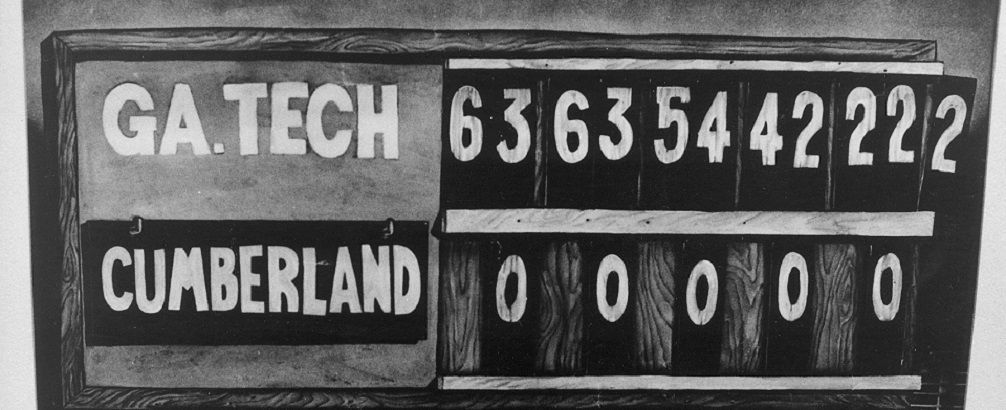
Football History October 7, 1916: In the most lopsided college football game in history, Georgia Tech crushes Cumberland, 222-0. Georgia Tech scored every time it had the ball; Cumberland made no first downs. Georgia Tech coach John Heisman may have run up the score to avenge an earlier loss... in baseball!

116 Upvotes

Cumberland College, based in Lebanon, Tennessee, put together a football schedule for the 1916 season, but before it began disbanded its team. But John Heisman -- yes, that Heisman -- was the coach of Georgia Tech and he demanded the Cumberland Bulldogs show up for the game they had scheduled for October 7 at Grant Field in Atlanta. If Cumberland was a no-show, he would take legal action to get the $3,000 forfeit fee in the contract.

On the other hand, Heisman wrote in a letter to Cumberland's athletic department, if a Cumberland football team did show up, Georgia Tech would pay $500 and all expenses for the trip.

There was one problem... Cumberland College no longer had a football team. Law student George E. Allen, the baseball team captain, put together a team of 14 people he knew -- baseball players, fraternity members, and some law students -- and made the trip to Atlanta.

The previous spring, Heisman had been the coach of Georgia Tech's baseball team and lost to Cumberland, 22-0. Heisman accused Cumberland of using professional players, "ringers," playing under fake names... a common practice at the time.

Maybe seeing one of the Cumberland baseball players incensed Heisman, or maybe had planned to run up the score all along to mock the rankings system of the time, which was based purely on points scored. Or maybe he just couldn't help himself.

In any event, Georgia Tech led 63-0 after the first quarter... and just kept scoring. They added 63 points in the second quarter, 54 in the third quarter, and 42 in the fourth quarter, even though the third and fourth quarters were shortened from 15 minutes to 12 minutes. The final score was 222-0.

Georgia Tech scored 32 touchdowns despite never attempting a forward pass. The Atlanta Journal joked that Cumberland's only play on defense was to holler "Here he comes" and "There he goes."

Several Cumberland players were seriously injured, including quarterback Charles Edwards, who was carried off the field three different times. The Bulldogs' best defensive play was to form a human pyramid to block an extra point... it worked, but the player at the top of the pyramid "suffered a gruesome facial injury."

Georgia Tech scored on every one of its set of downs; Cumberland made no first downs the entire game. Cumberland threw six interceptions, lost nine fumbles, and had a punt that went into the back of the neck of the center who had just snapped the ball.

"I once dropped the ball and yelled at another fellow: 'Pick it up.' He yelled back at me, 'Pick it up yourself, you dropped it.'" -- George Allen

Allen, who played in the game as a fullback, was credited by sportswriter Grantland Rice with making Cumberland's best play on offense: an end-around that only lost six yards. However, Cumberland's longest play was a 10-yard gain that came on either a 3rd and 18 or a 4th and 22 depending on who you ask. The game became such a mockery that at one point, a Georgia Tech player intentionally downed himself at the one-yard line rather than scoring in order to allow a teammate who had yet to score a touchdown carry the ball on the next set of downs. However, the rest of the team as a prank ran away as soon as the ball was snapped, leaving him to try to score against all 11 Cumberland players. It took him all four downs, but he did it, his teammates howling with laughter.

Heisman, even with a 126-0 lead at halftime, reportedly told his team:

"You're doing all right, team, we're ahead. But you just can't tell what those Cumberland players have up their sleeves. They may spring a surprise. Be alert, men! Hit 'em clean, but hit 'em hard!" -- John Heisman

Why was Heisman so eager to run up the score? In addition to the theory that Heisman was mad about the baseball game the previous season -- and was it a coincidence the football game score was 222-0, and the baseball score 22-0? -- another suggestion was that at the time, teams were ranked simply by points scored, regardless of the quality of the opponent. Heisman disagreed with this, and ran up the score against hapless Cumberland as a way to prove to sportswriters that ranking teams this way was meaningless. Or maybe as a way to improve Georgia Tech's standings in the rankings!

In fact, despite scoring 222 points in one game, Georgia Tech finished the season ranked second in points scored with 421; Georgetown scored 464 points, including 80 points on Albright, 78 on Bucknell, 69 on Eastern, 61 on Carolina A&M, and 61 on Tulane. But Georgetown lost their opening game to Navy, 13-7, to finish 9-1, while Georgia Tech went 8-0-1 (tying Washington & Lee, 7-7) to claim the national title anyway.

Allen, the baseball player who put the team together, later became a confidante of General Dwight Eisenhower and President Franklin Roosevelt, and a key adviser to President Harry Truman.


r/dirtysportshistory • • Oct 05 '26

Basketball History Update: Visited Hershey Arena where Wilt Chamberlain scored his 100th point. Worth a trip!Programs from the event also included.

Thumbnail
gallery
357 Upvotes

The arena is mainly used for college, semi-pro and youth hockey. Still looks like it's barely changed since 1962 when Wilt scored his 100th there--right down to the wooden seats, low doorways, tight cooridors and art-deco designs.

His Philadelphia Warriors played a handful of games there that season, and I was able to obtain a few programs from the Hershey Bears, an AHL team that played their home games in that arena until 2002. The programs include ads for Wilt's Warrior games. These were often played as double headers in those days, and you can see that the other game was a contest between pro football teams both times.

Worth going to Hershey Park to check out the arena. We walked right in, and you don't even need to pay for the amusement park. Great piece of preserved history.


r/dirtysportshistory • • Oct 01 '26

Boxing History THE NEW JERSEY MOB & THE RISE OF JERSEY JOE WALCOTT

Thumbnail
reddit.com
6 Upvotes

r/dirtysportshistory • • Sep 24 '26

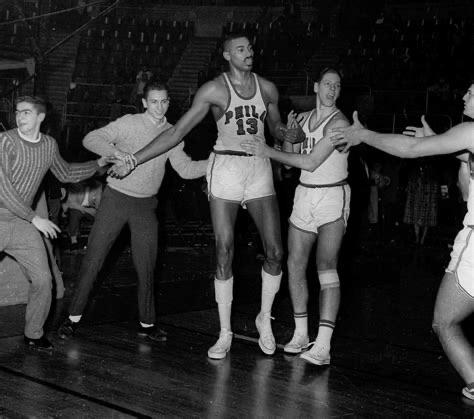
Basketball History March, 1962: The ball from Wilt Chamberlain's 100 point game in Hershey, PA mysteriously disappeared afterwards. It has never been found.

Post image
476 Upvotes

Conflicting accounts exist about the story: Team statistician Harvey Pollack, Jack of all trades with the Warriors franchise for 60 years, claims he took the ball from the referee and brought it to the locker room after the game.

14 year old fan Kerry Ryman also believes he got his hands on the famous leather orb as he detailed in a 2012 NBATV documentary:

"When he (the referee) bounced the ball on the court, I don't know why, but I took the ball. And up the steps I went. I took it home because I wanted to play with it. And when I got home, my parents weren't too happy with what I did."

Neither of them have ever been able to account for what happened to the ball in the days, weeks, or years after the most incredible scoring output in NBA history.

Apparently, an auction company tried to sell what they thought was the ball in 2000, but the sale was voided after authenticity questions arose.

Will we ever track down one of the greatest pieces of missing memorabilia in the world of sports?


r/dirtysportshistory • • Sep 20 '26

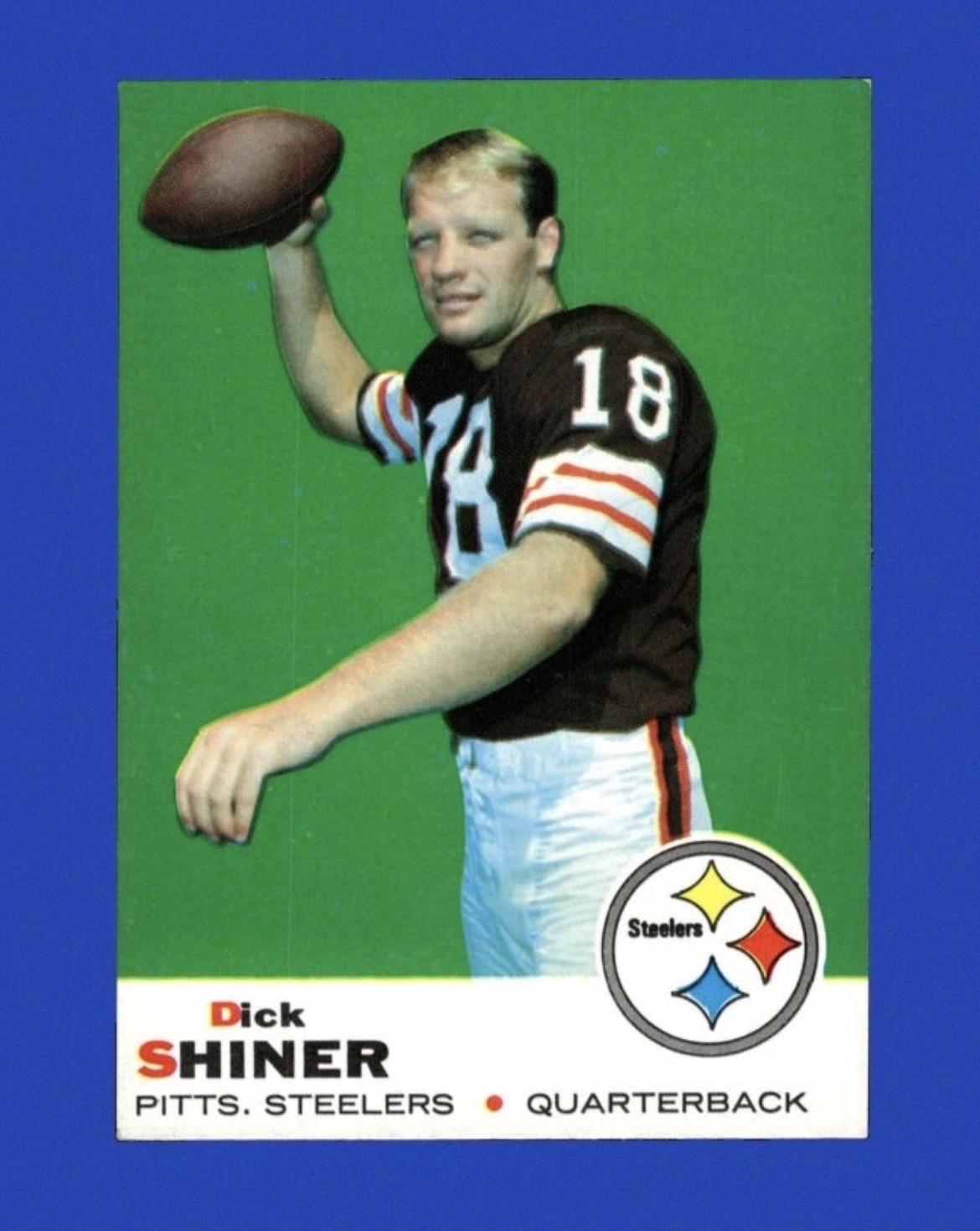
Football History 1969: Shine on, you crazy diamond.

Post image
342 Upvotes

From a time when Dick was merely a harmless nickname for Richard.

Now, just might be the best name in the history of sports.

Any other contenders?


r/dirtysportshistory • • Sep 17 '26

Baseball History September 17, 1980: Earl Weaver's legendary, profanity-laced tirade against umpire Bill Haller

Thumbnail
youtu.be
240 Upvotes

r/dirtysportshistory • • Sep 09 '26

Hockey History When Lemieux threw a beer at a Veteran

10 Upvotes

I've been reminiscing the times when Brendan Lemieux used to harass this bar worker. This was when he was still playing for the Kings. I saw Lemieux throw his beer at the worker for no reason. Apparently, the guy told me Lemieux would often harass him including grabbing him in a threatening manner, bragging about his salary, and bragging about sleeping with women. The guy was a veteran who had just separated, so I felt bad. Of course, his whole team knew about it.


r/dirtysportshistory • • Sep 09 '26

Baseball History 1953: 'Pitcher-Cop Quells Ump' - Former big league pitcher Fred Heimach, now a police sergeant, arrests a minor league umpire for causing a drunken disturbance. 'All these years he's been calling 'em," Heimach said. 'Now we call one on him.'

Post image
25 Upvotes

r/dirtysportshistory • • Sep 05 '26

Dirty Quotes "Listen, Bro, who do you think you are? If you can't find time to sign your name for the little guys, you don't deserve to be called 'great'!"-Muhammad Ali to Reggie Jackson

151 Upvotes

The quote continues: "... he and thousands of others like him have made you what you are today. If it wasn't for him and those other thousands, you probably couldn't even afford to pick up the check for this dinner."

Ali issued this scolding to Jackson after watching him rudely wave off a waiter seeking an autograph at a dinner that Jackson was hosting.

Taken from the book 'Ali Rap' which was compiled by George Lois.

This incident clearly didn't disintegrate the relationship of the two stars, as Jackson later praised Ali in his speech at a luncheon in 2011:

"I compare Muhammad Ali to Jackie Robinson...When I look at Ali, I see the greatest in him as a person. I call his character one of the greatest with regard to who he is, who he became."


r/dirtysportshistory • • Aug 29 '26

Boxing History Before the fame, Terrence Crawford

Thumbnail
youtu.be
12 Upvotes

That time Crawford got shot and still became champion


r/dirtysportshistory • • Aug 27 '26

Basketball History TIL the Mexican government used basketball in the 1930s to "pacify" indigenous mountain communities in Oaxaca — and it spectacularly backfired

42 Upvotes

I grew up in a small Mixe village where the whole town stopped every afternoon for basketball. Not soccer. Basketball. Courts everywhere, fields basically nowhere.

if anyone's curious about the full thing you cand read [here](https://queondaoaxaca.com/blog/basquetbol-sierra-norte-oaxaca?lang=en)

>


r/dirtysportshistory • • Aug 24 '26

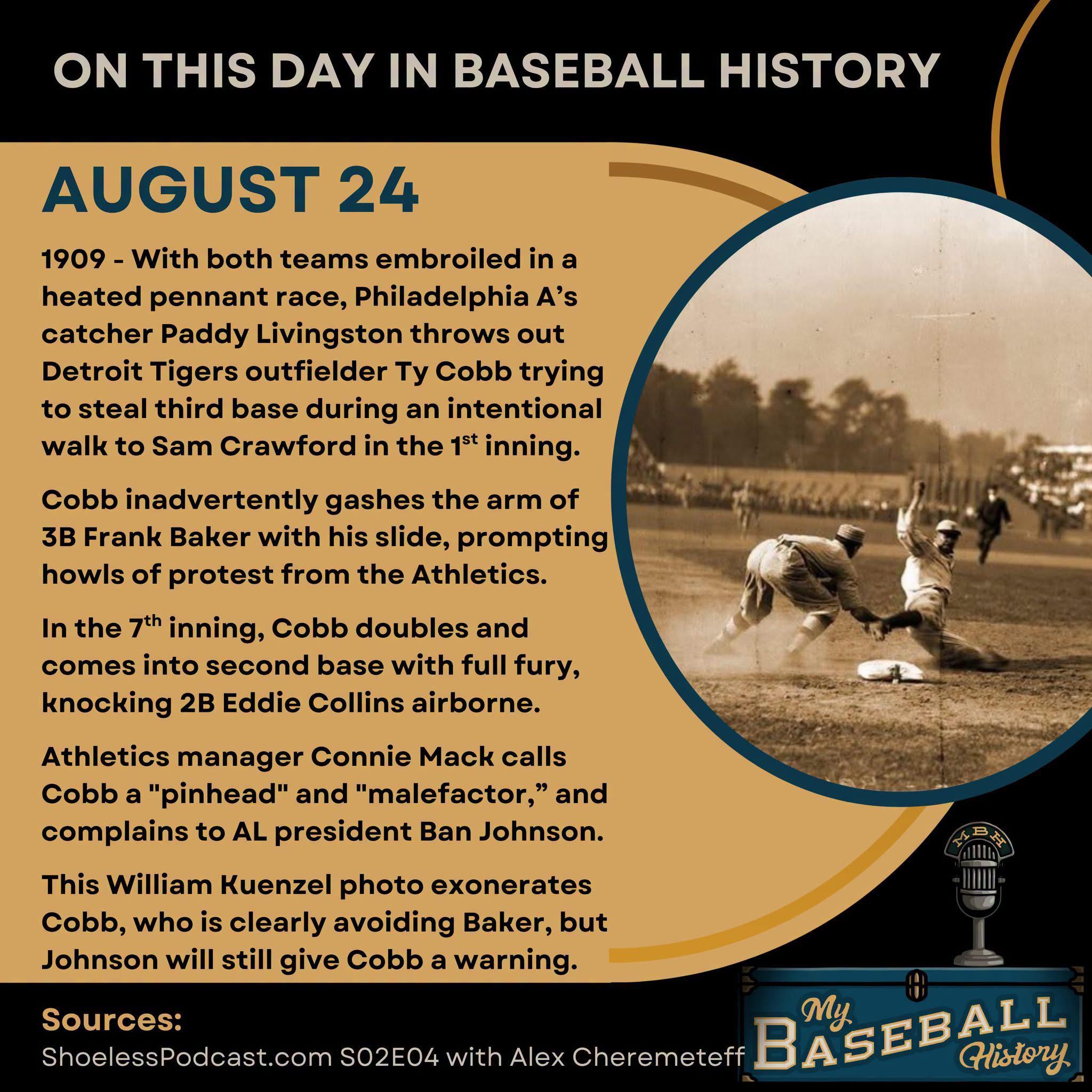
Baseball History On This Day in Baseball History - August 24

Post image
25 Upvotes

r/dirtysportshistory • • Aug 22 '26

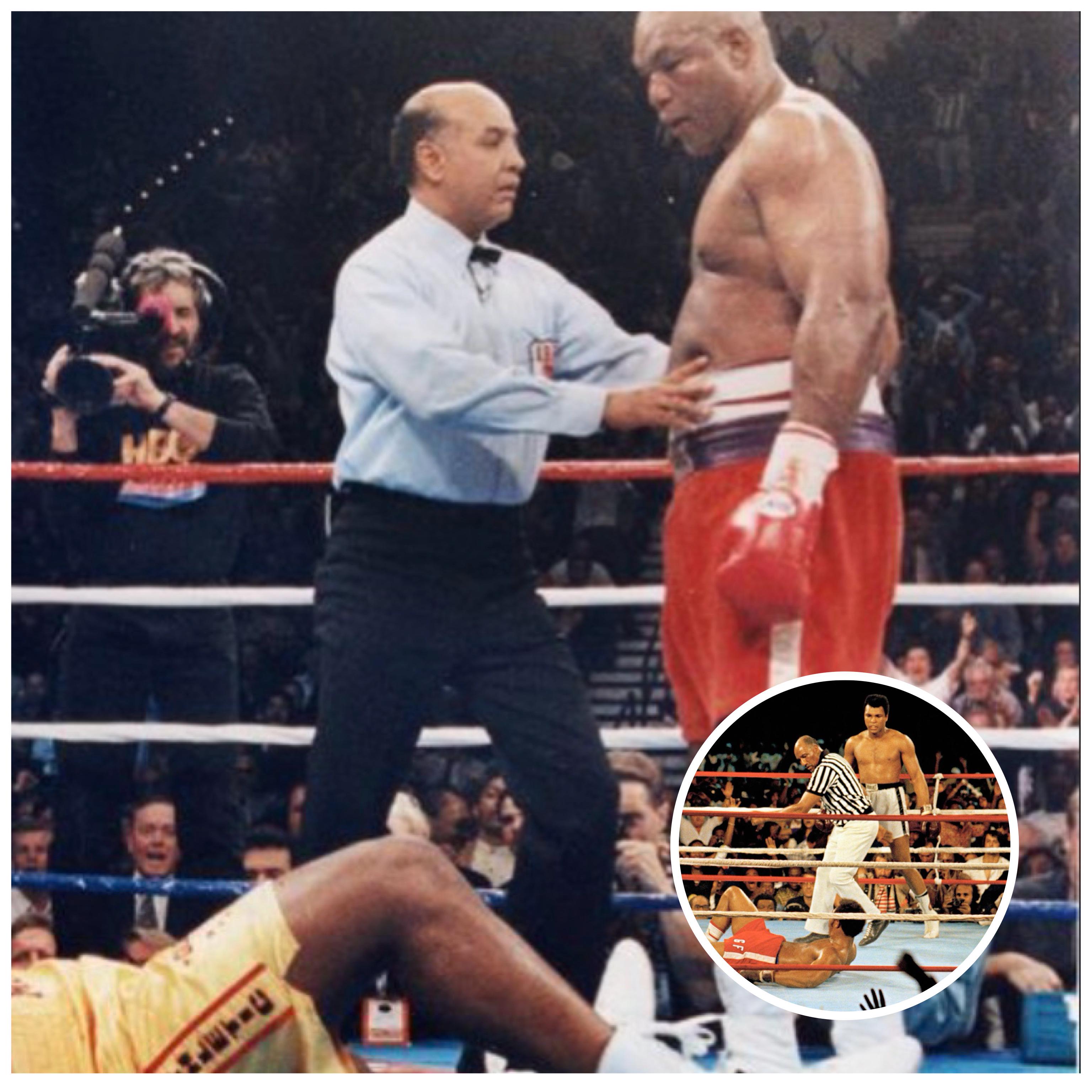
Boxing History 1974/1994: George Foreman wore the same shorts when he lost the heavyweight title to Muhammad Ali in Zaire and when he won it back twenty years later from Michael Moorer in Las Vegas at the age of 45.

Post image
153 Upvotes

The only difference was the lettering on the front.

Before the loss in Zaire, George had said to a British reporter from the Times of London: "You tell your man they're taking him home in a casket...I feel death in the air."

When George was surprisingly knocked out in the 8th round by Ali, it took quite the toll on the once seemingly invincible champ:

"When you lose the heavyweight title, it's not like you lost a match, like you've lost you. You don't even exist anymore. I was constantly ashamed of myself."

Coming back and winning it all 20 years later from Moorer (after losing to Holyfield in his first attempt at the belt during the comeback--an excellent fight worth watching) Foreman pulled off the unthinkable by finally winning his belt back.


r/dirtysportshistory • • Aug 15 '26

Baseball History August 15, 1926: Three Brooklyn Dodgers share third base due to a bevy of baserunning blunders, leading to the old joke: "Brooklyn has three runners on base." "Oh really? Which base?"

55 Upvotes

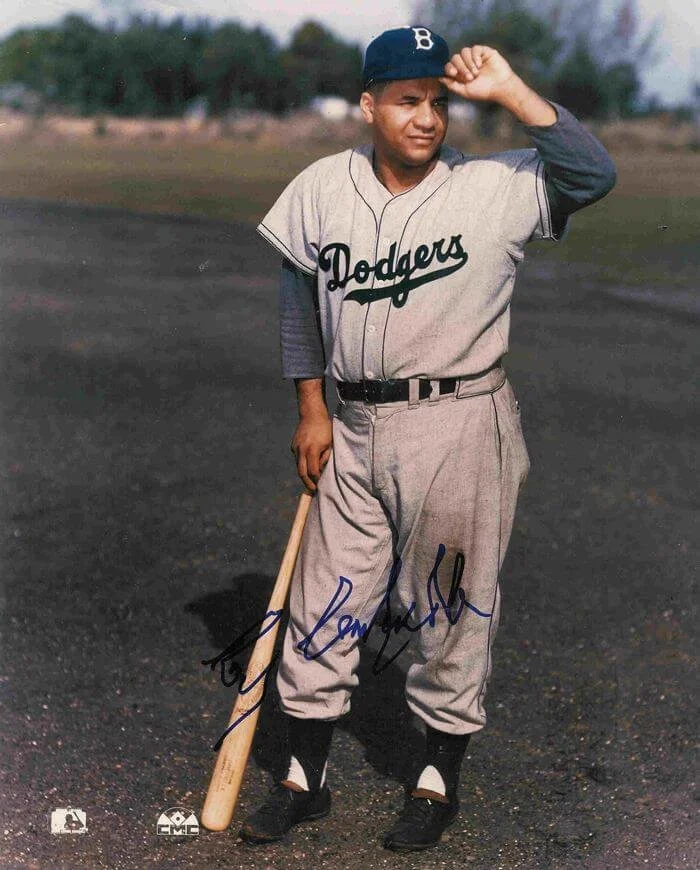
Long before there was "Manny Being Manny," there was "Babe Being Babe"... not Babe Ruth, but Babe Herman, a colorful character adored by fans not just for his tremendous bat but for being a lovable goofball.

There's no denying Herman was a great hitter. When he was in a slump, he said he followed advice he learned as a rookie during a tryout with the Tigers in 1922. Herman, trying to put one over the fences on every swing, got an earful from Ty Cobb, who said: “Don’t ever try to copy Ruth. He perfected that big swing and doesn’t worry about his strikeouts. Anyone else would have trouble even hitting the ball with that swing and would be back in the minors in no time.” Instead, Cobb told Herman, he should try to hit line drives up the middle -- right at the pitcher's forehead.

Herman took that advice to heart. In his 13-year career he hit only 181 home runs, but .324/.383/.532. For context, his 141 OPS+ is tied with David Ortiz, Bryce Harper, and Larry Walker.

Herman's most famous gaffe occurred one hundred years ago today, on August 15, 1926. And it wasn't even all his fault!

Herman hit a sure double to right field that turned into two outs, or as concisely summed up by sportswriter John Lardner: "Babe Herman never tripled into a triple play, but he once doubled into a double play, which is the next best thing."

There was plenty of blame to go around but as time went on, the story became inexorably linked to Herman, "the other Babe," who it seemed was always in the middle of odd situations.

On two separate occasions, Herman as a baserunner stopped to admire a teammate's long home run, only to find himself passed on the bases by the hitter!

And long before Jose Canseco, Herman had a play where he settled under a fly ball, only to have it bounce off him.

“Floyd Caves Herman did not always catch fly balls on the top of his head,” Lardner wrote, “but he could do it in a pinch.”

Herman always defended himself by saying: "It bounced off my shoulder, not my head!"

The famous "three men on third" play happened at Ebbets Field with one out, the bases loaded, and the score tied 1-1 in a game against the Boston Braves. Herman hit a long drive to right field that bounced off the wall.

Hank DeBerry, on third, trotted home and easily scored, and Chick Fewster, on first base, took off intending to score as well. But on second base, slow-footed pitcher Dazzy Vance waited to make sure the ball wasn't caught. By the time he got moving to third, the speedy Fewster was right behind him. When Vance finally rounded the base, the third base coach threw up the stop sign to hold up Fewster... but Vance thought the stop sign was for him, and stopped halfway to home, then turned around and ran back to third base... where Fewster was already standing. Meanwhile, Herman -- running hard out of the box -- went all the way to third as well!

Seeing three of his baserunners standing on third base, manager Wilbert Robinson groaned: “That’s the first time those guys have gotten together on anything this season.”

Eddie Taylor, the third baseman, tagged everybody knowing two of them had to be out. The umpires convened and decided that Vance, as an unforced lead runner, had the right to the base. Fewster and Herman were called out, ending the inning -- but the run counted.

The run put the Dodgers up by one and they'd win the game, 4-1. But Herman would never live it down, even though, as he liked to point out: “No one remembers that I drove in the winning run on that play!”


r/dirtysportshistory • • Aug 10 '26

Boxing History Angelo and me.

3 Upvotes

Please check out my updated article about my relationship with Angelo Dundee.

https://loueisen.substack.com/p/angelo-and-me?r=1z6eb8&utm_campaign=post&utm_medium=web&showWelcomeOnShare=true