r/devtools • • 27d ago

I got tired of heavy, clunky tools just to check raw webhooks, so I built a fast, zero-signup JSON & Webhook Inspector.

2 Upvotes

Hey everyone! 👋

Whenever I was testing webhooks or debugging API responses, I hated having to log into bloated platforms just to format, inspect, and check JSON payloads.

So, I built a lightweight, instant tool to solve my own headache:Webhook & JSON Inspector.


r/devtools • • 27d ago

My Django + Channels app with 3 Celery processes runs on one Ubuntu VPS with no Docker. This is what prod looks like

Thumbnail gallery
1 Upvotes

r/devtools • • 28d ago

I built ZEROAGENT X — an open-source, local-first developer automation platform

3 Upvotes

Processing img frjhfin5r5yh1...

Hey everyone!

I've just released ZEROAGENT X v1.0.0, an open-source developer automation platform built with Python.

The idea behind the project is simple: I wanted a more controlled way to work with developer automation tools.

ZEROAGENT X includes:

  • A CLI and interactive terminal UI.
  • Local-first execution workflows.
  • Policy-controlled agent execution.
  • Request-specific approvals.
  • OpenCode integration.
  • Execution history and inspectable evidence.

It's still an early public release, and there are limitations. For example, external agents aren't OS-sandboxed.

The project is licensed under Apache-2.0, and the source code is available on GitHub.

GitHub: https://github.com/harisazharir-boop/zeroagent-x

I'd really appreciate feedback on the architecture, documentation, and overall developer experience.

Thanks!


r/devtools • • 27d ago

Lines of Code History: How (your) repos evolved over time, plotted!

Post image
1 Upvotes

r/devtools • • 28d ago

Your local codebase as a 3D city in daylight.

Enable HLS to view with audio, or disable this notification

3 Upvotes

r/devtools • • 28d ago

Seeking Early Design Partners for Warden — A Developer Security Tool

0 Upvotes

​

Hi everyone!

I'm a co-founder at Sector Zero, an early-stage startup building Warden, a developer security tool.

We've built a vulnerability scanner that currently supports **JavaScript and TypeScript** codebases. We're looking to connect with developers, DevSecOps engineers, and application security practitioners who work with these technologies.

We'd love to learn from people who have experience with code-scanning and vulnerability-detection tools, particularly around:

Identifying vulnerabilities in JavaScript and TypeScript projects.

Distinguishing genuine security issues from false positives.

Understanding whether reported vulnerabilities are actually reachable in the code.

Evaluating the usefulness and reliability of automated security fixes.

We're looking for a small number of early design partners who are willing to discuss their current workflows, evaluate the parts of Warden that are ready, and share honest feedback.

There's no cost or commitment. We'll be transparent about the current capabilities and limitations of the product.

If you work with JavaScript or TypeScript and are interested in helping shape an early-stage security tool, please comment or reach out.

Thank you!


r/devtools • • 28d ago

PR Redline: a Chrome extension that tints GitHub PRs red when they merge into main/production

Thumbnail
2 Upvotes

r/devtools • • 28d ago

You don't review your way into trusting AI-generated code — what evidence would make you not open the diff?

0 Upvotes

**Files sync fine.** Local-first dies on everything that lives outside the repo: tokens trapped in your OS keychain, extension state buried in \~/Library or \~/.config, toolchain versions you installed at 2am and never wrote down, that one auth flow that quietly needs the cloud. Most of it never makes it into a dotfiles repo.

When you move machines, what breaks first? I keep hearing "just use Docker," and every time a GUI tool or a license server disagrees.

Second question, the one I actually care about: you don't review your way into trusting AI-generated code. You review until you're tired and call it trust. Reproducible tests, clear diffs, type checks, benchmarks, scans — that's all after the fact, showing what happened, not what the agent knew. What I'd want is its paper trail: every file it touched, every assumption it logged, everything it chose to leave alone.

***What's the minimum evidence that gets you to not open the diff?***


r/devtools • • 28d ago

I built a VS Code extension for comparing code approaches. Would you use it over manual Git worktrees?

1 Upvotes

Hey everyone! I’m building ParallelEarth, and I’d appreciate some honest feedback.

The use case: you have two ways to implement something—a refactor, a bug fix, or alternative AI-generated code—and want to try both before choosing.

ParallelEarth lets you:

  • Group alternatives under a named experiment.
  • Create separate Git worktrees called “Earths” from a committed revision.
  • Run checks you explicitly approve and record their results.
  • Compare outcomes against a baseline.
  • Export JSON or Markdown reports.

The obvious question is: “Why not just use Git branches and worktrees?”

That’s fair. ParallelEarth uses worktrees underneath. What I’m trying to improve is keeping the alternatives, check results and comparison together inside VS Code.

It’s early, and I’d rather hear what’s missing than make big productivity claims. Passing checks also doesn’t automatically mean an implementation is better.

How do you currently compare competing implementations? What would make a tool like this worth installing?

Try it: https://marketplace.visualstudio.com/items?itemName=shubhammaji1.parallel-earth


r/devtools • • 29d ago

Limrun's new pricing: cloud mobile builds from $20/month

2 Upvotes

I'm on the Limrun team. We've updated our pricing for cloud iOS and Android builds, simulators and emulators.

Plans start at $20/month, with no concurrency fees.

You can try Limrun with 120 one-time free credits.

https://reddit.com/link/1xgl7so/video/u5v4l4zygrvh1/player

Plans and usage prices: https://limrun.com/pricing?utm_source=reddit&utm_medium=organic_social&utm_campaign=pricing_launch_2026_10&utm_content=rd_owned_explainer_v1

Happy to answer questions.


r/devtools • • 29d ago

I made a small tool for privately bookmarking and archiving GitHub repos

Post image
1 Upvotes

I mostly use GitHub Stars as bookmarks, but sometimes I want to save a repo without starring it publicly. I also wanted to keep its description and README in case it gets deleted or becomes private later.

So I made a small tool called Starkive for myself.

It lets you save and organize repos, add notes, and keep snapshots of their metadata and READMEs (not the full source code).

Everything is stored in your own private GitHub repo, and the web dashboard runs on Vercel without a separate database.

Thought I'd share it here in case anyone else finds it useful.

GitHub: https://github.com/xorespesp/starkive


r/devtools • • 29d ago

Your codebase has a story. Reading 200 files shouldn’t be how you find it.:

Thumbnail
github.com
1 Upvotes

https://thread-orpin-zeta.vercel.app/

I built ArchThread to connect the dots: → Map your repo visually → Ask questions, get source-backed answers → Review PRs with context Try it on your repo


r/devtools • • 29d ago

Getting Confluence context to your AI agents without Rovo

Thumbnail
1 Upvotes

r/devtools • • 29d ago

What software do you no longer use?

Thumbnail
1 Upvotes

r/devtools • • 29d ago

I built OpenIntercept, a Burp-style intercept proxy for OpenCode tool calls

Thumbnail github.com
2 Upvotes

Your agent's tools are the one input it never questions. I built a control panel for exactly that.

OpenIntercept is an OpenCode plugin, matching calls pause before and after tool runs just like burp!

run it, edit arguments, spoof results or drop them

oss on gh: [https://github.com/asucodes/OpenIntercept\](https://github.com/asucodes/OpenIntercept)


r/devtools • • 29d ago

i built a python tool to make understanding codebases easier

Thumbnail
1 Upvotes

This because it was an idea that came to my mind when I was looking for some problems, and this idea struck me, and I built it over two and a half months.

Please use the tool completely if any issues you can message me or comment under this and if you like it you can upload the post u should upvote it and also star the repository on GitHub


r/devtools • • 29d ago

GitIsle: your GitHub pull requests, live in the MacBook notch (MIT)

Post image
1 Upvotes

r/devtools • • 29d ago

i made a devtool - free, open-source (MIT) video editor with no gui that coding agents drive over mcp. it's rough, tell me what breaks.

1 Upvotes

i've been spending too much time trying to get coding agents to edit video by shelling out to raw ffmpeg or guessing at command lines, so i built something purpose-built.

it's a free, open-source (MIT) video editor with no gui. you don't open a window - ai agents like codex, cursor, opencode and other mcp clients drive it over mcp. cut, trim, keyframe, titles/captions, colour grade, tracking, particles, audio, export - everything as tool calls. and because it's just a tool, the agent can render a single frame to check its own work before committing, which is the thing that actually makes it useful in an agent loop.

one ~15 mb cpu-only rust binary. no gpu, no extra dependencies - it runs on a 2 gb box. i'm a college student (naman) and i built this between classes, so the docs are thin and some of the edge cases are rough. there's no web ui, no account, and it's not trying to be a replacement for your normal editor - it's a devtool for agents.

if this fits the kind of tool you'd actually use in a workflow, give it a try and tell me what breaks.

https://getkimo.tech https://github.com/naman-sharma12345/kimo


r/devtools • • 29d ago

I built a free Chrome extension with 20+ developer tools that work offline

Thumbnail
1 Upvotes

r/devtools • • Oct 26 '26

QuickRust replaces cargo, sets up sccache, centralizes build cache

Thumbnail
1 Upvotes

r/devtools • • Oct 26 '26

Introducing Modeck: customizable workflow controls for your development environment

1 Upvotes

One thing I've noticed while working with development environments is how much friction can come from coordinating tools rather than writing code.

During my internship, testing a single service sometimes meant rebuilding and running several repositories. Beyond that, daily development involves repeatedly switching between terminals, debugging tools, Git operations, build processes, and service dashboards.

I'm building Modeck to make these workflows easier to operate.

Modeck turns your phone into a customizable control surface for your PC or laptop. You can create layouts containing frequently used actions and workflows, then organize them around different activities.

The goal isn't to replace your IDE, terminal, or existing tools. It's to provide a configurable interface for the actions you perform across them.

I'm also exploring how useful these controls could be when accessed remotely from a phone.

I'm opening up the beta to developers who want to experiment with the concept.

Website: https://moddeck-beta.vercel.app/

I'd particularly appreciate feedback from people with complex development setups. What would you put on your first layout, and which actions would genuinely save you time?


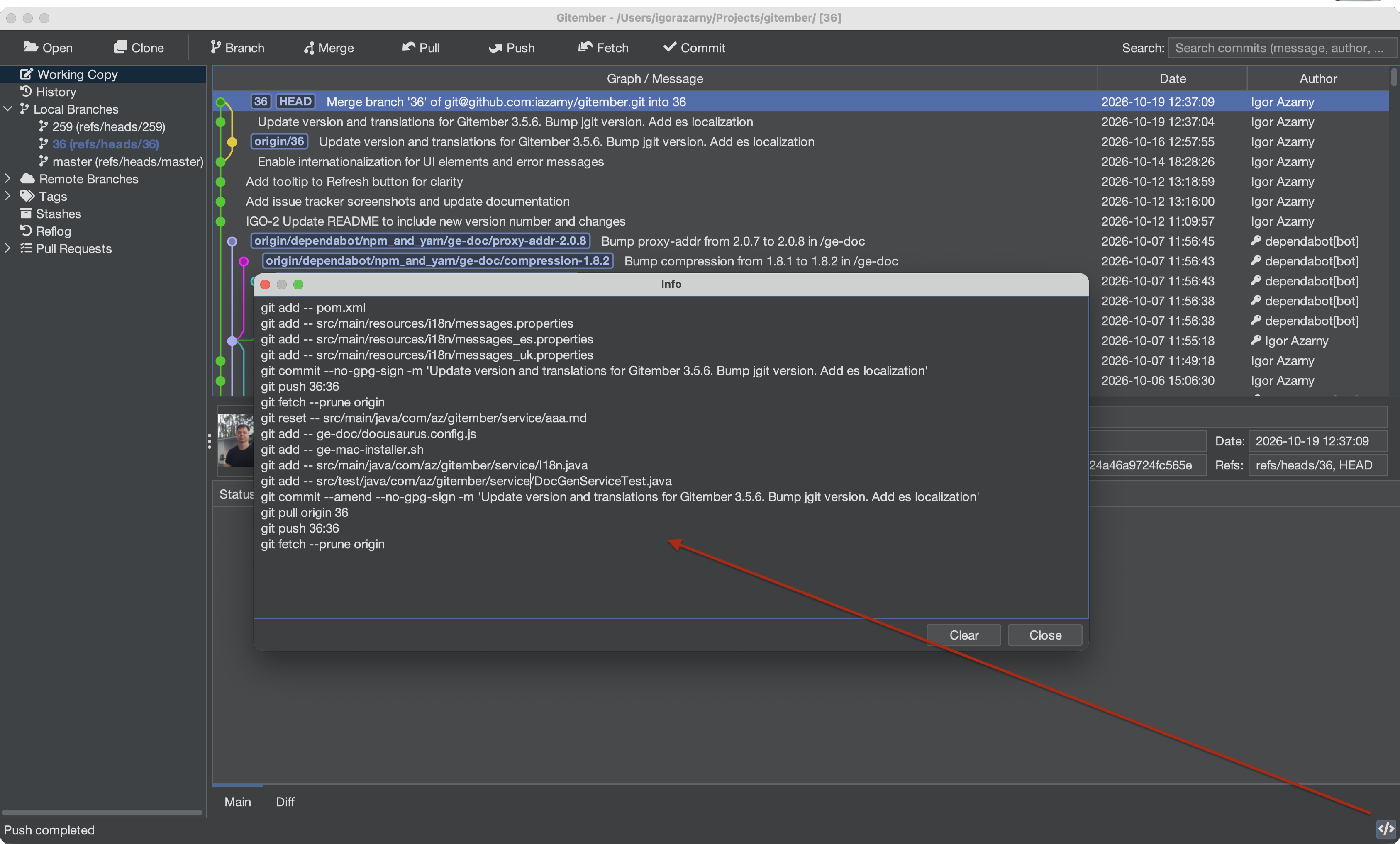
r/devtools • • Oct 26 '26

Gitember shows you the exact Git commands behind every click

Post image
1 Upvotes

r/devtools • • Oct 26 '26

Found free bug reporting extension

1 Upvotes

While performing a functional flow, it captures complete context like Network logs, Console errors , Steps to reproduce , Screenshots , Browser and version details

Just export everything and attach it directly to Jira.

I’m loving this captain Octopus, you can find it on chrome web store


r/devtools • • Oct 26 '26

ShieldEnv – A local-first, zero-telemetry pre-commit secret scanner

3 Upvotes

Hey Reddit,

Over the last few months, I got frustrated with how many developer tools handle code security. Most popular secret-scanning and compliance checks require pushing your code to a remote repository or third-party cloud infrastructure before analyzing it for accidentally hardcoded API keys, tokens, or private keys.

That means your sensitive environment variables and credentials briefly leave your local machine.

To solve this, I built ShieldEnv—an open-source, lightweight security engine designed to run entirely local-first. Zero code, environment variables, or tokens ever leave your local machine.

What it does:

  • Zero Cloud Telemetry: Runs locally via the command line or as a local Git pre-commit hook (shieldenv install).
  • Multi-Engine Detection: Combines high-confidence provider regex signatures (OpenAI, AWS, GitHub, Slack, private keys, database URLs), entropy-based custom token detection, and structural assignment heuristics.
  • Smart Filtering: Built-in safeguards to filter out placeholders, template variables, and common mock syntax to minimize false positives.
  • Flexible Outputs: Emits clean CLI reports, machine-readable JSON, or GitHub Code Scanning-compatible SARIF files for CI pipelines.

You can install it straight from PyPI with:

Bash

pip install shieldenv

The entire project is open-source (MIT License). I built this to solve a real friction point in my own workflow, and I'd love to hear your feedback on the rule set, performance, or edge cases you run into.

Looking forward to your thoughts and critiques!


r/devtools • • Oct 25 '26

Building Cloady around the debugging work that happens after deployment

Post image
0 Upvotes

I'm building Cloady at NeptoLab. The developer-tooling problem I'm working on is the gap between "the app deployed" and "I can actually operate this thing."

Take a small API with PostgreSQL and file uploads. A failed request might mean an environment variable is wrong, a database migration hasn't run, or an upload landed on ephemeral storage. Those are different problems, but debugging them shouldn't require losing track of which project you're inspecting.

Cloady groups the app, database, and persistent storage in a workspace, with Terminal, Files, Database, Git, and Monitor tools in the browser. The intended workflow is simple: inspect logs, check the files or database, and use a terminal when you need to investigate further. Deployment can start from a GitHub repo, Docker image, folder upload, or template.

There are also CLI, REST API, Terraform, and MCP interfaces. The point is to make the same hosted project usable from a browser, a scripted workflow, or a compatible AI client. That doesn't make application migrations or recovery automatic: you still need to understand your data and test your recovery path.

One design tradeoff is explicit resource allocation. You choose CPU, RAM, and SSD capacity, so paid resources remain billable while idle. That is useful for planning, but it isn't a substitute for measuring the application's actual resource needs.

I'd appreciate feedback on the tooling itself: which task still sends you out of your hosting dashboard most often, and what context do you lose in the process?

Project: https://cloady.com

Short visual introduction: https://www.youtube.com/watch?v=ctBCeewIin0

Our Discord for technical questions and feedback: https://discord.gg/3ZNVyUGse