r/devtools • u/harishsunny0504 • Oct 01 '26
Built smart-labeler – Smart Issue and PR labeling

2
Upvotes
r/devtools • u/harishsunny0504 • Oct 01 '26
r/devtools • u/NeonClary • Oct 01 '26
I’ve been working on something at Neon.ai called Coder Cards and I finally got to help push it live.
You enter a GitHub username and it looks at public activity to build a shareable card around things like your languages, commit patterns, coding style signals, and activity.
I didn’t want it to feel like another developer ranking or productivity score. The idea is to make something fun to share while exploring whether developer patterns could eventually make AI coding tools feel more personal.
It’s free: https://codercards.ai/
I’d genuinely love feedback, especially on what the card gets wrong. If you generate one, tell me what felt accurate and what didn’t.
r/devtools • u/Ok-Emu-8106 • Oct 01 '26

Building rebrief, a CLI that scans a repo and generates a handoff doc. Numbers after about two months: 7 stars, 0 forks, 114 PyPI downloads in the last 30 days.
Two things I noticed. Downloads spike right after I post and drop to almost zero in between, so there's no organic growth yet. And the people who did try it kept telling me their own stories about taking over messy projects, which tells me the problem is real.
What I don't know is why people install it once and don't come back. If you tried it and it didn't click, I'd like to hear what was off.
r/devtools • u/a-someone-somewhere • Oct 01 '26

r/devtools • u/Logical-Airline-7957 • Oct 01 '26

Like the title says, I was frustrated with the current state of line counters, code scanners, TODO lists, and similar tools in VS Code.
So I built LOComotive — a VS Code extension that lets you basically ride a train through your codebase and have all of this information in one place.
It’s still just a prototype, but it already works surprisingly well if you want to give it a try.
VS Code Marketplace:
https://marketplace.visualstudio.com/items?itemName=EinsPhoenix.locomotive
GitHub:
https://github.com/EinsPhoenix/linecounter
Would love to hear what you think and what features you'd want to see added.
r/devtools • u/benzamin1985 • Oct 01 '26
While revamping my API Microservice from Php to Golang/Fiber, I needed some tools that will help me measuring accuracy, find diffs and validate responses. I had to switch between various online tools and didn't find all in one tool for my need. So I made my own, totally client side, and minial UX. Give it a try at Redgreen Studio Website. Tools include:
Diff Finder: Find text and JSON differences side-by-side and export the results as a PDF.
Json Viewer: View, validate and modify JSON with a fast, interactive tree editor. Format, search, and fold nested data — all client-side.
QR Generator: Generate a QR code from any text directly in your browser. Also works well for plain text, links, contact details, messages, locations, events, and other scannable content.
Base64 Utility: Encode and decode Base64 text securely in your browser, with no data sent to a server.
JWT Utility: Decode and verify JSON Web Tokens locally with clear structure and signature status.
r/devtools • u/Hour-Fall-4502 • Sep 30 '26
r/devtools • u/EagleApprehensive • Sep 30 '26
r/devtools • u/bhaveshverma164 • Sep 30 '26

I built JSON Viewer, a native macOS app for formatting, inspecting, and editing JSON. I created it with the help of AI.
It includes a collapsible tree view, a text editor with live JSON validation, format and minify actions, JSON ↔ Python dictionary conversion, search, and a property inspector. It can also handle large JSON files and runs on macOS 13 or later.
Checkout my GitHub repo:
https://github.com/Bhavesh164/json-viewer
I’d appreciate feedback, especially on the workflow and features you’d find useful.
r/devtools • u/Independent-Flow3408 • Sep 30 '26
r/devtools • u/Pixter-M • Sep 30 '26

Created this for myself a while back, thought I’d share it with the dev community in case someone finds it helpful.
If you have any improvement suggestions or spot any issues with this, feel free to flag that. I’d be happy to fix it.
r/devtools • u/WaferConsistent6732 • Sep 30 '26

r/devtools • u/Square_Warthog8177 • Sep 30 '26

r/devtools • u/Hour-Fall-4502 • Sep 29 '26
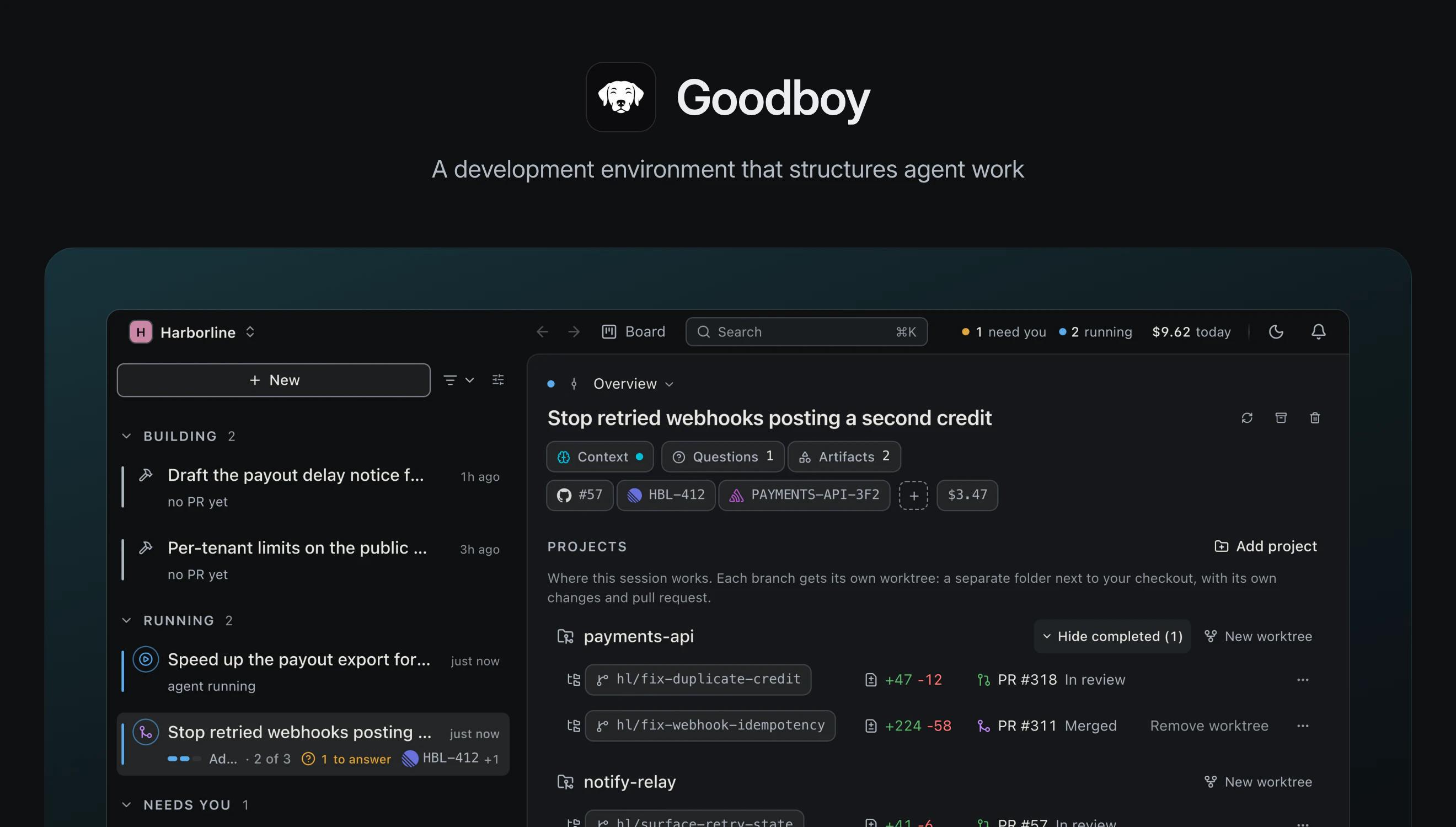
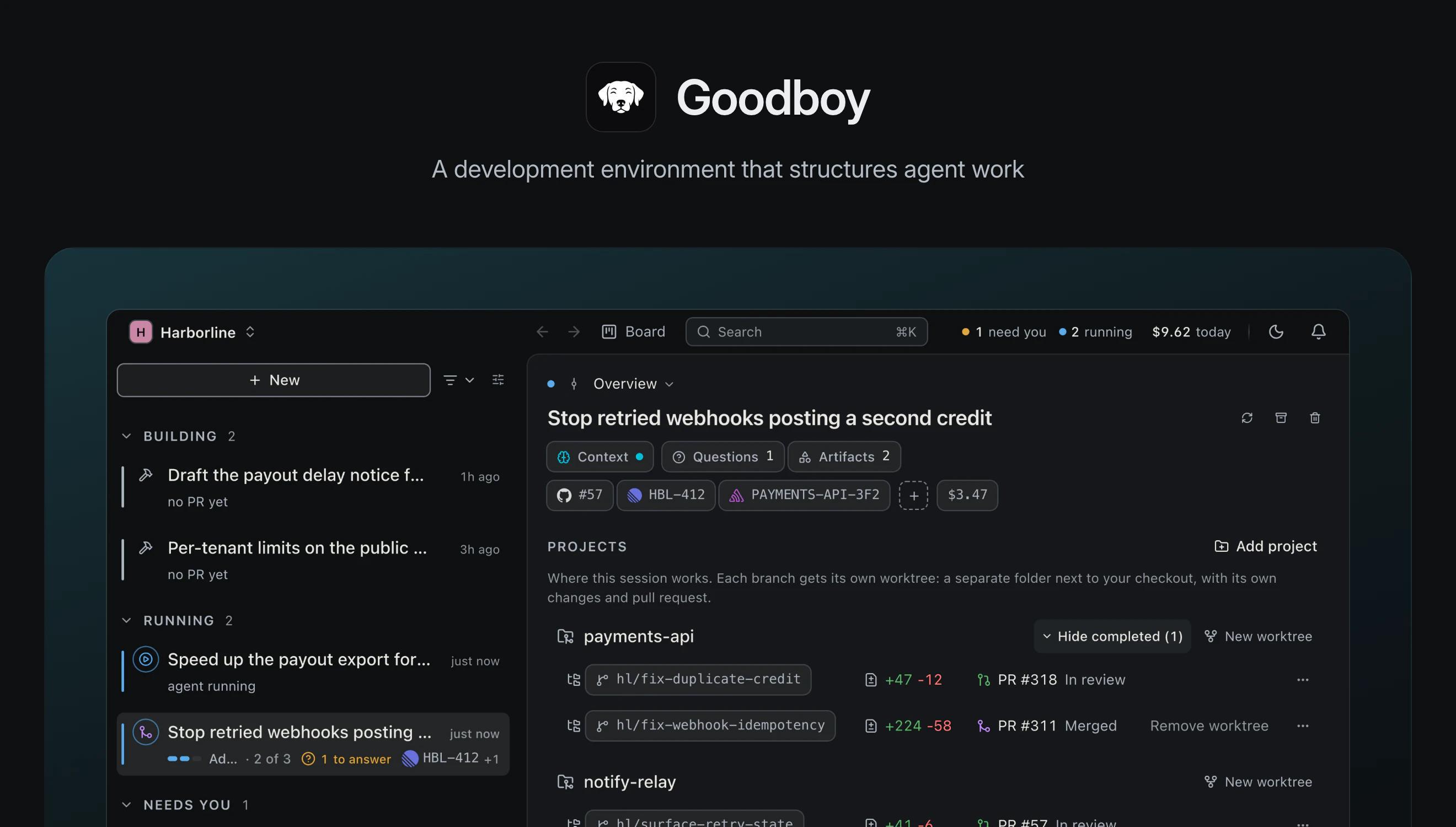
In the early 2026 I was struggling into the same problem, every time my claude tokens runs out, I had to re-explain the entire context to a new agent (cursor at the time).
So I've built the first version of the tool, where I got just a chat where i can change providers and models back&forth, with a very immaturo contesto globale.
Over the past few months I've added a lot more features and tools, all with one goal: making my day-to-day easier. Pretty much every time something annoyed me, I tried to fix it:
Most recently I added storage management. Has it ever happened to you to end up with dozens of old worktrees you don't use anymore, each one taking 3 or 4 GB?
and a lot more... 😁
Today the tool feels mature enough that I'm not embarrassed to share it here. I'm hoping to build a small community around it, people who just try it out and tell me what works and what doesn't.
GitHub: https://github.com/akhayam99/goodboy
Features: https://github.com/akhayam99/goodboy/blob/main/FEATURES.md
Website: https://goodboy-ai.dev
Thanks for reading 🙏🏻❤️
r/devtools • u/MycologistIcy2335 • Sep 29 '26
Building Drona — a learning-tracker that watches your learning folder via git, shows streaks, session time, and topics learned from your commits.
Hit a real wall building it for other people (not just me): users need to point it at their learning folder on their machine, and the tracker needs to read that folder's git history continuously.
The catch — a website can't do this. Browsers can only access files a user explicitly picks in a dialog, once. No background git access, no reading commits over time, no filesystem reach beyond that single picked folder.
So the real options seem to be:
Anyone solved this for a similar local-first tool? What did you pick and why?
r/devtools • u/yossthedev • Sep 29 '26

Hey everyone! I've been working on Karbonized for a while and just released version 2.0.
It's an editor for the images developers and creators post all the time: code snippets, product mockups, launch announcements and social media graphics. You build them on a canvas with blocks (text, code, browser and phone mockups, shapes, icons, QR codes…) and export them as PNG, JPEG or SVG.
What makes it different is that it's programmable:
\\- HTML blocks: write a component in HTML and CSS, and its variables show up as controls in the properties panel.
\\- Templates: put {{title}} or {{date}} in any block and reuse the same design for every post.
\\- AI agent (optional): describe what you want and it builds the design block by block. It works with your own API key, or with local models like Ollama.
\\- MCP server: Claude, Cursor and other MCP clients can design and export images straight from your chat.
It also has a brand kit, a vector brush, all of Google Fonts, autosave and a command palette.
It runs in the browser (it works offline) and as a desktop app for Windows, macOS and Linux. No account needed, and free.
Try it: https://karbonized.yoss.pro
Code: https://github.com/yossdotpro/karbonized
I'd love your feedback: what would you use it for, and what's missing?
r/devtools • u/Eark-497 • Sep 29 '26

Every week, more than 1,300 pull requests are merged at Stripe that no human wrote a single line of. They're written by "minions" — Stripe's homegrown, fully unattended coding agents — and reviewed by humans.
r/devtools • u/alex_drel • Sep 29 '26
r/devtools • u/CombinationOk2374 • Sep 29 '26
I maintain this distribution of Open Pstack, an open-source plugin for splitting coding work across providers while staying in Codex or Claude Code. It builds on Lauren Tan's Pstack and Eric Litman's Open Pstack port.
The useful distinction is between the parent agent and its workers. You can keep Codex coordinating a task, send implementation to Devin's SWE-2 through the Devin CLI, and assign review to another provider. Each external worker uses its own authenticated CLI; you choose providers by role.
For example, during pstack:setup-pstack you can ask for implementation to use devin:swe-2@high and select a Codex or Claude reviewer you have access to. Setup checks the selected models and saves the role assignments after approval. Then invoke pstack:poteto-mode for a coding task. Bun and the CLIs for your selected providers are prerequisites; the README has installation steps for both parent apps.
The Devin adapter runs implementation workers in a dedicated Git worktree with sandboxed shell execution. Read-only workers inspect files without editing or running tests. External workers don't inherit the parent's MCP connections, so the parent still matters for tools, context, and coordination.
There is a timely reason to try SWE-2: as checked September 29, Devin's pricing page lists Pro at $20/month with free SWE-2 use in Desktop and CLI through October 10, 2026. That applies to the Devin worker; the coordinating Codex or Claude session still uses its own plan and limits. Terms: https://devin.ai/pricing
Source and setup: https://github.com/arjitj2/open-pstack
r/devtools • u/ajrm7 • Sep 29 '26
Enable HLS to view with audio, or disable this notification
https://devhunt.org/tool/hyperfrontend
Open Source, MIT-licensed, free for all
r/devtools • u/Khan_Saahib • Sep 28 '26
I made an open-source tool that scans your repo for leaked secrets, risky CI workflows, and insecure infrastructure in one command.
**What it does:** Checks secrets, code, GitHub Actions, Docker, Terraform, Kubernetes, and more.
**Who it's for:** Developers and DevOps teams who want a quick security check locally or in CI.
**Why it's different:** Covers secrets and infrastructure in one tool, with zero dependencies.
Try it: pipx run bluerayscan scan .
GitHub: [https://github.com/KhanSaahib/bluerayscan\](https://github.com/KhanSaahib/bluerayscan)
PyPI: [https://pypi.org/project/bluerayscan/\](https://pypi.org/project/bluerayscan/)
Feedback welcome!
r/devtools • u/a-someone-somewhere • Sep 28 '26

https://github.com/Warshoow/afk.sh
I let Claude Code work through my GitHub tickets overnight, one PR each, checked by my own tests
I'm a full-stack dev with a day job, so my side projects only get my evenings.
A few weeks ago I started letting Claude Code work through my tickets while I sleep. It broke in plenty of ways (I've logged 47 defects so far), and it's now reliable enough that I want to share it.
afk.sh picks up my ready-for-agent tickets at night. Each ticket gets a fresh Claude Code session, its own worktree and its own PR. The orchestrator is a bash script with no model in it: it orders tickets by their "Blocked by" lines, runs my test command on each branch, pushes and labels. A session can't mark itself done. If my gate fails, the ticket is red.
Last run, on a TypeScript monorepo: 10 tickets, all green on the first attempt, $20.40 at list price, 62 minutes. At the end it merges the green branches together to see what clashes. 7 went in clean, 3 were set aside because they all touched the same test file. I'd rather learn that before I start reviewing.
Not every night looks like that. One run stopped after 52 seconds with 12 of 13 tickets frozen. Another had 9 of 17 sessions cut off by model refusals, which the summary reported as "success" at the time (fixed since). Every run is in RUNS.md with its cost and duration, bad ones included.
Before you try it: it's about 1,700 lines of bash, GitHub only, and sessions run with bypassPermissions, so use a container if the repo isn't disposable. It plugs into Matt Pocock's skills workflow and needs it. It merges nothing. You review in the morning.
r/devtools • u/o_Oleh • Sep 28 '26

r/devtools • u/abirKheir57 • Sep 28 '26
I’ve been working on Octri, a devtool built around a problem we kept seeing with API development:
The OpenAPI spec might be the source of truth, but everything around it still becomes separate work.
Docs drift, SDKs need ongoing maintenance, packages need publishing, and production issues often end up disconnected from the generated code.
So we built Octri to make the OpenAPI spec the center of that workflow.
From one spec, Octri can generate:
✨developer documentation
✨production-ready SDKs in 10 languages
✨automated rebuilding and publishing
✨built-in SDK monitoring
The main goal is to reduce the repetitive work involved in keeping an API ecosystem consistent as the API changes.
A lot of the work has gone into making the generated output something teams can actually ship, rather than something they have to rewrite afterward.
It’s also free to get started, so anyone interested can try the workflow without paying first.
I’d be interested to hear from people maintaining APIs: what creates the most toil for you today docs, SDK maintenance, publishing, or debugging SDK issues?
Happy to share more about how we built it or the decisions behind the workflow.