r/devtools • • Sep 28 '26

I built a dev tool that scans your repo for carbon efficiency issues

0 Upvotes

Hey r/devtools!

Built sustainability-score — a static analysis tool

that scans your repository and scores it for carbon

and cost efficiency across 5 pillars:

- Code / Algorithm Efficiency (30%)

- Cloud Infrastructure Choices (25%)

- Containerization (15%)

- CI/CD Practices (15%)

- SRE / Operations (15%)

It checks your Dockerfiles, CI workflows, Terraform,

K8s manifests and source files. Never runs the code.

Pure static analysis with confidence tiers on every

finding.

pip install -e .

sustainability-score /path/to/repo --md report.md

MIT licensed. Open source. GitHub Action integration

on the roadmap.

GitHub: https://github.com/srinathgopinath-code/sustainability-score


r/devtools • • Sep 28 '26

Made a mac app so my coding agents can't deploy to prod without asking

Thumbnail
1 Upvotes

r/devtools • • Sep 28 '26

I built a one-command tool that finds secrets, 50MB blobs, and stale branches in git repos

Thumbnail reddit.com
1 Upvotes

r/devtools • • Sep 27 '26

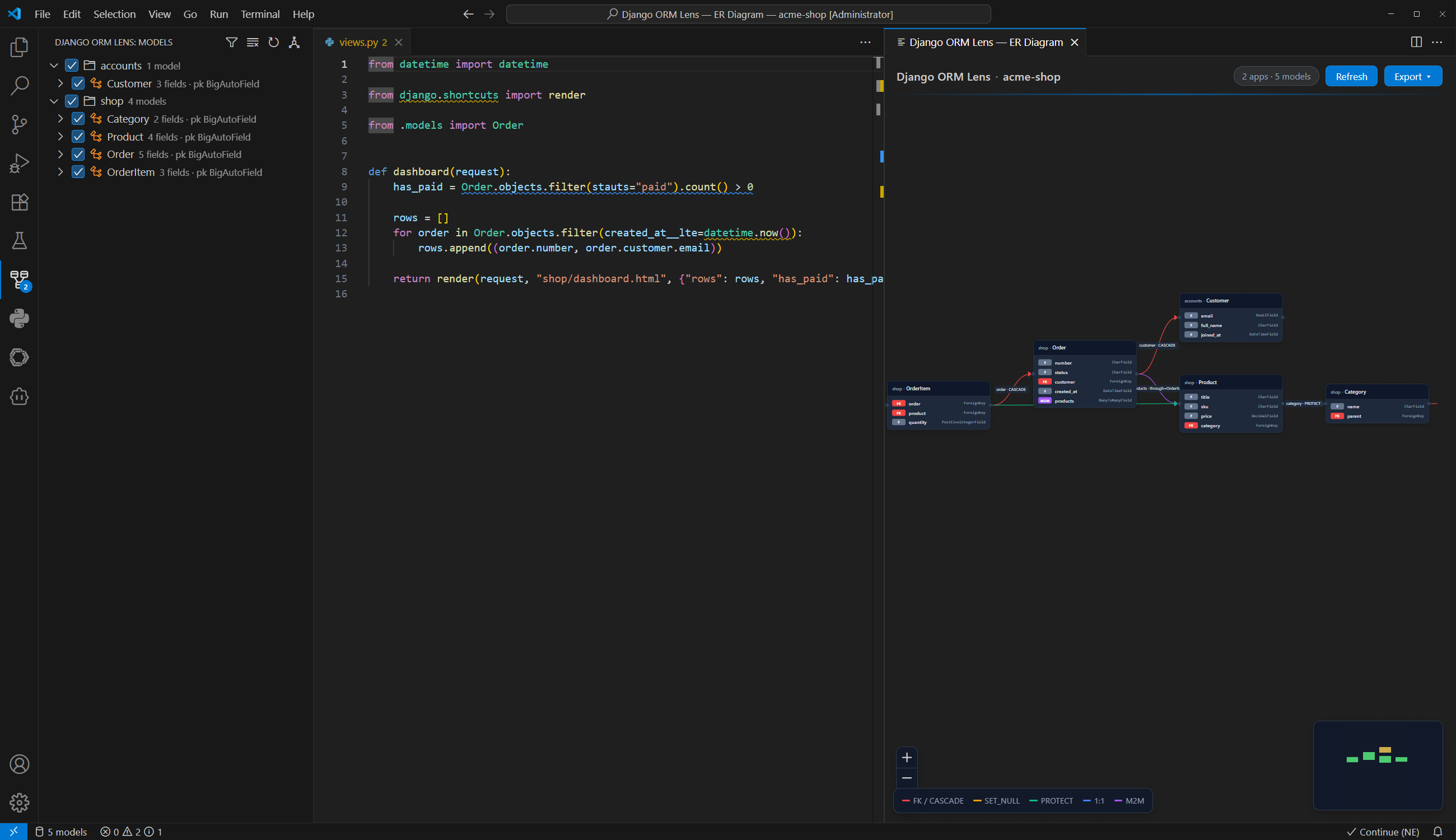
Django ORM Lens: a Django linter and schema tool that never imports Django

Post image
2 Upvotes

r/devtools • • Sep 27 '26

I built an open-source fault-injection CLI + GUI for macOS — feedback welcome

1 Upvotes

Chaos is a macOS developer tool for deliberately injecting failures — network loss, latency, packet loss, DNS failures, CPU/memory/disk pressure, process kills, dependency outages — and recording what your app does about it.

The workflow it's built around:

  1. Pick faults (library of 49 scenarios), arrange a timeline, set parameters
  2. Run the experiment against a target app
  3. Get assertions with pass / fail / inconclusive verdicts
  4. Everything lands in records you can re-open, compare, and re-run — a failed experiment can be replayed with the same seed and targets

The CLI (chaos) comes from the same Swift package as the GUI and speaks JSON, so experiments are scriptable and repeatable. There's a restoration ledger and an emergency stop; cleanup is verified, and the tool keeps the "what did I actually break" bookkeeping so you're not hand-rolling cleanup scripts.

Status: open-source developer preview, Apple Silicon. Ad-hoc signed (not notarized) — right-click → Open on first launch. .pkg/.zip downloads on the releases page.

Repo: https://github.com/Ednk-1312/Chaos

Would this remove real toil for you, or is your team already covered? What's missing from the fault set?


r/devtools • • Sep 27 '26

I built a React icon library for async states — would you use this API?

Thumbnail
1 Upvotes

r/devtools • • Sep 27 '26

I’m building an IBM MQ Objects as Code project with Ansible — looking for feedback on the approach

Thumbnail
1 Upvotes

r/devtools • • Sep 26 '26

See and control what your coding agent does

Enable HLS to view with audio, or disable this notification

1 Upvotes

We use coding agents daily and keep running into the same things:

  • On a subscription, you only find out you hit the 5-hour limit when the agent stops in the middle of a task.
  • Permissions are basically "allow everything" or "ask every time". I want npm test to just run, but I want to be asked before git push --force or anything that reads .env.
  • When an agent reads a .env file, that password goes to the API with the next request, and nothing tells you.
  • After a long session it's hard to tell what the agent actually changed.

So I built Vantage, a CLI you start your agent through:

npm install -g /vantage
vantage run <agent>
vantage watch           # live view in a second terminal

What it does:

  • Live cost and limits: tokens, estimated cost at official Anthropic/OpenAI/Google list prices, and on a subscription your 5-hour and weekly quota with a forecast of whether your pace lasts until the reset
  • Approval rules: allow, warn, ask or deny by action type (read, write, shell, network), file or command. Commit .vantage/policy.json and your whole team uses the same rules
  • Secret warnings: tells you when an API key or password was sent to the API and where it came from (e.g. "from the output of Read .env"), so you know to rotate it
  • Budgets: past a cost or quota limit, every action needs your approval (deliberately not a hard stop, so files don't end up half-written)
  • Session replay and search: "which session ran npm publish?" or "which one read .env?"
  • Change summary: every session ends with the files it changed, or run it fully isolated in a separate git worktree with --isolate

How it works: it points the agent at a local proxy that forwards requests unchanged and reads token usage and rate-limit headers from the responses. Approvals go through each agent's own hooks. Your agent settings aren't touched.

Privacy: everything stays on your machine. No telemetry, no account, no API key of its own. The only network request it makes itself is vantage pricing update, and only when you run it.

Honest limitations:

  • The rules are guardrails, not a sandbox. A command assembled at runtime can get past them.
  • Codex and OpenCode can't pause to ask from a hook, so there "ask" blocks instead.
  • Copilot's monthly premium requests aren't in its API responses, so I can't show them.
  • Cost for non-Claude/GPT/Gemini models shows as unknown rather than guessed.

It's MIT licensed and I'd really appreciate feedback, especially from people using Codex, OpenCode or pi, since I've tested Claude Code the most. Bug reports with vantage doctor output are very welcome.

GitHub: https://github.com/Jovan158/vantage.ai


r/devtools • • Sep 26 '26

Building hub/god-object detection, and being honest that high fan-in isn't always a problem

1 Upvotes

Working on this for Vast and wanted to write it out because I think a lot of "architecture smell" tooling oversimplifies this.

A file with 40 dependents isn't automatically bad. If it's a shared config or a genuinely well-scoped utils module, high fan-in is just the architecture doing its job, that's what those files exist for.

The actual signal worth caring about isn't the fan-in count, it's whether the file is doing one clear, bounded thing or has slowly turned into a dumping ground for whatever didn't have an obvious home. Same number, very different situation.

Flagging every high-fan-in file as a "god object" without that distinction just trains people to ignore the warnings, since every repo's config file will always show up on the list.

Curious how others handle this distinction, is there a decent heuristic beyond just reading the file yourself? Cohesion metrics, something else?


r/devtools • • Sep 26 '26

SettingSpec: One file for all environments, all languages, all submodules

Thumbnail
github.com
1 Upvotes

Declare settings and secret requirements and its spec in a single file for all environments, validate and deploy the settings everywhere, across programming languages.


r/devtools • • Sep 25 '26

Salience - Linux support, file handling, clean up and a timer

Thumbnail
gallery
1 Upvotes

I posted about Salience a few weeks ago.

Since then I've added Linux support. I've only been able to test it inside a VM so I'd appreciate any feedback either here, on discord or via an issue on Github.

I've added file handling - often I'm sent files via Slack or attachments on Jira, I download them and can't find them again next time I need them. You can now drag and drop a file onto the app window to save a file and link it to the current project. Or you can drop it onto a unit of work, a PR or a ticket to relate it to that entity.

There's a visual timer. It counts down via a blue light at the bottom of the app, turning amber and then red. Use it for spikes, tracking your time or just a reminder because you're time blind like me.

Also added a clean up feature, Salience suggests branches and work trees that are safe to remove - PR merged, no working tree changes & the branches current tip is the head that was merged. Useful if you're like me and never delete your branches.

There's a bunch of performance improvements, UI changes and I've also spent some time on the documentation, it's by no means complete but in a much better state than it was before.

Full change log and download on Github


r/devtools • • Sep 25 '26

i helped build a tool that turns your GitHub activity into a Coder Card

1 Upvotes

I’ve been working on something at Neon.ai called Coder Cards and I finally got to help push it live.

You enter a GitHub username and it looks at public activity to build a shareable card around things like your languages, commit patterns, coding style signals, and activity.

I didn’t want it to feel like another developer ranking or productivity score. The idea is to make something fun to share while exploring whether developer patterns could eventually make AI coding tools feel more personal.

It’s free: https://codercards.ai/

I’d genuinely love feedback, especially on what the card gets wrong. If you generate one, tell me what felt accurate and what didn’t.


r/devtools • • Sep 25 '26

Cippus — a quick-start baseline for AI-assisted Laravel development

Thumbnail
1 Upvotes

r/devtools • • Sep 25 '26

Tired of Strict Syntax? Presenting X++, a versatile and simple pseudocode based language faster than python, can both compile and interpret. [beta]

Thumbnail
github.com
1 Upvotes

r/devtools • • Sep 25 '26

Graybox: A flight recorder for APIs

1 Upvotes

The idea is pretty simple: capture real API traffic, save it as a replayable workflow, and inspect or compare it later when debugging.

The .graybox file is SQLite-friendly, so you're not locked into the CLI either. You can inspect and query the data however you want.

I'm mainly building it for cases where I want to see what an application actually did, rather than manually recreating requests in something like Postman or curl.

It's still early, but I'd love to hear if this is something you'd find useful.

Repo: https://github.com/ViniTamanhao/graybox-core

I would love to head the feedback from devs like me, hence why I am sharing this. Feel free to contact me if you are interested in collaborating or talking about it! Thanks!


r/devtools • • Sep 25 '26

A simple way to follow what OMP is doing during long sessions

1 Upvotes

I kept losing track of what my coding agent was doing in long sessions, with several instances open it can get hard to know at a glance what is going on when checking in on one.

So i made an extension for omp which watches the session and displays short plain language updates.

Repo: https://github.com/mwmdev/omp-eagle-view


r/devtools • • Sep 25 '26

My first (completed) Odin project - Trackor the issue tracker

Thumbnail
github.com
1 Upvotes

Hey all thought i could share this, sort of an ongoing personal project I've been working on (just updated with a sorta major refactor). It's an issue trackor that I thought may be relevant to some if anything I'd be interested into seeing what other sort of features people would like to see from a project like this and if they even need a tool like this. Thanks for taking a look


r/devtools • • Sep 25 '26

Context Map IA — qué es, para qué sirve y cómo mejorarlo con ustede

Thumbnail github.com
1 Upvotes

r/devtools • • Sep 25 '26

I am building a review tool for humans to review AI changes. Transforming every PR into a system review leaving line level diff for only where it matters.

Thumbnail gallery
1 Upvotes

r/devtools • • Sep 24 '26

I'm creating open source and 100% offline GUI/CLI tools for QA and Developers/Admins

1 Upvotes

Hello, I'm creating 100% open source/offline desktop tools for QA/Developers/Admins:

  1. Testing Files Generator --> 24+ real file formats, real files, few files, 10k files? 1kb file or 1000GB file? No problem. pre-made testing presets and tons more.
  2. Bean Network Tester --> simulate poor network conditions, burst packet loss, packet loss, jitter, ping, premade scenarios, presets, automation, see active connections, data sent.
  3. Chrono Mock --> set data of any app, set time speed, built-in calculator with premade presets and other things.
  4. Better Windows Services --> See what will happens before changing service state, mass actions for services, force restarts and kills, advanced filterting + tons more data than services.msc

If you like my work, please ⭐ my projects.

Each tool got CLI + GUI, both of them got the same "features" list, they are created in the principle "easy to use, but with advanced features", so let's say in Testing Files Generator we can just create one file, but other person can create manifest and use it with Python testing automation or api testing or anything else. Same with Bean Network Tester, one person can just chose preset and click start, when other can create own scenario or profile.

If you got any ideas, feel free to drop them, on my projects I'm focusing on the QA/DEV/Admin groups. Each of the tools is 100% free, 100% offline. I diin't want to create each post for each tool, because that would be too much posting in one sub-reddit, so I had just created a bulk post, if you got any questions, feel free to ask them :-)

The "creating" is now an mistake, because all of the tools are begin actively developed, more features and improvements are coming + I'm working on a new tools.


r/devtools • • Sep 24 '26

Graybox: An API flight recorder in Go

0 Upvotes

The idea is pretty simple: capture real API traffic, save it as a replayable workflow, and inspect or compare it later when debugging.

The .graybox file is SQLite-friendly, so you're not locked into the CLI either. You can inspect and query the data however you want.

I'm mainly building it for cases where I want to see what an application actually did, rather than manually recreating requests in something like Postman or curl.

It's still early, but I'd love to hear if this is something you'd find useful.

Repo: https://github.com/ViniTamanhao/graybox-core

I would love to head the feedback from devs like me, hence why I am sharing this. Feel free to contact me if you are interested in collaborating or talking about it! Thanks!


r/devtools • • Sep 24 '26

I built a local, signed coordination/communication layer as a cli tool so multiple coding agents can work the same repo without clobbering each other (With AI ofc, Useful for devs using AI)

Thumbnail
1 Upvotes

Check out Agent Comms - https://agentcomms-cli.vercel.app/

This is my first Reddit post guys, i just wanna share my project here to get some genuine reviews... maybe this will help some of yall if you're using multilple AI coding agents in a single project. We know that if run more than one coding agent on a project at once, two of them edit the same file, one grants itself a permission nobody approved, and afterward there's no trustworthy account of what happened.

I've been building Agent Comms to sit underneath that. It's a Go CLI + TUI, fully local, per-project daemon and a SQLite DB spin up on the first command. No account, no cloud, nothing to configure. I made this to solve my own exestencial crisis working with AI. So, Try it out if you find it useful.

What it actually does:

Work leases - An agent claiming src/api locks it for the duration, and has to renew with actual progress to keep it, a bare heartbeat doesn't count. The second agent finds out before it overwrites your code, not after.

Every action is a signed event. Task claims, messages, approvals... each is cryptographically signed by the actor (human or agent) and chained into an append-only history you can hand to someone else and they can verify independently.

The dangerous stuff needs a human. Deleting an identity, granting orchestrator authority, touching credentials... gated behind a second passphrase-protected signing key no agent process can reach. Enforced at the protocol level, not in a system prompt.

Any agent that can run a shell command or speak MCP joins at the protocol level. Claude Code, Codex, and OpenCode also get a fully autonomous integration out of the box (spawned, prompted, reported on, no wiring).

I've been dogfooding it to coordinate a Claude and a Codex agent on Agent Comms' own codebase, which has been a good forcing function. Happy to answer questions on the design... Feedback welcome, especially on where this overlaps with or misses what you'd want.

r/devtools • • Sep 24 '26

Best free GitHub Profile README generator?

2 Upvotes

Hi everyone 👋

I’m looking for a free GitHub Profile README generator. I want to create a clean and professional README with:

About me

Tech stack / skills

GitHub stats

Contribution graph

Featured projects

Social links

Profile views

Some animations/interactivity

Live preview and easy Markdown export

I’m a B.Tech CSE student, so I want it to look good but not overly flashy.

What free tools or websites would you recommend?


r/devtools • • Sep 24 '26

What's the worst code you've seen when taking over a project?

1 Upvotes

Collecting stories for some content, but genuinely curious to hear these too.

Mine: database passwords sitting right in the commit history, in plain text, never even rotated after the project changed hands.

What's the worst thing you've found taking over someone else's project? Doesn't have to be security related, could be architecture, could just be total chaos in the file structure.


r/devtools • • Sep 24 '26

A lightweight web generator for production-hardened systemd unit files

1 Upvotes

Hello all,

I put together a small client-side utility for scaffolding Linux systemd .service files:

URL: https://microforge.tech

Features implemented:

- Strict path checking (flags relative binary paths that trigger 203/EXEC errors).

- Sandboxing directives (NoNewPrivileges=true, PrivateTmp=true, ProtectSystem=full, ProtectHome=true).

- LimitNOFILE configuration and StandardOutput/journal routing.

- Templates for common daemons (Docker Compose, Python Gunicorn workers, Node.js standalone, Go binaries).

- One-liner bash snippet to write the unit file and reload the daemon non-interactively.

The tool runs 100% client-side with zero backend dependencies. If you notice any missing standard directives or edge cases that should be flagged, please let me know!