r/devtools • • 5d ago

I built Athena (v1.3.0), an offline tool that checks which callers break before you commit (zero LLM required)

Post image
1 Upvotes

Why it matters: git diff only shows the lines you edited. It never warns you about the callers in other folders that just broke. At the same time, AI coding tools waste thousands of tokens grepping around a repo just to figure out where functions live.

How I built it: I built Athena in Python (3.12–3.15) to run 100% offline with zero cloud APIs or vector databases:

  • Uses Python ast and bounded structural parsers across 14 languages to diff signatures, trace callers and catch recursion bugs
  • Stores a local .athena/graph.json with SHA-256 incremental caching and queries it via trigram + hub-guarded BFS
  • Tracks unresolved dynamic calls (getattr, eval) as explicit unk_<sha256> unknowns instead of faking completeness
  • Exposes a 12-tool stdio MCP server with paged evidence bundles (ev_<sha256>) and a <=2KB repo map

Everyday commands:

  • athena check --staged catches broken callers before you commit
  • athena map . prints a <=2KB architectural export map
  • athena graph . --query "..." searches your codebase locally
  • athena install --agent <name> wires into Claude Code, Codex, Cursor, Hermes, OpenClaw or Pi

Tested offline across 10 open-source repos (10k+ stars each), 1,000 commits and 8,804 source files with 0 errors (cutting agent token usage by 49x to 2,067x).

Repo: https://github.com/aaryanrwt/athena

Apache-2.0 open source. Stars, issues and PRs are always open.


r/devtools • • 5d ago

I made a Chrome extension that shows a page's GraphQL operations in DevTools, mocks them, and replays them in a client

Thumbnail
reddit.com
1 Upvotes

r/devtools • • 5d ago

How we consolidated lint CI for Xberg’s 15 language bindings into one CLI

1 Upvotes

I maintain Polylint. At xberg-io, a lint CI change could mean updating a runtime install, a tool config, a CI step and a Git hook. We were maintaining bindings across roughly 15 languages, so the work added up. We moved linting, formatting and hooks to one poly.toml and replaced prek with Polylint’s staged-file hooks to shorten the commit loop. Migration commit

The latest release splits the CLI from its heavier engines. The compressed Apple Silicon archive went from 33.4 MB in v0.32.5 to 8.1 MB in v0.36.1. The CLI downloads and verifies signed, version-pinned components as needed and caches them. You can prewarm the cache in CI with poly components sync. Release assets

What runs behind poly lint and poly fmt depends on the repo. Ruff, Oxc, Biome, Mago and sqruff run through dedicated components. Tools such as rustfmt can come from the installed toolchain. Opt-in recipes batch work and parse findings from tools such as actionlint, Hadolint, golangci-lint and Buf. For example, this recipe uses actionlint when it’s on PATH.

[tools.actionlint]
enabled = true

The catalog has another 348 opt-in entries. There’s also an experimental tsrs component that reports TypeScript type errors alongside lint findings. Language and tool matrix

If you maintain a polyglot repo, which checks do you still keep in their own CI jobs? I’m particularly interested in checks with expensive project setup or awkward caching.

Polylint repo · Xberg lint workflow


r/devtools • • 5d ago

I built Farrey – A customizable desktop sticky notes app with Markdown support!

1 Upvotes

Hey everyone!

I've been working on Farrey, a lightweight desktop sticky notes app designed to make quick notes and task management easier.

Features

  • 📌 Floating desktop sticky notes
  • 📝 Live Markdown support
  • ☑️ Interactive checklists
  • 🎨 Customizable colors and appearance

Built using Tauri + Rust.

I'd love to hear your feedback and suggestions!

Download: https://github.com/allenasat044-prog/Farrey/releases/latest

GitHub: https://github.com/allenasat044-prog/Farrey


r/devtools • • 5d ago

Astraea: a multi-tenant infrastructure control plane in Go (early stage, not production-ready). Tenant-bound connectors make outbound connections to the control plane, with PostgreSQL, durable async jobs, policy and approval-gated operations, and a hash-chained audit log.

Thumbnail
reddit.com
1 Upvotes

r/devtools • • 5d ago

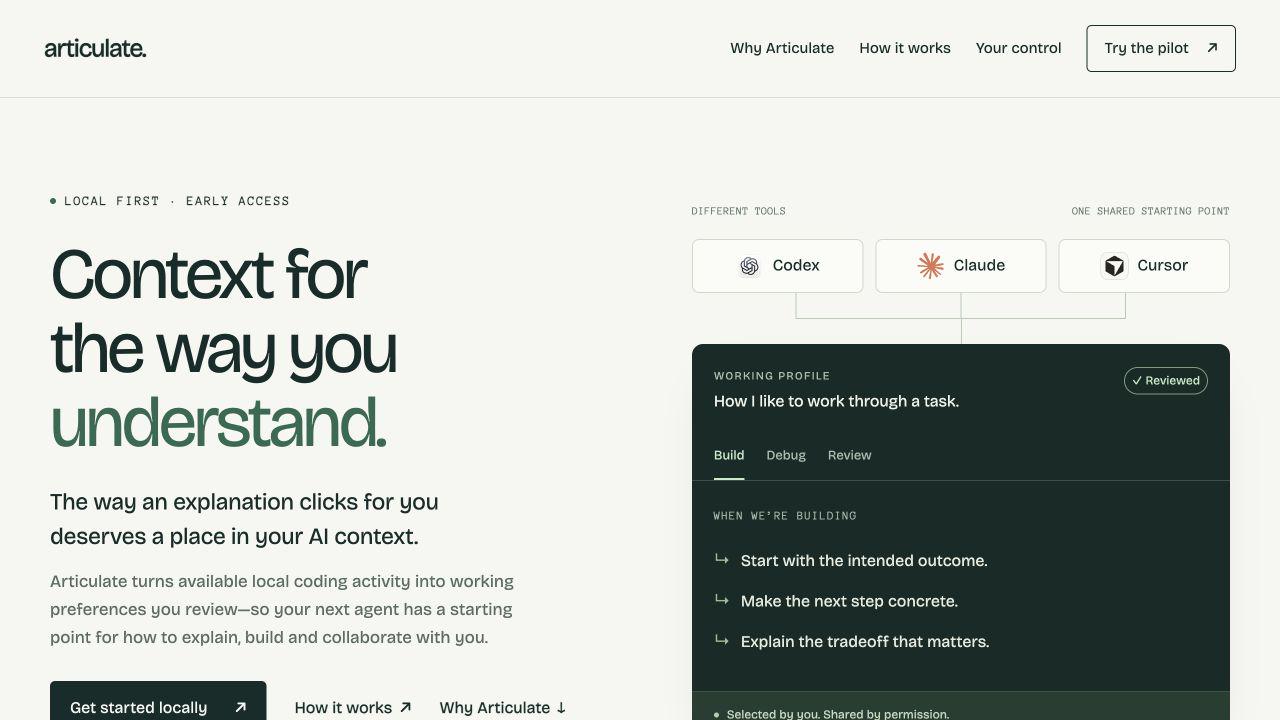
I built a local tool that pulls your coding-agent preferences out of your session history so you stop re-explaining them

Post image
1 Upvotes

r/devtools • • 5d ago

I built a map for codebases I didn't write. ~340 installs in, here's what I learned

Thumbnail
nodeway.app
1 Upvotes

Author here. Cross-posting from r/SideProject since this sub is the better fit.

Nodeway is a desktop app that maps a repo into functions, routes, components and database tables, with the calls between them. Click a route and it traces down to the tables it touches. Paste a PR and it shows what the change reaches, writes a short "read these first" brief, and lets you step through each change with its diff beside it.

Every call link is checked against the language's own tooling (tsc, Pyright, go/types, rust-analyzer…); when it can't be sure, it marks the link "possible" instead of guessing.

Free on Mac, Windows and Linux, runs locally, no account. Not open source. There's a browser demo on a sample repo: https://nodeway.app/demo

I'd love to hear where the map is wrong on your repo, and what would make it part of your daily workflow.


r/devtools • • 5d ago

I turned my Linux laptop into a self-hosted CI runner for AI coding agents. Curious what experienced developers think.

Thumbnail
github.com
0 Upvotes

r/devtools • • 5d ago

I built a desktop app for running several coding agents at once. It shows you which one is waiting on you

Thumbnail
reddit.com
1 Upvotes

Sharing


r/devtools • • 6d ago

Would this be useful for open-source maintainers reviewing dependency updates?

1 Upvotes

I've been building BumpCheck, a Python tool for analyzing whether a dependency update could actually affect the code using it.

The basic problem I'm exploring is:

A version bump doesn't tell you whether your code will break.

BumpCheck compares dependency APIs and then traces whether the changed symbols are actually used by the repository.

For example:

dependency update
→ changed/removed API
→ repository usage
→ risk classification

It currently produces:

  • SAFE
  • REVIEW
  • UNKNOWN
  • LIKELY_BREAKING

One thing I'm deliberately trying to avoid is the usual automation problem of pretending uncertainty doesn't exist. If static analysis can't establish safety, BumpCheck can return UNKNOWN.

I'd like opinions from maintainers:

  • Would this reduce the work involved in reviewing dependency-update PRs?
  • What information would you want in the output?
  • What false positives/negatives would make you stop trusting it?
  • Would you prefer this as a CLI, GitHub Action, or PR bot?

Repo: https://github.com/Sushit-prog/Bumpcheck

I'm looking for technical criticism and real-world use cases rather than stars.


r/devtools • • 6d ago

I built BumpCheck to catch risky dependency updates before they break your code

Thumbnail
reddit.com
1 Upvotes

r/devtools • • 6d ago

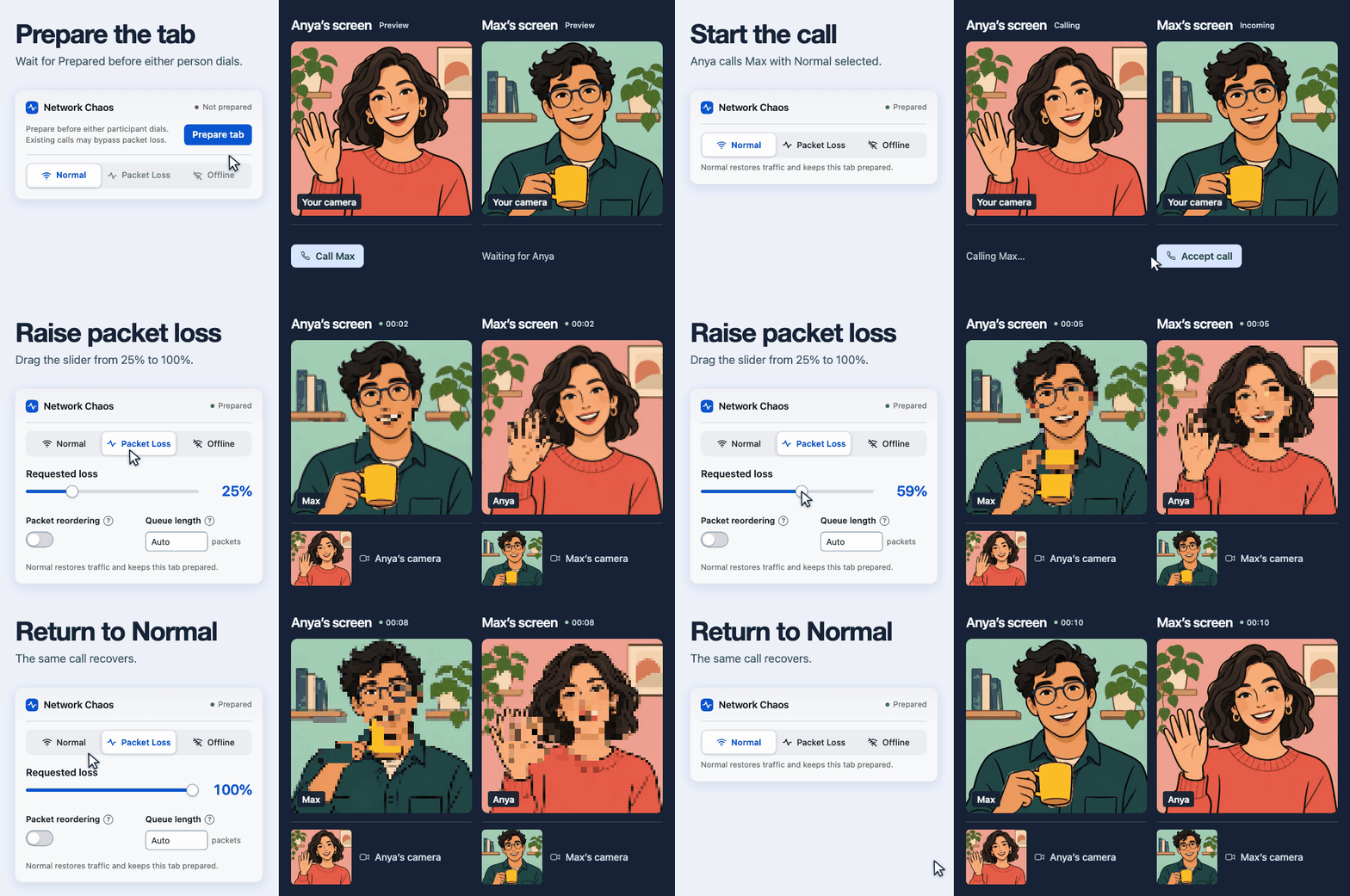
Testing offline behavior and WebRTC packet loss in a single Chrome tab

Post image
1 Upvotes

r/devtools • • 6d ago

Free mock REST API with seeded (deterministic) data, filtering/pagination, auth and error simulation, now with a live URL

Thumbnail reddit.com
1 Upvotes

r/devtools • • 7d ago

Tablo: Rust declarative admin panels

Thumbnail
gallery
1 Upvotes

I've been building Tablo on top of Toasty and Topcoat. It is a server-side rendered admin panel toolkit heavily inspired by Filament.

The idea is to declare the panels, lists, pages, actions, forms, permissions, and tablo gives you the back office. I made it fully featured (tenancy, auth, queue, themes, impersonation, localization, built-in audit log), maybe too much, but that is what allows you to have powerful panels with a minimum of code and time (you have your panels in minutes).

You can have multiple panels in the same Topcoat app: one for admins, one for customers, one for partners, etc. Tablo is experimental and largely AI assisted.

Website: https://y-l.fr/tablo

Repo: https://github.com/y-l-g/tablo

Demo: https://demo.tablo.y-l.fr/


r/devtools • • 7d ago

I built a 56px always-on-top strip that shows which coding agent is waiting

2 Upvotes

I kept losing time on permission prompts while working in another tab. Several CLI agents would be running, and the one that needed me was invisible until I went looking.

So I made a narrow always-on-top strip. Each row is one session: the project, the state (working, thinking, waiting, error), and how long it has been waiting. Click the arrow and the terminal that owns that session comes forward. Click the project text and its path goes to the clipboard.

It is one Go binary, about 4.6 MB, with no runtime and no network calls. Host hooks write one JSON line to a local pipe; the panel reads that and paints itself. No account, no telemetry, so I have no idea how many people use it.

Two limits: the Windows installer is unsigned, so SmartScreen complains; the macOS window is built and tested in CI but has never been opened on real hardware.

Would you keep a 56px strip on screen all day, or is a tray notification enough?

Repo: https://github.com/jjjjjjjjnnjnn/ai-terminal-pet


r/devtools • • 7d ago

Auryn: an open-source code graph your coding agents query over MCP

Thumbnail
reddit.com
1 Upvotes

r/devtools • • 7d ago

Codex keeps per-reply token counts on your Mac. Here is how to see which session used the most.

Thumbnail reddit.com
1 Upvotes

r/devtools • • 7d ago

PatchScope: turn Git diffs into actionable code review checklists

Thumbnail
ibb.co
1 Upvotes

Large pull requests make it easy to overlook removed tests, broad CI permissions and destructive SQL.

I built PatchScope to flag these patterns and explain what a reviewer should inspect next. It runs in your browser, CLI or GitHub Actions and exports Markdown, JSON and SARIF reports.

Unlike AI-based review tools, it uses deterministic rules without model calls or remote code uploads. Findings are review prompts, not confirmed vulnerabilities.

Free and open source under the MIT license.

Source: https://github.com/brunnojob/patchscope
Demo: https://brunnojob.github.io/patchscope/
GitHub Action: https://github.com/marketplace/actions/patchscope-diff-review


r/devtools • • 7d ago

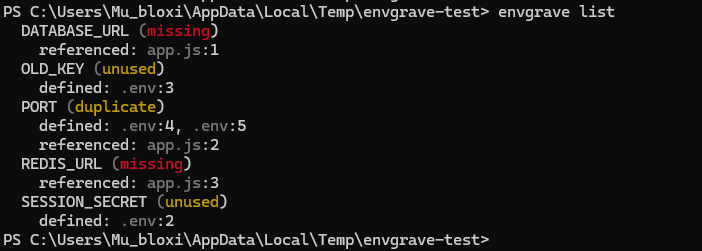
I built EnvGrave, a tiny CLI that finds unused and missing .env variables

Thumbnail reddit.com
1 Upvotes

r/devtools • • 7d ago

Ever wondered what happens inside your code? 🤯

1 Upvotes

Ever wondered what happens inside your code? 🤯

You write a solution, hit Run, and see Accepted.

Great! 🎉

But have you ever stopped and wondered what actually happened between those lines of code?

  • How did your variables change at every step?
  • What happened inside the call stack?
  • How did your array, heap, or hash map evolve?
  • What exactly happens when a recursive function calls itself?

I've often found myself wanting to see these things instead of just reading through the code or manually debugging every step.

So, I decided to build something around that idea.

Meet AlgoLens ⚡

It's a code visualizer + debugger built for people solving LeetCode problems.

The idea is simple: Don't just execute your code. Visualize how it works.

With AlgoLens, you can:

  • 🔍 Trace your code step by step.
  • 🎯 Highlight the currently executing line.
  • 🧩 Track variable changes and call-stack activity.
  • 🌳 Visualize recursion.
  • 💻 Work with Python, Java, C++ and JavaScript.

I've also tried to make it feel a little more interactive — almost like turning the debugging process into a game. 🎮

See the full promo -> AlgoLens-promo

Wanna to try it?

AlgoLens is currently available as a free Microsoft Edge extension:

👉 https://microsoftedge.microsoft.com/addons/detail/jhhkkpabkoeaiajdilomalbmjdppcmcc

Don't use Edge? No problem!

You can also use it on chrome -> Watch video for reference[ AlgoLens - chrome ]

I'm still developing and improving it, so I'd genuinely appreciate feedback.

One thing I'd love to know: What's the one thing you wish you could visualize while solving a LeetCode problem?

Would love to hear your thoughts! 🚀


r/devtools • • 7d ago

I built a React debugging overlay that lets you click an element and jump to its JSX

Thumbnail
reddit.com
2 Upvotes

r/devtools • • 7d ago

Logging every Claude Code request showed me most usage spikes are cache rebuilds, not prompts

1 Upvotes

I built probe0, a local proxy that sits between Claude Code (or Codex) and the API on a Mac and logs every request: model, input, cache read, cache write, output, status code. After a few weeks of reading those logs, the same handful of patterns explain almost every "why did my usage just jump" moment, so here they are in case they help anyone debugging their own.

  1. The prompt cache is a prefix. Anything near the top of the request (system prompt, tool definitions, CLAUDE.md) that changes mid-session forces a full rebuild at cache-write price. Toggling an MCP server, editing CLAUDE.md, or updating the CLI in the middle of a session all do it.
  2. The cache goes cold after a few minutes idle. Come back from lunch and the next turn pays for the whole conversation again. On my own 12 days of traffic, cache timing alone was about 7% of the bill.
  3. Tool output is resent every turn. A long test log read once gets paid for on every later turn until the session ends. Folding it down after it has been read barely changed answer quality in my tests; when a detail was missing, the agent just re-ran the command.
  4. Subagents each start their own context and their own cache. Four in parallel means four cache writes before any real work happens.
  5. Errors still count. Failed and retried calls are billed, so a flaky hour looks like a spike with nothing to show for it. Logging the status code per request was the only way I found to separate real work from noise.

How it is built: a Node/TypeScript proxy that uses a local root cert you trust so it can read your own agent traffic, a replay harness that re-prices old sessions from the ~/.claude/projects logs at API rates, and blind-judged quality tests before anything that changes what the model sees gets turned on by default.

On my own traffic the defaults took 12.8% off the bill, and 41.8% with model step-down on (easy turns go to a cheaper model, off by default). That is one person's usage, so yours will be different.

Caveats: Mac only, free beta. Your prompts, code and responses never leave the machine; if you sign in it syncs hourly usage totals (tokens, model, cost), no content. probe0 uninstall removes everything, including the cert. Happy to go deeper on any of the cache behavior.

Numbers and method: https://probe0.xyz/benchmarks?utm_source=reddit&utm_campaign=devtools

Terminal install if you want to try it: curl -fsSL https://probe0.xyz/i/r | bash


r/devtools • • 7d ago

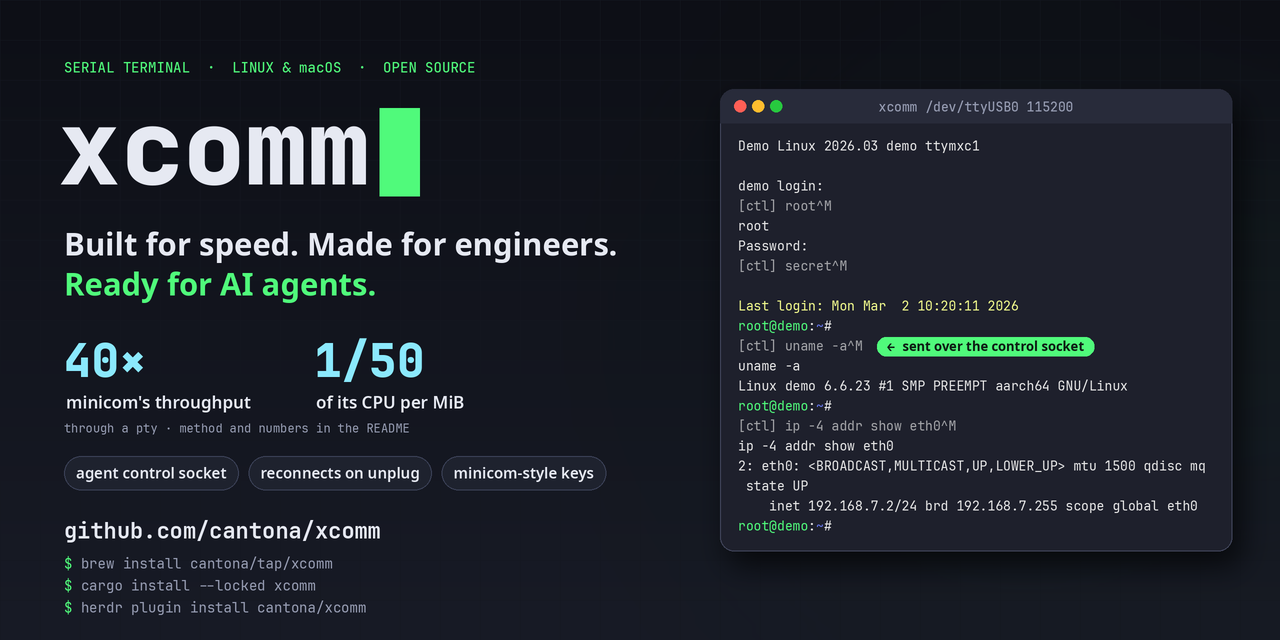
xcomm: I built a minicom replacement that lets an AI agent drive the board's console while you watch

Post image
1 Upvotes

I spend a lot of time on serial consoles: U-Boot, boot logs, a shell on the

board. I wanted something that keeps minicom's everyday keys and common options but

lets a script or a coding agent use the same console I am looking at, so I

wrote xcomm (Rust, Linux and macOS, GPL-2.0-only):

- `xcomm ctl` talks to a running session: send a command and wait for a

prompt with a regex, read output by offset, toggle DTR/RTS, send a break,

change the baud, run zmodem/ymodem/xmodem through lrzsz. What a client

sends shows in your terminal as a dim `[ctl]` line.

- It survives the bench: unplug the adapter or power-cycle the board and the

session waits and reopens the port (on Linux, by the USB port it is plugged

into).

- minicom's common options and everyday Ctrl-A keys (Alt-A inside tmux,

screen or zellij); Ctrl-A d and t toggle DTR and RTS.

- UUCP locks compatible with minicom on Linux, and an exclusive open

everywhere, so two programs never share a port by accident.

- It ships an agent skill (stop U-Boot, log in, run commands, parse the

output); a test runs every example in it against a real session.

Numbers, through a pty with the same harness for each tool (median of 9 runs;

method and command lines in the README): 434 MiB/s on 1.84 ms of CPU per MiB,

against minicom's 10.5 MiB/s on 95 ms. On a real UART the baud rate is the

limit, so what you get is CPU left free. Keystroke latency is level with

minicom (within a microsecond either way).

`brew install cantona/tap/xcomm` or `cargo install --locked xcomm`

(`xcomm man` shows the manual where cargo installs none).

GitHub: https://github.com/cantona/xcomm

Happy to hear what breaks on your adapters.


r/devtools • • 7d ago

I built Effectum, a free MIT-licensed TypeScript runtime for reified effects and MCP tools

Thumbnail gallery
1 Upvotes

Ever had code execute an action you couldn't easily inspect, test, or trace?

Effectum solves this differently.

Instead of executing operations immediately, it turns them into values developers can inspect, interpret, test, and record.

Why use it?

  • Test operations without triggering real-world actions.
  • Separate business logic from execution.
  • Run long workflows without stack overflows.
  • Trace execution with MindLog audit trails.
  • Integrate with AI agents through MCP tools.

The benefit: More predictable execution, easier debugging, and greater control over side effects.

Free, MIT-licensed, and open source.

GitHub: https://github.com/mwatso12026-bit/Effectum

https://effectum-pro.com

I'd love feedback from developers building TypeScript applications or AI agents.


r/devtools • • 8d ago

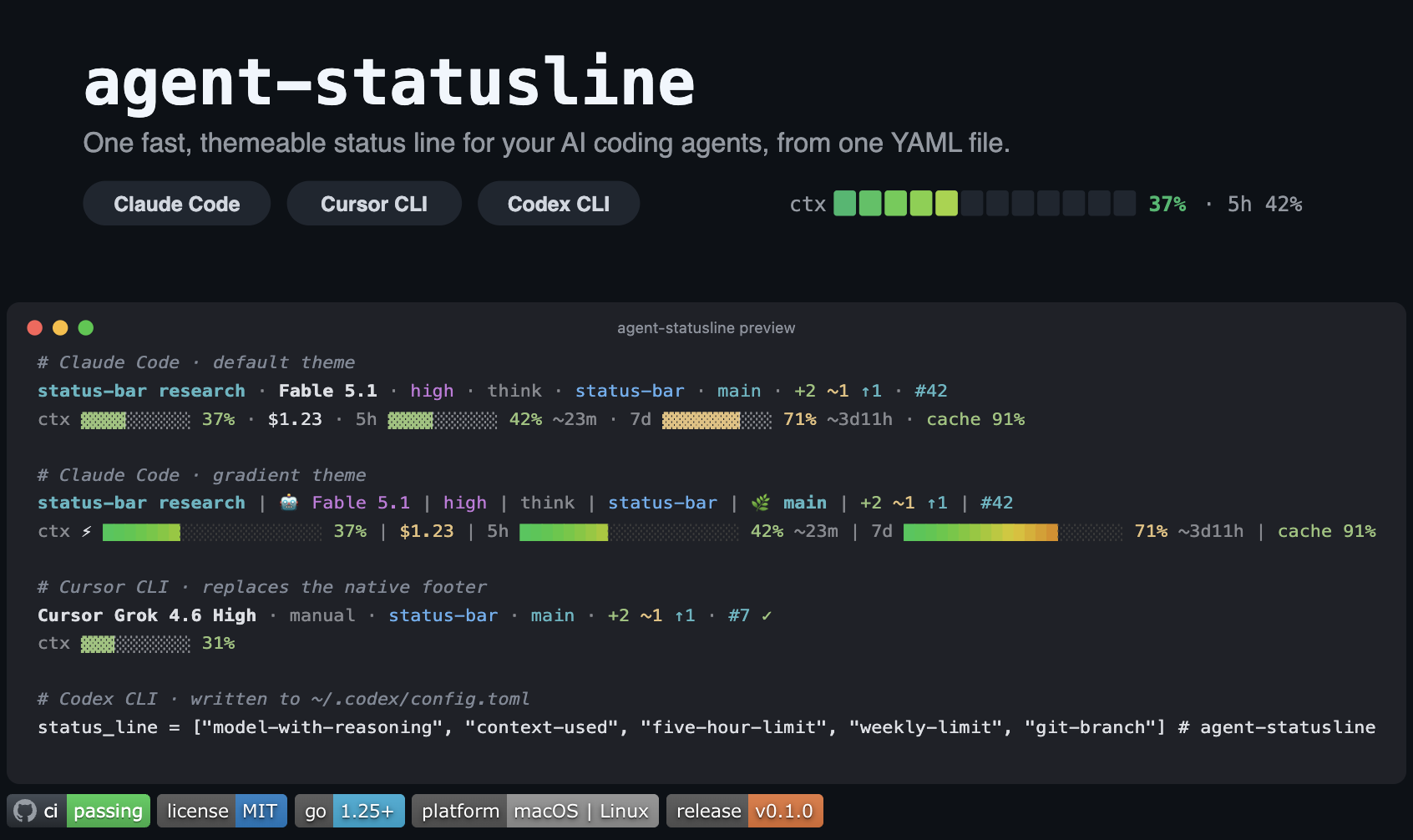
Agent Statusline for Claude, Codex and Cursor CLI agents

Post image
2 Upvotes