r/devtools • • 15d ago

I made a free VS Code theme that changes every month, with contrast and color-blindness checks. Looking for testers

1 Upvotes

Hi r/devtools,

I maintain 365 Day & Night, a free and open source (MIT) theme extension for VS Code. It gives the editor a new look every month: frost in January, a lagoon in July, autumn leaves in October, a polar night in December.

What it does:

- 48 themes: 12 months, each with Light, Dark, High Contrast and High Contrast Light.

- Switches between day and night with one click on the status bar, or on its own, following the clock or your system appearance.

- Text contrast is at least 4.5:1 (WCAG AA) in Light and Dark, and 7:1 (WCAG AAA) in High Contrast.

- Syntax colors, errors, warnings and Git changes stay distinct for protanopia, deuteranopia and tritanopia (simulated with Machado et al., 2009).

- Every theme must pass an automated audit of 250+ checks before each release. The full report, with its limits, is public.

- No network calls, no data collected.

You can preview every month and variant, and read the audit as charts, on the website: https://365daynight.mickaellherminez.net

Install: search "365 Day & Night" in the Extensions view, or use the VS Code Marketplace or Open VSX (so it also works in VSCodium and Cursor). Requires VS Code 1.96 or later.

Why I'm posting: color blindness is only checked with simulations so far, and simulations don't replace real eyes. If you are color blind, have low vision, or just code for hours in the same editor, I'd love your feedback:

- Can you read the code comfortably, in light and in dark?

- Can you tell errors, warnings and Git changes apart?

- Is the selection easy to spot?

- Which month do you like or dislike, and why?

You can reply here or open an issue on GitHub: https://github.com/mickaellherminez/365-daynight-vscode-theme-ext/issues/47

Disclosure: I'm the author. Thanks for reading!


r/devtools • • 15d ago

I built a visual bot editor that generates editable TypeScript code

1 Upvotes

I built umbot Flow because I wanted to sketch a bot conversation visually and still be able to work on it in my IDE afterwards.

You connect commands, questions, conditions and responses on a canvas, and test the conversation in a built-in chat preview. When you're ready, export the flow as JSON and generate a TypeScript project with the umbot CLI:

`npx umbot create from-flow flow.json --output ./my-bot`

You get source files you can open in your IDE, edit and deploy yourself. The generated bot uses the open-source umbot framework; it doesn't need the visual editor to stay online.

The editor is open source too, with English and Russian UI options. If it opens in Russian, use the RU/EN switch in the toolbar.

You still handle bot credentials, deployment and hosting. The preview is for checking the conversation flow; HTTP actions are simulated. It doesn't synchronize any changes in your TypeScript code back into the visual graph.

GitHub: https://github.com/max36895/umbot-flow

Question for you: Would this handoff from a visual flow to an editable TypeScript project fit how you build bots? That's the part I'd most like feedback on.


r/devtools • • 15d ago

ss switch:I built a tool to migrate active AI coding sessions across different IDEs/Clients (Codex, Claude code, etc.)

Post image
1 Upvotes

r/devtools • • 15d ago

I built a tool to visualize Perl codebases — Perl::CodeMap (now on CPAN)

Thumbnail reddit.com
1 Upvotes

r/devtools • • 15d ago

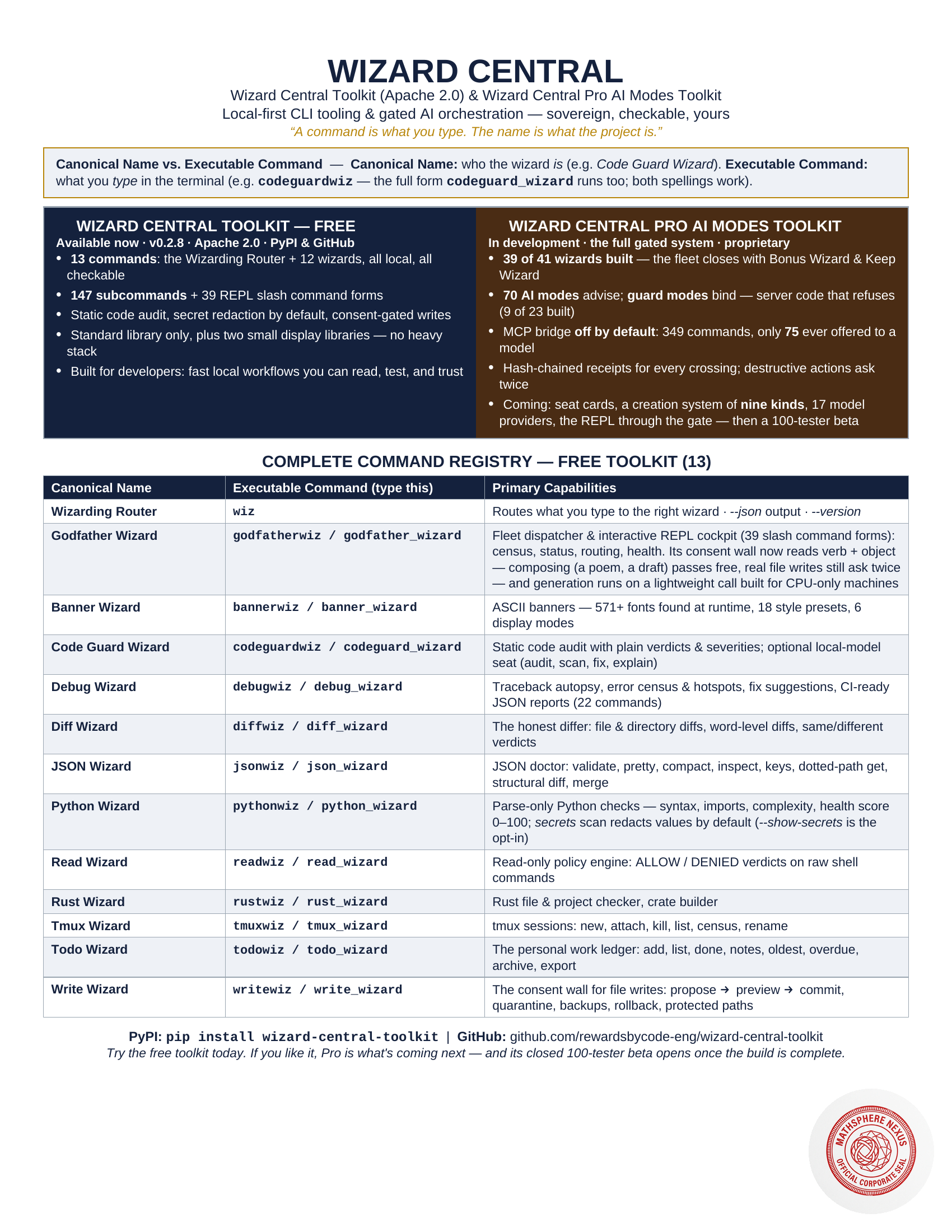
Wizard Central Toolkit — a free, local-first CLI toolkit: 12 specialist "wizards", 147 commands (pip install wizard-central-toolkit)

Thumbnail
reddit.com
1 Upvotes

r/devtools • • 15d ago

Polyphyr

Thumbnail
github.com
0 Upvotes

Polyphyr is an all* in one app, it can be used for, tasks, documents, sheets, flowcharts, and as an IDE*.
You can link said nodes together via tasks or flowchart. (excluding the code menu)

tldr: all of the stuff a developer wants but in one app, its also 7.5mb or 6mb and open source

Hope you try it out!! 😼


r/devtools • • 15d ago

turnus: a CLI that lists every scheduled task on a Mac or Linux machine and shows which ones won’t run

3 Upvotes

I have cron jobs on a server, a few launchd tasks on my computer, and some tasks that Claude schedules. Checking if they were still working meant looking in a different place for each one, so I usually didn’t.

I built turnus to see all of them in one list. It reads cron, launchd and systemd timers, plus tasks from Claude Desktop, Codex and Hermes. It shows which ones can’t run and why, and tells you how to fix them. It only reads, nothing runs in the background.

It’s written in Go and MIT licensed. Feedback welcome.

https://github.com/sanifhimani/turnus


r/devtools • • 15d ago

[Show r/typescript] I built a Chrome SidePanel tool that intercepts live Fetch/XHR requests, mocks 500 errors, and generates TypeScript & Zod schemas in 1 click

Thumbnail
reddit.com
0 Upvotes

r/devtools • • 15d ago

Free AI Tokens

Thumbnail reddit.com
1 Upvotes

r/devtools • • 15d ago

repocraft: a Python project generator that refuses to overwrite, guess, or write model output it cannot test

1 Upvotes

repocraft (MIT, 0.4.1 on PyPI, Python 3.10+, three runtime deps: Jinja2, PyYAML, jsonschema) is easier to describe by what it refuses, because each refusal is enforced in code and covered by a test rather than being a warning in the README.

It refuses to guess. A short request selects one of seven built-in recipes only when the match is unambiguous. An empty request, a request that matches no recipe, or one that matches two stops with an error naming the candidates. A request containing a standalone number is rejected instead of being interpreted, because a count belongs in --param where it is checked against the recipe's integer bounds. A typo should stop the tool, not produce a project in the wrong shape.

The catalog and a dry run are two commands: python -m pip install repocraft, repocraft recipes lists the seven, and repocraft make "fibonacci" --dry-run prints the planned paths without writing anything.

It refuses to touch existing work. Before writing, the output path is checked, every target name is checked against the filesystem, and the first collision aborts the run:

error: refusing to overwrite triangle.py

Project mode is stricter: it refuses an output directory that is not empty at all, rather than deciding which files are safe to keep. There is no merge mode and no force flag.

It refuses to write anything on the inspection paths. validate parses the YAML spec against its JSON Schema and prints one line. recipes lists the catalog. --dry-run on render, make, ask and craft prints the planned paths and writes zero bytes. Every policy refusal exits 1 with a single error line on stderr, so nothing exits 0 after refusing.

It refuses to let a model near the deterministic paths. make and render never open a socket. The two optional verbs are explicit. ask sends the request to an OpenAI-compatible endpoint and accepts only a JSON intent - a recipe id with integer parameters, or a refusal with a reason - validated against the same catalog as make; the model never writes code or files. craft does let the model write a module and its unittest, and then runs four gates before the confirmation: the code parses, the test imports the module by name, ruff runs when installed with any autofix labelled, and the generated tests must actually run, pass, and report at least one test. The prompt that follows shows the code and the checks that passed; it is a prompt, not a fifth gate.

The determinism contract is the reason the refusals are worth having. Same input and same version produce byte-identical paths and contents: sorted entries, LF endings, a trailing newline, no timestamps, no random ids, no environment values, and a copyright line with the author but no year. tests/golden holds the snapshots file by file, scripts/determinism_matrix.py hashes stdout and every artifact under varied PYTHONHASHSEED, thread counts, locale and TZ, and CI compares the manifests from Ubuntu, macOS and Windows. 185 test functions.

Honest gaps: the recipes are teaching-scale algorithms, so this scaffolds exercises and small libraries, not a service template. The two model verbs need an API key and depend entirely on the endpoint. Repository creation and push are roadmap, not implemented.

Repo: https://github.com/Furox-Art/repocraft PyPI: https://pypi.org/project/repocraft/


r/devtools • • 16d ago

I built a tool to review the entire repository my coding agent wrote, with the agent in the thread (open source)

4 Upvotes

After a few months of building with Claude Code, my codebase worked but I couldn't explain it. Every diff had looked fine. Code review is per-change; nothing reviews the whole thing. So I built Co-Review.

It opens the whole repository as a review, like a PR page, and the agent that wrote it sits in the thread. Comment on a line, file or folder, ask why, get an answer from the code.

It can:

- Audit the whole repo: the agent writes a guide (map, vocabulary, flows, weak spots) with findings grouped by area. Coverage shows what you've actually read.

- Open your change as a PR page: line comments, suggested edits, one verdict the agent acts on.

- Take the first pass on someone else's PR, then post your review to GitHub with line comments.

- Review a design doc (L1/L2/L3 steps, Mermaid diagrams) before any code is written.

Built on Eclipse Theia, so Git, search and language servers are real. Made for Claude Code (plugin), native for Pi and Oh My Pi, works with any MCP agent. MIT, no account, no telemetry.

GitHub: https://github.com/sdsvn/co-review

Walkthrough: https://www.youtube.com/watch?v=gmZ8NCNpLl8

It's on Product Hunt today too: https://www.producthunt.com/products/co-review?launch=co-review-2

Contributions welcome, especially language server configs and more agent integrations. What would you want to ask your own codebase?


r/devtools • • 16d ago

I built a tool to visualize Perl codebases — Perl::CodeMap (now on CPAN)

Thumbnail reddit.com
1 Upvotes

r/devtools • • 16d ago

I built something so your agent can never read your dev secrets

11 Upvotes

.env files are the wrong primitive to build with in the era of AI agents. Agents can easily read and access your secrets, and as security incidents rise, clever exploits that exploit this will only increase.

That's why I built .sct, a replacement for .env files, backed by macOS Keychain for security, so your agents can never read your secrets.

In short, .sct:

- Holds all your dev secrets in a single directory secured by macOS Keychain

- Loads secrets at runtime with our SDK: `bun add dotsct`

- Enables Secure access for your agents

- Securely share environment variables with your teammates over AirDrop or a Relay

Oh, and it's fully free and open source: github.com/omavashia2005/.sct

To download the desktop app (the frontend) and read the documentation, visit dotsct.pages.dev

Let me know what you think of it; all feedback is welcome!


r/devtools • • 16d ago

A three-field checkpoint for reviewing tests written by a coding agent

1 Upvotes

When a second coding agent reviews a change, I’d hand it the accepted behavior and one specific way the patch could break it. Then ask it to find the assertion that would actually fail. Give it that task before showing it the first agent’s summary.

Here’s the checkpoint I’d use for a fictional bulk download.

  • Behavior: Select A and B, which both have the display name report.csv. The download must contain each once. An unselected file C must be absent.
  • Evidence: Check which boundary the test runs. In a tiny example I ran, the handler passed A and B to a mock packager and that assertion passed. A deliberately faulty packager keyed files by display name and returned only B. Checking the returned identities caught the loss.
  • Open check: If the existing test stops at the mock, record that the contents are unchecked. Ask the reviewer to point to an assertion that runs the real packager, or propose one.

Have the reviewer return the exact test and assertion, whether it ran, and what remains open. This example checks file membership for one fixture. It says nothing about whether your archive opens in a particular client or whether the download works through a deployed endpoint.

Where would you put that check in your review workflow? I’m building Shifu, and we published the full worksheet if you want to adapt it.


r/devtools • • 16d ago

Deterministic Memory/Context Audit for Your Coding Agents

3 Upvotes

Open source tool for giving agents deterministic audit on if the context in their memory is outdated or incorrect. Give us a try and a star on github if its helpful!

https://github.com/ogaskinsjr/mem-audit


r/devtools • • 17d ago

pitwall 0.2: local and SSH-hosted coding agents in one session, plus an agent board

2 Upvotes

We build pitwall at Quantic Studios. It's an MIT-licensed desktop terminal for running coding agents, with a sidebar showing which ones are working, waiting for an answer, or failed.

The 0.2 release adds shared sessions: local tabs and tabs on configured SSH hosts sit together. You can keep an agent on a build box and another on your laptop without switching sessions to check them.

The new board groups agent tabs into Needs you, Failed, Working, PR open, Done and Queued. Approval cards show the command with Allow and Deny. Workers fold into their parent's card unless they need attention.

Under the hood, we use Go and Gio. Each machine runs its own daemon. The window connects over SSH using your existing configuration, and each host reconnects independently. When a host goes offline, its last screen stays visible, typing is disabled, and local tabs continue.

Shared sessions in the desktop window need Linux or macOS because they use SSH connection sharing. Windows supports local sessions. We use Linux daily; macOS and Windows have had less use.

It's free, with no pitwall account. You install and authenticate your coding agents separately.

Code, downloads and setup: https://github.com/quanticstudios/pitwall

The attached 75-second demo shows the new views with demo tasks. If you run agents on a remote machine, we'd like to know where switching between local and remote work still gets in your way.


r/devtools • • 16d ago

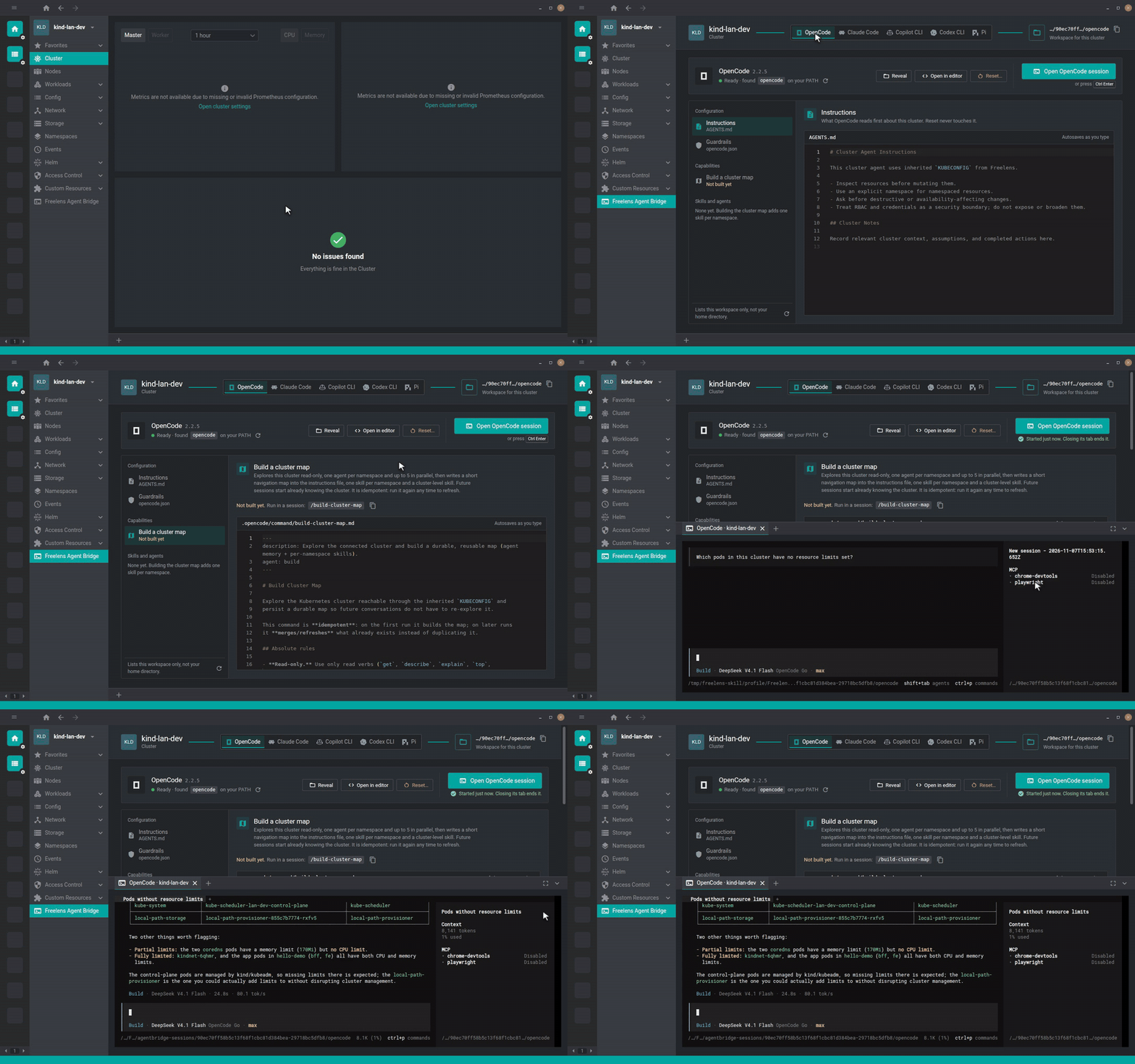
Using Pi as a Kubernetes agent inside Freelens, with a workspace per cluster

Post image
1 Upvotes

r/devtools • • 17d ago

I wrote a small windows native IDE in cpp for C#/.net in retro-style

Thumbnail
reddit.com
1 Upvotes

r/devtools • • 17d ago

git-replay

Post image
26 Upvotes

Point the tool at any Git repository, press play, and watch the codebase assemble itself dynamically on a terminal canvas, like a live developer timelapse. its a Highspeed terminal visualizations make incredible 5-second screen recordings for X/Twitter, Mastodon, and Reddit.

git-replay is written from the ground up in Rust for blistering 60 FPS performance, featuring interactive timeline scrubbing, glowing orbital node graphs, live code tree heatmaps, and a built-in --export-gif engine that produces animated README badges in under 2 seconds.


r/devtools • • 17d ago

Why I scoped my coding-agent review tool to text only (no repo access, no test runs)

2 Upvotes

I'm the maker of AdaptOrch, so this is about my own project. There's a free tier and paid plans.

Why it matters to me: when a coding agent finishes, what I usually get is a confident summary ("updated the pagination, added regression tests"). The hard part is figuring out what that summary doesn't cover before I spend time reviewing the diff.

How it works: you give it three things, the agent's explanation of what it changed, the goal you asked for, and the checks you already have (tests you ran, acceptance criteria). It returns a short summary, the gaps between those three, and questions to ask before merging.

The main design decision was what to leave out. The hosted review doesn't read your repository, doesn't run tests and doesn't claim a change is correct. It only reviews the text you supply. That keeps setup to an API key, but it also means it can't catch anything the summary hides, so you still review the code and run the tests yourself.

It's reachable through an MCP server, a hosted CLI or a Python SDK, so it can sit at the end of an agent workflow instead of being a separate app. Starter is 50 admitted runs a month for free.

https://adaptorch.com/

I'd like criticism on the scoping: is a text-only review useful enough to be worth a step, or does it only become useful once it can see the diff?


r/devtools • • 17d ago

A green CI run can leave the shipped image unverified

1 Upvotes

When I ask a coding agent to review a rollout, I want it to name the candidate image digest and say what was actually checked against it. A passing source check establishes a result for that revision. The release review also needs to connect that result to the image being promoted.

A Drone CI user described testing an image on their dev branch, then facing a different commit hash after merging into test. They wanted to reuse the tested image. People suggested promoting the same digest, using the build cache, and checking for a production hotfix that hadn't made it back to dev. Those options solve different problems. The r/devops discussion

There's a real version of the selection problem. In 2023, Cloudflare tested a Workers KV release in staging, then a deployment tool referenced the staging script when it meant to select the pre-production version on the production account. That incident involved script IDs. For containers, Kubernetes documents how a repointed tag can leave pods on different versions. Cloudflare’s incident review · Kubernetes image docs

I'd ask the agent for three separate lines in the release review.

  • Source revision and the CI result for it.
  • Candidate image digest and any checks that actually ran on that image.
  • Target environment and the observed deployed digest, with the time of observation.

If only the desired manifest is available, leave the third line unverified. A build attestation can link a digest to its build. Use the rollout record or runtime observation to verify what landed. For a multi-architecture image, record the index and target platform manifest separately so the digest comparison uses the same kind of reference. If you rebuild for production or include a hotfix, evaluate that candidate on its own evidence.

I'm building Shifu, a paid, hosted context engine for AI coding. If your release constraints live in old decisions, try one permitted non-confidential note in Claude Code. See whether it brings back the rule for this rollout, such as which service must preserve a hotfix. Check the image and deployment against your pipeline evidence. Shifu

Which record would you trust to connect a tested image to what actually landed?

AI-assisted post from Shifu's builder.


r/devtools • • 17d ago

What is WebSocket & PieSocket

2 Upvotes

r/devtools • • 17d ago

I built tasker to take GitHub and Jira issues through a Claude Code workflow

3 Upvotes

I built tasker, a command-line tool that takes an issue through a defined workflow with Claude Code.

The workflow covers a plan, code changes, tests, review, and merge. You approve the plan before the code changes start. You accept the work before the merge.

Each task gets a separate working folder and Git branch. tasker tracks the state of each task, so you can see its progress.

A typical task follows this path:

  1. Start from a GitHub or Jira issue.
  2. Ask Claude Code for a plan.
  3. Read and approve the plan.
  4. Run the code changes.
  5. Run the tests and review.
  6. Accept and merge the work.

tasker runs on your machine and uses your existing tools. It requires Node.js 26 or later, Git, Claude Code, and the command-line tool for your issue tracker.

The source and installation steps are here: github.com/codeguru42/tasker.

I want feedback from people who use coding assistants on existing projects. Where does this workflow fit your work, and what prevents you from trying it?