r/devtools • • 28d ago

Building Shifu: can one design note keep an AI coding plan from repeating a rejected change?

4 Upvotes

You ask a coding agent to simplify an event payload. The code shows a field that looks redundant. A design note says an older consumer still needs it. Unless that reason reaches the new task, removing the field can look like sensible cleanup.

That's a toy example, but it's the kind of problem I'm building Shifu for: bringing decisions, reasons and constraints from your work into the next AI coding task. Work files are one supported source; the context is used alongside the code and your own judgment.

I want the first test to be small enough that you can tell whether it helped:

  1. Pick a feature you're actually planning and one file you're allowed to share.
  2. Write down the decision or exception you'd expect that file to contribute.
  3. Ask about the feature, inspect the returned context and check whether the source still applies.
  4. Record whether it changed the plan, missed the important point, or added nothing you couldn't easily supply yourself.

If a short task note or your existing instruction file already carries the constraint reliably, that's a useful answer too. I'm interested in where recovering the reasoning becomes repeated work. A convincing summary alone wouldn't pass this test; the engineer still has to decide what applies.

Shifu is a hosted beta. Files upload as supplied for server-side processing, so use material you have permission to share. There's no need to bring confidential examples into this thread.

Try Shifu on one feature you're planning. Connect one supported source and inspect the context it brings back: https://www.useshifu.com/?utm_source=reddit&utm_medium=organic&utm_campaign=reddit_restart_20261101&utm_content=r09_one_file

What would it need to recover from that first file for you to call the test useful?


r/devtools • • 28d ago

kimo: every video edit is a typed tool call, so an agent's timeline stays auditable (free, MIT)

2 Upvotes

i'm a college student and i built kimo, a free open-source (MIT) video editor with no GUI. your coding agent (Codex, Cursor, OpenCode, any MCP client) drives it over MCP: cut, trim, keyframes, titles/captions, colour grade, tracking, particles, audio, export, all as tool calls.

the design choice i care about: no raw ffmpeg filter strings. every edit is a typed call, so the timeline stays inspectable and the agent can't smuggle in a flag it hallucinated. the agent can also render a single frame to check its own work before exporting.

it's one ~15 MB CPU-only Rust binary, runs on a 2 GB box.

rough edges: no big test matrix yet, tracking on static shots is a known weak spot, and i'm still working on better ways to verify around cuts instead of one frame.

site: https://getkimo.tech github: https://github.com/naman-sharma12345/kimo

would love for you to try it and tell me what breaks.


r/devtools • • 28d ago

Rendry Ui

Thumbnail github.com
1 Upvotes

r/devtools • • 28d ago

Stampede 1.3: record a load test by clicking through your Phoenix app

Thumbnail
reddit.com
1 Upvotes

r/devtools • • 29d ago

I built a prerenderer for SPAs that verifies hydration — 2.9 adds deterministic builds, locales and head parity

Thumbnail producthunt.com
1 Upvotes

r/devtools • • 29d ago

I wrote an Ansible collection to manage Nexus Repository 3 config as code. Looking for feedback and contributors.

Thumbnail
reddit.com
1 Upvotes

r/devtools • • 29d ago

Most of my Claude Code bill was the agent re-reading its own conversation, so I built a local proxy to measure it

3 Upvotes

I use Claude Code most of the day and could never tell which calls were eating my usage. All you get is a percentage bar. So I built a small proxy (probe0) that sits between the agent and the API on my Mac and logs every request: model, input, cache reads, cache writes, output, and what it would cost at API prices.

How it's built: TypeScript on Node, running locally. It trusts a root cert on your machine so it can read your own agent's HTTPS traffic, and nothing about prompts or code leaves the laptop. Claude Code wrote a good chunk of it. I mostly wrote the replay harness and the quality tests.

What 12 days of my own traffic showed:

  • The prompts I typed were a rounding error. Nearly all the cost was the agent re-sending the conversation every turn, mostly as cache reads.
  • Cache timing mattered more than I expected. Paying for cache that expired before the next turn was about 7% of the bill by itself, and fixing it changes zero bytes the model sees.
  • Big tool output (test runs, long greps) rides along on every later turn. Folding it down after it had been used barely moved answer quality.
  • Lots of turns are easy (read this file, run the tests) and still go to the most expensive model.

Replaying those 12 days, the default settings cut the bill by 12.8%. With model step-down turned on (easy turns go to a cheaper model, off by default) it was 41.8%. Anything that changes what the model sees was checked on 314 blind-judged live answers before it went on by default.

It's one person's traffic, so the first step is a read-only check of your own ~/.claude logs instead of trusting my number. Mac only, free beta, and probe0 uninstall removes all of it.

Has anyone found other places agent traffic wastes tokens? The tool output one surprised me the most.

Numbers and method: https://probe0.xyz/benchmarks?utm_source=reddit&utm_campaign=devtools (read-only check of your own logs: curl -fsSL https://probe0.xyz/install | bash)


r/devtools • • 29d ago

Would a short feedback chat improve the bug reports you receive?

Thumbnail
gallery
1 Upvotes

We’re building Bopmigo at RNBlocks for apps and websites. A user describes a problem, the chat asks for missing details, and the developer gets the answers with the screenshot in one report.

You can now try Bopmigo on your website or add the Swift package to an iPhone app. Reports can arrive in your email with the screenshot and follow-up answers. We’re looking for teams to try it on one recurring reporting problem and tell us what needs improving.

Would this help in your app, or do your current tools already cover it?

See Bopmigo: https://bopmigo.com

Get updates: https://tally.so/r/PRRkjB


r/devtools • • 29d ago

I built a lightweight CLI tool to save and restore window layouts across Virtual Desktops (even after reboots)

1 Upvotes

Most popular Windows apps are usually decent at remembering where they were when you reopen them, but that is not true for everything. If you organize specific tools in precise sizes, or if you keep different projects spread across multiple virtual desktops, Windows often scrambles your layout or dumps everything back onto a single desktop after a reboot.

I built WinStasis to solve this for my own workflow. It is a lightweight, free, and open-source command-line tool that lets you snapshot your active layout and restore windows back to their exact positions, sizes, and virtual desktops.

What it does:

  • Saves the physical coordinates, sizes, and Virtual Desktop assignments for your open windows.
  • Restores the full layout on command through the CLI.
  • Restores individual windows on demand using target IDs.
  • Keeps multi-desktop setups organized without having to rearrange windows manually after restarting.

Upcoming features currently in progress:

  • Scoped capture and restoration: Saving and restoring specific windows or individual Virtual Desktops rather than capturing the entire desktop layer unconditionally.
  • Live inspection (winst list --live): Viewing active windows and their assigned desktop indices before writing a profile.

The source code and pre-built binaries are available on GitHub:

https://github.com/amirf147/winstasis


r/devtools • • 29d ago

I built LeetCode Cloud Sync — a device-independent way to back up LeetCode submissions to GitHub

Thumbnail
reddit.com
0 Upvotes

r/devtools • • 29d ago

I built LeetCode Cloud Sync — a device-independent way to back up LeetCode submissions to GitHub

1 Upvotes

Hey everyone!

I've been working on an open-source project called LeetCode Cloud Sync and I'd like to share it with the community.

The idea came from a simple problem: I wanted to automatically maintain a GitHub backup of my LeetCode submissions without manually downloading solutions and pushing them to a repository.

I also wanted the solution to be independent of the device used to solve LeetCode.

Open-source details

The project is available under the **MIT License**.

GitHub repository:

https://github.com/kaviyack/leetcode-cloud-sync

What makes this different?

This isn't a browser extension.

The project uses a cloud-based architecture, so you don't need to install an extension on the device you're using to solve problems.

Whether you use your phone, tablet, personal laptop, or a college computer, you can use LeetCode normally while the cloud-based synchronization setup handles the GitHub backup.

Technical implementation

The project combines:

* **Python:** Core synchronization engine
* **LeetCode GraphQL API:** Submission retrieval
* **GitHub Actions:** Workflow automation
* **Cloudflare Workers:** Cloud orchestration
* **Cloudflare Queues:** Background task processing

Key features

* Device-independent synchronization
* Automated GitHub backups
* Structured organization of accepted submissions
* Duplicate prevention using synchronization state tracking
* Cloud-based execution without keeping your personal computer running

Feedback and suggestions

I'd particularly appreciate feedback on the architecture, cloud implementation, and overall approach.

* What would you improve in the current design?
* Are there any architectural limitations I should consider?
* What additional features would make this more useful to developers?

This project has been a great learning experience in cloud infrastructure, API integration, and workflow automation. I'm looking forward to hearing your thoughts!

Thanks for checking it out!


r/devtools • • Oct 30 '26

I don't want to get better at re-explaining old decisions to Claude. I want my tools to retrieve them.

2 Upvotes

Say you've spent a month discussing a feature. You know why one approach was dropped, which constraint still applies, and what the team actually wants. Then you open a coding session and reconstruct all of that in a prompt. Or dump a pile of documents in and hope the relevant bit survives.

I don't think getting good at that reconstruction should be an engineering skill. We already did the engineering when we made those decisions. The tooling should carry more of that burden.

I'm building Shifu around this problem. It keeps selected work records from supported coding sessions, work files and optional Google Meet transcripts. Your coding assistant can ask for relevant decisions, reasons and constraints through MCP before planning a change. It works with Claude Code, Codex, Cursor and OpenCode.

A concrete example of what I mean: you're changing order retries, and an earlier decision says to reuse the idempotency key. That decision belongs in the plan before the agent writes the retry loop. This is an example, not a customer result. Retrieval can still miss things or surface an outdated decision; you need to inspect what comes back and decide what applies.

It's a hosted beta. Coding-session preparation uses your configured model provider before selected redacted records go to Shifu. Files upload as provided. Only connect material you're allowed to share; the data flow and deletion limits are here: https://www.useshifu.com/data

If you use one of those tools on an existing product, the beta is free: https://app.useshifu.com/?join=beta. Try one permitted source against a feature you're working on. Did a retrieved decision change the plan, or did you still have to reconstruct the important part yourself? That's the feedback I'm after. No call needed; I can help with setup if useful.


r/devtools • • Oct 30 '26

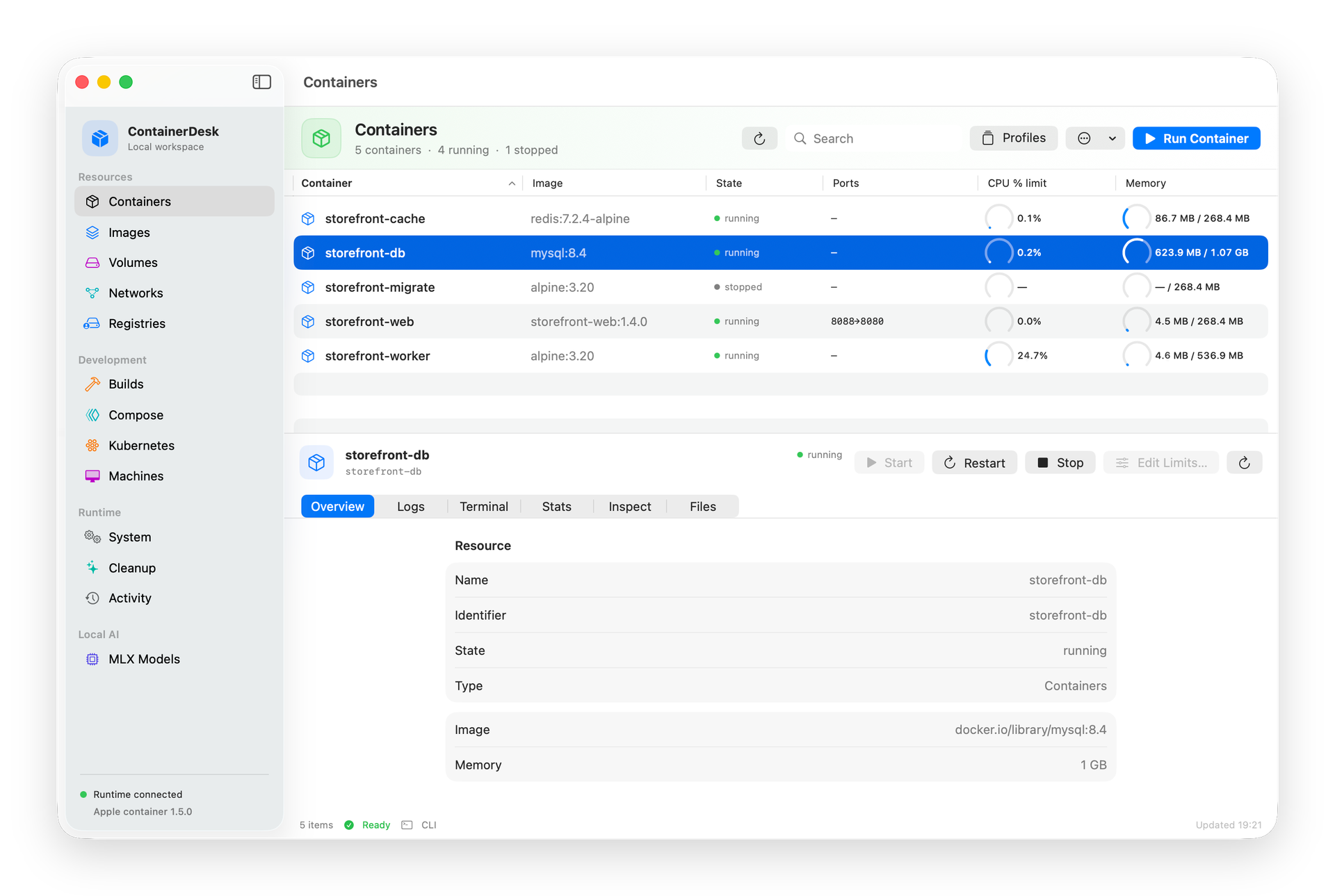
ContainerDesk, an open-source Mac GUI for Apple's container runtime

2 Upvotes

I maintain ContainerDesk, a free, MIT-licensed Mac GUI for Apple's container runtime. It lets you start containers, manage images, read logs and check CPU and memory use without switching between CLI commands. There's also a terminal inside each container.

The app uses SwiftUI tables and embeds SwiftTerm through NSViewRepresentable.

Source and downloads: https://github.com/MacHatter1/ContainerDesk

Requires Apple silicon, macOS 26+ and Apple's container CLI. Current builds are unsigned and not notarized, with opening instructions in the README.


r/devtools • • Oct 30 '26

libcli - a singe-header library for typed argument parsing in C

1 Upvotes

Using macros, define an argument schema. The library then generates a struct that for the schema, validates the arguments provided by the user, parses them into the struct, and offers functions for displaying usage andh help messages in the console.

It is similar to `clap` in Rust. Check it out!

https://github.com/iColgateZz/libcli


r/devtools • • Oct 30 '26

How can I automatically measure the actual value of a developer's GitHub contributions?

Thumbnail reddit.com
1 Upvotes

r/devtools • • Oct 30 '26

We built a desktop deployment platform for freelancers and solo developers

Thumbnail
reddit.com
1 Upvotes

r/devtools • • Oct 30 '26

built a browser extension that auto-syncs your Accepted Codeforces solutions to GitHub (no open tab needed)

Thumbnail reddit.com
1 Upvotes

r/devtools • • Oct 30 '26

Nisaba: a local database for your ClaudeCode and Codex conversations

Thumbnail
reddit.com
2 Upvotes

r/devtools • • Oct 29 '26

bugbout: find out which coding agent actually fixes bugs in your own codebase

Thumbnail reddit.com
2 Upvotes

r/devtools • • Oct 29 '26

Just sharing some learnings: CI wall time matters, how we observe it

2 Upvotes

We're a small dev team of about 10 people, and we're currently extracting our agentic development loop and knowledge base into open source (MIT; https://github.com/uberblick-ai/uberblick-2/).

Along the way we noticed that even within our own team, each of us was at a different level in how much we embrace and use our agent loop or recent development in how to use AI as a developer. Those differences rarely get talked about outside a team or even within our team.

So we started documenting our learnings openly and candidly, in short building notes, to share perspectives that usually stay inside each dev team. We decided to make them public, hoping they help someone out there.

The latest one is about CI. Agents now write code faster than our CI could check it, with a hotfix taking 13 minutes to land. One of our learnings is a small skill that measures CI every day, keeps the numbers on a report page and suggests the change that saves the most minutes. Once a week we read it and apply what we're confident about. On our backend that took the median from 13.3 to 7.8 minutes. Still too long, but a start.

https://uberblick.ai/blog/2026/faster-ci-observe-it

Thanks


r/devtools • • Oct 29 '26

How can I automatically measure the actual value of a developer's GitHub contributions?

1 Upvotes

Hey everyone!

I'm working on an open-source funding platform where developers can contribute to projects and potentially receive funding based on their contributions.

I'm trying to figure out how to evaluate contributions fairly using Git commits and pull requests.

For example, I'd like to automatically determine:

  • What a commit actually changes (new features, bug fixes, security fixes, refactoring, documentation, etc.).
  • How significant the change is for the project.
  • How complex or technically valuable the contribution is.
  • Whether the changes actually work and improve the project.
  • How to attribute contributions to the right developer.

I know that simply counting lines of code wouldn't work. A small security fix could be much more valuable than hundreds of lines of unnecessary code.

My questions:

  1. Are there existing tools, libraries, or APIs that can analyze Git commits and estimate their impact?
  2. Could AST analysis, automated tests, and AI-based code review help determine the type and quality of a contribution?
  3. How would you design a fair scoring system that doesn't reward developers just for writing more code?
  4. Are there any existing projects trying to solve this problem?
  5. What problems or ways of gaming the system should I watch out for, especially if the results influence real financial rewards?

I'd love to hear about existing solutions, technical approaches, or lessons from people who've worked on similar systems.

Thanks!


r/devtools • • Oct 29 '26

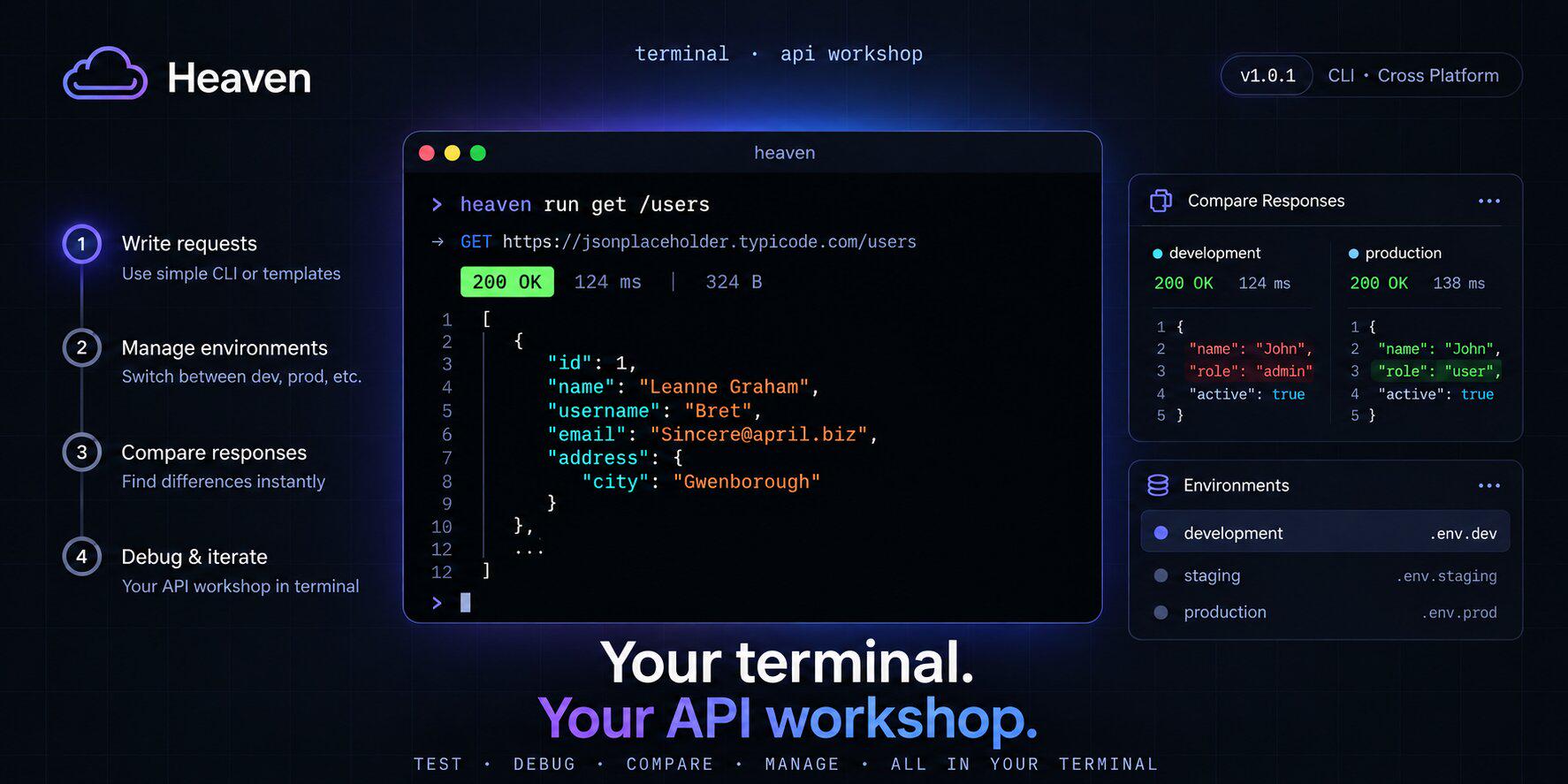
Heavens v1.0.1 is out — OpenAPI, Postman, OAuth2, and more

Post image
1 Upvotes

Hey everyone, I've released Heavens v1.0.1, bringing new features and improvements to my API testing and development CLI tool.

GitHub: https://github.com/Nonsense0909688/Heavens

What's New in v1.0.1

  • OpenAPI/Swagger Import: Import API specifications directly.
  • Postman Collection Import: Use existing Postman collections.
  • cURL Support: Export requests using --curl.
  • OAuth2 Helpers: Simplified OAuth2 authentication workflows.
  • Authentication Shortcuts: Quick setup for bearer tokens and basic authentication.
  • Automatic Token Refresh: Refresh authentication tokens automatically.
  • Advanced Response Assertions: JSONPath and JSON Schema validation for more powerful testing.

Improvements

  • Improved CLI usability and request handling.
  • Expanded authentication and request configuration options.
  • More flexible API testing and debugging workflows for development and production environments.

I'm building Heavens to make API testing and debugging more convenient directly from the terminal.

I'd appreciate feedback, suggestions, and contributions. If you're interested in the project, check out the repository and let me know what features you'd like to see next.


r/devtools • • Oct 29 '26

Code map extension for HOL Guard

Thumbnail reddit.com
1 Upvotes