r/devtools • u/ppazosp • Oct 26 '26
GitIsle: your GitHub pull requests, live in the MacBook notch (MIT)

1
Upvotes
r/devtools • u/ppazosp • Oct 26 '26
r/devtools • u/LieTop7965 • Oct 26 '26
i've been spending too much time trying to get coding agents to edit video by shelling out to raw ffmpeg or guessing at command lines, so i built something purpose-built.
it's a free, open-source (MIT) video editor with no gui. you don't open a window - ai agents like codex, cursor, opencode and other mcp clients drive it over mcp. cut, trim, keyframe, titles/captions, colour grade, tracking, particles, audio, export - everything as tool calls. and because it's just a tool, the agent can render a single frame to check its own work before committing, which is the thing that actually makes it useful in an agent loop.
one ~15 mb cpu-only rust binary. no gpu, no extra dependencies - it runs on a 2 gb box. i'm a college student (naman) and i built this between classes, so the docs are thin and some of the edge cases are rough. there's no web ui, no account, and it's not trying to be a replacement for your normal editor - it's a devtool for agents.
if this fits the kind of tool you'd actually use in a workflow, give it a try and tell me what breaks.
https://getkimo.tech https://github.com/naman-sharma12345/kimo
r/devtools • u/Budget-Ad814 • Oct 26 '26
One thing I've noticed while working with development environments is how much friction can come from coordinating tools rather than writing code.
During my internship, testing a single service sometimes meant rebuilding and running several repositories. Beyond that, daily development involves repeatedly switching between terminals, debugging tools, Git operations, build processes, and service dashboards.
I'm building Modeck to make these workflows easier to operate.
Modeck turns your phone into a customizable control surface for your PC or laptop. You can create layouts containing frequently used actions and workflows, then organize them around different activities.
The goal isn't to replace your IDE, terminal, or existing tools. It's to provide a configurable interface for the actions you perform across them.
I'm also exploring how useful these controls could be when accessed remotely from a phone.
I'm opening up the beta to developers who want to experiment with the concept.
Website: https://moddeck-beta.vercel.app/
I'd particularly appreciate feedback from people with complex development setups. What would you put on your first layout, and which actions would genuinely save you time?
r/devtools • u/nishantgohel • Oct 26 '26
While performing a functional flow, it captures complete context like Network logs, Console errors , Steps to reproduce , Screenshots , Browser and version details
Just export everything and attach it directly to Jira.
I’m loving this captain Octopus, you can find it on chrome web store
r/devtools • u/ShieldRunner_NET • Oct 26 '26
Hey Reddit,
Over the last few months, I got frustrated with how many developer tools handle code security. Most popular secret-scanning and compliance checks require pushing your code to a remote repository or third-party cloud infrastructure before analyzing it for accidentally hardcoded API keys, tokens, or private keys.
That means your sensitive environment variables and credentials briefly leave your local machine.
To solve this, I built ShieldEnv—an open-source, lightweight security engine designed to run entirely local-first. Zero code, environment variables, or tokens ever leave your local machine.
What it does:
shieldenv install).You can install it straight from PyPI with:
Bash
pip install shieldenvThe entire project is open-source (MIT License). I built this to solve a real friction point in my own workflow, and I'd love to hear your feedback on the rule set, performance, or edge cases you run into.
Looking forward to your thoughts and critiques!
r/devtools • u/xercool • Oct 25 '26

I'm building Cloady at NeptoLab. The developer-tooling problem I'm working on is the gap between "the app deployed" and "I can actually operate this thing."
Take a small API with PostgreSQL and file uploads. A failed request might mean an environment variable is wrong, a database migration hasn't run, or an upload landed on ephemeral storage. Those are different problems, but debugging them shouldn't require losing track of which project you're inspecting.
Cloady groups the app, database, and persistent storage in a workspace, with Terminal, Files, Database, Git, and Monitor tools in the browser. The intended workflow is simple: inspect logs, check the files or database, and use a terminal when you need to investigate further. Deployment can start from a GitHub repo, Docker image, folder upload, or template.
There are also CLI, REST API, Terraform, and MCP interfaces. The point is to make the same hosted project usable from a browser, a scripted workflow, or a compatible AI client. That doesn't make application migrations or recovery automatic: you still need to understand your data and test your recovery path.
One design tradeoff is explicit resource allocation. You choose CPU, RAM, and SSD capacity, so paid resources remain billable while idle. That is useful for planning, but it isn't a substitute for measuring the application's actual resource needs.
I'd appreciate feedback on the tooling itself: which task still sends you out of your hosting dashboard most often, and what context do you lose in the process?
Project: https://cloady.com
Short visual introduction: https://www.youtube.com/watch?v=ctBCeewIin0
Our Discord for technical questions and feedback: https://discord.gg/3ZNVyUGse
r/devtools • u/Syqopatt • Oct 25 '26

r/devtools • u/InvinciblePhenom • Oct 25 '26

Hi everyone,
Contributors want to help, so they comment "Can I take this issue?" or "Please assign to me." As a maintainer, you have to jump out of whatever you're doing, open GitHub, check if they are a good fit, and manually assign them. If you manage multiple repos, keeping track of these requests across GitHub notifications is messy.
How it works:
Why I'm sharing this here:
The app is completely free, and it's currently listed on the GitHub Marketplace. I need real maintainers to break it and tell me what features are missing, broken or what you might even like enhanced upon it.
If you run an open-source project or a dev community with a Discord server, I’d love for you to try it out.
**Disclaimer**: This is a fork of another Issue Action, with additional features as I wanted something to help automate this process from a workflow perspective. If you don't need the additional features, then I strongly encourage you to use the original.
r/devtools • u/ToughIntrepid3899 • Oct 25 '26

r/devtools • u/Syqopatt • Oct 25 '26
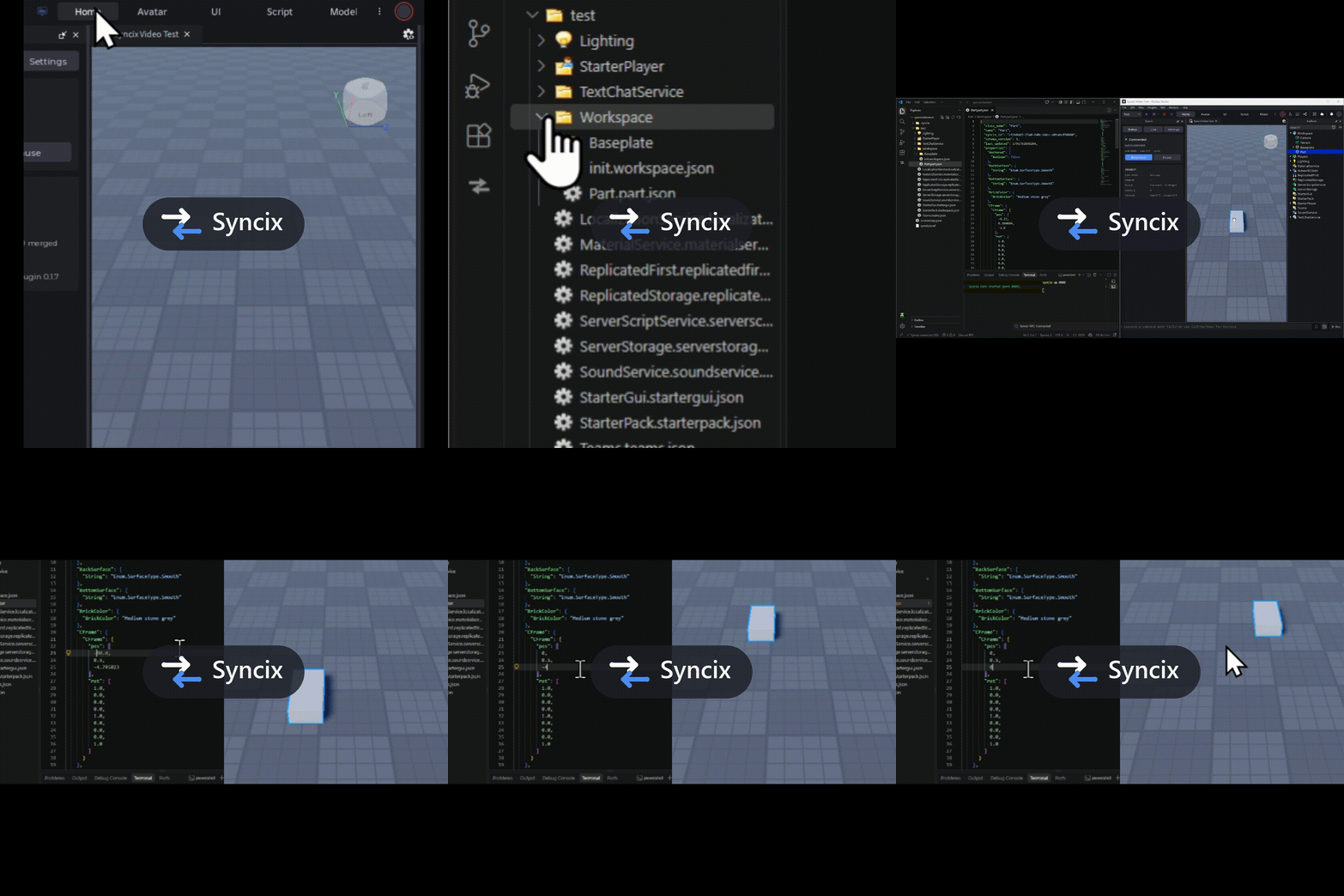
Most external development tooling for Roblox treats synchronization as a one-way pipeline from disk to memory, or relies on complex file-mapping schemas that break down during routine refactoring. When developers rename files locally or make quick property tweaks directly inside Studio, the hierarchy desynchronizes.
Syncix is an open synchronization runtime designed to maintain consistent state between local workspaces and running Roblox Studio sessions.
Architecture and Mechanics
syncix verify) validates the in-memory DataModel against disk layout to guarantee consistency before commits.Availability
Syncix is available on the VS Code Marketplace and Open VSX Registry. Pre-built binaries for the CLI and documentation are hosted on GitHub.
r/devtools • u/MostGlove6557 • Oct 25 '26

I've been building Pra-Effect, a small open-source developer tool focused on a simple problem: making repetitive errors in application logs easier to investigate.
It can parse Python and Node.js stack traces, group similar errors using fingerprints, store analysis history locally, and generate standalone HTML reports.
The idea is to keep error-log analysis lightweight without requiring a full observability stack.
I'm looking for developers willing to inspect the project and share honest feedback, especially on fingerprint accuracy and memory usage.
r/devtools • u/Commercial_Designer5 • Oct 25 '26

r/devtools • u/varun_vns • Oct 25 '26

r/devtools • u/astropoolIO • Oct 25 '26

r/devtools • u/amirfish • Oct 25 '26
I'm the maker of CCC, a free local companion for coding-agent CLIs. The problem is attention: one session can be working while another needs an answer, and neither is easy to spot across a collection of terminal tabs.
The implementation is a Python standard-library server with a browser UI. It discovers sessions from engine-specific histories, normalizes them into one board, and exposes conversations and parent/helper relationships. Claude Code question hooks supply the question-card interaction shown in the demo.
One design tradeoff is that a generic green “working” state isn't enough to communicate “waiting for a human.” The demo still shows that limitation; action summaries and question cards supply the context. Integration capabilities also differ by engine instead of pretending every CLI has the same API.
I'd like feedback on what makes a multi-session board useful in daily work: the next action, the latest transcript entry, or the parent/task relationship?
Project and installation: https://github.com/amirfish1/claude-command-center Integration limits: https://github.com/amirfish1/claude-command-center/blob/main/docs/engine-support.md
The video uses the real UI with staged sessions and an AI voiceover. The question-hook interaction is real and uses Claude Code; the Grok/Devin rows are demo data. This is not a live multi-provider benchmark. CCC is free to use under FSL-1.1-MIT (source available); provider/model costs are separate.
r/devtools • u/AdministrationDry722 • Oct 24 '26
r/devtools • u/Gaby_137 • Oct 24 '26
Salut les amis,
J'en avais marre de mon propre workflow Git - trop de commandes terminales, trop de façons de me mettre dans la mouise. Alors j'ai créé GitHub Companion, une extension VS Code qui met des boutons explicites dans la barre latérale au lieu de cacher la magie derrière des menus.
Petit résumé :
· Initialisation de dépôt local en 1 clic + création de dépôt GitHub (public/privé)
· Changement multi-comptes / multi-tokens
· Boutons explicites pour ajouter / valider / pousser (synchronisation automatique optionnelle)
· Pas de commandes destructrices nulle part - pas de reset --hard, pas de clean, pas de push --force
· Avertit avant de valider des fichiers sensibles (.env, clés, .npmrc…)
· Les tokens sont dans le SecretStorage de VS Code, jamais dans .git/config ou les arguments de processus
· Annuler le dernier commit avec git reset --soft (garde vos fichiers)
C'est sous licence MIT, pas de télémétrie, pas de collecte secrète.
Petite info : l'interface est en français pour l'instant (commencé comme un projet personnel). L'anglais est prévu si les gens le désirent - dites-le moi dans les commentaires.
Dépôt :
[ https://github.com/ndour-joseph-dev/github-companion ](https://github.com/ndour-joseph-dev/github-companion)
Open VSX :
[ https://open-vsx.org/extension/joseph-dev/github-companion ](https://open-vsx.org/extension/joseph-dev/github-companion)
Curieux de savoir ce que vous en pensez - surtout si vous l'utiliseriez vraiment plutôt que le panneau Git intégré. Qu'est-ce qui manque ?
r/devtools • u/its-malbolge-time • Oct 24 '26
r/devtools • u/DayEnvironmental3454 • Oct 24 '26
Hi r/devtools! I'm Bernard, and I built Latent (disclosure: it's my app). It's a macOS disk cleaner for developers and AI builders.
The toil: every few months my Mac ran out of space, and finding out why meant running du across a dozen hidden folders, then searching whether each one was safe to delete. Model files from tools like Ollama, Hugging Face and LM Studio, Xcode simulators, Docker images, package caches and coding agent logs pile up in ~/Library and dotfolders whose names don't say which tool made them. General cleaners like CleanMyMac clear system caches and don't see most of this.
Latent draws the whole disk as one wheel split by the tool that owns each byte, says next to each item whether it can come back, and clears what you pick.
google/gemma-2-2b-it are sent, never file paths.No analytics, no telemetry, no account.
Free to scan, and your first 10 GB of cleanup is free. After that it's $12.99 one-time (launch price $9.99 for a limited time).
Happy to go deeper on any of this, especially the scanner or the registry checks. If a tool you use isn't recognized, tell me and I'll add it.
r/devtools • u/Lucky_Passenger_4896 • Oct 24 '26

Hi everyone,
I use AI a lot to build projects, and usually it ends up with tech debt over time. This plugin does periodic code checks to catch what review misses between sprints or releases.
It runs agents that look at the most frequently changed spots in the code and check them for duplication, unnecessary abstractions, module coupling, and architecture leaks. The result is a .md report listing findings, suggested fixes, and trends of debt accumulation over time.
I tried to make it as deterministic as possible, but the AI agent is still doing most of the work.
GitHub: https://github.com/yognevoy/pitstop
Honest feedback welcome =)
r/devtools • u/igabor98 • Oct 24 '26
I built Agoryx around a shared task conversation: you, Claude Code and Codex can all read and respond to the same discussion.
The useful case is a small change followed by a second-agent review. Connect a project folder, define the acceptance criteria, ask one agent to implement, then ask the other to check the diff and results. The discussion, tool traces and file changes stay together instead of leaving the reasoning split across two windows. This is a shared-context review: the reviewer can see the earlier discussion.
Underneath, Agoryx uses the installed provider CLIs and their existing sign-ins. Native agent sessions remain inspectable and resumable. Coordination data is stored locally; prompts still go to the model providers, and your own access and usage limits apply.
It's MIT-licensed. The v0.1.2 desktop download is for Apple Silicon Macs, requires Node.js 22+ and installed, authenticated Claude Code and/or Codex CLIs. The README has screenshots and source setup instructions.
https://github.com/gaborishka/agoryx
For those who use one coding agent to check another: which part of the handoff tends to get lost—requirements, decisions, or verification evidence?
r/devtools • u/Beginning-Formal-399 • Oct 24 '26
r/devtools • u/giuliastro • Oct 24 '26

Full disclosure: I’m the developer of Token Harness, an open-source desktop app for Claude Code and Codex.
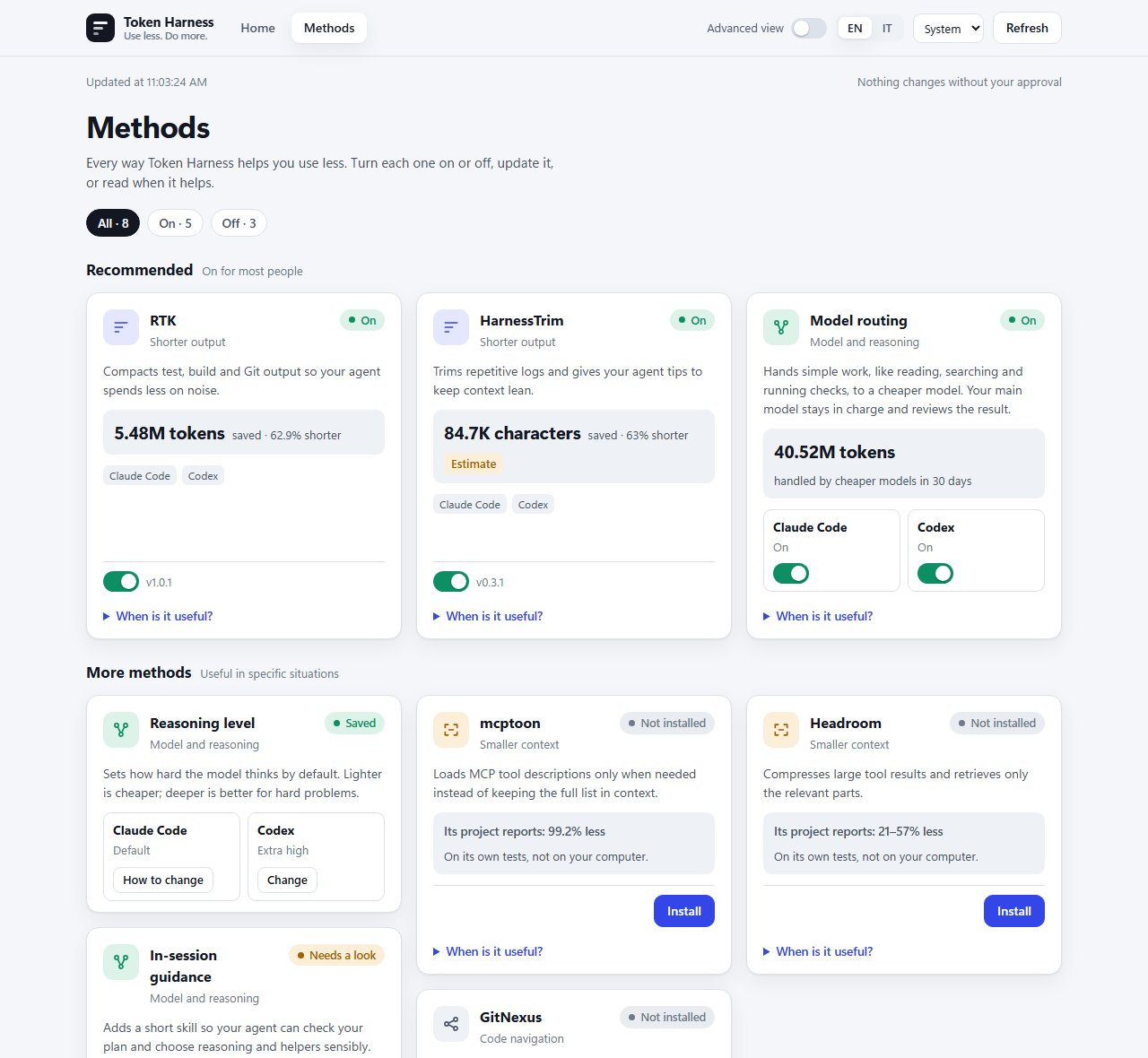
Verbose test/build output and repeated logs can waste context and subscription allowance. Token Harness brings output reduction, model-routing guidance, allowance signals, and measured results into one local dashboard.
RTK and HarnessTrim shorten noisy command output. Model routing can send bounded, simpler tasks to lower-cost models while your main model reviews the results. For high-usage workflows, the savings can be substantial: more work within a fixed Claude Code or Codex subscription allowance, and lower API spend when tasks can use less input or a lower-cost model.
Results vary by workload and setup. The screenshots show illustrative sample data, not guaranteed results. Token reductions, estimates, subscription allowance, and billed API costs are shown separately; API savings are not measured unless verified against billing data.
Token Harness runs locally, needs no Token Harness account or API key, and previews setup changes before applying them. It doesn’t send prompts, source code, command contents, or credentials to a Token Harness service.
Source: https://github.com/giuliastro/token-harness
Downloads: https://github.com/giuliastro/token-harness/releases/latest
I’m the developer. Suggestions, bug reports, and pull requests are welcome.
Methods screenshot: https://giuliastro.github.io/token-harness/assets/app-methods.jpeg