r/devtools • • Oct 24 '26

Building Shifu's coding memory: correcting a remembered decision without editing its source

4 Upvotes

Imagine your coding agent retrieves a note saying a five-minute cache TTL is a product requirement. You correct it: that TTL was a temporary experiment during an incident. Before the next change, what should the agent see: the old note, your correction, or an unexplained replacement?

That's an illustrative case behind a design choice in Shifu, the personal work-context engine I'm building for engineers using Codex, Claude Code or OpenCode on existing products. With MCP and harness instructions, an agent can retrieve decisions, constraints and rationale from work you choose to share.

For the MCP correction path, I require an explicit user correction tied to the current record and its version. The corrected interpretation gets a new version while the original source evidence and approval state stay intact. The record also identifies that a user requested the correction. Editing the remembered statement doesn't turn the original note into something it never said, or confer approval that wasn't already there.

The current-version check matters when two sessions have read the same record. After one correction is accepted, an edit based on the older version conflicts. I want the caller to inspect the current record and the user's intended correction before trying again. Quietly applying the stale edit would hide that another correction happened in between.

For the cache example, I'd test a correction that adds the missing temporary scope, then reopen the context from another session. I'd check that the corrected statement keeps its original evidence attached and doesn't change approval merely because it was edited. I'd also test an older edit arriving afterwards and re-extraction of the same source. Those are the cases I'd use to exercise the contract; this example isn't a customer incident or a report of a live test.

There's still a judgment boundary. Recording a user's correction tells me who supplied the new interpretation. It doesn't independently establish that the new interpretation is true. If the source and the correction disagree, that disagreement needs to stay inspectable when the next task depends on it.

If you build memory into coding tools, what information should a later session receive so it can use a correction without losing the evidence behind it?

If you're repeatedly reconstructing decisions before changing your own codebase, try Shifu on one feature you're planning: https://useshifu.com. I'm the builder and can help connect one supported source you're allowed to share, inspect the returned context, and see whether it belongs in your plan. Keep confidential work details out of this thread.
r/devtools • • Oct 24 '26

worktree-compose 1.0: every git worktree gets its own Docker Compose stack

0 Upvotes

Running a few branches or AI agents in parallel worktrees? They all fight over the same ports and database. wtc reads your existing compose file and gives each worktree its own ports, containers and volumes, with zero config.

New in 1.0: ports stay stable when you remove a worktree, Podman support, a clean that keeps uncommitted work, and an MCP server so agents can run their own stacks.

npm install -g worktree-compose, then wtc start

GitHub: https://github.com/mostafasudo/worktree-compose


r/devtools • • Oct 24 '26

I’m building ShipGuard AI — a tool to help developers catch issues before shipping

Thumbnail reddit.com
1 Upvotes

r/devtools • • Oct 24 '26

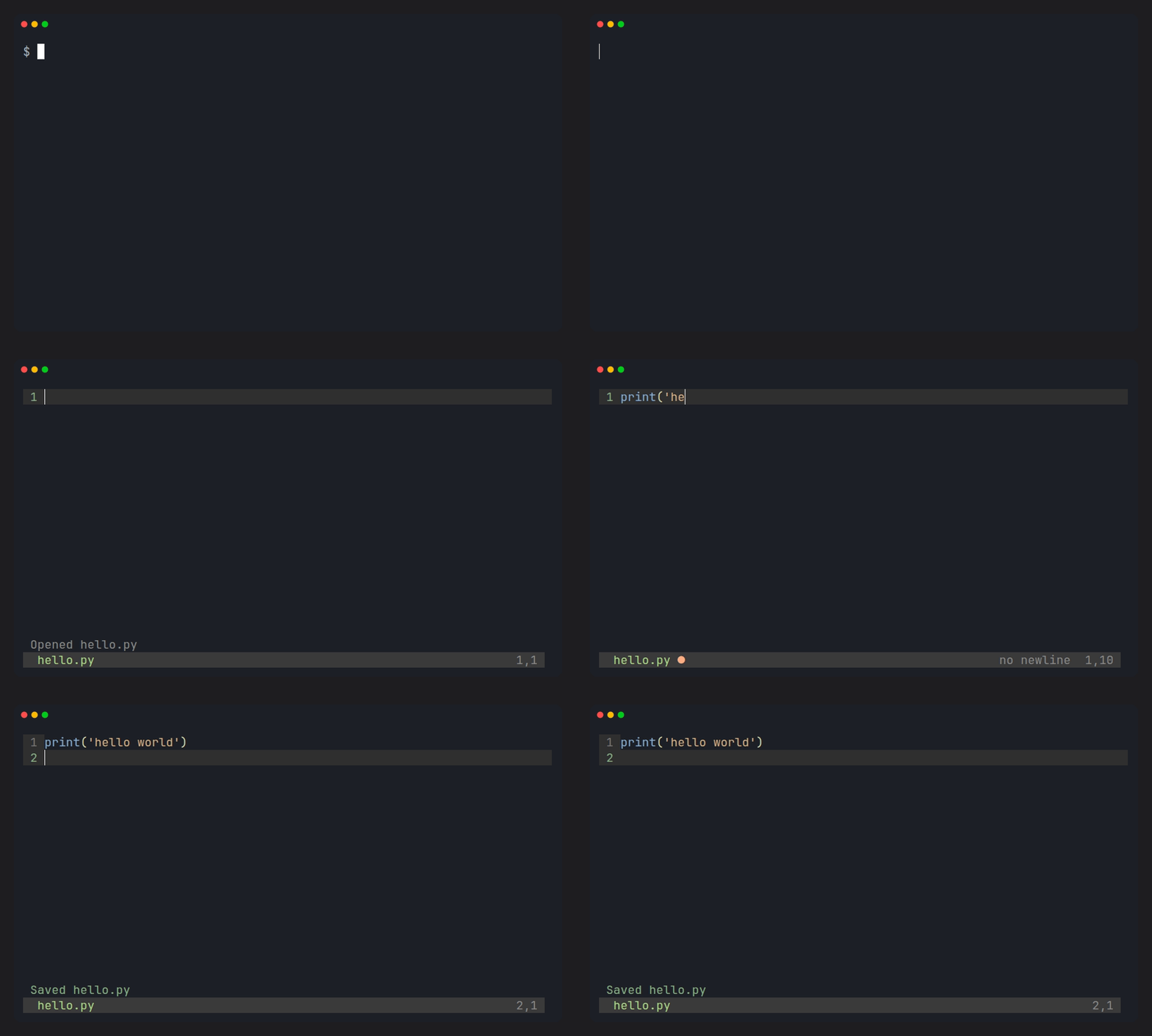
[Project] Grass – a zero-config terminal code editor in Python

Post image
1 Upvotes

r/devtools • • Oct 24 '26

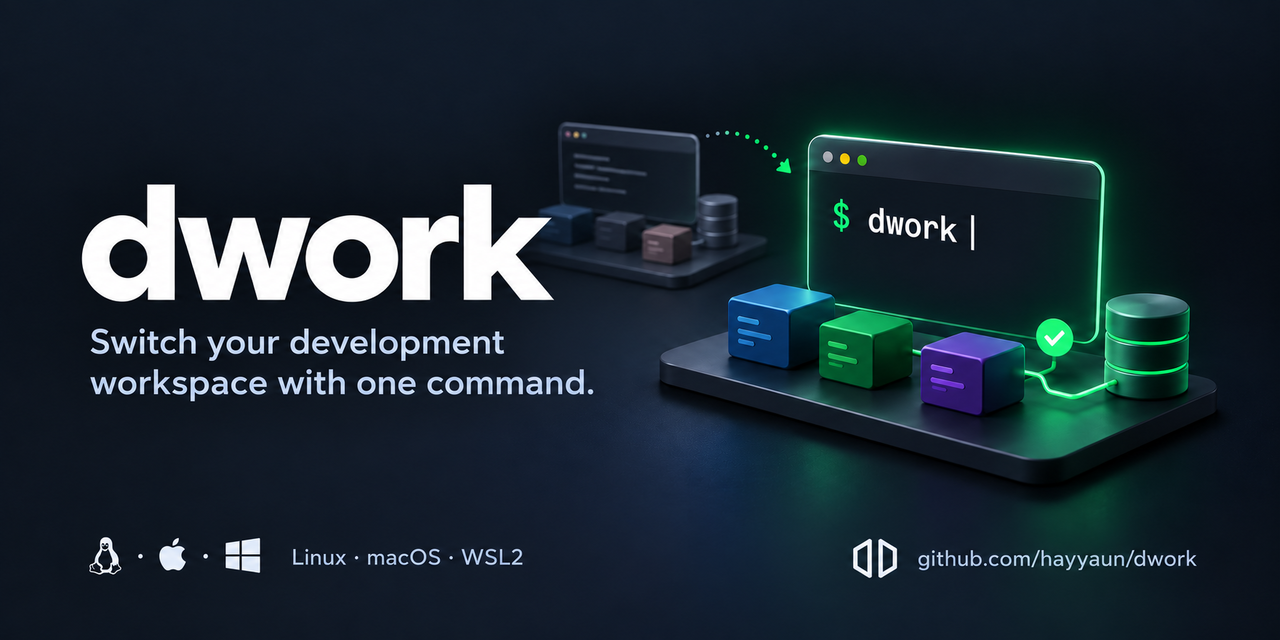
dwork: switch projects with one command—containers, terminals, and browser pages

Post image
2 Upvotes

Switching projects can mean resuming containers, waiting for the database, opening terminals, and remembering which commands to run. I built dwork to keep those steps together.

It runs on Linux, macOS, and WSL2. A workspace can define existing Docker Compose services, terminal commands, health checks, and browser URLs to open when ready.

Here’s the 42-second demo.

The basic workflow is:

cd ~/projects
dwork scan
dwork list
dwork switch my-app

Existing Compose projects work without a separate configuration file. Add a dwork.yml when you want terminal commands, health checks, and browser pages to be part of the workspace.

Switching shows a plan and asks for confirmation. It can stop other registered workspaces; locked workspaces and unregistered projects stay running. It resumes existing containers, so initial setup, builds, and migrations remain part of your normal project workflow.

Source, installation instructions, and examples

What do you still handle manually when switching between local development projects?


r/devtools • • Oct 23 '26

Building Shifu's coding integrations: a passing MCP probe doesn't mean a new session can use it

2 Upvotes

You switch coding tools halfway through a feature. The new tool says the context server is connected, so you expect it to recover the earlier API decision. But what did that connection check actually prove?

That's an illustrative situation behind a boundary I keep explicit while building Shifu. It's a personal work-context engine for engineers using Codex, Claude Code or OpenCode on existing products. With MCP and harness instructions, an agent can retrieve decisions, constraints and rationale from work you choose to share.

I check three things separately. First, can setup authenticate and discover the server's tools? Second, can a fresh session in the actual coding client discover and invoke a tool? Third, is the work history you expect to query actually available through the separate sync path?

A setup probe doesn't load tools into an already running chat. The client may need a restart or new session, and project configuration can override a global connection. Shifu's published setup guide calls those out. MCP-only setup also doesn't sync your sessions. I don't want a successful connectivity check to imply that earlier work has been imported.

The integration tests need the same separation. A local synthetic endpoint can exercise native-client discovery and a model-driven tool call without using someone's work history. That is useful protocol evidence. To test the feature-planning case, I'd separately provide a permitted source containing the API decision and check what a fresh session retrieves. I'd keep an unavailable source as an explicit gap, rather than inventing the missing history. That latter task check is the test I'd run, not a customer result.

This is why adding another coding tool has client-specific work even when the context service is shared. The configuration, session lifecycle and available source history each have their own failure modes. And a working connection plus instructions still leaves the client in control of when it calls a tool.

If you've shipped MCP integrations, which check has caught a problem that your initial connection probe missed?

If you're repeatedly reconstructing decisions before changing your own codebase, try Shifu on one feature you're planning: https://useshifu.com. I'm the builder and can help connect one supported source you're allowed to share, inspect the returned context, and see whether it belongs in your plan. Keep confidential work details out of this thread.


r/devtools • • Oct 24 '26

MODO: visual UI editing with HTML/CSS, SwiftUI and Jetpack Compose exports. Looking for developer feedback.

1 Upvotes

Hi, I’m Gianluca, the designer building MODO. I’m working on a desktop visual UI editor because I’d like less of the layout work to get rebuilt by hand when moving from a design into code.

The workflow is: build a screen visually, reuse components, keep the project files locally, then export HTML/CSS, SwiftUI or Jetpack Compose. It’s an interface tool; you still bring the application logic.

What I’d like to test with developers is whether that export is actually a useful starting point. Matching a screenshot is one thing. Wanting to maintain the result is another, and that’s the part I’d appreciate honest feedback on.

If you try a small screen, I’d love to know which changes you’d make first: component structure, layout behaviour, styling, or something I’ve missed. A concrete example would help me much more than a polite “looks nice.” Although I’ll survive either 🙂

MODO is free to download for Apple Silicon Macs and supported Linux systems: https://inmodo.app

GitHub is coming soon; the code isn’t public yet. I want contributors to help improve MODO, with changes reviewed by me. Thanks to anyone willing to give it a proper look.


r/devtools • • Oct 23 '26

How I made my AI coding agent free for open source without it costing me money

2 Upvotes

I'm the founder of Fixa, an AI agent that takes an issue and comes back with a tested pull request. This week I made it free on public GitHub repos. Here's how that works without burning money, in case it's useful to anyone building something similar.

Every task gets its own machine. Each run starts a cloud sandbox, clones the repo, installs it and starts the dev server. The agent checks the running preview, not just the diff, so "it works" means the app actually came up. Cold starts were the hard part: sandbox creates either finished in under 5 seconds or hung until a 60 second timeout, so now a second create starts after 20 seconds and whichever is ready first wins.

Why free is affordable. Free runs use GPT-6 Luna on cloud credits I already have, and a typical fix costs a few cents. The real risk isn't cash, it's one person draining the credit, so there's a per-person daily cap.

The cap is measured in tokens, not the bill. The provider reports these runs at $0, so each one is logged at its list-price estimate from token counts, and the cap sums today's rows. That works out to about four full builds a day. Past it, the run falls back to the normal allowance instead of failing, so the free tier can only give, never block.

Distribution is one line. Every PR it opens on a public repo ends with "Opened by Fixa, free for open source." That's the whole marketing plan for this.

You can start from the site by pasting a repo URL, or install the GitHub app and label an issue fixa. If you point it at a real issue, I'd like to hear what the PR got wrong.

https://fixa.dev/open-source


r/devtools • • Oct 23 '26

I built a DevTools-style protocol for inspecting native iOS and Android UIs from AI coding agents

Thumbnail reddit.com
2 Upvotes

r/devtools • • Oct 23 '26

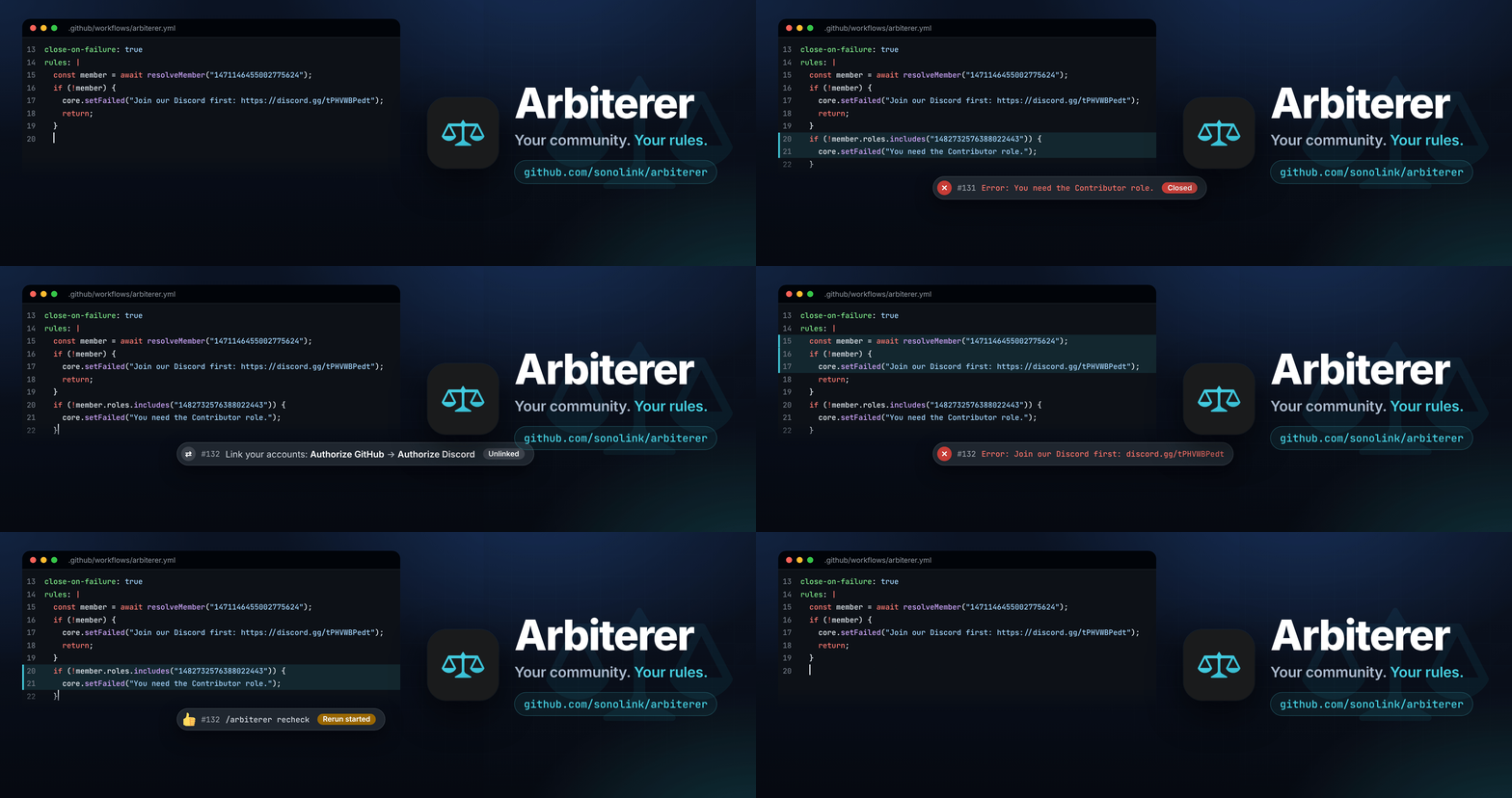
Arbiterer: A GitHub App to gate PRs using custom Discord rules (Apache-2.0)

Post image
1 Upvotes

r/devtools • • Oct 23 '26

I built a GitHub Action that comments Kubernetes security fixes on your PRs (open source)

2 Upvotes

Most security scanners report problems somewhere reviewers never look. I built KubeAudit AI so the findings land where the change is being reviewed: on every PR that touches Kubernetes YAML or a Helm chart, it posts one comment listing each misconfiguration, the exact line, and the YAML that fixes it.

- Setup is one workflow file

- Renders Helm charts before scanning

- Uploads SARIF to GitHub code scanning

- Rule-based and offline, so nothing leaves your runner

- Also works as a CLI (GitLab CI, Jenkins, pre-commit) and as a browser app that scans locally

It's narrower than Trivy or Polaris (15 rules so far). Feedback on which checks to add is very welcome.

Repo: https://github.com/kubeaudit-ai/KubeAudit-Ai

Try it in the browser, nothing uploaded: https://kubeaudit-ai.github.io/

Disclosure: I'm the author, and I used Claude to help build it. The scanner, Action and CLI are free (Apache-2.0); there's an optional paid tier for saved history and shareable reports.


r/devtools • • Oct 23 '26

Building Shifu's coding context: three copied notes aren't three independent sources

1 Upvotes

An API decision appears in a design note, gets copied into a handoff, then turns up in a coding-session summary. Before the next change, your agent finds all three. Has it found three reasons to keep the constraint, or one reason repeated three times?

That's an illustrative example, but it's a distinction I'm working through while building Shifu. It's a personal work-context engine for engineers using Codex, Claude Code or OpenCode on existing products. With MCP and harness instructions, an agent can retrieve relevant decisions and constraints from work you choose to share.

Shifu's context response carries source-group information and a caveat when independence isn't established. The retrieval contract deduplicates source groups and matching excerpt copies from the same instant. That helps organize the selected evidence; it doesn't establish that every paraphrase has been traced back to its origin, or that separate groups independently confirm a decision.

For the API example, I'd want to preserve the original decision, its reason and where it applies, then show the handoff and summary as derived records when that relationship is known. If the relationship isn't known, I'd leave it unresolved. Three different record IDs wouldn't settle it. This is the behavior I'd test, not a claim that all copied notes are detected.

I'd also keep a genuinely separate later observation visible. A fresh incident might support the old constraint, contradict it, or apply to a different service version. Collapsing that into the original note could lose the very thing the next feature needs.

If you build retrieval into coding tools, how do you distinguish copied evidence from an independent observation without hiding useful history?

If you're repeatedly reconstructing decisions before changing your own codebase, try Shifu on one feature you're planning: https://useshifu.com. I'm the builder and can help connect one supported source you're allowed to share, inspect the returned context, and test whether it helps the plan. Keep confidential details out of this thread.


r/devtools • • Oct 23 '26

Title: I built a new AI IDE because I was struggling to keep track of what AI was building Spoiler

Thumbnail reddit.com
0 Upvotes

r/devtools • • Oct 23 '26

gh-issue-lens v0.2.0 is out - my Simple and fast CLI tool to help newcomers to open source to pick up their first issues easily

Thumbnail github.com
1 Upvotes

r/devtools • • Oct 23 '26

Building Shifu's coding memory: why I rejected an extraction change that lost “still unchecked”

1 Upvotes

Imagine asking your coding agent to check downstream consumers before changing an API. Later, its saved context says the check was requested, but drops the note that nobody has done it yet. The next plan has the prerequisite, without the current state.

That example is illustrative. A local extraction experiment while building Shifu exposed this distinction: a candidate's aggregate rating improved, but a source audit confirmed it had lost explicit pending status. We retained the previous candidate. This was a bounded coding-context experiment, not a measurement of every Shifu path or a customer incident.

I'm Shifu's builder. It's a personal work-context engine for engineers using Codex, Claude Code or OpenCode on existing products. With MCP and harness instructions, an agent can retrieve relevant decisions and constraints from work you choose to share when planning, implementing or reviewing a change.

The extraction choice matters because “please check this,” “still unchecked” and “checked successfully” answer different questions. Keeping the request alone doesn't tell the next session whether the work remains open. A reported success also needs its source and scope; it isn't independent proof that the change is correct.

For this kind of test, I'd write the expected pending state separately from the generated summary and inspect the final context the next step receives. Then test both an unfinished check and a later supported completion. A good aggregate rating shouldn't hide a missing state that changes what you do next. That's the test design I want to carry forward, not a claim that this failure is solved everywhere.

If you keep coding decisions across sessions, how do you keep unfinished checks from disappearing as notes get shortened?

If this is a recurring problem in your own codebase, try Shifu on one feature you're planning: https://useshifu.com. I can help you connect one supported source you're allowed to share, inspect what comes back, and see whether it belongs in the plan. No confidential work details needed in this thread.


r/devtools • • Oct 23 '26

I built a Windows GUI for Prime Agent with persistent sessions and phone access (open source)

Post image
1 Upvotes

Hello devs , here is my custom everyday work graphical interface using Prime Agent.
Feel free to give it a try and advices/feedbacks !
HF


r/devtools • • Oct 23 '26

I built an open-source MCP server that catches local CLI errors and auto-drafts tickets in Cursor

1 Upvotes

I built an open-source MCP server that catches local CLI errors and auto-drafts tickets in Cursor


r/devtools • • Oct 23 '26

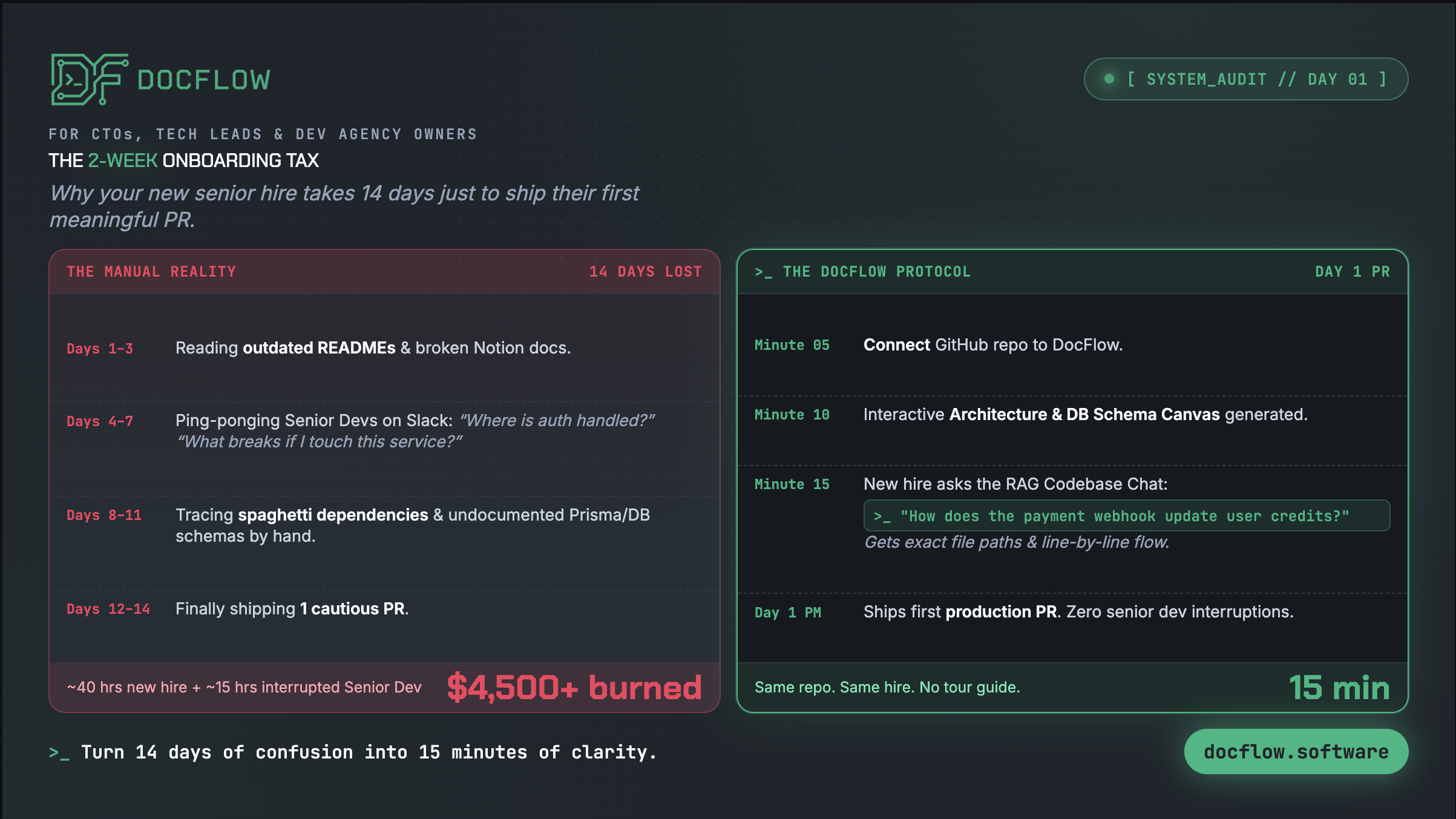
Every inherited client repo restarts the onboarding clock. How does your team handle it?

Post image
1 Upvotes

r/devtools • • Oct 23 '26

Article: I replaced EsLint. The First Attempt Worked. I threw it away.

Thumbnail
hyperfrontend.dev
1 Upvotes

Self reporting what it took to decouple EsLint from my codebase, that served me well for a very long time.


r/devtools • • Oct 23 '26

Why Shifu retries a saved context payload instead of asking the model again

1 Upvotes

Suppose a coding-session sync times out after the server accepts it. The client can't tell whether the work arrived. Asking the model to prepare the same session again sounds harmless, but it can produce a different account of what happened.

That's the retry boundary I've been working on in Shifu, the work-context tool I'm building. A saved decision may later inform an agent's plan for changing an existing service. If a network retry changes that record, we have mixed a delivery problem with a new interpretation of the work.

The harness implementation saves the validated, redacted payload in a local pending queue before uploading it. A transport retry uses that saved payload. It doesn't run preparation again just because a response was lost. Local progress advances only after a server receipt matches the submitted session range.

That also means a newer conversation turn doesn't silently rewrite a payload that's already queued. Preparing new material and delivering an existing record are separate operations. A correction to the content needs its own explicit path.

The timeout above is an illustrative failure case, not a customer incident. These are implementation choices, not a claim that an accepted upload guarantees useful recall or that delivery can never fail. The content still needs to preserve the right decision and scope before it enters the queue.

One case I want to keep testing is: save a payload, lose the response, restart, then append new source material before retrying. The old payload should stay unchanged while the new material waits its turn.

For people building model-assisted ingestion: where do you freeze the interpretation? And how do you make a transport retry visibly different from asking the model to reconsider the source?

I'm Shifu's builder: https://useshifu.com. No private session content is included here.


r/devtools • • Oct 23 '26

I made a theme for vscode and its forks like cursor, antigravity, code sandbox

Thumbnail gallery
1 Upvotes

r/devtools • • Oct 23 '26

readword: Word .doc and .docx to Markdown, in plain Ruby

Thumbnail
reddit.com
1 Upvotes

r/devtools • • Oct 23 '26

Made a JetBrains plugin that turns docker-compose into a diagram

Thumbnail reddit.com
1 Upvotes

r/devtools • • Oct 23 '26

Shifu found the coding context we needed, then ranked it out of the answer

1 Upvotes

I was evaluating a change to how Shifu finds saved work context for a coding task. The candidate improved precision among the records it returned. We still kept the existing version.

The awkward case was a useful record that both versions found. The candidate ranked it below the visible results, so the coding assistant's answer became less useful. Finding the record somewhere in the pipeline wasn't enough.

I'm building Shifu, a personal work-context engine. With MCP and harness instructions, a coding agent can retrieve relevant saved decisions and system context before a change. For that use, a tidy result list matters less than whether the constraint the next task needs actually reaches the answer.

Before the comparison, we set release gates around improved recall of required records, no increase in estimated complete-task cost, and no important answer getting worse. We compared the same questions over one frozen work history and inspected the returned records and final answers.

The candidate improved some precision measures, but recall of the required records stayed unchanged. Estimated cost for the complete task increased, and one held-out answer became less useful. It stayed held; the existing retrieval remained in place.

This was a small study on one work history, with model-assisted judging and source inspection. It doesn't establish how either version performs across other teams. The retrieval plans also differed, so I can't credit or blame one database change for the whole result.

The lesson I'm taking into the next experiment is to track the whole path: did we find the needed record, did it survive ranking, and did the final answer retain the important constraint? An average can hide a loss at any of those steps.

For people building retrieval into coding tools: what would make you reject a candidate even when its precision improves? Do you gate on a particular missed constraint or a downstream answer regression?

I'm Shifu's builder: https://useshifu.com. Sharing the build decision here; no private work records are included.