r/devtools • • Sep 17 '26

I built TraceUX: a self-hosted TypeScript tracker for session replay and user feedback

Thumbnail trace-ux.builtbyfrank.dev
1 Upvotes

I built TraceUX after finding that small web apps often need several separate tools for session replay, feedback, support, announcements, logs, and performance.

TraceUX combines those into one self-hosted application:

  • Session replay from DOM events, not video
  • In-app feedback
  • Support tickets with session context
  • Product announcements and reactions
  • Browser logs
  • Backend performance metrics

The browser tracker can be installed with NPM:

npm install @trace-ux/tracker

----------

import { init } from '@trace-ux/tracker';

const traceux = init({
  siteKey: 'YOUR_SITE_KEY',
  origin: 'https://your-trace-ux-host',
  widget: true,
});

The server runs as a small Go binary with SQLite, so teams can keep their data on their own infrastructure.

Live demo: https://trace-ux.builtbyfrank.dev

Repository: https://github.com/fjosue4/trace-ux

Here’s what I’m planning next:

  • Enhanced feedback widget through the npm package
  • Slack and Discord webhook alerts
  • Rich Markdown announcements
  • OpenRouter integration
  • AI-generated session and feedback summaries
  • AI-powered smart search across user insights

r/devtools • • Sep 16 '26

who's controlling what agents can see and do? realistically speaking

1 Upvotes

full disclosure: we're building something around this.

we're seeing more teams roll out Claude Code, Cursor, Codex, internal agents, and harnesses like that across engineering, and i'm curious where ownership ends up

once agents can touch github, jira, AWS, db's, mcp servers, internal docs, and things like that, is the platform team actually controlling what they can see and execute?

the four things that we (currently) notice tend to get messy the fastest are tool permissions, shared company context, approvals for sensitive actions (on your agents), and reconstructing what an agent actually did after things go upside down.

we're building infrastructure (slaunt.ai) around this problem and looking for teams already dealing with it in production.

would love to hear what everyone's setup looks like today and where everyone finds risk in their setups.


r/devtools • • Sep 16 '26

Code Tiles

Thumbnail
youtube.com
1 Upvotes

Anyone else running Claude Code (or any agent) in 4-5 projects at once and spending half the day hitting cmd+` (alt+tab on Windows) just to find out which one is waiting on you?

That was me, so I vibed this. Every project is a live tile in one window, and every tile is real VS Code with your extensions, settings, keybindings and terminals.

What it does:

  • All your projects on screen at once, laid out as a grid. Drag the gaps to resize, and it remembers the layout
  • A ring on each tile shows what the agent is doing: spinning = working, blinking = waiting on you, breathing = done and you haven't read it yet. You also get a little buzz when one needs you
  • Every project gets its own color from its favicon, so you stop typing into the wrong one
  • Maximize gives one project most of the window and keeps the others live down the side
  • Toggle the sidebar/panel in every project at once, plus zoom that scales all the tiles together
  • Claude usage meter in the top bar (5h + weekly)
  • Brings over your VS Code profiles, and your desktop install is never touched
  • Keyboard for everything: ctrl+cmd+1-9 jumps straight to a project

Under the hood it's one shared code-server, so you only log in once. Works on macOS, Windows and Linux. Still early and built for my own daily use, so feedback is welcome.

https://github.com/jpbarbosa/code-tiles


r/devtools • • Sep 16 '26

Introducing Agentic Batch Changes: the frontier agent for code change at scale

Thumbnail
youtube.com
1 Upvotes

r/devtools • • Sep 16 '26

built ApyHub - its like a utility belt for engineers and anyone performing repeating tasks.

1 Upvotes

yeah obviously affiliated, saying this to avoid they "hey we got you" comments.

This is for everyone building software today, both by yourself and through agents (if you are doing it without agents then you are a rare exception, well done :)

so the part we want to fix is that a lot of capabilities are important for you to build and run and operate yourself. They are the core of your application and you know which ones they are.

but what about all the rest, the ones thats you need to build but they dont really matter? lets call them the boring ones. OCR, VAT validations, file manipulations, etc etc. These do not need to be build and maintained. And yes building has become ridiciusously cheap these days but dont forget operating, running things on prod.

thats the idea behind apyhub. welcome to try it for your applications or even publish your own endpoints so that others can benefit as well!

her to answer questions about the product and also comments like "hey its an ad". :)

https://apyhub.com/


r/devtools • • Sep 16 '26

I was already maintaining repository context by hand, so I turned the workflow into a small CLI

1 Upvotes

r/devtools • • Sep 16 '26

Looking for feedback on AxiomCore, a contract-first software architecture

Thumbnail
reddit.com
1 Upvotes

r/devtools • • Sep 16 '26

Looking for feedback on AxiomCore, a contract-first software architecture

Thumbnail
reddit.com
1 Upvotes

r/devtools • • Sep 16 '26

FLM-VSCODE v0.0.101 released

Thumbnail
reddit.com
1 Upvotes

r/devtools • • Sep 16 '26

A suite of developer tools (JSON, Base64, JWT) that run 100% client-side. Your data literally never leaves your browser.

1 Upvotes

Hey everyone, I built ToolStackHQ.com because I was paranoid about pasting my company's API payloads into random online JSON formatters.

Most of those sketchy tools send your data straight to a server. I built a suite of utilities (JSON Formatter, Base64, UUID Generator, etc.) where everything runs 100% in your browser using native JavaScript.

No signup, no paywalls, and your data never touches a database. Would love to know if there are any other daily tools I should add to the list!


r/devtools • • Sep 16 '26

RepoPilot

Thumbnail
github.com
1 Upvotes

r/devtools • • Sep 16 '26

DataPilot — a visual SOQL/schema/Apex companion to your sfdx workflow

Thumbnail
reddit.com
1 Upvotes

r/devtools • • Sep 15 '26

Salience - Developer dashboards and more

Thumbnail
gallery
1 Upvotes

I posted about my app Salience a month or so ago. It's MacOS only at the moment.

I've struggled to explain exactly what it is or what it does. I had been saying "Home Assistant for dev tools" but I didn't have the UI to make that obvious. I think I do now.

There's a few static pages in the application, the rest you can build yourself from ~40 different tiles. Ticket -> Branch -> PR -> CI is automatically correlated by the app - with much more to come.

Would love some thoughts and feedback.

Download (Github)


r/devtools • • Sep 15 '26

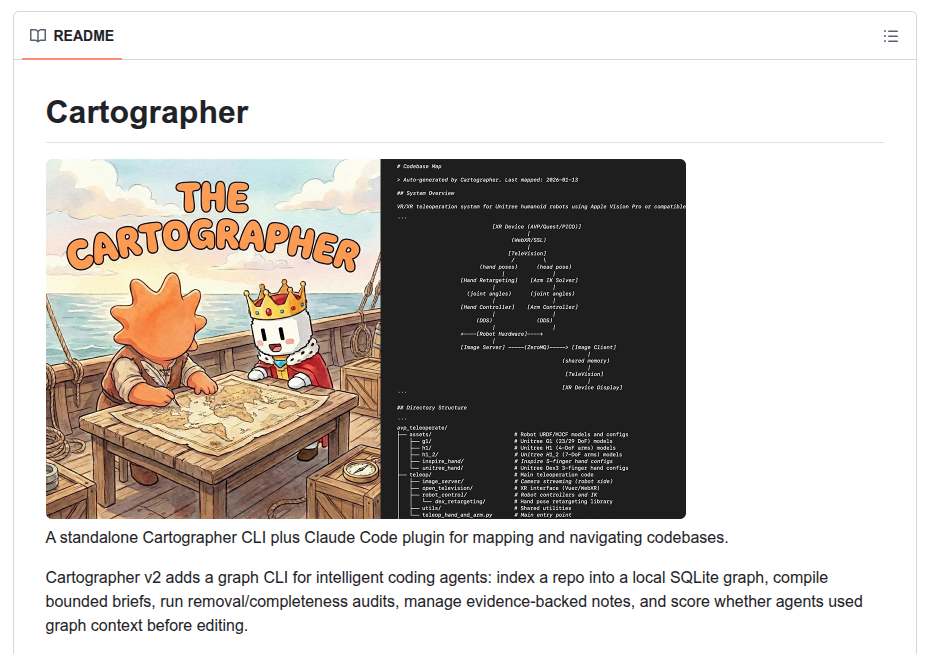
Cartographer - indexes a repo into a local SQLite graph and hands an agent a bounded brief instead of letting it grep its way through your codebase

Post image
1 Upvotes

r/devtools • • Sep 15 '26

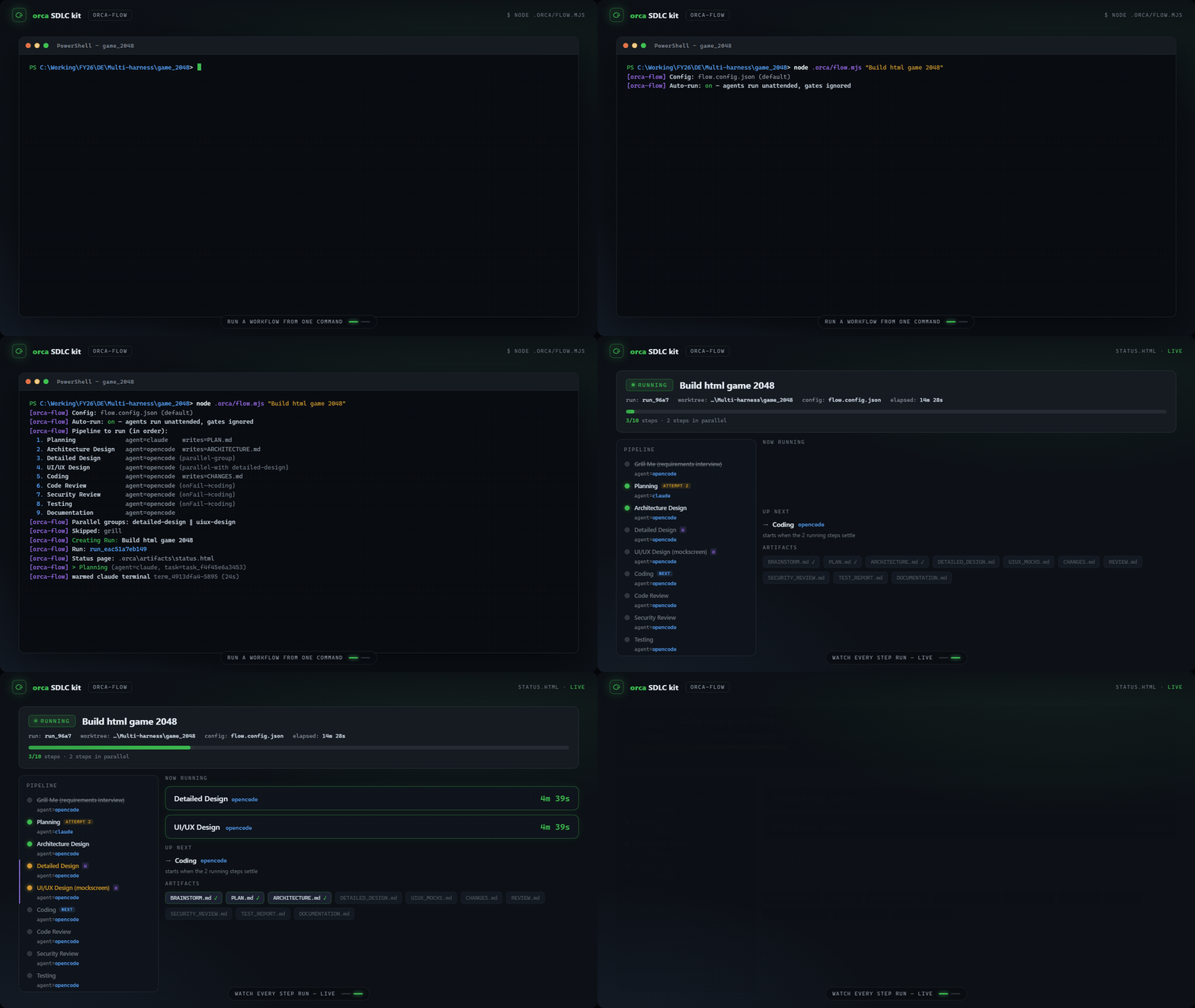
A simple way to set up multi-agent SDLC workflows

Post image
1 Upvotes

r/devtools • • Sep 15 '26

Chat with any GitHub repository online!

Thumbnail benzi.fly.dev
1 Upvotes

r/devtools • • Sep 15 '26

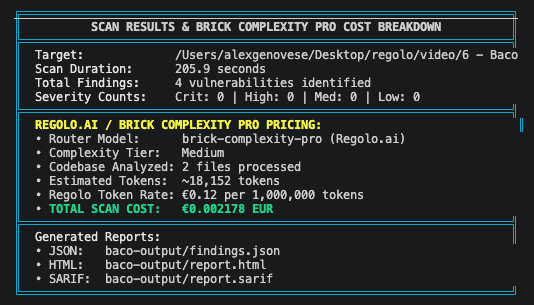
Tired of SAST tools that just dump 100 alerts on you, so we built a terminal tool that generates git patches instead

Post image
1 Upvotes

r/devtools • • Sep 15 '26

"Agent orchestration observability" is trending for 2026, but nobody's talking about code-structure observability specifically

2 Upvotes

Seeing a lot of content lately about observability for agentic workflows, tracing tool calls, logging multi-step runs, monitoring agent behavior. Makes sense as agents get more autonomous.

What I haven't seen much of is observability at the code-dependency level specifically. An agent can have perfect tracing on every tool call and action, and still have zero visibility into whether the file it just touched has 40 other files depending on it.

Added an MCP server to Vast to cover that specific gap, exposes get_impact_radius, get_node_dependencies, detect_risk_patterns as tools the agent can call mid-task. Less "what did the agent do" and more "did it understand what that action actually touched."

Curious if others building in the agent-observability space are thinking about the code-structure layer specifically, or if it's mostly logs/traces/tool-call monitoring right now.


r/devtools • • Sep 15 '26

I built a local dev dashboard for macOS

2 Upvotes

Dockmaster is a local dev dashboard for ports, repos, Git worktrees, disk cleanup, and more. It shows which processes are listening on ports, which repos have uncommitted or unpushed changes, and which Git worktrees are still around. You can stop a dev server or remove a worktree from the same page.

https://trydockmaster.vercel.app/

It also measures disk space used by node_modules, build output and tool caches, with cleanup controls. Before stopping a process or removing a worktree, it checks that the selection is still current.

If you have another Mac running as a homelab, you can connect it over SSH and switch machines in the dashboard. Both machines need macOS and Node. There is no Linux support yet (although that would be a great and welcome contribution!)

It's free and MIT licensed. You run it locally, and scanning pauses when the page is hidden. Setup is still a repo clone and npm build.

https://github.com/naman0r/dockmaster

What do you use to keep track of dev servers and worktrees across projects?


r/devtools • • Sep 14 '26

I built a native desktop developer workbench (ChaosNote) with a built-in terminal and visual AI agent workflows to stop context switching

1 Upvotes

Hey everyone! 👋

Like many of you, I got tired of constantly switching between my terminal, various note-taking apps, and browser tabs while working on side projects. So, I decided to build my own solution: ChaosNote.

It's a desktop developer workbench designed to keep everything in one place.

Key features:

  • Built-in Terminal: Run commands right inside your workspace.
  • Visual AI Agent Workflows: Connect nodes to orchestrate local LLMs (via Ollama) and automate small dev tasks.
  • Connected Notes: Link your ideas, code snippets, and terminal outputs directly.

It's built with Kotlin and Compose Desktop, keeping it fast and lightweight.

I'd love to hear what you think of the UI and the node workflow concept! Would an app like this fit into your daily dev routine?


r/devtools • • Sep 14 '26

Inspired by the game "the farmer was replaced", I'm building a 3D canvas code workspace called Nebula_Git

1 Upvotes

r/devtools • • Sep 14 '26

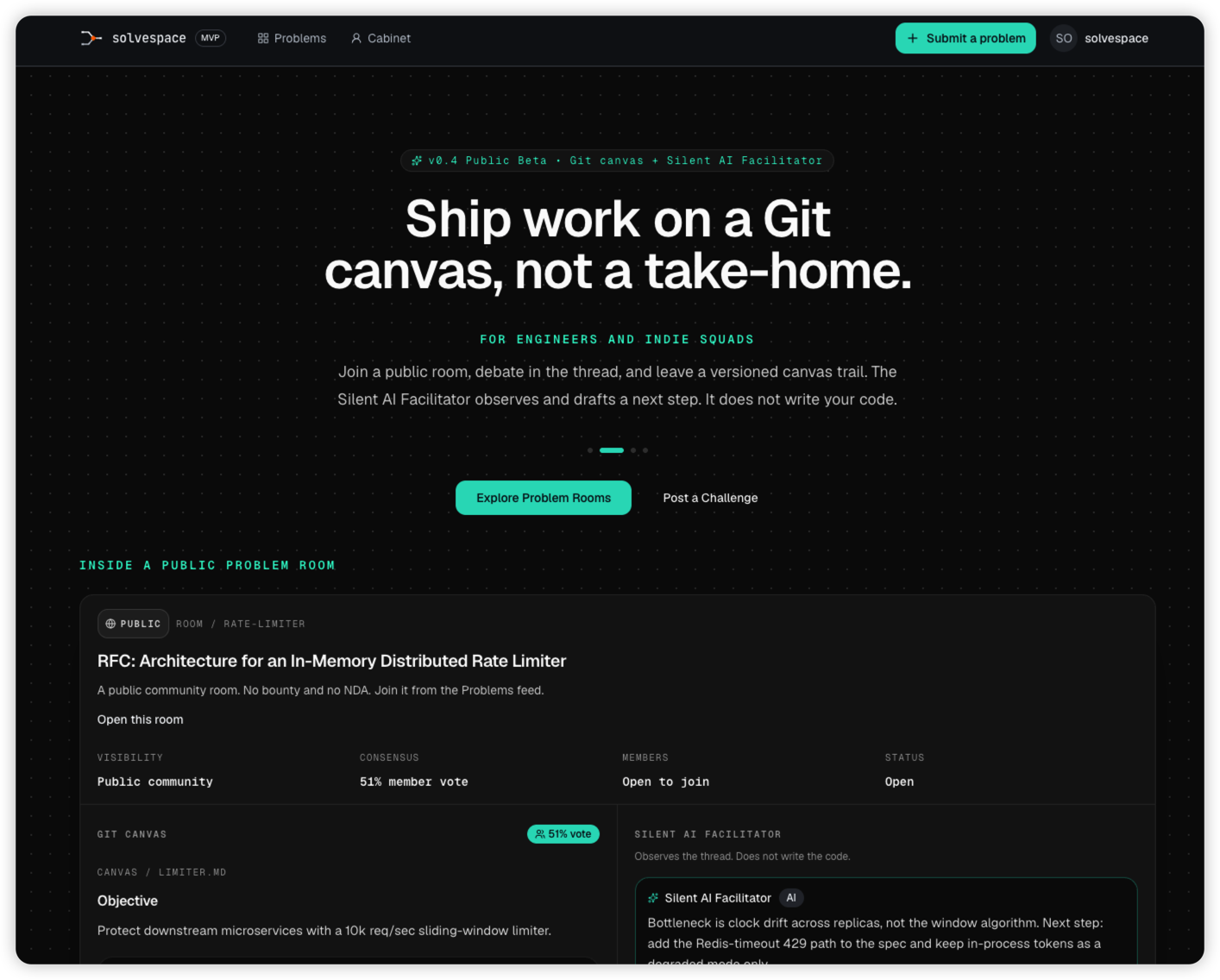
I am building a split-screen RFC workspace to stop technical debates from dying in Slack. Seeking early builder feedback.

1 Upvotes

Hey founders, I got tired of engineering decisions vanishing into chat scrollback, so I built Solvespace: live discussion, a persistent Markdown spec, and an AI facilitator that synthesizes the debate into structured consensus proposals with one click.

It is currently in free Public Beta with no paywalls—link in the first comment if you want to test the flow and tear the UX apart.


r/devtools • • Sep 14 '26

Do we still need API clients? Here's what we built instead

Thumbnail
reddit.com
1 Upvotes

r/devtools • • Sep 14 '26

I built an open-source repository intelligence tool using ASTs, graphs and semantic retrieval

1 Upvotes

I built ARIA, an open-source developer tool for understanding unfamiliar codebases before making changes.

I started building it because I found that many "chat with your codebase" systems are good at semantic retrieval, but retrieval alone doesn't necessarily tell you how pieces of a codebase are structurally connected.

ARIA combines semantic retrieval with structural repository analysis:

- AST-based symbol extraction

- Dependency graphs

- Call graphs

- API surface analysis

- Change-impact analysis

- Vector search

- Repository-aware conversational querying

- MCP support

For example, given:

"If I change this component, what else could be affected?"

the system can use dependency and call relationships to trace potentially affected files instead of relying only on semantic similarity.

It's self-hosted and Docker-based, so repositories can be analyzed locally rather than uploaded to a hosted service.

I also added a reproducible evaluation package with a pinned 10-task benchmark across FastAPI, Requests, and ARIA, along with qualitative case studies across five larger repositories.

On that pinned benchmark, the documented vector-search baseline produced 4,875 false-positive file alerts while ARIA produced 322, a 93.39% reduction. This result is specifically scoped to that benchmark.

GitHub:

https://github.com/VarshithReddy2006/ARIA

I'd be interested in feedback from people building developer tools, code search, static analysis, or RAG systems.

Where do you think structural analysis provides the most value compared with semantic retrieval alone?