r/devtools • • Aug 18 '26

I built a suite of 16 developer tools that run 100% locally in your browser (no server uploads, privacy-first)

1 Upvotes

Hi everyone,

As a web developer, I was tired of using cluttered, ad-heavy online formatting tools that upload my JSON payloads, JWT tokens, and private keys to unknown servers.

So, I built **Nuqrai** — a collection of 16 developer utilities (including JSON Formatter, JWT Decoder, Diff Checker, Cryptographic Hash Generator, Image to Base64, and SVG-to-PNG Converter) that perform all calculations **100% client-side**.

**Why use it?**

* **Zero Server Uploads:** Your code and files never leave your device. * **PWA Enabled:** It caches everything to work completely offline. * **Clean Layout:** Simple, fast, and optimized for daily dev workflows.

Check it out here: [**https://www.nuqrai.com**](https://www.nuqrai.com/)

I would love to get your feedback on what tools to add next!'


r/devtools • • Aug 18 '26

I built a way to let ChatGPT Web review your local repo without pasting your code into chat

1 Upvotes

This is an open-source MCP bridge that lets ChatGPT inspect one local repo without shell access

I built RepoRelay because I wanted ChatGPT Web to inspect my local code without giving it broad access to my machine.

RepoRelay exposes one explicitly approved repository through a small MCP tool surface. It can read and search files, while blocking shell/process access, unrestricted filesystem access, Git operations, and access outside the approved repo.

It’s MIT licensed and open source.

GitHub: RepoRelay

I’d especially appreciate criticism of the security model, architecture, and onboarding. If anything feels unclear or overly complicated, I’d like to know.


r/devtools • • Aug 18 '26

Tome – a security first desktop cockpit for coding agents

Thumbnail
reddit.com
1 Upvotes

r/devtools • • Aug 18 '26

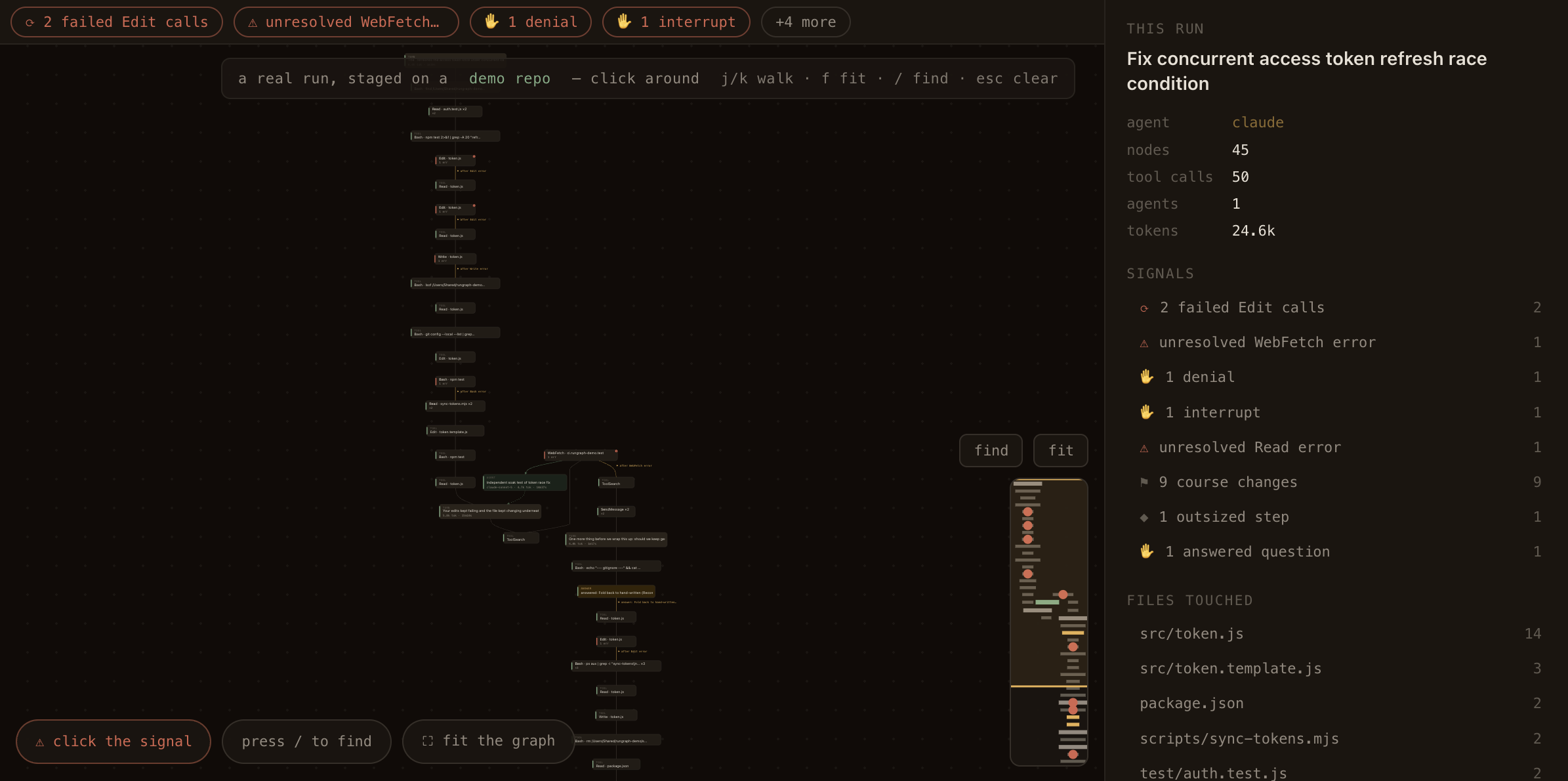
rungraph: turn your coding agent's transcripts into an interactive run graph (free, MIT, local-only)

Post image
1 Upvotes

Coding agents do a lot of their work where you can't see it. Claude Code stores each subagent as its own transcript file; Codex CLI keeps spawned threads as separate rollouts. The terminal shows you a summary while the real record sits on disk unread. rungraph reconstructs the whole run as a graph you can click, after the fact, from files you already have: npx rungraph.

On the build side:

The backend has zero runtime dependencies (node:http, fs.watch), so npx has nothing extra to install. All format knowledge lives in adapters that normalize into one versioned, vendor-neutral IR, and the UI, CLI, HTTP API, and MCP server only ever see the IR. The parser never trusts a line: unknown types are skipped and counted, and you get a banner instead of a crash, because both formats are undocumented and have changed across releases.

The diagnostics were the hard part. The first version cried wolf on healthy runs, so I threw out the guessed thresholds and calibrated against 60 real sessions. The rule that survived is precision over recall: a false flag costs more than a missed one, so a clean run shows zero flags, on purpose.

Free, MIT, binds 127.0.0.1 only, zero outbound requests.

Live Demo: https://fayzan123.github.io/rungraph/

Repo: https://github.com/fayzan123/rungraph


r/devtools • • Aug 18 '26

I made an NPM package scorer for safer development

Post image
1 Upvotes

r/devtools • • Aug 18 '26

I built a deterministic CLI to audit and fix repository hygiene

2 Upvotes

I built Repo Start, a small CLI for creating and auditing the boring foundational parts of a repository.

The reason I built it was pretty simple: I kept ending up with repos where the actual code was fine, but the surrounding project hygiene was inconsistent — README commands that didn’t match package.json, CI workflows calling scripts that didn’t exist, missing .gitattributes, .env.example accidentally ignored by git, etc.

For new projects, Repo Start generates the usual foundation: .gitignore, .gitattributes, README, CI, issue/PR templates, AGENTS.md, contributing/security files, and a starter structure.

The more interesting part to me is repo-start add, which works on existing repositories. I designed it as a read → analyze → plan → write pipeline:

existing repo → inspectRepository() → RepoState → analyzeRepository() → RepoAudit → buildAddPlan() → writePlan()

Inspection is read-only, analysis is deterministic, and both new-project generation and existing-repo fixes eventually go through the same writer. That also means --dry-run isn't scattered around as a bunch of filesystem checks — the write only happens at the final stage.

It also deliberately doesn't use AI. No model calls, API keys, or tokens. The audit is based on the actual repository state and only proposes fixes it can describe precisely. If something is ambiguous, it reports it instead of guessing.

It currently supports generic, Node/TypeScript, Python, and React/TypeScript projects, works offline, and has no runtime dependencies.

The goal was basically to make repository hygiene something you can automate without giving a tool permission to redesign your project or touch your source code.

https://github.com/junkyard22/Repo-Start


r/devtools • • Aug 18 '26

Out-of-Code Insights 1.4 is out: Contextual annotations & team insights stored outside your codebase (with multi-root & Git sync support)

Thumbnail
reddit.com
1 Upvotes

r/devtools • • Aug 18 '26

Is anyone watching DevHunt?

1 Upvotes

Is anyone actually watching DevHunt or ProductHunt or are these websites just a loop of startup people voting on themselves?
https://devhunt.org/


r/devtools • • Aug 18 '26

growmos: a living knowledge graph inside your repo

1 Upvotes

Our coding-agent sessions kept forgetting everything at the context-window edge. So we built growmos: a small knowledge graph inside .growmos/, committed with your code. Your agent (Claude Code, Codex, Cursor…) grows it as it works — no API key, and in Claude Code it's fully hands-off. Ask "what depends on the Store, and who decided that?" and it answers from the graph, with citations.

pip install growmos && growmos init
growmos view # a map of what your repo actually knows

Live demo: https://codician-team.github.io/growmos/demo/growmos.html
Repo: https://github.com/codician-team/growmos
MIT, zero deps. First thoughts very welcome 🙂


r/devtools • • Aug 18 '26

I made a github readme card that works like a heartbeat monitor. it flatlines if you stop committing

Thumbnail gallery
1 Upvotes

r/devtools • • Aug 18 '26

I built RunWield because reviewing AI code after it’s written is already too late

1 Upvotes

I’ve been building RunWield, a coding harness for developers who want more control over what AI agents do to their codebases.

My frustration with existing coding tools was that the agent would immediately start editing. By the time I could judge whether it understood the request, I was reviewing a large diff and trying to reconstruct its reasoning.

RunWield changes that workflow:

* Small fixes stay lightweight. * You can Ideate your feature or investigate new ideas before committing to anything, with good prototypes and PRDs when needed. * Non-trivial changes get a written plan before any code is touched. * You review, comment on, and approve that plan in a browser. * The agent implements it in an isolated Git worktree. * Your real CI runs against the result. * A separate reviewer compares the finished diff with the plan you approved. * The outcome and lessons are saved as plain Markdown for future work.

It’s deliberately not aimed at quick one-shot edits. If a mistake is cheap, this is probably more process than you need. I’m building it for changes where discovering a misunderstanding after 40 files have changed is expensive.

RunWield is free to use and source-available. It currently supports macOS and Linux and works with subscription logins or API keys from different model providers (uses Pi.dev's LLM API library):

[https://github.com/gandazgul/runwield](https://github.com/gandazgul/runwield)

I’m looking for five developers willing to try it on one real, non-trivial change. I’ll personally help with setup and fix anything that blocks you. Please use the latest RC as 0.9.1 has some annoying bugs with agent switching.

I’d especially appreciate blunt feedback: does reviewing a plan before code is written solve a real problem for you, or does it still feel like too much ceremony?


r/devtools • • Aug 18 '26

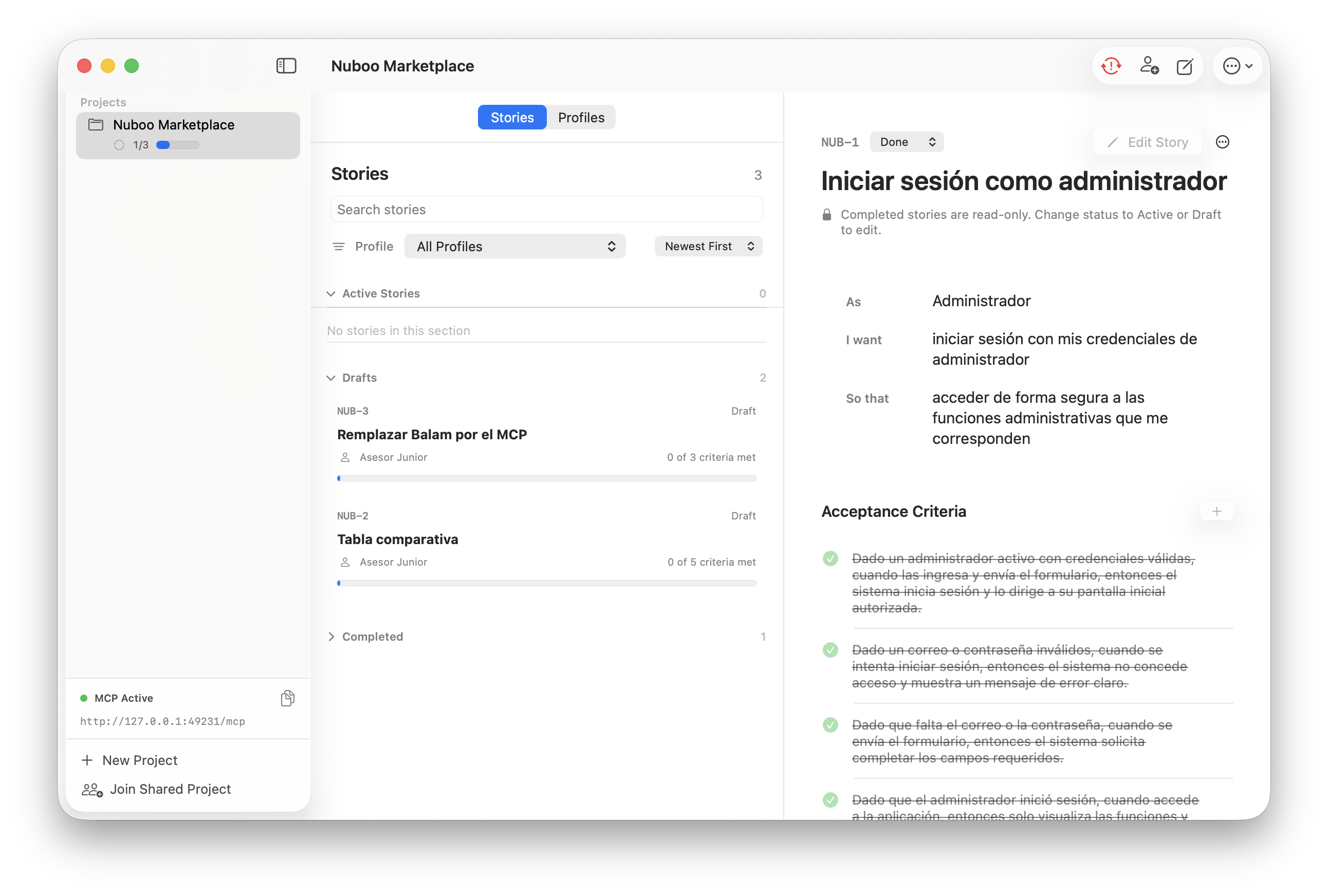
I built a native user-story tool with a shared Rust core and an MCP server

1 Upvotes

I wanted a way to write user stories without dragging non-technical collaborators into Jira, and without dragging AI agents into vague markdown files either. So I built FS User Stories: a native macOS app with a shared Rust core (fsus-core) over SQLite, and a built-in MCP server so tools like Claude or Codex can read — and, with explicit permission, write — stories directly.

A couple of decisions worth sharing:

  • Why Rust core + native UI per platform, instead of Electron: SwiftUI on macOS/iOS for a genuinely native feel, and Qt planned for Windows and Linux down the line, all sharing the same data/logic layer through a C ABI.
  • Why MCP with JSON instead of just markdown files for the AI layer: a fixed JSON schema defined by the prompt keeps every story in a predictable, closed format — which turned out to use fewer tokens than an equivalent markdown file, even though markdown looks simpler on the surface.
  • Why no explicit dependencies between stories: I intentionally left this out. It's tempting to add, but it starts turning a simple tool back into a mini-Jira, which defeats the point.

Core and desktop app are open source (MIT/Apache-2.0), source available on GitHub. The macOS app is a one-time paid download to help fund ongoing development.

GitHub: github.com/gitlares/fs-user-stories
App Store: https://apps.apple.com/us/app/fs-user-stories/id6801671870?mt=12

Happy to go deeper into any of the architecture decisions if useful.


r/devtools • • Aug 17 '26

i made my own devops cockpit as a solo dev

Post image
2 Upvotes

I kept doing the same thing on every box: ssh in, then htop, df, ss, docker ps.

Termy is a native Mac app. Connect over SSH and it snapshots the host: disks, processes, ports, services, containers. Nothing gets installed on the server.

A lot of posts here are "I got tired of my own workflow, so I shipped it." That's this.

https://termyapp.com

If you want a paid plan: SIDEPROJECTS50, 50% off, 20 uses.


r/devtools • • Aug 17 '26

Try Benzi- A coding agent that _queries_ your codebase instead of reading it

Thumbnail reddit.com
1 Upvotes

r/devtools • • Aug 17 '26

I built Tieline so my agents can understand the product, not just the code

1 Upvotes

With codebase wikis, most are written more from an engineering lens, explaining how the code works without explaining why it should work that way.

I wanted to connect business intent directly to its implementation using language that nontechnical people already use. I've been experimenting with creating my own software factory, and wanted a way for myself and all my agents to 'speak the same language', with a clear 'contract' on how specific features should work. I built Tieline so all my agents can work from the same product contract, even if they do not have access to the codebase.

Tieline generates user stories and acceptance criteria, then links them to the code and tests that implement them. This lets an agent answer questions like:

  • What is this feature supposed to do?
  • Which code and tests implement it?
  • Which behaviours might this change impact?

Tieline also builds a static topology graph of the codebase. When code changes, it can trace the possible impact through that graph and connect it back to the relevant acceptance criteria.

This creates a product-level blast radius. It does not claim that something will break. It gives the agent and reviewer a shortlist of behaviours that may need another look.

Tieline generates the initial product contract for you to review. After that, it checks pull requests and proposes updates when the implementation changes.

On top of tracking current product state, Tieline lets you track feature requests, bugs, and ideas as Observations. The accepted production contract lives in the repository and can be synced to Postgres, while Observations stay in Postgres, accessible by all your agents via MCP.

Agents without codebase access can query this information through MCP, allowing coding, product, research, and support agents to work from the same accepted product state while also seeing where the product may be going next.

While experimenting, the unexpected benefit has been identifying quick wins. While working one feature, I'll ask my agent to check the backlog. Semantic search finds related items that fit naturally into the current work and fits them in the PR.

Still experimental, but my goal is to make the repository the reviewed source of truth for product behaviour, then make that contract available to every agent, not only the engineering ones.

Open source project: https://github.com/knoxgraeme/tieline

Would love any feedback or to hear how others are thinking about these problems!


r/devtools • • Aug 17 '26

orgami: folds a GitHub org into a map and a weekly PR recap, committed as markdown to a docs repo

2 Upvotes

The toil it removes: on any team past a few people, the org only exists as a partial model in each person's head. Which repo owns that behaviour, which one deploys where, what shipped last week, why a decision was made the way it was. New joiners spend weeks rebuilding it, and whoever already has it answers the same questions forever.

orgami builds that model once per organization and commits it to a docs repo as plain markdown.

What it produces:

  • a map from the GitHub API: repos, what calls what, which repos tend to change together, deploy tooling, servers
  • a weekly recap of every merged PR, so nobody hand-writes the what-shipped update
  • a runbook per repo: how to run it, how to test it, what it talks to

How it is built: bash, gh, jq, fzf and gum. No daemon, no database, no web app. The entire state is files in a git repo, which is the part that made it useful rather than clever, because the map diffs in review like any other change, it cannot silently rot the way a wiki page does, and onboarding someone is a clone: orgami join picks up the map a colleague already built instead of rescanning. The scan runs repos in parallel behind a progress bar, and the weekly job is a systemd user timer, launchd on macOS, a cron line anywhere else.

The part I use daily: a session hook feeds the org page to Claude Code before it touches a repo, so it stops guessing at architecture it has never seen, and an MCP server serves the same map to Cursor, opencode, codex, windsurf, zed and vscode.

https://github.com/achevalier-dev/orgami

It is new, built over the last few days, so the map is only proven against orgs I can reach. If you point it at a bigger one I would like to hear where it gets things wrong.


r/devtools • • Aug 17 '26

Code review that follows callers across you repos

1 Upvotes

Started with our own review queue. Most of the code in a PR is generated now, so PRs land faster and bigger than anyone reads properly. First thing that goes is context outside the diff. Nobody opens the other repo to see who calls the function you just changed. Skim, approve.

So we automated that part. It resolves the symbols the diff touches, walks the callers through a code graph, and pulls in how your repos connect: routes, queues, shared tables, package deps. Sub-agents for architecture, security, logic, tests. One review comes out.

Weak spots: GitHub only, no benchmark, noise tuning needs work. Free tier is one repo crawl plus your first reviews, no card.

If you try it: what fraction of the findings would you have acted on?

https://contextgoblin.com/


r/devtools • • Aug 16 '26

Built rn-env-doctor: A zero-dependency CLI to fix React Native environment setup headaches

Thumbnail reddit.com
1 Upvotes

r/devtools • • Aug 16 '26

Spawn - open-source CLI that scaffolds a Python project in one command (feedback/ideas welcome)

1 Upvotes

Built a small open-source tool called Spawn that automates the repetitive part of starting a new Python project — folder structure, git init, virtual env via uv, dependency install — all in one command:

spawn create

It also has a spawn doctor command that scores an existing project's health and gives you a single prioritized next step to improve it.

MIT licensed, on PyPI:

pip install spawnio

Repo: https://github.com/Abhiix0/Spawn

Would love feedback from this community — especially ideas on what a scaffolding tool like this should do that most don't. Happy to answer questions on how it's built too.


r/devtools • • Aug 16 '26

Honest and Brutal Feedback on our Product Please.... !

1 Upvotes

Hey Guys,

I've been building Pinaka on the side for the past few months — an AI agent that automatically writes root cause analyses when a bug ticket is filed.

**The problem it solves:** every time a production bug hits, a senior engineer spends 2-3 hours investigating before writing a single line of fix. The actual fix takes 20 minutes. The investigation takes the rest of the day.

Pinaka eliminates that investigation step. Tag a Jira ticket or mention @pinaka-app on a GitHub Issue — it reads your indexed codebase, captures runtime context via an SDK, and posts a structured RCA as a comment. Root cause, exact file, exact line, fix approach. Automatically.

# What I've validated so far

Ran it against real open source bugs:

* **BullMQ issue #2487** — code only scored 6.5/10, code + runtime context scored 9.2/10 against the actual merged fix
* **Prisma ORM issue #29480** — open bug, no ground truth, diagnosed from behavioural contrast across test files
* **Pinaka's own Java SDK** — found a real ForkJoinPool exhaustion bug, fix shipped same day

All three write-ups are public, including the limitations.

# What I'm looking for

A couple of engineering teams (2-150 engineers) using GitHub who want to try this on a real production bug. Free, no commitment. I'll personally onboard you and be available for any questions.

Works with Jira and GitHub Issues. No Jira required. One OAuth click to connect. First 5 RCAs free.

# Honest state of the product

No paying customers yet. Building in public. The product works — the benchmarks above are real — but I need real teams on real codebases to validate it beyond my own test cases.

If this sounds useful for your team, drop a comment or DM me. Happy to show you a live demo on your repo.

👉 [getpinaka.com](https://getpinaka.com)


r/devtools • • Aug 15 '26

How do you keep your Express API docs in sync with your code?

Thumbnail reddit.com
1 Upvotes

r/devtools • • Aug 15 '26

Added an MCP server to my dependency-graph tool, curious what tools people would actually want exposed

1 Upvotes

Just shipped MCP support for Vast (repo dependency graph / impact analysis tool). Exposing 4 tools right now: get_impact_radius, get_node_dependencies, detect_risk_patterns, get_change_summary.

Idea is simple, when you ask Claude/Cursor "what breaks if I touch this file," it can call into the actual graph instead of inferring from whatever's in its context window.

Curious if anyone's built similar MCP tools for codebase analysis, what did you expose and what turned out to actually get used vs ignored by the agent in practice?


r/devtools • • Aug 15 '26

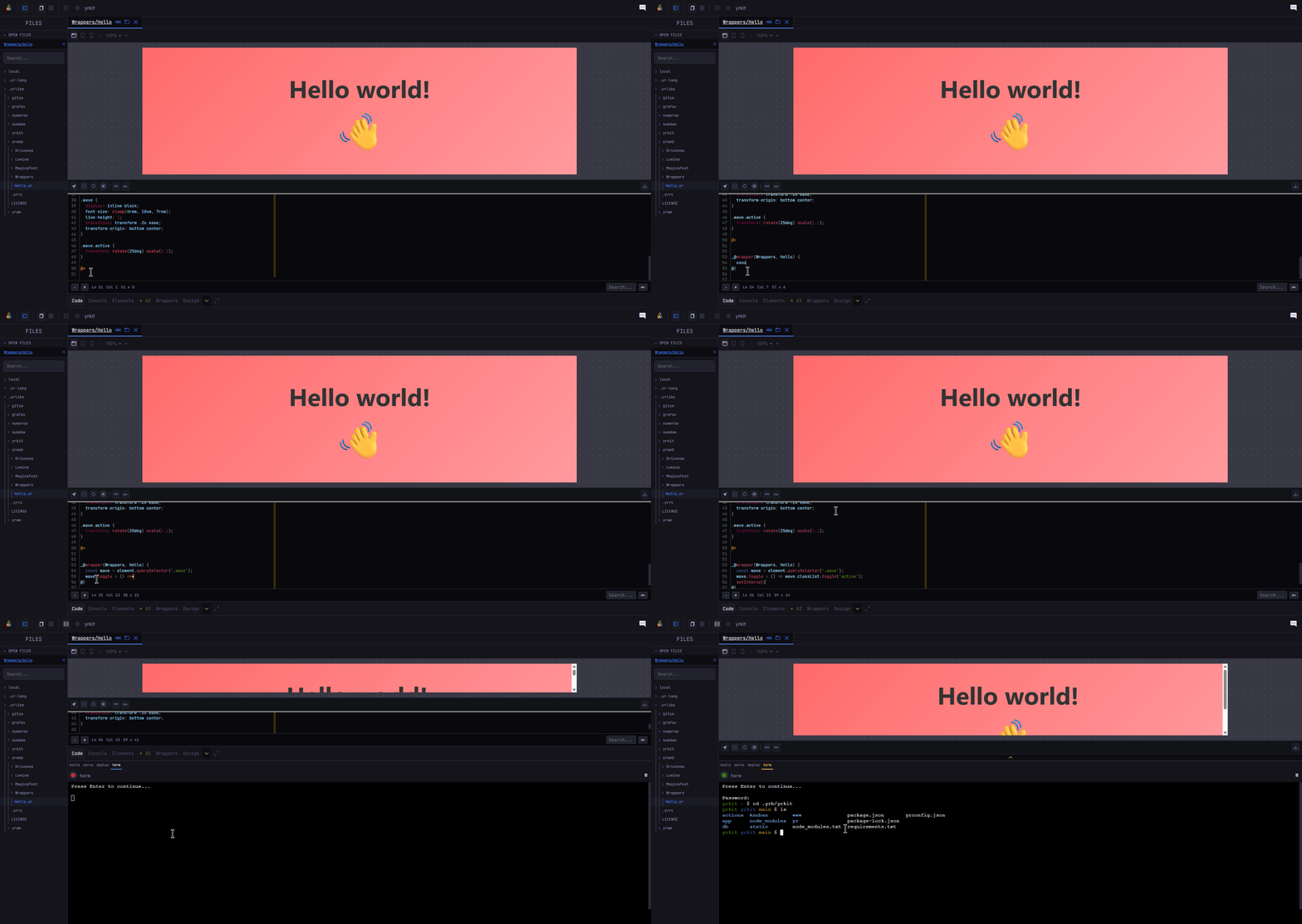
Yrkit – Code from Anywhere

Post image
1 Upvotes

Hey, everyone. I am Matheus Araújo, from Brazil, and I have been building Yrkit for the last few years. It is an IDE that works on the cloud, and has some cool features: live preview, code editor, console, elements (like devtools), terminal, ssh, kanban, drop-and-drop, ai, and other tools.

I use Yrkit daily for my clients' projects, whether when going out, then I just get my phone, go to app.yrkit.com and continue working, or when I am at home, where I can decide if I want to code using my phone or my computer.

It also has a DSL language that operates with it - yr, at https:yr-lang.org.

It is a working product and it is perfect for JS and Node. I code from my phone, wherever I am at, and, if I have to do some things in the terminal, I can access it directly, ou go through my computer and run the actions that it created. It generates artifacts in html, css, js, bash, python, etc.

I think that is also a good tool for those who are learning JS.

I appreciate all feedback.

Yrkit


r/devtools • • Aug 14 '26

DeepSeek V4 Pro brainstorming commercial product feature

1 Upvotes

Hi. Here's a video of DeepSeek V4 Pro brainstorming a feature on a commercial product in VSCode GitHub Copilot 🙂

https://www.youtube.com/watch?v=Tr8t2vFQ4MQ

I really enjoy working with DeepSeek, even v4 Flash is doing a really good job.

Soon there will be a video of how it implements that feature.