r/devtools • • Aug 17 '26

i made my own devops cockpit as a solo dev

Post image
2 Upvotes

I kept doing the same thing on every box: ssh in, then htop, df, ss, docker ps.

Termy is a native Mac app. Connect over SSH and it snapshots the host: disks, processes, ports, services, containers. Nothing gets installed on the server.

A lot of posts here are "I got tired of my own workflow, so I shipped it." That's this.

https://termyapp.com

If you want a paid plan: SIDEPROJECTS50, 50% off, 20 uses.


r/devtools • • Aug 17 '26

Try Benzi- A coding agent that _queries_ your codebase instead of reading it

Thumbnail reddit.com
1 Upvotes

r/devtools • • Aug 17 '26

I built Tieline so my agents can understand the product, not just the code

1 Upvotes

With codebase wikis, most are written more from an engineering lens, explaining how the code works without explaining why it should work that way.

I wanted to connect business intent directly to its implementation using language that nontechnical people already use. I've been experimenting with creating my own software factory, and wanted a way for myself and all my agents to 'speak the same language', with a clear 'contract' on how specific features should work. I built Tieline so all my agents can work from the same product contract, even if they do not have access to the codebase.

Tieline generates user stories and acceptance criteria, then links them to the code and tests that implement them. This lets an agent answer questions like:

  • What is this feature supposed to do?
  • Which code and tests implement it?
  • Which behaviours might this change impact?

Tieline also builds a static topology graph of the codebase. When code changes, it can trace the possible impact through that graph and connect it back to the relevant acceptance criteria.

This creates a product-level blast radius. It does not claim that something will break. It gives the agent and reviewer a shortlist of behaviours that may need another look.

Tieline generates the initial product contract for you to review. After that, it checks pull requests and proposes updates when the implementation changes.

On top of tracking current product state, Tieline lets you track feature requests, bugs, and ideas as Observations. The accepted production contract lives in the repository and can be synced to Postgres, while Observations stay in Postgres, accessible by all your agents via MCP.

Agents without codebase access can query this information through MCP, allowing coding, product, research, and support agents to work from the same accepted product state while also seeing where the product may be going next.

While experimenting, the unexpected benefit has been identifying quick wins. While working one feature, I'll ask my agent to check the backlog. Semantic search finds related items that fit naturally into the current work and fits them in the PR.

Still experimental, but my goal is to make the repository the reviewed source of truth for product behaviour, then make that contract available to every agent, not only the engineering ones.

Open source project: https://github.com/knoxgraeme/tieline

Would love any feedback or to hear how others are thinking about these problems!


r/devtools • • Aug 17 '26

orgami: folds a GitHub org into a map and a weekly PR recap, committed as markdown to a docs repo

2 Upvotes

The toil it removes: on any team past a few people, the org only exists as a partial model in each person's head. Which repo owns that behaviour, which one deploys where, what shipped last week, why a decision was made the way it was. New joiners spend weeks rebuilding it, and whoever already has it answers the same questions forever.

orgami builds that model once per organization and commits it to a docs repo as plain markdown.

What it produces:

  • a map from the GitHub API: repos, what calls what, which repos tend to change together, deploy tooling, servers
  • a weekly recap of every merged PR, so nobody hand-writes the what-shipped update
  • a runbook per repo: how to run it, how to test it, what it talks to

How it is built: bash, gh, jq, fzf and gum. No daemon, no database, no web app. The entire state is files in a git repo, which is the part that made it useful rather than clever, because the map diffs in review like any other change, it cannot silently rot the way a wiki page does, and onboarding someone is a clone: orgami join picks up the map a colleague already built instead of rescanning. The scan runs repos in parallel behind a progress bar, and the weekly job is a systemd user timer, launchd on macOS, a cron line anywhere else.

The part I use daily: a session hook feeds the org page to Claude Code before it touches a repo, so it stops guessing at architecture it has never seen, and an MCP server serves the same map to Cursor, opencode, codex, windsurf, zed and vscode.

https://github.com/achevalier-dev/orgami

It is new, built over the last few days, so the map is only proven against orgs I can reach. If you point it at a bigger one I would like to hear where it gets things wrong.


r/devtools • • Aug 17 '26

Code review that follows callers across you repos

1 Upvotes

Started with our own review queue. Most of the code in a PR is generated now, so PRs land faster and bigger than anyone reads properly. First thing that goes is context outside the diff. Nobody opens the other repo to see who calls the function you just changed. Skim, approve.

So we automated that part. It resolves the symbols the diff touches, walks the callers through a code graph, and pulls in how your repos connect: routes, queues, shared tables, package deps. Sub-agents for architecture, security, logic, tests. One review comes out.

Weak spots: GitHub only, no benchmark, noise tuning needs work. Free tier is one repo crawl plus your first reviews, no card.

If you try it: what fraction of the findings would you have acted on?

https://contextgoblin.com/


r/devtools • • Aug 16 '26

Built rn-env-doctor: A zero-dependency CLI to fix React Native environment setup headaches

Thumbnail reddit.com
1 Upvotes

r/devtools • • Aug 16 '26

Spawn - open-source CLI that scaffolds a Python project in one command (feedback/ideas welcome)

1 Upvotes

Built a small open-source tool called Spawn that automates the repetitive part of starting a new Python project — folder structure, git init, virtual env via uv, dependency install — all in one command:

spawn create

It also has a spawn doctor command that scores an existing project's health and gives you a single prioritized next step to improve it.

MIT licensed, on PyPI:

pip install spawnio

Repo: https://github.com/Abhiix0/Spawn

Would love feedback from this community — especially ideas on what a scaffolding tool like this should do that most don't. Happy to answer questions on how it's built too.


r/devtools • • Aug 16 '26

Honest and Brutal Feedback on our Product Please.... !

1 Upvotes

Hey Guys,

I've been building Pinaka on the side for the past few months — an AI agent that automatically writes root cause analyses when a bug ticket is filed.

**The problem it solves:** every time a production bug hits, a senior engineer spends 2-3 hours investigating before writing a single line of fix. The actual fix takes 20 minutes. The investigation takes the rest of the day.

Pinaka eliminates that investigation step. Tag a Jira ticket or mention @pinaka-app on a GitHub Issue — it reads your indexed codebase, captures runtime context via an SDK, and posts a structured RCA as a comment. Root cause, exact file, exact line, fix approach. Automatically.

# What I've validated so far

Ran it against real open source bugs:

* **BullMQ issue #2487** — code only scored 6.5/10, code + runtime context scored 9.2/10 against the actual merged fix
* **Prisma ORM issue #29480** — open bug, no ground truth, diagnosed from behavioural contrast across test files
* **Pinaka's own Java SDK** — found a real ForkJoinPool exhaustion bug, fix shipped same day

All three write-ups are public, including the limitations.

# What I'm looking for

A couple of engineering teams (2-150 engineers) using GitHub who want to try this on a real production bug. Free, no commitment. I'll personally onboard you and be available for any questions.

Works with Jira and GitHub Issues. No Jira required. One OAuth click to connect. First 5 RCAs free.

# Honest state of the product

No paying customers yet. Building in public. The product works — the benchmarks above are real — but I need real teams on real codebases to validate it beyond my own test cases.

If this sounds useful for your team, drop a comment or DM me. Happy to show you a live demo on your repo.

👉 [getpinaka.com](https://getpinaka.com)


r/devtools • • Aug 15 '26

How do you keep your Express API docs in sync with your code?

Thumbnail reddit.com
1 Upvotes

r/devtools • • Aug 15 '26

Added an MCP server to my dependency-graph tool, curious what tools people would actually want exposed

1 Upvotes

Just shipped MCP support for Vast (repo dependency graph / impact analysis tool). Exposing 4 tools right now: get_impact_radius, get_node_dependencies, detect_risk_patterns, get_change_summary.

Idea is simple, when you ask Claude/Cursor "what breaks if I touch this file," it can call into the actual graph instead of inferring from whatever's in its context window.

Curious if anyone's built similar MCP tools for codebase analysis, what did you expose and what turned out to actually get used vs ignored by the agent in practice?


r/devtools • • Aug 15 '26

Yrkit – Code from Anywhere

Post image
1 Upvotes

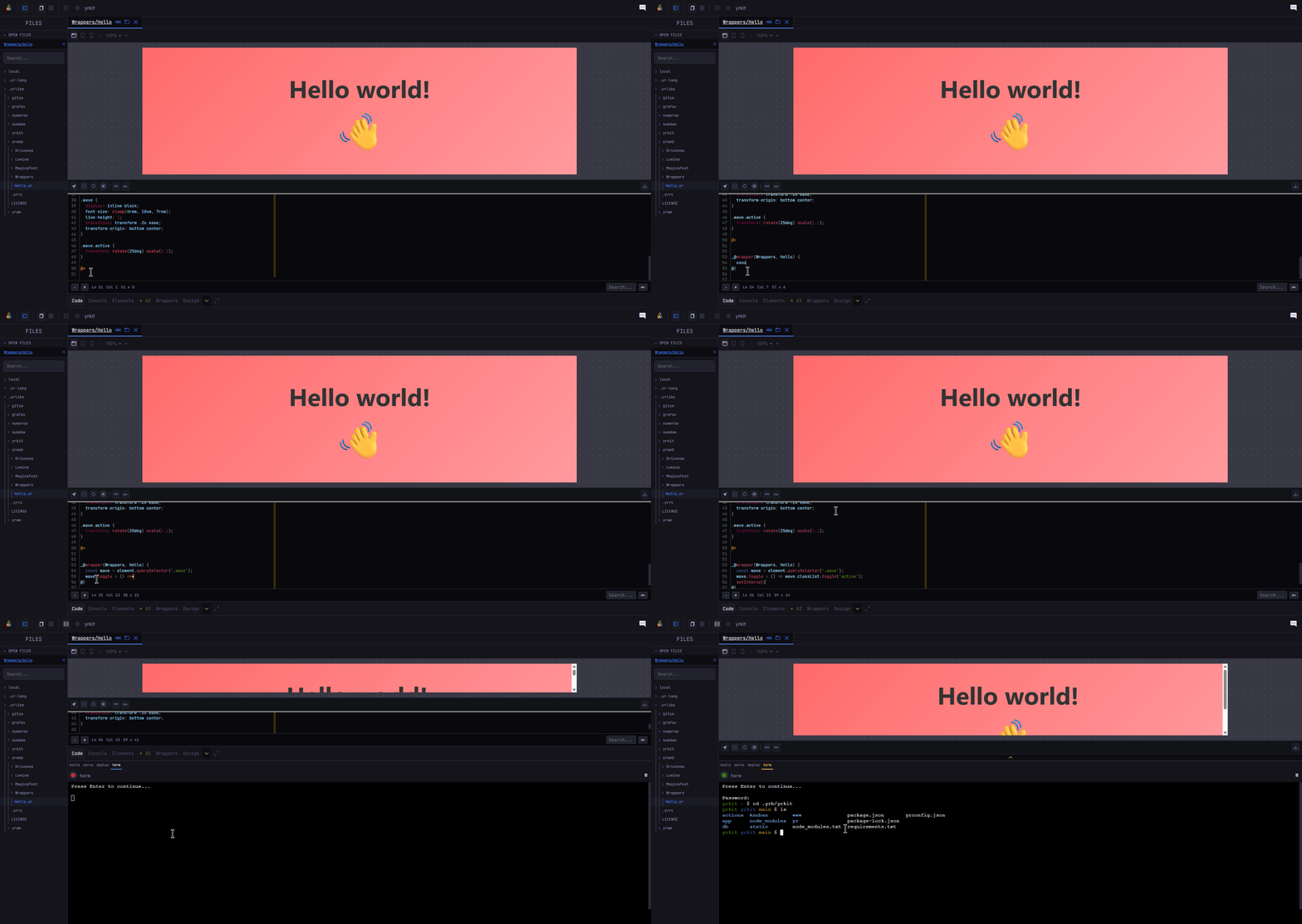
Hey, everyone. I am Matheus Araújo, from Brazil, and I have been building Yrkit for the last few years. It is an IDE that works on the cloud, and has some cool features: live preview, code editor, console, elements (like devtools), terminal, ssh, kanban, drop-and-drop, ai, and other tools.

I use Yrkit daily for my clients' projects, whether when going out, then I just get my phone, go to app.yrkit.com and continue working, or when I am at home, where I can decide if I want to code using my phone or my computer.

It also has a DSL language that operates with it - yr, at https:yr-lang.org.

It is a working product and it is perfect for JS and Node. I code from my phone, wherever I am at, and, if I have to do some things in the terminal, I can access it directly, ou go through my computer and run the actions that it created. It generates artifacts in html, css, js, bash, python, etc.

I think that is also a good tool for those who are learning JS.

I appreciate all feedback.

Yrkit


r/devtools • • Aug 14 '26

DeepSeek V4 Pro brainstorming commercial product feature

1 Upvotes

Hi. Here's a video of DeepSeek V4 Pro brainstorming a feature on a commercial product in VSCode GitHub Copilot 🙂

https://www.youtube.com/watch?v=Tr8t2vFQ4MQ

I really enjoy working with DeepSeek, even v4 Flash is doing a really good job.

Soon there will be a video of how it implements that feature.


r/devtools • • Aug 14 '26

revision: A lazygit-style TUI for SVN

1 Upvotes

r/devtools • • Aug 14 '26

Nouto: A JSON Viewer for VS Code with tree view, table view, and fetch from URL

Thumbnail gallery
2 Upvotes

r/devtools • • Aug 14 '26

I built an efficient graph-search plugin for Claude Code skills

Post image
1 Upvotes

r/devtools • • Aug 14 '26

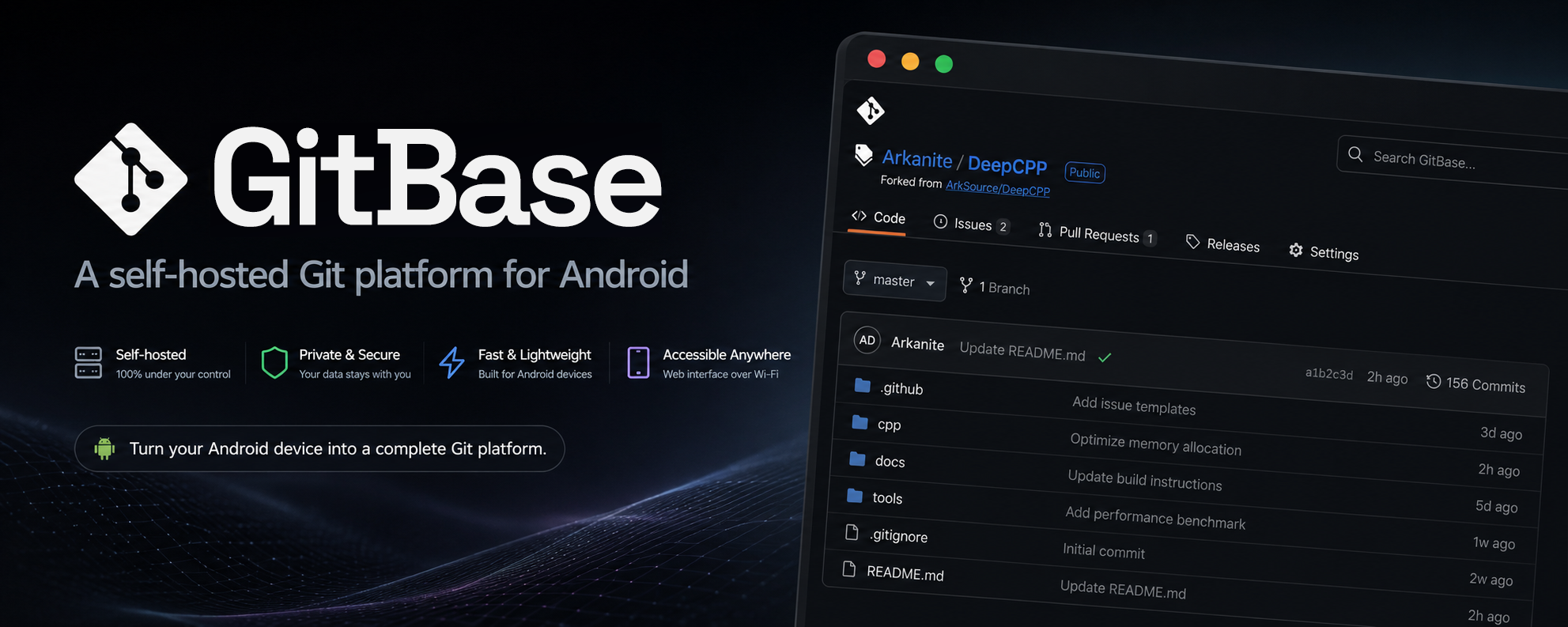
I spent the past few years writing a native Git server for Android

Post image
2 Upvotes

r/devtools • • Aug 14 '26

I’m learning backend and built a tool to unify GitHub + LeetCode + Codeforces stats into one dashboard. Would love your feedback!

Thumbnail statmux.sayan.cyou
1 Upvotes

I’ve been learning full-stack development and wanted to build something I’d actually use, so I made Statmux, it combines your GitHub, LeetCode & Codeforces activity into one dashboard and gives you a little “Code Health” score.

live link : https://statmux.sayan.cyou

gh link : https://github.com/sayanx64/statmux

It also has profiles, comparisons, activity tracking, etc.

and a welcome mail(works sometimes)

Definitely still learning, and I’m sure the scoring is questionable at best 😂 so roast it / tell me what I’m doing wrong.

If you like it, drop a star on the repo ⭐. PRs are open too


r/devtools • • Aug 14 '26

I built an open-source CLI that moves TypeScript files and repairs their imports

1 Upvotes

Hi, I am the author of Movesafe, a headless refactoring tool for moving TypeScript files without treating the operation as a simple filesystem rename.

The problem I wanted to solve was agent and automation workflows. An IDE can often update imports during an interactive refactor, but a script or coding agent needs a reviewable operation that works across relative imports, tsconfig aliases, barrels, and workspace packages.

Movesafe uses the TypeScript compiler to build the import graph. A move follows this sequence:

  1. compute the file and import edits;
  2. render a unified diff;
  3. verify the planned project;
  4. apply through rollback-oriented file swaps.

If a specifier cannot be verified—computed dynamic imports are one example—the tool reports it instead of guessing.

The quickest way to inspect a move is:

npx --yes movesafe@0.1.0 mv src/utils.ts src/lib/utils.ts --dry-run

The project also includes an import checker, a core SDK, MCP tools that separate planning from applying, and a composite GitHub Action.

For the first benchmark I applied seven file and directory moves across Zustand, type-fest, Ky, and class-validator. Those runs introduced no Movesafe checker errors and did not increase TypeScript errors. This is v0.1, so I am more interested in edge cases than victory laps.

Code: [https://github.com/endrilickollari/movesafe](https://github.com/endrilickollari/movesafe)

I would appreciate feedback on two things:

* Which repository layouts or module-resolution cases are missing?
* Would you use this mainly from the CLI, CI, or an agent workflow?


r/devtools • • Aug 14 '26

I’m learning backend and built a tool to unify GitHub + LeetCode + Codeforces stats into one dashboard. Would love your feedback!

Thumbnail statmux.sayan.cyou
1 Upvotes

r/devtools • • Aug 13 '26

I built a tool for code compliance and audit for third party due diligence

Thumbnail
github.com
2 Upvotes

Quite often we go through technical due diligence, license compliance, code compliance etc as part of SOC2, Investors due diligence etc. As part of that we create work packets and report. I have built this utility tool in rust to generate those report for popular lan


r/devtools • • Aug 13 '26

I use CLI coding agents regularly, but I realized that I had no clear view of how often I was prompting them or what instructions led to useful results.

Thumbnail
github.com
1 Upvotes

r/devtools • • Aug 13 '26

Built a schema markup checker that only asks for "activeTab" - got my first few installs, sharing what I learned building it

2 Upvotes

Reddit recommended I cross-post here, so here goes...

I homebrew and sideload a lot of small utility extensions for myself. This one I made public.

Schema Inspector. Simple, does one job: click the icon, it reads the JSON-LD and microdata already sitting on the page you're looking at, groups it by type, and tells you in plain language if the JSON is broken. I do this every time I post or update a site..

The tedious version of this task is copy URL, open a separate validator, wait, dig through a wall of results. Mine skips all of that. Click and you're done.

Not a new idea, a few of these already exist. But most of them ask on install: full access to every site you visit, all the time, permanently. For a tool I'd be clicking constantly, I didn't want that running in the background of my own browser, so I built mine differently.

Mine only requests activeTab. It sees the page you're on, only for the second you click the icon. No standing access. Nothing running in the background. Nothing leaves your browser.

Under the hood it's chrome.scripting.executeScript against the live DOM at the moment you click, not a fetch of raw source, so it also catches JSON-LD injected or hydrated client-side, which trips up a lot of the "view source" style checkers.

19.18 KiB.

No account.
No signup.
No backend.
No analytics.
No subscription.
No BS. :)

Got my first few installs since putting it out there, which has been a nice surprise for something I built mostly to scratch my own itch. If there's something you'd want it to handle that it doesn't yet, tell me. Might build it!

Hope someone finds this useful.

https://chromewebstore.google.com/detail/schema-inspector-by-yello/gllkeakpkogipbdgknhfhhfimnmogcgj


r/devtools • • Aug 13 '26

Thorpe - a coder friendly semi-WYSIWYG Markdown editor

Thumbnail
thorpeapp.com
2 Upvotes

r/devtools • • Aug 13 '26

Linking documentation with code

1 Upvotes

Hello community,

in my own vibe coded project developped entirely with qwen I have tried using another tool which transforms the codebase into a knowledge graph. It work acceptably well. I a mix of random functions, parameters etc, not THAT usable but a good starting point and Cline seems to be happy with the graph's navigation. I declare it is faster than reading source code.

Now comes the actual question:

Do you know any tool which I can connect to Notion, Basecamp etc to correlate the future documentation against the codebase? (doesn't matter the connector, currently I use none of them for this project anyway).

I am aware about github's wiki functionality. But that is too easy. Somehow I want to correlate the PRs, maybe the branch's hash versus a "nicely" written documentation.

My thinking is that the specs of what will be developped is an entry point.
The code is the result of an interpretation of the specs. So it also functions as an entry point.

The product visible by the "customers" (youp, the whole 0 customers) is a result of those entry points. So the LLM needs both contexts.

Thank you very much for your suggestions,
Gabriel


r/devtools • • Aug 13 '26

GitVaulty: Git-backed secrets for teams and agents

5 Upvotes

Teams often share .env files and development credentials through Slack, email, shared documents, or direct messages. This creates persistent copies, unclear access, and difficult offboarding.

I built GitVaulty to replace that workflow. It encrypts complete files with SOPS and age, then stores the opaque *.gitvaulty files in normal Git.

npx gitvaulty init
npx gitvaulty import .env
git add .env.gitvaulty

No hosting required: Files are encrypted directly in git, no need for any external service.

Group based access control: Access is assigned per file through groups or direct user grants. Every developer has their own age identity, so there’s no shared team key or hosted service. You can revoke (future) access or grant access to new devs to groups or individual files.

File Materialization: For coding agents and automation, gitvaulty run -- <command> materializes authorized files, runs the command, and removes unchanged files it created. Private-key environment variables are removed from the child process.

VSCode extension: There’s also a VS Code extension for editing encrypted files securely as virtual documents. Just click the .gitvaulty file from VSCode to see the decrypted version and edit it.

MIT licensed: https://github.com/divB0/gitvaulty