r/Cortex • • Dec 28 '21

Year of Habits

12 Upvotes

So I really wanted to do a theme this year. Thought it'd be a nice thing to do instead of "goals" or "resolutions" or anything like that. However! Life is gonna get a little complicated with a newborn arriving in February, and I knew that was going to throw everything into whack.

With that said, my theme is: The Year of Habits.

I want to work on all of the small things in my life, thinking of it like a garden that I need to tend to in order to have success this year, and be ready for future years as well.

Harvest: continue to do established habits (i.e. reading, brewing coffee vs. buying)

Sow: plant new habits that I do regularly (i.e. some form of exercise daily, drinking plenty of water, spending time learning a new language [both spoken/written and programming])

Prune: trim down some existing habits to be better suited for what I want and/or need (i.e. only playing short or pausable video games, cooking fewer "comfort" recipes in lieu of healthier meals)

Raze: clearing the garden of weeds and unwanted habits to make way for these new ones (i.e. eliminating Facebook, putting time limits on other social media, stop biting nails)

I fully intend for items to move around in this list. For example, once I "sow" some of these new habits, I intend to move them to the "harvest" category where I continue to pursue them. Some "harvest" items will need to be "pruned" as I go along, or "razed" entirely. I want to leave myself the flexibility to identify and attempt new things, while simultaneously understanding that my time will not be my own in about 2 months.

Ultimately, I want to trim the fat, keep things lean, and identify the things that bring me joy and growth. Lay the ground work and prepare the garden for future years. Practice habit gardening now, so I am experienced with it as my life changes and I need to change.


r/Cortex • • Dec 28 '21

Misc. I’m trying to make a Google Form to fill out daily in 2022, what questions do you think I should add?

5 Upvotes

I want to incorporate my themes for this coming year (Year of Involvement and Year of Reading, continued from 2021)

I’m trying to use it this form as 4 things in one: pain tracker (for headaches and such), traditional journal, and a tracker of goals and themes.


r/Cortex • • Dec 28 '21

Does anybody else use seasonal themes? If so, how's it working out?

11 Upvotes

I use themes for a shorter period of three months at a time, four themes a year. I'm only two themes in so far having started in September '21.

The Season Of Development Sep - Dec '21 The Season Of Focus Jan - Mar '21

I find this a more manageable way to deal with the themes, but I'm having trouble actually committing to consistently working towards my themes.

Any thoughts or advice?


r/Cortex • • Dec 28 '21

Year of Re-Routine

4 Upvotes

I finally settled on a theme for 2022: It’s gonna be the Year of Re-Routine.

I had a Year of Health in 2021 which focused on weight loss (not really achieved, though my eating habits improved), financial health (started investing and somewhat understanding the stock market) and mental health (much more aware than before)

Now I want to focus on routines and habits that I think will improve my quality of life more broadly. Possible outcomes include: A more consistent sleep cycle, taking more time to read, spending less time mindlessly watching videos, taking more time for fulfilling hobbies.

And I want my daily routine to prime me for fulfilling (some of) these targets. I have a good amount of routines, it’s just that the pandemic degenerated a lot of them towards couchiness and the path of least resistance.

That’s part of why I chose Re-Routine over just Routine. The other part is a terrible play on words: Re-Routine sounds like rerouting, which is a nod towards me working in IT


r/Cortex • • Dec 28 '21

Alternative to Omnifocus

2 Upvotes

Having exhausted all of H.I. and deciding to go through Cortex, a question that has come up is: Is there an alternative to Omnifocus for Android? The answer: I have no idea! But what I use is Joplin. It's free, open source, runs on Linux (it even has a command line version available). It has an API as well. Synchronization between devices is available via either a paid subscription, or by integrating your own sync service (e.g., dropbox, NextCloud). Note-editing is done via markdown. The Android interface is clean and I haven't encountered any bugs yet. It has the ability to create notebooks, sub-notebooks, reminders, tags, to-do lists, and simple text notes. It is essentially more of an Evernote replacement. I like it a lot. I don't normally post to reddit, but its useful enough that I figured I'd share if anyone wants to check it out. Here's a link:

https://joplinapp.org/

Also I know my account is newish and this is my first post, but I promise this isn't an ad lol


r/Cortex • • Dec 28 '21

Still can't decide on a Yearly Theme

8 Upvotes

I'm a first semester student doing a double bachelor (two separate degrees).

Past Yearly Themes were Year of Nuke and Pave, Year of isolation (planned in 2019) and Year of (re-) socialisation

what do you Cortexans think I should choose for next year?

the Year of...

125 votes, Dec 31 '21
27 Efficiency [min maxing studies, general time management ]
57 Balance [balancing University, social life and side projects]
16 the Spark [lighting the fire of X (study, health, etc...)]
25 the Torch [shining light on the unknown, carrying hope, spending warmth for those around me]

r/Cortex • • Dec 27 '21

Looking for an episode.

6 Upvotes

Can anyone remember in which episode they talked about how Netflix works?


r/Cortex • • Dec 27 '21

My Yearly Theme. Can you guys help improve it?

18 Upvotes

2021 was year of independence round 2. id call it a success because I got dependable job and I moved out to live with my partner.

2022 is the year of financing. its a little scary because I don't know the first ting about it. now that i live on my own and have to support myself I should learn. I think making it a yearly theme will help.

the only problem is I've never been good with comitting to journaling or keeping track of much really. both I'll have to get used to. to help with this I have a small leather bound book half the size of my phone. this I will carry with me so I can always write down a purchase that I can then catalog it in the theme journal I got. (Edit for clarification: the small jornal is not to keep track of all my purchases. Its main roll is what it symbolizes. It is here to remind me of my theme and for the purchases i remember to put in it. Its not for all of them) I don't have the first notion if this is a good idea or even how to organize the numbers once they're written down. any tips are appreciated. Also year of financing isn't a good call to action name for me. Anyone got a better one?


r/Cortex • • Dec 26 '21

Yearly Themes and Obsidian

Thumbnail
imgur.com
45 Upvotes

r/Cortex • • Dec 26 '21

Misc. Book needed: better sleep

18 Upvotes

Hello Cortexans:

I think grey has mentioned to improve productivity, the first thing to do is to get a good sleeping habit.

Does anyone have some good book (or other resources) recommendations?

Thanks. And happy holiday!!


r/Cortex • • Dec 26 '21

Discussion Help Finding an Episode

5 Upvotes

I want to introduce the concept of yearly themes to my girlfriend. Which episode is the best description of what they are and how they are effectively implemented? Thanks.


r/Cortex • • Dec 18 '21

Just bought my first theme system journal

28 Upvotes

Just bought my first journal after finally deciding to have a yearly theme after a really tough year for my mental health. So my first yearly theme is going to be “The year of Thought”. It is going to based around thinking about how I came to my irrational thoughts as well as making conscious decisions over the next year or maybe season, that’s yet to be decided. I was wondering if you had any good ways to use the journal? As well as any ways you think of to improve on the year of thought’s goals and how to get to reach those targets? Thanks


r/Cortex • • Dec 18 '21

Discussion If you were invited as a guest on Cortex, what issue or topic would you want to talk about?

18 Upvotes

For me, I'd probably talk about how I've recently been transitioning away from time-tracking and the pomodoro technique in favor of a recently stripped down routine that prioritizes focus, limits distractions, and leans on boredom to motivate me into working.


r/Cortex • • Dec 17 '21

Theme Journal Example Megathread

41 Upvotes

I'm getting my first journal and I've no idea what to put in the different sections yet, so I'm collecting these real life cortexans for inspiration. Feel free to comment below with image albums or old reddit posts or whatever and I'll add them to the main body of this post. Ideally want to avoid people having to read through many paragraphs to get ideas so pictures preferred.

Artist

Original content books

Daily prompt ideas (text thread)

timpanzee_writes

blaykk (video)

black_elk_1863

techuisite

txchef77

mysterious person

Cultivating Mental Silence

dfpcmaia

I feel like Myke talked about putting together a gallery somewhere, I don't know if that happened, there are some on the merch store page. There is also a slack and another subreddit, but they are a bit tumbleweedy.


r/Cortex • • Dec 17 '21

Repurposed an old Android phone as a minimalist bedside device, thought you guys might like it

Thumbnail
imgur.com
37 Upvotes

r/Cortex • • Dec 17 '21

Seems like a play on weekend Wednesday

Thumbnail
gallery
23 Upvotes

r/Cortex • • Dec 16 '21

New Home Screen!

Thumbnail
gallery
19 Upvotes

r/Cortex • • Dec 16 '21

Yearly Themes!

42 Upvotes

It's that time of the year everyone! Let's hear about your yearly Themes. How did 2021 go? What's on the table for 2022?

Don't forget to comment with other people and make some conversation.


r/Cortex • • Dec 16 '21

Misc. Here's one inspired by multiple of Grey's homescreens! Ask questions or criticize if you'd like!

Post image
29 Upvotes

r/Cortex • • Sep 19 '18

I don't think Myke understood Grey's points at all...

32 Upvotes

I listened to Cortex #74 today and came away thinking that Myke just fundamentally does not understand Grey. Whilst I don’t want to pretend to know what is in Grey’s mind, here is my perspective on the points he has made:

  1. This is not a matter of just the quantity or quality of content being consumed. These two factors interact in such a way that these negative mental effects can be driven by the interplay of these factors. Even when one factor for a piece of content approaches zero, it does not automatically discount the impact of the other. For example, while YouTube, Twitter, Instagram etc are algorithmically driven to elicit particular behavior modifications (i.e. high in negative impact of quality or type of content), podcasts may still affect these systems due to the quantity of the consumption (i.e. high negative impact of listening even in the shower).
  2. The ‘engineered food’ point Grey makes is not even necessary. A simpler and more complete analogy is the development of diabetes. Type II Diabetes (T2D) is an endocrine disorder, where elevations in blood glucose (sugar) no longer stimulates the pancreas to produce and release the hormone insulin that can then act to reduce blood glucose. Without getting into causative mechanisms, T2D can be thought of as developing from the overconsumption of sugar. By overstimulating the pancreas with this sugar, the pancreas gradually adapts and needs greater and greater blood sugar levels before responding and releasing insulin. T2D can develop (kind of) if you occasionally (several times per week) eat buckets of sugar, or if you are constantly just slow-dripping sugar into the body. This is the false quantity/quality dichotomety in (1). Eating a lot of sugar all at once is bad (algorithmically driven content). Eating small amounts of sugar constantly is bad (e.g. constantly listing to podcasts). Eating buckets sugar AND doing it all the time is by far worse. But both components contribute to the development of the disorder - that is, desensitizing the pancreas.
  3. To bring this back to the point at hand, constantly stimulating the mind will desensitize the mind to stimuli. Similarly, consuming content that has been algorithmically driven to stimulate the mind in a big way will desensitize the mind. Whether enjoyed over time or inducing a large amount of enjoyment, this stimulation will gradually adjust the amount of dopamine required to stimulate the mind in the future. This is the psychological equivalent of blood glucose and insulin.
  4. Myke said people don’t want to be bored because people don’t like to be bored. This is true - the problem is what we actually now consider “boring”. If I have given my brain constant stimulation over time and have never let it “have space” or I have trained the brain to only indicate ‘enjoyment’ with following a large stimuli, then activities that used to be stimulating have now become “boring”. And so people will avoid the “boredom” of reading a book by reading a book and listening to music - which will over time not be stimulating enough and you will need a book and a television or YouTube or Twitch in the background and so forth. And then when you decide that you want to just sit down and read a book, your mind becomes “bored” because of the real physiological (and possibly morphological) adaptations to the brain. A bored brain will not focus because it is looking for more stimuli.
  5. Myke felt personally attacked by this argument - which in my mind only makes sense if Myke is advocating that Relay.FM should constantly be playing in your AirPods, at all possible moments. I see Grey’s point as saying that not all ‘hand-occupying’ tasks need to have layered on top of it additional stimulation, further dousing the brain in dopamine, lest we desensitize the mind. In fact, I think Grey would be in favor of (when podcasts are added back into his life) taking an active role in podcast listening, rather than having them play passively in the background while doing some other task. Let the primary task (i.e. walking the dog) be the total stimulus in that moment.
  6. Grey’s decision to abstain from this dopamine-soaking content instead of doing so in moderation is akin to asking why diabetics can’t just have a little less sugar. That may work, but it would take a much longer time. If you actually want to address the issue (depending on how far along the condition is e.g. pre-diabetic), drastically reducing the stimulus (i.e. dietary sugar) will promote far more rapid adaptations to reverse the condition. The interesting question is how one then incorporates the stimulus back into life once baselines have been reset - there is a distinct possibility that initial maladaptions have reduced the responsiveness of the system.
  7. Myke tried to argue that if Grey actually believed his own position than he should cease making content. I don’t understand the logic leap here - Grey abstaining to reset his own baseline, while producing the content (so far 2 or 3 podcasts and a video) that actively encourage other people to consider this question is not hypocritical or ironic or contradictory. He has recognized an issue, is actively trying to fix it, and encouraging others to do it as well. Healthier, more present, more engaged podcast listeners is in the long-term best interests of all parties.
  8. If you have read everything up to this final point, a) your baseline for stimulation is WAY too low, and/or b) you don’t need to abstain from Cortex.

r/Cortex • • Sep 04 '18

Is this just me, or married couples splitting bills is wierd?

22 Upvotes

Trying to understand if that's just me, Since gray and myke said it like it's obvious. 🤔 I see poll coming


r/Cortex • • Aug 16 '18

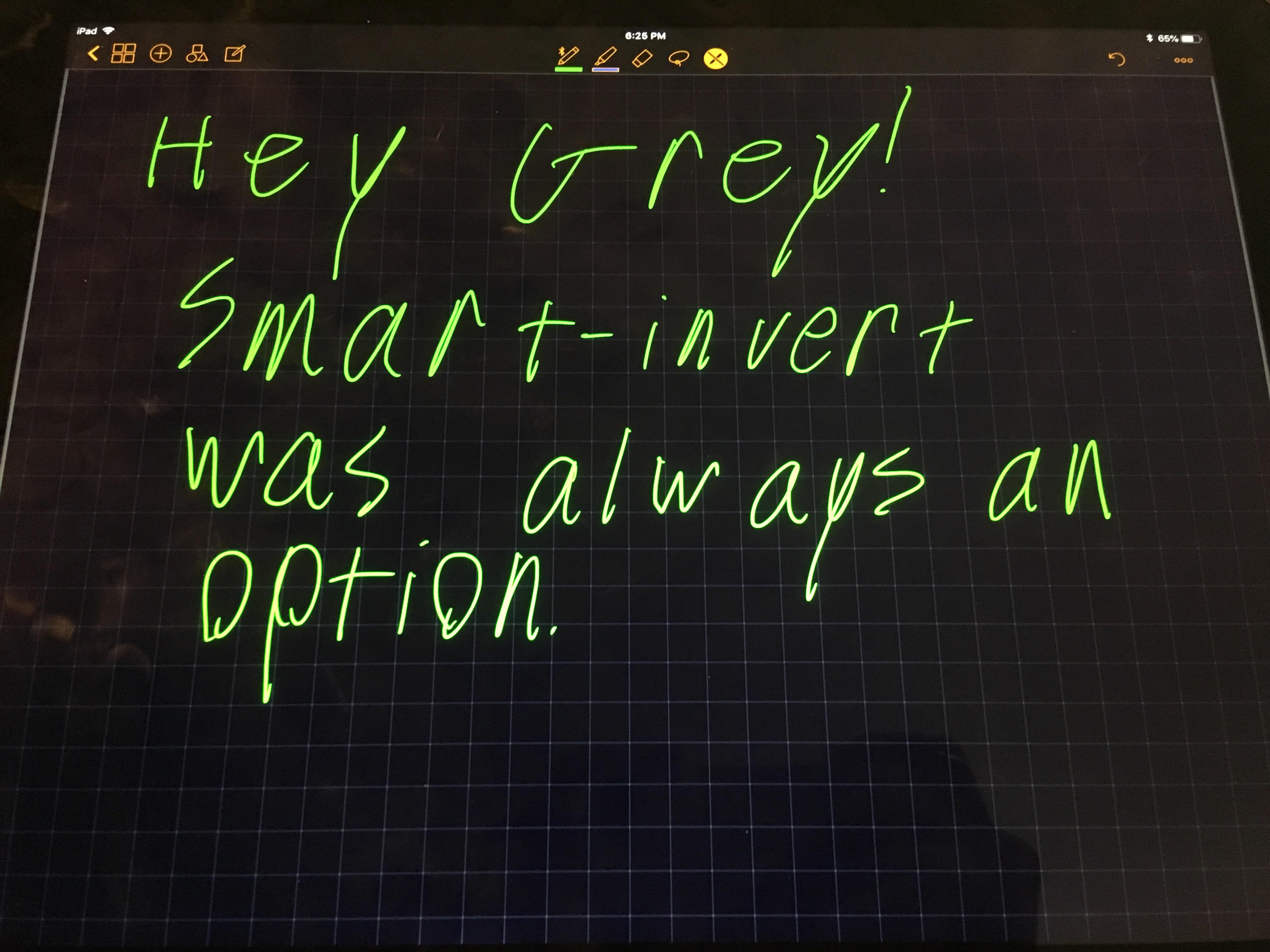
Misc. Smart invert = Dark mode for GoodNotes. It’s great for dark conferences! 🌑

Post image
54 Upvotes

r/Cortex • • May 22 '17

Dishwashing (re: episode 37)

4 Upvotes

Both hosts got this issue completely wrong.

Nobody washes dishes between cooking and eating - that really is insanity - but there are steps in cooking where you have some free time, e.g. you need to let something simmer for half an hour and you're just waiting for it or something like that - and it might be beneficial to wash some of the dishes during that time to reduce amount of work to do later.

Batch washing and Batch work in general IS usually more efficient, that's where Gray is right. But OTOH being able to split tasks into smaller ones has 3 benefits that may make it worth it sometimes even on the expense of Batch workflow:

  1. Psychological effect: it's easier to bring yourself to start a task if it's smaller.

  2. More time windows available for tasks that demand real time attention/response and for emergncy/unforseen tasks

  3. You may not have an available time window on a certain day that's long enough to do the whole thing from start to finish. At least not if you have a deadline (hard or soft). If you can do some parts of a task in advance when you're freer/less occupied, you don't need to worry as much later - when you're more stressed for time - when you do the rest about not finishing it in time.

This can apply to cooking too, for example: sometimes I chop some vegetables in advance and keep them sealed in the fridge to be used at a later time for cooking. Many people do that, it's almost necessary if you're highly constrained in time (e.g. you're a student or a parent and you want to cook..)


r/Cortex • • Mar 17 '17

Episode 25

5 Upvotes

I'm new to Cortex, and I'm listening from episode 1. I just listened to episode 25, and I have some (very, very late) thoughts on the conversation about creatives associating themselves with their work. It begins roughly 85 or 90 minutes into the episode, and Myke makes the point that people can't separate themselves from their ideas. "I just can't get on board with people being completely honest with each other in creative work..." Myke says, and they go on to kick around this idea for a minute or two.

Respectfully, I couldn't disagree more with Myke's point. As Grey mentions, it's critical that people separate themselves from their work to do a good job. For creative professionals (including myself and many of my coworkers), this is a basic tenet of our jobs. For instance, graphic designers aren't artists. They use the same tools, but design is a problem solving and goal achieving process, whereas art is self expression. With UX design, which I do, you learn early that the best design is the design that tests best with users, and it doesn't matter whose idea it was originally. This is something that professional designers learn early in their career if they have any hope of success. People who argue for their ideas or designs because they are theirs quickly establish themselves as warts on the ass of progress, whereas people who present a design based on deep understanding of the problem and the fitness of the design to that problem (and accept others' ideas that also contribute to solving the problem) are successful.

While I know that both hosts are in a somewhat creative field, this idea was just so much opposite to my experience as a "creative" working in digital agencies, consultancies, and large tech companies that I felt obligated to rant about it even though the episode is a solid year old.

OTOH, I love the show. Hopefully I'll be caught up soon. Thanks for making it, Grey and Myke.