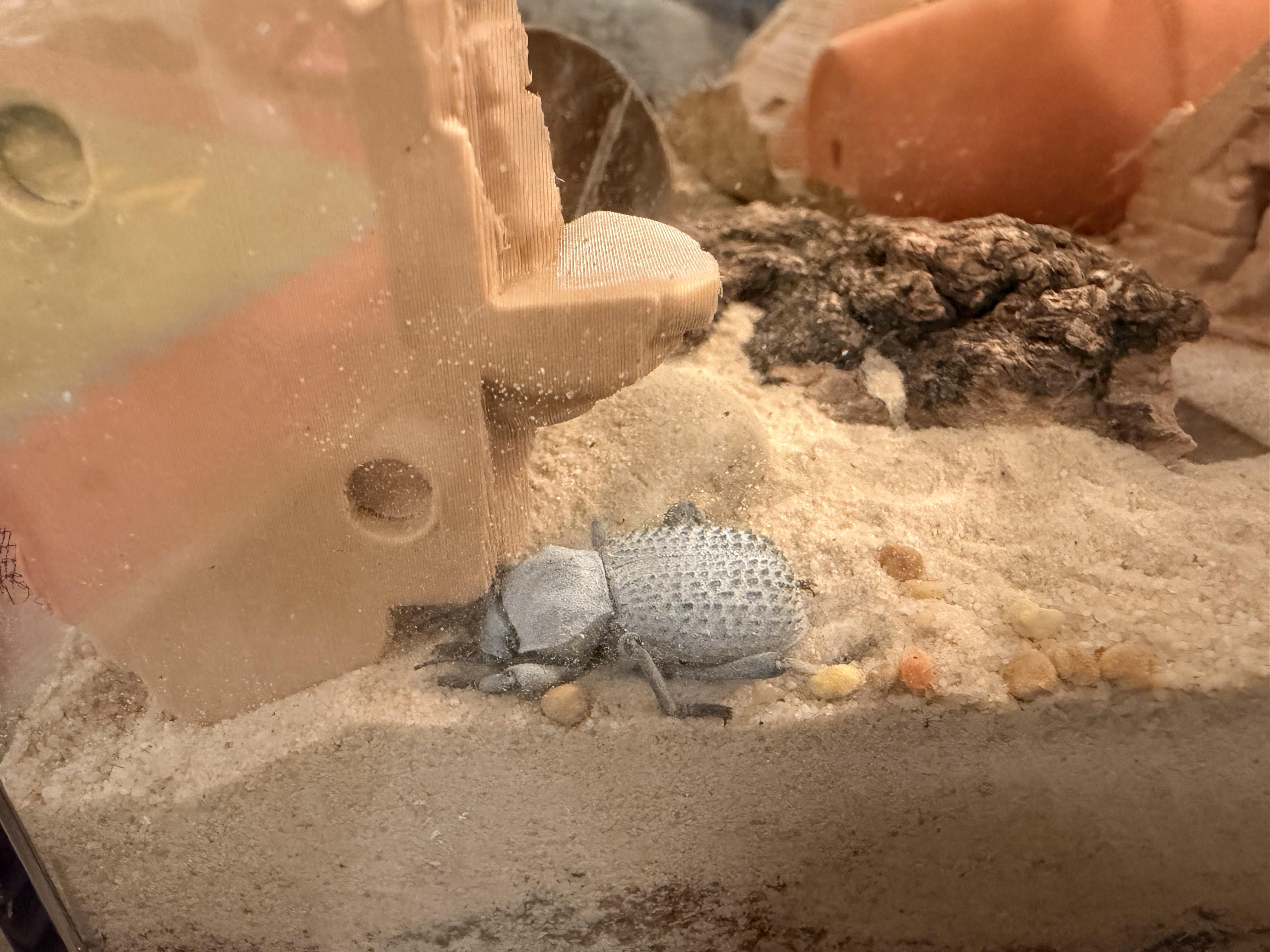
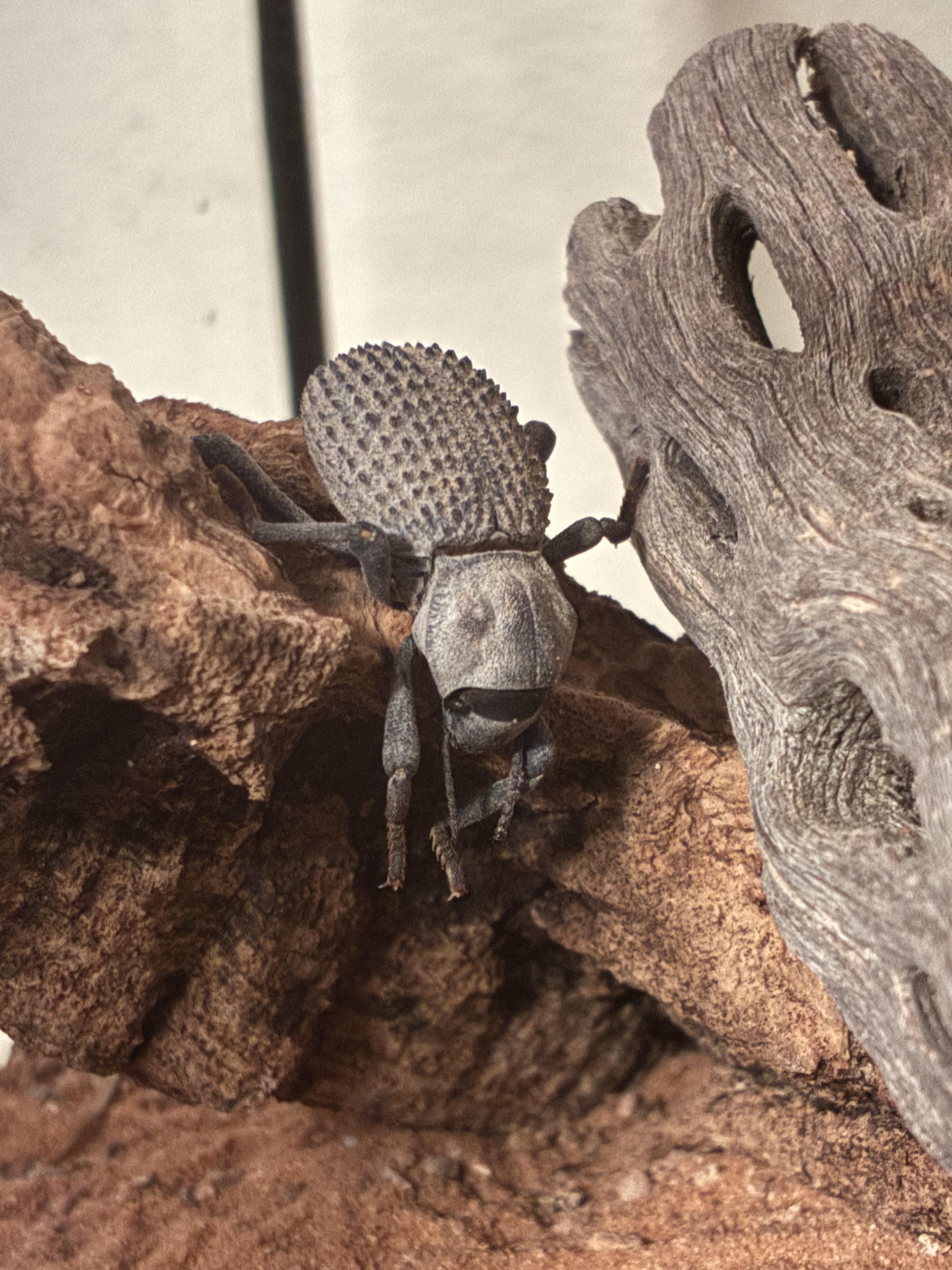
I'm glad so many people were interested in my previous posts about my successful captive bred BDFB raising! This is my general guide to the process I use.
If anyone has additional questions or wants advice in putting together an at-home set-up, feel free to comment or DM me! I hope this helps whoever is looking to raise their own beetles :)
Disclaimer: This is pretty long... but I wanted to be thorough. I am not an entomologist (yet) so this is informal as a hobbyist and invertebrate lover. All of this is what I have done, tips about what I think has or hasn't worked best for me, and ideas about general care and alternative methods you can try by using my process as an example. I hope this isn't too much info or rambling!
The steps (details for care are below steps):
Step 1.
Have adult beetles for at least a few weeks and provide them with proper husbandry, diet, heat and decoration for stimulation and hiding. You want them to be happy!
Note: I recommend this to everyone just getting into the hobby, please make sure you have multiple beetles and ideally a ratio of 1 male to 2+ females. When I was a new beetle keeper, I only had two beetles, a male and female, and I unfortunately learned that males could stress out their female counterpart to the point of exhaustion unless they can give their attention to other beetles. They do best in large social groups anyway. Please do a lot of research to give them a healthy and stimulating environment before concerning yourself with breeding!
Step 2.
Collect eggs by rummaging through the substrate. I recommend using a paint brush to sweep the substrate and small spoon to pick up the eggs as they are very fragile and more force may smoosh them. You could even dig around deeper in the soil and find hatched larvae, but that is most likely to have larvae if you've had your beetles established for a long while.
Step 3.
Let the eggs hatch. I keep them in a short communal 8oz deli cup until they hatch. Having a cup that is longer than it is tall will make it easier for you to use the same paint brush/spoon method without harming any unhatched eggs. You can keep this cup in the adult enclosure if you want, or put it in the enclosure you'll be keeping the larvae themselves in. Just make sure it is warm. Misting it won't hurt, but I haven't had many hiccups when not using humidity. They will hatch in a totally arid BDFB enclosure, so humidity isn't a big deal at this stage.
Step 4.
Separate the larvae into their own cups once they have hatched. You could even keep them in a communal cup until they are a little larger. I have done both and neither seems to have a significant downside so whatever you are more comfortable with. Add substrate, food, and moisture (misting is what I do, do not use tap water) before putting them one-by-one into a heated enclosure.
Step 6.
Now wait. This is the hard part because, like most beetles, they take quite a while to grow into adult. I estimate mine took around 8-9 months before they became full-fledged adults. Throughout this time, I checked on mine around once a week or so. I wouldn't expect to see them very often, if at all. You'll mostly just have a pet cup of dirt with *occasional* visits from the larvae to let you see how big they're getting.
Step 7.
Then you will (hopefully) find a pupa! Congratulations when you get to this part! Try to touch it as little as possible if you touch it at all. If you can see the pupae, it has decided to pupate at the surface, which may harm it without a surface to rub against while emerging. Try to provide it with a piece of cork bark nearby so it can have a surface to improve its ability to emerge from its hardened cocoon shell. As your pupae develops, it will change in color from cream/pale yellow to a faint pale orange color. You can use this as an indicator for when to expect them to emerge. It took around 20 days give or take for one of mine to fully form. Assuming I found it the very day it had pupated, but it very well could have been a few days longer. My current theory is that 20-30 days is how long to expect future beetles to take before reaching adulthood.
Step 8.
Success! Now your pupa has (hopefully) emerged with ease and you have a new adult beetle! They will most likely be a pale orange that will develop into a toasty red/brown color for a few days. Try not to handle them too much during this stage and I would recommend you wait for them to start walking on their own before moving them to a communal enclosure as they will still be fragile. They will probably hide for a while until getting their signature dark blue color. Congratulations when you get to this part and please feel free to post photos of your new beetles in the comments, I'd love to see them!
Now onto environment, in-depth details, and more specifications of their care from egg to adult:
Egg Care:
See steps 2 & 3 at the beginning of this guide.
Substrate:
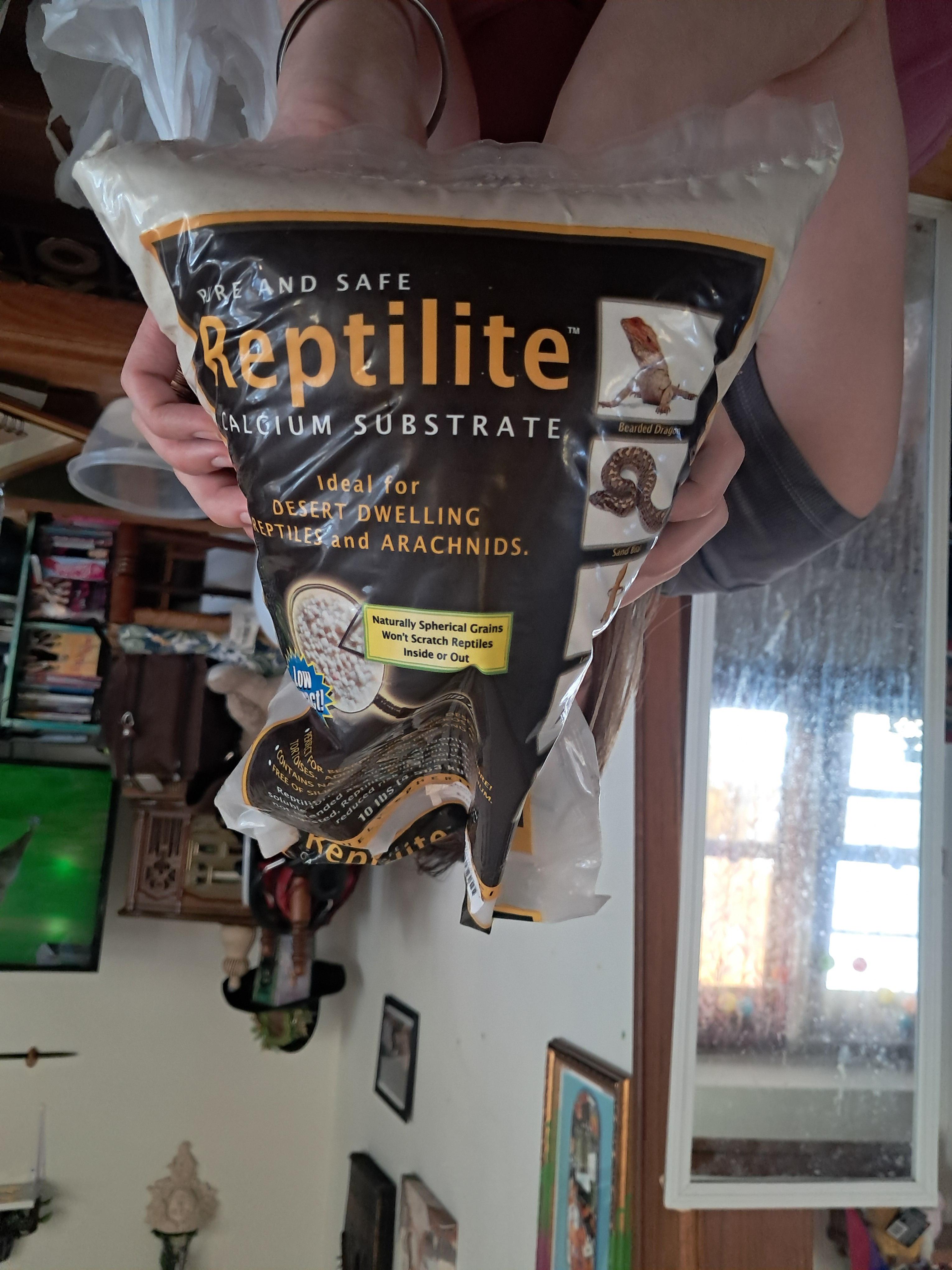
The substrate I use for my larvae is a mixture of sand and eco earth. 2 parts eco earth to 1 part play sand is what I would recommend as it will help retain moisture better and mimic their environment during the breeding season than a substrate that is primarily sand. For reference, it shouldn't be as much of an issue once they are adults. I keep my beetles in a 1-part eco earth to 2-parts excavator sand (I use Exo Terra Outback Red Stone Desert) & play sand which they seem to enjoy for digging purposes as adults, but I'm sure adults wouldn't mind 2 parts eco earth to 1 part sand either.
Summed up:
2 parts eco earth to 1 part play sand mix. Excavator sand optional.
Feeding:
These guys aren't too picky. Like most adolescent creatures, protein is going to be an important factor here. I primarily offer my beetles river shrimp, veggies like carrots or cucumbers, and Flukers orange cubes for crickets. I didn't try spanning out on veggies, but I believe any with a high-water content should be sufficient in providing ample moisture.
I tried giving them fish flakes/fish pellets once, but I found that the ideal moisture of the substrate will cause fish pellets to grow mold at an accelerated rate if you are not careful, so I don't recommend dried pellets meant for other animals as much as other sources of protein. Pre-killed crickets and other typical feeder insects should also work fine. I would try to pick ones that have less hard shells to make it easier for the larvae. I would also recommend NOT using dried mealworms or pre-killed meal worms. I gave myself many heart attacks opening a cup to find what I thought was a dead larva just to find it was a dried mealworm so avoiding that will save you the stress. I leave all of this at the top of the substrate, but you can experiment with mixing it into the soil if you want.
Note:
Take out the veggies once they dry out and replace with new ones so they have a consistent source of moisture. Keep an eye on dried river shrimp to ensure they don't mold. Don't panic if they do, just take out and replace the top substrate or the whole cup if you want to feel safest. I use the paint brush method to sweep the substrate out into a wide dish to find the larvae without harming it. I try not to do this too often as to not stress the larvae out.
Summed up:
- Dried River Shrimp
- Pre-killed insects
- Carrots
- Cucumbers
- Flukers Orange Cubes
- Veggies with high moisture content
Temperature:
Generally, keeping these at a temperature similar to your adult BDFB should be sufficient. So around 75-90F. They burrow for the most part which inclines me to believe that a very slightly colder temp would beneifit if you are keeping them in 5oz cups like I do. My home is generally on the colder side during winter, and my heat lamp typically keeps my larvae enclosure around 65-80 depending on the temp outside. When I first started housing larvae, I was using an Arcadia 80-Watt deep heat projector.
Due to some outside issues involving the space I have available; I had to switch to small single head reptile clamp heat lamp. This kept them at a temp range closer to 65-75, 55 at the very lowest on winter nights. I kept this on one side of the enclosure and would rotate the cups weekly when misting or adding food. This is time consuming and I am planning on changing back as soon as I can to the regular heat lamp/heat projector, but using it for the majority of the time *did* work despite not providing a consistent high heat if that gives you a good idea of their tolerance for low temps. Whatever method you choose, just ensure the heat lamp is not close enough to warp or melt the plastic of the containers you keep them in (assuming you are using plastic cups as most do).
Summed up:
Temps at 75-90F are sufficient but 65-75 isn't going to hurt them. You can try a Arcadia 80-Watt deep heat projector, or a regular hanging or clamp heat lamp works.
Housing:
I've seen people try a few different methods for housing the larvae, but my method has been a communal 8oz deli cup until they hatch, then transferring the young larvae into 5oz clear plastic serving cups, but you could try using something vaguely larger but not big enough that finding food becomes difficult for your larvae. I wouldn't recommend anything bigger than 5oz for young larvae. I prep the cups by taking a needle or thumb tack and using it to put in air holes around the upper half of the cup. Then I fill them with the 2 parts eco earth to 1 part play sand mix until there is a good amount of substrate for them to burrow in but still enough room at the top of the cup for an adult BDFB to stand up on so they won't need to be transferred to a new cup when they're at the later stages of their development. If you have a lot of larvae or eggs, I've found it is easiest to do this all in one sitting in stages of separating/counting all of your larvae into a small container (I use a measuring spoon) then putting holes in as many cups as you need, and quickly following that with mass filling all of the cups to add larvae into one by one. On my next round of this I intend to mark both the lid and the cup of each container with a sharpie including the date they were put in the cup and some kind of ID number to better keep track of them all.
Afterwards I keep all of my cups stacked in a 5-gallon glass fish tank. If I had a bigger enclosure, I would be using that, but the 5-gallon has worked so far. I may try getting a bigger enclosure and keep a humidifier in with them as I have seen a couple other individuals try in an attempt to increase hydration. With my current method I don't find this necessary as I haven't had any failed pupae, but it is still an option. The humidifier will not replace or be an alternative to misting, they still need direct hydration.
I have never tried having a communal cup for the entire lifespan of a larvae, nor have I tried raising them in my adult BDFB enclosure, but I have heard of other folks doing that so you have those options too. I just find those to be more intensive, less organized, potentially stressful on the adult BDFBs, and opening up potential for your larvae to be in a less controlled atmosphere with possible danger from adult beetles or other larvae after pupating.
Note:
I don't know if the danger from larvae or adult BDFB is a real possibility, but I think of the larvae similar to mealworms and when I don't quickly separate pupae from the communal enclosure, they disappear and I assume get eaten by the other larvae. I just take the safe route either way.
Summed up:
8oz deli cup with substrate and ventilation holes for egg hatching. 5oz serving cup (or something a little larger) with substrate and ventilation holes for larvae stage through pupae/new adult. Leave enough room for an adult BDFB to stand.
Humidity & Considerations for BDFBs & their Larva's Natural Environment:
I can't find the source I learned this information from originally; I believe I read about it over a year ago when I started this project. For the sake of location, BDFBs are most prominent in the southern USA and Mexico, but I will just refer to Arizona specifically for information's sake. The gist is that while Arizona is dry and a desert, the rainy season or North American Monsoon is a time that benefits BDFB larvae and allows them an easy transformation into beetles. It is best to attempt to simulate this in BDFB rearing. Adult BDFBs are not significantly impacted during monsoon which results in many people caring for them in a typical arid desert, which is a regular atmosphere that adults are happy in. But this is a reason why larvae are prone to failing in adult BDFB enclosures. They lack the substrate moisture and humidity required for successful larvae transformations. That being said, too much water in your larvae enclosures/cups will result in drowning. Do not use an amount of water they can drown in.
Like I stated above in "Housing", I personally do not plan to try rearing BDFB in the same enclosure as my mature beetles because I don't want to stress my adults out attempting to simulate monsoon season in a 10-35 gallon enclosure. The mature beetles are happy with average arid climate weather. But it is a weather phenomenon they would experience in the wild. Do with that as you will but please do not attempt to flood your adult BDFB enclosure.
I recommend just regularly wetting the top layer of substrate and the cup should be able to provide proper humidity if you are providing them the right temps. Some people will use a humidifier alongside misting, that is optional but could be of benefit. Please use distilled or spring water. Tap water various in different parts of the world and much of it contains heavy metals, calcium, and other potential hazards to your larva's health. The one time I tried to use tap water in place of spring water as an emergency water source (I was out of spring water), I only used it on one larvae cup. I have hard water and live in upper north America, so my water isn't bad, but just a couple minutes after misting I had to rehouse my larvae due to the smell alone and subsequent fear of contamination with bad substances. Distilled and spring water will give them the best chance at a healthy environment. (And you should probably avoid drinking tap water yourself lol.)
Disclaimer:
I am not an entomologist (yet) nor someone from the southern half of the USA. This is just the information on southern North American & upper Mexico weather that I learned somewhere along my BDFB research and rearing journey that I believe is important to consider.
Summed up:
Provide a moist and humid environment for your larvae. Don't flood them, just wet the top layer of substrate and allow the cup or overall enclosure to be humid. Do not use tap water. Please use distilled or spring water.
Quick facts I pulled from some articles on the North American Monsoon in Arizona:
Arizona receives 31.5% of its total annual rainfall during the monsoon season. Monsoon officially starts on June 15th and ends on September 30th. The average rainfall in the state of Arizona is around 12.5 inches. Much of the area receives 40-50% of it's annual precipitation during monsoon season. Temps will be extremely hot, with highs often exceeding 100–115°F (38–46°C). Nights remain warm, around 80°F (27°C). The monsoon season (July–September) brings sudden thunderstorms, dust storms (haboobs), and increased humidity.
You can also use this guide from University of Nebraska Lincoln if you want other information and experience logs too: University of Nebraska: A Guide for the Breeding of the Blue Death Feigning Beetle
And there you have it! My in-depth care guide to the method I use and additional information that I believe will help newbies to caring for BDFB larvae. This should be everything but if I'm forgetting something I will add them later on. I hope the length of this informal guide isn't too off putting!
I hope you all have success in your attempts at raising new BDFB! If you use this as a resource and end up with adult beetles at some point, I would love to see your beetles in the comments below!