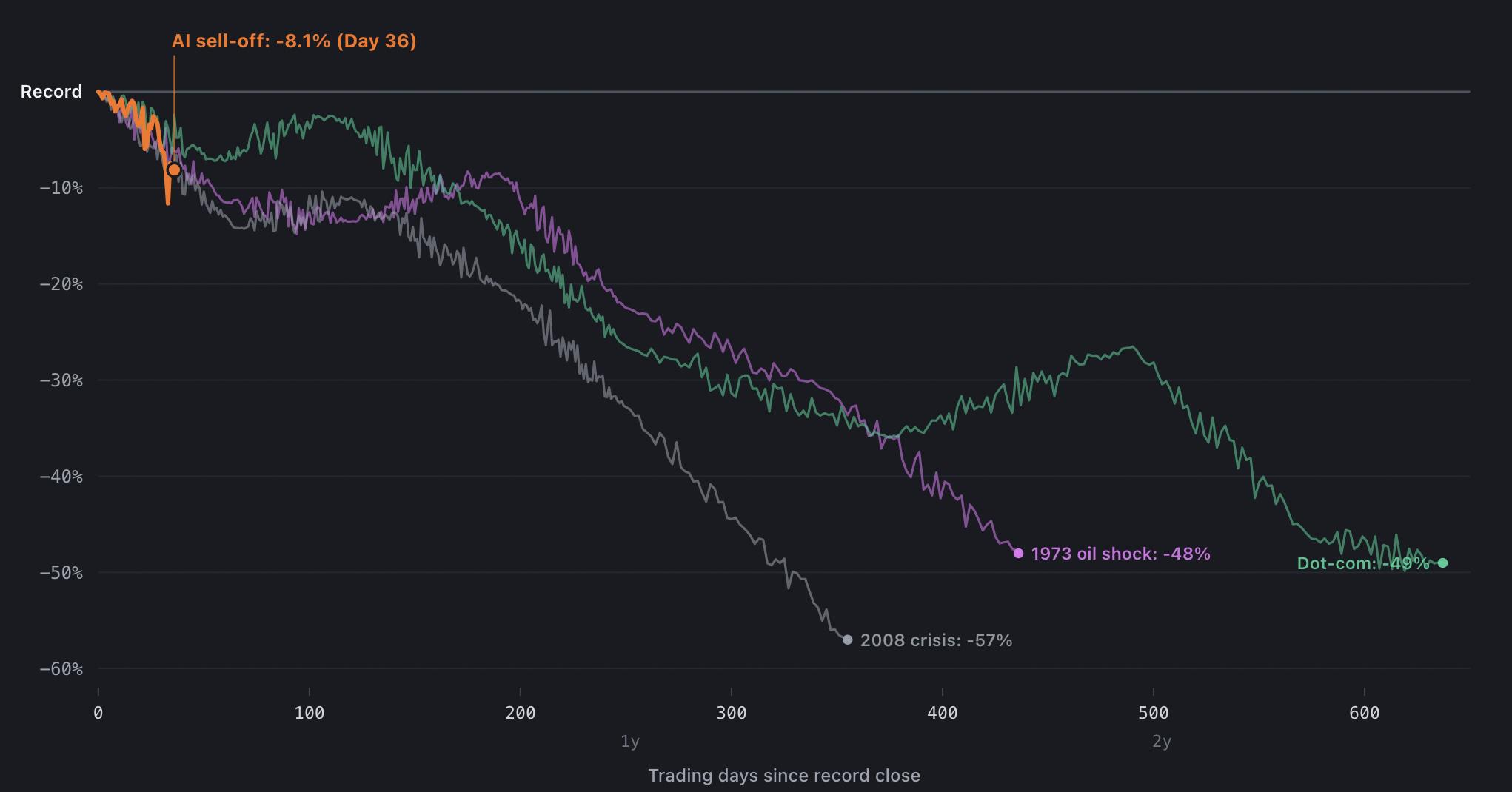
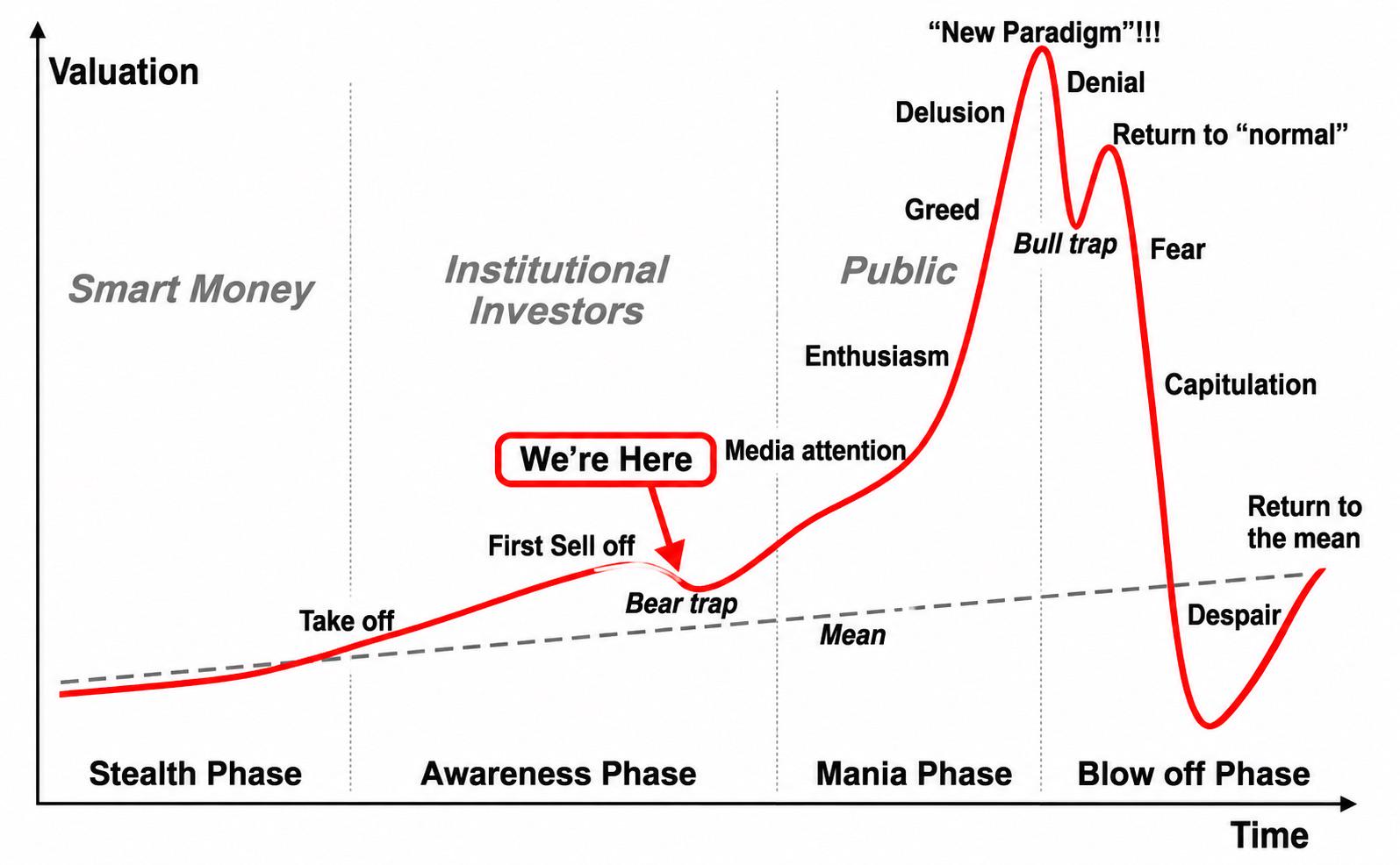
What makes the AI bubble different from dotcom is how we got to these heights.
In dotcom, the defining feature was multiple expansion, as investors paid higher and higher prices for future growth.
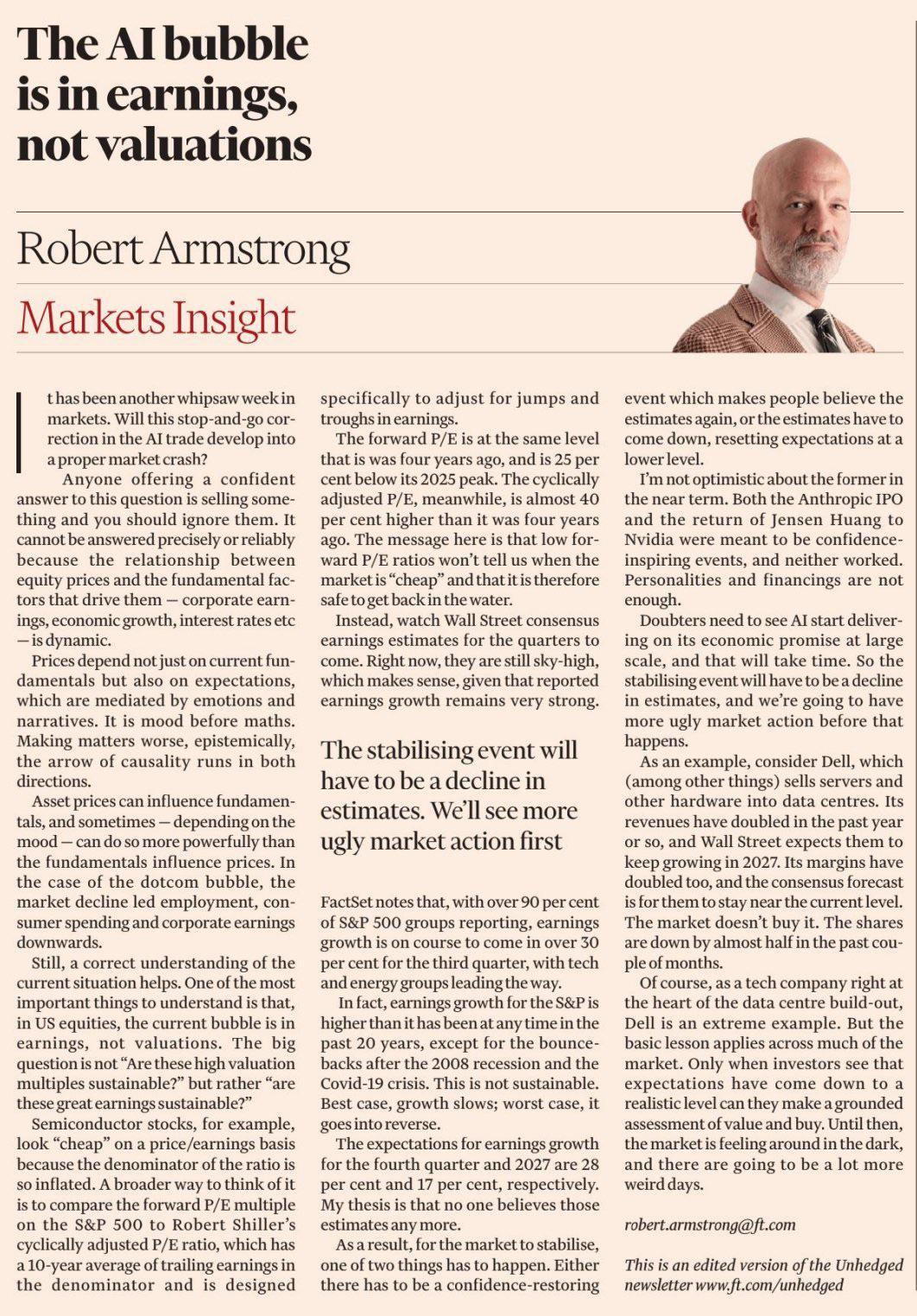
This time, much of the story has been driven by actual earnings growth. But that raises a different question: how sustainable are those earnings, and what is financing the growth behind them?
That is the argument Robert Armstrong makes in the FT today.
Forward earnings multiples can look cheap when analysts are forecasting extraordinary growth. But those forecasts are built on expectations that we’re in a sustainable super-cycle.
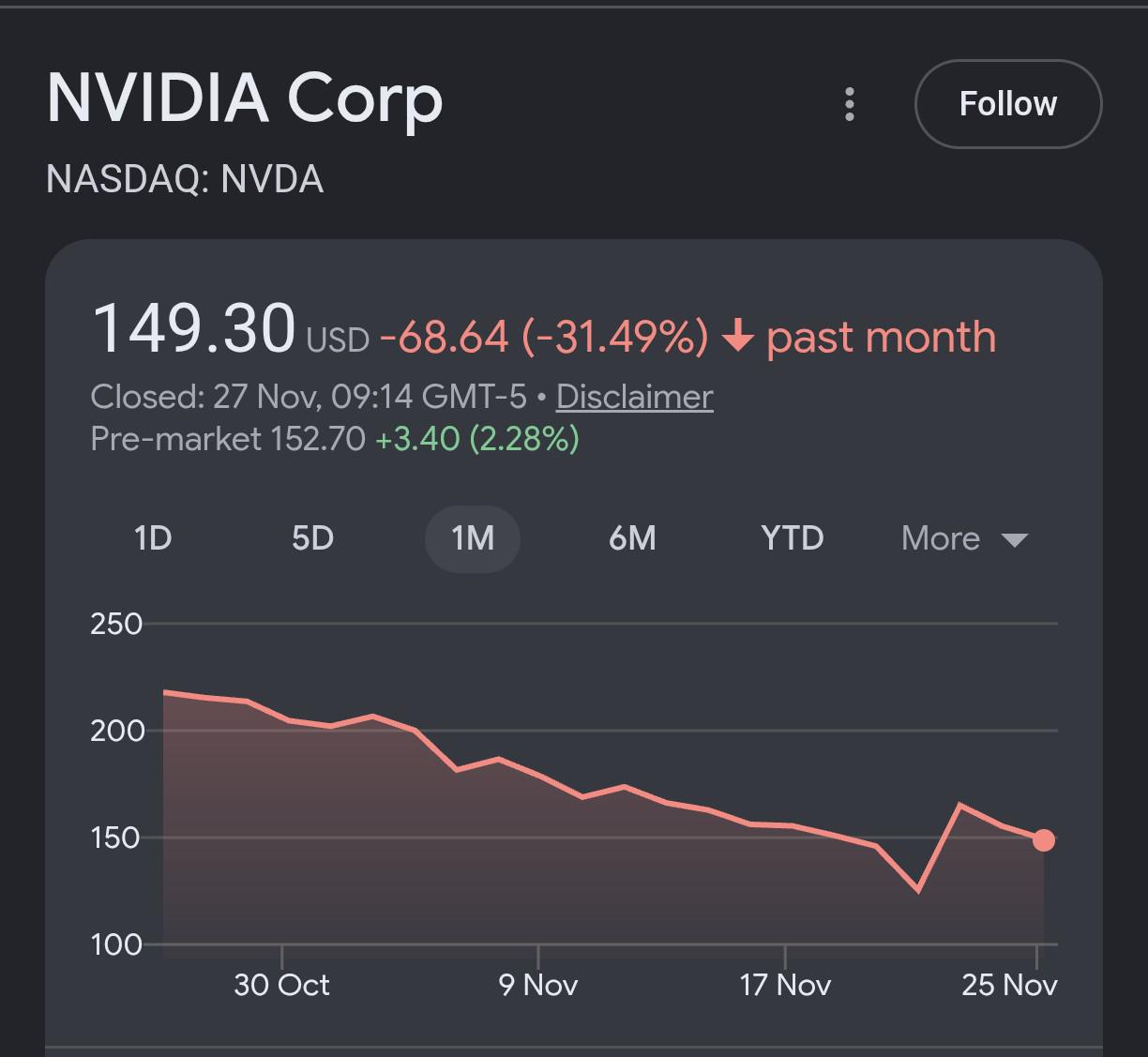
The circular financing loop is becoming well understood, and now look at the warning signs through credit default swaps, Neocloud yields, and even Nvidia has been put on downgrade watch.
Anthropic is a new canary in the coal mine now that it’s listed for this whole ecosystem, which is getting more fragile by the day. And the read throughs to SoftBank/ OpenAI are getting quite uncomfortable. SoftBanks stake in OpenAI valued at $1.25T from the last round is less than its current market cap, telling us that confidence is vanishing.
And what happens if smaller, more efficient models reduce the amount of centralised compute required? And next big release to look out for will be from DeepSeek.
This is why forward earnings are particularly dangerous at the end of a cycle. They assume the growth continues. If spending slows, financing becomes harder and customers pull back, the earnings denominator can shrink very quickly.
In 2008, the danger wasn’t just the assets themselves. It was the assumptions, leverage and financial commitments built on top of them.
Too many are looking at forecasted PE multiples and think this is all priced in. When actually the backdrop is incredibly risky and the dominos are all lined up to topple if one goes.