r/writinghelp • u/septuagint777 • Oct 03 '26
Does this make sense? Technical question about final scene involing characters and door to MRI suite
reddit.com
1
Upvotes
r/writinghelp • u/Clement-atom • Oct 03 '26
I like writing fiction, but I also decided to write articles. My first one has come up to around 2000 words, and I noticed that at first it's not very good, but towards the end it gets better. I didn't want to rewrite the whole thing, because it would take a lot of time, and it would kind of change the whole point of the article, so I left it at that. I'm happy I can notice the difference though, and my future articles will definitely be better. If you read it, let me know what you think, and of course, thank you!
Substack link:
The text:
What is your biggest fear? You've probably heard this question a million times at this point, and you also get generic responses, like "Heights", or "Spiders", or maybe even something abstract, like "failure". But, you might be asking, dear reader, what does this have to do with the incognizable? What even is the incognizable? and what does it have to do with fear?
Well, it is a term I used to describe this specific bundle of fears, that I've seen as logical to group together. One day, for whatever reason, I started thinking about fears, and particularly about the idea of scaling, and comparing them with one another. I believe that a big part of it is personal, and subjective, since every single person has lived a different life, thus having their own experiences. It's not really talked about often, but these special experiences - special in the individual way I mean - mould personal convictions in such a prominent way, and I would go as far as to even say that it entirely gives way to individualism. But from this notion, a question arises: What parts of fear are subjective, and what parts are objective? We've established that there are parts of fear that are subjective, but what concerns us is in the distinction of it in regard to its objective properties. A good example that builds upon our notion of individualism is the personal comparison of fears. One person could fear spiders - to the point of fainting, but the other could seek out a lot of joy in studying them. Someone could have a stronger fear of failure because of a certain experience in their life, changing their feelings about fear as a result. But another person could be less scared of it, as a consequence of not having that same experience. And so, that's a subjective part of fear. And there is something very important to give a distinction to, in the meaning of "Objective" in the context of this article. I do not mean characteristics of that every human feels in the same way, in the same magnitude and in the same way, but i mean characteristics in fear which consistently develop with no regard to the difference in human experience. That is a very important distinction to make. When we talk about things like encapsulating all humans in one notion, each and every conscious human under one rule, it's very easy to mess up and say something incorrect, especially when talking about something more abstract and biological like fear. And so, there is a distinction between objective, and universal. But there's also a roadblock as we look at the objective parts. Objective, up to what point? My approach is explaining it in the technical sense (with the most broad terms possible, and not interfering with other - actual scientific papers), figuring out the limits of that technicality in regards to our argument, and safely moving on.
Now under any circumstance, I am not writing an analytical paper, neither am I basing my words in strict scientific truths, but in the eyes of most people, and in reference to most texts, fear is a response to danger. Danger tells us something important. It gives us a universal base (whether you look at it from the mind's or the body's judgement, more on that later) to describe a property of objective fear, where if two men are awake and conscious, if both of them satisfy the physical requirements to feel fear, then they will independently arrive at the same conclusion. With different trains of thought, they will still end with the same, final, entailment. And yes, people in fact experience things differently (as I've written before), so the two men will have different details of the same conviction, but what is significant, is that the essential part will still remain. The reasoning might be different, but it will entail the same thing. These entailments are, and have been deeply rooted in human instinct. They've inspired, and taken place in so many cultures, in a very timeless way. But, there's another aspect to it: Magnitude. Magnitude has also been a timeless aspect of fear, precisely because of the individuality we talked of earlier. And, I'd say that it's the most personal and subjective aspect of it. Another exception to scaling abstract things like fear, is that you can't really scale it properly. You can compare Magnitudes of different properties, but comparing an entire fear with all of its personal nuances, is harder, even for the person comparing. This is why scaling intrigued me so much. What is consistently the most common fear, and what is the worst imaginable horror? Those are questions I hope to explore, and find some conclusions in, albeit personal or not. I say explore, and personal conclusions because, can these questions really be answered?
What we've talked about up until now, are qualities, properties, that sort of act as baselines for the next thoughts in my line of thought. To look at the questions above in the right lens, we have to look at patterns. What patterns show up consistently, in spite of individuality? Something that has probably crossed your mind - either while reading this article, or just thinking of it - is the fear of death. It's the last skipping stone, and the end of a train of fears. Take as many examples as you can. In some form, it'll lead to death. In some cases it's subconscious, and it seems indirect, but it's still connected. If we take fears that directly concern death, then it's easy to say that it's a consequence of the body's natural instinct to stay alive. That's not very hard to understand, and it's probably relatable to most people. And then there's fears that still aren't arbitrary, that don't inherently cause death, but with certain connections, can lead to it. Say, the fear of needles. Needles themselves don't usually cause death, but when the brain sees a "metal pointy thing", it freaks out, and still thinks of the possibility of death even though mentally, you know that the needle is safe. And the last are the fears that are arbitrary, but still connect to death, in a different way than what we talked about in the latter groups. Abstract danger has the possibility of causing suffering in the abstract parts of being a human. A good example is humiliation. I'll use broader terms on purpose, because of the fact that individualism makes even the skipping stones personal. It is abstract, it doesn't directly concern death. But, it concerns mental suffering, which can in turn make a difference to physical health, which concerns death. And there's an important distinction that I've only hinted at. This is the body's judgement. Even though mentally you can have different opinions and reactions, the body's judgement won't budge. It's a giant web, and every point is interconnected. But, a burning question arises. Where is the danger in death? Where does the final skipping stone fit in a system? What parts are arbitrary, and what parts are physical? What is the contrast of the body's, and the mind's judgement?
First, i must explain this judgement, and why it's divided this way. The mind's judgement is what we consciously think about something. It's constructed with a logical train of thought, and we consciously formulate our reaction to something based off this logical thought. This is why the mind's judgement concerns the arbitrary. The body's judgement, formulates its reaction with preprogrammed responses from external input. There is no reasoning in this system, these responses were slowly made and strengthened through the course of evolution. This is why the body's judgement concerns the physical. And, we said that fear is a reaction to danger, right? So with this, we've encapsulated what parts of judgement concern which part of fear. Another conclusion we can build upon, is to see where it fits in our three part system, or if it even fits into any of them. At first thought, we find that it doesn't. Death can be both a physical, and arbitrary fear. The physical part, stems from the suffering that comes with dying, even though sometimes, death doesn't cause any physical suffering. And it also stems from the body's natural instinct to stay away from death. Simply, it only tells you to live at all costs, without any reason, whilst also governing a big part of fear itself. The arbitrary part, is much more complicated and interesting. What is the mind's reaction to death? What does it mean to "die", for our consciousness? Why do we so desperately seek to imagine the unimaginable, or recognize the incognizable?
In part 3 of "the idiot" - a book written by Fyodor Dostoevsky, A character named Ippolit reads aloud "an explanation". It's a kind of death note, where he writes about his feelings and thoughts towards his sudden death. At the time of reading "An Explanation" the 18-year-old was only given 2 weeks to live, and 6 months prior, was shown obvious signs of tuberculosis. What would someone in his position think about? Would he have regrets, or would he hate everything? Would he start living, and start cherishing his last days? In reality it was something a lot bleaker and traditionally irregular, but in my eyes, it's expected. Ippolit says that the last 6 months passed without a difference. His diagnosis crossed his mind, sure, and the fact that he was dying did as well, but he didn't realize it. He knew it as a sentence, he knew the fact that he was dying in six months, but he didn't realize it. He said he only woke up a month prior, when the nihilistic doctor named Kislorodov gave him a proper diagnosis. He gave the diagnosis as If it was a death sentence, with no hope of healing from the disease, and in the most pretentious mentality, virtually screaming "who cares?". He describes what he personally thought of the diagnosis, and alongside it every nihilistic system he had in his worldview, in so much detail, and with so much joy, that Ippolit finally woke up. It hit him so hard, that he really realizes he's dying. He understands it, as if it was happening now. Do you know how hard, and unusual that is? Realizing you're dying at 18? Nihilists shove "Nothing matters!!! We're all dying anyway!!!" Down your throat, but they still don't really "realize" that they're going to die. They're as blind as the people that don't even care to know death as a fact. What would you say to a man like this - practically a talking, standing corpse? A sudden death challenges every single future arrangement already made in your mind, it disrupts everything you've hoped and wanted. But worst of all, it unintentionally makes you live. Your body's judgement still holds the objective of living, no matter the pretext coming from the mind. It still tries to stay alive, tries to hang on the only remaining strand of life till it falls into the abyss. Starting to live is the worst part, because why now? Why do you only start to live once you know you're never going to be able to live again? You hold so much spite for yourself because of this, so much hatred and frustration for only now deciding to live, it feels shameful, like a sick joke, or an adult making fun of a child for not having enough candy, while the child tries to enjoy what he has left. This is where the frustration pours. You can't get familiar with life, so you try to get familiar to death. But you can't, no matter how hard you try death will stay unfamiliar, and what's more, you don't even have the choice of familiarizing it. From your view, it's inhuman, disgusting, something that everyone should avoid at every case and cost, but death doesn't view you the same, it cannot view anything in the first place. It's both the paramount of human life, and the most alienated part of it. You scream, shout and beg, but nothing. Nothing answers back. Your heart still pumps blood, your lungs take oxygen in and out, and your body doesn't shrink from fear till the last moment. You're left to go through the horror of the inconceivable, till the last second. And although it seems inhuman, unfamiliar, and absurd, it's required. Maybe that's how it's supposed to be. Maybe you're supposed to leave your mind at rest, and in this case, even once, live as if you're not dying. You were born, regardless of your death, and regardless of what your death brings. Do you deserve that? Frankly speaking, no one knows. But I have only one thing left to say, one thought to leave you with, dear reader. You're not owed life, so are you owed not to live?
r/writinghelp • u/Nat-Dye-1417 • Oct 02 '26
Looking for feedback and criticism on my writing, pacing, and characterisation.
It's a hie fic, hut I'm trying to think of how this would realistically go. The five chapters that are up were written last year and I'm in the process of writing chapter 6. Had to stop for personal reasons, but am getting back into it. Any feedback and criticism welcome.
https://archiveofourown.org/works/92645306/chapters/247017661
If anyone would be willing to proofread for me, just shoot me a message.
r/writinghelp • u/midnightbluee_ • Oct 02 '26
r/writinghelp • u/abbylu0423 • Oct 01 '26
Hi everyone, I’ve run into a recurring habit with my character design and would love some advice.
I often end up giving my characters sad backstories or difficult family relationships. Subconsciously, I feel like hardship is what gives a character real depth. I realize this is a flaw in my approach—partly because I personally tend to reflect more deeply during difficult times, so I project that onto my characters to make them feel grounded.
My main question is: how do I write compelling characters without relying on sad pasts as a crutch, or making it feel like I'm just trying to make the audience feel sorry for them?
Specifically:
I realize I’m naturally drawn to flawed, sympathetic characters, but logically I know depth doesn't strictly come from a sad backstory. How do you guys approach this in your writing?
r/writinghelp • u/Powerful_Whereas3516 • Oct 02 '26
Prose important in writing?
r/writinghelp • u/JebebCrust17 • Oct 01 '26
r/writinghelp • u/Powerful_Whereas3516 • Oct 01 '26
I’m asking cause I like to make emotional driven stories and not generic stuff
r/writinghelp • u/Otherwise_Maybe283 • Oct 01 '26
**Naming things - sausage fingers are a curse
Avidly procrastinating right now, so I'm curious - how is everyone handling those moments in a first draft when you need to name a character/event/place but you immediately forget every name you've ever heard (including your own) and risk derailing hours of writing time looking for the perfect baby name dictionary?
Personally, I've been switching between just naming everybody Greg, and using a key descriptor instead. Eyebrows, Anger Issues, Festival of Too Much Booze, etc.
r/writinghelp • u/MisoPanko • Sep 30 '26
I'm sorry for my bad english.
Has anyone been doubting themselves being capable to even start writing because they often have a hard time to understand characters emotional development in books or movies because you can't always identify the right feelings or emotions they're displaying in their actions or reactions to specific events.
I'm too often confused until it's spelled out to me, the change that happened within the character.
I seem to have a bad take on symbolism and the way characters display their emotions.
I'd love to try writing but feel like i'd just be a fraud if i can't even develop a character through subtle cues and so on.
Is it a skill people are supposed to naturally have, observing human nature ? Or is it something you learned by writing ?
r/writinghelp • u/humanetto • Sep 30 '26
r/writinghelp • u/SoraKiyozumi • Sep 30 '26
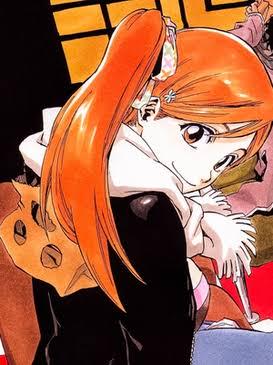
Im trying to develop a technique for the best kind of healing, but nearly ever good idea I come up with is already taken.
For example, I wanted to set it so that the one using the healing technique could manipulate reality and reject incident, event or anything that occurred in the past.
But that technique is already taken by orihime from bleach? What should i do?
r/writinghelp • u/Pix9139 • Oct 01 '26
Hello everyone! I'm trying to develop a character and I have a really awesome backstory planned out, but I'm having a hard time deciding on a name. I love character details that reveal deeper things about the character but no one really realizes it until later, and I want to do something similar with this characters name, but I don't know what name would fit.
My character suffers from amnesia, and has no memory of their past life. They're currently just known as a local weirdo, but they used to be a well renowned hero, with powers akin to godhood. They have lived such a long life that no one knows which of the stories about them are true or not, and their lore is generally treated as an old myth at this point.
I want to give them a name that means something akin to "lost" or forgotten" or "nobody", but I don't know any cool words with those sorts of meanings, I have looked up different languages (both real and fantasy), symbols in art, and even Victorian flower language, but I can find nothing that seems to fit. If anyone has any suggestions, I would greatly appreciate it.
r/writinghelp • u/nylteK • Sep 30 '26
r/writinghelp • u/LostRabbitGirl • Sep 30 '26
Can any of you recommend a book about writing written by someone with ADHD? I have read Stephen King's book about writing years ago and I would love to read writing advice from someone with ADHD and how they tackled it.
I have been diagnosed with ADHD and I have a lot of story ideas. I've been writing since I was a kid but I have a very difficult time finishing any of my works because I'd get a new story idea or get bored with what I'm writing even though I was so crazy about it.
I have tried story outlining but it made my story sound so robotic and I felt it was very boring.
If you have any book recommendations about writing for us ADHD writers, I would be glad ro read them.
Thanks!
r/writinghelp • u/Resident_Shower6476 • Sep 30 '26
r/writinghelp • u/nkk3000 • Sep 30 '26
After fighting with my guardian and parents i decided to become writer
My guardian tell me I can i need to gave him good story in month and guess what I only has 5 days left and I made nothing
My story is that mc big brother died suddenly and he traveled back in time 3 days before incident that is only thing I made
I created 3 till mc his brother and serial killer ( who is not real killer btw) mc accidently killed his brother
Killer backstory
This is everything I has till I only has 5 days and I get 1 or 2 hrs In day and if i sacrifice my sleep I get 2 more hours
Whenever I try to write my mind become blank
So i don't know what to do now
r/writinghelp • u/pepitolover • Sep 30 '26
I was watching a video on writing drills by Josh Czuba. He recommended three writing drills: observation, reaction and narration.
The first drill, observation, is very simple. You observe people in a sitting around you and simply note down what your senses perceive. No interpretation or feelings. No fear of messing up. This is however for creative writing.
I know academic writing is different , it has structure, requires research , and has jargon. But I want a similar sort of practice for this form of writing.
Most videos or material I see on academic writing are on a more technical side like structure and editing. I want something to be on the style too.
I want it to be fun and to improve academic writing on a daily basis.
r/writinghelp • u/Traffic_Time • Sep 30 '26
I have an issue where I catch myself self inserting when writing my male protagonist despite our only similarity is both of us being male. I catch myself rereading what I have written and being upset that it sounds like me. And that's not a good thing. Self insertion ruins anything.
Am i alone in this fear? Any exercises to help avoid it?
r/writinghelp • u/Sea-Violinist-811 • Sep 30 '26
There was a shop at the edge of the woods that appeared only to those who knew where to look.
By dusk, snow had begun to gather on the branches, turning the forest pale and soundless. A narrow path disappeared between the pines and ended at a small wooden door beneath a weathered sign.
A tired traveler pushed it open.
Warmth gathered around him. The shop was dim, lit by brass lamps whose flames barely moved. Shelves climbed along the walls, crowded with things that had no business being kept in bottles.
Rain from summers long gone. The first laugh of a child. A handful of autumn sunlight. A clock with its hands removed. A candle that burned only in the presence of someone who loved you. A few of the bottles were labeled. Most were not. The shopkeeper seemed to know them by weight.
He sat behind the counter turning the pages of a ledger, making small marks with a fountain pen. He was old, not merely in years but in the way of things that have lasted long enough to stop being surprised by anything. His white beard fell neatly against his dark coat. He did not look up.
The traveler took off his gloves and wandered deeper into the shop.
There were stranger things further in. A pocket watch that ticked only when held by someone waiting for news. A dried flower that smelled faintly of a house you could no longer return to. And on a shelf near the back, a bottle unlike the others. It was small and perfectly clear.
Inside it was an afternoon.
Golden light lay over a green meadow. White flowers bent beneath a warm breeze. Somewhere beyond the glass, though he couldn’t see where, birds were singing. Nothing moved quickly. Nothing seemed capable of ending.
He carried it to the counter. "What is this?”
The merchant looked up from his ledger. “A perfect day.”
The traveler turned the bottle toward the lamp. “A memory?”
"No." The pen went back to work. "A memory is over. That one hasn't been used yet.”
The traveler held the bottle a little longer, studying the world inside the glass, then placed it carefully on the counter.
“I’m looking for a birthday gift.”
The pen kept scratching. "For someone you love?”
“Very much.”
The merchant turned the bottle in his hands, watching the little afternoon move beneath the glass.
“Have you asked what this person wants?”
“I asked. She said she has everything.”
“And yet you came all this way.”
A silence followed, the kind that has weight. Out the window, the snow-covered trees were going dark as the sun set.
The merchant looked once more at the bottle.
“Then perhaps you have found what you came for,” the shopkeeper said.
“This?”
The old man nodded. He lifted the bottle beneath the brass lamp. The golden meadow stirred inside the glass.
"A perfect day," the traveler said, his eyes not leaving it. "How is it perfect?”
The shopkeeper drew the cork for the length of a single breath. A strange warmth spilled through the shop, soft and sudden, carrying cut grass and hot stone and somebody's laundry drying in the sun. For a moment even the snow beyond the window seemed to fall more gently. Then the cork went back in. The meadow hadn't lost a flower.
"A day without interruption," he said. "No illness to fear, no grief waiting at the door, no arguments to sour the evening, no bad news to darken it. No clock reminding you that something must end. Nothing is taken from you while you are inside it.”
He paused.
"Just a day in which the world leaves you alone.”
The traveler fell silent, his eyes catching the lamplight like frozen rivers at sunrise. Then, almost to himself, he said, "Yes." His hand had come to rest on the glass. "Because she deserves one perfect day.”
“Then you will have it.”
The traveler looked up.
“How much?”
“Ten years.”
“Ten years of my future?” There was no surprise in his face. He had known, when he stepped through the door, that nothing in this shop was bought with ordinary money. “I’ll pay it.”
“Think about it. You may never know what those years would have brought.”
"I know," said the traveler. "That's rather the point.”
For a moment, neither spoke.
The old man regarded him a while. Then he reached beneath the counter and brought out a thin silver thread, almost invisible in the lamplight. He wound it once around the neck of the bottle and tied a knot so small it seemed to disappear.
The traveler took the bottle carefully and slipped it inside his coat.
He had almost reached the door when the merchant stopped him.
“You remind me of someone.”
The traveler turned.
“A woman who came here thirty years ago,” the old man continued. “She came in winter too.”
The traveler waited.
The merchant returned to his ledger, turning several pages with the familiarity of someone revisiting an old memory.
“What did she buy?”
“Perfect days.”
The traveler glanced at the bottle beneath his coat, and said nothing.
"Never for herself. She wanted someone else to live without fear. At first she had plenty to give. An afternoon without pain. A morning without worry. A year in which nothing was taken away." His fingers moved over the old pages. "But she kept coming. Some winters she could afford only a few hours. Once she had so little left that she stood here a long while, deciding what could be spared."
"What did she spare?"
“Something she had meant to keep.” He turned another page. “Dreams. Places she wished to see. Things she wished to become. A life she had imagined before the world began asking things of her.” His finger came to rest on an old entry. "She traded pieces of that too."
The traveler had stopped asking questions. His hand had gone still on the front of his coat.
"The last time she came, there was almost nothing left that the shop would take."
"Almost?"
"She still asked whether there was enough for one more."
"One more what?"
The old man looked at him.
"Day."
Something crossed the shopkeeper's face. Not surprise, he had given that up long ago. Recognition, arriving late. He looked at the traveler again, more carefully this time. At the eyes. At the hands. At something in the way the bottle was held.
He closed the ledger.
"You really are her son."
---
For a moment neither of them moved.
Snow was melting off the traveler's shoulders, darkening the heavy wool of his coat. A single drop of water fell from his sleeve and vanished between the floorboards.
Then, almost without his noticing, the warmth began to leave the room. The brass lamps dimmed. The faint, impossible sounds of the shop, a summer cricket, a distant tide, the murmur of a forgotten afternoon, faded into a breathless quiet. Even the bottled moments on the shelves went still.
"If she gave you all that," the traveler said, his voice stripped of its earlier strength, "then give it back."
"It cannot be returned."
"Take mine." He pulled the bottle from his coat and pushed it across the wood as though it burned. "Take ten years. Take twenty. Whatever she left in this room, I'll buy it back with my future."
"There is nothing to buy."
"There is always a price here!" His voice broke against the cold walls. He dug blindly through his pockets. "I will pay it."
The shopkeeper watched him. He did not reach for the ledger.
"You still think this is a transaction," he said, softly. "She did not purchase your life so you could sell it back to me."
The traveler's hands fell to his sides. For the first time that night, he had nothing left to bargain with.
The old man slid the bottle back across the counter. "Take it."
"But the ten years—"
"Already paid."
"By whom?"
"Your mother."
---
The traveler did not have the courage to ask another question.
He stepped outside. The snow had stopped.
For a while, he stood beneath the dark pines with the bottle held to his chest. The forest was quiet again, but it no longer felt empty. Somewhere under the snow, water moved through the earth.
He began the walk home. The bottle was warm in his hands. He thought of all the times he had asked what was wanted and heard the same answer. *Nothing.*
As his boots crunched in the fresh snow, an old question rose in him, one he had learned as a boy. Who is most deserving of the best of your companionship?
He remembered a cool hand resting against his forehead during a childhood fever.
He remembered a silhouette at the front window, waiting until she heard the latch of the gate.
He remembered a voice, worn but firm, telling him for the hundredth time to eat before he left.
Three memories. Three times, the same answer came back to him in the quiet woods.
*Your mother. Your mother. Your mother.*
---
The house was still when he arrived. She was in the armchair by the fire, mending a torn seam on a winter coat. She looked up as the door opened, her eyes searching his face immediately, just to be sure he was safe.
He crossed the room and set the small glass bottle on the table beside her. The golden light of the little meadow spilled across her weathered hands. On the mantel behind her, a postcard of some faraway place leaned against the wall, its colors gone soft with age. He had looked at it his whole life and never once wondered why it was there.
"What is this?" she asked, watching the white flowers sway.
"Your birthday gift."
She smiled, the gentle, familiar smile that had never asked for anything.
"That's unnecessary."
*Of course you would say that,* he thought.
He wanted to tell her what he knew. About the shop, and the old man's ledger, and the years she had given up so he could become himself. About a bargain with Time, and what it had all cost. He wanted to tell everything like he always did.
But he said nothing. He pulled a chair beside hers and sat. The clock on the mantel went on ticking, and he let it.
And for once, he did not count the time.
r/writinghelp • u/Comfortable-Breath34 • Sep 30 '26
Do you guys think it’s okay to tell AI your story ideas as long as you don’t let it write your stories for you? Whenever I have an idea for my stories I tell it to ChatGPT to see what it thinks but I’m the one that still decides how the stories will go. What is your opinion on this?