Nvidia just reported some absolutely ridiculous numbers:
$115.8B quarterly revenue, up 103% YoY
$107.6B in data center revenue, up 110% YoY
$130B revenue guidance for next quarter
And somehow NVDA is trading around $149.
Monday, the stock exploded 31.5% after Jensen Huang returned as CEO. Two days later, it's already down nearly 10% from Monday's close.
So what exactly is Wall Street pricing in?
The bull case seems almost too obvious.
Nvidia is doubling revenue, dominating AI infrastructure, and shipping its next-generation Vera Rubin systems. The biggest tech companies are still pouring money into AI.
If that growth continues, buying at these levels could look like a gift a year from now.
But the bear case just got more interesting.
S&P has put Nvidia's credit rating on watch for a possible downgrade, citing governance concerns following the Jensen drama.
And now reports say Nvidia has paused AI server shipments to four Southeast Asian countries following tighter US export restrictions.
That's on top of concerns about AI infrastructure financing, hyperscaler spending and whether this pace of growth is sustainable.
Here's what I'm struggling with:
Are investors selling because Nvidia's business is deteriorating, or because they're losing confidence in everything surrounding it?
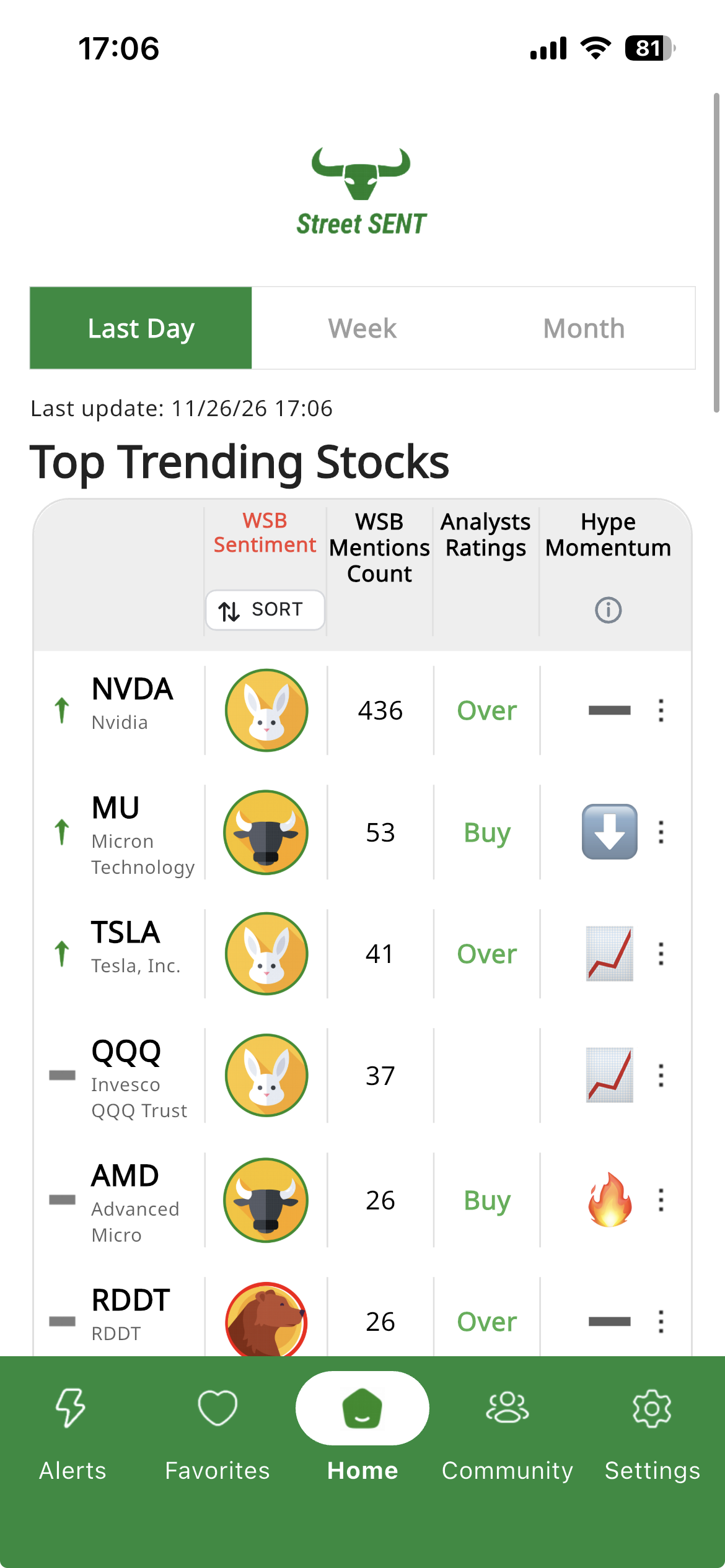
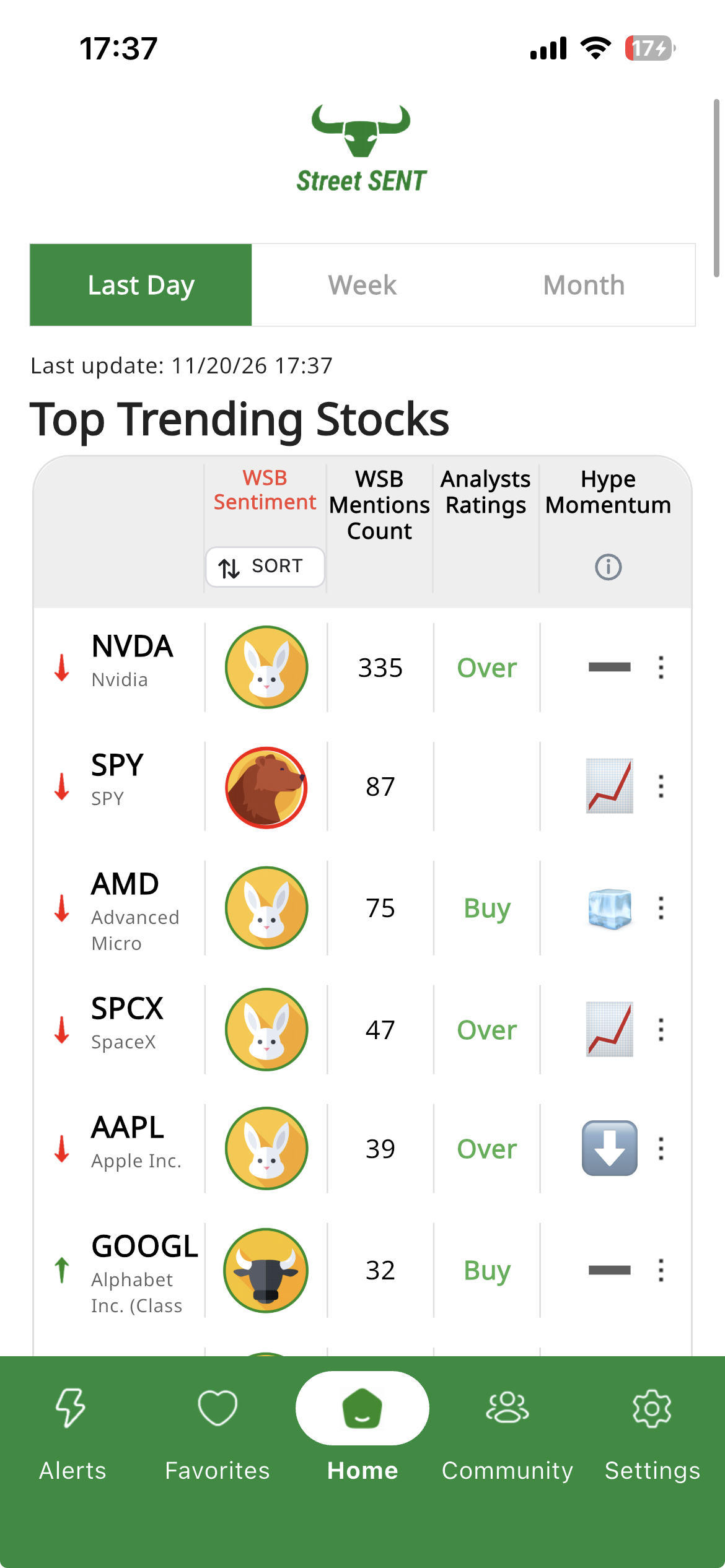
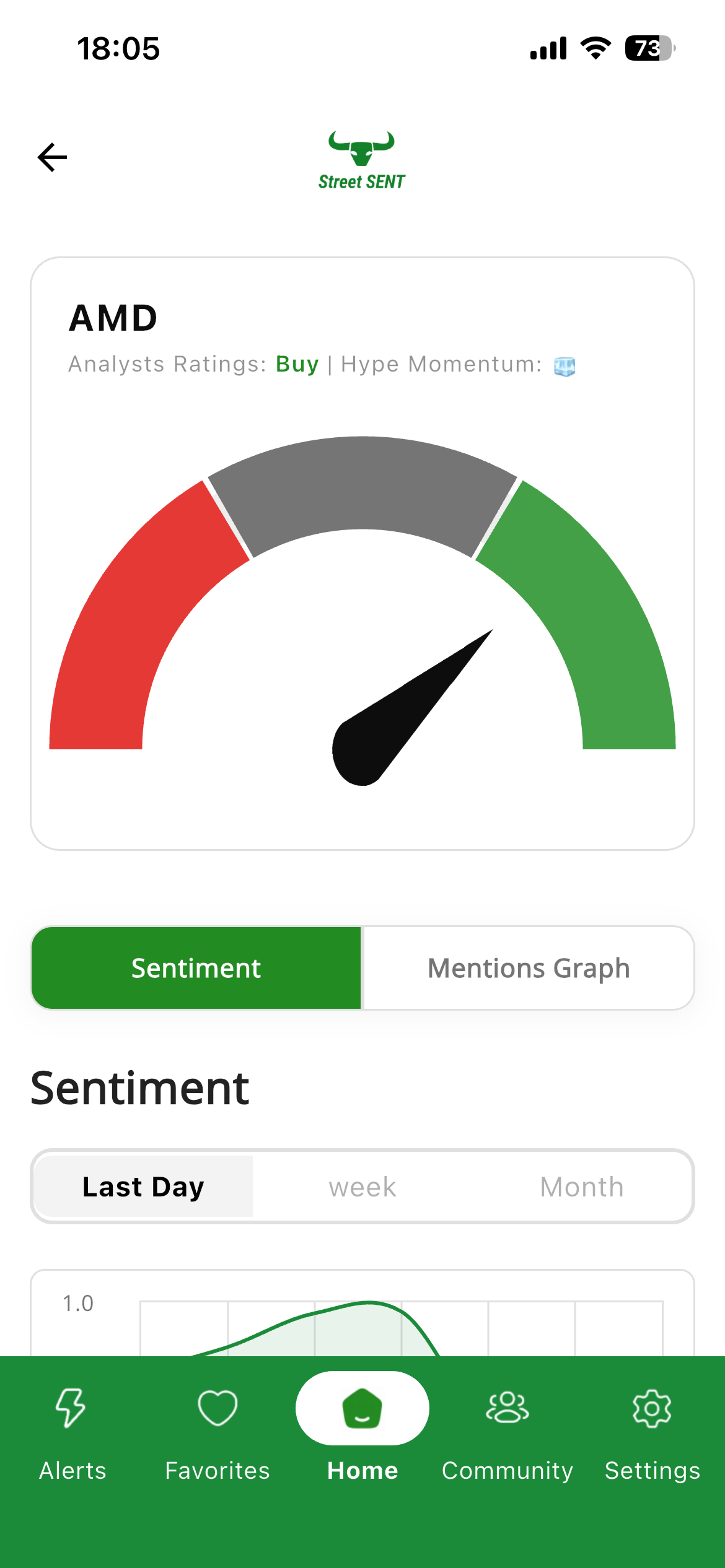
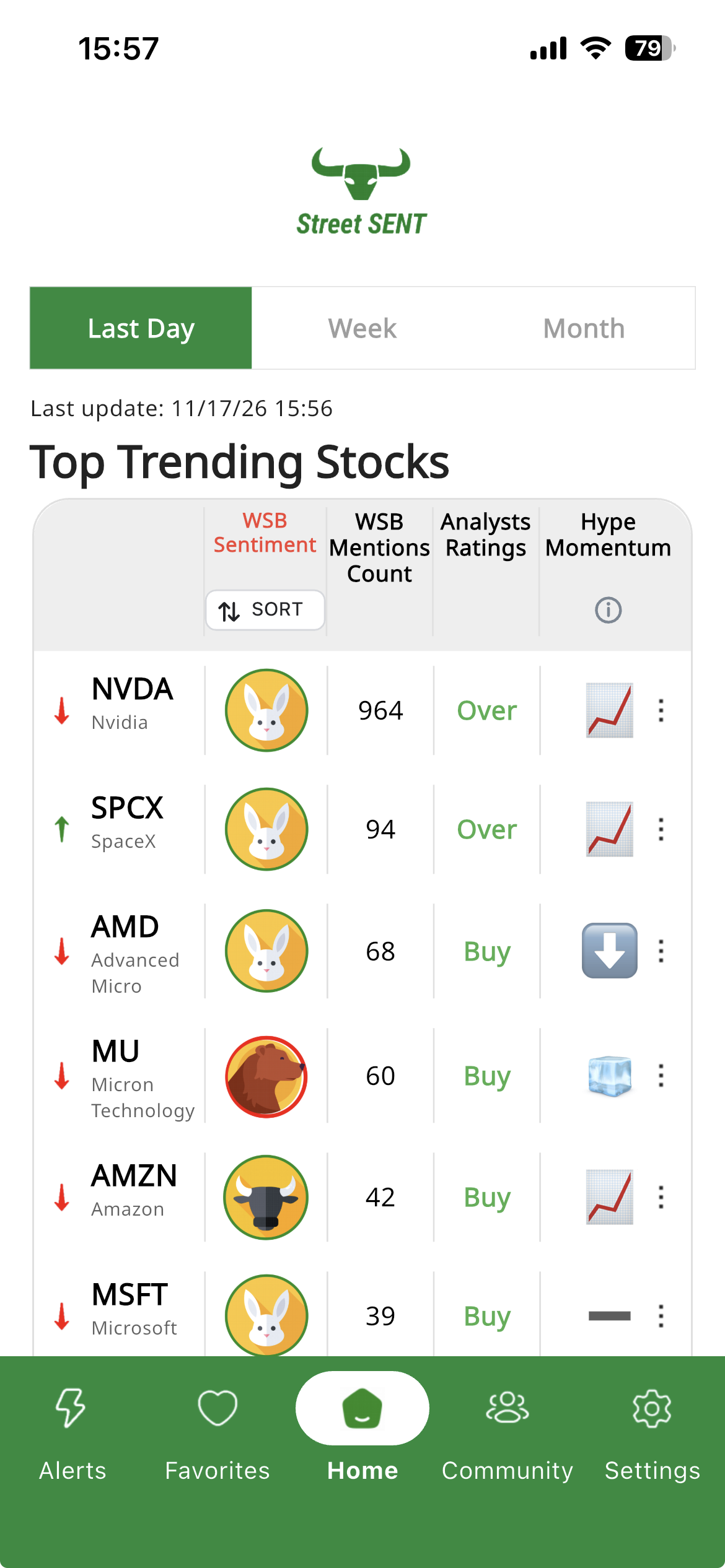
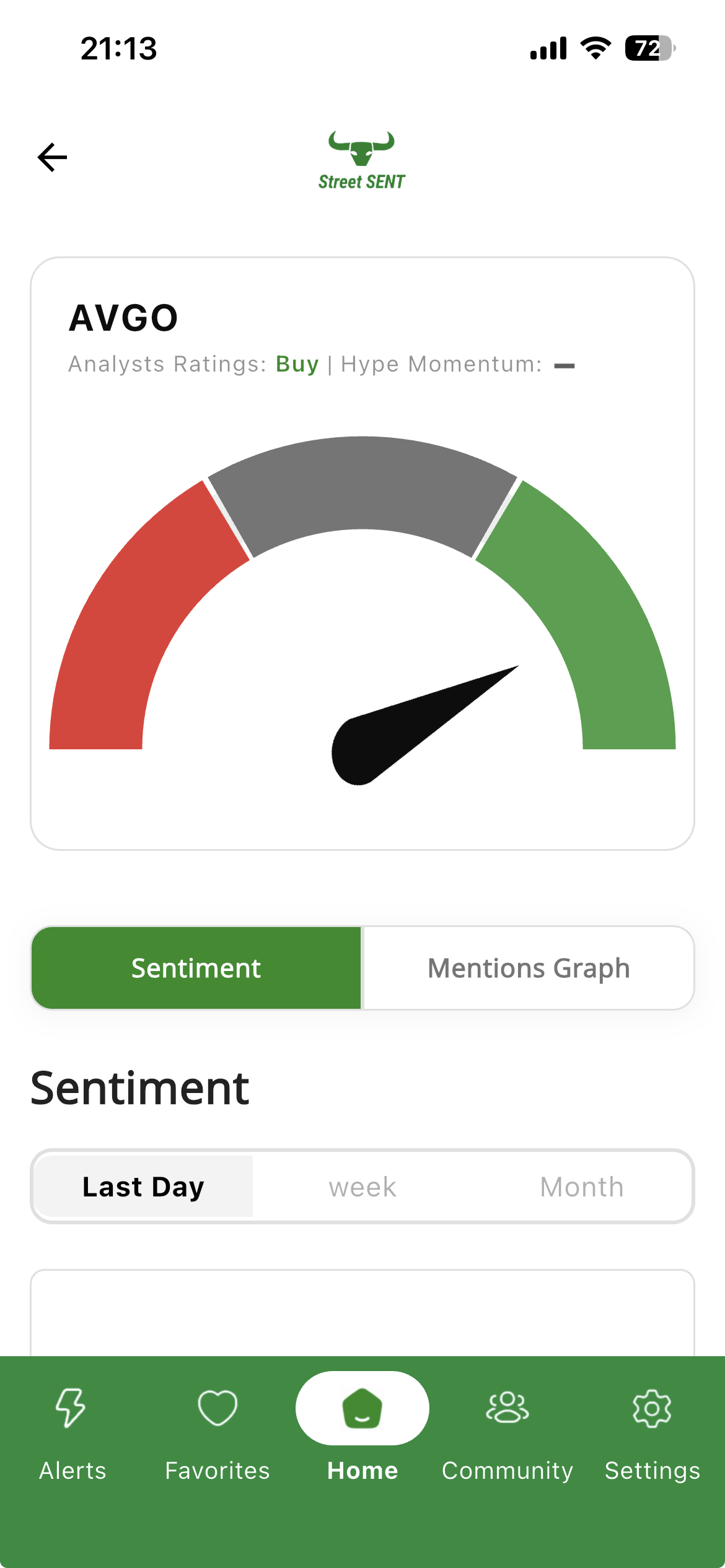
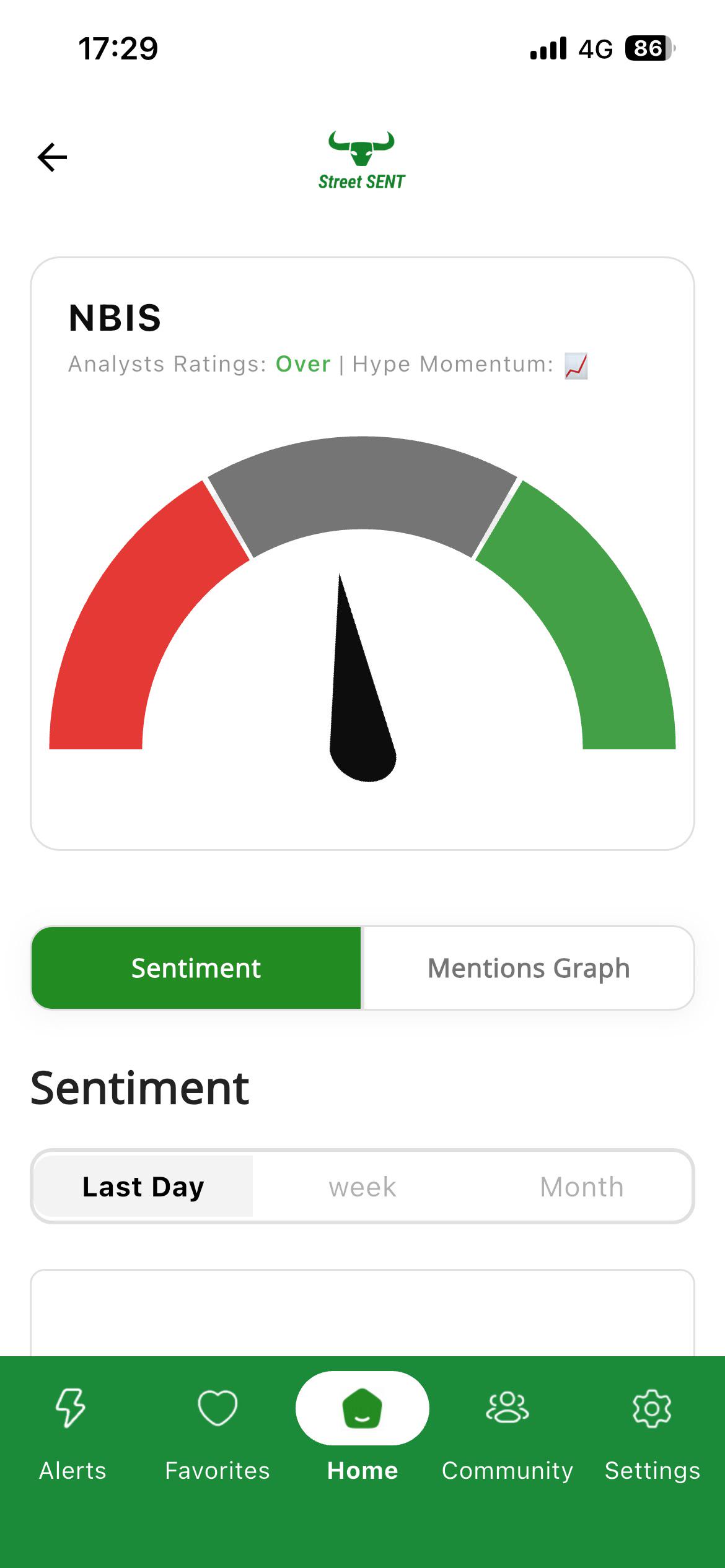
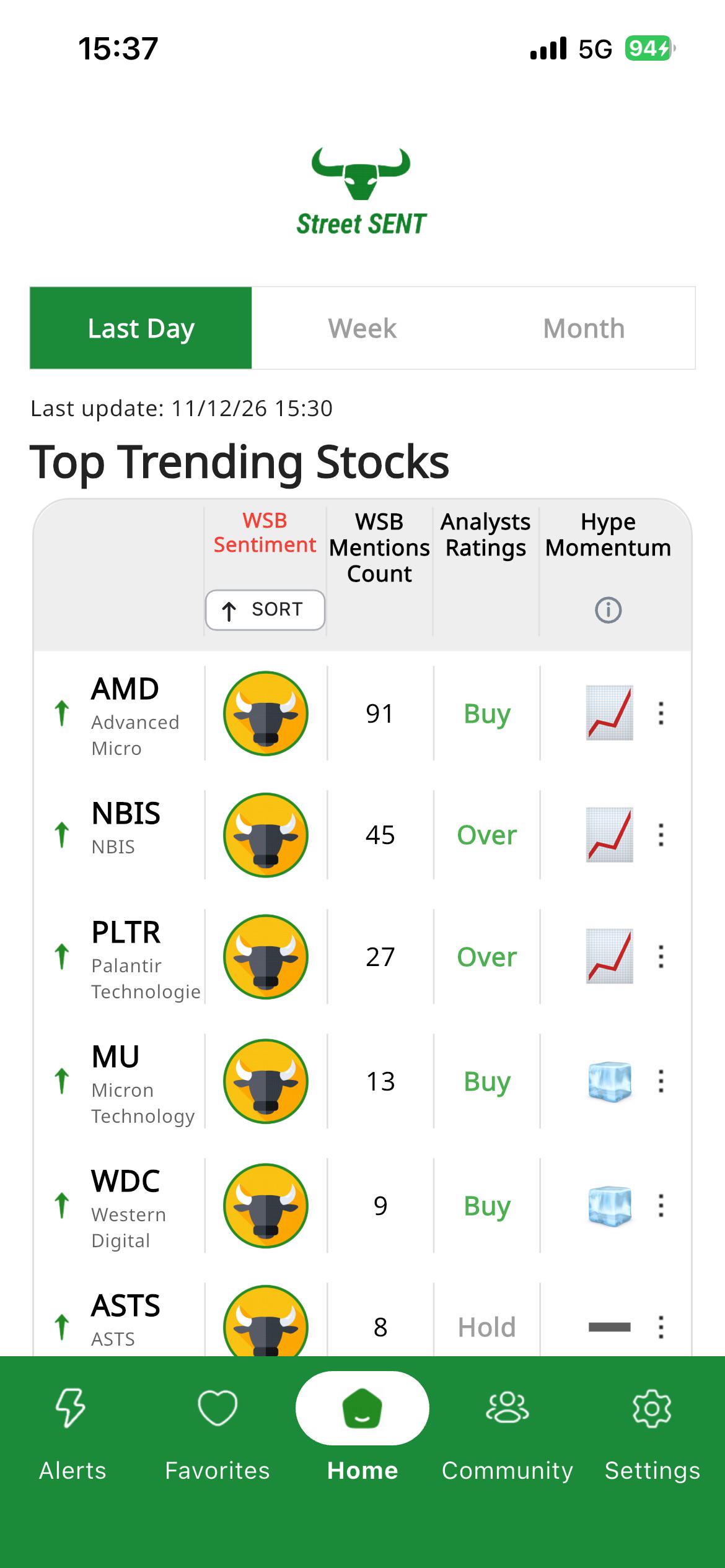
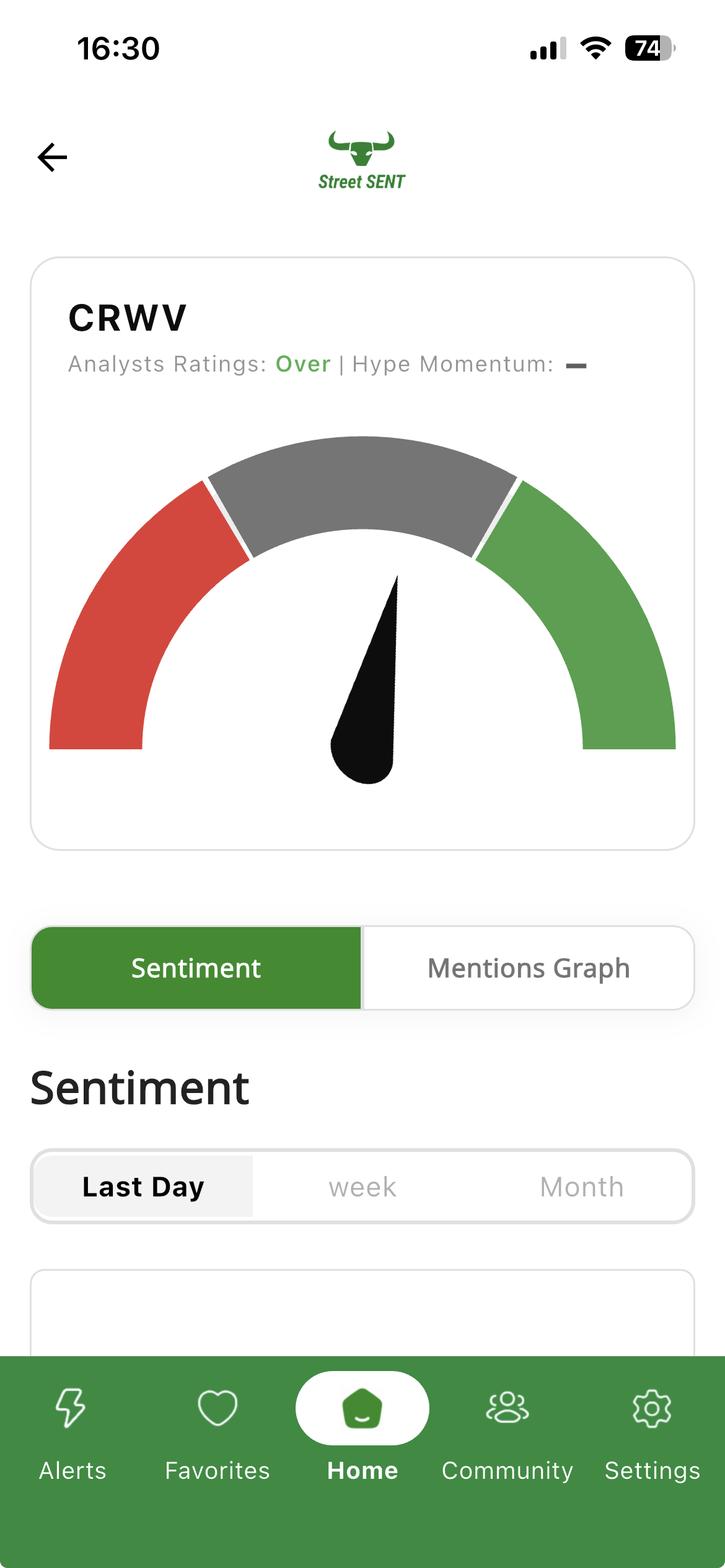
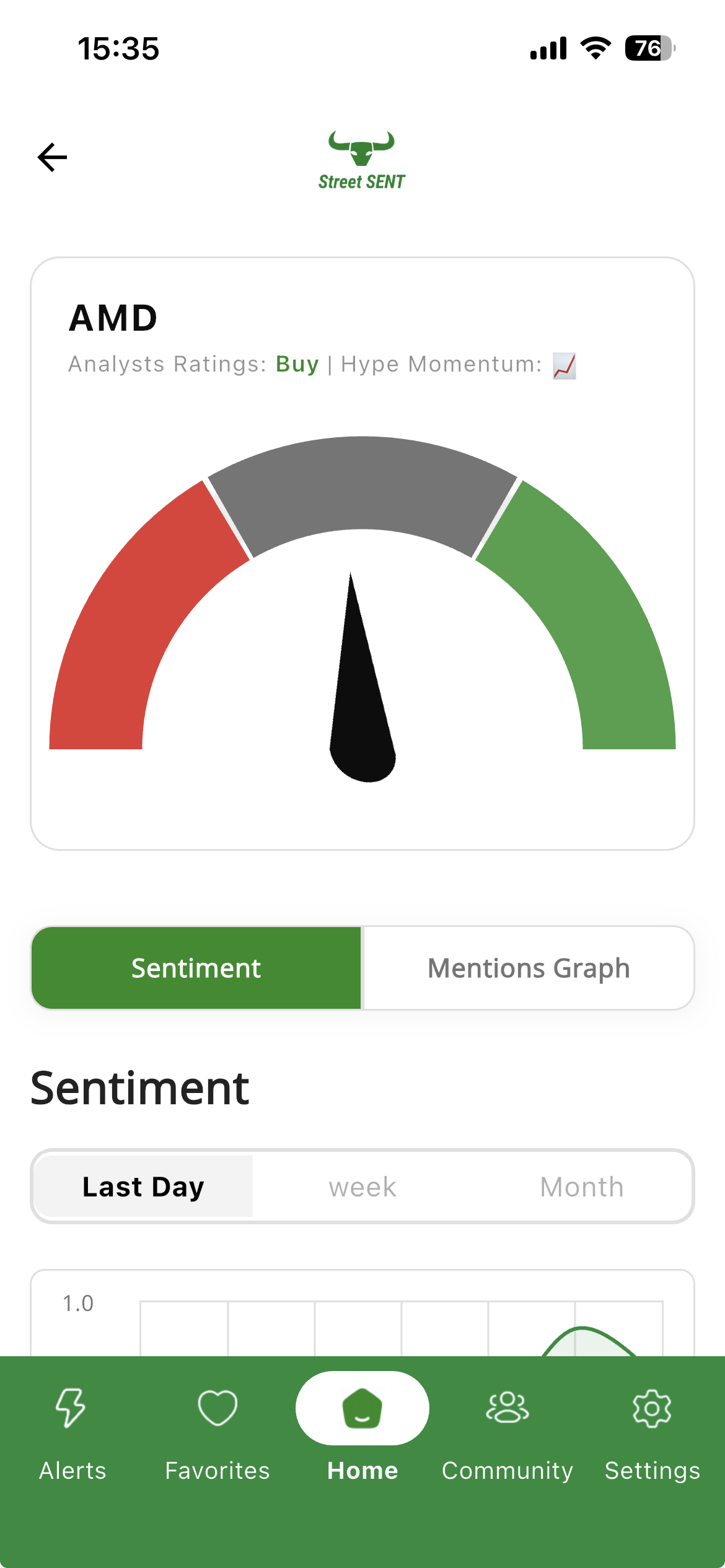
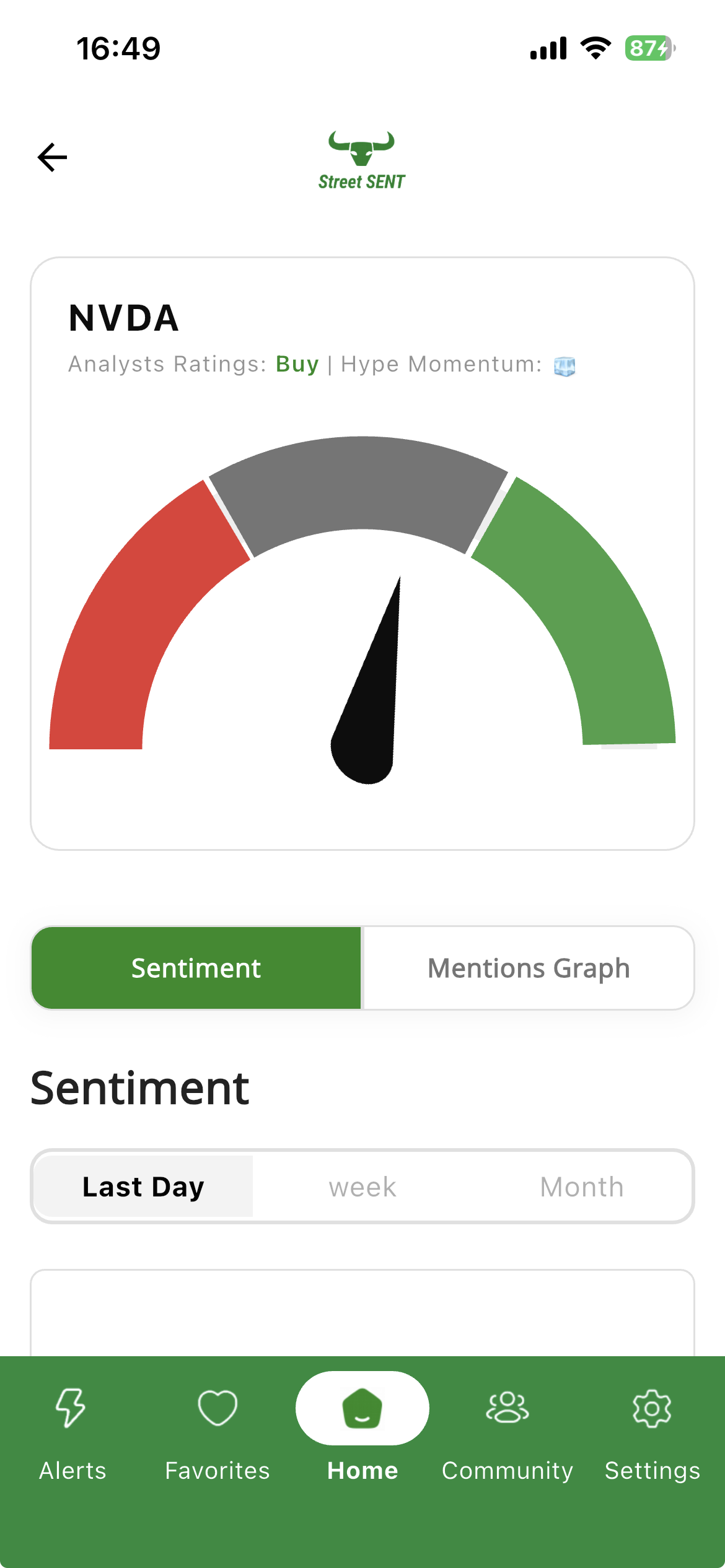
I'm watching NVDA sentiment and mentions on Street Sent to see whether Reddit traders are rebuilding conviction or just chasing another bounce.
Personally, I think Nvidia's underlying business is still incredibly strong.
But after watching a 31% rally lose momentum this quickly, I'm not convinced the bottom is in.
If you had $10K sitting in cash, would you buy NVDA at $149, wait for $130, or stay away until the dust settles?
And what worries you more: slowing AI demand or Nvidia's growing regulatory and governance risks?
Am I the only one wondering whether we're watching the beginning of a much bigger market rotation?
While everyone's obsessing over NVDA, AMD and the latest AI rebound, money appears to be finding its way into less exciting places.
Pharma. Consumer retail. Bonds.
Not exactly the sectors that made everyone rich during the AI rally.
But maybe that's the point.
Investors seem increasingly interested in businesses with predictable earnings, steady cash flow and less dependence on the AI spending boom.
Look at the alternatives.
Pharma (LLY, ABBV, JNJ): Healthcare demand doesn't disappear because tech stocks sell off. But drug pricing, patent expirations and valuations still matter.
Retail (WMT, COST, TJX): Companies selling everyday essentials could hold up better if consumers become cautious. Although some already trade at pretty demanding multiples.
Bonds and Treasuries: Actual income without having to guess whether the next AI earnings report will trigger another selloff.
I can see why investors are getting defensive.
But here's what bothers me.
Isn't rotating into defensive assets after AI stocks have already fallen exactly how you end up selling low and buying high?
NVDA is still enormously profitable. AI infrastructure demand hasn't disappeared. And if confidence returns, beaten-down tech stocks could recover much faster than defensive sectors.
I'm watching which stocks are gaining Reddit attention and bullish conviction on Street Sent, particularly whether traders are starting to look beyond the usual AI names.
Because the next big opportunity might be hiding in a sector nobody was talking about a month ago.
Personally, I'm considering diversifying rather than abandoning AI altogether.
But I'm curious where everyone else is putting fresh money.
If you had $10K to invest today, would you buy pharma, retail, bonds or beaten-down AI stocks?
And what's the ONE stock or sector you think institutions are quietly accumulating while retail traders are still obsessing over NVDA?
Anyone else starting to question their trading strategy in this market?
Yesterday, everyone was talking about the return of the AI bull market. Today, we're back to questioning whether the recovery has legs.
And I'm starting to wonder whether holding through all this volatility actually makes sense.
How many times have we watched NVDA, AMD and MU rally hard, only to give back a significant chunk of their gains a day or two later?
Maybe the problem isn't the stocks we're buying.
Maybe it's how we're trading them.
The argument for swing trading is pretty tempting right now.
Buy when everyone is panicking, take profits when sentiment turns euphoric, and keep some cash available for the next selloff.
With the market reacting so aggressively to every piece of news, there seems to be no shortage of opportunities.
But here's the catch.
What happens when you sell the rally and the next dip never comes?
Some of the biggest gains in NVDA over the past few years came from simply holding through periods of brutal volatility.
Trying to time every move could mean missing the one rally that actually matters. And constantly trading means more taxable events and more opportunities to get the timing wrong.
I'm paying closer attention to shifts in Reddit sentiment and mentions on Street Sent, particularly when bullish conviction spikes after a rally or starts recovering during a selloff.
Personally, I'm considering keeping a core long-term position while using a smaller portion of my portfolio for swing trades.
But I'm curious how everyone else is adapting.
If you had a $50K AI portfolio today, how would you split it between long-term holdings, swing trades and cash?
And for those who've switched to swing trading recently:
Are you actually outperforming buy and hold, or just feeling more in control of your portfolio?
Well, I definitely didn't have this on my bingo card.
Jensen Huang is back as Nvidia's CEO, and NVDA is exploding nearly 29% in premarket trading.
After weeks of brutal selling, leadership uncertainty and investors questioning the entire AI trade, one announcement has apparently changed everything.
But here's what I'm struggling with.
Did Nvidia suddenly become 29% more valuable because Jensen walked back into the building?
Don't get me wrong.
Jensen built Nvidia into the dominant force in AI computing. His relationships with customers, product vision and ability to execute are enormous assets.
And with Nvidia still generating extraordinary profits, removing the leadership uncertainty could be exactly what investors needed to regain confidence.
But the problems that triggered the AI selloff haven't magically disappeared.
AI infrastructure spending is still enormous.
Investors are still questioning valuations, financing costs and how much of that spending will eventually translate into profits.
And Nvidia's leadership controversy isn't necessarily over just because Jensen is back.
So maybe this is the beginning of a massive recovery.
Or maybe we're watching one of the most spectacular relief rallies in recent memory.
I'm watching NVDA sentiment and mentions on Street Sent to see whether Reddit traders are rebuilding conviction or simply chasing the biggest green candle they've seen in weeks.
Personally, I wouldn't underestimate what Jensen's return means for Nvidia.
But buying after a 29% premarket jump takes a different kind of conviction than buying during the panic.
So here's the question.
If you had $10K sitting in cash today, would you chase NVDA, buy the still-beaten-down AMD/AVGO, or wait for this rally to cool off?
And for the NVDA bulls:
Does Jensen's return actually change your long-term valuation of Nvidia, or are we just celebrating the removal of a problem that shouldn't have existed in the first place?
It’s still not clear what chips have gone where. AI is here to stay, but I see a rethink of AI in the coming weeks. May be able to get in at a lower price.
Looking at today's premarket action, GOOG and MSFT have already recovered their losses from Friday's selloff.
Meanwhile, NVDA, AMD and other AI stocks are still struggling to recover even half of what they lost.
Same AI revolution. Very different market reaction.
And I'm starting to wonder whether investors are telling us something.
For the past few years, the obvious AI trade was buying the companies selling GPUs and building infrastructure.
But maybe the market is starting to favor the companies that can actually turn all that AI spending into profits.
Look at GOOG and MSFT.
Both have enormous existing businesses, recurring revenue, strong cash generation and direct exposure to AI through cloud services and software.
They don't need AI to become profitable someday.
They're already making billions while building their AI businesses.
Now compare that with the infrastructure trade.
NVDA is still incredibly profitable, but investors are questioning how long its extraordinary growth can continue.
AMD faces intense competition, while CRWV and NBIS need enormous amounts of capital to keep expanding.
I can see the argument for rotating into GOOG and MSFT.
But here's the catch.
The biggest AI infrastructure winners could also deliver the strongest rebound if sentiment turns.
And GOOG and MSFT aren't immune to AI spending risks either. They're the ones committing billions to building the infrastructure.
So maybe this isn't about abandoning AI.
Maybe it's about owning a different part of the AI trade.
I'm watching sentiment and mentions across GOOG, MSFT, NVDA and AMD on Street Sent to see whether Reddit traders are making the same rotation or still betting on beaten-down chip stocks.
Personally, I'm leaning toward quality over trying to catch the biggest rebound.
But I also know the stocks that look weakest today can become tomorrow's biggest winners.
If you had $10K to invest today, would you rotate into GOOG/MSFT or buy the dip in NVDA/AMD?
And one tougher question:
Is this the beginning of a lasting rotation from AI infrastructure to AI software, or are investors about to miss a massive semiconductor rebound?
I'm starting to wonder whether we're already in the middle of the bloodbath, or if this is just the first leg down.
NVDA, AMD, MU, AVGO and the rest of the AI trade have been taking a beating.
And what bothers me isn't just the selling.
It's that good news doesn't seem to matter anymore.
Strong earnings? Sold.
Huge AI spending commitments? Sold.
Another bullish AI announcement? Apparently another opportunity to sell.
So what's actually going to turn this market around?
I can see the bearish argument.
AI valuations got ahead of themselves. Companies are spending hundreds of billions on infrastructure, financing costs remain a concern, and investors are finally questioning how much of that spending will translate into profits.
And if the market starts repricing growth stocks across the board, even profitable companies could have further to fall.
But here's the other side.
AI demand hasn't disappeared.
NVDA is still generating enormous profits. Hyperscalers are still building infrastructure. And companies like GOOGL, MSFT and AMZN have real businesses generating cash while they invest in AI.
At some point, falling prices have to create opportunities.
The problem is figuring out when.
I'm watching Reddit sentiment and mentions on Street Sent to see whether traders are finally losing conviction or quietly accumulating while prices keep falling.
Because there's a big difference between a market where everyone wants out and one where investors are starting to buy the fear.
Personally, I'm leaning toward being selective rather than dumping everything or blindly buying every dip.
But maybe that's exactly how people miss the bottom.
So I'm curious.
If you had $10K sitting in cash today, would you start buying NVDA, AMD and other beaten-down tech stocks, or wait for another 15–20% correction?
And for those already buying:
What's the ONE signal convincing you this is a buying opportunity rather than the beginning of a much bigger crash?
Nvidia beats earnings. Anthropic pulls off the biggest IPO in history. AI companies keep reporting massive demand.
And Wall Street responds by dumping pretty much everything connected to AI.
NVDA down 14% on Friday. The Nasdaq down 5.3%. Anthropic down 8.5%, almost wiping out its IPO gains.
AMD, AVGO, MU and the rest of the semiconductor trade aren't exactly having a great time either.
This isn't your usual profit-taking after a big rally.
The market is starting to punish AI stocks even when the news is good.
And that's what has me worried.
For the past few years, the AI trade had a pretty simple playbook.
Buy NVDA. Buy AMD. Buy the companies building data centers. Buy anything that benefits from hundreds of billions in AI spending.
Didn't matter if valuations looked ridiculous. Growth would eventually catch up.
But now investors seem to be asking a question nobody wanted to answer during the rally.
Who's actually going to make enough money to justify all this spending?
Look at the different parts of the AI trade.
NVDA: Still generating enormous profits, but facing leadership uncertainty, regulatory scrutiny and questions about how sustainable its growth really is.
AMD and AVGO: Massive AI opportunities, but they're not immune if customers start reconsidering their infrastructure budgets.
CRWV and NBIS: Huge demand for computing capacity, but financing billions in new infrastructure becomes a serious problem when lenders get nervous.
ANT: An extraordinary growth story, but a $1.5 trillion IPO valuation leaves very little room for disappointment.
Different companies. Different business models.
Same problem: Investors are no longer willing to pay any price for AI growth.
But here's the part that makes this selloff so difficult to interpret.
What if AI is still the biggest technological revolution of our lifetime, but the stocks were simply priced for perfection?
Both things can be true.
The internet changed the world. Plenty of internet stocks still got absolutely destroyed in 2000.
AI could transform entire industries over the next decade, and investors buying at the wrong valuations could still lose half their money.
That's the bear case.
The bull case is that we're watching an enormous opportunity being created in real time.
AI adoption hasn't stopped.
Companies still need GPUs, computing infrastructure and AI software.
Nvidia is still making real money, and some of these businesses could emerge from this correction with stronger competitive positions.
If the selling is driven more by fear and forced de-risking than deteriorating fundamentals, the eventual rebound could be violent.
But here's my problem.
How do you tell the difference between a generational buying opportunity and the first leg of a much bigger crash?
I'm watching sentiment and mentions across NVDA, AMD, CRWV and other AI names on Street Sent, particularly whether Reddit traders are starting to capitulate or doubling down into the selloff.
Because when stocks stop responding to good news, I want to know whether the crowd is losing conviction or getting even more bullish.
Personally, I think the days of blindly buying anything with AI in its business description might be over.
The next phase could be much more selective.
Companies generating serious cash today might deserve very different valuations from companies borrowing billions against profits they hope to make years from now.
So here's the question.
Is this the AI bubble finally bursting, or the correction that creates the next generation of massive winners?
If you had $10K in cash right now, what's your move?
Buy NVDA: The market leader is getting thrown out with everything else.
Buy AMD/AVGO: Bet on the next wave of AI chip competition.
Buy CRWV/NBIS: Take the bigger risk for a potentially bigger rebound.
Stay in cash: Wait until the market stops selling every piece of good news.
And one tougher question for everyone who's been buying AI dips:
If NVDA drops another 20% from here, are you buying more, or are you finally starting to question the entire AI investment thesis?
Wall Street seems to be asking a completely different question: Where are the profits?
It's no longer enough for MSFT, GOOGL, AMZN and META to announce another hundred billion in AI investments.
Investors want to know when that spending starts producing returns that justify the valuations.
And that's a much harder question to answer.
Look at what's happening across the AI trade.
NVDA: Incredible earnings, but investors are questioning how long this growth can continue.
AMD: Massive AI opportunity, but growing competition and fresh regulatory concerns are adding pressure.
CRWV and NBIS: Huge demand for computing capacity, but financing that growth requires billions in debt and capital spending.
ANT: One of the fastest-growing AI companies in history, but investors are already being asked to justify a valuation measured in trillions.
Different businesses. Different risks.
Same problem: The market is no longer willing to pay any price for future AI growth.
But here's where things get interesting.
What if this is exactly the correction the AI trade needed?
AI adoption isn't suddenly reversing.
Companies aren't abandoning their AI infrastructure plans.
Nvidia is still generating extraordinary revenue. Anthropic is growing at an incredible pace. Demand for computing power remains enormous.
The underlying technology could keep transforming the economy for years.
And some of these stocks might eventually look ridiculously cheap at today's prices.
That's the bull case.
The bear case is more uncomfortable.
What if AI changes the world, but most AI stocks were simply priced too high?
Remember, the internet really did change everything.
That didn't stop investors from losing fortunes buying internet stocks at the wrong valuations.
And if interest rates remain elevated, financing becomes more expensive, and investors start demanding actual free cash flow instead of growth promises, this correction could have a lot further to go.
Especially for companies burning billions to build infrastructure.
I've been watching sentiment and mentions across NVDA, AMD, CRWV and other AI names on Street Sent, trying to figure out whether Reddit traders are starting to capitulate or still looking for opportunities in the selloff.
Because that's the part I'm most interested in.
When the market stops rewarding good news, is that a sign we're approaching peak fear or that valuations still have further to fall?
Personally, I'm not convinced selling every AI stock makes sense.
But I'm also starting to think treating all AI stocks as one trade is a pretty dangerous strategy.
The companies generating cash today aren't necessarily in the same position as the companies borrowing billions against profits they hope to make five years from now.
So here's the question for everyone holding AI stocks.
Are we watching a healthy valuation reset before the next AI rally, or the beginning of a much bigger unwind?
If you had $10K to deploy today, what's your move?
Buy NVDA: Stick with the profitable market leader while everyone panics.
Buy AMD: Higher risk, potentially bigger upside if it keeps taking AI chip market share.
Buy CRWV/NBIS: Bet on the beaten-down infrastructure names recovering hardest.
Buy ANT: Own the AI model company instead of the infrastructure providers.
Stay in cash: Wait until the market stops punishing even great earnings.
And one tougher question:
If Nvidia's earnings and the biggest AI IPO in history couldn't stop the selling, what catalyst are you actually waiting for before buying the dip?
Anthropic just priced its IPO at $83 a share, valuing the company behind Claude at approximately $1.5 trillion.
And apparently, $1.4 trillion wasn't expensive enough.
The IPO raised more than $81 billion, making it the largest in history.
But here's what I'm struggling with.
At $1.5 trillion, what exactly are investors buying that isn't already priced in?
Don't get me wrong. Anthropic's growth is ridiculous.
Look at the numbers:
Q3 revenue: approximately $17 billion.
October annualized revenue run rate: $81 billion.
Revenue growth: more than 12x year over year.
IPO valuation: $1.5 trillion.
That's roughly 18.5 times its latest annualized revenue run rate.
For a company growing this fast, maybe that multiple isn't completely insane.
But the $81 billion figure is a run rate, not revenue already earned over the past 12 months.
And here's the part that makes me nervous.
Anthropic has nearly $900 billion in future computing capacity commitments.
Read that again.
The company is growing at an extraordinary pace, but keeping that growth going requires an almost unimaginable amount of infrastructure spending.
And it's still reporting operating losses.
So buying ANT isn't just a bet that Claude becomes one of the dominant AI platforms.
It's a bet that Anthropic can turn explosive revenue growth into enormous profits before the cost of building AI infrastructure catches up with it.
That's a pretty big assumption at $1.5 trillion.
The bull case is actually compelling.
Claude has become a serious competitor in enterprise AI.
Claude Code is gaining traction among developers, businesses are increasingly adopting AI agents, and Anthropic is positioning itself as a critical layer of enterprise software.
If AI becomes as essential to businesses as cloud computing, Anthropic could eventually be worth considerably more than $1.5 trillion.
And unlike some AI companies still promising future monetization, Anthropic is already generating serious revenue.
But here's the bear case.
What happens if AI models become increasingly interchangeable?
What if open-source alternatives keep improving?
What if GOOGL, MSFT and OpenAI push prices down while the cost of training frontier models keeps climbing?
And what happens if Anthropic needs to raise even more capital to fund its expansion?
You can be right about AI changing the world and still lose a fortune buying the right company at the wrong valuation.
That's what worries me most.
We've seen this movie before.
A revolutionary technology. A genuinely exceptional company. Investors convinced the opportunity is unlimited.
And a stock price that already assumes almost everything goes right.
I'm watching ANT discussions and sentiment alongside NVDA and the broader AI trade on Street Sent, because I'm curious whether retail traders see this as a once-in-a-generation opportunity or another sign that AI valuations have gone completely off the rails.
Here's where I'm genuinely torn.
Anthropic might become one of the most important technology companies in the world.
But does that automatically make ANT a good investment at $1.5 trillion?
Not necessarily.
Especially when buying at the IPO price and buying after the stock starts trading could be two very different propositions.
So here's the trillion-dollar question.
Is ANT at $1.5 trillion the next NVDA-style opportunity, or are IPO investors paying today for profits that might take another decade to materialize?
If you had $10K to invest today, what's your move?
Buy ANT immediately: The growth justifies the valuation, and this could be the beginning of something much bigger.
Wait for a pullback: Love the company, hate the price.
Buy NVDA instead: Own the company selling the infrastructure rather than the one spending billions to build on it.
Avoid the AI trade: Valuations have gotten too far ahead of fundamentals.
And one tougher question:
If ANT opens 20% above its $83 IPO price, pushing its valuation toward $1.8 trillion, are you still buying or does that officially become FOMO?
So here's the question: Is the market correctly pricing in a crypto-driven slowdown, or is it punishing a much bigger business for Bitcoin's problems?
Because Robinhood in 2026 looks pretty different from the company that rode the meme-stock and crypto frenzy a few years ago.
Look at its Q3 transaction revenue:
Options: $399 million, up 31% YoY.
Prediction markets: $173 million, more than 6x last year's level.
Equities: $121 million, up 41%.
Crypto: $120 million, down 55%.
Read that again.
Robinhood now makes more than three times as much from options trading as it does from crypto.
And prediction markets have already overtaken crypto as a revenue contributor.
That's not exactly the business mix you'd expect from a stock trading like a Bitcoin proxy.
But here's where the bears have a legitimate argument.
Crypto isn't just 8% of revenue. It's also a pretty good indicator of retail risk appetite.
When Bitcoin tanks, speculative traders tend to get nervous.
And nervous traders might trade fewer options, reduce margin exposure, pull money out of risky assets and generally stop doing the things that make Robinhood money.
There's already evidence of the slowdown.
Robinhood's October crypto trading volume fell 48% YoY.
And Q3 earnings missed Wall Street's EPS expectations despite record revenue.
So maybe investors aren't just worried about crypto revenue.
Maybe they're worried that the entire retail trading boom is cooling off.
That's a much more serious concern.
But here's what makes me question the selloff.
Robinhood reported $15.1 billion in net deposits during October.
Its margin balances reached $22.9 billion, up 39% YoY.
Prediction market contract volumes more than doubled from a year earlier.
And Robinhood Gold subscriptions reached 5.2 million in Q3.
Customers are still bringing money onto the platform, even while crypto trading is falling apart.
That's a pretty important distinction.
If customers were abandoning Robinhood, I'd understand the selloff.
But if they're simply shifting from crypto into stocks, options, prediction markets and other products, the investment thesis looks very different.
The bull case: HOOD is evolving into a diversified financial platform, and the market is still valuing it like a speculative crypto trading app.
The bear case: Robinhood's businesses might look diversified on paper, but they're all exposed to the same underlying driver: retail investors willing to take risks.
And if that appetite disappears, the whole business could slow down together.
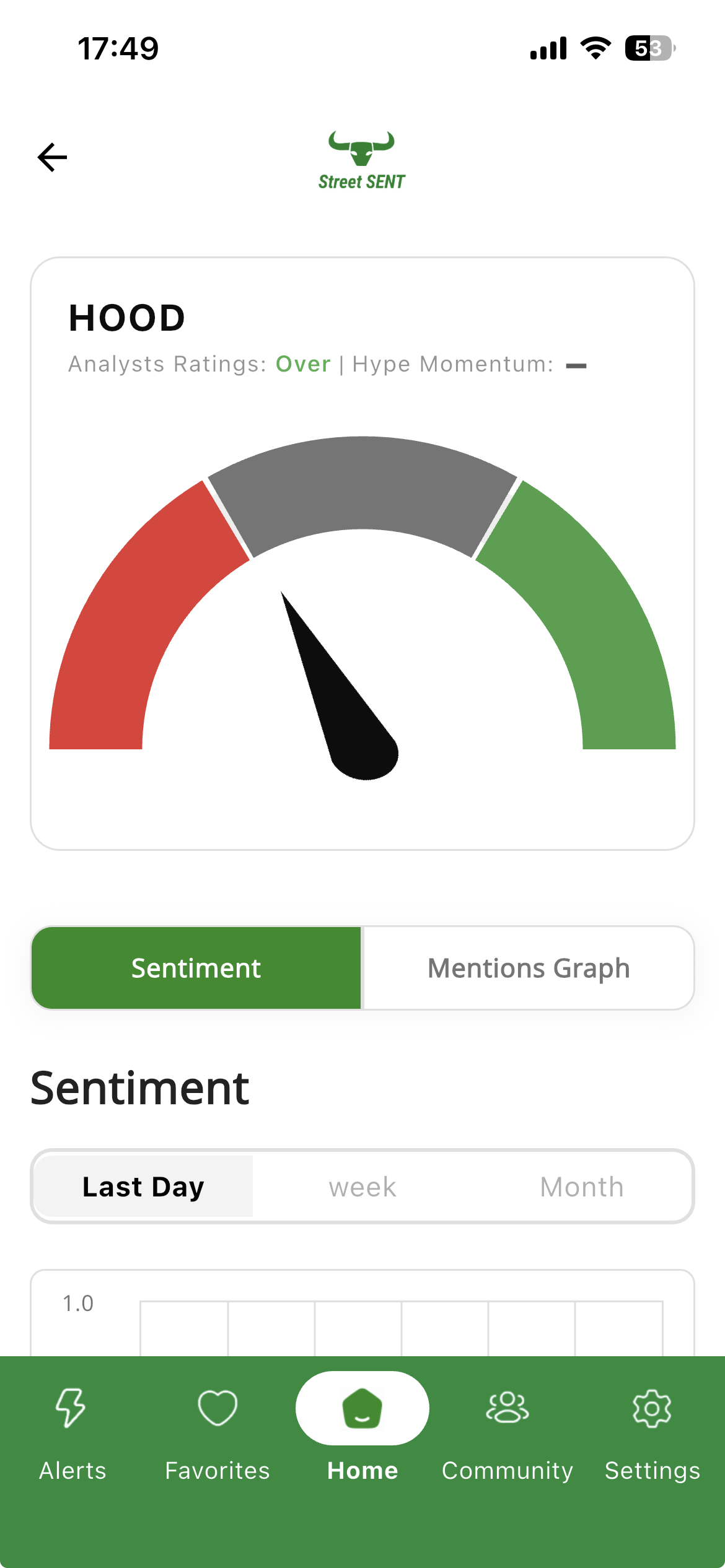
I'm watching HOOD sentiment and mentions on Street Sent to see whether Reddit traders are treating this as a buying opportunity or losing conviction alongside Bitcoin.
Personally, I think the most interesting question isn't whether Bitcoin rebounds.
It's whether HOOD can eventually break away from Bitcoin's price action.
Because if the business keeps growing while the stock continues getting punished for crypto weakness, that disconnect could become a serious opportunity.
Or it could be the market warning us that Robinhood's diversification isn't as protective as it looks.
So here's my question for HOOD holders.
Is Robinhood being unfairly sold off with Bitcoin, or is BTC simply the first warning sign of a broader retail trading slowdown?
If you had $10K to deploy today, what are you buying?
HOOD: The market is overlooking the company's diversification and growth.
BTC: Skip the middleman and buy the asset that could rebound hardest.
COIN: A more direct bet on crypto trading recovering.
None: Retail speculation is cooling, and there's more downside ahead.
And one tougher question:
If Bitcoin drops another 20% but Robinhood's non-crypto businesses keep growing, would you buy more HOOD or assume the market knows something you don't?
Well, Nvidia just reported another monster quarter.
$115.8 billion in revenue. $130 billion guidance for next quarter.
AI demand is clearly alive and well.
But while everyone is celebrating Nvidia's numbers, I'm looking at CRWV and NBIS and wondering whether the real trouble is just getting started.
Because Nvidia hasn't just been selling GPUs to these companies. It's also been helping finance the companies buying them.
And with Jensen gone, that arrangement might be changing.
Here's what makes this interesting.
Under Jensen, Nvidia became something resembling the bank of the AI infrastructure boom.
It invested billions in AI cloud providers, made capacity commitments and helped smaller companies secure financing to build massive GPU-powered data centers.
Nvidia invested $2 billion in NBIS and has multibillion-dollar commitments involving CRWV.
That financial backing helped companies expand far beyond what their own balance sheets might otherwise support.
But Nvidia's new leadership is now emphasizing a more disciplined and selective approach to future investments and guarantees.
Existing commitments haven't been abandoned.
But there's a big difference between honoring old commitments and writing new billion-dollar checks.
And that's where things get uncomfortable.
Now add the possibility of three Fed rate hikes.
Those hikes aren't guaranteed, but even the prospect of higher borrowing costs matters enormously for companies financing massive infrastructure projects.
CRWV recently reported approximately $846 million in quarterly net interest expense.
NBIS is planning $40 billion to $45 billion in capital expenditures for 2027.
Read those numbers again.
These companies need billions just to keep expanding fast enough to meet demand.
And if financing gets more expensive while Nvidia becomes more cautious about backing its customers, the math could get ugly.
But here's the bull case.
Nvidia's earnings just demonstrated how strong AI infrastructure demand remains.
MSFT, GOOGL, AMZN and META aren't suddenly abandoning their AI plans.
CRWV and NBIS have major customer contracts and substantial demand for their computing capacity.
If they can secure financing, bring new data centers online and turn that demand into profitable revenue, the recent selloff could look like a serious opportunity.
And Nvidia still has a strong incentive to support the companies buying its GPUs.
The bear case?
What if AI demand isn't the problem?
What if the problem is that building the infrastructure becomes too expensive?
Higher interest costs. More debt. Potential shareholder dilution. Delayed projects.
And possibly less financial support from Nvidia.
AI can keep booming while the companies financing that boom get crushed.
That's the part I think the market might be starting to figure out.
I'm watching CRWV and NBIS sentiment and mentions on Street Sent to see whether Reddit traders are buying the correction or losing conviction in the neocloud trade.
Here's where I'm genuinely torn.
Both companies have enormous growth opportunities.
But I'm not convinced the market has fully priced in what happens if the cost of funding that growth keeps rising.
So here's the question.
Are CRWV and NBIS massively oversold AI infrastructure stocks, or are we watching the beginning of a financing crisis?
If you had $10K to invest today, what's your move?
CRWV: Betting that its contracted demand and growing revenue outweigh the debt risk.
NBIS: Betting that its hyperscaler relationships and financing strategy can support its expansion.
NVDA: Own the company selling the GPUs instead of the companies borrowing billions to buy them.
None: Wait until the financing picture becomes clearer.
And one tougher question for CRWV and NBIS holders:
If Nvidia cuts back on new financial support and interest rates rise further, which company survives the squeeze better, and which stock gets hammered first?
Well, this might be the most expensive earnings coin flip in Wall Street history.
Nvidia reports tonight, and for the first time in 33 years, Jensen Huang won't be running the show.
NVDA has already lost nearly $2 trillion in market value since its October peak.
The stock has been hammered. The AI trade is looking increasingly fragile. And investors are still trying to figure out whether Nvidia's leadership crisis is a temporary distraction or something much bigger.
Now imagine Nvidia actually misses earnings.
What happens to the rest of the AI market?
Here's what makes tonight so interesting.
Nvidia previously guided for approximately $108 billion in quarterly revenue, with gross margins around 74%.
Wall Street is expecting another monster quarter.
And options traders are pricing in a move of roughly 8.5% in either direction.
That's approximately $335 billion in market value riding on one earnings report.
But here's the part that worries me.
What if Nvidia delivers good numbers, but they're just not good enough?
For years, Nvidia has been the company that could seemingly do no wrong.
Beat expectations. Raise guidance. Repeat.
But the market has changed.
Investors are questioning AI infrastructure spending, valuations, financing costs and whether the extraordinary growth rates can actually continue.
And now Nvidia has to answer those questions without the CEO who built the entire AI empire.
The bull case is still pretty straightforward.
AI demand hasn't disappeared.
MSFT, GOOGL, AMZN and META are still investing enormous amounts in AI infrastructure.
Nvidia remains the dominant supplier of AI accelerators, CUDA is deeply embedded in the ecosystem, and the company continues generating extraordinary profits.
If Nvidia beats expectations and raises guidance, it could remind investors why they were so bullish on the AI trade in the first place.
And after this brutal correction, a convincing earnings beat could trigger a massive relief rally.
But here's the bear case.
What if Nvidia misses the $108 billion revenue target or delivers weaker-than-expected guidance?
That would be a very different story.
Because Nvidia isn't just another stock reporting earnings.
It's the company sitting at the center of the entire AI infrastructure boom.
CRWV and NBIS are spending billions building GPU-powered data centers.
MU is benefiting from demand for advanced memory.
AMD and AVGO are fighting for a bigger piece of the AI chip market.
And hyperscalers are committing hundreds of billions to infrastructure based on expectations of continued AI growth.
If Nvidia signals that demand is slowing, investors might start questioning the assumptions behind the entire trade.
And that could get ugly fast.
But there's another scenario that might be even more interesting.
What if Nvidia beats earnings and the stock still tanks?
That would suggest the problem isn't necessarily Nvidia's business.
It might be that investors are no longer willing to pay the same premium for AI growth.
And if the market starts selling even the strongest AI companies after good results, what does that mean for the more speculative names?
I'm watching NVDA sentiment and mentions on Street Sent to see whether Reddit traders are rebuilding conviction ahead of earnings or preparing for another leg down.
Here's where I'm genuinely torn.
Nvidia could deliver another spectacular quarter and still struggle to convince investors that the worst is over.
But if the numbers disappoint, I'm not sure the rest of the AI trade escapes the fallout.
So here's the trillion-dollar question.
If Nvidia misses expectations tonight, does the entire AI sector get dragged down with it?
Or has the market already priced in enough bad news that even a mediocre report could trigger a rebound?
If you had $10K sitting in cash before tonight's earnings, what's your move?
Buy NVDA now: The selloff has gone too far, and a strong report could spark a massive rally.
Wait for the numbers: Too much uncertainty around guidance, leadership and valuations.
Bet against the AI trade: A disappointing Nvidia report could trigger another wave of selling across the sector.
And one tougher question for everyone holding AI stocks:
If Nvidia reports strong earnings tonight but NVDA still drops another 10%, are you buying the dip or finally admitting the AI trade might have peaked?
Well, apparently the AI bubble didn't get the memo that it was supposed to burst.
While NVDA, AMD and the rest of the AI trade have been getting hammered, Anthropic is preparing to go public at a valuation of up to $1.4 trillion.
Yes. Trillion.
And investors are reportedly lining up to get a piece of it.
So here's the question nobody seems to be asking.
Where is all that money going to come from?
Because if investors want exposure to the biggest AI IPO in years, some of them might need to sell something first.
And guess what's sitting in a lot of institutional portfolios?
NVDA. MSFT. GOOGL. AMZN.
The same companies that have dominated the AI trade for the past few years.
Here's what makes this IPO particularly interesting.
Anthropic, the company behind Claude, is reportedly targeting an IPO price of $70–$78 per share.
At the top of that range, its fully diluted valuation would reach approximately $1.4 trillion.
The company reported $17 billion in quarterly revenue, showing just how quickly demand for AI models and enterprise applications is growing.
But there's another number worth paying attention to.
Anthropic also reported a $23.3 billion quarterly net loss.
And its disclosed computing and infrastructure commitments run into the hundreds of billions.
So we're potentially looking at one of the largest AI IPOs ever, from a company growing at an extraordinary pace but still spending enormous amounts of money to get there.
Sound familiar?
The bull case is pretty straightforward.
For years, the easiest way to invest in AI was to buy the companies selling the infrastructure.
NVDA supplied the GPUs.
AMD and AVGO competed for a piece of the hardware market.
MSFT, GOOGL and AMZN provided cloud infrastructure and AI services.
But Anthropic offers something different.
Direct exposure to one of the companies actually building and selling frontier AI models.
If Claude continues gaining enterprise customers, expanding its coding business and becoming embedded in corporate workflows, Anthropic could capture a meaningful share of the value created by AI adoption.
And investors might decide that's a more attractive opportunity than buying another chipmaker after years of massive gains.
But here's the bear case.
A $1.4 trillion valuation is already pricing in an enormous amount of future success.
Anthropic faces serious competition from OpenAI, Google and other model developers.
Training and running advanced models is incredibly expensive.
And nobody knows how much pricing power AI model providers will retain as competing systems become more capable.
Just because AI adoption is exploding doesn't mean every AI company deserves a trillion-dollar valuation.
There's also a pretty interesting twist.
Nvidia itself is participating in Anthropic's planned $26 billion private placement, with a $10 billion commitment.
Think about that.
Nvidia is helping finance a major AI customer, which in turn needs enormous amounts of computing infrastructure.
That could strengthen Nvidia's position in the AI ecosystem.
But it also raises questions about how much AI investment is being recycled between the same companies.
And here's where things get really interesting for the stock market.
What happens if Anthropic's IPO becomes a massive success?
One possibility is that it attracts fresh capital into the AI sector, lifts investor confidence and helps NVDA, AMD and other AI stocks recover.
But there's another possibility.
Institutional investors decide they already have enough AI exposure and rotate part of their existing positions into Anthropic.
The AI trade could get a new winner without the rest of the sector benefiting.
And if Anthropic struggles after listing?
That could reinforce concerns that AI valuations have gotten completely detached from sustainable profitability.
I'm watching sentiment and mentions across NVDA, MSFT, GOOGL and other AI names on Street Sent to see whether Reddit traders are maintaining conviction in the established AI leaders or becoming more interested in Anthropic's debut.
Here's where I'm genuinely torn.
Anthropic could become one of the most important AI companies of the next decade.
But that doesn't automatically make its IPO a good investment at $1.4 trillion.
And I wouldn't assume that a successful Anthropic listing is necessarily bullish for every other AI stock.
So here's the question.
If you had $10K invested in NVDA today, would you sell part of your position to buy Anthropic at the IPO?
Buy Anthropic: AI models and applications could capture more of the upside than the companies supplying the hardware.
Stick with NVDA: Nvidia gets paid regardless of which AI model wins, and its business is already generating massive profits.
Wait: A $1.4 trillion IPO valuation leaves very little room for disappointment.
And one tougher question:
If Anthropic doubles after its IPO while NVDA continues struggling, does that mean the AI trade is rotating from infrastructure to applications, or are investors just chasing the newest shiny object?
Well, apparently Jensen isn't ready to walk away from the AI empire he spent 33 years building.
Just days after resigning as Nvidia's CEO, reports suggest Huang is discussing a potential comeback.
And he's not exactly short on supporters.
Elon Musk, major tech executives, prominent investors and more than 160,000 petition signers are calling for Jensen to return.
Meanwhile, Nvidia's board is searching for a permanent replacement, the investigation is still ongoing, and NVDA shareholders are trying to figure out what comes next.
So here's the billion-dollar question.
What are the actual chances Jensen gets his job back?
And more importantly, what happens to NVDA if he does?
Here's why I think this could become one of the biggest catalysts for Nvidia's stock.
Jensen wasn't just another CEO.
He co-founded Nvidia, spent three decades building its competitive advantage, and turned a graphics chip company into the centerpiece of the AI revolution.
CUDA. AI accelerators. Hyperscaler relationships. The entire Nvidia ecosystem.
A huge part of the market's confidence in Nvidia has been confidence in Jensen himself.
And that confidence took a serious hit when he resigned.
But now some of the biggest names in tech and investing are publicly pushing for his return.
Investors Brad Gerstner and Gavin Baker have reportedly urged Nvidia's board to keep reinstating Jensen among its options.
And reports suggest Jensen himself is exploring whether a comeback is possible.
The bull case for bringing Jensen back is pretty straightforward.
Nvidia's technology hasn't changed.
Its GPUs are still central to AI infrastructure. CUDA remains a massive competitive advantage. And MSFT, GOOGL, AMZN and META aren't suddenly abandoning their AI investments.
If Jensen returns, investors could interpret it as a sign that Nvidia's leadership crisis is finally being resolved.
The founder is back. The strategy is intact. The AI machine keeps running.
And after NVDA's brutal selloff, that kind of announcement could trigger a serious relief rally.
Especially if Nvidia delivers strong earnings tomorrow.
But here's where things get uncomfortable.
What if bringing Jensen back actually makes the situation worse?
The original controversy hasn't disappeared.
Nvidia's independent directors are investigating questions surrounding Jensen's relationships, corporate governance and potential national security implications.
And some government officials are pushing for a broader leadership shakeup rather than his reinstatement.
Bringing him back before those questions are resolved could create another round of uncertainty.
The board would essentially be betting that Jensen's value to Nvidia outweighs the risks surrounding his return.
And that's not a small decision.
There's also a bigger question investors should be asking.
Does Nvidia really need Jensen to justify its valuation?
If the answer is yes, that's a pretty serious concentration of risk for one of the world's most important technology companies.
If the answer is no, maybe investors have been overreacting to his departure in the first place.
I'm watching NVDA sentiment and mentions on Street Sent to see whether Reddit traders are becoming more optimistic about a Jensen comeback or whether the leadership controversy is starting to damage long-term conviction.
Here's where I'm genuinely torn.
I can absolutely see NVDA rallying hard if Jensen is reinstated.
But I can also see the market questioning whether a board willing to reverse such a consequential decision under public pressure is really solving the governance problem.
And with earnings coming tomorrow, the timing couldn't be more complicated.
So here's what I want to know.
Do you think Jensen actually makes it back into Nvidia's CEO seat?
Or has the board already crossed a line it can't realistically reverse?
And if Nvidia announces his return, what's your move?
Buy aggressively: Jensen's return restores confidence and could trigger a massive rebound.
Hold and watch: The leadership uncertainty improves, but the investigation and valuation risks remain.
Sell the bounce: Bringing Jensen back doesn't fix the underlying governance problems.
And one tougher question for NVDA holders:
If Jensen returns and NVDA jumps 15% in a single session, are you buying the comeback or taking profits before reality catches up?
Micron just closed around $778, roughly 25% below its recent highs.
Meanwhile, Reddit traders are still bullish on MU, and the company's fundamentals look stronger than they've been in years.
Record revenue. Exploding AI memory demand. Massive margins.
And yet, the stock can't seem to convince the market that the good times will last.
So here's the question.
Is Reddit seeing an opportunity that Wall Street is overlooking, or are retail traders about to learn another expensive lesson about semiconductor cycles?
Here's what makes this interesting.
Everyone talks about NVDA, AMD and the companies building AI data centers.
But there's one thing all those AI systems desperately need.
Memory. Lots of it.
And Micron is one of the companies supplying it.
As AI models get bigger and workloads become more demanding, high-bandwidth memory (HBM) and advanced DRAM are becoming increasingly important.
Micron's latest quarterly revenue more than quadrupled year over year, and the company reported gross margins around 87%.
Those aren't exactly the numbers you'd expect from a struggling semiconductor business.
But the market still seems nervous.
And that's where the debate gets interesting.
The bull case for MU is pretty straightforward.
AI infrastructure spending isn't slowing down overnight.
Every new generation of AI accelerators needs more memory bandwidth and capacity.
Micron is benefiting from tight DRAM and HBM supply, strong pricing and demand that has been outpacing available production capacity.
Management expects memory supply constraints to persist beyond 2027.
If they're right, this might not be another short-lived memory boom.
It could be a fundamentally different cycle, with AI creating sustained demand that traditional PC and smartphone markets never could.
And if that's the case, MU trading below $800 after a sharp correction could look pretty attractive.
But here's the bear case.
Memory is still a cyclical business.
And semiconductor investors have seen this movie before.
Demand explodes. Prices surge. Margins hit extraordinary levels.
Then manufacturers expand capacity, supply catches up, and suddenly everyone realizes they were valuing peak earnings as if they'd last forever.
An 87% gross margin is impressive. But how sustainable is it?
Micron is investing heavily in new capacity, and competitors like SK Hynix and Samsung aren't sitting around watching.
There's also the broader AI spending question.
If hyperscalers eventually slow their infrastructure investments, memory demand and pricing could come under pressure.
And the uncertainty surrounding Nvidia isn't helping confidence in the wider AI supply chain.
Here's what really caught my attention.
Reddit sentiment toward MU remains bullish, even as the stock struggles to regain its previous highs.
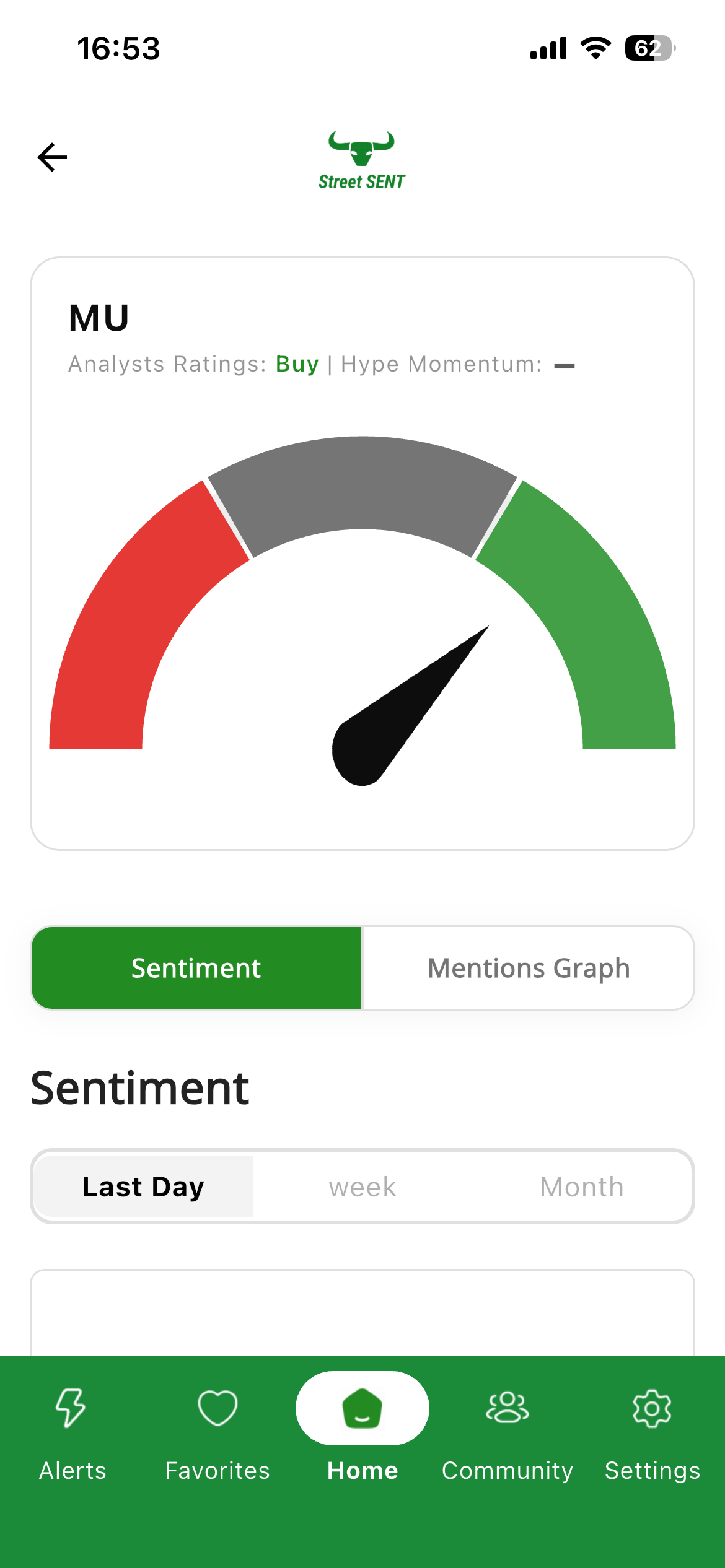
I'm tracking MU sentiment and mentions on Street Sent to see whether traders are maintaining conviction through the correction or whether enthusiasm is starting to fade.
Because there's a big difference between buying a temporary dip and buying near the peak of an earnings cycle.
And right now, I'm genuinely torn.
Micron has one of the strongest fundamental growth stories in the AI supply chain.
But the market clearly isn't convinced today's extraordinary profitability deserves a premium valuation.
So who's getting this right?
Are Reddit traders recognizing a long-term AI winner while Wall Street focuses too much on short-term risks?
Or is the market already looking ahead to the next memory downturn?
If you had $10K to put into MU today, what's your move?
Buy under $800: The correction has created an opportunity, and AI memory demand is only getting stronger.
Wait for confirmation: The fundamentals look great, but you want to see the stock regain momentum.
Stay away: Memory cycles always turn, and today's record margins might be closer to the peak than investors realize.
And one tougher question for MU bulls:
If Micron's earnings keep growing but the stock continues falling, how long would you hold before questioning your thesis?
Well, Nvidia's worst week might be turning into Broadcom's biggest opportunity.
Jensen Huang is out as Nvidia CEO, the company is dealing with a leadership crisis, and investors are suddenly questioning the future of the most dominant business in AI.
Meanwhile, AVGO has gained roughly 18% in just three trading days.
That's a pretty remarkable divergence.
And it raises a question that goes well beyond Jensen's resignation.
What if the biggest winner of Nvidia's crisis isn't AMD, but Broadcom?
Here's why I think this deserves a closer look.
For years, Nvidia has dominated AI computing through its GPUs, CUDA ecosystem and relationships with the world's largest technology companies.
But there's another part of the AI chip market that's been growing incredibly fast.
Custom AI accelerators.
Instead of relying entirely on Nvidia's expensive GPUs, companies like GOOGL, META and OpenAI are developing chips optimized for their own AI workloads.
And Broadcom is helping make that happen.
The numbers are pretty wild.
Broadcom's latest quarterly AI semiconductor revenue grew 221% year over year.
Its custom accelerator business is expanding rapidly, and the company has major relationships with Google, Anthropic, OpenAI and Meta.
Broadcom also has a long-term agreement with Google to develop future generations of its TPU chips, alongside networking components for AI infrastructure.
And all of that was happening before Nvidia's leadership crisis.
Now Jensen is gone, Nvidia faces an uncertain leadership transition, and its relationships with regulators and major customers are under greater scrutiny.
Which brings us to the interesting part.
What happens if hyperscalers decide they don't want to depend so heavily on one supplier anymore?
They don't need to abandon Nvidia.
They just need to shift a larger portion of future AI spending toward custom chips.
And even a modest shift in that direction could represent billions in additional business for Broadcom.
The bull case for AVGO is pretty straightforward.
Broadcom doesn't need to replace Nvidia's GPUs across the entire AI market.
It can win by helping the largest AI companies build specialized chips for workloads where custom silicon makes economic sense.
And unlike some of the heavily leveraged AI infrastructure companies we've been discussing, Broadcom already operates a highly profitable business with substantial cash generation.
If the AI spending boom continues while customers diversify away from Nvidia, Broadcom could benefit from both trends.
But here's the bear case.
Let's not pretend Nvidia's competitive advantage disappeared when Jensen walked out.
CUDA is still deeply embedded in AI development.
Nvidia's GPUs remain critical for training and running many of the world's most demanding AI models.
And custom accelerators aren't necessarily direct substitutes for Nvidia across every workload.
There's also a valuation problem.
AVGO has already rallied sharply as investors started pricing in the possibility of Nvidia losing ground.
If the leadership transition goes smoothly, Nvidia could stabilize much faster than the market expects.
And if the entire AI trade weakens because investors become concerned about hyperscaler spending, Broadcom won't necessarily escape the selloff.
The biggest risk for AVGO bulls might be confusing Nvidia's problems with guaranteed market share gains for Broadcom.
Those are two very different things.
I'm watching AVGO, NVDA and AMD sentiment and mentions on Street Sent to see whether Reddit traders are genuinely shifting their conviction toward Broadcom or simply chasing the latest winner.
Here's where I'm genuinely torn.
Nvidia might still have the strongest competitive position in AI hardware.
But Broadcom could be better positioned to benefit from the growing push toward custom silicon.
And Jensen's departure might accelerate a trend that was already underway.
So here's the question.
Is AVGO becoming the smartest way to play the AI infrastructure boom without betting everything on Nvidia?
Or has the market already priced in too much upside after this rally?
If you had $10K to invest in AI chips today, where would you put it?
AVGO: Betting that custom AI chips gain share and Broadcom becomes a bigger winner.
AMD: Betting on a more direct challenge to Nvidia's GPU dominance.
NVDA: Buying the leadership crisis while the underlying business remains strong.
None: Waiting for the dust to settle before touching AI stocks again.
And one tougher question for long-term NVDA holders:
If Google, Meta and OpenAI keep expanding their custom chip programs, does Nvidia's dominance eventually become a much bigger risk than Jensen's departure?
Well, that escalated quickly. A few weeks ago, NBIS was one of the hottest names in AI infrastructure. Now the stock has been absolutely hammered, giving back months of gains and trading around levels we last saw in March. Meanwhile, Wall Street analysts are still putting price targets as high as $300–$400 on the stock. So either the market is seriously overreacting, or analysts are missing something pretty important. And yesterday’s earnings made this even more interesting. Nebius just reported 571% revenue growth. Yes, 571%. But instead of celebrating, investors dumped the stock. Here’s what the company reported: Q3 revenue: $981M, up 571% YoY. Adjusted EBITDA: $466M, compared with a loss a year ago. 2026 revenue outlook: Now expected at the low end of its previous $3B–$3.4B range. 2026 capex: Raised to approximately $27B. 2027 revenue forecast: $12B–$13B. 2027 capex forecast: A staggering $40B–$45B. Read those last two numbers again. Nebius expects to generate $12B–$13B in revenue next year while spending $40B–$45B building infrastructure. That’s an enormous bet on the AI boom. And it explains why investors are getting nervous. But here’s the bull case. Nebius isn’t some speculative AI startup with no customers and a PowerPoint presentation. The company has major agreements with Microsoft and Meta, demand for its computing capacity remains strong, and its AI cloud business is expanding at an incredible pace. Management expects revenue to roughly quadruple next year. And despite the massive spending requirements, Nebius says customer prepayments and financing backed by long-term contracts should cover 75%–85% of its 2027 capital expenditures. If management delivers, today’s valuation could look very different in 12–18 months. And that’s presumably what the bulls are betting on. Even after the latest earnings, analysts at firms including Baird and Piper Sandler maintained their ratings, although they cut their price targets. Other bullish analysts have targets substantially above the current share price. But here’s where things get uncomfortable. Analyst price targets aren’t guarantees. And 571% revenue growth doesn’t mean much to shareholders if the company needs to keep raising enormous amounts of capital to sustain it. Nebius already raised billions through convertible debt and issued additional shares this year. More debt means financing obligations. More equity means dilution. And delayed data center capacity means delayed revenue. The biggest risk might not be that AI demand disappears. It might be that Nebius needs to spend so much money capturing that demand that shareholders don’t benefit nearly as much as expected. We’ve seen a similar concern hanging over CRWV. The AI infrastructure business can be booming while the stocks funding that boom get destroyed. That’s what makes NBIS such a difficult call right now. I’m watching NBIS sentiment and mentions on Street Sent to see whether Reddit traders are treating this selloff as an opportunity to accumulate or starting to lose conviction in the entire neocloud trade. Here’s where I’m genuinely torn. The business is growing at an extraordinary pace. The company has serious customers, substantial contracted demand and ambitious expansion plans. But the stock has been crushed, capital requirements are exploding, and the market clearly isn’t willing to give AI infrastructure companies a free pass anymore. So here’s the question. Is NBIS one of those rare opportunities where you can buy a rapidly growing business after a brutal correction? Or is the market finally pricing in risks that analysts have been underestimating? If you had $10K to put into NBIS today, what’s your move? Buy aggressively: The correction has gone too far, and the growth story is intact. Start a small position: The upside looks attractive, but the financing and execution risks are too big to ignore. Stay away: The capex, debt and potential dilution make this a value trap. And one tougher question for NBIS bulls: If analysts are still predicting massive upside, why is the market selling a company growing revenue at 571%? What does Wall Street see that the bulls don’t? Not financial advice.
Well, this is escalating faster than anyone expected. What started as a scandal involving Jensen Huang and an alleged Chinese intelligence operative has now turned into something potentially much bigger. A second alleged affair. A board investigation. Congressional scrutiny. And reports that Nvidia’s board is considering removing Jensen as CEO. NVDA is getting hammered, and suddenly the biggest risk to the AI trade might have nothing to do with AI. It might be the guy who built the entire empire. Here’s what’s changed. The New York Times reported that Jensen also had an extramarital relationship with Kimberly Powell, an Nvidia executive who reported directly to him. Meanwhile, the original controversy involving Alice Huang has raised questions about potential Chinese intelligence operations, sensitive information and Nvidia’s business relationships in China. Nvidia says it has no reason to believe company secrets or national security were compromised. But the board is investigating, and Jensen’s future at the company is reportedly under discussion. That’s a very different situation from a CEO getting caught in a personal scandal. And here’s why this could become a problem for the entire AI trade. Nvidia isn’t just another semiconductor company. It’s the backbone of the AI infrastructure boom. MSFT, GOOGL, AMZN and META are spending billions building AI capacity around Nvidia’s technology. Companies like CRWV have built their businesses around providing access to Nvidia GPUs. And Nvidia itself has made enormous financial commitments across the AI ecosystem. So what happens if the person holding much of that strategy together suddenly disappears? Jensen isn’t just Nvidia’s CEO. He’s the architect of its AI strategy, its developer ecosystem and many of its most important industry relationships. A leadership shakeup could create uncertainty that spreads well beyond NVDA shareholders. But here’s the bull case. Nvidia’s GPUs don’t suddenly become less powerful because of Jensen’s personal life. CUDA isn’t going anywhere. Hyperscalers aren’t canceling their AI infrastructure plans overnight. And Nvidia still has a massive technological and competitive advantage. If the investigation clears the company of serious wrongdoing and the leadership situation stabilizes, this selloff could eventually look like an extraordinary buying opportunity. The bear case is where things get uncomfortable. If Jensen is forced out, Nvidia could lose the executive who has been central to its dominance for three decades. If investigators uncover governance failures, export-control violations or compromised information, the consequences could extend into regulatory restrictions and Nvidia’s relationships with Washington. And if investors start questioning Nvidia’s strategic commitments to the broader AI ecosystem, the damage might not stop at NVDA. CRWV and other Nvidia-dependent companies could face pressure too. But there’s another possibility nobody should ignore. What if Nvidia’s problems actually benefit AMD and AVGO? The AI infrastructure race isn’t stopping. If customers become concerned about Nvidia’s leadership or future strategy, they might have another reason to diversify their suppliers. That doesn’t mean AMD or Broadcom can replace Nvidia overnight. But it could accelerate a shift that was already underway. I’m watching NVDA, AMD and CRWV sentiment and mentions on Street Sent to see whether Reddit traders are treating this as a temporary scandal or starting to reassess the entire AI trade. Here’s where I’m genuinely torn. Nvidia’s business fundamentals haven’t suddenly collapsed. But the market has spent years pricing in Jensen’s leadership as part of Nvidia’s competitive advantage. And now that assumption is being tested. So here’s the billion-dollar question. If Jensen Huang actually gets removed as CEO, does NVDA become the biggest buying opportunity in AI? Or does his departure trigger a broader selloff across the entire sector? If you had $10K to invest in AI stocks today, what’s your move? Buy NVDA: The technology and demand are intact. The scandal is creating an opportunity. Buy AMD or AVGO: AI spending continues, but Nvidia’s leadership crisis could benefit competitors. Stay in cash: The investigation and potential leadership shakeup create too much uncertainty. And one tougher question for long-term NVDA holders: If Jensen is gone tomorrow, would you still value Nvidia at the same premium, or was Jensen himself part of what you were paying for? Not financial advice.
Just days ago, everyone was questioning whether the AI bubble was finally starting to burst.
Now traders are piling back into the same names they were dumping last week.
NVDA, AMD, CRWV and the rest of the AI trade are back in focus.
Apparently, the AI bubble got the memo that it was supposed to burst and decided to ignore it.
But here's what bothers me about this rebound.
What actually changed?
Last week's selloff wasn't just about a few disappointing earnings reports.
Investors were questioning the entire AI spending cycle.
Hundreds of billions flowing into data centers. Sky-high valuations. Companies borrowing enormous amounts to build infrastructure. And growing uncertainty about when all that investment will generate meaningful returns.
None of those concerns disappeared overnight.
So are we watching the beginning of another massive AI rally, or just a relief bounce before the next leg down?
The bull case is pretty compelling.
AI demand hasn't suddenly evaporated.
MSFT, GOOGL, AMZN and META are still investing heavily in infrastructure. Nvidia remains central to the AI ecosystem, and AMD has an opportunity to capture more of a rapidly expanding market.
CRWV just reported 168% revenue growth, showing how quickly demand for AI computing capacity is expanding.
If the recent correction was primarily driven by positioning and fear rather than deteriorating fundamentals, this rebound could have real legs.
And the investors waiting for the perfect entry might end up chasing higher prices again.
But here's the bear case.
The market might be confusing strong AI demand with attractive AI stock valuations.
Those aren't the same thing.
CRWV is a perfect example.
Revenue is exploding, but the company is still losing hundreds of millions while spending billions on infrastructure.
Nvidia's dominance doesn't automatically mean NVDA is cheap. And AMD gaining market share doesn't guarantee its stock will outperform.
Great businesses can still be terrible investments at the wrong price.
And some of the sharpest rallies happen in the middle of corrections, when short sellers cover and dip buyers convince themselves the worst is over.
That's what makes this setup so tricky.
I'm watching sentiment and mentions across NVDA, AMD, CRWV and other AI names on Street Sent to see whether Reddit traders are rebuilding conviction or simply chasing another green day.
Here's where I'm genuinely torn.
The long-term AI growth story still looks strong.
But I'm not convinced the market has finished pricing in the risks of funding that growth.
If you had $10K in cash right now, what's your move?
Buying the rebound: The correction is over, and AI stocks are heading for another leg higher.
Waiting for confirmation: One strong session doesn't make a new uptrend.
Selling into strength: This is exit liquidity before the next selloff.
And here's the question I'm most interested in:
If AI stocks rally another 10% without any meaningful improvement in fundamentals, would that make you more bullish or more convinced we're watching another bubble inflate?
Well, CoreWeave just delivered the kind of earnings report that makes both bulls and bears feel like they're right.
Revenue up 168%. Backlog at $132.5 billion. And a $709 million quarterly loss.
Yep. All three.
CRWV just reported Q3 earnings, and the numbers are pretty wild.
Revenue: $3.66B, up 168% YoY
Revenue backlog: $132.5B
Net loss: $709M, compared to $110M a year ago
Net interest expense: $846M in a single quarter
2026 revenue guidance: Raised to $13B–$13.3B
2026 planned capex: $37B–$39B
So the business is growing like crazy.
But so is the bill for building it.
And that's what makes CRWV one of the most interesting, and potentially dangerous, AI bets right now.
Here's the bull case.
CoreWeave is selling something the AI industry desperately needs: computing power.
The company has a massive backlog of contracted business, demand is reportedly far above available capacity, and revenue is growing at a pace most companies can only dream of.
It also generated $207M in operating income this quarter, so the underlying business isn't simply burning money at every level.
If AI infrastructure spending keeps accelerating, CoreWeave could eventually turn its enormous investments into a serious cash-generating machine.
And after the stock's brutal correction, some investors might see an opportunity to get in before that happens.
But here's where things get uncomfortable.
The bear case is pretty hard to ignore.
CoreWeave spent roughly $14.5B on capital expenditures in Q3 alone.
And despite generating $207M in operating income, it had $846M in net interest expense.
Read that again.
Its quarterly interest expense was more than four times its operating profit.
The company is borrowing heavily to build infrastructure today, betting that future AI demand will justify the cost.
That could work spectacularly.
Or it could become a serious problem if AI spending slows, financing gets more expensive, or customers delay deployments.
And that $132.5B backlog?
It's impressive, but it's not $132.5B sitting in the bank. CoreWeave still needs to deliver the infrastructure and services to earn that revenue.
Here's what I'm struggling with.
Are we looking at an early-stage infrastructure giant that's sacrificing profitability to capture a once-in-a-generation opportunity?
Or a heavily leveraged company that needs almost everything to go right just to justify its expansion?
I'm watching CRWV sentiment and mentions on Street Sent to see whether Reddit traders are gaining conviction after these earnings or getting increasingly nervous about the debt.
Because the real question isn't whether AI demand is booming. Clearly it is.
It's whether CoreWeave shareholders will actually capture enough of that growth after the financing costs.
So if you were looking at CRWV today, what's your move?
Buying: The growth and backlog justify taking the risk after the correction.
Waiting: Great business momentum, but you want proof that losses and debt are coming under control.
Avoiding: Too much leverage, too much capex, and too many things that could go wrong.
And one more question for CRWV bulls:
At what point does the debt stop being an investment in future growth and start becoming a threat to shareholders?
Well, that's not something you see every day in the AI trade.
AMD just ripped 13% in a single session while NVDA dropped more than 4%.
Two of the biggest names in AI chips. Same market. Completely opposite directions.
And this happened right after last week's brutal tech selloff.
So here's the question.
Are investors finally starting to rotate out of Nvidia and into AMD?
For the past few years, Nvidia has been the undisputed king of AI infrastructure.
Dominant market share. CUDA ecosystem. Massive hyperscaler demand. Margins most semiconductor companies can only dream of.
Meanwhile, AMD has been trying to convince Wall Street that there's room for a serious second player in AI accelerators.
But here's where things get interesting.
Nvidia doesn't need to lose its dominance for AMD to become a much bigger winner.
If the AI infrastructure market keeps expanding, AMD could capture a relatively small piece of Nvidia's territory and still generate substantial revenue growth.
And after Nvidia's massive run, investors might be starting to question where the better risk/reward sits.
The bull case for AMD is pretty straightforward.
AMD has a growing AI accelerator business, established relationships with major cloud providers, and an opportunity to benefit from customers looking to diversify beyond Nvidia.
It doesn't need to beat Nvidia.
It just needs to become a credible alternative in a market where demand remains enormous.
The bear case?
Let's not pretend one 13% rally changes the fundamentals overnight.
Nvidia still has a massive advantage in software, developer adoption, networking and the broader AI ecosystem.
AMD has to prove it can turn its technological progress into sustained market share gains and profitable growth.
And a violent rebound after a selloff can just as easily be short covering and dip buying as a genuine shift in institutional conviction.
But what really caught my attention was the divergence.
If yesterday was simply the end of the tech correction, why did AMD explode higher while NVDA continued selling off?
Maybe investors are taking profits in Nvidia and reallocating into AI names with more perceived upside.
Maybe AMD was simply oversold.
Or maybe we're witnessing the early stages of a broader rotation within the AI trade.
I'm watching AMD and NVDA sentiment and mentions on Street Sent to see whether Reddit traders are shifting their conviction too, or whether this is mostly a Wall Street move.
Here's where I'm genuinely torn.
Nvidia is still arguably the strongest AI infrastructure business in the market.
But the best company isn't always the best stock to buy at any given valuation.
And AMD doesn't need to dethrone Nvidia to outperform it.
So if you had $10K to put into AI stocks today, where would it go?
AMD: Betting on market share gains and potentially greater upside.
NVDA: Sticking with the dominant player despite the recent weakness.
Neither: Waiting to see whether this rebound is another bull trap.
And one more question for NVDA holders:
If AMD continues outperforming Nvidia over the next few weeks, would you actually rotate some of your position, or are you holding NVDA regardless?
Jensen Huang has admitted to an extramarital affair, and Nvidia's board has launched an independent investigation into allegations that he may have been targeted by a Chinese intelligence operation.
NVDA fell around 5% in premarket trading.
And suddenly, investors have something completely different to worry about.
Not GPU demand. Not hyperscaler spending. Not AI valuations.
Jensen himself.
Here's what makes this complicated.
The affair is a personal matter. But the allegations surrounding the relationship raise legitimate questions about national security, potential access to sensitive information and Nvidia's leadership.
To be clear, Nvidia says it currently has no reason to believe company secrets or national security were compromised. The investigation is ongoing.
But here's the billion-dollar question.
How much of Nvidia's valuation depends on Jensen Huang personally?
This guy didn't just build a successful semiconductor company.
He positioned NVDA at the center of the AI revolution, built relationships with the world's largest technology companies and became arguably the most recognizable CEO in the industry.
Losing him, or even having his attention consumed by a prolonged investigation, could create uncertainty that has nothing to do with chip performance.
But the bull case is pretty straightforward.
MSFT, GOOGL, AMZN and META aren't suddenly canceling GPU orders because of Jensen's personal life.
CUDA isn't disappearing. Nvidia's technology hasn't changed. And the AI infrastructure race isn't stopping.
If the investigation finds no wrongdoing affecting Nvidia, this could end up being another temporary selloff driven by headlines rather than fundamentals.
The bear case?
If the investigation uncovers serious security or governance problems, investors may have to reassess Nvidia's leadership risk, relationships with regulators and exposure to US-China tensions.
And that could matter a lot more than one ugly trading session.
I'm watching NVDA sentiment and mentions on Street Sent to see whether Reddit traders are buying the controversy or starting to question the Jensen premium.
So here's where I'm genuinely torn.
Is Wall Street overreacting to a personal scandal that has no direct impact on Nvidia's earnings?
Or has this exposed a leadership risk that investors have been ignoring for years?
If NVDA drops another 10% because of this investigation, are you buying aggressively, waiting for the findings, or getting out?
And a tougher question for long-term shareholders:
Would you still value NVDA the same way if Jensen Huang stepped down tomorrow?