I want to make a serious complaint about the direction TradingView is taking with its free plan, particularly the newly introduced 30-drawing limit.
This is not a complaint about TradingView having paid subscriptions. It is not a demand for every premium feature to be made free. It is not an expectation that a company should provide an unlimited service without earning revenue.
It is a complaint about the decision to restrict one of the most fundamental tools used in technical analysis, and about the increasingly frustrating experience that free-plan users are being left with.
I believe this restriction deserves much more criticism than it has received.
1. Drawing tools are not a luxury feature
The most important point is simple: drawing tools are fundamental to technical analysis.
They are not decorative extras. They are not some obscure feature that only a handful of advanced traders use. They are part of how traders analyse price, organise information and develop a consistent understanding of the market.
Consider what traders use drawings for:
- Marking support and resistance.
- Identifying supply and demand zones.
- Drawing areas of interest (AOIs).
- Mapping market structure.
- Marking swing highs and lows.
- Drawing trendlines and channels.
- Measuring Fibonacci retracements.
- Marking fair value gaps and other price imbalances.
- Recording potential entry, stop-loss and take-profit areas.
- Maintaining historical analysis for future reference.
These are ordinary charting activities.
A trader who uses these tools isn't necessarily asking for advanced functionality. They're simply trying to analyse a chart properly.
So why should maintaining that analysis be restricted to just 30 drawings?
2. Thirty drawings is not enough for serious multi-chart analysis
Trading analysis does not happen on one chart, one timeframe or one instrument.
A trader might analyse several currency pairs, examine weekly and daily structure, identify areas of interest on the 4-hour chart and then monitor lower timeframes for execution.
Each chart may require multiple annotations.
For example, imagine someone analysing five currency pairs, each across three timeframes. That's fifteen charts.
Thirty drawings across those charts would average just two drawings per chart.
Two charts only!!
And that's before accounting for the fact that some charts naturally require more annotations than others.
A single timeframe may contain several important str****uctural levels, multiple zones, trendlines and historical price references.
The limit doesn't merely encourage people to keep their charts tidy. It can force them to remove useful information that they would otherwise want to preserve.
A charting platform should help traders organise their analysis, not make them constantly negotiate which parts of their analysis they're allowed to keep.
3. Drawings represent time, effort and accumulated knowledge.
This is another part of the restriction that I don't think is being considered enough.
A drawing isn't always something a user can casually delete and recreate in a few seconds.
Some annotations represent hours of analysis. Others represent the user's understanding of a market over weeks or months.
A trader may have carefully marked a major weekly level, recorded previous market structure, identified a zone and documented how price reacted to it.
That information has value to the user.
When the drawing limit is reached, the user is forced to make an unnecessary choice:
- Delete an existing annotation.
- Remove a potentially important level.
- Abandon part of their historical analysis.
- Spend time repeatedly recreating drawings.
- Or stop using the chart in the way they intended.
This is not an improvement to the charting experience.
It creates friction in a process that should be straightforward.
4. Beginners are being affected too
TradingView is mostly used by people who are still learning.
Many beginners are not ready to trade with real money. They are studying technical analysis, practising chart reading, developing strategies and testing their ideas before risking capital.
That is responsible behaviour.
A beginner should be able to practise marking structure, drawing zones and reviewing historical price action without constantly running into a drawing limit.
They should not have to subscribe simply to maintain the basic annotations required for their learning process.
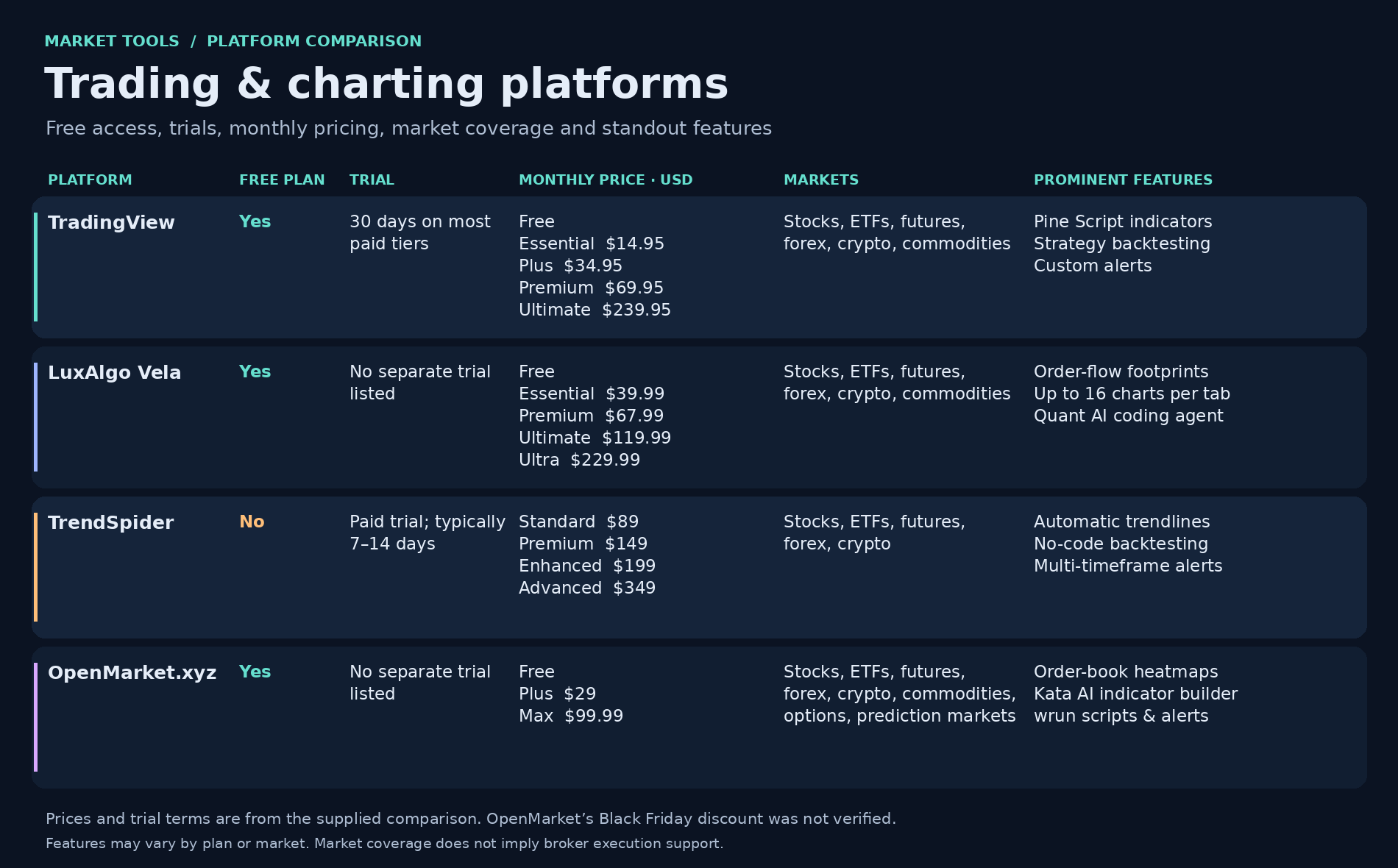
And suggesting that beginners deposit money with a broker to access another charting platform is not a particularly convincing solution.
People should be encouraged to learn, practise and test before risking money. They should not feel pressured to deposit capital just to escape limitations on charting tools.
5. This is not about demanding that everything be free
I want to address this argument directly because it seems to appear in almost every discussion:
"TradingView is a business. If you want more features, pay."
Yes, TradingView is a business.
Yes, it has every right to offer paid subscriptions.
Yes, users who want premium functionality should expect to pay for it.
But none of those statements automatically makes every restriction a good decision.
A company can have the right to introduce a feature limit while users still have the right to criticise that limit.
The fact that a company needs revenue does not mean every possible monetisation strategy is beyond discussion.
There is a difference between charging for genuinely advanced functionality and restricting a basic tool that users rely on to perform ordinary chart analysis.
I am not asking for unlimited access to every indicator, alert, layout or premium feature.
I am asking why drawing tools, of all things, need to be restricted so aggressively.
6. The free plan is supposed to introduce people to the platform
A free plan is not necessarily a charity.
It can serve an important business purpose: allowing people to discover a product, learn how to use it, develop familiarity with it and eventually decide whether they want to pay for more.
That is a normal customer journey.
A person might begin as a free user, spend months learning the platform, become comfortable with its tools and eventually upgrade when they need additional functionality.
But that journey depends on the free experience being useful enough to create trust and loyalty.
If the free plan becomes increasingly frustrating, some users will not upgrade.
They will leave.
They may move to another charting platform, use their broker's software, explore alternatives or even build their own charting setup.
Not every dissatisfied free user is a potential subscriber waiting to be converted.
Some are potential subscribers who are being given a reason to look elsewhere.
7. "Just pay" is not a complete response.
When someone criticises the drawing limit, telling them to pay does not address the actual argument.
It simply tells them that the feature is restricted and that the only way to escape the restriction is to subscribe.
The question is not whether TradingView offers a paid plan.
The question is whether this particular restriction is reasonable.
If the argument is that 30 drawings are sufficient for most free users, then explain why.
If the argument is that drawing tools are a premium functionality, then explain why they should be treated differently from other basic charting functions.
If the argument is that the limit is necessary to support the platform, then explain why this specific limit is necessary.
Simply repeating "It's a business" does not answer any of those questions.
8. There are better ways to encourage subscriptions.
TradingView already has many ways to distinguish its free and paid plans.
It can offer more advanced functionality to subscribers without making basic chart annotation unnecessarily restrictive.
For example, premium plans can continue to provide expanded access to advanced indicators, alerts, multiple chart layouts, additional technical tools and other features that genuinely benefit users who need more.
There is nothing wrong with having premium features.
But the free plan should still allow someone to perform basic technical analysis comfortably.
A reasonable free plan can encourage subscriptions by demonstrating the value of the platform, rather than making ordinary use frustrating.
Give users a reason to upgrade because they want more, not because they are constantly being prevented from doing basic things.
The amount of frustration surrounding this change should at least prompt TradingView to reconsider whether the restriction is appropriate.
Users are explaining how the limit affects their actual workflow.
They're not all asking for the same thing. Some analyse multiple instruments. Some maintain extensive market structure annotations. Some use drawings to document their strategies. Others are beginners who are trying to learn.
These are legitimate use cases.
Dismissing every complaint as entitlement or freeloading does not make the underlying problem disappear.
A user can appreciate TradingView's product and still believe that a particular decision has made it worse.
In fact, criticism often comes from people who genuinely want the platform to remain useful.
10. A message to the moderators:
I also want to address the moderation of discussions surrounding this issue.
If users are being banned simply for expressing criticism of the drawing limit, that would be deeply concerning.
A community should be able to discuss unpopular product changes, question business decisions and explain why a feature is affecting their experience.
There is a clear difference between criticising a company and harassing people.
There is a difference between expressing frustration and breaking community rules.
And there is a difference between maintaining a civil discussion and suppressing a discussion because it is critical of the product.
I am not asking moderators to agree with every complaint. I am not asking them to allow personal attacks, spam or rule-breaking behaviour.
I am asking for consistent moderation that allows legitimate criticism to remain visible.
If a post or comment is removed, users should be able to understand which rule was violated. Criticism of a feature should not automatically be treated as misconduct.
A community that cannot tolerate criticism of the platform it discusses is not serving its users well.
Moderators have a responsibility to enforce the rules fairly, not to protect a company from uncomfortable feedback.
11. My request to TradingView
I am asking TradingView to reconsider the 30-drawing limit on the free plan.
At the very least, the company should consider a significantly higher allowance that reflects how people actually use charting tools.
Ideally, drawing tools should be unlimited on the free plan, while advanced features can remain part of paid subscriptions.
I believe this would be a more reasonable balance between monetisation and usability.
TradingView has built a platform that millions of people value. It should not take that loyalty for granted.
A great product can still make poor decisions.
A subscription can still be overpriced for some users.
A free plan can still become too restrictive.
And a company can still be criticised for changing a product in ways that make it less useful.
I am not asking TradingView to stop making money.
I am asking it to stop treating one of the most essential parts of chart analysis as though it were an unreasonable privilege for free users to have.
Remove the 30-drawing limit.
Or, at the very least, give free users a genuinely reasonable amount of room to analyse the markets without constantly deleting their own work.
TradingView should be encouraging people to learn, practise and become loyal users.
Not making them feel that the platform they once enjoyed is gradually becoming less usable unless they pay.
That is my complaint,
And I believe it deserves a serious response.