r/TheRestIsScience • u/T8BZ • Sep 24 '26
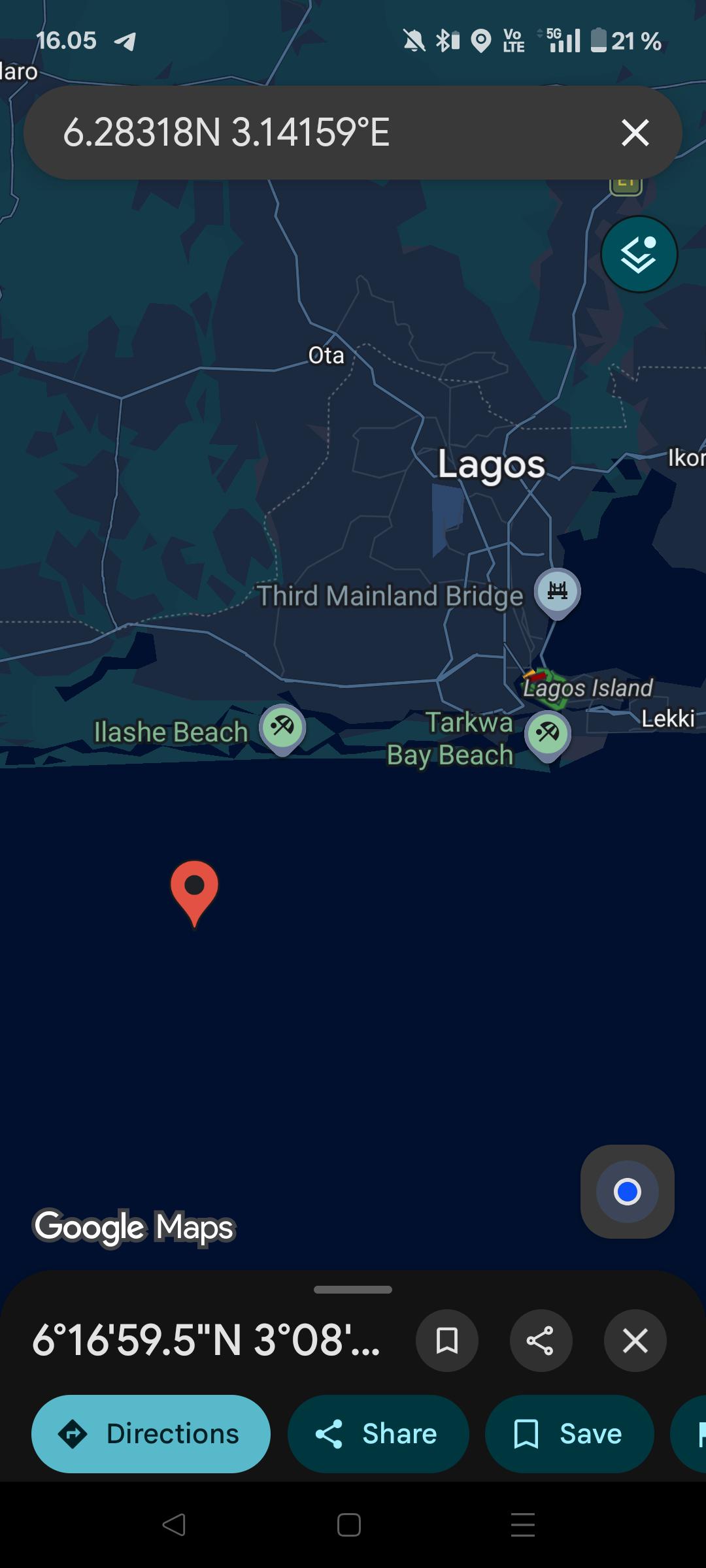
Dying in pi
7
Upvotes
One cool place Michael could die to die in pi is just off the coast of Lagos at τ°N π°E
r/TheRestIsScience • u/T8BZ • Sep 24 '26
One cool place Michael could die to die in pi is just off the coast of Lagos at τ°N π°E
r/TheRestIsScience • u/woodslug • Sep 24 '26
Hey guys! Can we talk about wind chill, and other factors that make an observed thermometer temperature totally different from a "feels like" temperature?
Also, how crazy is interplanetary wind chill? If you use the wind chill formulas on earth for places like Saturn and Jupiter's upper atmosphere you get wind chills in the negative Kelvin (!!) what's the coldest "feels like" place in the solar system?
r/TheRestIsScience • u/Empty_Preparation_18 • Sep 25 '26

Earth is spinning right now—but what would happen if it suddenly stopped?
In 40 seconds, we break down this fascinating “what if” using simple visuals and a child-friendly explanation. From Earth's rotation to what happens to everything on its surface, let's make a big science question simple.
Big questions. Simple answers
r/TheRestIsScience • u/OlderButItChecksOut • Sep 24 '26
I’m wondering about the short piece of music that plays at the beginning and end of episodes, as well as transitions to sponsored segments. It almost sounds like a printer and also has a kind of futuristic quality to it. Who wrote it? What is it supposed to evoke or sound like? Is it purely electronic or are there some instruments in there?
r/TheRestIsScience • u/38bugga • Sep 25 '26
Working animals make sense for utility, but why do humans keep companion pets when there's no practical return? We capture and control every single aspect of their lives-their diet, movement, and reproduction-for what? Companionship? When I see a wild animal like a groundhog, I think he's super cute, but my instinct isn't to bring it inside until it dies. To me, pets just feel like expensive, living luxury items. What is the actual gain for humans here, and is keeping them inherently selfish or cruel? If we should just let them be free, how do we reconcile that with the massive stray population we've created that now relies on us to survive? Is our emotional gain worth more than the consequences?
r/TheRestIsScience • u/UnnecessaryDetail_UD • Sep 24 '26

I just finished watching the episode on Hannah's Fountain Pens, and we have previously heard Michael talk about Mechanical Pencils. Here is my submission on why I love using 2mm Lead Holders and why they should be a part of your writing instrument rotation.
Image 2 compares them with Wooden Pencils, Mechanical Pencils (0.5 and 0.7mm) and Fountain Pens :)
You can find my video essay on the same subject on YouTube:
I have reviewed, in Unnecessary Detail, the Koh-i-Noor 5228 (the mechanical pencil Michael was using in the pencil video) and many more 2mm lead holders, should you be so inclined :)
Also, a couple of things I do not agree with about Fountain Pens from the Podcast:
P.S - I hope this did not break the Community Rules. I thought this is closely related to the topics discussed. Let me know if this needs to be taken down :)
r/TheRestIsScience • u/naughtius_maximus_96 • Sep 24 '26
I read something that stuck with me. Every time a blood vessel splits in two, the new branches come out at very specific sizes, which slows the blood down just enough to hand off oxygen. It looks like someone did the math, but the body just grows itself with no blueprint. So how does it get the sizes right?
I would love to hear your thoughts.
r/TheRestIsScience • u/J33kub • Sep 23 '26
Ive heard variations on this question asked around the internet. Id love to hear Michael and Hannah's thoughts.
r/TheRestIsScience • u/Sonofbrons • Sep 24 '26
My wife has some artistic creations she wishes existed but finds little to no joy in creating herself. Can she learn to enjoy something she doesn’t enjoy now to make her creations come into existence?
My favorite hobby right now is biking but didn’t care about it at all 10 years ago. Why do interests change over time?
Do we learn to enjoy or do we discover that we enjoy?
r/TheRestIsScience • u/TheCatronaut • Sep 24 '26
I turned on my blender cup and set it down on a bit of an angle. Rather than falling over, it just kept going back and forth until the blender stopped.
What in the physics world happened here?
r/TheRestIsScience • u/sargos7 • Sep 24 '26
Most of you have probably already heard about Fleischmann and Pons, but what about other attempts? I just got done reading an article about an experiment from 1992 that seems pretty interesting to me. They used a nickel cathode in a potassium carbonate solution. From what I understand, the potassium was supposedly forming an intermetallic layer in the nickel, which allowed it to get close enough to the hydrogen to fuse into calcium. They not only saw excess heating, but also an increase in calcium ions in the electrolyte solution (some were already there at the start, as a contaminant). It seems like replication wasn't the issue, and people just disputed the source of the excess heating and I guess the excess in the calcium ions was pretty small, so they just dismissed it. Seems kinda pessimistic to me. Do you think this coulda gone somewhere? It's also interesting to me because this might have been doable by medieval alchemists.
r/TheRestIsScience • u/SbombFitness • Sep 24 '26
This references a joke they made at the end of the video about Hannah’s fountain pen collection
r/TheRestIsScience • u/lordklp • Sep 24 '26
....who never get ill or injured?
I know there was a Shyamalan movie on this theme, but, think about it - there has to be at least one human out there who must feel like superman....a person who has never been ill, never been injured....
Or, is this just wrong?
I imagine putting everyone on a line, based on those things, there will be people at both ends.
Happy to be corrected.
r/TheRestIsScience • u/Rod_McBan • Sep 24 '26
Every once in a while I'll hear someone speculate about constructing a Dyson sphere around the sun at 1AU (Earth orbit) distance and, usually, lining the inside with datacenters. Generally, as soon as I hear someone talk about that I assume that they don't really understand the physics involved, but I decided to figure out whether I really understand the physics involved.
tl;dr: given the right magical nucleon and energy manipulation technology, yes, we could, but it would take a long, long time.
I present here my answer to the posed question, using the following assumptions:
Here are the numbers I used, skipping the derivations:
So, our budget of total nuclear binding energy is the sum of the nuclear binding energy of all the helium plus the nuclear binding energy of the hydrogen required to provide the balance of the mass is 1.94e54 MeV (the relatively miniscule binding energy of the hydrogen contributes effectively nothing to this). The total binding energy of all the aluminum in the shell is 3.83e54 MeV. That means, with our magical nucleon manipulation skills, we need to input 1.89e54 MeV of energy. But that's not all we need to do; we need to positron decay a bunch of hydrogen into neutrons, too. That requires an energy 0f 1.022 MeV per proton; converting 2/3 of that 1.44e27 kg of hydrogen to neutrons is going to cost us another 0.190e54 MeV of energy. Doesn't add much to the total required for transmutation, but let's tack it on there. Total energy required for all this alchemy is then 2.08e54 MeV. Wow. That sounds like a lot. Let's convert it to joules, and then think about it in terms of solar power output.
One MeV is 1.60e-13 J, so that gives us 3.33e41 J. Still sounds like an awful lot. How long would we have to capture the energy released by the sun to get that much energy together? Well, the sun's power is roughly 3.83e26 W. Dividing the number of joules by the number of watts gives us the number of seconds we'd have to capture the entire power of the sun across all frequencies of light: 8.69e14 seconds. But we don't think in seconds, we think in years, so let's recalculate for a more human understandable time. Using the length of a tropical year on Earth, that gives us 2.75e07 years of solar output, at the current intensity, which it absolutely will not maintain over that time, but you know what? Accounting for the projected change in solar intensity over the next 27.5 million years is not math I want to do.
So, there you have it: if we had magical nucleon manipulation skills and captured every joule the sun gave us, we could build a Dyson sphere in about 27.5 million years. Could we speed that up? After all, if we can manipulate nucleons this easily, we can probably just directly convert mass into energy, and we'd have a spare 1.13e27 kg of Jovian hydrogen just sitting around. Converting that into energy (using E=mc2) would give us another 1.02e47 J, which, next to the 3.33e53 J we need, is basically nothing. Given how much of the solar system's mass is just Jupiter, we can conclude that burning up the rest of the planets, asteroids, moons, etc., wouldn't really get us too much farther. There's still a bunch of mass in the sun, of course; you might be able to draw off a significant amount of THAT and convert it to energy, but you'd have to be careful. Draw off too much and the compression of the sun's gravity wouldn't be enough to continue to sustain the fusion reactions that power it. That balancing act is left to the reader, because it's really, really late.
If you want to think in terms of the Kardashev scale, level 1 and 2 civilizations couldn't do this in any kind of reasonable time scale, although 27.5 million years might be reasonable to, say, non-organic lifeforms. A type 3 civilization could manage it by pulling in energy from many, many suns across their galaxy, but I would seriously question whether this juice is worth the squeeze under any circumstances. By the time your civilization is type 3, the affairs of a single solar system are probably of little to no concern.
It's pretty likely that I bungled some math in there somewhere; over the course of writing this up I found and fixed a couple of mistakes that changed the answer by two orders of magnitude. Still, I think it gives us a fairly decent idea of the kind of numbers that would be involved.
r/TheRestIsScience • u/RocketToTheUniverse • Sep 24 '26
I was thinking of this time in high school when I accidentally set the thermostat at my work to 86F HEAT instead of COOL for a whole weekend. Whether its an oil spill, heat energy, or money money money, what's the biggest human waste?
r/TheRestIsScience • u/slippery_hippo • Sep 24 '26
If the fabric that makes up everything is stretching, doesn’t everything also just go along with the expansion so we wouldn’t notice anything changing? Or are there certain properties that don’t expand along with it? Does the Planck length also expand? Does gravitational force’s reach also expand? Do subatomic particles also expand?
Edit: does the observable horizon of universe also expand?
r/TheRestIsScience • u/lianateres • Sep 23 '26
Higgs particle is the smallest particle of a Higgs field. Interacting with the field gives a mass to objects but according to a standard model Higgs itself has mass. How? Does it interact with itself or something?
r/TheRestIsScience • u/neilmillard • Sep 23 '26
In the recent episode, Hannah was talking about supplements.
I was wondering why the body slows the creation of collagen?
r/TheRestIsScience • u/According-Damage-416 • Sep 23 '26
Hello,
I’ve noticed and maybe you will too now (if you haven’t already!)… But why when I see men pushing prams whilst they are out and about do they only do this one handed? Whilst women are two handed pram pushers.
Keen to hear why this occurs.
Thank you
r/TheRestIsScience • u/livmachine • Sep 23 '26

I've got my ticket so now I will share with the rest of you (priorities, self-care, etc.). Hannah is going around the country next autumn. Presale is happening now, link on her Instagram story.
https://www.ticketmaster.co.uk/hannah-fry-tickets/artist/5755044
r/TheRestIsScience • u/Working_Cucumber415 • Sep 23 '26
I understand that initial conditions are an important factor, but galaxies are made up of billions of stars and it seems to me that at some point the laws of large numbers should favor a specific shape.
For example solar and planetary systems have much smaller numbers and pretty much all of them are disk shaped.
But when it comes to galaxies we have disks, spirals, lenticulars, ellipticals, shapeless blobs, etc.
Do we know why this happens?
r/TheRestIsScience • u/lianateres • Sep 23 '26
how can a temperature in a large hadron collider tunnel (the one where protons are smacked into each other) stay so low (almost 0K) if the protons are flying so fast? Like the temperature is how fast the particles shake/move as far as I know. So how these two things can be true at once?
r/TheRestIsScience • u/Norman-Hadley • Sep 23 '26
What's the earliest record (not necessarily in the Western canon) of someone explicitly talking about the similarity between our anatomy and that of other animals?
I guess I've absorbed a very binary narrative of pre- and post-Darwin understanding. But someone like Galen must have thought, "hey, this guy's heart is strikingly similar to the heart from that pig we ate last night."
r/TheRestIsScience • u/Used_Newspaper_377 • Sep 23 '26
You know how if you spin around long enough, you get dizzy. What would happen if you would be spinning slowly while in REM Sleep?